
Thammasat University Strengthens Community Ties by Hosting Public Learning Events on Campus

HIGHLIGHTS

  • Public Learning Hub: Thammasat University actively opens its campuses to the public, offering diverse educational programmes that promote lifelong learning and community engagement.
  • Legal Dialogue Through Film: The Faculty of Law, in collaboration with the ICRC, hosted “International Law and Films”—a public seminar combining cinema and academic discussion to deepen understanding of international humanitarian law.
  • Art for Peacebuilding: The “Dialogue of Humanity” exhibition at the Thammasat Museum, created with Patani Artspace, used art to foster empathy and dialogue around peace in Thailand’s southern border provinces.
  • Community Health and Safety: Through the “Luk Pathum Must Be Safe from Water” project, the university trained over 500 local children in essential swimming and water safety skills, supporting youth well-being and accident prevention.

Thammasat University is reinforcing its commitment to public education and community well-being, opening its doors to host a diverse range of programmes that serve the wider public. From critical academic discussions to essential life-skills training, the university actively transforms its campus into a vital hub for continuous learning.

Fostering Legal Dialogue Through Cinema

On Friday, 1 November 2024, the Faculty of Law’s International Law Centre, in collaboration with the International Committee of the Red Cross (ICRC), hosted a compelling public seminar titled “International Law and Films.”

The event, held in the Jit-Saetabutr Room at the university’s Tha Phrachan campus, featured a screening of the powerful film First They Killed My Father. The screening was followed by an expert academic seminar, providing a unique opportunity for attendees to explore the complex themes of international humanitarian law through the accessible medium of cinema. Furthermore, the university extended the reach of this important discussion by broadcasting the academic panel live via the Faculty of Law’s Facebook page.

Exploring Learning Environments Through Sound

Furthermore, the university extended its educational outreach into innovative sensory research. On 28-29 May 2024, the Faculty of Learning Sciences and Education hosted a specialised workshop, “Soundscape in School: Sound, People, School, Learning”.

This two-day training event was open to academics, teachers, students, and the interested general public, drawing participants from multiple institutions. Attendees were trained by university experts and specialists from ‘Hear & Found’ in soundscape theory, ethnographic data collection, and field recording techniques. The programme combined theory with practical application, using the Thammasat Secondary School campus as a live learning environment for fieldwork, analysis, and data presentation, providing valuable new methodologies for future research.

Art as a Platform for Peace and Understanding

This commitment to fostering critical dialogue through culture was further demonstrated at the Rangsit campus. The Thammasat Museum, in partnership with Patani Artspace, presented the “Dialogue of Humanity” art exhibition. Running from May to August 2024, the exhibit provided a powerful exploration of events in the three southern border provinces, using art as a medium to build understanding and support the peace process. By opening the museum doors to the public on weekdays, the university provided a vital, free-of-charge space for reflection and conversation.

Promoting Vital Community Health and Safety Skills

Beyond academic and cultural dialogue, the university’s dedication to the community also extends to critical health and safety training. In a significant collaboration, the Thammasat Property and Sports Management Office partnered with the Pathum Thani Provincial Administrative Organisation for the “Luk Pathum Must Be Safe from Water” project.

Held between March and May 2024, this initiative provided essential basic swimming skills training for over 500 children and youth from the local area. By opening the state-of-the-art Thammasat Aquatic Centre for the programme, the university provided a professional and safe environment for participants to learn vital skills, combining both theory and practical application to help prevent drowning.

These initiatives—spanning law, art, and health—exemplify Thammasat University’s multifaceted role as an active community partner, utilising its diverse campus facilities to provide accessible and meaningful educational opportunities for all.

Thammasat Opens Doors to Knowledge: Promoting Lifelong Learning Across Society

HIGHLIGHTS

  • Free Online Courses with Certificates: Thammasat offers accessible online learning via platforms like TU NEXT and OIA, providing certificates upon completion for career enhancement.
  • Public Access to Campus Facilities: Key learning spaces, including the Rangsit Centre Public Library, museums, and recreational areas, are open for free public use, fostering community engagement. 
  • Extensive Digital Resources: The university provides free online access to vast digital collections (TU Digital Collections), and seminar recordings, making knowledge widely available.
  • Commitment to Lifelong Learning: All initiatives reflect Thammasat’s core mission as the ‘University for the People’, dedicated to breaking down educational barriers and enriching Thai society. 

As Thailand’s ‘University for the People’, Thammasat University is steadfast in its commitment to broadening educational horizons and championing lifelong learning throughout Thai society. True to this mission, we are proud to offer a wide array of educational resources freely accessible to the public through multiple channels:

1. Free Online Courses with Certificates: Learn Anytime, Anywhere

Our dynamic online learning platforms empower everyone to acquire new skills and deepen their knowledge at their own pace:

  • Gen Next Academy (TU NEXT): This flagship initiative serves as a vibrant learning hub for all. Explore a rich catalogue of online courses spanning business, technology, law, arts, and humanities. Taught by expert faculty, these courses provide cutting-edge insights. Upon meeting completion requirements, learners earn an official certificate – a valuable addition to any portfolio or CV. [Learn more at TU NEXT]
  • Language Skills Development: Prepare for the global stage with free online courses offered by our Office of International Affairs (OIA). Whether you’re aiming for IELTS or TOEFL success, or learning Thai as a foreigner, these courses equip you with vital communication skills for today’s interconnected world. [Explore OIA Courses]

2. Access to Inspiring Campus Facilities: Knowledge Beyond the Classroom

Learning thrives in stimulating environments. Thammasat welcomes the public to experience our key centres for knowledge and discovery:

  • Thammasat University Public Library (Rangsit Centre): A pioneering model within higher education, our public library offers free access to all. More than just a collection of books, it’s a community learning space. Simply present your national ID card to read, research, or work in a quiet, resource-rich atmosphere. [Visit the Public Library Page]
  • Thammasat Museum of History and Hall of Fame: Explore the journey of Thai society, politics, and democracy through the lens of Thammasat’s history. Offering free admission, the museum aims to inspire and connect generations. [Discover Thammasat Museums]
  • Public Spaces and Sports Facilities: We believe in holistic development. Our campus includes open public spaces and designated sports facilities, like the extreme sports plaza, promoting community well-being alongside intellectual pursuits.

3. Rich Online Resources: Knowledge at Your Fingertips

We are dedicated to transforming our extensive knowledge and research into truly public assets, accessible anywhere:

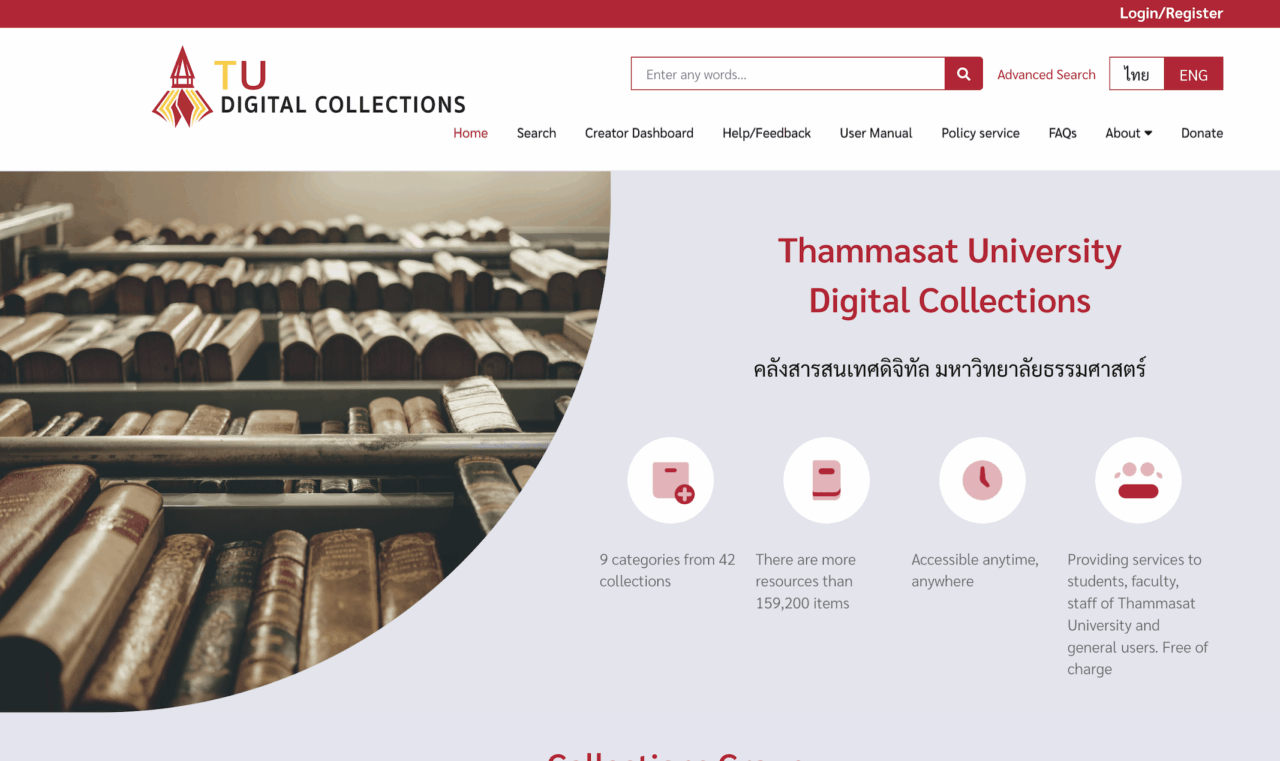
  • TU Digital Collections: Delve into a vast online library containing over 157,000 items, including rare manuscripts, archival documents, theses, and cutting-edge research. This invaluable primary source is freely available to academics, students, and history enthusiasts alike. [Access Digital Collections]
  • Online Seminars and Public Lectures: Missed a fascinating lecture? Faculties and institutes regularly publish recordings and materials from academic events, allowing you to learn directly from leading experts at your convenience, free of charge.

These initiatives underscore Thammasat University’s unwavering dedication to dismantling barriers to education. We are committed to ensuring that the wealth of knowledge cultivated within our walls serves as a powerful resource for the enrichment and progress of all Thai society.

Thammasat University’s Comprehensive Process for Carbon Management and Emission Reduction

HIGHLIGHTS

  • Formal Carbon Accounting Process: Initiated in 2024, Thammasat established a Carbon Credit Program integrating solar, waste, and tree planting, formally registered with the TGO (LESS), demonstrating a structured process for carbon management.
  • Active Emission Reduction Initiatives: The university actively reduces CO2 through the long-standing Solar Rooftop project (expanded to 6.28 MW, cutting >21,000 tons CO2 annually) and the ongoing “Zero Waste to Landfill”campaign (active in 2024) which reduces landfill emissions through source separation and diversion.
  • Strategic Framework & Oversight: A university-wide “Carbon Neutrality by 2050” strategy exists, supported by a dedicated Taskforce (established by 2024/2025) indicating a managed process.

Thammasat University is intensifying its commitment to environmental stewardship through a dynamic and expanding process for managing carbon footprints and reducing greenhouse gas (GHG) emissions. Focusing on recent advancements while leveraging long-standing efforts, the university is driving progress towards its sustainability goals and supporting Thailand’s national climate objectives, including carbon neutrality by 2050.

Recent Strides in Carbon Management

In recent years, Thammasat has launched significant initiatives to bolster its carbon reduction process:

  • Formal Carbon Accounting: A key development in 2024 was the initiation of a pilot program by the Office of Asset Management and Sports to accumulate carbon credits. This formal process quantifies emission reductions from waste management, tree planting, and solar power generation. Demonstrating adherence to national standards, the program is registered under the Low Emission Support Scheme (LESS) with the Thailand Greenhouse Gas Management Organization (TGO) (View Registration Details).

  • Data-Driven Strategic Planning: Utilizing the internationally recognised GHG Protocol, recent assessments like the Lampang Campus study (evaluating 2019-2022 emissions) provide critical data. This research informs projections and reduction scenarios, such as achieving over 50% emission cuts by 2030 through expanded solar power and waste reduction, guiding future actions.

  • University-Wide Carbon Neutrality Framework: Thammasat is advancing its ambition with a university-wide strategy aiming for “Carbon Neutrality by 2050”. A dedicated “Thammasat Carbon Neutrality Taskforce” was established to drive this multi-phased plan (Green Shift, Impact Surge, Net Zero), signifying a high-level, structured commitment across the institution.

  • Enhanced Energy Partnerships: A 2025 Memorandum of Understanding (MOU) with the Metropolitan Electricity Authority (MEA) focuses on co-developing clean energy innovations, improving building energy efficiency, further reducing GHG emissions, and expanding EV infrastructure, leveraging external expertise for greater impact.

  • Strengthened Waste Reduction Efforts: The ongoing “Project Zero Waste” initiative, active through 2024, continues to tackle emissions from waste. The “Separate Before Disposing, Use the Right Bin” campaign, coupled with food waste diversion, composting, recycling, and minimising landfill contributions via a clear four-bin system, forms a crucial part of the current process.

Building on a Strong Foundation

These recent advancements are built upon Thammasat’s long-term investments in sustainability:

  • Pioneering Solar Energy: Our commitment to renewable energy is long-established. The “Solar Rooftop Energy” project at the Rangsit campus, initiated back in 2016, has consistently expanded. It now covers 44 buildings with an installed capacity of 6.28 megawatts, generating 10% of the campus’s electricity and cutting CO2 emissions by over 21,000 tons annually.
  • Early Green Mobility: For years, Thammasat has promoted sustainable transport through electric shuttle buses and shared bicycle schemes, demonstrating an early commitment to reducing transport-related emissions.

Thammasat University’s process for carbon management and emission reduction is both established and dynamic. By actively implementing new, data-driven strategies like formal carbon accounting and enhanced partnerships, while continuously expanding foundational initiatives in solar energy and sustainable transport, Thammasat reaffirms its leadership in environmental sustainability and its dedicated role as a leading green university.

Driving National Policy: Thammasat University’s Role in Crafting Thailand’s Future (2024)

HIGHLIGHTS

  • Thammasat University partners with key ministries and state agencies to translate academic research into national policy, addressing Thailand’s most urgent economic, social, and public health challenges.
  • In 2024, over 79% (320 of 404) research and consultancy projects conducted through TURAC were commissioned by government bodies, underscoring the university’s public service orientation.
  • Policy-focused studies—such as RCEP trade impact analysis (with NXPO) and blockchain for trade efficiency (with the Ministry of Commerce)—provide actionable insights for Thailand’s economic strategy and global competitiveness.
  • Collaborative projects on social legislation and public health policy, including work with the Department of Women’s Affairs and national health research agencies, strengthen evidence-based governance and social justice reform.

Thammasat University, guided by its foundational spirit of serving the public, actively partners with Thailand’s key government bodies to translate rigorous academic research into effective national policy. Our experts collaborate directly with ministries and state agencies, providing the critical analysis required to address the nation’s most pressing economic and social challenges.

These research and consultation projects are conducted by professors and researchers at Thammasat University. As reported by the Thammasat University Research and Consultancy Institute (TURAC), this work is overwhelmingly focused on public service. In 2024 alone, 320 out of 404 contracted research projects were commissioned by government agencies. These collaborations demonstrate a deep commitment to evidence-based governance, ensuring that future policies are informed by comprehensive data and expert insight.

Shaping Economic Strategy and International Trade

In an era of complex global trade, Thammasat University provides vital analysis to government policymakers.

Informing Public Health and Social Justice Legislation

The university’s expertise is also sought to navigate complex social issues and modernize public law.

  • Drafting Social Legislation: Thammasat’s legal and social science experts were commissioned by the Department of Women’s Affairs and Family Development (under the Ministry of Social Development and Human Security). The project involved a comprehensive study and the subsequent drafting of a new law concerning the prevention and resolution of prostitution, aiming to create more effective and modern legislation. [Read More: https://digital.library.tu.ac.th/tu_dc/frontend/Info/item/dc:303465]

  • Public Health Policy: To inform public health standards, our researchers conducted a comparative study on alcoholic beverage labeling measures across 10 different countries. This analysis, supported by national research funding bodies, provides a critical evidence base for Thailand to consider new control measures, balancing public health imperatives with international trade frameworks. [Read More: https://digital.library.tu.ac.th/tu_dc/frontend/Info/item/dc:315302]

Through these and many other projects, Thammasat University upholds its duty as a public intellectual partner, working hand-in-hand with the government to build a more prosperous, just, and resilient Thailand.

See more about TURAC in Annual Report 2024

Thammasat’s Property and Sports Management Office Spearheads Campus Waste Revolution with ‘Project Zero Waste’ and Community Action

HIGHLIGTS

  • University-Wide Zero Waste Strategy: Project Zero Waste drives a holistic approach to waste management, aiming for “Zero Waste to Landfill” through source separation, system design, and community participation.
  • Innovative Behaviour Change Campaigns: The “Double Digit Days” initiative successfully turns waste separation into an engaging, lifestyle-driven activity, fostering long-term environmental awareness among students and staff.
  • Proven Scalability at Major Events: Implementation during Thammasat Games 2025 demonstrated the project’s effectiveness at scale, diverting significant amounts of food and recyclable waste from landfills.
  • Next-Step Climate Action: The initiative now expands into carbon credit accumulation, integrating waste reduction, tree planting, clean energy, and real-time transparency through the Thammasat Carbonfootprint platform.

Thammasat University is accelerating its transformation into a truly sustainable university, guided by a clear vision to reduce its environmental impact and embed sustainability into everyday campus life. At the forefront of this effort is the Property and Sports Management Office (PSM), which leads the university’s flagship environmental initiative, “Project Zero Waste.”

This comprehensive programme addresses waste management through a holistic, end-to-end approach—from encouraging waste separation at the source to achieving the ambitious long-term goal of “Zero Waste to Landfill.” Rather than focusing solely on waste disposal, PSM drives behavioural change through creative engagement, systematic processes, and community-wide participation. As a result, environmental responsibility has become a shared value across the Thammasat community, including students, staff, vendors, and event organisers.

From Waste Crisis to Sustainable Goals

The urgency behind Project Zero Waste emerged from a clear and pressing reality. In 2023, Thammasat University generated an average of 250 tonnes of waste per month, reflecting the scale of operations of a large, urban university campus. PSM recognised that conventional waste management methods would no longer suffice.

In response, the university established a clear and measurable target: “Zero Waste to Landfill.” This goal shifts the focus from simply managing waste to systematically reducing the volume of waste sent to landfills, while maximising reuse, recycling, and recovery. The initiative aligns closely with global sustainability frameworks, including the circular economy concept and climate action goals, positioning Thammasat as an institution willing to confront environmental challenges head-on.

“Double Digit Days”: A Strategy for Engagement

Understanding that lasting change begins with individual behaviour, PSM designed an innovative engagement strategy under the campaign “Separate Before You Throw… Bin it Right.” The campaign reframes waste separation not as a rule or obligation, but as an accessible and engaging daily habit.

To connect sustainability with student lifestyle, PSM drew inspiration from popular online shopping sales days and introduced activities on “Double Digit Days” such as 11.11 and 12.12. This creative concept emerged from close collaboration between PSM and the TU100 (Civic Engagement) course, led by Asst. Prof. Dr Prinya Thaewanarumitkul, which integrates civic responsibility into student learning.

The campaign debuted with the “11.11 Big Pro, Green Heart” event and quickly gained momentum, evolving into a highly anticipated monthly activity. Students and staff bring 1 kilogram of recyclable waste and exchange it for essential household items. This gamified approach transformed waste separation into a positive social activity, fostering cooperation, enjoyment, and shared responsibility rather than enforcement or compliance.

Scaling Up: Waste Management at “Thammasat Games 2025” 

The principles of “Separate Before You Throw” were put to the ultimate test during a mega-event: the “Thammasat Games 2025,” held earlier this year from 9–18 January 2025.

Managing waste for a major sporting event is a logistical challenge. PSM implemented a comprehensive waste management system covering 14 sports stadiums, market zones, and food service points.

Post-event data processing was rigorous. After the competitions ended each day, waste was immediately sorted and processed systematically. The results from the 10-day event provided clear, measurable data:

  • Food Waste: 2,790 kg (Diverted from landfill and sent for animal feed production).
  • Recyclable Waste: 2,045 kg (Sent to recycling facilities).
  • General Waste: 55,952 kg (Sent to sorting plants for proper disposal).

This success proves that Project Zero Waste is scalable. Whether it is daily campus life or a national-level sports event, the system works when managed effectively.

The Next Step: Carbon Credit Initiative 

The Property and Sports Management Office is not stopping at waste. It is now steering the university towards a Carbon Credit Accumulation Project.

This advanced phase integrates waste management with tree planting initiatives and the transition to clean energy. The aim is to systematically reduce Greenhouse Gas (GHG) emissions. In the spirit of transparency, the university has launched the Thammasat Carbonfootprint website, allowing the community to track and audit the university’s environmental data in real-time.

Cultivating a Culture of Sustainability 

Project Zero Waste has proven that solving environmental problems starts with small, individual actions that ripple out to create massive change. By fostering cooperation across the entire community, Thammasat University is ready to stand as a model educational institution that is genuinely committed to the planet.

Unlocking Mental Well-being with ‘TUHEART by TUH Psychiatry’: Your 24/7 AI Companion for Mental Health Screening and Initial Consultation

HIGHLIGHTS

  • 24/7 AI Mental Health Support: TUHEART is an always-on AI chatbot integrated with LINE, providing private, immediate mental health assistance anytime, without barriers or waiting times.
  • Intelligent Screening & Self-Care Guidance: The platform screens for stress, depression, anxiety, and insomnia, while offering practical self-management advice to help users take the first step toward better mental well-being.
  • Trusted Medical–Technology Collaboration: Developed through a cross-disciplinary partnership between psychiatry and engineering at Thammasat University, with collaboration from Mahidol University and Siriraj Hospital, ensuring medical reliability and technical excellence.
  • Inclusive, Free, and Confidential Access: Available at no cost to healthcare workers, the university community, and the general public, TUHEART expands equitable access to mental health support beyond campus boundaries.

In the midst of the digital age, while we are more connected than ever, many still face a silent struggle with their mental health. The challenge often lies in finding a dependable support system that is both easily accessible and strictly private.

Recognising this urgent need, Thammasat University Hospital (TUH) has leveraged technology to bridge the gap. Introducing “TUHEART,” an innovative AI-Chatbot developed by the Department of Psychiatry, Faculty of Medicine, designed to be a constant companion and a primary aid for anyone seeking to care for their mind.

‘TUHEART’: The Digital Companion That Never Sleeps 

TUHEART is not just software; it is a smart AI-Chatbotintegrated seamlessly into the LINE application, the most widely used communication platform in Thailand.

  • 24/7 Availability: Mental health crises do not keep office hours. TUHEART provides automated responses around the clock, ensuring that help is available whenever it is needed most.
  • Intelligent Screening: It functions as a digital frontline assessment tool. The bot is programmed to screen for common mental health issues such as Chronic Stress, Depression, Generalised Anxiety, and Insomnia.
  • Actionable Advice: Beyond screening, it offers initial consultation and practical self-management advice, empowering users to understand their emotions and take the first steps towards healing in a private, stigma-free environment.

Innovation Born from Cross-Disciplinary Collaboration

The strength of TUHEART lies in its foundation of expertise. It is the product of a powerful synergy between medicine and engineering. This innovation was co-created by the Psychiatry Clinic at Thammasat University Hospital and the Faculty of Engineering at Thammasat University. Furthermore, it represents a significant cross-institutional collaboration, incorporating knowledge and networks from Mahidol University and the Faculty of Medicine Siriraj Hospital. This ensures that every line of code and every word of advice is backed by rigorous medical and technical standards.

Designed for Inclusivity: A Tool for ‘Everyone’ 

While TUHEART has been in service for some time, its core mission remains steadfast: to democratise access to mental health care. The platform is meticulously designed to serve three key groups without discrimination:

  1. Medical Personnel: Supporting the mental resilience of the doctors and nurses at Thammasat University Hospital who dedicate their lives to saving others.
  2. University Community: Acting as a safety net for the students and staff of Thammasat University, helping them navigate academic and professional pressures.
  3. The General Public: Crucially, this service extends beyond the campus walls. It is a testament to the university’s commitment to society, ensuring that every citizen has a digital avenue to seek help.

Accessible, Free, and Private 

Thammasat University stands firm on the principle that mental health support is a right, not a privilege. Therefore, financial constraints should never be a barrier to care.

TUHEART is completely FREE to use. With a simple scan of a QR Code via the LINE application, users can instantly initiate a conversation with a digital friend who is ready to listen and understand.

A Commitment to Sustainable Quality of Life 

The existence of TUHEART is a clear proof point that Thammasat University aims for more than just academic excellence. We are dedicated to creating innovations that elevate the quality of life and serve as a pillar of support for the people. We believe that a healthy society starts with a healthy mind.

“Because your heart matters, TUHEART is always by your side.”

Thammasat University Promotes Labour Rights and Employee Participation: Building a Listening Culture through the Official “University Staff Council”

HIGHLIGHTS

  • Formal Mechanism for Employee Representation: Thammasat University ensures the freedom of association through the official establishment of the University Staff Council — a democratically elected body representing support staff, serving as a bridge between employees and management.
  • Promoting Dialogue and Fair Employment: The Staff Council plays a vital role in fostering constructive dialogue, offering policy recommendations, and safeguarding fairness in employment practices across all university units.
  • Equal Labour Rights for All: Thammasat upholds equal rights and non-discrimination for all staff — ensuring gender equality and guaranteeing that international employees receive the same welfare and benefits as Thai staff under University regulations.
  • Building a Culture of Listening and Inclusion: Through its commitment to participatory governance and respect for labour rights, Thammasat University strengthens a culture of listening, fairness, and shared responsibility — laying the foundation for a sustainable and inclusive academic community.

เลือก Page 2 เพื่ออ่านเป็นภาษาไทย

Thammasat University believes that its people are the driving force behind its pursuit of excellence. Guided by this conviction, the University places the highest importance on promoting the freedom of association and ensuring that every employee’s voice is heard through formal and transparent mechanisms. While the University’s approach may differ from traditional “labour union” models, it has established the University Staff Council as an official employee representative body under University regulations. This council serves as a bridge between employees and management, fostering constructive dialogue and ensuring fairness in employment practices across the institution.

A Foundation of Respect for International Labour Rights

Thammasat’s employment policies are grounded in the recognition and respect of international labour rights. The University is committed to cultivating an organisational culture in which all personnel are treated fairly and can meaningfully participate in institutional decision-making. This includes upholding the freedom of association and the right to collective consultation through official representation mechanisms, ensuring that the voices of all staff—regardless of gender or nationality—are heard and integrated into the University’s sustainable development process.

The University Staff Council: A Guarantee of Participatory Rights

Thammasat University provides a tangible guarantee of employees’ freedom of association through the establishment of the University Staff Council—a democratically elected representative body for support staff. This process not only enables staff to elect their own representatives but also empowers those representatives to act as the collective voice of employees.

  • A channel for consultation and dialogue with management
    The Staff Council plays a vital role in advising and providing policy recommendations to senior management. This process represents a powerful form of “collective consultation”, allowing employee representatives to influence decisions related to workplace policies and conditions.
  • Protecting rights and fairness
    The Council has a key mandate to safeguard the rights and welfare of all employees in accordance with laws and University regulations.

Equal Labour Rights for All

The principle that labour rights must extend to every member of staff lies at the heart of Thammasat’s policy framework. The University ensures equal treatment and non-discrimination through clear and formal guarantees.

  • For Women
    Thammasat promotes gender equality across all dimensions of employment. Female staff have equal opportunities for career advancement, leadership, and representation within the Staff Council.
  • For International Staff
    Equality in rights and benefits for international employees is formally enshrined in the Thammasat University Regulation on the Employment of Foreign University Staff, B.E. 2560 (2017).
    Clause 14 explicitly states that:
    “Foreign university staff shall be entitled to the same welfare and benefits as prescribed in Clause 40 of the Thammasat University Regulation on the Personnel Administration of University Staff, B.E. 2559 (2016).”
    This regulation provides a legally binding guarantee that international staff receive the same entitlements and benefits as their Thai counterparts, affirming that nationality is no barrier to fair and equal treatment at Thammasat University.

A Culture of Fairness, Inclusion, and Mutual Respect

Thammasat University is committed to building a community in which every employee has the right to be heard and is treated fairly and equally. This commitment rests on two key pillars:

  1. Freedom of association, through a democratically elected Staff Council that represents employee voices; and
  2. Equal rights and fair treatment, formally guaranteed through written University regulations that cover all categories of personnel.

These pillars form the foundation of a culture of listening, respect, and participation—essential to nurturing a sustainable and inclusive Thammasat community for the future.

Unlocking the Doors to Knowledge: Thammasat Public Library Offers Free, Equal Access for All

True to its founding spirit as the “University for the People,” Thammasat University continues to translate its guiding philosophy into meaningful action. Since 1 July 2020, the Thammasat University Public Library at the Rangsit Centre has officially opened its doors to the general public, extending access to academic resources beyond the university community.

This initiative stands as a key pillar of the university’s Social Responsibility mission. Thammasat affirms that a modern university must serve not only as a centre of academic excellence, but also as a public institution that actively contributes knowledge, opportunity, and social value to the wider community.

More Than Just Books: A Sanctuary of Opportunity

The Thammasat University Public Library is far more than a traditional book collection. The university has intentionally designed the space as a “Space of Opportunity”—a shared learning environment that empowers individuals and communities through open access to knowledge.

In an era where educational resources often carry financial and institutional barriers, Thammasat takes a different approach. The university removes those obstacles entirely by offering the library’s services free of charge to the public. This commitment reflects a deep belief that knowledge should not be limited by economic status, academic affiliation, or social background.

Accessible, Simple, and Open to Everyone

The heart of this library is equality. We have stripped away complex membership processes to ensure that accessing knowledge is as easy as walking through the door.

Location: 2nd Floor, Puey Ungphakorn Centenary Hall (Puey Park for Learning) Thammasat University, Rangsit Centre
Service Fee: FREE for the general public.
Opening Hours: Monday – Friday: 08:30 – 16:00 (Closed on public holidays and national holidays)
How to Access: Access is simple and convenient. Visitors only need to present one form of identification to the staff at the entrance:

  • National ID Card (for Thai citizens)
  • Passport (for International visitors)

This simplified entry process reflects our clear intention: to welcome and facilitate every citizen without bureaucracy.

A Hub for Lifelong Learning

The establishment of the Public Library at the Rangsit Centre marks a significant expansion of Thammasat’s academic services to the wider society.

It does not matter who you are—a student from another institution, a resident living in the neighbourhood, or simply a lifelong learner seeking inspiration—this space is yours. It is a quiet, inspiring environment perfect for reading, researching, or reviewing knowledge.

Investing in the Future 

This project goes beyond promoting a culture of reading; it is a sustainable investment in the country’s Human Capital. By providing free access to information, we are laying the foundation for social development in every dimension.

Thammasat University stands firm on the principle that “Education must be accessible to all.” The operation of the Thammasat University Public Library is the clearest proof of that resolve—transforming a vision into a practical reality that yields real benefits for society.

Thammasat University Drives Industrial Energy Efficiency and Net Zero Goals Through Direct Support

HIGHLIGHTS

  • Driving Industrial Decarbonisation: Thammasat University’s Centre of Excellence in Eco-Energy (CEEE) delivers direct technical services and consultancy to help Thai industries enhance energy efficiency and meet ambitious Net Zero goals.
  • Strategic Collaboration with TGO: In partnership with the Thailand Greenhouse Gas Management Organisation, CEEE provides hands-on workshops and capacity-building programmes for local industries and entrepreneurs.
  • EEC Project for Carbon Management: CEEE leads training in Rayong, Chonburi, and Chachoengsao under the Eastern Economic Corridor initiative, enabling factories to use the national CFO Platform for accurate carbon footprint assessment.
  • Flexible Support Model: Thammasat combines free national initiatives with paid professional training courses, such as certified Carbon Footprint of Organisation (CFO) programmes, making expert guidance accessible across all sectors.

The Centre of Excellence in Eco-Energy (CEEE) at Thammasat University’s Faculty of Engineering is actively providing direct services to Thailand’s industrial sector, helping companies improve energy management and achieve ambitious decarbonisation targets.

CEEE acts as a key project manager and expert consultant for crucial national initiatives. In close collaboration with the Thailand Greenhouse Gas Management Organisation (TGO), the Centre provides technical services and capacity-building workshops aimed directly at local industry and entrepreneurs.

One major initiative involves managing a project to enhance the capabilities of industrial plants within the Eastern Economic Corridor (EEC). This direct support focuses on training operators in the Rayong, Chonburi, and Chachoengsao provinces to use the national “CFO Platform.” This service enables companies to assess their carbon footprint accurately and implement effective greenhouse gas management strategies.

The ultimate goal of this expert support is to guide businesses in setting Science Based Targets (SBT) and developing clear pathways toward Net Zero. This process is intrinsically linked to improving energy efficiency and identifying opportunities for adopting cleaner energy alternatives.

Beyond these sponsored projects, CEEE offers its expertise through commercially available, in-depth training programmes. For instance, specialised courses on calculating the ‘Carbon Footprint of Organization (CFO)’ are offered to professionals seeking certified skills. In these fee-based programmespersonnel from Thammasat University serve as the primary instructors, delivering expert-led training (as detailed at Carbon Footprint for Organization: CFO) for organisations investing in their sustainability capabilities.

This hybrid approach demonstrates Thammasat’s flexible commitment. While many large-scale initiatives are provided free of charge to participating companies, CEEE also provides specialised, paid-for courses, ensuring that direct services are accessible to all parts of local industry driving the Net Zero transition.

Thammasat University Drives Global Sustainability Dialogue and Best Practice Development in 2024

HIGHLIGHTS

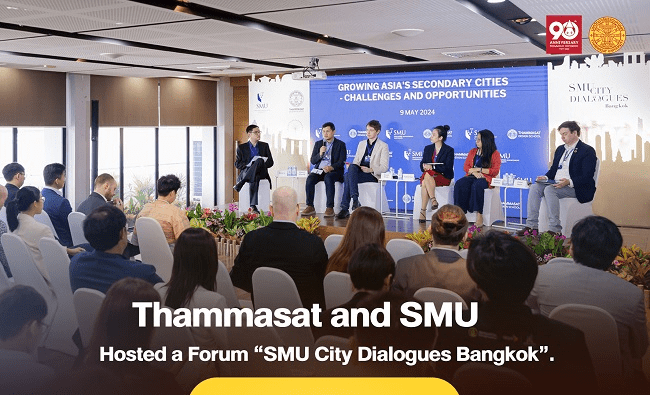
  • Co-hosted the “SMU City Dialogues Bangkok” with Singapore Management University to review comparative approaches and share lessons learned on secondary city development in Southeast Asia, promoting sustainable urban policy innovation.
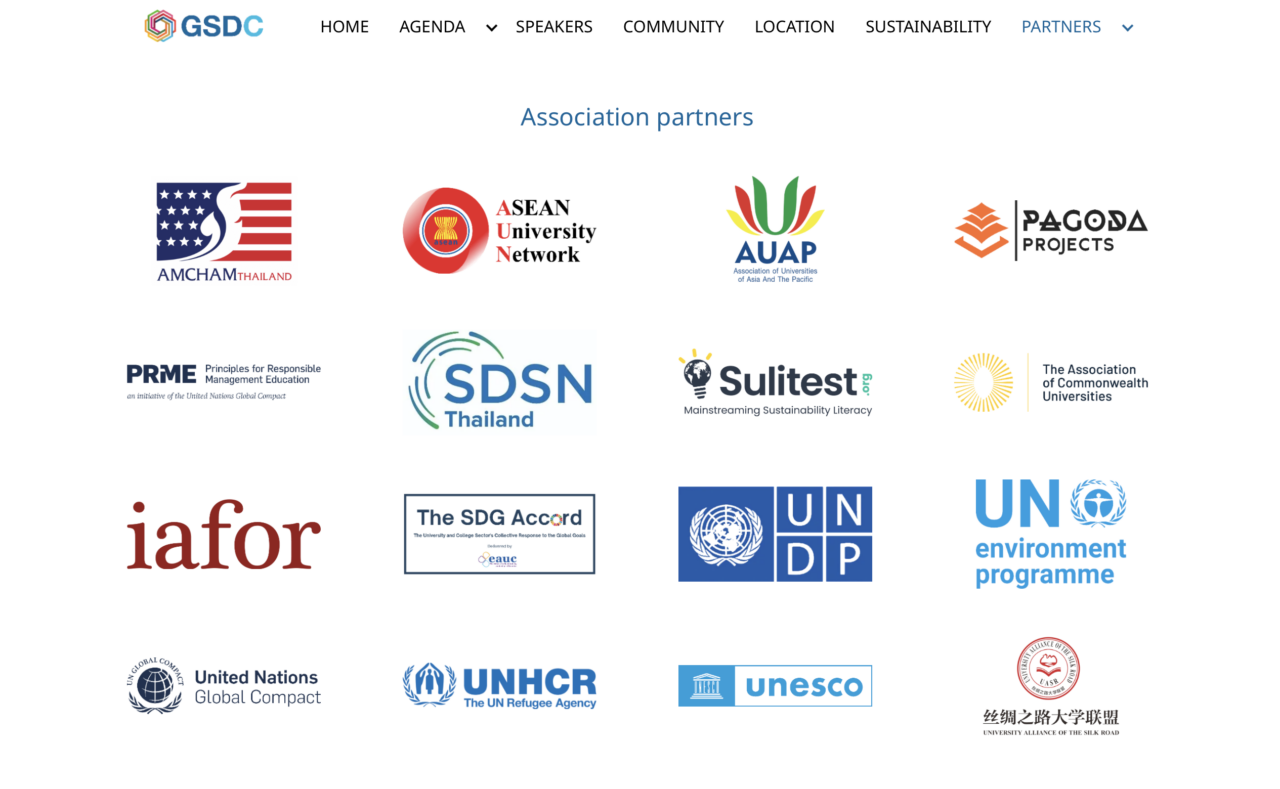
  • Served as an Association Partner for the Times Higher Education (THE) Global Sustainable Development Congress 2024, advancing global dialogue on sustainability research and the role of higher education in achieving the SDGs.
  • Participated in the 15th International Academic Consortium of Sustainable Cities Conference in Manila to exchange research findings and collaboratively develop international best practices for building resilient and sustainable urban environments.

Thammasat University demonstrated its deep commitment to tackling the SDGs throughout 2024 by leading and participating in high-level international collaboration and research forums aimed at developing sustainable solutions.

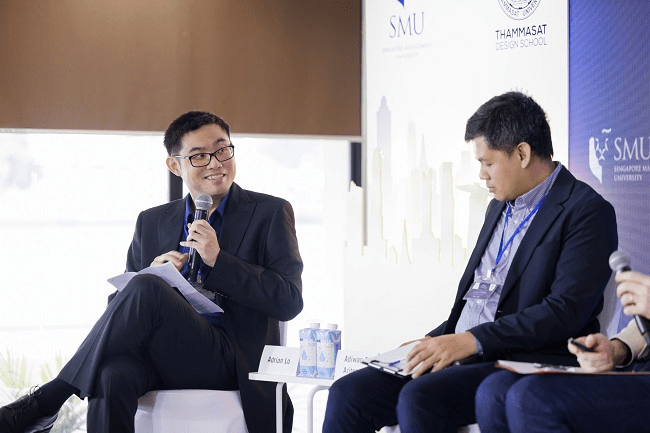
On 9 May 2024, Thammasat University (TU) co-hosted the “SMU City Dialogues Bangkok” with Singapore Management University (SMU). This forum convened leaders from industry, government, and academia to review comparative approaches and explore lessons learned regarding the development of secondary cities in Southeast Asia. The dialogue was aimed at advancing innovative solutions and influencing policy for sustainable urban growth.

Read more: https://tu.ac.th/en/thammasat-160567-tds-smu-city-dialogues-growing-asias-secondary-cities

In its capacity as SDSN Thailand, co-hosted by the Centre for SDG Research and Support (SDG Move), Thammasat University, also served as a key Association Partner for the Times Higher Education (THE) Global Sustainable Development Congress 2024, held in Bangkok from 10 to 13 June 2024. This major congress brought together global experts and innovators to share solutions and emphasize the role of higher education in research and development, fostering a global consensus on sustainability strategies.

Furthering this commitment, the university participated in the 15th International Academic Consortium of Sustainable Cities Conference in Manila, Philippines. This consortium, co-hosted by institutions from the Philippines, Japan, and Indonesia, operated under the theme “Sustainable and Resilient Future Cities through Research and Innovation.”

The conference served as a vital platform to review comparative approaches based on new research findings in public health, environmental health, and urban planning. Through dedicated plenary sessions, experts engaged in a critical exchange of ideas aimed at helping to develop international best practice for creating resilient and sustainable urban environments.

Thammasat University’s participation in these forums highlights its dedication to fostering global partnerships and utilizing research to address the world’s most pressing sustainability challenges.