
Thammasat University, Lampang Campus, Holds Seminar on “Law for the Voiceless” to Advance Animal Welfare Protection

HIGHLIGHTS

  • Academic Seminar on Animal Welfare Law: Thammasat University, Lampang Campus, organized a seminar titled “100 Years of World Animal Day: Welfare Law for the Voiceless” on 20 October 2025, focusing on legal protections for animals.
  • Interdisciplinary Expert Insights: Speakers included legal and veterinary experts—Asst. Prof. Dr. Lalin Kowuttikulrungsri, Dr. Thanaporn Iamsa-ard (D.V.M.), and Ms. Yossuda Raicharoen—with the session moderated by Assoc. Prof. Dr. Chalermwut Sriprom.
  • Promoting Awareness and Legal Mechanisms: The seminar aimed to raise public awareness, exchange academic perspectives, and encourage development of laws that ensure humane treatment and welfare of animals.
  • Commitment to Sustainable and Ethical Society: The event marked the 100th Anniversary of World Animal Day and reaffirmed Thammasat University’s dedication to advancing knowledge and fostering societal respect, fairness, and compassion for all living beings.

เลือก Page 2 เพื่ออ่านเป็นภาษาไทย

On 20 October 2025, the Faculty of Law, Thammasat University, Lampang Campus, organised an academic seminar titled “100 Years of World Animal Day: Welfare Law for the Voiceless” at the Sirindhararat Building, Thammasat University, Lampang Campus.

The seminar focused on the crucial dimensions of building a just and sustainable society — one that extends protection and care to all living beings. It aimed to raise public awareness, exchange academic perspectives, and encourage the development of legal mechanisms that promote humane treatment and ensure the welfare of animals.

Distinguished speakers from both the legal and veterinary fields shared their insights, including:

  • Asst. Prof. Dr. Lalin Kovudhikulrungsri, Faculty of Law, Thammasat University
  • Dr. Thanaporn Iamsa-ard (D.V.M.), Faculty of Veterinary Medicine, Chiang Mai University
  • Ms. Yossuda Raicharoen, Faculty of Law, Thammasat University
    The session was moderated by Assoc. Prof. Dr. Chalermwut Sriprom, Faculty of Law, Thammasat University.

Beyond commemorating the 100th Anniversary of World Animal Day, the event reaffirmed Thammasat University’s commitment to advancing knowledge and raising societal awareness on sustainable development issues — ensuring that all forms of life are treated with fairness, dignity, and compassion.

Watch the seminar recording in the video below.

Thammasat University Promotes Inclusion through Support Systems for Students with Disabilities

HIGHLIGHTS

  • Inclusive Education in Action: Thammasat University ensures equal access to quality education for students with disabilities through dedicated academic and learning support provided by the Disabled Student Services (DSS).
  • Accessible Campus Infrastructure: Dormitories, classrooms, libraries, and public spaces across the Rangsit Campus have been renovated to meet universal design standards — featuring ramps, lifts, Braille blocks, and wheelchair-accessible facilities.
  • Comprehensive Health and Well-being Support: The University provides holistic care through mental health services, health and well-being centres, and inclusive fitness spaces that encourage active lifestyles for all.
  • Fostering a Culture of Inclusion: Through academic support, infrastructure, and community engagement, Thammasat University strengthens its commitment to creating an inclusive learning environment where everyone can thrive with dignity.

เลือก Page 2 เพื่ออ่านเป็นภาษาไทย

Creating an inclusive environment for all is a crucial component of achieving the Sustainable Development Goals (SDGs), particularly SDG 4: Quality Education and SDG 10: Reduced Inequalities.

Thammasat University recognises this importance and has continually strengthened its support systems and infrastructure to ensure that students with disabilities can access education and campus life on an equal basis with others.

This effort was featured in the “10 Universities for Students with Disabilities” review project by the online programme “Dek Pikan Rien Nai Dee” (“Where Should Students with Disabilities Study?”). The programme is supported by the Safe and Creative Media Development Fund, organised by the Duang Prateep Foundation for People with Disabilities and Society, in collaboration with Alamax Co., Ltd.

The feature highlighted Thammasat University’s multidimensional approach to supporting students with disabilities, as outlined below.

1. Academic Support

The Disabled Student Services (DSS) serves as the main unit providing assistance throughout the admission process, enabling students with various types of disabilities to enrol in over 20 faculties and programmes (at the Rangsit Campus).
DSS also offers a range of learning support facilities, including:

  • A computer room equipped with screen reader software, enabling students to access documents and online information.
  • Loan services for educational equipment such as iPads, voice recorders, walking canes, and wheelchairs.

2. Accessible Infrastructure and Facilities

The University has continually improved its physical infrastructure to ensure accessibility across residential, learning, and public spaces. Examples include:

  • Student dormitories (such as Dormitories C8 and F) featuring dedicated zones for students with disabilities, equipped with ramps, lifts, facial recognition security systems, and in-room amenities such as grab bars and SOS emergency call systems.
  • Campus shuttle buses that accommodate wheelchairs, pedestrian paths with Braille blocks, and audible traffic signals at crossings.
  • Accessible academic and service buildings, such as SC1 Building, Puey Ungphakorn Library, and the Green Canteen, all of which include ramps and tables designed for wheelchair users.

3. Health and Well-being Support

Beyond learning and physical accessibility, the University also prioritises the health and social well-being of students with disabilities.

  • Viva City Centre offers mental health services, while the TU Well-being Centre (SC1 Building) provides health consultations and first aid.
  • Sports and recreation areas, including fitness centres and Gym 7 (outdoor zone), have been designed for easy access with ramps and open spaces.
  • The Friends of Dome Club organises volunteer camps and inclusive activities, encouraging meaningful participation of students with disabilities alongside their peers.

Towards an Inclusive Learning Community

Through comprehensive support in academics, infrastructure, and well-being, Thammasat University reaffirms its commitment to fostering an inclusive and equitable learning environment — one where everyone can learn, grow, and live together with dignity and happiness.

Thammasat Launches Inaugural “TU ESG NEXT” Programme: Forging a New Generation of Leaders to Drive Sustainable Business

HIGHLIGHTS

  • Flagship Executive ESG Programme: TU ESG NEXT (Class 1) equips senior leaders with the strategic insight and practical tools needed to embed ESG principles into organisational growth and decision-making.
  • Practice-Driven Learning Approach: The programme emphasises Action Learning, real-world case studies, and exclusive study visits to leading sustainability-driven organisations in Thailand and abroad.
  • Distinguished National Thought Leaders: Participants gain first-hand insights from top figures in governance, finance, and business, including the Governor of Bangkok, senior SET executives, and leading corporate leaders.
  • Cross-Sector Leadership Network: Designed for executives from the public sector, private enterprises, and NGOs, the programme builds a powerful network of sustainability leaders driving long-term impact.

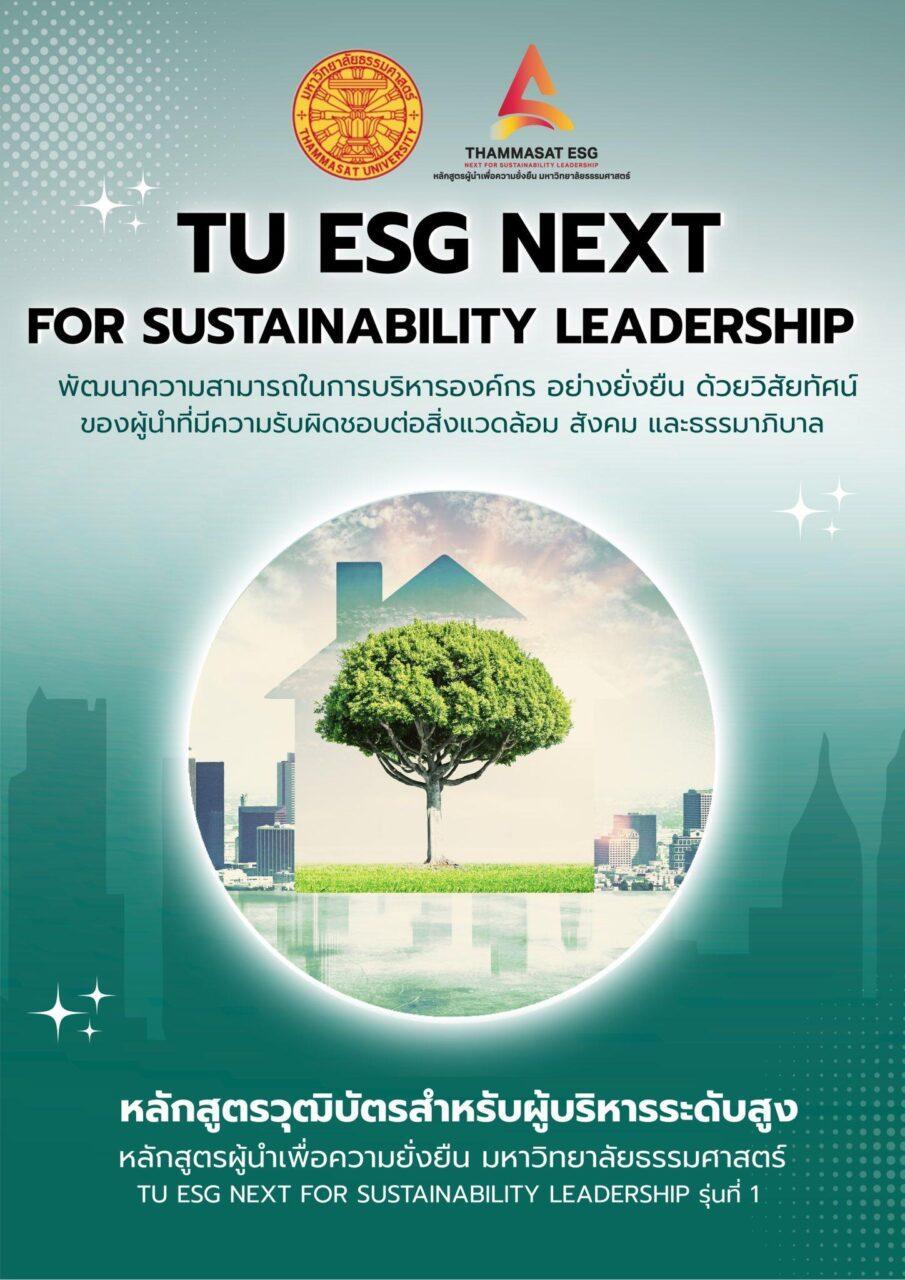
Thammasat University, through the Institute for Continuing Education and Human Resources (ICEHR), proudly launches its flagship executive programme, “TU ESG NEXT FOR SUSTAINABILITY LEADERSHIP” (Class 1). This programme marks a significant step in the University’s ongoing commitment to advancing sustainable development and responsible leadership across Thailand’s public, private, and civil society sectors.

The programme responds directly to the growing global demand for leaders who can navigate complex economic challenges while embedding sustainability at the core of organisational strategy. As Environmental, Social, and Governance (ESG) principles increasingly shape investment decisions, regulatory frameworks, and stakeholder expectations, organisations require leaders who understand sustainability not as a compliance requirement, but as a strategic driver of long-term value.

Cultivating Leaders for Sustainable Growth

TU ESG NEXT FOR SUSTAINABILITY LEADERSHIP is meticulously designed to cultivate a new generation of organisational leaders—visionaries who combine strategic foresight with ethical responsibility. The programme equips executives with the knowledge, skills, and mindset required to balance business growth with environmental stewardship, social responsibility, and sound corporate governance.

Participants develop a deep understanding of ESG frameworks and learn how to translate these principles into actionable strategies that strengthen organisational resilience, enhance stakeholder trust, and support sustainable competitiveness in an increasingly volatile global environment.

Designed for Real-World Application

The curriculum moves decisively beyond theory and academic abstraction. ICEHR structures the programme around real-world application, ensuring that participants can immediately apply their learning within their own organisations.

Key areas of study include:

  • Core principles and global standards of ESG
  • Sustainability leadership and decision-making in complex environments
  • Integrating ESG into corporate strategy, risk management, and performance measurement
  • ESG data, disclosure, and transparent communication with stakeholders
  • Emerging ESG trends and challenges at both national and international levels

A central feature of the programme is Action Learning, which enables participants to work on practical assignments, case studies, and real organisational challenges. In addition, the programme offers exclusive study visits to leading organisations at the forefront of sustainability innovation, both in Thailand and overseas. These visits allow participants to observe best practices firsthand and engage directly with sustainability practitioners and senior executives.

Learn from the Nation’s Best 

Participants benefit from direct engagement with Thammasat University’s expert faculty alongside a distinguished lineup of Thailand’s most influential thought leaders and practitioners in sustainability, governance, and economic development.

Confirmed speakers include:

  • Mr Chadchart Sittipunt, Governor of Bangkok
  • Dr Soraphol Tulayasathien, Senior Executive Vice President, The Stock Exchange of Thailand
  • Mr Pichai Chirathivat, Executive Director, Central Group

Through lectures, dialogue sessions, and experience sharing, these leaders offer invaluable insights into how ESG principles translate into real policy decisions, corporate strategies, and large-scale organisational transformation.

Programme Schedule:

  • Duration: 20 November 2025 – 18 March 2026
  • Time: Every Wednesday, 13:00 – 18:00
  • Venue: Asawin Grand Convention Hotel, Vibhavadi Rangsit Road, Bangkok

Final Call for Applications

Applications for TU ESG NEXT FOR SUSTAINABILITY LEADERSHIP (TEN1) close on 31 October 2025.

The programme invites senior executives and emerging leaders from the public sector, private enterprises, state-owned organisations, and non-governmental organisations who are ready to play an active role in shaping a more sustainable future.

If you are an executive seeking to steer your organisation beyond short-term success toward long-term, responsible growth, TU ESG NEXT offers a unique platform to learn, connect, and lead with purpose.

Apply Now: https://docs.google.com/forms/d/e/1FAIpQLSdELzLgbCd…/viewform

Contact Us:

  • Line: @tuesgnext
  • Facebook: TU ESG NEXT
  • Tel: 093-756-8318 (Public Relations Department)

Thammasat University Affirms Commitment to Energy Conservation with University-Wide Policy and Measures

HIGHLIGHTS

  • Formal Plan Exists (by 2024): Thammasat established a formal “Energy Conservation Policy” dated August 26, 2024, meeting the requirement for a plan to be in place. 
  • Goal to Reduce Consumption: The 2024 Policy explicitly commits the university to “improve energy efficiency” and operate sustainably, implicitly aiming to reduce overall energy consumption. 
  • Specific Reduction Measures Implemented: The policy is supported by detailed, long-standing “Energy Saving Measures” (e.g., specified operating hours for AC and lifts, rules for lighting and office equipment) demonstrating practical steps taken to reduce consumption. 
  • Policy & Practice Alignment: The combination of the formal 2024 Policy and the detailed 2013 Measures document provides evidence of both a strategic plan and its operational implementation aimed at energy reduction.

Thammasat University reinforces its dedication to sustainability and responsible resource management by formalizing its Energy Conservation Policy, announced on August 26, 2024. This policy aligns with Thailand’s Energy Conservation Promotion Act B.E. 2535 (amended B.E. 2550) and establishes a clear framework for enhancing energy efficiency across all university operations.

01-นโยบายอนุรักษ์พลังงาน

A University-Wide Commitment

The policy underscores that energy conservation is an integral part of Thammasat’s mission. It mandates continuous improvement in energy efficiency suitable for the specific needs of university buildings and emphasizes that compliance with relevant energy laws is the responsibility of all administrators, staff, and students. The university commits to allocating necessary resources, including budget and personnel, to achieve these goals effectively and will monitor and report on energy management progress annually.

Practical Measures for Energy Saving

This formal policy builds upon long-standing practical measures already implemented, particularly at the Rangsit Campus as outlined in 2013, demonstrating a consistent effort towards reducing energy consumption. These ongoing measures include:

  • Air Conditioning Management: Setting specific operating hours (e.g., 09:00-12:00, 13:00-16:30), maintaining thermostat settings at 26 degrees Celsius, shutting down systems during unoccupied periods, and encouraging fan use during off-hours.
  • Lighting Efficiency: Mandating the switching off of lights during lunch breaks, after work hours, or when rooms are unoccupied, including restrooms.
  • Lift Optimisation: Implementing schedules to reduce the number of active lifts during off-peak hours and weekends/holidays, designating specific lifts for cargo, and restricting stops at the second floor to encourage stair use.
  • Office Equipment Practices: Encouraging staff to turn off and unplug office equipment after work, switch off monitors during breaks, and utilize computer power-saving modes.
  • Monitoring: Encouraging faculties and units to install electricity meters to track their energy usage.

Through the combination of this clear university-wide policy and established practical measures, Thammasat University reaffirms its commitment to efficient energy use, cost reduction, and contributing to a sustainable future.

2.-Policy-on-Energy-Conservation-and-Management-Measures

Thammasat University Announcement on Lifelong Learning Policy B.E. 2568 (2025)

Thammasat University Announcement

RE: Lifelong Learning Policy B.E. 2568 (2025)

In accordance with the aspiration of Professor Dr. Puey Ungphakorn, who founded Thammasat University as a “Open University” to provide equal educational opportunities to the public, amidst the rapidly changing world, Lifelong Learning is a critical key to developing the potential of individuals and creating a sustainable society. This directly aligns with the United Nations’ Sustainable Development Goal (SDG) 4, which aims to ensure inclusive and equitable quality education and promote lifelong learning opportunities for all.

Therefore, to carry on the spirit of being a “University for the People” and to drive the University’s strategy of becoming a “Leading Comprehensive University for Future Societies,” this announcement on the Lifelong Learning Policy is issued. It serves as a framework for expanding educational opportunities, reducing inequality, and creating a learning ecosystem that is truly accessible to everyone.

By virtue of Section 39 (1) of the Thammasat University Act B.E. 2558 (2015), the following announcement is made:

Clause 1 This Announcement shall be called the “Thammasat University Announcement Re: Lifelong Learning Policy B.E. 2568 (2025)”.

Clause 2 This Announcement shall come into force on the day following the date of its publication.

Clause 3 In this Announcement:

  • “Lifelong Learning” means the provision of education in the formal, non-formal, and informal systems, blended in diverse ways, to enable individuals to continuously develop the knowledge, skills, and competencies necessary for work and life throughout their lives.
  • “Learner” means the general public, current students, alumni, and University personnel who have registered as learners in the University’s lifelong learning system.
  • “Credit Bank” means a centralized registration system for accumulating learners’ learning outcomes and credits from participating in various courses or subjects, for the purpose of credit transfer toward a degree program, or for professional competency certification.

Clause 4 Principles and Intent

Thammasat University’s intent is to be a leading learning resource that provides accessible and equitable educational opportunities for everyone. The University adheres to the principles of democracy and equality, without discrimination based on race, religion, gender identity, origin, socioeconomic status, or physical disability.

Clause 5 Policies and Implementation Guidelines

(1) The University shall promote access to diverse bodies of knowledge by developing Short Courses, courses for Upskilling and Reskilling, including the development of online course content in the form of learning courses and short-term competency certification (Micro-credentials) through the University’s digital learning platform, to ensure learners can access them anytime, anywhere. (2) The University shall develop a flexible learning system, allowing learners to manage their learning according to their potential and needs, and shall provide a Credit Bank system to enable learners to accumulate learning outcomes throughout their lives, which can be used for credit transfer toward the University’s degree programs, in accordance with related regulations. (3) The University shall encourage all administrative units to integrate the concept of lifelong learning with their core missions, including teaching, research, and academic service, to create a robust and sustainable learning ecosystem. (4) The University shall expand its network of cooperation with various sectors—public, private, and community—to jointly develop curricula and organize learning activities that respond to the needs of society and the country’s labor market. (5) The University shall promote access to its educational resources for learners in the lifelong learning system, such as libraries, online databases, and various academic services, in accordance with the regulations prescribed by the University.

Clause 6 The President shall be responsible for the execution of this Announcement and shall have the authority to issue additional rules, regulations, or announcements of guidelines that are not contrary to or inconsistent with this Announcement.

Announced on October 15, B.E. 2568 (2025).

(Prof. Dr. Supasawad Chardchawarn) Rector of Thammasat University

Thammasat University Announcement on Fair and Good Governance Employment Policy B.E. 2568 (2025)

Thammasat University Announcement

RE: Fair and Good Governance Employment Policy B.E. 2568 

Whereas Thammasat University is a higher education institution for the people, consistently upholding the principles of freedom, equality, and fairness, and recognizing the importance of respecting human rights in accordance with international principles, in alignment with the Sustainable Development Goals (SDGs), the University hereby establishes a human resource management policy to serve as a standard for promoting a working environment free from discrimination, grounded in ethics, and based on mutual respect. 

By virtue of the Thammasat University Act B.E. 2558, it is deemed appropriate to establish the policy guidelines on equality and fair employment as follows: 

Clause 1 Principle of Equality and Non-Discrimination

Thammasat University is committed to managing and operating under the principle of equality by treating all personnel with respect for human dignity, and strictly prohibits any discrimination, segregation, exclusion, or restriction of any benefits, whether directly or indirectly, on the grounds of differences in origin, race, nationality, skin color, religion, political belief, gender (including gender identity, sexual orientation, and gender expression), age, marital status, social status, physical or health disability, or refugee status. This principle applies throughout the employment process, including recruitment and selection, employment, remuneration, work assignment, performance evaluation, training and development, promotion and career advancement opportunities, as well as welfare and termination of employment. 

Clause 2 Anti-Forced Labor and Anti-Human Trafficking Policy 

Thammasat University has a firm determination to oppose all forms of forced labor, slave labor, human trafficking, and illegal child labor, including any acts of physical or mental abuse, whether by means of threats, harassment, unlawful detention, or the use of violence. The University shall oversee and promote all types of employment within the University to be lawful and fair. 

Clause 3 Recognition of Equal Rights for External Personnel 

The University requires that contractors or external service providers (Outsource) operating for the University must treat their personnel strictly in accordance with human rights principles and labor laws. The University will support 2 and monitor to ensure that these personnel receive equal treatment and fair compensation from their employers without discrimination. If it appears that unfair practices have occurred, the University will take necessary actions to ensure proper correction or may consider terminating the employment contract. 

Clause 4 Equal Pay and Closing the Gender Pay Gap 

The University adheres to the principle of “Equal Pay for Work of Equal Value” by determining the compensation structure based on knowledge, capability, experience, nature of work, and responsibilities, without gender bias or any other discrimination. The University is committed to regularly measuring and monitoring the gender pay gap and will establish appropriate measures to eliminate such gaps in order to achieve true fairness within the organization. 

Clause 5 Enforcement 

Personnel and executives at all levels are responsible for complying with and promoting an organizational culture that aligns with this policy. The University shall provide an effective complaint channel for personnel who receive unfair treatment and protect complainants from unfair retaliation. 

Therefore, this announcement is made known and to be adhered to as a general guideline. 

Announced on October 15, B.E. 2568 

(Professor Dr. Supasawad Chardchawarn) Rector of Thammasat University 

Thammasat Ensures Fairness for its Community through Appeal and Grievance Processes for Staff Rights and Interests

HIGHLIGHTS

  • Formal Process Exists: Thammasat has established a formal appeal and grievance process through the “Thammasat University Regulations on Appeals and Grievances B.E. 2559 (2016)” and utilizes a dedicated Appeals and Grievances Committee (UAGC).
  • Covers All Employees: The regulations explicitly state the process is available for university employees and contract staff, ensuring broad coverage.
  • Addresses Employee Rights: The scope of grievances includes key employee rights issues such as unfair treatmentdiscriminatory personnel management, and actions causing loss of rights or benefits.
  • Includes Pay & Remuneration: The process specifically allows grievances concerning remunerationunfair salary increase evaluations, and failure to receive due benefits in a timely manner, covering the pay aspect.

Thammasat University has laid the foundation for a transparent and fair personnel management system by establishing systematic processes for staff to lodge appeals and grievances. This aims to guarantee that university employees and contract staff receive fair treatment and can protect their due rights. These processes are formally stipulated in the “Thammasat University Regulations on Appeals and Grievances B.E. 2559 (2016)” and reinforced by clear guidelines in the “Thammasat University Code of Ethics Handbook,” reflecting the university’s commitment to caring for its personnel with good governance.

48_compressed_compressed

The Main Adjudicating Mechanism: The Appeals and Grievances Committee

At the heart of this process is the Thammasat University Appeals and Grievances Committee (UAGC), established specifically to consider appeals and grievances. Its authority covers two main areas:

  1. Consideration of Appeals: In cases where university employees and contract staff face disciplinary action.
  2. Consideration of Grievances: In cases where university employees and contract staff believe they have “experienced unfairness or distress” resulting from the actions or orders of a superior.

Scope of Grievances: Covering Rights, Interests, and Remuneration

The regulations provide a channel for personnel to file grievances on a wide range of issues directly related to their rights and interests, including remuneration. Cases eligible for a grievance include:

  • Unfair Treatment: When a superior exercises their authority in a manner that is unlawful towards staff.
  • Discriminatory Personnel Management: Personnel management practices that are unfairly discriminatory, potentially affecting performance evaluations, promotions, and remuneration.
  • Procrastination Causing Loss of Rights: Delays in processing matters to the extent that staff lose their rights or “do not receive due rights and benefits in a timely manner,” which may include salary increases or other benefits.
  • Unfair Evaluations: The Code of Ethics Handbook also specifies a channel for reporting corruption and misconduct, which covers “unfair salary increase evaluations/contract renewals.”

A Systematic and Transparent Procedure

Thammasat University has defined clear grievance procedures to ensure staff can access internal justice mechanisms effectively.

  • Timeframe for Grievances: Personnel must file a grievance within 30 days from the date of learning of the incident that is the cause of the grievance.
  • Hierarchical Consideration Structure:
    • Cases originating from a superior within a faculty/department: The grievance is submitted to the “Grievance Consideration Committee” appointed by the Rector, which will propose recommendations to the Rector for a decision. If the decision is unfavourable to the grievant, it must be reported to the University Council for further consideration.
    • Cases originating from the Rector: The grievance is submitted directly to the University Appeals and Grievances Committee (UAGC), which will consider the matter and report the outcome to the University Council for approval.
  • Notification of Results and Right to Further Action: Once the process is concluded, the university will inform the grievant of the resolution in writing promptly. This notification will also state their right to file a case with the Administrative Court, ensuring the university’s process aligns with the rule of law and is open to external oversight.

Furthermore, the Legal Affairs Division serves as the responsible unit for receiving complaints/grievances concerning actions that constitute misconduct or various forms of unfairness, reinforcing the existence of formal and accessible channels for all personnel.

In summary, Thammasat University has created a comprehensive and effective appeal and grievance mechanism through clear regulations and an independent adjudicating committee. This provides personnel with a concrete channel to demand fairness regarding their rights, duties, and benefits (including pay), which is a crucial foundation for sustainable and fair personnel management.

Thammasat University Spearheads International Collaboration for Climate-Resilient Urban Futures

HIGHLIGHTS

  • Thammasat University serves as Thailand’s national implementing agency for the Urban-Act Project (Integrated Urban Climate Action for Low-Carbon & Resilient Cities)—a major regional initiative funded by Germany’s International Climate Initiative (IKI) to advance SDG-aligned, low-carbon urban development.
  • Through collaborative data collection and analysis across sectors such as transport, water, and human settlements, Thammasat and partners—including ENTEC and Chulalongkorn University—are developing evidence-based climate and urban planning policies for the pilot area in Phuket Province.
  • As part of this Asia-Pacific partnership involving China, India, Indonesia, and the Philippines, Thammasat contributes to regional data exchange and capacity building, supporting cross-country measurement and monitoring of SDG progress on climate resilience and sustainable urbanization.

Thammasat University’s Research Unit in Urban Futures and Policy (UFP) is at the forefront of a major regional initiative, Urban-Act (Integrated Urban Climate Action for Low-Carbon & Resilient Cities). This vital project, operating across the Asia-Pacific, is funded by the German Federal Ministry for Economic Affairs and Climate Action (BMWK) through its International Climate Initiative (IKI). The project’s mission is to accelerate the transition to low-carbon, resilient cities, directly contributing to national climate targets and the Sustainable Development Goals (SDGs).

As the national implementing agency for Thailand, Thammasat University leads a consortium of key partners, including the National Energy Technology Center (ENTEC) and the Faculty of Law, Chulalongkorn University. The project’s implementation in the pilot area of Phuket province was officially kicked off on October 28, 2024.

Fostering Evidence-Based Action Through Collaborative Data

A central pillar of this international collaboration is the gathering and measurement of critical data for sustainable development. The Urban-Act initiative is founded on promoting evidence-based and inclusive climate-sensitive spatial and urban planning.

This approach involves analyzing data across multiple sectors—including transportation, water resources, and human settlements—to develop robust, integrated policy instruments. By systematically gathering data on climate risks and carbon footprints, the project supports the formulation of effective mitigation and adaptation strategies.

This collaborative data-gathering effort extends beyond Thailand. A key project objective is to enhance knowledge through regional networking, exchange, and learning with the four other partner countries: China, India, Indonesia, and the Philippines.

By participating in this comprehensive international collaboration, Thammasat University is not only developing actionable concepts for climate investment in Phuket but also contributing to a shared, regional knowledge base. This collective effort is essential for measuring progress and successfully implementing the Sustainable Development Goals across the Asia-Pacific region.

Explore: https://www.thai-german-cooperation.info/en_US/urban-act-integrated-urban-climate-action-for-low-carbon-resilient-cities-project/
http://www.urbanfuturestu.com/urban-act-phuket/

<

Thammasat University Advances Campus Sustainability Through Consistent Energy-Efficient Building Upgrades

HIGHLIGHTS

  • Specific Upgrades in Existing Buildings: Renovation projects for existing structures like the Pridi Banomyong Libraryand the SC1 Building explicitly included upgrades to higher energy efficiency systems (e.g., replacement with LED lighting, mandatory high-efficiency VRF air conditioning), demonstrating action by 2024.
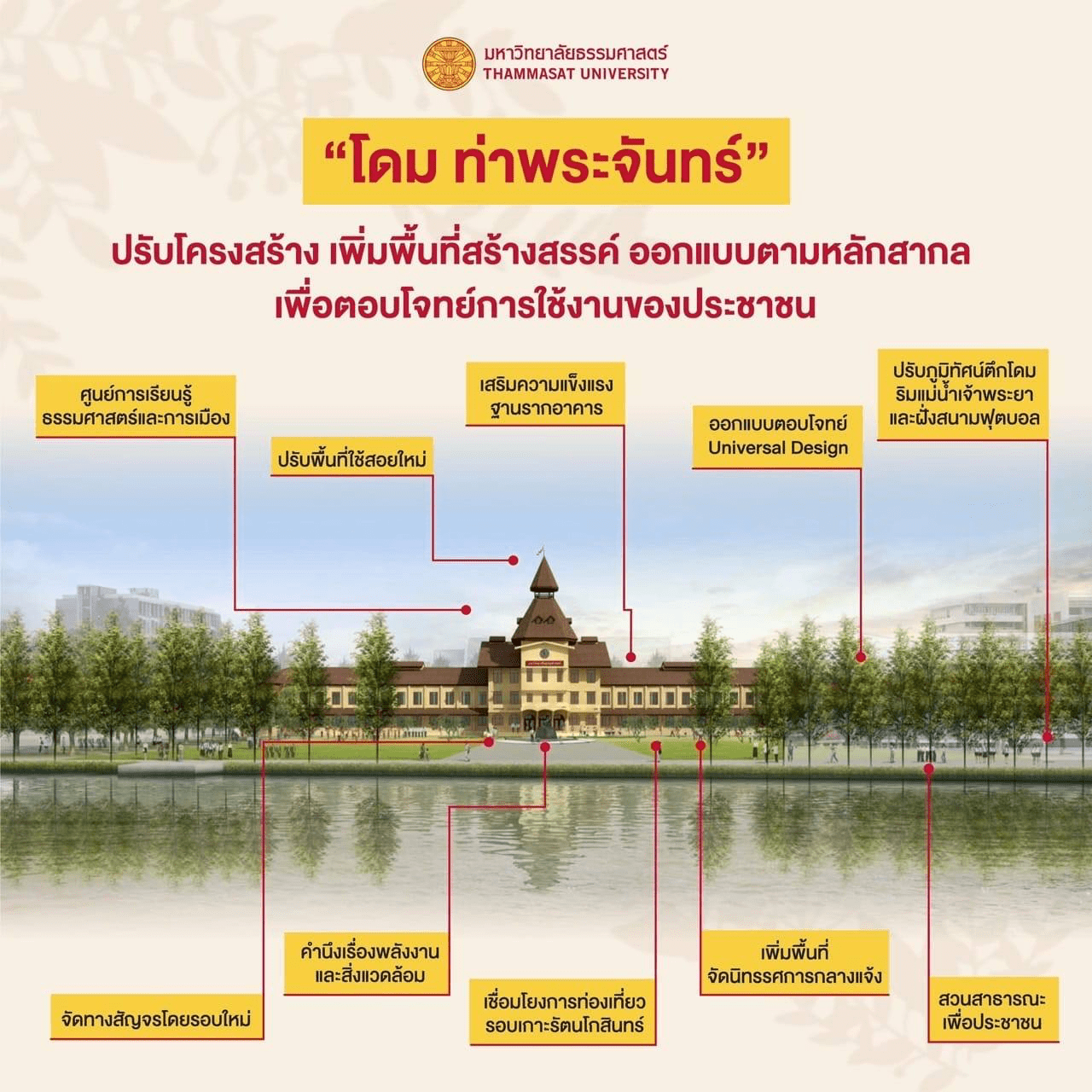
  • Sustainability Focus in Heritage Conservation: The large-scale conservation of the existing, historic Dome buildingincorporated considerations for “energy and environment for sustainability,” guiding system choices towards efficiency within the heritage context.
  • Demonstrated Practice Reflecting Intent: While not a single formal “Plan” document, the consistent application of energy efficiency upgrades (LEDs, HVAC) across multiple major renovation projects on existing buildings by 2024 demonstrates a clear operational strategy and implicit plan to improve energy performance.
  • Benchmark for Future Upgrades: The ASEAN Energy Award for the Siri Witthayalak building, although potentially new construction, reinforces the university’s commitment and sets a standard influencing the energy efficiency goals for upgrading other existing buildings.

Thammasat University demonstrates its ongoing commitment to creating a sustainable campus by consistently integrating energy efficiency measures into the renovation and conservation of its existing buildings. This strategic direction, evident across multiple significant projects undertaken by 2024, reflects the university’s dedication to responsible resource management and aligns with our broader goals for environmental sustainability.

The university’s approach to enhancing energy performance in older structures is clear through the following key initiatives:

Pridi Banomyong Library: Illuminating the Future with LEDs

The major renovation of the Pridi Banomyong Library at Tha Prachan prominently features energy efficiency. A core component of the upgrade involves replacing outdated lighting systems with modern, energy-saving LED technology throughout the building. This systematic upgrade is designed to significantly reduce the library’s long-term energy consumption. [Explore Plan]

The Iconic Dome: Conserving Heritage with Sustainable Practices

Even in the delicate conservation of the historic Dome building, initiated by 2024, energy considerations are integral. The project framework explicitly includes a focus on “energy and environment for sustainability,” ensuring that choices made during the renovation, while respecting the building’s heritage, are aligned with principles of improved efficiency and reduced environmental impact.

Setting High Standards: SC1 Renovation

The approach taken during the renovation of the SC1 building (Faculty of Social Administration) exemplifies Thammasat’s standard practices. Project requirements mandated the adoption of high-performance, energy-saving technologies, specifically demanding high-efficacy LED T8 lighting and high-efficiency VRF air conditioning systems. This serves as a clear blueprint demonstrating the university’s consistent application of energy-efficient standards during building upgrades. [Explore TOR]

Recognised Excellence: A Benchmark for Efficiency

The ASEAN Energy Award 2024 recognition for the Siri Witthayalak Building further reinforces Thammasat’s commitment to high energy performance standards. This achievement sets a benchmark and provides direction for incorporating proven energy-saving designs and technologies into future renovations of existing campus buildings.

The recurring implementation of energy-saving measures, such as LED lighting and high-efficiency HVAC systems, across major renovation projects like the Pridi Banomyong Library, the Dome, and SC1, clearly indicates a consistent operational direction. These actions demonstrate Thammasat University’s practical strategy, active by 2024, to progressively upgrade its existing building stock for higher energy efficiency, contributing tangibly to a more sustainable campus environment.

Thammasat University: A Hub for Low-Carbon and Green Technology Startups

HIGHTLIGHTS

  • Comprehensive Startup Ecosystem: Thammasat has developed an integrated support system for low-carbon and green-tech startups, covering every stage from idea generation and prototype development to business incubation and IP protection.
  • Innovation Infrastructure at Thammasat Creative Space (TCS): Equipped with advanced tools such as 3D printers and laser cutters, TCS provides the physical and collaborative environment needed for students and entrepreneurs to turn low-carbon technology ideas into tangible products.
  • Business and Intellectual Property Support via TU IPI: The Thammasat University Intellectual Property and Business Incubation Center offers end-to-end services, including IP registration, business consulting, and financial mentoring, to help green startups become sustainable enterprises.
  • Living Lab Model: Solar Café: The on-campus Solar Café showcases practical application of low-carbon innovation, operating entirely on solar power and zero-waste principles, serving as a real-world example that inspires and validates green entrepreneurship.

Thammasat University has positioned itself as a leading higher education institution that not only generates theoretical knowledge but also plays an active role in supporting and nurturing startups driven by innovation for sustainability and a low-carbon economy. The University has built a “startup ecosystem” that empowers students and entrepreneurs to transform green technology ideas into viable businesses — from inspiration and prototype development to business and intellectual property consultation.

Inspiring Ideas: Platforms for Sustainable Startup Creation

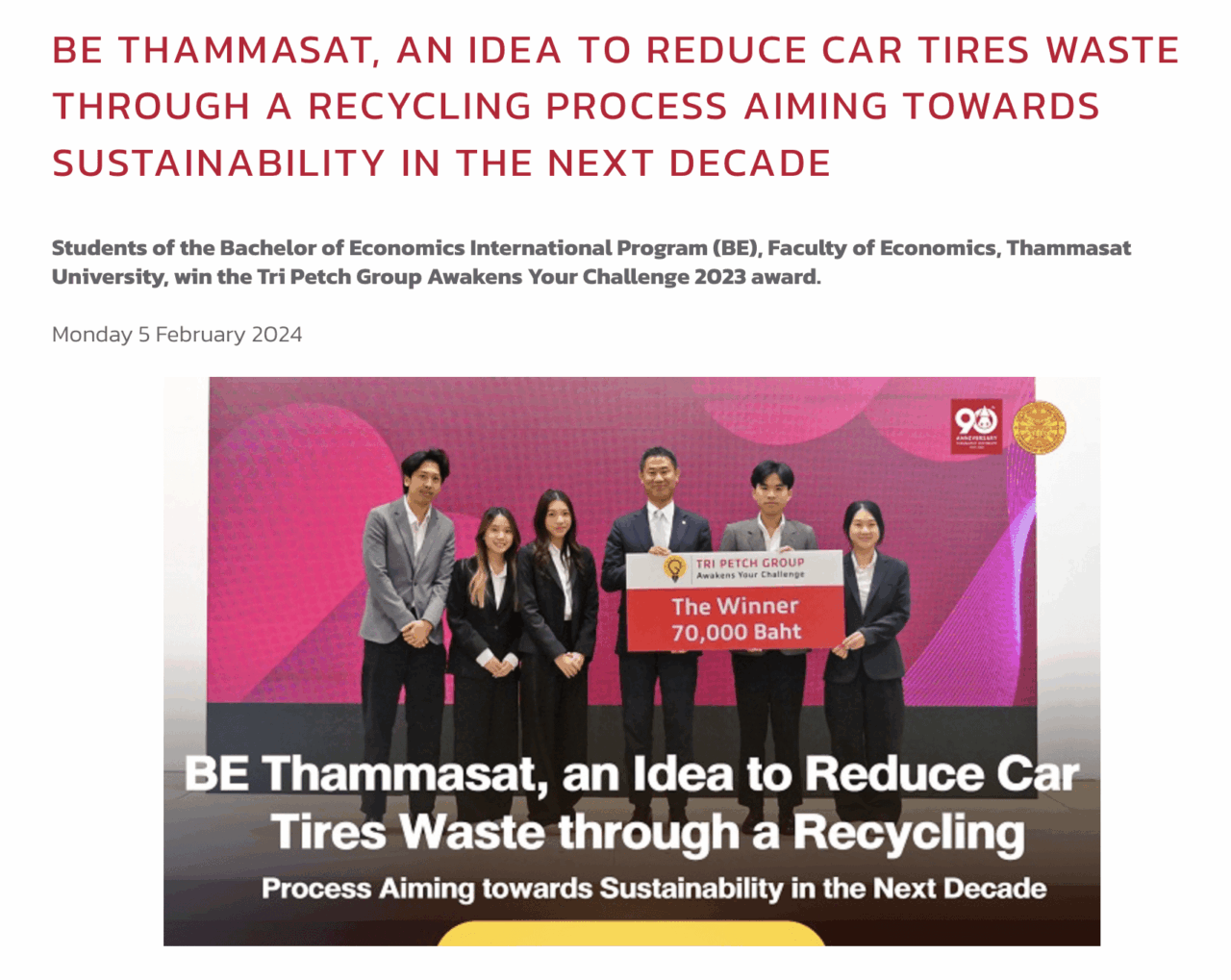
Thammasat University encourages its students to participate in national-level competitions to spark creativity and innovation that address environmental challenges. A recent success story is Uzusi Consulting, a team of students from the Faculty of Economics (International Programme – BE), who won the Tri Petch Group Awakens Your Challenge 2023 competition with their project on tyre waste management through upcycling and circular economy solutions. This achievement demonstrates that Thammasat can cultivate sustainable business concepts with real commercial potential right from the classroom.

Creative Infrastructure: Turning Ideas into Prototypes at Thammasat Creative Space (TCS)

To ensure that great ideas do not remain only on paper, Thammasat University established Thammasat Creative Space (TCS) at Puey Ungphakorn Library, Rangsit Campus — a physical hub for innovation with key facilities including:

  • Maker Space: The heart of prototype development, equipped with advanced technology such as 3D printers and laser cutters. These investments underline Thammasat’s commitment to hardware-based innovation — essential for green technology (GreenTech) startups that often develop tangible products like smart sensors or energy-saving devices.
  • Co-working Space: A collaborative area where students and entrepreneurs can exchange knowledge and ideas, network, and develop their business concepts further.

TCS thus serves as an incubating ground that lowers barriers for low-carbon technology startups, enabling them to develop prototypes and test concepts quickly and efficiently.

Business Support Mechanisms: Thammasat University Intellectual Property and Business Incubation Center (TU IPI)

Once a startup has developed a ready-to-market prototype, the Thammasat University Intellectual Property and Business Incubation Center (TU IPI) steps in as a key mechanism to transform research and innovation into sustainable businesses. The center provides comprehensive services, including:

  • Intellectual Property Support: Consulting and assisting startups in protecting their innovations through patent, petty patent, and copyright registration.
  • Business Incubation: Providing in-depth guidance on business operations, marketing, and finance — from the early stages until entrepreneurs can stand independently.

Real-Life Success Model: Solar Café – A Clean Energy Business on Campus

Beyond structural support mechanisms, the University also uses its own campus as a living laboratory to demonstrate that green businesses can thrive in practice. Solar Café at the Rangsit Campus, supported by the Office of Property and Sports Management, exemplifies this vision. The café operates on genuine low-carbon principles — powered by solar energy from rooftop panels, adopting zero-waste waste management, and maintaining a sustainable supply chain. It serves as a tangible model that inspires other entrepreneurs to follow suit.

Thammasat University has built a comprehensive ecosystem to support startups in the low-carbon economy and green technology sectors — from idea generation through competitions, to prototype creation at TCS, business and IP consulting via TU IPI, and successful real-world implementation through campus-based models. Altogether, these efforts reaffirm the University’s strong commitment to driving a sustainable, low-carbon society.