Thammasat University Launches Clean Energy Learning Hub for the Community

HIGHLIGHTS

  • Launch of Clean Energy Learning Hub: Thammasat University, in partnership with Solartron PCL, established the Clean Energy Innovation Learning Center at Rangsit Campus, open to the public and university community.
  • Educational Focus: The center provides programmes and resources on sustainable solutions, climate change adaptation, and clean energy innovations.
  • Supporting Sustainable Smart City Vision: The initiative aligns with Thammasat’s broader goals, including solar rooftop installations and a 100% electric shuttle bus fleet on campus.
  • Community Engagement: The hub encourages visitors to learn, explore, and participate in advancing a cleaner, more sustainable future.

As part of its steadfast commitment to sustainability, Thammasat University, in collaboration with Solartron PCL, has established the “Clean Energy Innovation Learning Center” at its Rangsit Campus. This new hub is a vital educational resource, open to the Thammasat community, the general public, and all interested individuals since May 2024.

The centre’s primary mission is to provide educational sources and access to information for the wider community. It offers a dedicated space for visitors to learn about sustainable solutions, explore the importance of adapting to climate change, and understand the innovations driving both clean energy production and energy efficiency.

This initiative is a key component of Thammasat’s wider vision to serve as a model for a ‘Sustainable Smart City’. It complements the university’s existing practical commitments, which include the large-scale installation of solar rooftops and the operation of a 100% electric (EV) shuttle bus fleet on campus.

The Clean Energy Innovation Learning Center invites everyone to visit, learn, and join the conversation on building a cleaner, more sustainable future.

Thammasat Champions the Fight for ‘Clean Air’: Mobilising Knowledge, Innovation, and Law to Ensure Every Thai Can Breathe Freely

“Clean air is not a luxury; it is a fundamental human right.”

On the occasion of the International Day of Clean Air for Blue Skies (7 September), Thammasat University—standing firm as the “University for the People”—reaffirms its commitment to tackling the invisible crisis of air pollution. We are deploying our full arsenal of academic knowledge, expert insights, and tangible action to drive the national ‘Clean Air’ agenda into reality.

Thammasat is moving beyond the classroom to spearhead change through three strategic pillars:

1. The ‘Thammasat Smart City’ Model: Leading by Example

(Action & Infrastructure)

We believe that change must begin at home. Thammasat has transformed its campus into a “Living Lab” for sustainability under the “Thammasat Smart City” initiative, proving that a low-carbon society is possible.

  • Renewable Energy: We have installed the largest urban rooftop solar system in Asia, drastically reducing our reliance on fossil fuels.
  • Green Innovation: The Thammasat University Rooftop Farm (TURF) acts as a model for urban climate adaptation, absorbing heat, filtering air, and providing organic food simultaneously.
  • Decarbonising Transport: We have overhauled our campus mobility with a fleet of EV Buses, actively reducing tailpipe emissions at the source.

2. The ‘Intelligence Unit’: Big Data & Public Health

(Research & Innovation)

To solve the PM2.5 crisis, we need precise data. The Faculty of Public Health has established the Coordination Centre for Clean Air and Climate Change (CCCACC)—the first centre of its kind in Thailand. Acting as the nation’s “Brain,” the centre is led by experts like Dr Supat Wangwongwatana, who has been granted funding to establish a “Hub of Talents.” His team is developing a national Big Data system for PM2.5. This initiative moves beyond simple monitoring; it aims to analyse, predict, and manage air quality crises with scientific precision, protecting the health of the population.

3. The ‘Legal Shield’: Pushing for the Clean Air Act

(Policy & Law)

Perhaps the most critical battleground is the law. The Natural Resources and Environmental Law Centre at the Faculty of Law is serving as the spearhead for structural change. Associate Professor Dr Surasak Boonruang, a leading legal expert, has played a pivotal role in drafting and advocating for the “Clean Air Act (Citizen’s Draft).” This legislation is crucial. It aims to elevate clean air from a policy promise to a legally guaranteed right, establishing clear accountability and mechanisms to tackle pollution across the country.

A Unified Breath for the Future

These initiatives are but a fraction of Thammasat’s dedication. By uniting the power of administrators, academics, and students, we are sending a powerful message: We will not stop until the haze clears. We are building a future where every Thai citizen can look up at a blue sky and breathe in fully, safely, and without fear.

Learning for Sustainability: Thammasat’s Interdisciplinary Integrated SDG Curricula

  • Global Recognition: Ranked 64th worldwide in the THE Impact Rankings 2025, marking Thammasat’s second consecutive year in the global Top 100.
  • Interdisciplinary Integration: By 2027, 90% of undergraduate programmes will embed SDG-related knowledge, making sustainability a core lens for every graduate.
  • Innovative Pathways: Flagship programmes such as SUMA, SGS, SCI-TU, and PSDS equip students to become leaders in sustainable management, social innovation, technology, and community development.
  • Accessible Sustainability Learning: General education courses such as TU103 Life and Sustainability is open to all students, ensuring opportunities to build sustainability literacy across every discipline.

เลือก Page 2 เพื่ออ่านเป็นภาษาไทย

In an era where the world faces increasingly complex environmental, social, and economic challenges, knowledge of sustainable development has become central to shaping the leaders of the future. Thammasat University has reaffirmed its position as a leading academic institution committed to advancing this agenda in earnest. This is reflected in its recent achievement of being ranked among the world’s Top 100 in the THE Impact Rankings 2025 for the second consecutive year, moving up to 64th globally. This stands as concrete proof of the University’s vision to be a “World-Class University for the People”—not merely a slogan, but a principle put into practice.

Behind this success lies a clear strategy: embedding the Sustainable Development Goals (SDGs) into Thammasat University Strategic Development Plan No. 13 (2022–2027). For Thammasat, sustainability is not simply a discipline, but a “lens” through which every graduate, regardless of faculty, must view the world. To achieve this, the University has designed a diverse learning ecosystem that connects knowledge across disciplines.


Multiple Pathways to Sustainability: Thammasat’s Approach to the Future

Thammasat recognises that multiple professional fields can contribute to advancing sustainability. Accordingly, the University has designed its curricula with varied pathways to match the diverse interests and aptitudes of students. The following are key examples of this approach:

1. The Leadership Pathway: SUMA
Thammasat’s flagship new programme is the Bachelor of Science in Sustainable Management (SUMA), designed to meet the demands of a business world increasingly focused on ESG (Environmental, Social, and Governance). This interdisciplinary programme is a collaboration between five key units: the College of Interdisciplinary Studies, the Faculty of Social Administration, the Puey Ungphakorn School of Development Studies, the Faculty of Science and Technology, and the Faculty of Engineering.
Its unique strength lies in producing professional sustainability managers with expertise spanning circular economy, green finance, and the use of AI for sustainability. With a strong emphasis on practical learning, including no fewer than 1,000 internship hours, it equips graduates to become leaders in business and organisational sustainability.

2. The Global Change-Maker Pathway: School of Global Studies (SGS)
The School of Global Studies serves as a hub for students interested in the social, political, and economic dimensions of sustainability from a global perspective. It also acts as a regional leader in social innovation. At undergraduate level, it offers programmes in global studies and social entrepreneurship, preparing students to develop 21st-century skills through courses such as Social Enterprise and Entrepreneurship and Human-Centred Design for Social Innovation. At postgraduate level, the programmes in Social Innovation and Sustainability train practitioners and researchers to tackle global challenges directly through the SDG framework, with courses such as Sustainability and the Global Political Economy.

3. The Technology Innovator Pathway: Faculty of Science and Technology (SCI-TU)
The Faculty offers both undergraduate and postgraduate programmes in Sustainable Development Technology. These are designed for those wishing to address sustainability challenges through science and technology, with a philosophy rooted in the Sufficiency Economy. Students gain strong foundations in mathematics and science, enabling them to create innovations that respond to global needs.

4. The Social Development Pathway: Puey Ungphakorn School of Development Studies (PSDS)
This pathway is ideal for students focused on community development, social justice, and public policy. The School aligns its mission with all 17 SDGs, producing graduates with strong public consciousness. Beyond degree programmes, it also provides specialised training for professionals, such as the Executive Programme in Sustainable Organisational Transition and courses in Social Impact Assessment (SIA/SROI).
Additionally, PSDS has pioneered the teaching of Introduction to ESG (ESG 101), in collaboration with the Stock Exchange of Thailand, to build essential ESG knowledge for all students.


Weaving Sustainability into the DNA of Every Graduate

Perhaps the clearest testament to Thammasat’s commitment is its policy of embedding sustainability into the very foundation of every student’s education through an “inclusive integration” approach. The 13th Strategic Plan sets an ambitious target: by 2027, 90% of Thammasat’s undergraduate programmes must incorporate SDG-related knowledge into their curricula.

In practice, students from all faculties are offered opportunities to study foundational general education courses such as TU103 Life and Sustainability and Introduction to ESG, providing essential entry points into sustainability knowledge. Deeper engagement is also encouraged through specialised electives and cross-disciplinary minors. For example, the Faculty of Science and Technology offers courses such as Environment and Sustainable Development and Carbon Trading, while the Faculty of Social Administration offers a minor in Community Development, allowing students from other faculties to acquire grassroots development skills.

This strategy ensures that every Thammasat graduate—whether an accountant, engineer, or journalist—carries with them a foundation of sustainability literacy, equipping them to become agents of change across all sectors of society.

เรียนรู้เพื่อสร้างความยั่งยืน: ธรรมศาสตร์กับการออกแบบหลักสูตรวิชาบูรณาการ SDGs – เชื่อมโยงความรู้ข้ามศาสตร์

ในยุคที่โลกกำลังเผชิญกับความท้าทายด้านสิ่งแวดล้อม สังคม และเศรษฐกิจอย่างซับซ้อน องค์ความรู้เรื่องการพัฒนาที่ยั่งยืนได้กลายเป็นหัวใจสำคัญของการสร้างผูนำแห่งอนาคต มหาวิทยาลัยธรรมศาสตร์ได้ตอกย้ำจุดยืนในฐานะสถาบันการศึกษาชั้นนำที่มุ่งมั่นขับเคลื่อนวาระนี้อย่างจริงจัง สะท้อนผ่านความสำเร็จล่าสุดที่ได้รับการจัดอันดับให้อยู่ในกลุ่ม Top 100 ของโลกติดต่อกันเป็นปีที่สอง จาก THE Impact Rankings 2025 โดยขยับขึ้นมาอยู่ในอันดับที่ 64 ของโลก ซึ่งเป็นเครื่องพิสูจน์ถึงวิสัยทัศน์ “มหาวิทยาลัยระดับโลกเพื่อประชาชน” ที่ไม่ได้เป็นเพียงคำขวัญ แต่คือการลงมือปฏิบัติอย่างเป็นรูปธรรม

เบื้องหลังความสำเร็จนี้คือยุทธศาสตร์ที่ชัดเจนในการผนวกเป้าหมายการพัฒนาที่ยั่งยืน (SDGs) เข้าเป็นส่วนหนึ่งของแผนยุทธศาสตร์มหาวิทยาลัยธรรมศาสตร์ ฉบับที่ 13 (พ.ศ. 2565-2570) ธรรมศาสตร์ไม่ได้มองว่า “ความยั่งยืน” เป็นเพียงสาขาวิชาหนึ่ง แต่เป็น “เลนส์” หรือมุมมองที่บัณฑิตทุกคนต้องมี ไม่ว่าจะสำเร็จการศึกษาจากคณะใดก็ตาม เพื่อให้บรรลุเป้าหมายดังกล่าว มหาวิทยาลัยจึงได้ออกแบบระบบนิเวศการเรียนรู้ที่หลากหลายและเชื่อมโยงความรู้ข้ามศาสตร์เข้าไว้ด้วยกัน


หลากหลายเส้นทางสู่ความยั่งยืน: แนวทางหลักที่ธรรมศาสตร์ออกแบบเพื่ออนาคต

มหาวิทยาลัยธรรมศาสตร์ตระหนักดีว่าหลากหลายสาขาวิชาชีพสามารถร่วมกันขับเคลื่อน “ความยั่งยืน” ได้ จึงออกแบบหลักสูตรให้มีแนวทางที่แตกต่างกัน เพื่อสร้างเส้นทางการเรียนรู้ที่ตอบโจทย์ความสนใจและความถนัดอันหลากหลายของนักศึกษา โดยหลักสูตรที่นำเสนอในบทความนี้เป็นเพียงตัวอย่างส่วนหนึ่งที่สะท้อนให้เห็นภาพความมุ่งมั่นดังกล่าว ซึ่งสามารถแบ่งออกเป็นแนวทางหลักๆ ได้ดังนี้

1. เส้นทางผู้นำองค์กร: หลักสูตรใหม่ SUMA

ธรรมศาสตร์ได้เปิดตัวหลักสูตรล่าสุด คือ หลักสูตรวิทยาศาสตรบัณฑิต สาขาวิชาการจัดการเพื่อความยั่งยืน (SUMA) ที่ออกแบบมาเพื่อตอบโจทย์โลกธุรกิจยุคใหม่ซึ่งให้ความสำคัญกับแนวคิด ESG (สิ่งแวดล้อม สังคม ธรรมาภิบาล) โดยเฉพาะ หลักสูตรนี้เกิดจากความร่วมมือของ 5 หน่วยงานหลัก ทั้งวิทยาลัยสหวิทยาการ คณะสังคมสงเคราะห์ศาสตร์ วิทยาลัยพัฒนศาสตร์ ป๋วย อึ๊งภากรณ์ คณะวิทยาศาสตร์และเทคโนโลยี และคณะวิศวกรรมศาสตร์ 

จุดเด่นของหลักสูตรคือการมุ่งสร้างนักจัดการความยั่งยืนมืออาชีพผ่านเนื้อหาที่ครอบคลุมทั้งเศรษฐกิจหมุนเวียน การเงินเพื่อสิ่งแวดล้อม และการใช้ AI เพื่อความยั่งยืน ทั้งยังเน้นการปฏิบัติจริงผ่านการฝึกงานไม่น้อยกว่า 1,000 ชั่วโมง จึงเหมาะสำหรับนักศึกษาที่ต้องการเป็นผู้นำด้านความยั่งยืนในโลกธุรกิจและองค์กรชั้นนำ

2. เส้นทางนักสร้างการเปลี่ยนแปลงระดับโลก: วิทยาลัยโลกคดีศึกษา

วิทยาลัยโลกคดีศึกษา คือศูนย์กลางสำหรับผู้เรียนที่สนใจมิติทางสังคม การเมือง และเศรษฐกิจของความยั่งยืนในมุมมองระดับโลก และเป็นผู้นำด้านนวัตกรรมสังคมในภูมิภาค ในระดับปริญญาตรี มีหลักสูตรโลกคดีศึกษาและการประกอบการทางสังคมที่เตรียมนักศึกษาให้เป็นผู้มีมีทักษะแห่งศตวรรษที่ 21 รับความท้าทายของโลก ผ่านวิชาอย่าง Social Enterprise and Entrepreneurship และ Human Centered Design for Social Innovation และ ในระดับปริญญาโท-เอก มีหลักสูตรนวัตกรรมสังคมและความยั่งยืนที่มุ่งสร้างผู้ปฏิบัติงานและนักวิจัยเพื่อแก้ไขปัญหาความท้าทาย โดยใช้กรอบ SDGs เป็นเครื่องมือวิเคราะห์ปัญหาโดยตรง เช่นในรายวิชา Sustainability and the Global Political Economy

3. เส้นทางนวัตกรเพื่อความยั่งยืน: คณะวิทยาศาสตร์และเทคโนโลยี

หลักสูตรวิทยาศาสตรบัณฑิตและมหาบัณฑิต สาขาวิชาเทคโนโลยีเพื่อการพัฒนายั่งยืน ตอบโจทย์ผู้ที่ต้องการแก้ปัญหาความยั่งยืนด้วยวิทยาศาสตร์และเทคโนโลยี  ด้วยปรัชญาในการผลิตบัณฑิตด้านเทคโนโลยีและวิศวกรรมเพื่อการพัฒนาที่ยั่งยืนตามหลักปรัชญาเศรษฐกิจพอเพียง เน้นพื้นฐานที่แข็งแกร่งด้านคณิตศาสตร์และวิทยาศาสตร์เพื่อสร้างนวัตกรรมที่ตอบโจทย์โลก

4. เส้นทางนักพัฒนาสังคม: วิทยาลัยพัฒนศาสตร์ ป๋วย อึ๊งภากรณ์

หลักสูตรภายใต้วิทยาลัยพัฒนศาสตร์ ป๋วย อึ๊งภากรณ์เหมาะสำหรับผู้ที่สนใจงานพัฒนาในระดับชุมชน ความยุติธรรมทางสังคม และนโยบายสาธารณะ วิทยาลัยฯ มีจุดมุ่งหมายเชิงยุทธศาสตร์ที่สอดคล้องกับเป้าหมาย SDGs ทั้ง 17 ข้อ และมุ่งผลิตบัณฑิตที่มีจิตสำนึกสาธารณะ โดยนอกเหนือจากหลักสูตรปริญญาแล้ว ยังจัดอบรมเฉพาะทางสำหรับบุคลากรภายนอก เช่น หลักสูตรนักบริหารการเปลี่ยนผ่านองค์กรอย่างยั่งยืน และหลักสูตรการประเมินผลกระทบทางสังคม (SIA/SROI)

นอกจากนี้ วิทยาลัยฯ ยังได้ริเริ่มเปิดสอนวิชาศึกษาทั่วไป Introduction to ESG (ESG 101) โดยร่วมมือกับตลาดหลักทรัพย์แห่งประเทศไทย เพื่อสร้างความรู้พื้นฐานด้าน ESG ให้แก่นักศึกษาทุกคน


ถักทอความยั่งยืนสู่ DNA ของบัณฑิตทุกคน

สิ่งที่ยืนยันถึงความมุ่งมั่นของธรรมศาสตร์ได้ดีที่สุด คือนโยบายที่จะยกระดับแนวคิดเรื่องความยั่งยืนให้กลายเป็นรากฐานการศึกษาสำหรับนักศึกษาทุกคน ผ่านแนวทาง “การบูรณาการอย่างทั่วถึง” แนวทางนี้สะท้อนผ่านเป้าหมายเชิงนโยบายที่ชัดเจนในแผนยุทธศาสตร์ฉบับที่ 13 ซึ่งตั้งเป้าว่า ภายในปี พ.ศ. 2570 หลักสูตรระดับปริญญาตรี 90% ของธรรมศาสตร์ จะต้องมีการบูรณาการองค์ความรู้ด้าน SDGs เข้าไปเป็นส่วนหนึ่ง

ในทางปฏิบัติ นักศึกษาทุกคนสามารถลงเรียนวิชาศึกษาทั่วไปอย่าง TU103 Life and Sustainability เพื่อให้มีความเข้าใจเรื่องความยั่งยืนเป็นพื้นฐานไม่ว่าจะเรียนในคณะใด นอกจากนี้ยังส่งเสริมการเรียนรู้เชิงลึกผ่านวิชาเลือกเฉพาะทางและวิชาโทข้ามศาสตร์ เช่น คณะวิทยาศาสตร์และเทคโนโลยีที่เปิดสอนรายวิชาอย่าง “สิ่งแวดล้อมและการพัฒนาที่ยั่งยืน” และ “การค้าคาร์บอน” หรือคณะสังคมสงเคราะห์ศาสตร์ที่เปิดวิชาโทการพัฒนาชุมชน ซึ่งช่วยให้นักศึกษาจากคณะอื่นได้เรียนรู้ทักษะการพัฒนาในระดับรากหญ้า


กลยุทธ์นี้มีเป้าหมายเพื่อให้บัณฑิตธรรมศาสตร์ทุกคน ไม่ว่าจะเป็นนักบัญชี วิศวกร หรือนักสื่อสารมวลชน มีความรู้ความเข้าใจพื้นฐานด้านความยั่งยืน (Sustainability Literacy) ติดตัวไป และพร้อมที่จะเป็นพลังขับเคลื่อนการเปลี่ยนแปลงในทุกภาคส่วนของสังคม

Thammasat University’s Wage Policy: A Commitment to Sustainable People Care and Decent Employment

HIGHLIGHTS

  • Above-Standard Pay Structure: Thammasat University’s salary scale for all staff ranks exceeds national minimum-wage and poverty-line benchmarks, ensuring fair and competitive compensation.
  • Commitment to a Living Wage: Every entry-level position meets or surpasses the Global Living Wage Coalition (GLWC) estimate for urban Thailand, enabling employees to live with dignity and financial security.
  • Inclusive Wage Policy: The University’s remuneration framework covers all categories of personnel—academic, professional, supporting, and technical—reflecting an institutional commitment to equality and well-being.
  • Advancing SDG 8 – Decent Work and Economic Growth: By embedding decent employment and fair pay into its governance system, Thammasat strengthens its role as a national model for sustainable and equitable employment practices.

เลือก Page 2 เพื่ออ่านเป็นภาษาไทย

Under its commitment to the Sustainable Development Goals (SDGs)—particularly Goal 8: Decent Work and Economic GrowthThammasat University prioritises creating a secure and high-quality working environment through a fair employment policy. The University establishes competitive pay scales that exceed national benchmarks across multiple qualification levels, reinforcing its dedication to equity and well-being in the workplace.

Fair and Adequate Remuneration for a Quality Start in Employment

A key feature reflecting the University’s commitment is its starting salary for bachelor’s degree holders. For professional and specialised positions, the entry-level rate is set at THB 21,250 per month, while for academic positions (lecturers), it begins at THB 23,500 per month. Both rates are significantly higher than key national financial indicators.

This policy demonstrates Thammasat’s concrete commitment to ensuring that graduates entering employment can begin their professional journey with a fair and dignified wage that supports a reasonable quality of life.

Comparison with National Benchmarks

When compared against major national standards, Thammasat’s salary structure stands out clearly:

  • Minimum Wage
    As of 1 July 2025, the government-set minimum wage for Bangkok is THB 400 per day, equivalent to approximately THB 12,000 per month. Even the University’s lowest entry-level wage exceeds this threshold.
  • Poverty Line
    The Office of the National Economic and Social Development Council (NESDC) has set the 2024 poverty line at THB 3,078 per person per month. For a four-person household, this equates to THB 12,312 per month—still below Thammasat’s lowest entry-level pay.

From the “Minimum Wage” to a “Living Wage” for a Dignified Life

Beyond compliance with minimum national standards, Thammasat University takes a further step by adopting the concept of the “Living Wage”—a remuneration level sufficient to cover a household’s essential living costs, including food, housing, healthcare, education, transport, and other necessities, ensuring that employees can live, not merely survive.

According to the Global Living Wage Coalition (GLWC), the estimated living wage for urban areas in Thailand is approximately THB 14,324 per month. When compared with Thammasat’s salary structure, it is evident that all entry-level positions exceed this benchmark, reaffirming the University’s commitment to ensuring that its personnel enjoy a decent and quality standard of living.

Inclusive Care: Safeguarding the Well-being of All Staff

Thammasat’s commitment extends beyond academic and professional positions to include supporting staff at all qualification levels (based on the 2024 pay rate announcement):

  • Vocational Certificate
    Starting salary THB 12,690 per month, higher than both the national minimum wage and the household poverty line.
  • Higher Vocational Certificate
    Starting salary THB 15,530 per month, surpassing basic national benchmarks and approaching the living wage standard.

Building a Foundation for Sustainable Well-being

Thammasat University’s remuneration policy represents more than the payment of salaries—it reflects a long-term investment in the quality of life and stability of its people and their families.

This policy not only aligns with the Sustainable Development Goals but also serves as a strategic instrument for attracting and retaining high-quality personnel, ensuring that the University community continues to grow and thrive sustainably together.


Reference: Thammasat University Announcement on Rates of Minimum and Maximum Pay for the University Staff Salary Scale, B.E. 2567 (2024).

Rates-of-Minimum-and-Maximum-Pay-for-the-University-Staff-Salary-Scale-B.E.-2567

Thammasat University Enhances Public Sector Capabilities through Strategic Upskilling Initiatives

HIGHLIGHTS

  • Thammasat University provides specialized education and outreach for policy-makers, lawmakers, and government officials through tailored programs that strengthen national governance and local administration capacities.
  • The university delivers upskilling and capacity-building initiatives across key policy domains—including economics, law, technology, migration, and climate change—to equip officials with future-oriented and practical policy tools.
  • Flagship programs such as “Government Strategic Foresight,” “Commu Max,” and “Creative Tourism with Soft Power” enhance strategic planning, communication, and sustainable economic development at both national and local levels.
  • Beyond formal training, Thammasat ensures community legal empowerment and access to justice through off-campus outreach like the Mobile Law Clinic, extending education and legal support to rural and underserved communities.

Thammasat University is actively strengthening national governance by providing specialized education and capacity-building programs tailored for Thailand’s public sector. These initiatives deliver targeted outreach and upskilling for policy-makers, lawmakers, and government officials, equipping them with essential skills to navigate complex modern challenges, while simultaneously ensuring access to justice at the grassroots level.

Government Strategic Foresight: Strategic Foresight for the Public Sector

The “Government Strategic Foresight” program is an advanced training course designed specifically for public sector agencies to improve long-term planning. The curriculum provides officials with the tools to anticipate future trends and integrate them into effective policy. Key modules focus on the direct application of foresight in:

  • Economics: Analyzing the future of fiscal policy and economic shifts.
  • Environment and Sustainability: Planning for climate change adaptation.
  • Technology: Utilizing Big Data, AI, and Machine Learning.

Legal and Regulatory Compliance for Local Government

Thammasat University provides critical training on complex regulations through its “Course on Land and Building Tax Regulations, NACC/PACC Investigation, and Administrative Court Cases.” This workshop is specifically designed for local administrators, equipping them with the necessary knowledge in public law and finance to ensure legal compliance, manage tax collection effectively, and navigate administrative justice procedures.

Creative Tourism and ‘Soft Power’ Policy

Reflecting a key national agenda, Thammasat offers the “Course on Promoting Creative Tourism for Local Communities with Soft Power.” This capacity-building program is delivered to local administrative organizations across different regions (Krabi, Korat, Khao Kho). It provides local policy-makers with strategies to develop and promote community-based tourism, leveraging local culture (“Soft Power”) for sustainable economic growth.

Commu Max

To ensure policy is communicated effectively in the digital age, the university spearheads the “Commu Max” program. This initiative, developed with the National Research Council of Thailand (NRCT), is designed to upskill public sector personnel in strategic communication. The training focuses on:

  • Policy Outreach: Mastering strategies for social media and digital platforms.
  • Effective Engagement: Enabling officials to effectively engage the public on national policies.

Community Legal Empowerment and Access to Justice

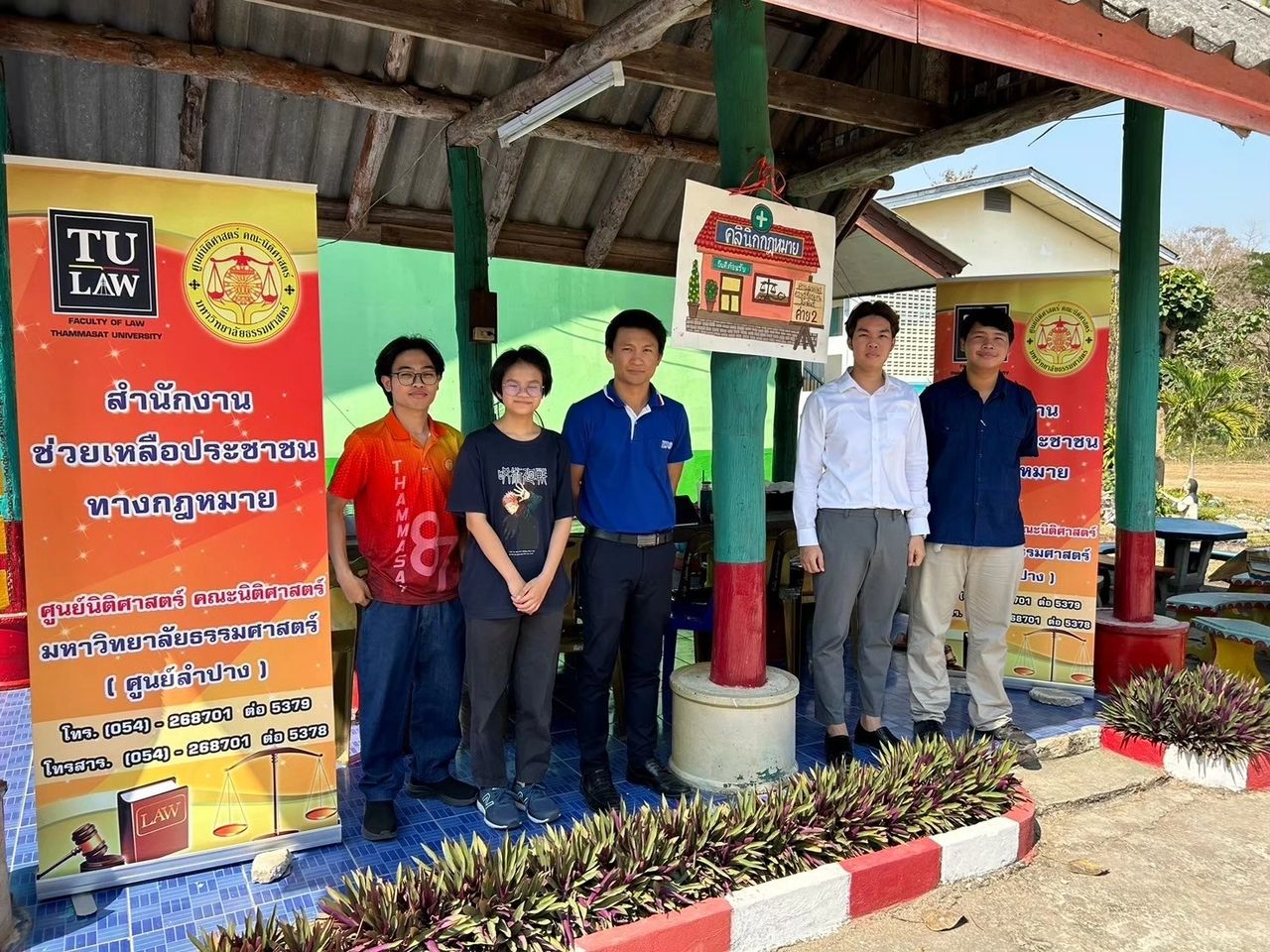
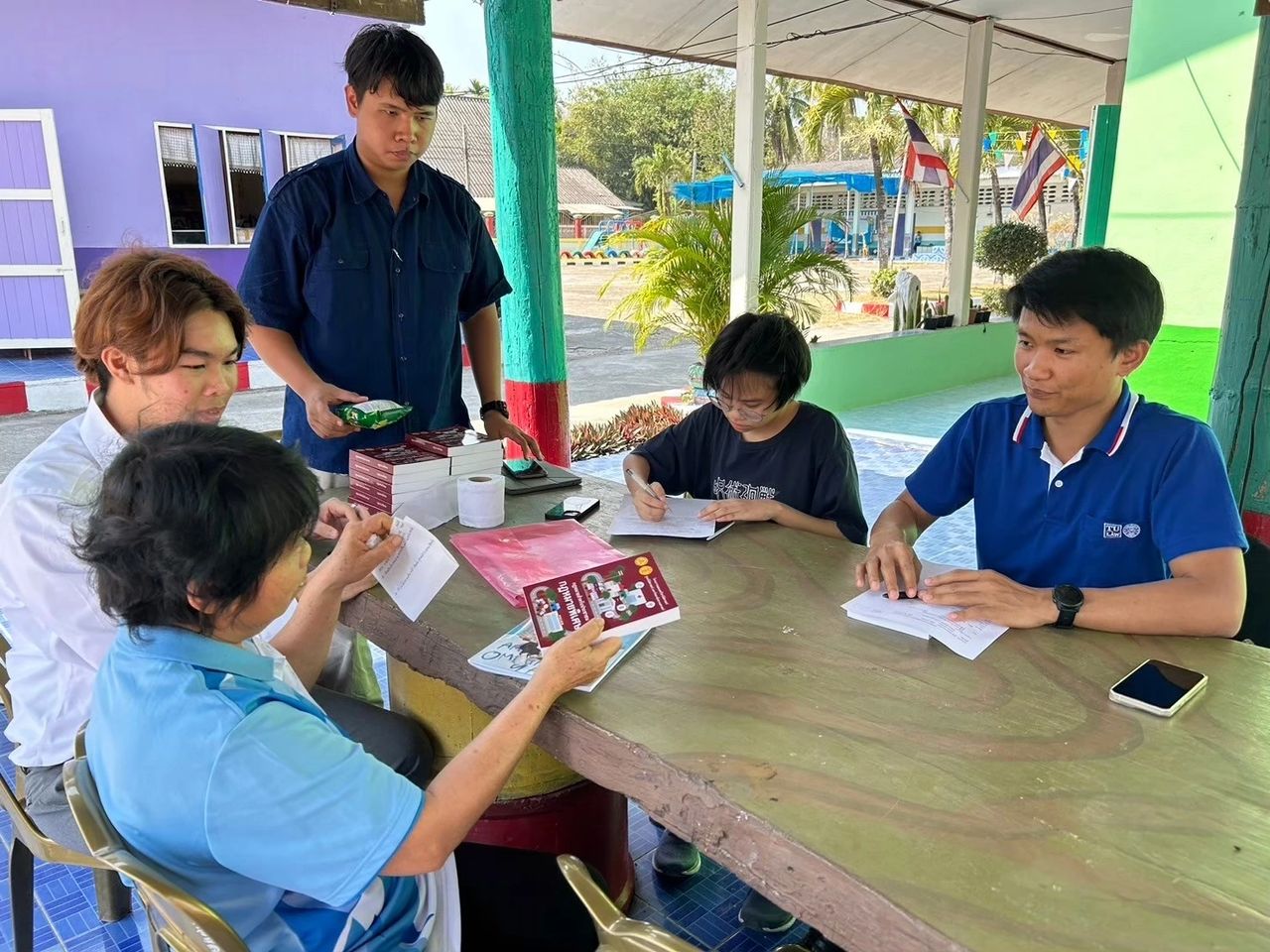
Beyond formal training for officials, Thammasat University also strengthens justice at the community level. Through its “Mobile Law Clinic”, the Lampang Campus conducts direct, off-campus outreach to provide pro bono legal consultations. This initiative, held jointly with the “11th Legal Knowledge Dissemination and Community Relations Project,” specifically targets the public in remote areas, such as the recent clinic held at Ban Thung Pong School in Mueang Pan District, Lampang. This ensures access to justice and provides vital legal education to community leaders and residents, empowering them to navigate complex legal frameworks and uphold their rights.

SDG Move Thammasat Reinforces Alliances, Co-Hosting ‘Sustrends 2026’ to Unveil the Future of Sustainability

In a continued effort to drive Thailand towards a greener future, Thammasat University, through the Centre for SDG Research and Support (SDG Move) under the Faculty of Economics, once again stepped up as a key partner for ‘Sustrends 2026’.

Held on 27 August 2025 at the Benchakitti Forest Park Museum, this premier annual seminar serves as a vital platform for updating the nation on the most critical sustainability trends. It is a space where knowledge is exchanged, and inspiration is ignited to drive Thai society towards sustainability in every dimension.

A Convergence of Changemakers 

The ‘Sustrends’ forum is organised through a robust collaboration of diverse sectors, led by The Cloud—an online media platform dedicated to creative social storytelling—alongside heavyweights such as the United Nations Development Programme (UNDP), the Office of the National Economic and Social Development Council (NESDC), the Bangkok Metropolitan Administration (BMA), and various other sustainability networks.

A Steadfast Partnership 

SDG Move’s involvement with Sustrends has been consistent and impactful. having served as a Co-organising Partner since 2023 (for Sustrends 2024) and again in 2024 (for Sustrends 2025), the Faculty of Economics has consistently deployed its personnel to share expertise on stage. This enduring relationship reflects a deep commitment to pushing the sustainable development agenda alongside the country’s leading networks.

Showcasing Impact and Innovation 

For Sustrends 2026, SDG Move maintained its pivotal role not only as a co-organiser but also as a key exhibitor. The centre’s booth attracted significant interest, showcasing the centre’s mission which aligns with the Sustainable Development Goals (SDGs), and highlighting Thammasat University’s impressive performance in the THE Impact Rankings 2025.

Spotlight on Innovation: “Urban Mining” 

A highlight of the event was the visionary talk by Associate Professor Dr Kriengkrai Techakanont from the Faculty of Economics, Thammasat University. Selected as one of the 15 distinguished speakers, he presented a compelling case for “Urban Mining: Extracting Value from End-of-Life Vehicles.”

Dr Kriengkrai illuminated a hidden economic opportunity, pointing out that the city’s accumulation of end-of-life vehicles (ELVs) is not merely waste, but a potential economic treasure trove worth over 200 billion THB.

  • The Circular Approach: He argued that managing these vehicles correctly is not just about waste disposal; it is a perfect model for the Circular Economy, turning scrap into valuable resources.
  • Call for Legislation: To unlock this potential and solve environmental issues sustainably, he proposed that Thailand must seriously consider enacting specific legislation to support the management of ELVs.

Read the full article from the speakers at The Cloud Facebook Page.

Thammasat Reaffirms Global Leadership in SDG 16, Achieving an Impressive 96.13 in the 2025 Integrity and Transparency Assessment (ITA)

Bangkok – 21 August 2025 – Thammasat University continues to set the standard for institutional governance. The university has officially announced the results of the Integrity and Transparency Assessment (ITA) for the Fiscal Year 2025, achieving a remarkable score of 96.13.

Classified as ‘Pass Good’ by the National Anti-Corruption Commission (NACC), this result is not merely a statistical improvement; it serves as a robust reinforcement of Thammasat’s role as a strong, transparent institution aligned with the United Nations’ Sustainable Development Goal (SDG) 16.

Exceeding Strategic Targets

This year’s assessment represents significant development, marking an increase of 1.40 points compared to the Fiscal Year 2024 (94.73 points). Furthermore, this achievement surpasses the challenging target set in Thammasat University’s Strategic Plan No. 13, which aimed for a minimum benchmark of 95 points.


Deep Dive: What is the ITA?

The Integrity and Transparency Assessment (ITA) is a proactive anti-corruption tool utilised by the NACC to evaluate public sector agencies across Thailand. Its goal is to elevate governance standards and create a society that does not tolerate corruption. The assessment is rigorous, comprising three main components:

  1. Internal Integrity and Transparency Assessment (IIT): Surveys the opinions of “Insiders” (university personnel) regarding the organisation’s integrity, operational culture, and internal anti-corruption measures.
  2. External Integrity and Transparency Assessment (EIT): Surveys the perspectives of “Outsiders” (service recipients, students, suppliers, and external stakeholders) who interact with the university, measuring their experience of transparency and fairness.
  3. Open Data Integrity and Transparency Assessment (OIT): A strict verification of the data the university discloses to the public via its website. This includes procurement data, operational plans, and budget expenditure to ensure maximum transparency and public scrutiny.

Linking Local Action to Global Goals (SDG 16)

Thammasat’s success in the national ITA is directly linked to its commitment to SDG 16: Peace, Justice, and Strong Institutions, a goal prioritised globally.

  • Target 16.5: Substantially reduce corruption and bribery in all their forms.
  • Target 16.6: Develop effective, accountable, and transparent institutions at all levels.

Empirical Proof of a “Strong Institution” 

Achieving a high ITA score acts as empirical evidence that Thammasat is a “Strong Institution” with effective and transparent operations.

This domestic success perfectly aligns with the university’s international standing. Recently, Thammasat University was ranked No. 1 in Thailand and No. 4 in the World for SDG 16 in the prestigious THE Impact Rankings 2025.

The rising ITA score is more than just a number; it is a confirmation of Thammasat University’s unwavering commitment to being a model institution rooted in good governance. It demonstrates that Thammasat is ready to be a key force in driving Thai society towards sustainable transparency.

Thammasat University: Championing Education for Global Goals in the Wider Community

HIGHLIGHTS

  • Empowering Local Citizens and Marginalized Communities: Through the Citizen School for Public Engagement, Thammasat provides structured education for non-students and local residents in Pathum Thani, equipping them with knowledge on governance, democracy, and social innovation. In parallel, the “Friend of the Hill Tribe” student volunteering program reaches remote and disadvantaged communities, offering integrated learning and inclusive activities for both students and villagers.
  • Supporting Local Entrepreneurs and Cultural Industries: The Faculty of Fine and Applied Arts, in collaboration with the Lampang Provincial Community Development Office, delivers specialized training and consultancy for community enterprises and artisans. This partnership enhances local skills and preserves the Lanna region’s cultural heritage while strengthening regional economic resilience.
  • Fostering Lifelong Learning and Sustainability Awareness: Thammasat promotes continuous education through the Cooperative Education and Career Center (TUCEEC), supporting alumni in lifelong skill development and employability. Meanwhile, public-facing initiatives like SDG Move’s “SDG Word Search Puzzle” enhance SDG literacy and engage diverse audiences in sustainability learning.

Thammasat University is deeply committed to embedding the principles of the United Nations Sustainable Development Goals (SDGs) not only within its academic walls but also across various segments of society. Through dedicated outreach and purposeful collaboration, TU ensures that knowledge and critical skills necessary for a sustainable world are accessible to the wider community.

Here are key initiatives that illustrate Thammasat’s commitment to advancing the Education for SDGs mission:

1. Empowering Local Citizens and Rural Development

Thammasat actively engages with local residents and disadvantaged groups through educational programs that address core sustainability challenges:

  • Citizen School for Public Engagement: In collaboration with the Puey Ungphakorn School of Development Studies and the Pathum Thani Provincial Civil Society Development Center, Thammasat offers the Citizen School Program (โรงเรียนพลเมือง). This structured educational activity provides non-Thammasat residents and local citizens in the Pathum Thani area with essential knowledge and skills in governance, democracy, public policy, social innovation, and inequality alleviation. The 2024 iteration ran from May 4, 2024, to June 14, 2024. This initiative directly empowers local communities to become informed and active citizens in sustainable development.

  • Volunteering for Disadvantaged Communities: The “Friend of the Hill Tribe” (ค่ายเพื่อนดอยพัฒนา) student camp, organized by the Thammasat Dome Community, demonstrates a strong commitment to marginalized communities. The camp involves students integrating with and learning from hill tribe villagers in remote areas, such as the Huay Phak Kud Learning Center in Tak province. The program features integrated teaching sessions for local students and community engagement activities, focusing on diversity and inclusion by facilitating cooperation between students with and without disabilities. This unique approach ensures that educational outreach reaches the most underserved populations and promotes intercultural understanding.

2. Upgrading Skills for Regional Economic Resilience

Thammasat leverages its academic expertise to bolster local economies and preserve cultural heritage through specialized upskilling and development programs:

  • Art and Craft Industry Development: The Faculty of Fine and Applied Arts established an academic partnership with the Lampang Provincial Community Development Office on July 3, 2024, through a Memorandum of Understanding (MOU). This formal collaboration focuses on providing educational support and expertise, through organizing specialized training, offering consultancy, and conducting research, to local entrepreneurs, community enterprise personnel, and skilled artisans in Lampang and the Lanna region. The joint effort aims to enhance and elevate local craft industries, directly aligning regional development with sustainability goals.

3. Promoting Lifelong Learning and Sustainability Awareness

Thammasat ensures continuous learning opportunities for its alumni and the broader public, reinforcing a culture of sustainability beyond graduation:

  • Alumni Skill Enhancement: The Thammasat University Cooperative Education and Career Center (TUCEEC) offers specialized skill development and job preparation support. Critically, it serves as a platform to support alumni in acquiring new skills, ensuring their lifelong employability and adaptability in a rapidly changing world.
  • Public SDG Literacy Initiatives: Through the SDG Move initiative, Thammasat helps the public, students, and professors increase their literacy on the SDGs. This takes the form of publicly accessible and reproducible learning tools, such as the SDG Word Search Puzzle, which was featured at the Sustrends 2025 summit on September 5, 2024. This engaging and user-friendly resource aims to simplify complex SDG terminology and make the 17 Global Goals more understandable for a diverse audience.

Thammasat University Soars to World’s Top 4 for SDG 16, Driving a ‘Just Society’ with Knowledge for Real-World Impact

  • Research That Drives Real Change: Thammasat prioritises research with social impact over academic output alone. Notable examples include national policy contributions on youth violence prevention and advocacy for reproductive health rights among ethnic minorities—efforts that earned the university a high score in the “Research on Peace and Justice” category.
  • Justice Across All Disciplines: Justice at Thammasat transcends traditional fields, being integrated into nursing, anthropology, business, and more, ensuring graduates are equipped with a multidimensional understanding of fairness and are prepared to support social equity in diverse careers.
  • Strong Government Collaboration: Serving as a neutral academic space, Thammasat collaborates with public agencies through policy-focused research and advisory roles, achieving a perfect score in the “Working with Government” category. Over 70 experts were appointed as government advisors, and more than 125 collaborative projects were conducted in a single year.
  • Academic Freedom Rooted in Responsibility: The university fosters a culture of academic freedom and civic responsibility, promoting open dialogue and critical thinking. This commitment contributed to its strong score in university governance, reflecting Thammasat’s enduring role as a “University for the People.”

เลือก Page 2 เพื่ออ่านเป็นภาษาไทย

Thammasat University has secured the top position in Thailand and fourth globally for its work on Sustainable Development Goal 16 (SDG 16): Peace, Justice, and Strong Institutions. The achievement was announced in the Times Higher Education (THE) Impact Rankings 2025, which assessed over 1,214 universities worldwide. This success is not an overnight accomplishment but the result of a clear strategy driven by the vision of being a “Knowledge Hub for a Just Society,” reflected through tangible actions across various dimensions.

A Deep Dive into the Three Core Strategies for Success

Assistant Professor Chol Bunnag, Director of the Centre for SDG Research and Support (SDG Move) and Assistant to the Rector for Quality Development and Sustainability at Thammasat University, revealed that this success stems from systematic work centred around three key areas of operation.

1. Research for Impact

Thammasat focuses not merely on academic publications but on research that can create real, tangible change in society. Key examples include:

  • Research on Youth Violence: The study “Pathways, Situations, and Factors Associated with Youth Violence in Educational Settings” conducted an in-depth analysis of the root causes of violence in educational institutions. Its findings were used to develop national policies and a prevention manual in collaboration with the Ministry of Education.
  • Research on Reproductive Health Rights: The qualitative study, “A determination of the influence of birth control among minority women in Thailand,” involved fieldwork to amplify the voices of women from ethnic minority groups, advocating for equality in the public health system and respect for cultural diversity.

The quality of this research is reflected in the university’s high score of 84.8 out of 100 in the “Research on Peace and Justice” category.

2. Interdisciplinary Justice

At Thammasat, the concept of justice is not confined to the faculties of Law or Political Science but is integrated into all fields of study to foster fairness in multiple dimensions. Examples include:

  • The Faculty of Nursing, which emphasises human rights within the healthcare system and equitable access to public health services.
  • The Faculty of Sociology and Anthropology, which studies and exposes structural inequality, acting as a voice for marginalised groups.
  • The Faculty of Commerce and Accountancy, which promotes the concept of a Social Economy and creates fair market mechanisms to support vulnerable communities.

This interdisciplinary approach ensures that Thammasat graduates possess a deep understanding of social dimensions and are prepared to be citizens who drive change.

3. Government Collaboration & Good Governance

Thammasat serves as a “neutral space,” linking academic knowledge with public policy-making. This earned the university a perfect score of 100 in the “Working with government” category, demonstrated through concrete actions such as:

  • In 2023-2024, over 70 academics and researchers were appointed as advisors to government agencies at all levels.
  • More than 125 policy-focused research projects were conducted in collaboration with the government in a single year.
  • The SDG Move research centre partnered with the Thailand Science, Research and Innovation (TSRI) office and a network of universities nationwide to assess sustainability situations and gather local-level data to help shape the country’s national Science, Research, and Innovation (SRI) plan.

From Ideology to Practice: Organisational Culture and a New Generation of Citizens

This success is deeply rooted in an organisational culture committed to “Academic Freedom,” a stance Thammasat recently reaffirmed as a core principle. Providing a space for students and staff to ask questions and express themselves constructively, within a framework of social responsibility, was key to the university achieving a high score of 93.8 out of 100 for its “University Governance Measures.”

Asst. Prof. Chol Bunnag concluded, “Freedom must exist within a framework of responsibility, aimed at the public good, and be guided by reason and the rules of society. At a time when the world is confused about the line between ‘freedom’ and ‘lawlessness,’ Thammasat chooses to define freedom with mindfulness and principle.”

The ranking is merely a reflection of a greater mission. More importantly, Thammasat continues to uphold its founding ethos as a “University for the People,” committed to nurturing a new generation of citizens with a heart for justice, ready to build a sustainable society that leaves no one behind.

TU-LSEd Develops New ‘Human Potential and Well-being’ Programme, Preparing Graduates for Modern-Day Challenges

  • New Degree Addressing Modern Challenges: Thammasat University’s Faculty of Learning Sciences and Education is launching a Bachelor of Arts in Human Potential and Well-being in 2026, aiming to respond to rising societal stress, mental health concerns, and global megatrends.
  • Interdisciplinary and Human-Centred Approach: The programme integrates knowledge from neuroscience, anthropology, ecology, arts, and therapy to cultivate graduates who understand human complexity and can support well-being across diverse contexts.
  • Cutting-Edge and Relevant Curriculum: Modules include topics such as neuroscience for well-being, intergenerational empathy, conflict mediation, ecopsychology, and gamification for social change, offering practical tools for personal and societal transformation.
  • Inclusive and Public-Facing Learning: In addition to full-time students, selected modules will be open to the public, promoting lifelong learning and broader engagement with issues of human potential and well-being.

เลือก Page 2 เพื่ออ่านเป็นภาษาไทย

Amidst a contemporary social landscape fraught with volatility and multifaceted change across economic, social, and environmental spheres, public anxiety and stress are on the rise. Compounded by global megatrends such as technological shifts, an ageing society, and a widening generation gap, the challenges to mental well-being for people of all ages are intensifying.

Recognising this urgent need, the Faculty of Learning Sciences and Education at Thammasat University (TULSEd) has developed and is preparing to launch a new Bachelor of Arts (B.A.) in Human Potential and Well-being. It is anticipated that the programme will be positively received as a contemporary course of study that meets the demands of society.

A Programme Designed to Create ‘Humans’ Who Understand ‘Humans’

This programme stems from the commitment of academics and experts to cultivate graduates with a holistic understanding of human potential and the capacity to oversee the well-being of people in a comprehensive manner. The objective is to meet the needs of both public and private sector organisations seeking personnel with the skills to manage complex challenges, foster a positive sense of self and of others, possess emotional maturity, and adapt within an ever-changing society.

The core of the programme is the integration of diverse fields of knowledge, from neuroscience, anthropology, and ecology to art and drama therapy, in order to foster a deep understanding of the various dimensions of humanity. Furthermore, it emphasises the development of skills and tools for working with conflicts arising from diversity at both organisational and societal levels, whether related to age, culture, or belief. The programme is founded on the conviction that social change can proceed alongside spiritual development.

Engaging and Relevant Modules for the Modern Era

The programme is packed with interesting and practical modules, such as,

  • Neuroscience for Human Well-being
  • Diversity, Equity, and Inclusion in Organisations and Society
  • Intergenerational Empathy and Communication
  • Conflict, Violence and Mediation
  • From Traditional Wisdom to Modern Practice: Spiritual Pathways for Holistic Well-being
  • Nature Connection and Ecopsychology
  • Games and Gamification for Social and Organisational Behaviour Change
  • Gerontology and Older Adult Potential Development
  • Death, Dying, and Bereavement

Preparing for the First Intake and Welcoming Public Participation

The Bachelor of Arts in Human Potential and Well-being is scheduled to accept its first intake of students in the 2026 academic year.

Furthermore, a special feature of the programme is the intention to open selected modules to interested members of the public, allowing them to learn and develop alongside the students.

For those interested, or for anyone seeking a course of study that addresses the challenges of contemporary life and society, further information will be available soon on the Facebook page: Faculty of Learning Sciences and Education, Thammasat University.