Data and Performance
SDG 14 Scholarly Output of Thammasat University
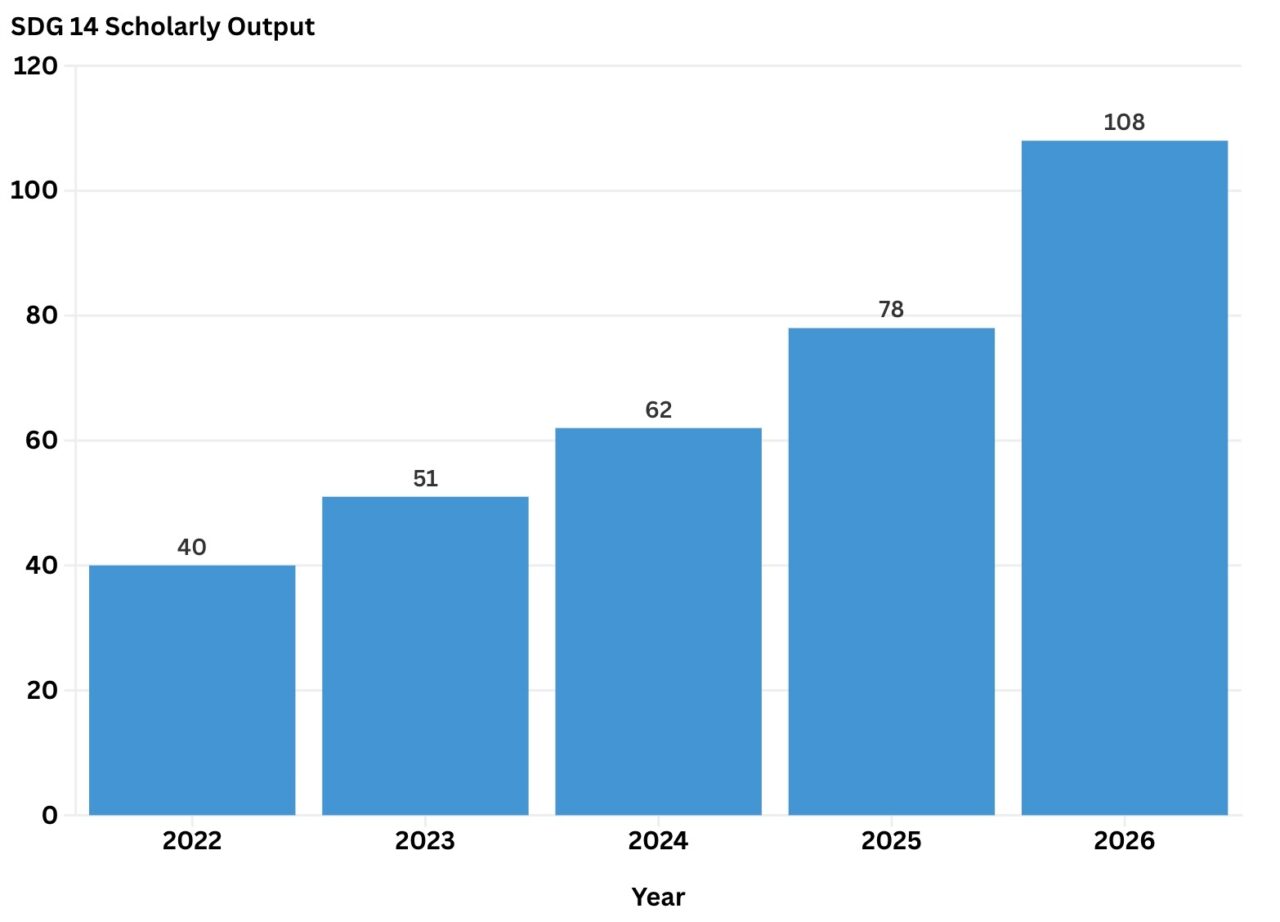
This bar graph presents the SDG 14 Scholarly Output of Thammasat University from 2022 to 2026, focusing on research on life below water. Scholarly output increased consistently from 40 in 2022 to 51 in 2023 and 62 in 2024. The upward trend continued, reaching 78 in 2025 and peaking at 108 in 2026, a 38.5% increase from the previous year. This sustained growth may reflect increasing academic attention to marine conservation, aquatic ecosystems, and the sustainable use of water resources.
Research in SDG 14
Thammasat University produced 108 publications in 2021–2025 under Sustainable Development Goal (SDG) 14, Life Below Water. Output rose from 10 (2021) to 16 (2022), 22 (2023), 22 (2024) and 38 (2025). A synthesis of titles and abstracts yields 8 thematic clusters:
- Microplastics and plastic pollution (26; 14.1): microplastics in Southeast Asian rivers, in mussels and cockles from Thai markets, and in wastewater treatment plants.
- Coastal change, climate vulnerability and adaptation (18; 14.2, 14.3): 35 years of shoreline change in the Upper Gulf of Thailand, coastal vulnerability in two southern provinces, and mangrove biomass estimation.
- Aquatic animal biology, health and breeding (15; 14.7, 14.a): crab and prawn reproductive hormones, antiviral strategies for shrimp, and shrimp genetic selection.
- Aquaculture systems, water treatment and sensing (14; 14.1, 14.7): nitrogen removal in recirculating systems, ammonia sensors and automated shrimp sizing.
- Nutrient and chemical pollution of waters (10; 14.1): nitrogen loading in a Thai river and phosphorus in Inner Gulf sediments.
- Life-cycle assessment of materials and waste (10; 14.1): fly ash concrete and organic waste treatment.
- Coastal development, tourism and ocean governance (9; 14.3, 14.7, 14.c): Eastern Economic Corridor land-use change, tourism growth in Phuket and Pattaya, and maritime security.
- Seafood safety and quality (6; 14.7): fish freshness testing and heavy metals in shrimp paste.
The disciplines behind the research
Fifteen Thammasat units contributed, spanning engineering, natural sciences, medicine, public health, architecture and planning, law and international studies. Each cluster has an anchor unit:
- Sirindhorn International Institute of Technology (SIIT): 18 of the 26 microplastics publications, 9 of the 10 life-cycle publications and 40 publications overall, the most of any unit
- Faculty of Engineering: 9 of the 14 aquaculture systems publications
- Chulabhorn International College of Medicine: 6 of the 15 aquatic animal biology publications
- Faculty of Science and Technology: 5 of the 6 seafood safety publications
- Faculty of Public Health: 4 of the 10 water pollution publications
- Faculty of Architecture and Planning: 4 of the 9 coastal development publications
The Faculty of Liberal Arts and the Faculty of Architecture and Planning jointly mapped tourism-driven land-use change on Phuket, informing sustainable coastal tourism (target 14.7).
Source: SciVal/Scopus, “Publications at Thammasat University within SDG 14: Life Below Water (2025), 2021–2025” (Scopus data last updated 20 September 2026; exported 27 September 2026).