HIGHLIGHTS
- Tackling climate inequality: Thammasat University’s Faculty of Architecture and Planning has partnered with allied networks to launch the “Heat Ready Thailand” project. Piloted in the Phasi Charoen district, it aims to support vulnerable groups severely affected by extreme heat.
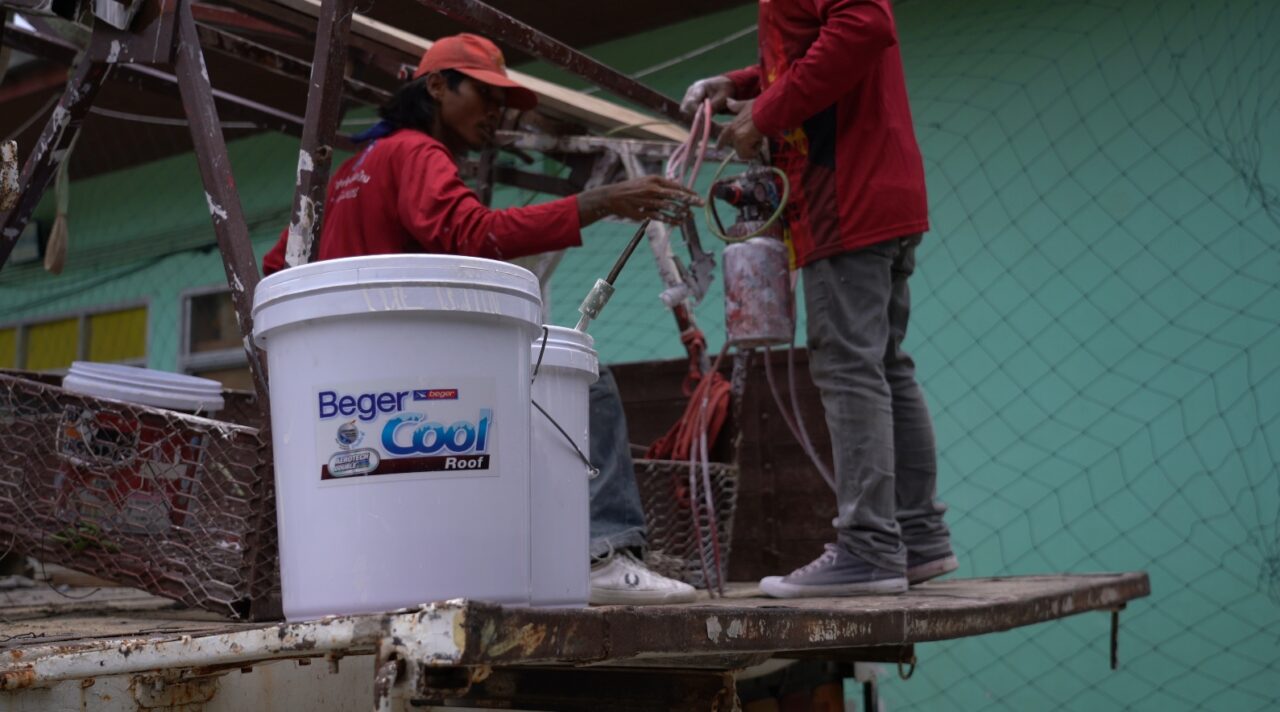
- Highlighting “Cool Roof” innovation: In collaboration with the private sector, heat-reflective paint was applied to the homes of vulnerable residents. This successfully reduced roof surface temperatures by 17–23 degrees Celsius and lowered average indoor temperatures by 2 degrees Celsius.
- Transforming wasteland into a “Cool Island”: Co-creating green spaces with the local community helped reduce surrounding air temperatures by 2–8 degrees Celsius, while also serving as a safe food source and a stormwater retention area.
- Preparing to expand into a city-level model: The project is currently monitoring results and extracting lessons learnt. This data will be used to scale up heat resilience strategies to other communities, turning the Sustainable Development Goals (SDGs) into tangible action.
Bangkok is currently facing extreme heat and the “Urban Heat Island” phenomenon, causing city temperatures to be higher than in surrounding rural areas. However, the impact of this heat is not felt equally by everyone. Vulnerable groups in congested urban communities bear the heaviest burden, as their dwellings—often roofed with corrugated iron—trap heat and turn their homes into ovens. This is compounded by financial constraints that limit their access to air conditioning.
In response to this climate inequality, the Faculty of Architecture and Planning at Thammasat University, led by Assoc. Prof. Dr. Manat Srivanit, Assistant Dean for Research and Knowledge Management, initiated the “Heat Ready Thailand” project. The Phasi Charoen district was selected as a pilot area, as it perfectly reflects the context of a densely populated urban community with a high risk of heat hazards.
A Three-Dimensional Strategy: Combining Academic and Private Sector Forces to Combat Heat Hazards
The project is funded by the ThaiCI fund under the Thai-German cooperation framework (GIZ) and the Office of Natural Resources and Environmental Policy and Planning (ONEP). It lays out spatial problem-solving guidelines to enable the community in Phasi Charoen district to adapt to climate change through three main strategies:
- Developing action-learning processes: Utilizing global warming simulations (“Hot House”) and thermal imaging cameras to allow students at Wat Pradu Bangchak School to visualise the reality of the situation.
- Creating model areas in collaboration with the community: Organising workshops to develop a community heat risk map featuring both “hot spots” (high-temperature areas such as concrete surfaces) and “cool spots” (areas with lower temperatures suitable for resting).
- Developing manuals and disseminating knowledge: Compiling knowledge, producing learning material kits, and creating guidance manuals on strategies to mitigate extreme heat risks for schools and communities.

Project Implementation and Tangible Results
The progress of the project, which has created a tangible impact on the community, includes:
- Transforming overgrown areas into Cool Islands: Collaborating with the community to revitalise abandoned areas along the canal into green spaces (Community Gardens). Trees act like evaporative coolers through transpiration, effectively reducing surrounding air temperatures by 2–8 degrees Celsius. This offers a triple benefit: providing a safe, toxin-free food source, serving as a social space for all ages, and acting as a point to slow down and absorb rainwater to prevent flooding.
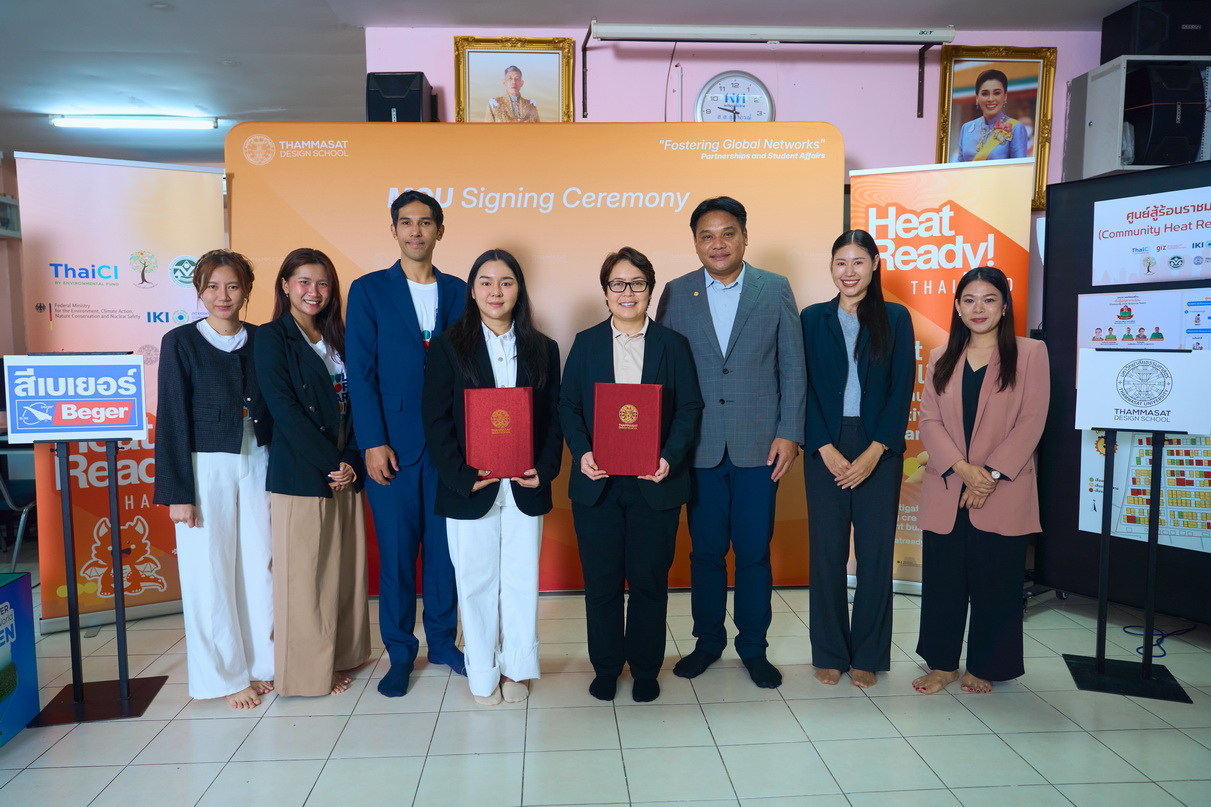
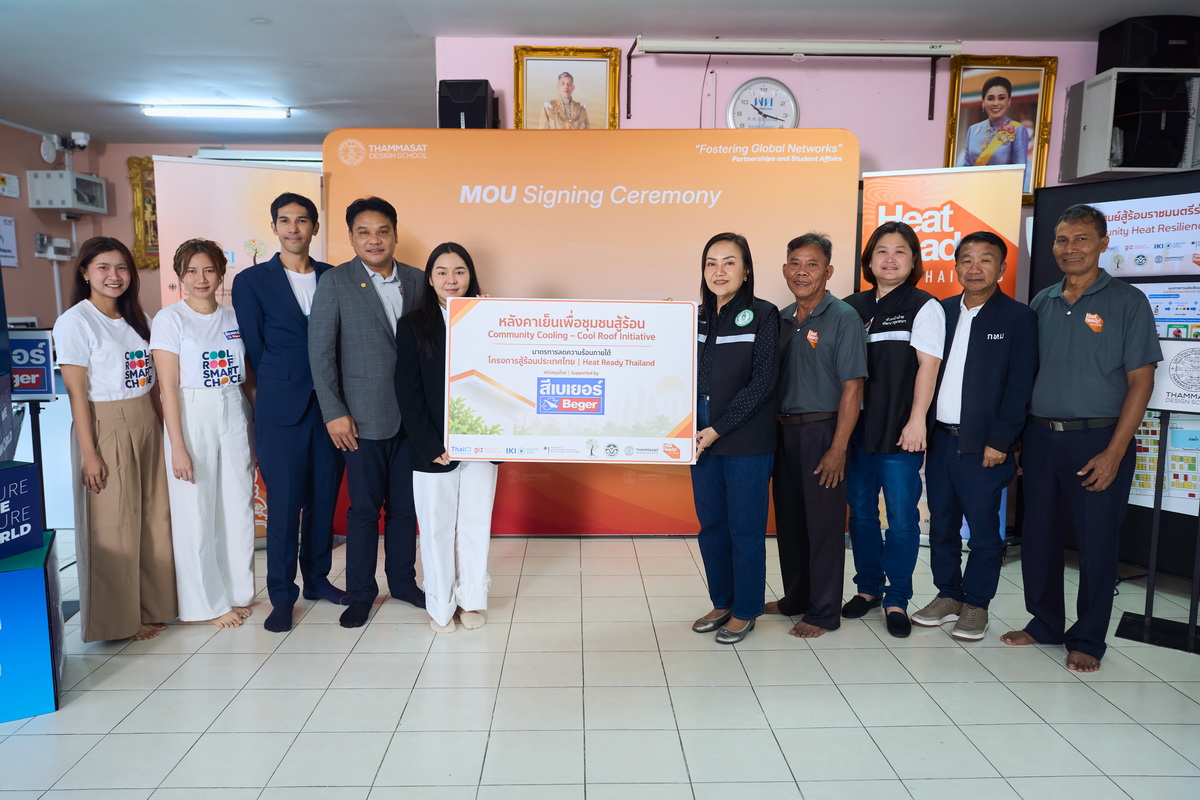
- Cool Roof Innovation: The project integrated cooperation with Beger Co., Ltd., applying heat-reflective paint innovation to test its physical efficiency on a health centre building and two houses belonging to vulnerable groups. Quantitative data collection revealed that roof surface temperatures dropped by 17–23 degrees Celsius (from 58–62 degrees Celsius down to 39–41 degrees Celsius). This significantly reduces heat transfer into the buildings, lowering indoor air temperatures by an average of 2 degrees Celsius. This serves to mitigate the health risks of extreme heat for households lacking air conditioning systems.
The Next Step: From Pilot Area to City-Level Sustainability Model
Currently, the Cool Roof innovation project is undergoing continuous monitoring to evaluate its seasonal efficiency and the durability of the paint, whilst also extracting lessons learned regarding management and budgeting. All data will be analysed to determine the feasibility of expanding the Cool Roof innovation to other communities, ensuring that Thailand’s response to heat hazards is based on real experimental results and the genuine needs of local people.
The “Heat Ready Thailand” project is a vital step for Thammasat University in applying research to solve the climate crisis in collaboration with communities. It aims to drive the Sustainable Development Goals (SDGs), particularly in reducing inequality and building disaster-resilient cities, making them a reality at the local level.
Follow the project’s updates via
Facebook : สู้ร้อนประเทศไทย
Website : Heat Ready Thailand