Have you ever spotted an issue on campus or in society, whether it is plastic waste, mental health, transport, or inequality, and felt inspired to launch a project to make a change? But when it comes to taking action, do you get stuck on where to start, or worry that your project will just be a one-off event that quickly fades away?
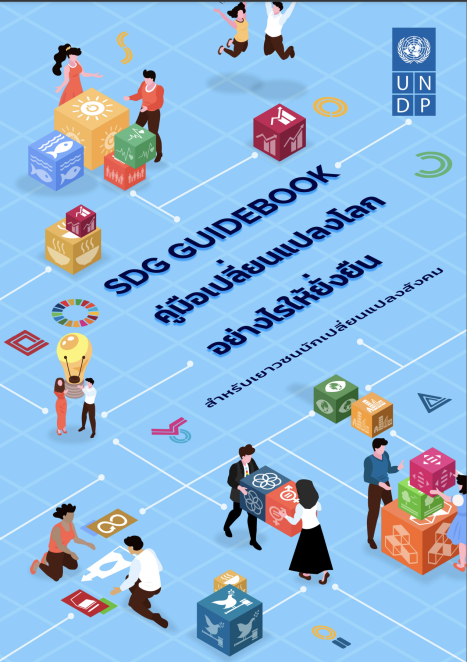
The Thammasat for SDGs editorial team has distilled key concepts and practical steps from the SDG Guidebook for Youth: How to Change the World Sustainably for Youth Social Changemakers (developed by UNDP Thailand and SDG Move) into this SDGs Student Project Playbook. It is designed to help students and activity groups at Thammasat University transform ideas on paper into real-world, sustainable impact.
4 SDG Fundamental Principles for Every Project
Before designing any activity, the key is not simply placing an SDG logo on a promotional poster. You must embed four fundamental principles into your project to ensure it addresses problems at their root without creating new issues:
- Inclusive: Thoroughly consider the impact on all groups, especially vulnerable or under-represented individuals who face greater barriers to accessing resources.
- Indivisible: Social and environmental issues are interconnected and complex. Tackling one issue requires a holistic view to ensure no negative trade-offs harm another area.
- Universal: Ground your project in universally accepted principles, such as human rights, fundamental liberties, equality, and non-discrimination.
- Transformative: Aim for root-cause systemic, cultural, or behavioural changes. Leverage technology where appropriate, and actively involve local communities or target groups in co-designing solutions.
5 Steps to Design an SDG-Aligned Project
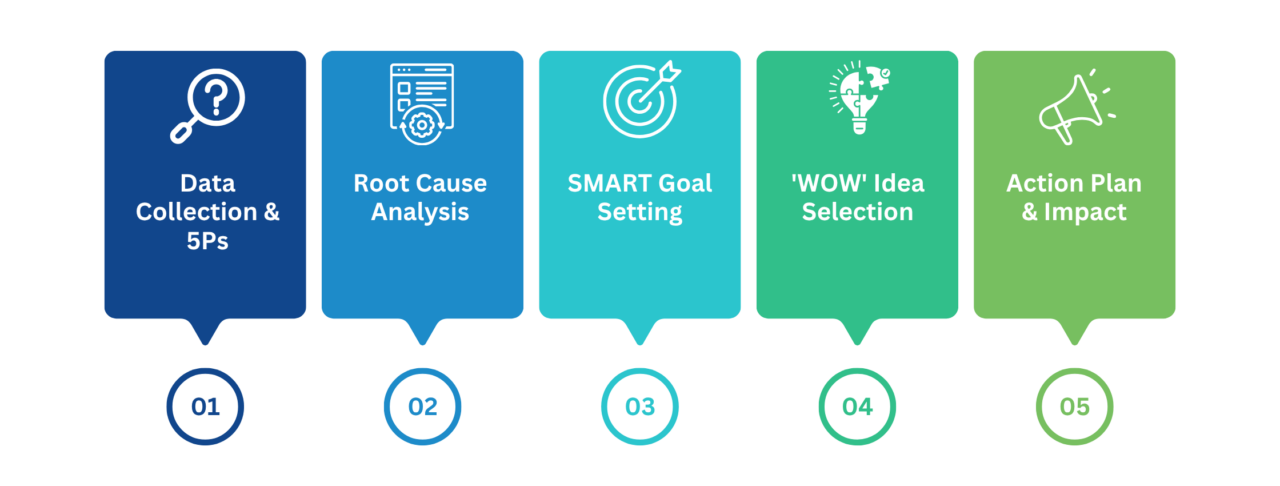
Step 1: Explore Problems and Collect Real Data (Data Collection)
Begin with field exploration and actual data collection rather than assumptions. Use the 5Ps framework (People, Planet, Prosperity, Peace, Partnership) to assess the local context, alongside mapping out 9 key stakeholder groups. Identify direct and indirect beneficiaries (such as youth, women, or local workers), as well as potential supporters and allies (such as businesses, local authorities, or academics).
Step 2: Analyse Root Causes with a 3-Level Problem Tree
Move beyond surface-level fixes by using a 3-level cause-and-effect analysis tree:
- Digging for Causes (Why x3): Ask “Why did this happen?” three consecutive times to uncover underlying root causes beneath visible symptoms.
- Mapping Impacts (What if x3): Ask “What happens if…?” three consecutive times to trace downstream consequences and link them directly to specific SDG targets.
Step 3: Set Measurable and Sustainable Goals
Define project objectives according to SMART criteria: Specific, Measurable, Attainable, Realistic, and Time-bound. Ensure the ultimate goal leaves no one behind and does not harm the environment.
Step 4: Brainstorm and Select ‘WOW’ Ideas
Gather your team to brainstorm as many solutions as possible, then categorise all ideas into four distinct boxes:
- Not Feasible: Unrealistic or requiring excessive resources (discard).
- HOW: Innovative but currently lacking budget or tools (save for future preparation).
- NOW: Conventional ideas already being implemented (keep as a backup plan).
- WOW: Fresh, innovative ideas addressing root causes (prioritise these for evaluation).
Evaluate ideas in the WOW (Red Ideas) box on a 100-point scale across four criteria: Effectiveness in achieving objectives (35 pts), Long-lasting impact (25 pts), Inclusivity/Participation (20 pts), and Efficiency/Resource value (20 pts).
Step 5: Develop an Action Plan and Communicate Impact
Translate your top-scoring idea into a structured Action Plan detailing activities, task steps, expected outcomes, timelines, resources, budget, and team responsibilities. Adapt official SDG indicators to serve as your project’s progress monitoring tools.
Communication is crucial for building engagement and scaling impact:
- Internal Communication: Keep team members updated, encourage mutual appreciation, and show how individual tasks contribute to specific SDGs to foster pride and shared ownership.
- External Communication: Present your SDG Impact, reflect honestly on challenges and lessons learnt, and share your story through platforms such as NESDC’s SDGs Story website, SDSN Youth networks, or university channels.
Case Study: Youth Power in Action at Thammasat
The UNDP’s SDG Guidebook for Youth features real-world examples of youth-led changemakers, including an initiative that originated right here at Thammasat University: the Young Thai for Sustainable Development Association (YSDA).
YSDA began as a student initiative at Pridi Banomyong International College, Thammasat University, aimed at raising awareness of the SDGs within the faculty and campus. It later expanded into a nationwide youth network that welcomes members regardless of nationality or ethnicity. The association conducts training workshops and youth camps (such as SDGs Youth Camps), empowering young people to become active changemakers in their own local communities.
Ready to Turn Your Sustainable Idea into Reality?
Driving sustainable change is not reserved solely for academics or large international institutions: it begins with the energy, creativity, and commitment of students.
If you and your friends have an idea to improve our campus or solve a pressing social problem this term, use this SDG Guidebook as your step-by-step guide. Stay tuned for upcoming opportunities to submit your project proposals and gain support through Thammasat University’s sustainability initiatives throughout the academic year.
Download the SDG Guidebook in English here