HIGHLIGHTS
- A Decade of Collaboration: The Faculty of Social Administration, Thammasat Lampang, has partnered with Lampang Central Prison for over ten years to elevate the quality of life for elderly inmates and prepare them for a sustainable return to society.
- Holistic Rehabilitation Programmes: Initiatives such as the “School for the Elderly” and the use of “Well-Being” tools equip inmates with vocational skills, promote lifelong learning, and restore their psychological well-being and self-worth.
- Comprehensive Support Systems: The project establishes strong internal networks, including multidisciplinary Core Teams and Buddy Support groups, while connecting with families and local organisations to ensure safe community reintegration.
- Empirical Success and Policy Advocacy: The model has successfully improved inmates’ mental health and Activities of Daily Living (ADL) scores, leading to a proposal to the Ministry of Justice to adopt this approach as a national policy to reduce recidivism.
Statistics from the Department of Corrections indicate that approximately one-third of released inmates re-offend within three years. A major cause is the lack of life and social skills, as well as the pressure from not receiving opportunities from society to start anew. This is particularly true for “elderly inmates,” who, in addition to declining physical capabilities, face more severe psychological vulnerabilities than other groups.
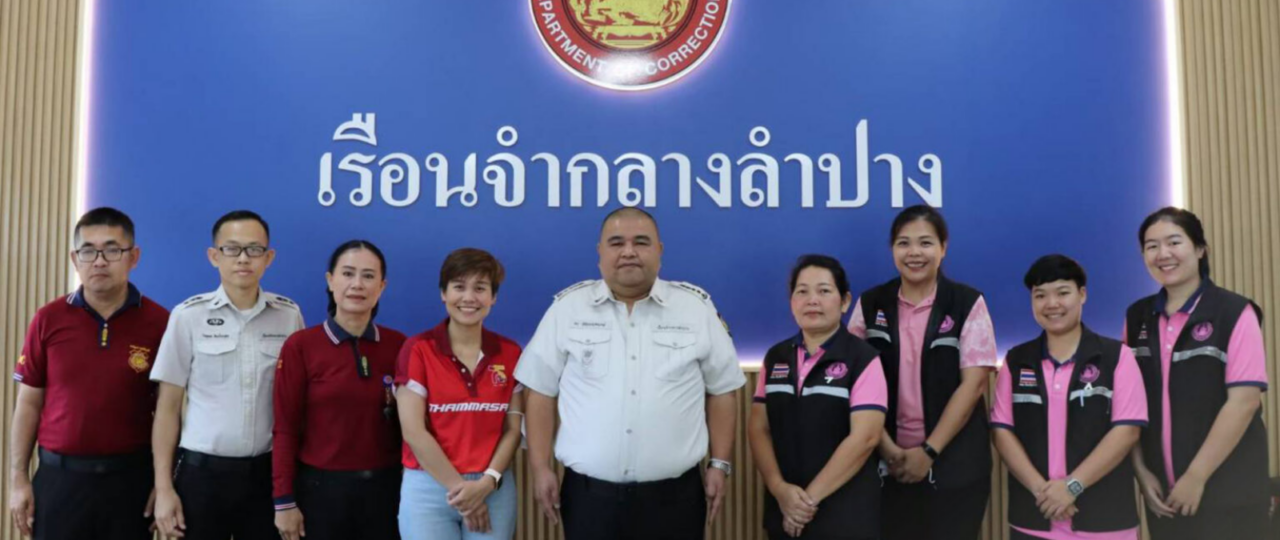
For this reason, over the past decade, the Faculty of Social Administration, Thammasat University (Lampang Campus), has collaborated with Lampang Central Prison and network partners to continuously support the improvement of inmates’ quality of life. This aims to prepare them for a sustainable return to society. An academic working team, led by Asst. Prof. Dr Punika Apirakkraisri, has acted as an “academic partner,” applying academic knowledge for practical benefit on the ground through the following key initiatives:
Co-driving the “School for the Elderly in Lampang Central Prison”
The Ministry of Social Development and Human Security (MSDHS), through the Department of Older Persons (DOP) and the Lampang Provincial Social Welfare Development Centre for Older Persons, collaborated with Lampang Central Prison, Thammasat University (Lampang Campus), and network partners to launch the “School for the Elderly in Lampang Central Prison” project in 2023. This initiative aims to elevate the quality of life for elderly inmates in line with lifelong learning policies.
The curriculum focuses on enhancing vocational and academic skills, alongside psychological development, helping participants realise their self-worth. The goal is to enable elderly inmates to adapt to society and prepare for a happy life after their release. This operation is considered an integrated collaboration to create equal opportunities in accessing welfare and education for vulnerable groups.
Well-Being Tools and the Life and Career Entrepreneurship Manual
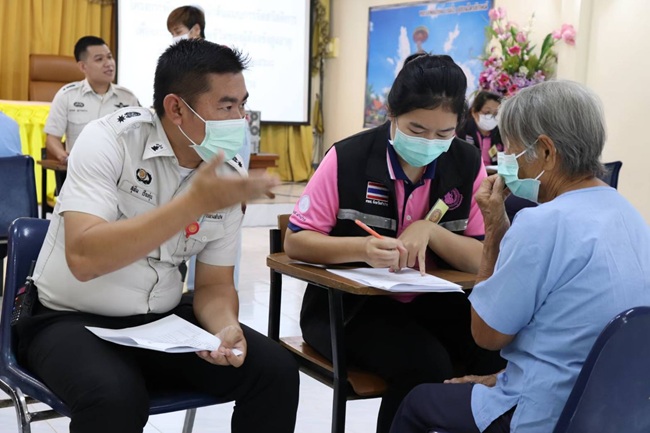
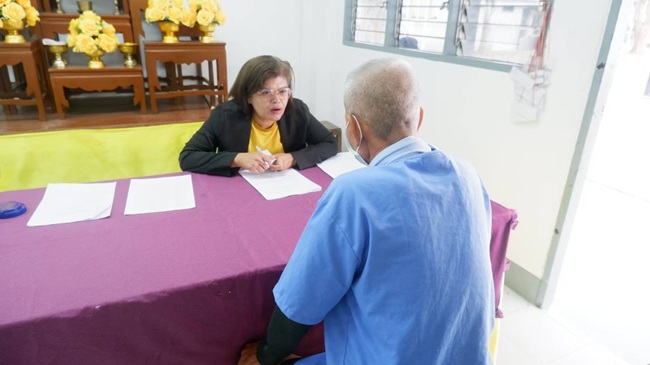
The working group has also implemented “Well-Being” tools to restore positive attitudes among inmates at Lampang Central Prison. Here, “Well-Being” refers to the process of cultivating self-goodwill by encouraging inmates to courageously reflect on themselves from both positive and negative perspectives. This allows them to discover their true potential and foster self-pride.
Furthermore, Lampang Central Prison utilises the “Life and Career Entrepreneurship Manual” to prepare inmates six months to one year prior to their release. Co-developed by the Faculty of Social Administration, TU Lampang, and Lampang Central Prison, the manual focuses on the psychological rehabilitation of the elderly and empowering inmates to believe in their own potential. It serves as a roadmap for living and pursuing careers that genuinely align with their own desires.
Establishing Internal and External Support Systems
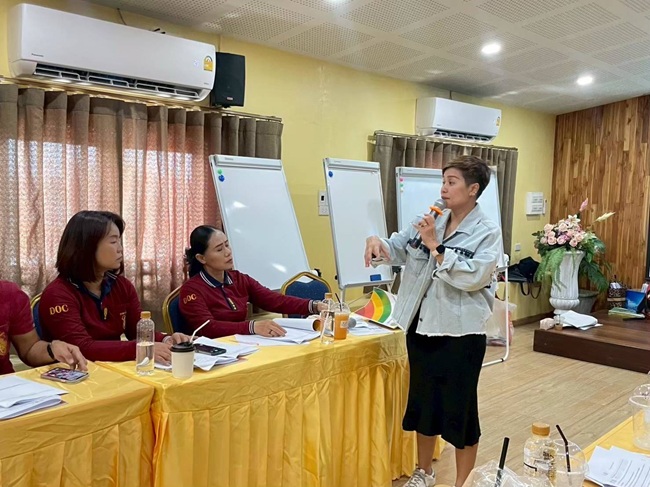
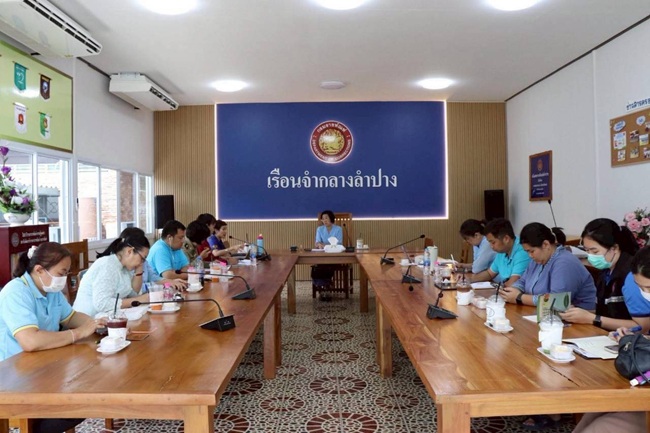
To create a support system for societal reintegration, various operational training sessions were provided to prison staff and personnel, resulting in the formation of a Core Team or a multidisciplinary group within the prison. This was accompanied by the establishment of Buddy Support groups, allowing inmates to care for one another both physically and mentally.
Meanwhile, externally, preparations have been made for families, along with networking with local government organisations, to build an environment ready to support a safe and sustainable return to community life.
Tangible Outcomes and the Next Step Towards Policy
The success over the past decade of this model prison for improving the quality of life for elderly inmates has yielded clear, empirical outcomes. Operations have shown that inmates have developed better relationships with one another, their mental health has improved, and their Activities of Daily Living (ADL) scores show an upward trend.
To push this rehabilitation programme to the policy level, the Faculty of Social Administration, TU Lampang, has presented these guidelines to the Ministry of Justice. The goal is to ensure that target inmates nationwide receive appropriate, individualised care, thereby reducing recidivism and sustainably restoring human dignity to those who have made mistakes.
Follow the operations of the Faculty of Social Administration, Thammasat University (Lampang Campus) at:
Website: Faculty of Social Administration
Facebook Page: Faculty of Social Administration, TU Lampang Campus
Sources:
- ‘ธรรมศาสตร์’ ร่วมฟื้นทักษะชีวิตหลังกำแพง คืนคุณค่า ‘ผู้ต้องขังสูงวัย’ ลดผิดซ้ำหลังพ้นโทษ
- พม. เดินหน้า เปิดโรงเรียนผู้สูงอายุในเรือนจำกลางลำปาง
- คณะสังคมสงเคราะห์ฯ มธ. จับมือกับเรือนจำกลางลำปาง นำโปรแกรมการวางแผนชีวิตและอาชีพมาฝึกสอนให้ผู้กระทำผิดพร้อมสำหรับการกลับสู่สังคม
- กรมกิจการผู้สูงอายุ (ผส.) ร่วมเสวนา เรื่อง “1 ทศวรรษของเรือนจำกลางลำปาง : ต้นแบบเรือนจำพัฒนาคุณภาพชีวิตผู้ต้องขังสูงอายุ”