

Powering Policy: Thammasat University Shapes Clean Energy and Low-Carbon Development

  • National Policy Advisory: Thammasat’s Faculty of Law and energy experts provide direct counsel to the Thai Senate, contributing to landmark legislation like the Solar Energy Promotion Act and offering evidence-based legal expertise for renewable energy adoption.
  • Research-Driven Policy Support: Through SDG Move and SDSN Thailand, the university conducts policy research, identifies gaps, and formulates actionable recommendations on energy transition, including regulatory reform, green financing, and infrastructure planning.
  • Strategic Partnerships for Applied Innovation: Collaborations with state enterprises such as EGAT enable Thammasat to translate research into practical solutions—e.g., EV battery recycling and circular-economy initiatives—that inform sustainable energy policies.
  • Evidence-Based Public Engagement: By hosting forums and seminars on national energy plans (e.g., PDP 2024), Thammasat promotes informed public debate and provides expert critiques to improve policy design, supporting more inclusive and effective clean energy strategies.

Thammasat University is reinforcing its role as a key national solution-provider, informing and supporting governments in developing effective clean energy and energy-efficient technology policies. By translating academic expertise into tangible policy actions, the university is increasingly partnering with government bodies, industries, and civil society to strengthen Thailand’s pathway toward low-carbon development — marking a decisive shift from theory to implementation.

This engagement spans multiple levels of governance, from contributing to national strategy formulation to facilitating on-the-ground solutions and evidence-based policy dialogues.

Engaging Policymakers Through Knowledge Exchange

Thammasat University plays an active role in advancing national energy discussions through academic forums and knowledge-sharing platforms.

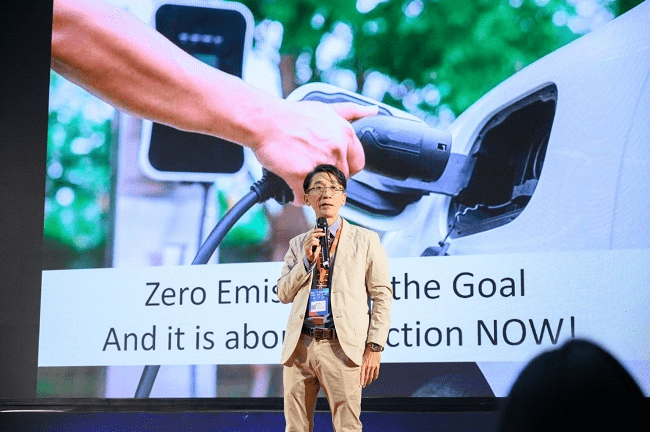
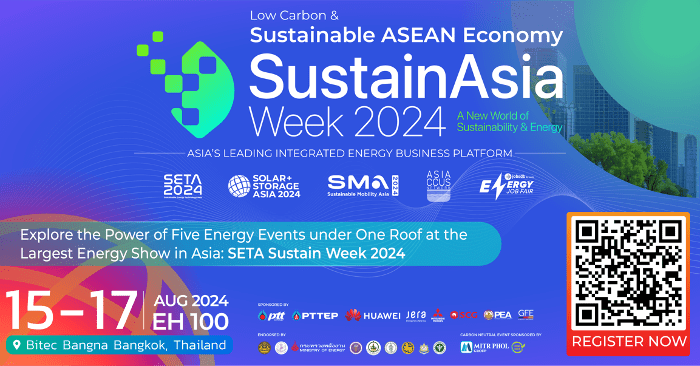
At the Sustainable Energy and Technology Asia (SETA) Week 2024, the university facilitated high-level dialogue between policymakers and industry leaders on climate action. Assistant Professor Dr Prinya Thaewanarumitkul’s session, “Leave Carbon Behind, Not People,” highlighted the urgent infrastructure risks posed by global warming — such as dam vulnerability — and called for stronger national adaptation strategies. He also presented the Thammasat Smart Cityinitiative as a scalable model for sustainable urban development, demonstrating how collaboration with the private sector on EV integration and car-sharing applications can inform national policies for reducing energy consumption and pollution.
National Leadership in Renewable Energy Legislation

Thammasat’s Faculty of Law has played a pivotal role in shaping Thailand’s renewable energy legislation. Legal experts from the Faculty have provided direct counsel to the Thai Senate, contributing to the development of the Solar Energy Promotion Act — a landmark legislative initiative designed to remove regulatory barriers and enable wider public participation in renewable energy generation.

Complementing this policy engagement, Dr Phakphum Lohawiratananith, a lecturer and energy law specialist from the Faculty, shared expert insights on the issue in Julaniti Legal Journal (Vol. 22, No. 2, May–August 2025). His interview on 4 March 2025 highlighted the critical need for legal reform to facilitate solar energy adoption, reinforcing Thammasat’s role in providing evidence-based legal expertise to advance Thailand’s clean energy transition.

Strengthening Policy Research and Institutional Capacity

Through the Centre of SDG Research and Support (SDG Move), Thammasat University — as the national host of the Sustainable Development Solutions Network (SDSN) Thailand — plays a key role in facilitating research and policy engagement that supports government decision-making. Recognising both Thailand’s Net Zero commitment and the need for broader stakeholder participation in energy planning, SDG Move initiated a research project exploring the establishment of a Think Tank for Just Energy Transition in Thailand.

In 2024, collaboration with SDSN Thailand, the centre also convened the high-level stakeholder forum “Thailand’s Just Energy Transition: Programme Update and Key Takeaways.” The meeting brought together representatives from the energy sector, civil society, and government agencies to discuss the socio-economic impacts of coal use and to exchange perspectives on equitable transition pathways.

From these consultations, SDG Move formulated specific policy recommendations supporting national energy transition goals, focusing on:

  • Regulatory and governance reform, including updates to the Power Development Plan (PDP), the application of carbon taxation, and the Polluter Pays Principle.
  • Financial mechanisms, such as enforcing the Thailand Taxonomy to stimulate green investment.
  • Infrastructure and market design, promoting smart-grid investment and Third-Party Access (TPA) implementation.

By identifying policy gaps and building multi-stakeholder consensus, Thammasat University provides a reliable, evidence-based foundation for government decision-making.

Building Strategic Partnerships for Applied Innovation

Thammasat University further strengthens its policy impact through strategic partnerships with key state enterprises. On 23 July 2025, the university signed a Memorandum of Understanding (MOU) with the Electricity Generating Authority of Thailand (EGAT) to jointly promote and develop research on energy, community, society, and environmental sustainability.

This collaboration aims to translate academic research into innovations that can be applied directly in policy and practice. Areas of joint study include EV battery recycling (Black Mass) and the use of power-generation by-products, aligning with national priorities for circular-economy and clean-technology development. Through this partnership, Thammasat contributes practical, research-based solutions that inform sustainable energy policies.

Providing Evidence-Based Critique to Improve Policy

Thammasat University also supports the policy-making process by offering expert, evidence-based critiques of national energy strategies and creating public platforms for policy dialogue.

On 4 July 2024, the Centre of SDG Research and Support (SDG Move) at Thammasat University’s Faculty of Economics hosted a national seminar titled “Power Development Plan (PDP) 2024: Thailand at the Crossroads.” The event aimed to raise public awareness of the implications of Thailand’s Power Development Plan and to promote an inclusive, just, and sustainable energy transition. It served as an open forum for discussion among academics, policymakers, and citizens on how energy policy affects people’s daily lives and the country’s sustainable future.

Building on this approach, on 8 November 2024, SDG Move organised the seminar “Beyond Coal: Advancing Clean Energy and a Just Transition” at the Faculty of Economics. The seminar provided a platform for academics, energy experts, civil society representatives, and government stakeholders to discuss Thailand’s reliance on coal — a major contributor to greenhouse gas emissions and climate change — and to explore evidence-based solutions for transitioning to clean energy.

In addition, Assoc. Prof. Dr Chalee Charoenlapnopparat of SDG Move represented the university in the public forum “A Better World is Possible: Debating the PDP 2024 Plan for the People and a Better World” on 31 July 2024, which specifically analysed the draft Power Development Plan 2024.
In this forum, Dr Chalee identified critical flaws such as over-forecasted electricity demand, continued reliance on fossil fuels, and insufficient renewable energy integration. He also provided a concrete recommendation — to include Solar Rooftops in the PDP 2024 — to enhance national energy security and self-reliance.

The forum was broadcast live through multiple Facebook pages, expanding public access and awareness of Thailand’s energy policy debate and encouraging broader civic engagement in the clean energy transition.
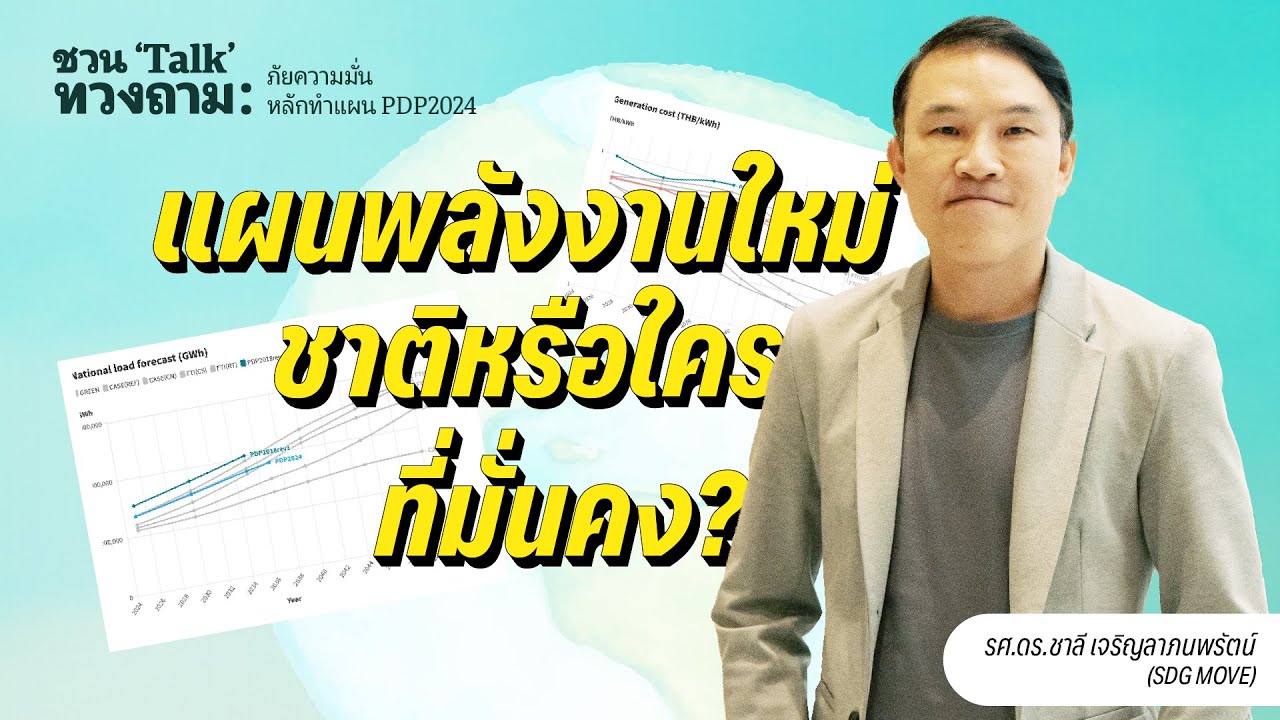

A Better world is Possible: ถกถามแผน PDP2024 เพื่อประชาชนและโลกที่ดีกว่า" ️  - Data Hatch

By both organising and contributing to national dialogues on Thailand’s energy planning, Thammasat University — through SDG Move — helps inform public understanding and directly supports government action toward a more effective and equitable clean energy policy.

University Driving Evidence-Based Policy

Across these diverse initiatives — from high-level dialogues and collaborative research to official partnerships and policy critique — Thammasat University consistently informs and supports governments in clean energy and energy-efficient technology policy development.

Through the integration of academic expertise with policymaking processes, Thammasat ensures that research findings do not remain theoretical but instead translate into concrete, evidence-based policies that advance Thailand’s transition toward a low-carbon and energy-efficient future.

Championing the Clean Energy Transition Through Action and Advocacy

HIGHLIGHTS

  • Hosts Public Advocacy Events: The university actively holds public events and discussions to promote a national clean energy transition. This includes high-level seminars such as the “Beyond Coal: Clean Energy Transition Dialogue” seminar, which convene experts and civil society to discuss policy and practice for reducing coal reliance.
  • Provides Technical Support for Industry Pledges: Thammasat directly supports external organisations in adopting cleaner energy. Through a 2024 collaboration, its ECEE and the Thailand Greenhouse Gas Management Organization (TGO) are providing technical consultancy to 20 pilot companies to help them adopt Net Zero pathways.
  • Offers Public Education on Clean Energy: The university provides clean energy education accessible to the “general public,” not just its own students. The Green Energy Innovation Learning Center serves as an open-access hub for the wider community to learn about solar power and green innovations, fostering broader public support for renewables.

Thammasat University actively pursues its ambitious sustainability goals, including achieving Carbon Neutrality by 2050, and recognises its critical role in inspiring broader societal change towards clean energy. The university contributes significantly to this goal through a dual approach: demonstrating large-scale renewable solutions on its own campus and actively fostering the wider industry and public transition through advocacy and capacity building.

Leading by Example: Demonstrating Renewable Viability

To showcase the practical benefits and feasibility of renewable energy, Thammasat has invested significantly in large-scale, public-facing projects.

  • Large-Scale Solar Rooftop Project: Our extensive Solar Rooftop project at the Rangsit campus serves as a powerful demonstration of renewable energy viability within a major institution. Currently generating 10% of the campus’s electricity needs from clean solar power, this initiative significantly reduces CO2 emissions by over 21,000 tonnes annually. By openly sharing the success and scale of this project, Thammasat aims to inspire similar initiatives in other organisations across Thailand.
  • Pioneering Public Renewable Energy: The Thammasat Solar Park at the Rangsit Campus was established as the first 100% renewable energy public park in Thailand. This initiative serves as a visible and accessible example of sustainable design for the wider community, embodying the university’s commitment to sharing sustainable solutions.
  • Green Energy Innovation Learning Centre: Further extending its educational mission, Thammasat, in collaboration with Solartron, opened the Green Energy Innovation Learning Center. This centre serves as a vital hub for promoting knowledge about clean energy technologies. Crucially, it is open to the general public, reinforcing Thammasat’s role as a ‘University for the People’ in the sphere of sustainable energy education.

Driving the National Dialogue: Advocacy Through Events and Discussions

Thammasat leverages its academic platform to foster crucial discussions and build capacity for the energy transition, directly engaging in public advocacy.

  • Hosting Specific Transition Dialogues: Thammasat organised the high-level seminar, “Beyond Coal: Clean Energy Transition Dialogue”. The primary goal of this event was to discuss approaches for reducing reliance on coal within Thailand’s energy sector. This dialogue brought together academics, experts, and civil society representatives to identify practical solutions and policies for promoting clean energy use.
  • Disseminating Knowledge: The Faculty of Law ensures that research findings and summaries from academic seminars—including those on energy transition—are distributed widely through effective communication channels, such as social media and accessible infographics, to respond to contemporary social issues.

Fostering Industry Transition: Building Capacity Beyond Campus

Thammasat actively engages beyond its borders to facilitate the clean energy transition in other sectors. A prime example is the 2024 collaboration between the Center of Excellence in Ecological Economics Energy (ECEE) at the Faculty of Engineering and the Thailand Greenhouse Gas Management Organization (TGO).

This joint project, titled “Promoting Industrial Sector Greenhouse Gas Emission Target Setting Towards Net Zero via Science-Based Targets,” aims to build capacity within industry. Under this MOU, TGO and ECEE provide technical support and consultancy to 20 pilot organisations on setting Science-Based Targets (SBT), including training on GHG reporting and identifying technologies to achieve Net Zero pathways. This initiative fundamentally enables businesses to increase their adoption of cleaner energy sources as part of their decarbonisation, thereby promoting the shift towards renewables in the wider economy.

Through these concerted actions—demonstrating large-scale renewable success on its own campus and actively supporting the decarbonisation efforts of public and private partners—Thammasat University contributes meaningfully to fostering an environment where ambitious renewable energy goals become more attainable for society as a whole.

Thammasat University Mandates Energy Efficiency Standards for All Building Construction and Renovation Projects

HIGHLIGHTS

  • Official Policy Established: Two university notifications, the “Policy on Environmental Management” and the “Policy on Energy Conservation Management…” , both dated October 18, 2024, establish the requirement.
  • Covers New Builds & Renovations: The policies explicitly state that the requirements apply to “All new build developments” and “Construction and renovation of all buildings”.
  • Specific Energy Efficiency Standard Mandated: Both policies require projects to achieve a minimum “Certified” rating from TREES (Thai’s Rating of Energy and Environmental Sustainability).

Thammasat University has formally integrated stringent energy efficiency standards into its campus development guidelines through two key policies issued on October 18, 2024: the “Policy on Energy Conservation Management and Access to Modern Sustainable Energy” and the “Policy on Environmental Management.” These policies ensure that energy conservation and sustainable design principles are fundamental considerations for all new construction and renovation projects across the university.

Setting a High Standard: The TREES Certification Requirement

A central element of this commitment is outlined in Article 9 of the Policy on Energy Conservation Management and Access to Modern Sustainable Energy. This crucial article mandates that:

“Construction and renovation of all buildings within Thammasat University will adhere to the building design principle for energy conservation and must take into account energy efficiency as a primary factor, following the minimum “Certified” rating from TREES (Thai’s Rating of Energy and Environmental Sustainability).”

This requirement ensures that both new builds and major renovations are designed and executed with energy efficiency as a top priority. Adherence to the TREES standard provides a clear, measurable benchmark for sustainable building practices recognized within Thailand.

Reinforcing Sustainable Design Principles

The Policy on Environmental Management further reinforces this direction. Article (2) requires the university to “Perform design and physical development while following sustainable building design principles”, while Article (3)specifically reiterates that “All new build developments will be required to achieve a minimum ‘Certified’ rating from TREES”.

A Comprehensive Approach

By embedding these requirements directly into official university policy, Thammasat ensures that energy efficiency is not an afterthought but a core requirement for developing and maintaining its physical infrastructure. These policies, effective from late 2024, guide the university’s efforts to reduce its overall energy consumption, minimize environmental impact, and build a more sustainable campus for the future.

Thammasat University’s Policy Commits to Equal Pay for Work of Equal Value

HIGHLIGHTS

  • Formal Policy Exists: Thammasat University has a formal “Fair and Good Governance Employment Policy”establishing clear standards against workplace discrimination.
  • Explicit Non-Discrimination Against Women (Clause 1): The policy explicitly prohibits discrimination based on gender (defined inclusively to cover sex, gender identity, sexual orientation, expression) across all employment processes, including hiring, pay, promotion, and termination.
  • Specific Commitment to Equal Pay (Clause 4): The policy enshrines “Equal Pay for Work of Equal Value”specifically “without gender bias” and commits the university to measuring and eliminating gender pay gaps.
  • Protection for Reporting Discrimination (Clause 5): The policy guarantees protection for complainants against unfair retaliation, ensuring a mechanism to uphold the non-discrimination principles.

Thammasat University reaffirms its unwavering commitment to gender equality and fair employment practices through its comprehensive Fair and Good Governance Employment Policy. This policy establishes clear and robust protections against discrimination, ensuring that women have equal opportunities and are treated with respect throughout their employment journey at the university.

Fair-and-Good-Governance-Employment-Policy-2025

Explicit Prohibition of Gender-Based Discrimination

A core tenet of the policy, outlined in Clause 1, is the strict prohibition of any form of discrimination based on gender. This explicitly includes discrimination based on sex, gender identity, sexual orientation, and gender expression. This principle applies universally across all stages of employment, including recruitment, selection, hiring, compensation, work assignments, performance evaluation, training, promotion, career advancement opportunities, benefits, and termination. This ensures women face no barriers based on their gender.

Commitment to Equal Pay and Future Analysis

Reinforcing this commitment, Clause 4 champions the principle of “Equal Pay for Work of Equal Value”. The university mandates that compensation structures are based on objective factors like skills, experience, and responsibility, explicitly “without gender bias”. Furthermore, the policy commits Thammasat to regularly measure and monitor gender pay gaps and take active steps to eliminate any disparities. As part of standard personnel management, the university systematically collects and manages staff remuneration data. This existing data provides the essential foundation for undertaking future pay equity analyses, in line with the policy’s commitment to ensuring genuine financial equity.

Protection Against Retaliation

Recognising the importance of a safe reporting environment, Clause 5 guarantees that the university will provide effective channels for lodging complaints regarding unfair treatment. Crucially, it ensures protection for complainants against any form of unfair retaliation, empowering individuals to report discrimination without fear of reprisal.

Through its specific clauses regarding gender, pay equity, and the systematic collection of necessary data, Thammasat University’s Fair and Good Governance Employment Policy provides a strong framework guaranteeing non-discrimination against women. This policy reflects Thammasat’s dedication to fostering an inclusive, equitable, and respectful workplace for all.

Thammasat University Reinforces Commitment to Fair Employment and Good Governance

HIGHLIGHTS

  • Comprehensive Non-Discrimination Policy (Clause 1): The policy explicitly prohibits discrimination on multiple grounds including religion, gender (covering gender identity/expression & sexual orientation), age, and refugee statusacross all employment processes.
  • Strong Stance Against Forced Labour (Clause 2): Thammasat unequivocally opposes forced labour, modern slavery, human trafficking, and illegal child labour, ensuring fair and legal employment practices.
  • Equivalent Rights for Outsourced Staff (Clause 3): The policy mandates that external contractors provide their personnel with equivalent rights, fair treatment, and non-discriminatory compensation, with university oversight.
  • Commitment to Pay Equity & Gender Pay Gap Elimination (Clause 4): The university adheres to “Equal Pay for Work of Equal Value,” commits to measuring and monitoring gender pay gaps, and aims to implement measures to eliminate them.

As an institution founded on the principles of liberty, equality, and justice, Thammasat University continually strives to uphold the highest standards in managing its human resources. Reflecting our commitment to human rights and sustainable development, the university has established a comprehensive Fair and Good Governance Employment Policy, setting clear standards for a respectful, ethical, and non-discriminatory working environment.

Equality and Non-Discrimination: A Cornerstone Principle

The policy firmly embeds the principle of equality throughout all aspects of employment. Thammasat University commits to treating every staff member with dignity and respect, prohibiting any form of direct or indirect discrimination based on origin, race, nationality, colour, religion, political belief, gender (including gender identity, sexual orientation, and gender expression), age, marital status, social status, disability, or refugee status. This principle applies across the entire employment journey, from recruitment and selection through to remuneration, assignments, performance evaluation, training, promotion, benefits, and termination.

Upholding Labour Rights: Opposing Exploitation

Thammasat unequivocally opposes forced labour, modern slavery, human trafficking, and illegal child labour in all forms. The policy condemns any actions involving physical or mental abuse, threats, coercion, confinement, or violence. The university actively ensures that all employment within its purview is conducted legally and fairly.

Ensuring Fair Treatment for Outsourced Personnel

Recognising the importance of fair labour practices throughout its operations, the university mandates that external contractors and service providers (Outsource) must treat their personnel in strict accordance with human rights principles and labour laws. Thammasat commits to monitoring and encouraging equitable treatment and fair, non-discriminatory compensation for these individuals by their employers. The university reserves the right to seek corrective action or terminate contracts if unfair practices are identified.

Commitment to Pay Equity

The policy enshrines the principle of “Equal Pay for Work of Equal Value”. Thammasat determines compensation structures based on knowledge, skills, experience, job characteristics, and responsibilities, free from gender bias or any other form of discrimination. Furthermore, the university is committed to regularly measuring and monitoring any gender pay gaps and implementing appropriate measures to eliminate such disparities, ensuring genuine fairness within the organisation.

Implementation and Accountability

All personnel and administrators share the responsibility of upholding this policy and fostering a corresponding organisational culture. Thammasat provides effective grievance channels for staff who experience unfair treatment and guarantees protection for complainants against unjust retaliation.

This policy reaffirms Thammasat University’s dedication to being a responsible employer, fostering a workplace built on fairness, respect, and good governance for all members of its community.

Fair-and-Good-Governance-Employment-Policy-2025

Thammasat University Announcement 
Re: Fair and Good Governance Employment Policy B.E. 2568 (2025) 

Whereas Thammasat University is an institution of higher education for the people , and has always upheld the principles of liberty, equality, and justice , and recognizes the importance of respecting universal human rights, in line with the Sustainable Development Goals (SDGs) , the University hereby establishes a human resource management policy as a standard for promoting a working environment free from discrimination, that is ethical and mutually respectful.

By virtue of the Thammasat University Act B.E. 2558 (2015), it is deemed appropriate to establish the policy guidelines on equality and fair employment as follows:

Clause 1 Principle of Equality and Prohibition of Discrimination: Thammasat University is committed to management and operations under the principle of equality , and shall treat all personnel with respect for human dignity. Direct or indirect discrimination, segregation, exclusion, or restriction of any benefits is prohibited on the grounds of difference in origin, race, nationality, skin color, religion, political belief, sex (which includes gender identity, sexual orientation, and gender expression), age, marital status, social status, physical disability or health, or refugee status.

This principle shall apply throughout the employment process, from recruitment and selection, employment, compensation, job assignment, performance appraisal, training and development, promotion and career advancement opportunities, as well as welfare and termination of employment.

Clause 2 Policy Against Forced Labor and Human Trafficking: Thammasat University has a firm commitment to opposing all forms of forced labor, slavery, human trafficking, and illegal child labor , including any act that constitutes physical or mental abuse, whether through intimidation, harassment, wrongful detention, or violence. The University shall supervise and promote all types of employment within the University to be lawful and fair.

Clause 3 Guaranteeing Equal Rights for External Personnel: The University requires external contractors or service providers (Outsource) working for the University to strictly comply with human rights principles and labor laws in their treatment of their personnel. The University shall support and monitor that these personnel are treated equally and receive fair compensation from their employers without discrimination.

If unfair treatment is found to have occurred, the University shall take necessary action to ensure proper rectification , or may consider terminating the contract.

Clause 4 Equal Pay and Elimination of the Gender Pay Gap: The University is committed to the principle of “Equal Pay for Work of Equal Value”, and shall determine compensation structure based on knowledge, ability, experience, job characteristics, and responsibility, free from gender bias or other discrimination.

The University is committed to regularly measuring and monitoring the gender pay gap , and shall establish appropriate measures to eliminate such gaps , in order to achieve true fairness within the organization.

Clause 5 Enforcement: Personnel and management at all levels are responsible for complying with and promoting an organizational culture consistent with this policy. The University shall provide effective grievance channels for personnel who have received unfair treatment , and shall protect complainants from unfair retaliation.

This is therefore announced for general acknowledgement and compliance as a guideline.

Announced on October 15, B.E. 2568 (2025).

(Prof. Dr. Supasawad Chardchawarn) Rector of Thammasat University 

Thammasat University’s Lifelong Learning Policy: Expanding Opportunities and Ensuring Equality

HIGHLIGHTS

  • Formal Policy Exists: Thammasat University has a formal Lifelong Learning Policy (B.E. 2568 / 2025) establishing a framework for lifelong learning initiatives.
  • Explicit Non-Discrimination Clause (Article 4): The policy guarantees access equality, explicitly stating non-discrimination based on race, religion, gender identity, origin, socio-economic status, or physical disability, directly addressing the indicator’s core requirement.
  • Comprehensive Scope: The policy covers various lifelong learning activities, including online courses, credit banking, facility access (libraries, museums), and online resources (digital collections, lecture recordings).

Reinforcing its founding vision as an open “market of knowledge,” Thammasat University proudly introduces its Lifelong Learning Policy (B.E. 2568 / 2025). This landmark policy solidifies our dedication to expanding educational pathways and promoting continuous learning, directly supporting Sustainable Development Goal 4 (Quality Education) and ensuring learning opportunities are genuinely accessible to everyone.

Equality and Non-Discrimination: A Core Principle Ensured by Article 4

Central to this policy is an unwavering commitment to equal opportunity. Article 4 (Principles and Intent) explicitly enshrines this commitment, stating that Thammasat University provides educational opportunities “equally for everyone” based on democratic principles. Crucially, this article guarantees “non-discrimination based on differences in race, religion, gender identity, origin, socio-economic status, or physical disability.” This specific clause ensures that all lifelong learning activities are accessible to all members of the community, regardless of their background, fulfilling a key aspect of inclusive education.

A Comprehensive Framework for Future Learning

Beyond this core principle, the policy outlines a forward-thinking approach to lifelong education:

  • Flexible Digital Learning: Expanding short courses, upskilling/reskilling programs, and micro-credentials through accessible online platforms.
  • Credit Accumulation: Implementing a Credit Bank system, allowing learners to gather and potentially transfer learning credits towards formal degree programs.
  • Holistic Integration: Encouraging all university departments to incorporate lifelong learning into their core activities – teaching, research, and community service.
  • Strong Partnerships: Collaborating with government agencies, private businesses, and local communities to develop learning opportunities that meet societal and workforce needs.
  • Resource Accessibility: Granting lifelong learners appropriate access to vital university resources, including libraries and online databases.

The Lifelong Learning Policy, particularly the clear non-discrimination guarantee within Article 4, demonstrates Thammasat University’s proactive stance in creating an equitable and accessible learning environment. We remain dedicated to empowering individuals throughout their lives and serving the evolving needs of Thai society.

Lifelong-Learning-Policy-2025

Thammasat University Announcement
Re: Lifelong Learning Policy B.E. 2568 (2025)

In accordance with the aspiration of Professor Dr. Puey Ungphakorn, who founded Thammasat University as a “Open University” to provide equal educational opportunities to the public, amidst the rapidly changing world, Lifelong Learning is a critical key to developing the potential of individuals and creating a sustainable society. This directly aligns with the United Nations’ Sustainable Development Goal (SDG) 4, which aims to ensure inclusive and equitable quality education and promote lifelong learning opportunities for all.

Therefore, to carry on the spirit of being a “University for the People” and to drive the University’s strategy of becoming a “Leading Comprehensive University for Future Societies,” this announcement on the Lifelong Learning Policy is issued. It serves as a framework for expanding educational opportunities, reducing inequality, and creating a learning ecosystem that is truly accessible to everyone.

By virtue of Section 39 (1) of the Thammasat University Act B.E. 2558 (2015), the following announcement is made:

Clause 1 This Announcement shall be called the “Thammasat University Announcement Re: Lifelong Learning Policy B.E. 2568 (2025)”.

Clause 2 This Announcement shall come into force on the day following the date of its publication.

Clause 3 In this Announcement:

  • “Lifelong Learning” means the provision of education in the formal, non-formal, and informal systems, blended in diverse ways, to enable individuals to continuously develop the knowledge, skills, and competencies necessary for work and life throughout their lives.
  • “Learner” means the general public, current students, alumni, and University personnel who have registered as learners in the University’s lifelong learning system.
  • “Credit Bank” means a centralized registration system for accumulating learners’ learning outcomes and credits from participating in various courses or subjects, for the purpose of credit transfer toward a degree program, or for professional competency certification.

Clause 4 Principles and Intent: Thammasat University’s intent is to be a leading learning resource that provides accessible and equitable educational opportunities for everyone. The University adheres to the principles of democracy and equality, without discrimination based on race, religion, gender identity, origin, socioeconomic status, or physical disability.

Clause 5 Policies and Implementation Guidelines (1) The University shall promote access to diverse bodies of knowledge by developing Short Courses, courses for Upskilling and Reskilling, including the development of online course content in the form of learning courses and short-term competency certification (Micro-credentials) through the University’s digital learning platform, to ensure learners can access them anytime, anywhere. (2) The University shall develop a flexible learning system, allowing learners to manage their learning according to their potential and needs, and shall provide a Credit Bank system to enable learners to accumulate learning outcomes throughout their lives, which can be used for credit transfer toward the University’s degree programs, in accordance with related regulations. (3) The University shall encourage all administrative units to integrate the concept of lifelong learning with their core missions, including teaching, research, and academic service, to create a robust and sustainable learning ecosystem. (4) The University shall expand its network of cooperation with various sectors—public, private, and community—to jointly develop curricula and organize learning activities that respond to the needs of society and the country’s labor market. (5) The University shall promote access to its educational resources for learners in the lifelong learning system, such as libraries, online databases, and various academic services, in accordance with the regulations prescribed by the University.

Clause 6 The President shall be responsible for the execution of this Announcement and shall have the authority to issue additional rules, regulations, or announcements of guidelines that are not contrary to or inconsistent with this Announcement.

Announced on October 15, B.E. 2568 (2025).

(Prof. Dr. Supasawad Chardchawarn) Rector of Thammasat University

Thammasat Championing Inclusivity: Empowering Students with Disabilities in Alignment with the SDGs

HIGHLIGHTS

  • Disaster Impacts Exacerbated by Governance & Data Gaps: The seminar revealed that the Hatyai flooding was intensified not only by extreme rainfall, but also by failures to utilise real-time data and outdated warning systems — leaving citizens without adequate time to protect lives and property.
  • Breakdown of Crisis Management & Public Service Delivery: Frontline experiences showed a lack of preparedness, weak coordination across agencies, ineffective evacuation support, and no unified command — resulting in communities relying on themselves and private networks during the crisis.
  • Legal Overlaps Create Accountability Challenges: Multiple laws enforced simultaneously caused confusion in the chain of command, while the Emergency Decree limited personal liability of state officials — complicating legal pathways for disaster victims seeking justice and remedies.
  • Call for Rights-Based State Responsibility in Disasters: Scholars proposed that courts recognise the State’s constitutional duty to protect citizens. Where mismanagement worsens disaster impacts, the State should be liable for incremental damages — establishing stronger accountability and driving reform toward transparent, efficient disaster governance.

Creating an “Inclusive Environment” where no one is left behind is a core principle of the United Nations Sustainable Development Goals (SDGs). This principle emphasises the right of every individual—regardless of physical, sensory, or cognitive differences—to access equal opportunities in education, social participation, and quality of life. In higher education, this vision is particularly aligned with SDG 10 (Reduced Inequalities) and SDG 4 (Quality Education), which call for the removal of systemic barriers and the creation of learning environments that embrace diversity.

Thammasat University has emerged as a leading example of how universities can translate these global goals into concrete action. Through long-term policy commitment, institutional mechanisms, and inclusive campus design, Thammasat has developed a comprehensive support system that enables students with disabilities not only to study, but to thrive as full members of the university community.

This commitment was recently recognised in the project “#Review10Universities: Where Should Disabled Kids Study?”, produced by the “Where Should Disabled Kids Study?” programme. Supported by the Safe and Creative Media Development Fund, and created by the Duaykan (Together) Group for the Disabled and Society Foundation in collaboration with Allamax Co., Ltd., the review highlighted Thammasat University as a benchmark institution for inclusive higher education. The project emphasised Thammasat’s multi-dimensional approach, which integrates academic support, infrastructure development, and social participation.

Below is an overview of how Thammasat University is transforming its campus into a truly inclusive “home for everyone”:

1. Educational Support: No Barriers to Learning

(SDG 4: Quality Education)

At the centre of academic inclusion is the Disability Support Services Centre (DSS), a specialised unit that ensures students with disabilities receive systematic and continuous support throughout their university journey. Assistance begins from the admission process, ensuring equal access to higher education for students with diverse impairments, including visual, hearing, mobility impairments, and those on the autism spectrum.

Currently, students with disabilities are enrolled across more than 20 faculties and disciplines at the Rangsit Centre, reflecting Thammasat’s commitment to inclusive education without academic segregation. The DSS Centre works closely with faculties, lecturers, and administrative units to adapt teaching methods and learning materials where necessary.

Key support services include:

  • Assistive Technology Rooms: Dedicated computer laboratories equipped with screen reader software and accessibility tools that enable visually impaired students to access academic documents, conduct online research, and complete coursework independently.
  • Equipment Lending Service: A centralised resource library offering assistive devices such as iPads, voice recorders, white canes, and wheelchairs. This service reduces financial barriers and ensures that students can fully engage in learning activities both inside and outside the classroom.

Through these measures, Thammasat ensures that physical limitations do not become intellectual limitations, reinforcing the principle that quality education must be accessible to all.

2. Infrastructure & Universal Design

(SDG 11: Sustainable Cities and Communities)

Recognising that accessibility is not limited to classrooms, Thammasat University has systematically redesigned its campus infrastructure in line with Universal Design principles, effectively transforming the university into a model “inclusive city” under SDG 11.

  • Accommodation: The university’s Halls of Residence, particularly Dormitories C8 and F, include designated living zones for students with disabilities. These spaces are equipped with ramps, elevators, and facial recognition security systems. Within individual rooms and shared facilities, safety features such as bathroom grab bars and SOS Emergency Signal systems ensure immediate access to assistance when needed.
  • Transport & Mobility: Campus transportation is supported by wheelchair-accessible shuttle buses, enabling students to move between academic buildings, dormitories, and public spaces with ease. Pedestrian infrastructure includes tactile paving (Braille blocks) along walkways for visually impaired students, as well as audible traffic signals at crossings to enhance safety and independence.
  • Public Spaces: Major academic and social facilities—such as SC1 Building, the Puey Ungphakorn Library, and the Green Canteen—are designed to be fully accessible. Features include standard ramps, wide entrances, elevators, and designated seating areas for wheelchair users, ensuring that students with disabilities can participate equally in academic and social life.

These infrastructure investments demonstrate that accessibility is not an add-on, but a fundamental component of sustainable and inclusive campus planning.

3. Well-being & Social Participation

(SDG 3: Good Health and Well-being)

True inclusion extends beyond access to education and physical spaces; it encompasses mental health, physical well-being, and meaningful social participation. Thammasat University recognises that students with disabilities face unique challenges that require holistic support systems.

  • Holistic Health Services: The university provides the Viva City Centre for mental health counselling, offering professional psychological support in a safe and inclusive environment. In addition, the Well-being Center (SC1 Building) delivers primary medical care, first aid services, and health consultations accessible to all students.
  • Accessible Recreation: Physical activity is promoted as a right rather than a privilege. Fitness facilities, including the outdoor Gym 7, have been modified with ramps and accessible equipment, enabling students with disabilities to engage in exercise and recreational activities alongside their peers.
  • Student Activities & Social Integration: The “Puen Dome Samphan” (Dome Friends Relations) Club exemplifies inclusive student engagement. Through volunteer camps and joint activities, students with and without disabilities collaborate, learn from one another, and build genuine friendships. These interactions help dismantle social stigma, foster empathy, and cultivate a campus culture of mutual respect.

By integrating academic support, inclusive infrastructure, and holistic well-being initiatives, Thammasat University demonstrates that higher education institutions can serve as powerful models for inclusive societies. The university’s approach shows that diversity is not a challenge to be managed, but a strength to be embraced—one that empowers every student with an equal platform to learn, grow, and succeed.

In doing so, Thammasat University not only advances the SDGs within its campus, but also sets a precedent for inclusive development across Thai society and beyond.

Thammasat University Library: Curating Knowledge to Advance the Sustainable Development Goals

HIGHLIGHTS

  • Resource Centre for Sustainable Development: Thammasat University Library plays a central role in supporting the University’s mission to advance the Sustainable Development Goals (SDGs) by serving as a comprehensive resource centre for students, researchers, and the public.
  • Strategic Curation and Communication: The Library actively curates and communicates SDG-related research through social media and thematic features, linking academic work to current social issues and specific SDG targets.
  • Showcasing Thammasat’s Research Strength: By spotlighting research and publications by Thammasat faculty members, the Library highlights the University’s academic capacity and interdisciplinary contributions to sustainable development.
  • Open and Accessible Digital Collections: Through the Thammasat University Digital Collections—comprising over 158,000 resources across 42 collections—the Library provides free, open access to knowledge for all, reinforcing the University’s commitment to lifelong learning and inclusivity.

เลือก Page 2 เพื่ออ่านเป็นภาษาไทย

Thammasat University is deeply committed to advancing the Sustainable Development Goals (SDGs) across all dimensions. One of the key mechanisms serving as a “resource centre” that supports this mission is the Thammasat University Library.

The Library has taken a proactive role in collecting research papers, articles, and books related to all 17 SDGs to support the University’s sustainability policies. It also serves as an important resource for students, researchers, and the wider public interested in exploring issues related to sustainable development.

Curating and Connecting Research to Social Issues

What makes the Library’s approach distinctive is its effort to communicate this body of knowledge through social media channels on a regular basis. Rather than simply listing available resources, the Library employs a strategy of curating research with topical relevance and linking it directly to the corresponding SDGs.

Content is presented under timely and engaging themes to raise public awareness and inspire readers to access the full research documents.
For example, topics such as “Teenage Mothers” are connected to SDG 3 (Good Health and Well-being) and SDG 4 (Quality Education) through related academic studies. Other pressing social issues, including “Migrant Workers, Refugees, and the Grey Chinese Economy,” are used to highlight structural challenges that link to SDG 3, SDG 10 (Reduced Inequalities), and SDG 16 (Peace, Justice and Strong Institutions).

In addition, the Library actively spotlights research and articles authored by Thammasat’s own faculty members, showcasing the University’s academic capacity to drive the SDGs across multiple dimensions.

A Digital Resource Hub Accessible to All

All curated materials presented by the Library are part of the Thammasat University Digital Collections — a large-scale digital repository that organises information into nine categories across 42 collections, containing over 158,797 searchable items.

This digital repository is open to students, lecturers, staff, and the general public free of charge, and can be accessed anytime and anywhere. It truly represents Thammasat University’s commitment to opening knowledge to the public and demonstrates the vital role of higher education institutions in promoting lifelong learning for sustainable development.

Thammasat University, Lampang Campus, Holds Seminar on “Law for the Voiceless” to Advance Animal Welfare Protection

HIGHLIGHTS

  • Academic Seminar on Animal Welfare Law: Thammasat University, Lampang Campus, organized a seminar titled “100 Years of World Animal Day: Welfare Law for the Voiceless” on 20 October 2025, focusing on legal protections for animals.
  • Interdisciplinary Expert Insights: Speakers included legal and veterinary experts—Asst. Prof. Dr. Lalin Kowuttikulrungsri, Dr. Thanaporn Iamsa-ard (D.V.M.), and Ms. Yossuda Raicharoen—with the session moderated by Assoc. Prof. Dr. Chalermwut Sriprom.
  • Promoting Awareness and Legal Mechanisms: The seminar aimed to raise public awareness, exchange academic perspectives, and encourage development of laws that ensure humane treatment and welfare of animals.
  • Commitment to Sustainable and Ethical Society: The event marked the 100th Anniversary of World Animal Day and reaffirmed Thammasat University’s dedication to advancing knowledge and fostering societal respect, fairness, and compassion for all living beings.

เลือก Page 2 เพื่ออ่านเป็นภาษาไทย

On 20 October 2025, the Faculty of Law, Thammasat University, Lampang Campus, organised an academic seminar titled “100 Years of World Animal Day: Welfare Law for the Voiceless” at the Sirindhararat Building, Thammasat University, Lampang Campus.

The seminar focused on the crucial dimensions of building a just and sustainable society — one that extends protection and care to all living beings. It aimed to raise public awareness, exchange academic perspectives, and encourage the development of legal mechanisms that promote humane treatment and ensure the welfare of animals.

Distinguished speakers from both the legal and veterinary fields shared their insights, including:

  • Asst. Prof. Dr. Lalin Kovudhikulrungsri, Faculty of Law, Thammasat University
  • Dr. Thanaporn Iamsa-ard (D.V.M.), Faculty of Veterinary Medicine, Chiang Mai University
  • Ms. Yossuda Raicharoen, Faculty of Law, Thammasat University
    The session was moderated by Assoc. Prof. Dr. Chalermwut Sriprom, Faculty of Law, Thammasat University.

Beyond commemorating the 100th Anniversary of World Animal Day, the event reaffirmed Thammasat University’s commitment to advancing knowledge and raising societal awareness on sustainable development issues — ensuring that all forms of life are treated with fairness, dignity, and compassion.

Watch the seminar recording in the video below.

Thammasat University Promotes Inclusion through Support Systems for Students with Disabilities

HIGHLIGHTS

  • Inclusive Education in Action: Thammasat University ensures equal access to quality education for students with disabilities through dedicated academic and learning support provided by the Disabled Student Services (DSS).
  • Accessible Campus Infrastructure: Dormitories, classrooms, libraries, and public spaces across the Rangsit Campus have been renovated to meet universal design standards — featuring ramps, lifts, Braille blocks, and wheelchair-accessible facilities.
  • Comprehensive Health and Well-being Support: The University provides holistic care through mental health services, health and well-being centres, and inclusive fitness spaces that encourage active lifestyles for all.
  • Fostering a Culture of Inclusion: Through academic support, infrastructure, and community engagement, Thammasat University strengthens its commitment to creating an inclusive learning environment where everyone can thrive with dignity.

เลือก Page 2 เพื่ออ่านเป็นภาษาไทย

Creating an inclusive environment for all is a crucial component of achieving the Sustainable Development Goals (SDGs), particularly SDG 4: Quality Education and SDG 10: Reduced Inequalities.

Thammasat University recognises this importance and has continually strengthened its support systems and infrastructure to ensure that students with disabilities can access education and campus life on an equal basis with others.

This effort was featured in the “10 Universities for Students with Disabilities” review project by the online programme “Dek Pikan Rien Nai Dee” (“Where Should Students with Disabilities Study?”). The programme is supported by the Safe and Creative Media Development Fund, organised by the Duang Prateep Foundation for People with Disabilities and Society, in collaboration with Alamax Co., Ltd.

The feature highlighted Thammasat University’s multidimensional approach to supporting students with disabilities, as outlined below.

1. Academic Support

The Disabled Student Services (DSS) serves as the main unit providing assistance throughout the admission process, enabling students with various types of disabilities to enrol in over 20 faculties and programmes (at the Rangsit Campus).
DSS also offers a range of learning support facilities, including:

  • A computer room equipped with screen reader software, enabling students to access documents and online information.
  • Loan services for educational equipment such as iPads, voice recorders, walking canes, and wheelchairs.

2. Accessible Infrastructure and Facilities

The University has continually improved its physical infrastructure to ensure accessibility across residential, learning, and public spaces. Examples include:

  • Student dormitories (such as Dormitories C8 and F) featuring dedicated zones for students with disabilities, equipped with ramps, lifts, facial recognition security systems, and in-room amenities such as grab bars and SOS emergency call systems.
  • Campus shuttle buses that accommodate wheelchairs, pedestrian paths with Braille blocks, and audible traffic signals at crossings.
  • Accessible academic and service buildings, such as SC1 Building, Puey Ungphakorn Library, and the Green Canteen, all of which include ramps and tables designed for wheelchair users.

3. Health and Well-being Support

Beyond learning and physical accessibility, the University also prioritises the health and social well-being of students with disabilities.

  • Viva City Centre offers mental health services, while the TU Well-being Centre (SC1 Building) provides health consultations and first aid.
  • Sports and recreation areas, including fitness centres and Gym 7 (outdoor zone), have been designed for easy access with ramps and open spaces.
  • The Friends of Dome Club organises volunteer camps and inclusive activities, encouraging meaningful participation of students with disabilities alongside their peers.

Towards an Inclusive Learning Community

Through comprehensive support in academics, infrastructure, and well-being, Thammasat University reaffirms its commitment to fostering an inclusive and equitable learning environment — one where everyone can learn, grow, and live together with dignity and happiness.