Test Accordion

เนื้อหาของหัวข้อที่ 1 เนื้อหาของหัวข้อที่ 1 เนื้อหาของหัวข้อที่ 1 เนื้อหาของหัวข้อที่ 1 เนื้อหาของหัวข้อที่ 1 เนื้อหาของหัวข้อที่ 1 เนื้อหาของหัวข้อที่ 1 เนื้อหาของหัวข้อที่ 1 เนื้อหาของหัวข้อที่ 1 เนื้อหาของหัวข้อที่ 1 เนื้อหาของหัวข้อที่ 1 เนื้อหาของหัวข้อที่ 1 เนื้อหาของหัวข้อที่ 1 เนื้อหาของหัวข้อที่ 1 เนื้อหาของหัวข้อที่ 1 เนื้อหาของหัวข้อที่ 1 เนื้อหาของหัวข้อที่ 1 เนื้อหาของหัวข้อที่ 1 เนื้อหาของหัวข้อที่ 1 เนื้อหาของหัวข้อที่ 1 เนื้อหาของหัวข้อที่ 1

headding 1

headding 2

headding 3

headding 4

headding 5
headding 6

เนื้อหาของหัวข้อที่ 2 เนื้อหาของหัวข้อที่ 2 เนื้อหาของหัวข้อที่ 2 เนื้อหาของหัวข้อที่ 2 เนื้อหาของหัวข้อที่ 2 เนื้อหาของหัวข้อที่ 2 เนื้อหาของหัวข้อที่ 2 เนื้อหาของหัวข้อที่ 2

เนื้อหาของหัวข้อที่ 3 เนื้อหาของหัวข้อที่ 3 เนื้อหาของหัวข้อที่ 3 เนื้อหาของหัวข้อที่ 3 เนื้อหาของหัวข้อที่ 3 เนื้อหาของหัวข้อที่ 3 เนื้อหาของหัวข้อที่ 3 เนื้อหาของหัวข้อที่ 3 เนื้อหาของหัวข้อที่ 3 เนื้อหาของหัวข้อที่ 3 เนื้อหาของหัวข้อที่ 3 เนื้อหาของหัวข้อที่ 3 เนื้อหาของหัวข้อที่ 3 เนื้อหาของหัวข้อที่ 3 เนื้อหาของหัวข้อที่ 3 เนื้อหาของหัวข้อที่ 3 เนื้อหาของหัวข้อที่ 3 เนื้อหาของหัวข้อที่ 3 เนื้อหาของหัวข้อที่ 3 เนื้อหาของหัวข้อที่ 3 เนื้อหาของหัวข้อที่ 3 เนื้อหาของหัวข้อที่ 3 เนื้อหาของหัวข้อที่ 3 เนื้อหาของหัวข้อที่ 3 เนื้อหาของหัวข้อที่ 3 เนื้อหาของหัวข้อที่ 3 เนื้อหาของหัวข้อที่ 3 เนื้อหาของหัวข้อที่ 3 เนื้อหาของหัวข้อที่ 3 เนื้อหาของหัวข้อที่ 3 เนื้อหาของหัวข้อที่ 3 เนื้อหาของหัวข้อที่ 3 เนื้อหาของหัวข้อที่ 3 เนื้อหาของหัวข้อที่ 3 เนื้อหาของหัวข้อที่ 3 เนื้อหาของหัวข้อที่ 3 เนื้อหาของหัวข้อที่ 3 เนื้อหาของหัวข้อที่ 3 เนื้อหาของหัวข้อที่ 3 เนื้อหาของหัวข้อที่ 3 เนื้อหาของหัวข้อที่ 3 เนื้อหาของหัวข้อที่ 3 




Waste data in 2022: Amount of waste recycled and sent to landfill

The item 6 of this policy stresses that “The University will need to be able to track and check the method of waste disposal during waste delivery to the disposal destination to note the amount of each type of waste that has been recycled and the amount of waste that has been taken to landfills, so that the university can appropriately promote activities that help increase waste recycling and reuse waste going to landfills.

The table below shows the amount of waste produced by Thammasat University in 2022. According to the data, the total waste generated in 2022 was 2,369.96 tons, less than that generated in 2021, which was 2,439.6 tons. The amount of recyclable waste in 2022 was 761.96 tons, more than that in 2021, which was 694.6 tons. The proportion of recyclable increased to 32.15 percentage in 2022, from 28.47 percentage in 2021.

  Jan-Jun 2020 Jul-Dec 2020 Jan-Jun 2021 Jul-Dec 2021 Jan-Jun 2022 Jul-Dec 2022
General waste (tons) 1,050.00 1425.00 920.00 825.00 810.00 798.00
Percentage 76.51 79.04 72.99 69.96 68.28 67.27
Recyclable waste (tons) 322.31 377.99 340.43 354.17 376.35 385.61
Percentage 23.49 20.96 27.01 30.04 31.72 32.50
Total waste 1,372.31 1,802.99 1,260.43 1,179.17 1,186.35 1,183.61
Percentage 100 100 100 100 100 100


Thammasat Policy on Solid Waste Management is committed to tracking and measuring the amount of waste and its management. In 2019, Thammasat University enacted a Policy on Solid Waste Management to advance the university towards becoming sustainable. The policy provides a direction on systematic and effective waste management within the university and is applied to all parties of the university, from students, staff, store owners, and individuals who perform other activities related to waste creation in the university area.

The item 6 of this policy stresses that “The University will need to be able to track and check the method of waste disposal during waste delivery to the disposal destination to note the amount of each type of waste that has been recycled and the amount of waste that has been taken to landfills, so that the university can appropriately promote activities that help increase waste recycling and reuse waste going to landfills.

The table below shows the amount of waste produced by Thammasat University in 2022. According to the data, the total waste generated in 2022 was 2,369.96 tons, less than that generated in 2021, which was 2,439.6 tons. The amount of recyclable waste in 2022 was 761.96 tons, more than that in 2021, which was 694.6 tons. The proportion of recyclable increased to 32.15 percentage in 2022, from 28.47 percentage in 2021.

  Jan-Jun 2020 Jul-Dec 2020 Jan-Jun 2021 Jul-Dec 2021 Jan-Jun 2022 Jul-Dec 2022
General waste (tons) 1,050.00 1425.00 920.00 825.00 810.00 798.00
Percentage 76.51 79.04 72.99 69.96 68.28 67.27
Recyclable waste (tons) 322.31 377.99 340.43 354.17 376.35 385.61
Percentage 23.49 20.96 27.01 30.04 31.72 32.50
Total waste 1,372.31 1,802.99 1,260.43 1,179.17 1,186.35 1,183.61
Percentage 100 100 100 100 100 100


Neutral platform and safe space in Thammasat University 2022

In 2022, Thammasat University was still a place for a neutral platform and safe space for discussion and dialogue. Different political stakeholders can come together and discuss challenges. Moreover, the university hosts a platform where sensitive issues in Thai society can be discussed.

Among all faculties, the Faculty of Political Science and the Faculty of Sociology and Anthropology were organizing seminars on political and other sensitive issues with diverse panellists.

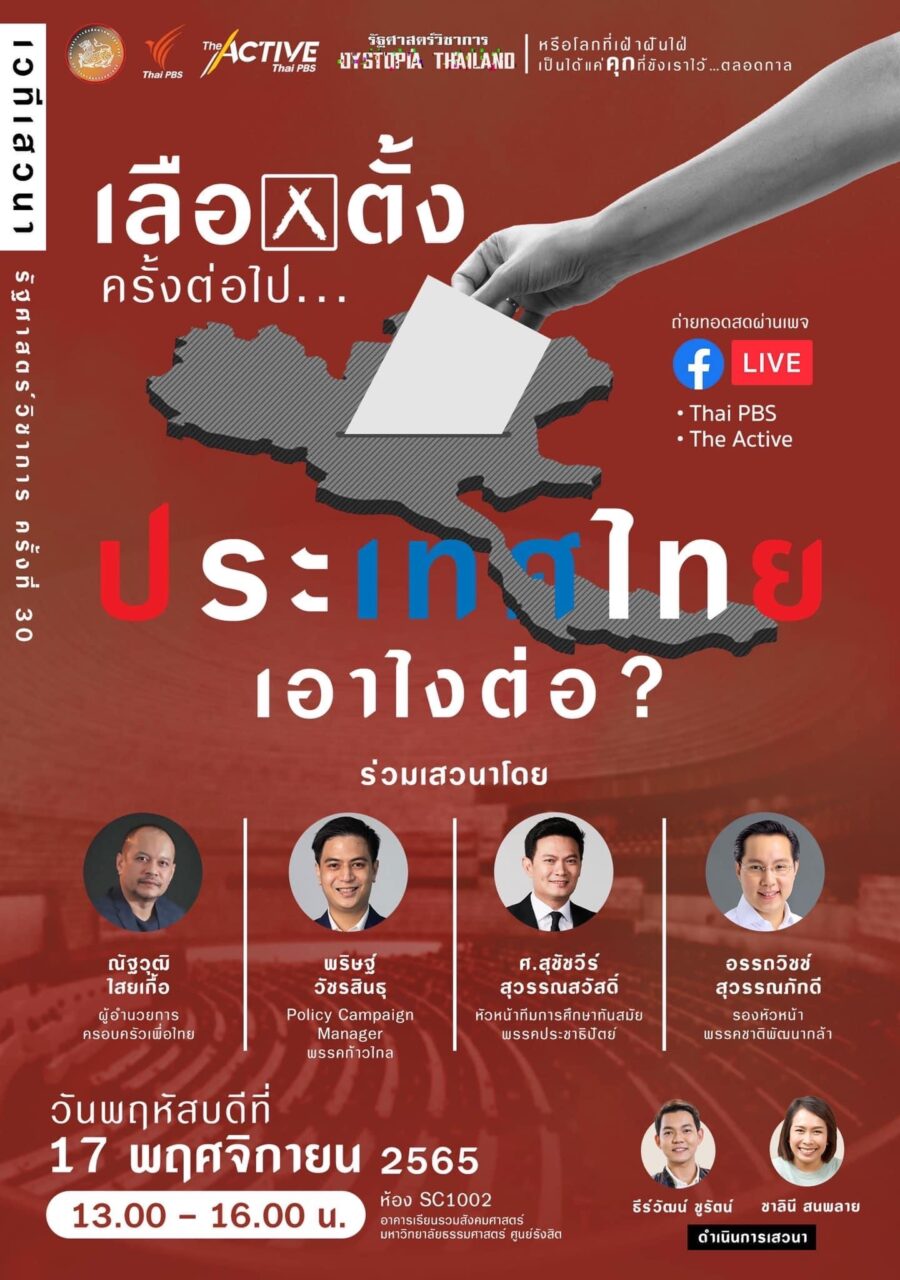
The next election, what is next for Thailand?: November 17, 2022

This seminar, The next election, what is Next for Thailand?, organized on November 17, was about the prospect of the next election and the future of Thailand. The panellists consist of politicians from liberal and conservative parties. For the liberal parties, the panellists were Nattawut Saikua from the Pheu Thai Party and Parit Watcharasintu from the Move Forward Party. From the conservative parties, the panellists were Suchatchavee Suwansawas from the Democrat Party and Atthawit Suwannaphakdee from the Chart Pattana Kla Party party.

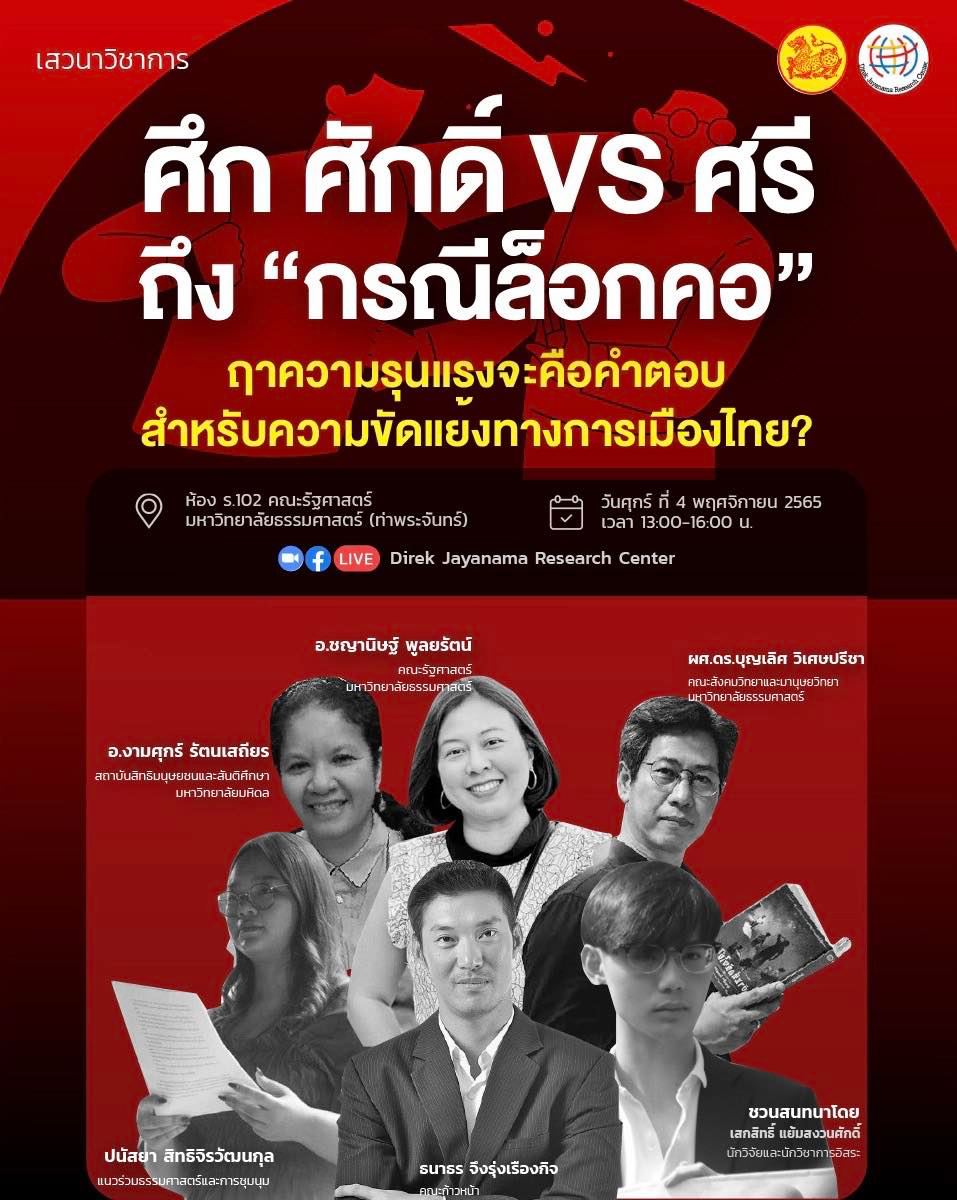
Is violence the answer to Thailand’s political conflict?: October 31, 2022

This seminar, Is violence the answer to Thailand’s political conflict?, organized on October 31, concerns the incidences of violence in Thai politics, for instance, how the government deals with protestors, cyber-bullying towards the supporters of Lese Majeste Law amendment, and the violence towards those filing lawsuits against the liberal parties. The panellists discussed if this is just an individual’s behaviour or a structural and cultural problem in Thai politics and what is the proper way of dealing with and responding to such violence.

The panellists include political science scholars from Thammasat University and political activists.

  • Pannika Wanich, Former Future Forward MP, and a key member of the Progressive Movement.
  • Panusaya Sithijirawattanakul, a Thai student political activist and university student leader who is also the spokesperson of the Student Union of Thailand.
  • Ngamsuk Rattanasatian, Institute of Human Rights and Peace Studies, Mahidol University
  • Chayanit Poonyarat, Faculty of Political Science, Thammasat University
  • Boonlert Visetpricha, Faculty of Sociology and Anthropology, Thammasat University

Thammasat Policy-Focused Research in 2022

In 2022, professors and researchers from Thammasat University participated in many government research projects. As publicized by the Thammasat University Research and Consultancy Institute (TURAC), the topics of research cover the issues of disaster management, reducing road traffic injuries, discount rates for calculating climate mitigation capacity, and telecommunication policy.

Beneficiaries of these research projects include the Department of Mineral Resources, the Department of Highways, the Thailand Greenhouse Gas Management Organization, and the Office of National Broadcasting and Telecommunications Commission.

Research titleAuthor & AffiliationGovernment DepartmentLink
The 5-Year Geological Hazards Management Action Plan of the Department of Mineral Resources (2023-2027)Naim Laeni
The Faculty of political Science
The Department of Mineral ResourcesClick
Traffic Data Analysis and Data Collection on Motorway Number 7 and 9Winai Raksuntorn, The Faculty of EngineeringThe Department of HighwaysClick
The study on appropriate discount rates for the evaluation of GHG mitigation measures (Phase III)Bundit Limmeechokchai, The Sirindhorn International Institute of Technology (SIIT)The Thailand Greenhouse Gas Management OrganizationClick
Study and research to determine measures and guidelines for the supervision of public service broadcasting for security purposesRachada Kongkachandra, The College of Interdisciplinary StudiesThe Office of National Broadcasting and Telecommunications CommissionClick

Thammasat University’s Capacity building activities to policy- and law-makers in 2022

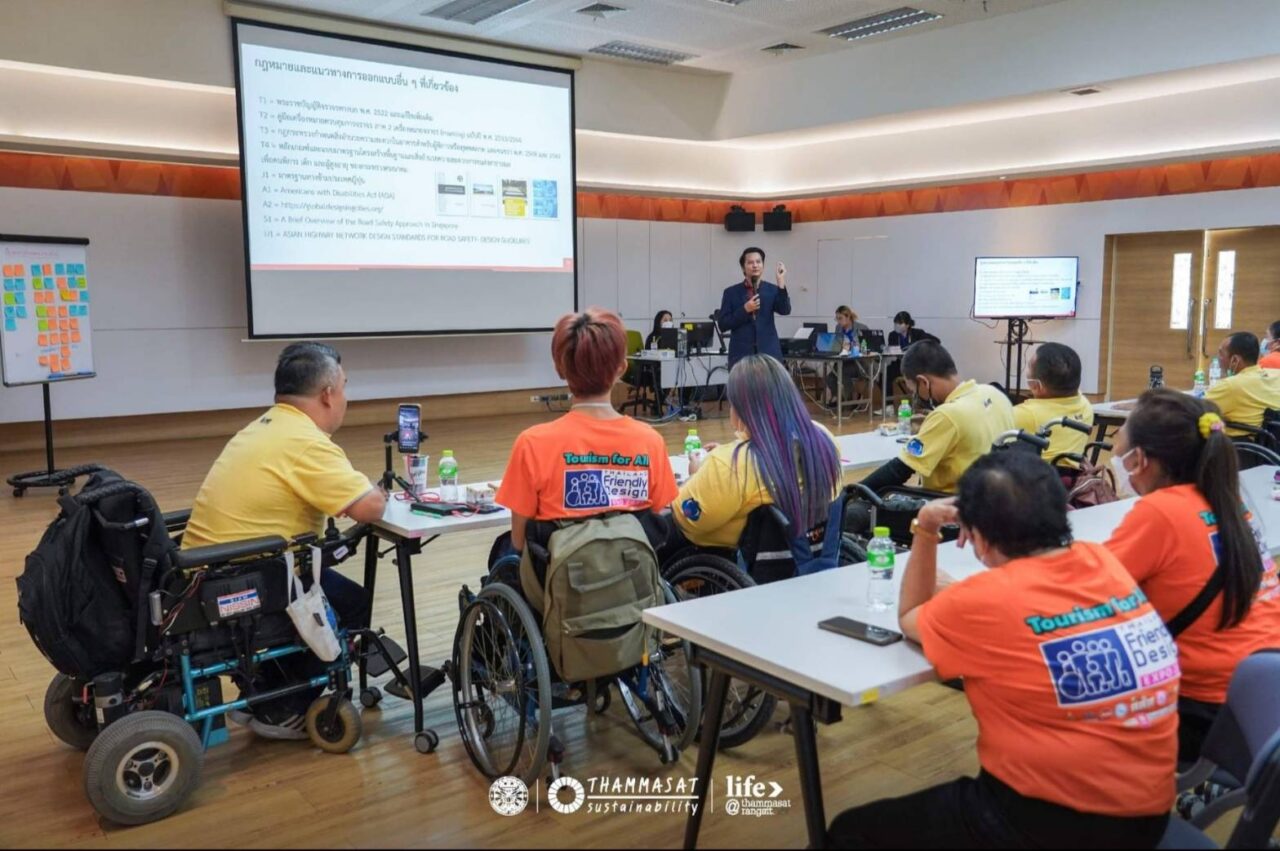
Thammasat University has provided outreach, general education, upskilling, and capacity-building to policy and lawmakers on several topics that will contribute to implementing and achieving sustainable development goals and the Paris Accord.

The general education, upskilling, and capacity-building activities organised in 2022 were mainly focused on law for local administration, local administration and smart city, environmental economic research, and Strategic Foresight and Scenario Planning in policy formulation.

These trainings are provided by Faculty of Law, Economics, Social Administration and Architecture and Urban Planning.

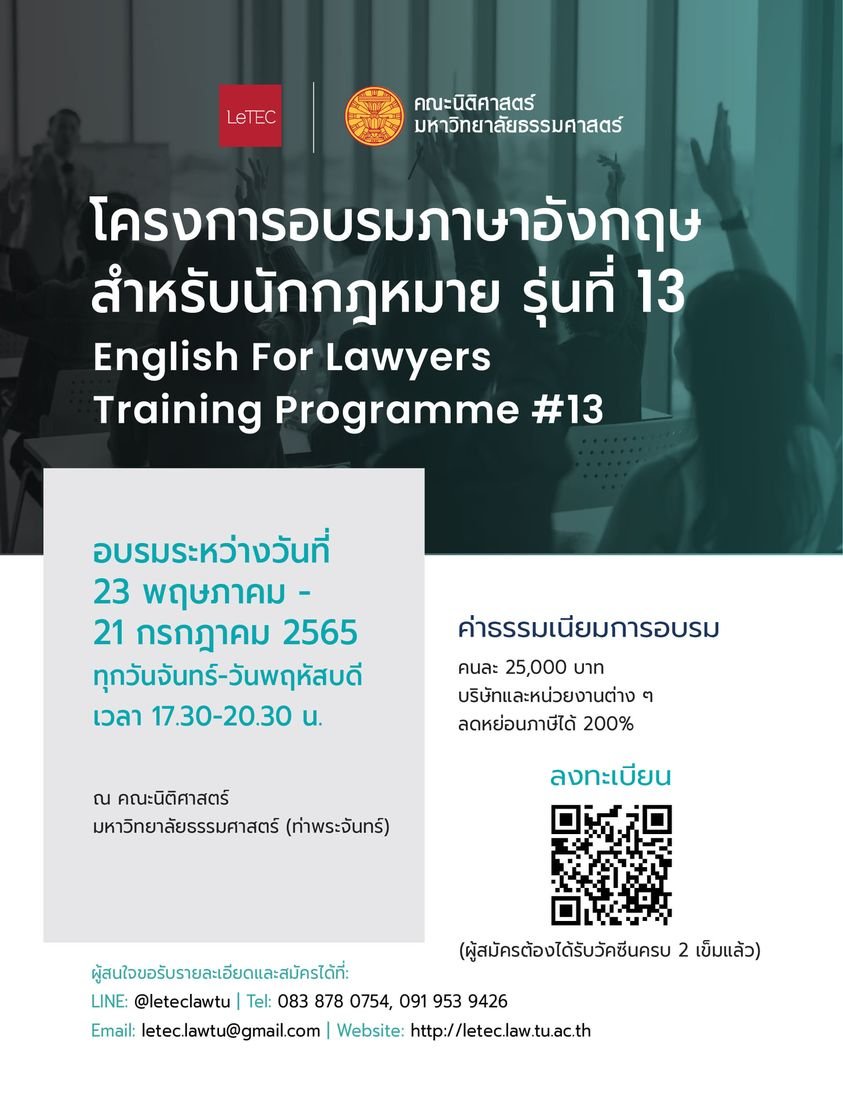
English for Lawyers Training Programme #13

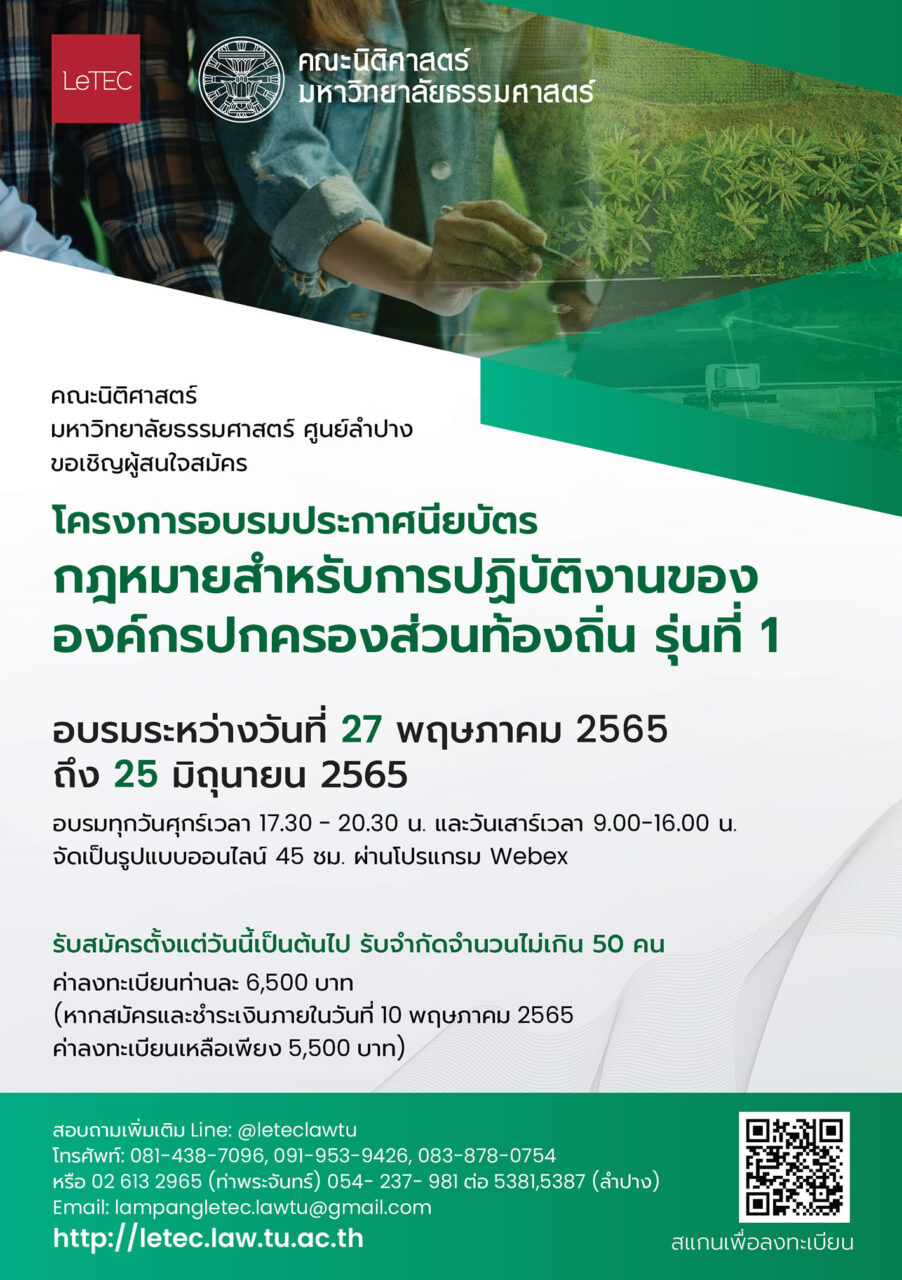
The Certification Training on Law for Local Administration Organizations #1

Local administration and smart city

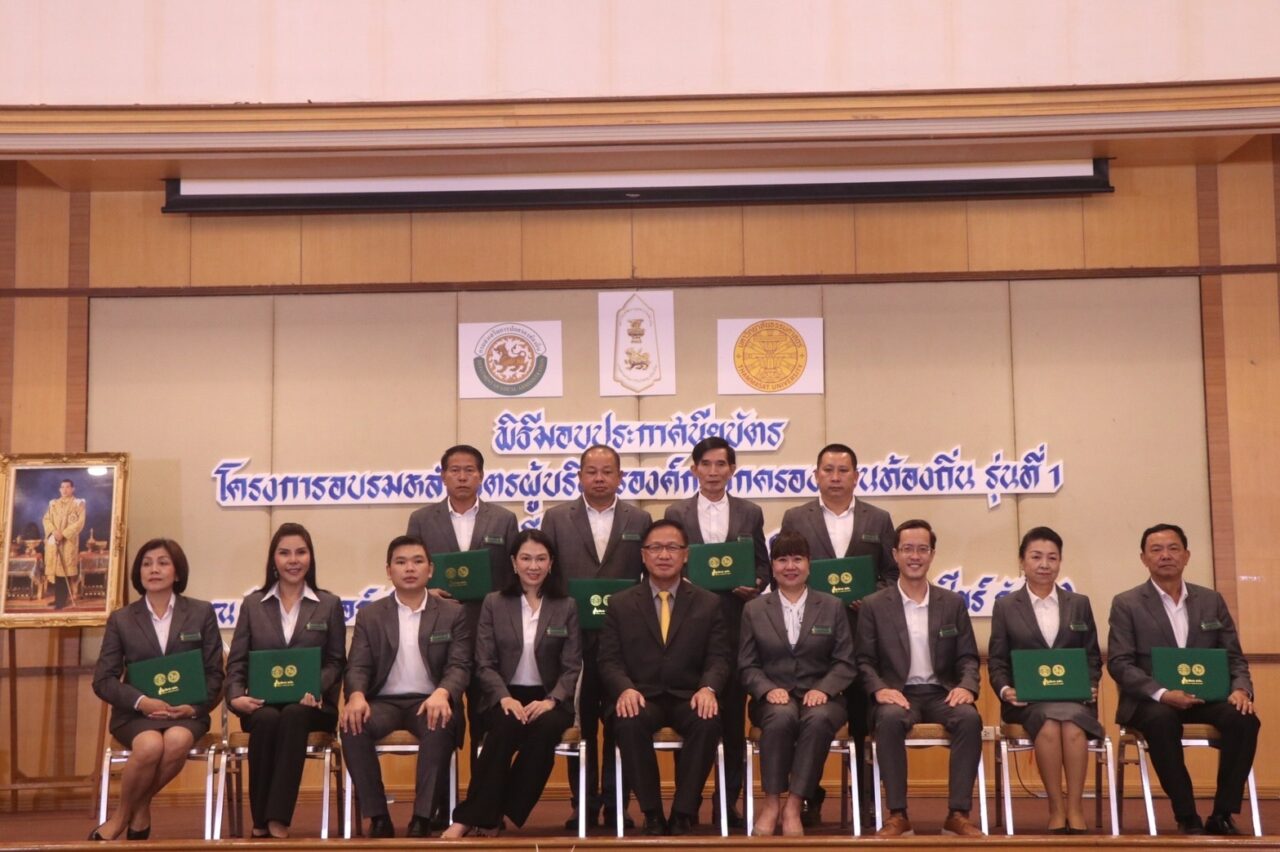
On August 30, 2022, the Director-General of the Department of Local Administration and Dean of the Faculty of Social Administration and delegation attended a ceremony to award certificates to the attendants of a training program for local administrative executives. The training program aims to develop the local administrators’ ability to drive their local areas into smart city development in accordance with government policy

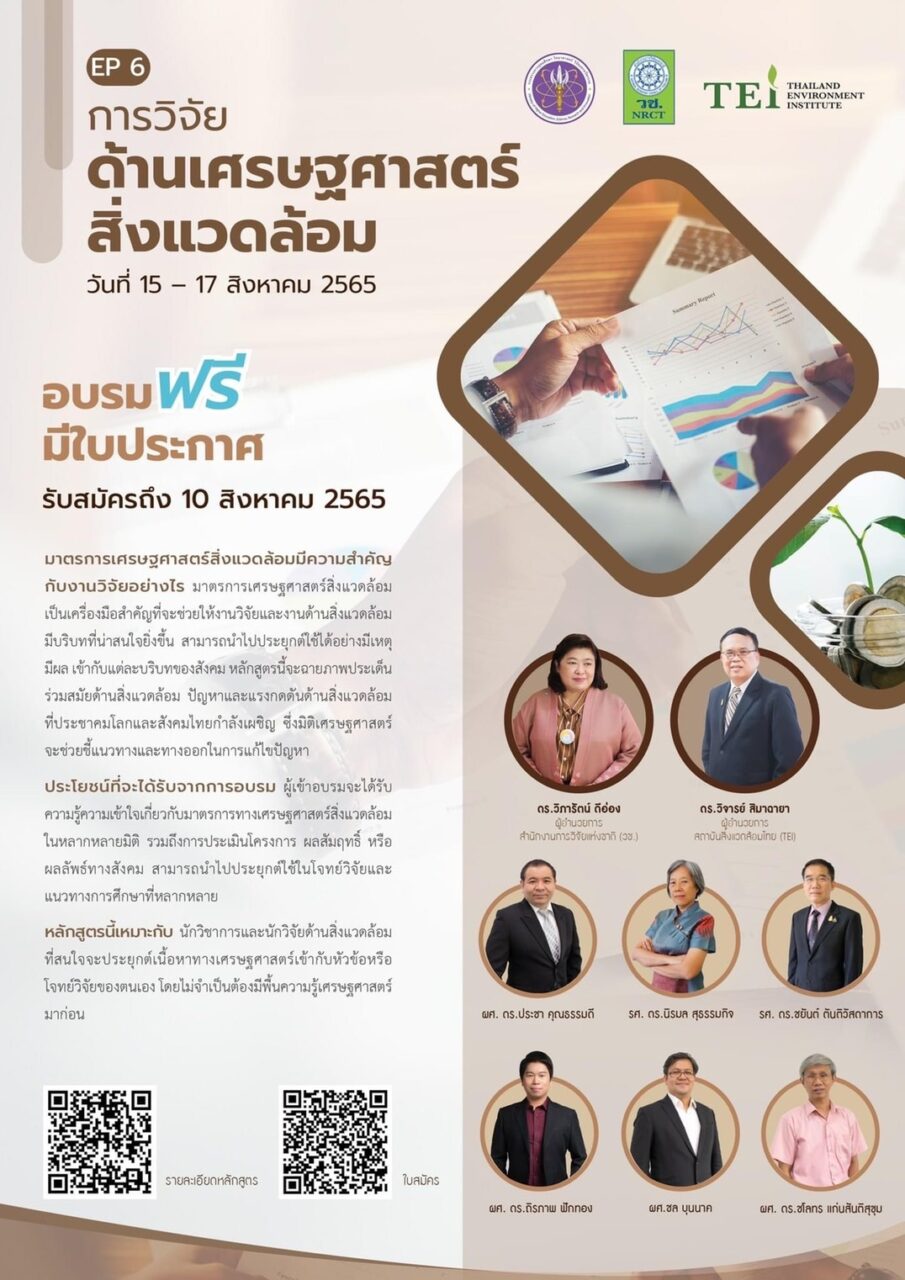
Research on Environmental Economics

The training was organized between August 15-17, 2022 by the cooperation between the National Research Commission of Thailand and Thailand Environmental Institute. The Faculty of Economics, Thammasat University, provided a team of instructors for this training. Target group

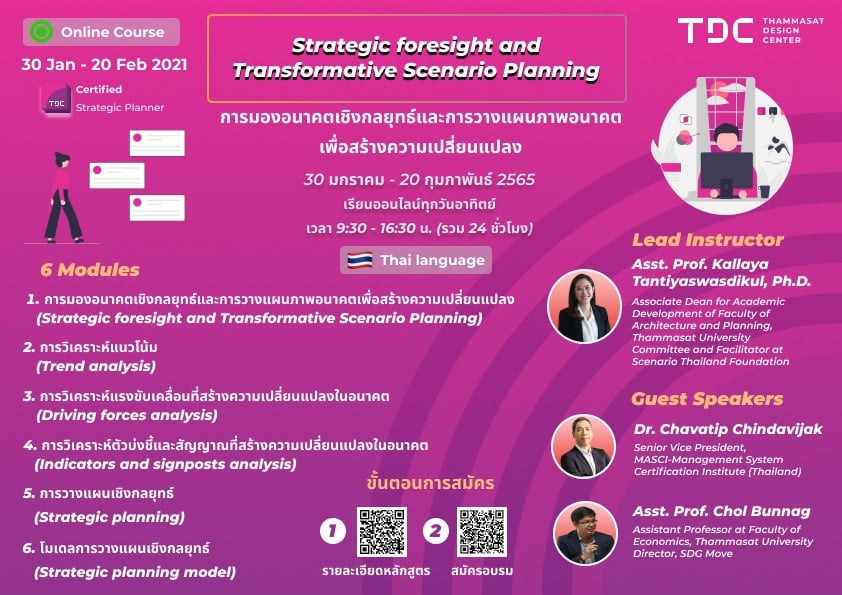
Strategic Foresight and Scenario Planning

Thammasat’s Expert Advice to Government at All Levels in 2022

In 2022, more Thammasat professors were appointed to be in a position or join as committee members in several government entities covering diverse issues, ranging from constitutional law, space policy, gender equality, area-based development policy, forestry, labour affairs, the impact of research, and telecommunication and broadcasting regulation.

At the same time, the professors who were appointed in 2021 (see here) were still in their positions in 2022.

AreaNamePositionDateReference
Constitutional LawProf. Dr. Udom RathamaritConstitutional Court JudgeDecember 26, 2022Click
Space PolicyAsst. Prof. Dr.Lalin Kovudhikulrungsri Expert in the National Space PolicyFebruary 9, 2022Click
Gender EqualityProf. Narong JaiharnPresident of the Committee for Gender Discrimination Verification in accordance with the Gender Equality Act 2015January 19, 2022Click
Integrated Area-based AdministrationAsst. Prof. Dr. Supachai SrisuchartMember of the Sub-committee on Integrated Area-based Administration Policy focusing on academic, law, and integration of projectsDecember 22, 2022Click
ForestryAsst. Prof. Dr. Pracha KoonnathamdeeAn expert and committee in the National Forestry CommitteeJune 28, 2022Click
Public PolicyAssoc. Prof. Niramon SuthammakijA board member of the Institute for Public Policy Development under the National Economic and Social Development Council (NESDC)January 7, 2022Click
Public PolicyAsst. Prof. Nattapong PuttanapongA board member of the Institute for Public Policy Development under the National Economic and Social Development Council (NESDC)January 7, 2022Click
Labour DevelopmentAssoc. Prof. Kiriya KulkolkarnA member, as a government representative, of the 20th National Labour Development Advisory Council. December 26, 2022Click
Research ImpactAsst. Prof. Anin AroonruengsawatAn expert of a working group for outcome and impact evaluation of platforms/programs/projects to which the budget from the Science Research and Innovation fund was allocated. July 19, 2022Click
Telecommunication and BroadcastingAssoc. Prof. Dr. Supach SupachalasaiMember of the National Broadcasting and Telecommunications CommissionApril 27, 2022Click

Special Affairs Unit: Thammasat’s local stakeholder engagement mechanism

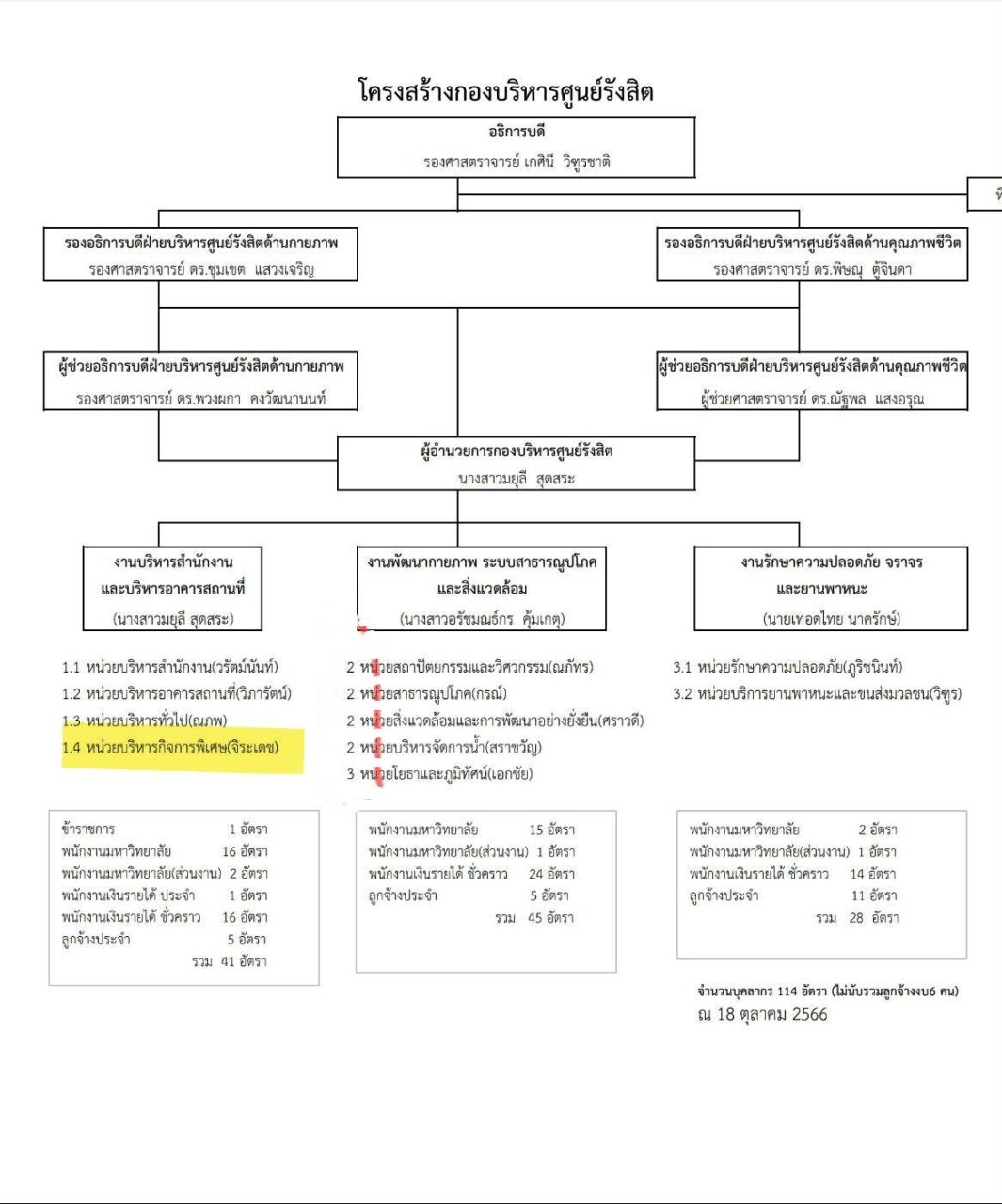
The Special Affairs Unit (SAU) was officially established in 2021 under the Rangsit Center Administration Division. Its purpose is to be an intermediary between the university and external stakeholders, especially local communities, private sectors, government agencies, and international organizations. It is the university’s mechanism to facilitate and promote collaboration between the university and the stakeholders.

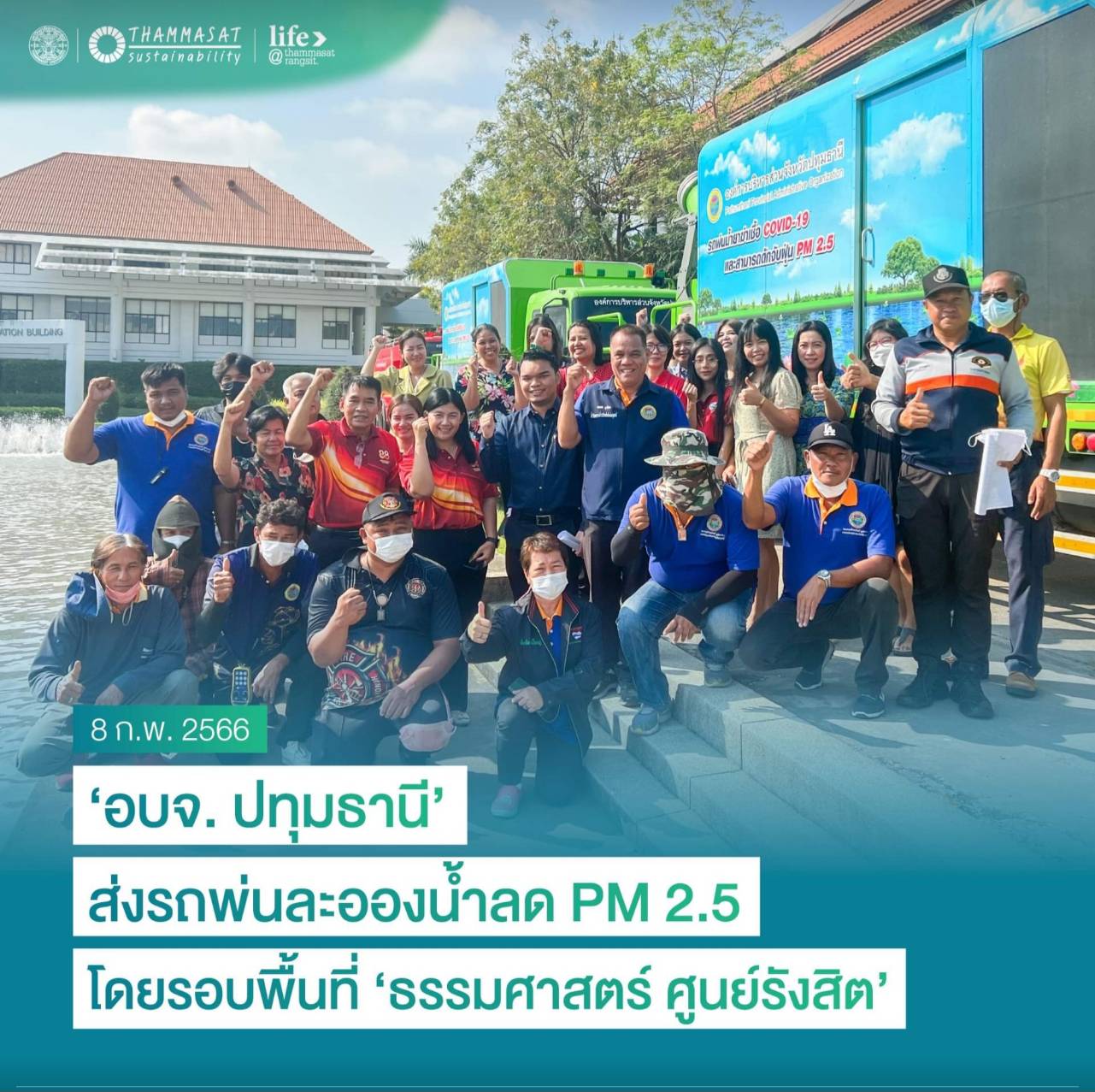
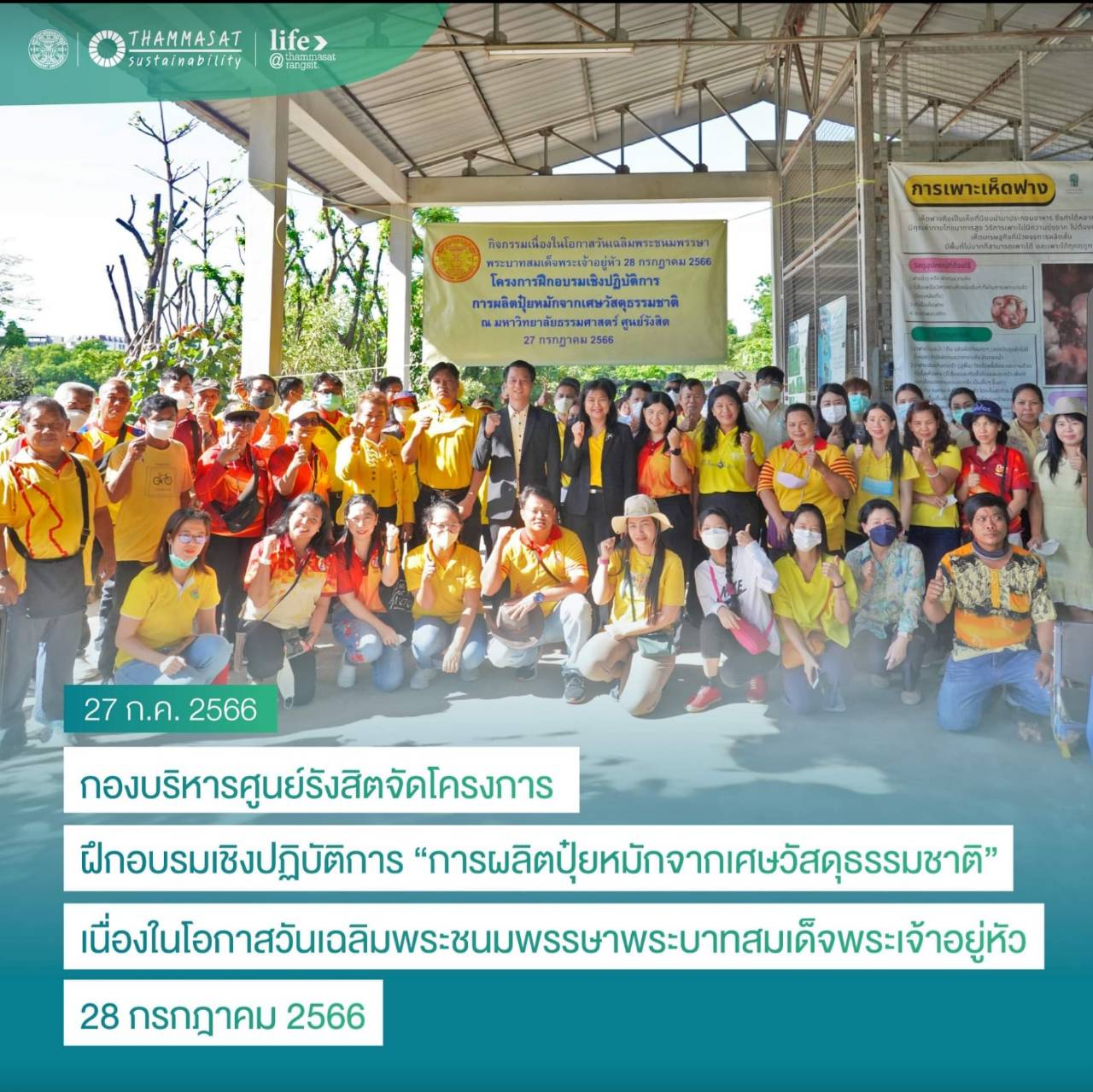
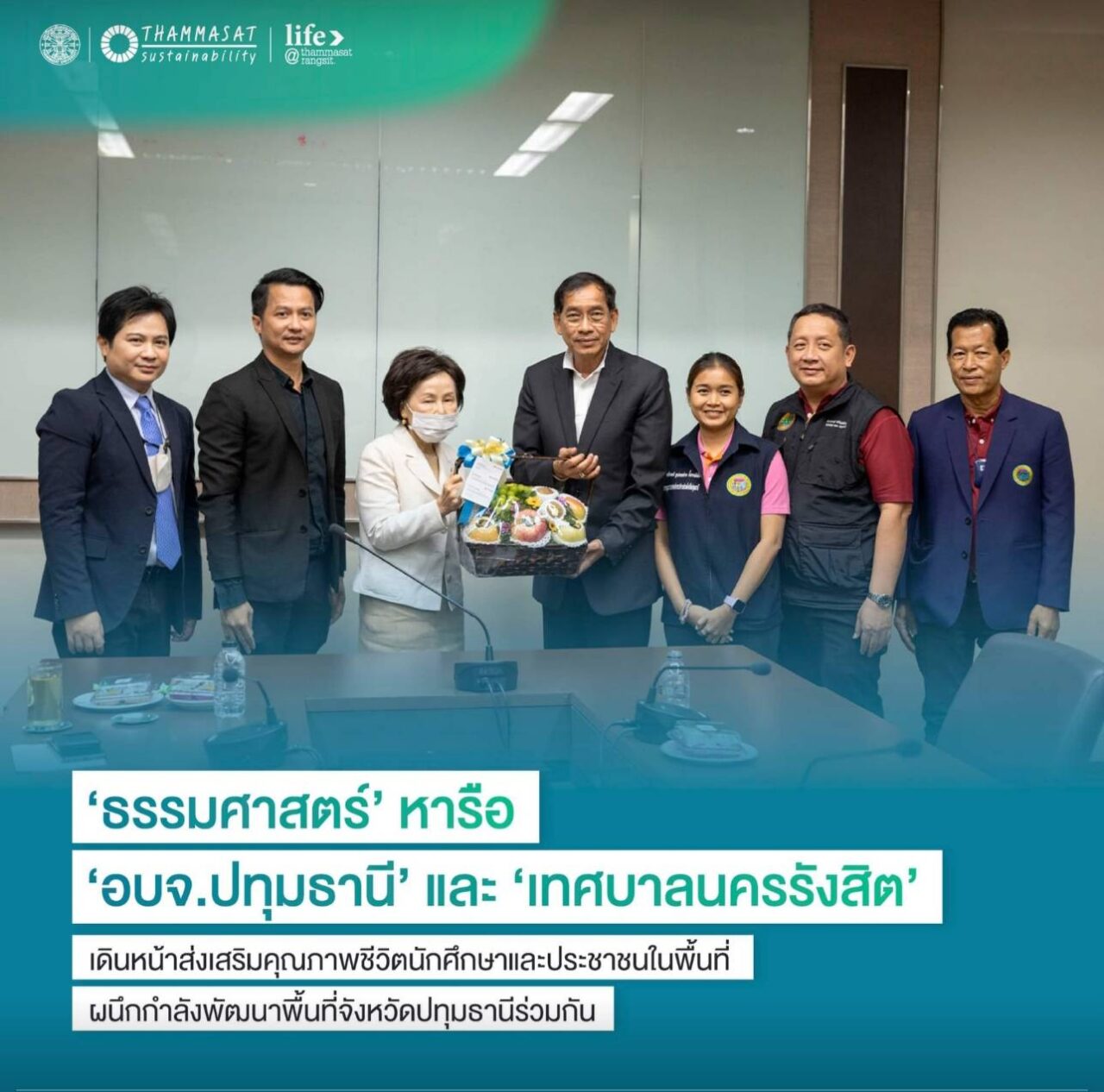
In 2022, SAU main task is to collaborate with stakeholders in Rangsit and Pathum Thani province area and organize outreach activities to promote students’ and people’s well-being. The stakeholders include Rangsit Municipality, Tha Klong Municipality, Pathmthani Provincial Administrative Organization, and the National Science and Technology Development Agency (NSTDA).

The Special Affairs Unit is highlighted.

Activities include the following:

See the list of activities taken care of by the SAU, click here.

International collaboration on gathering data on the government’s SDG effort in 2022

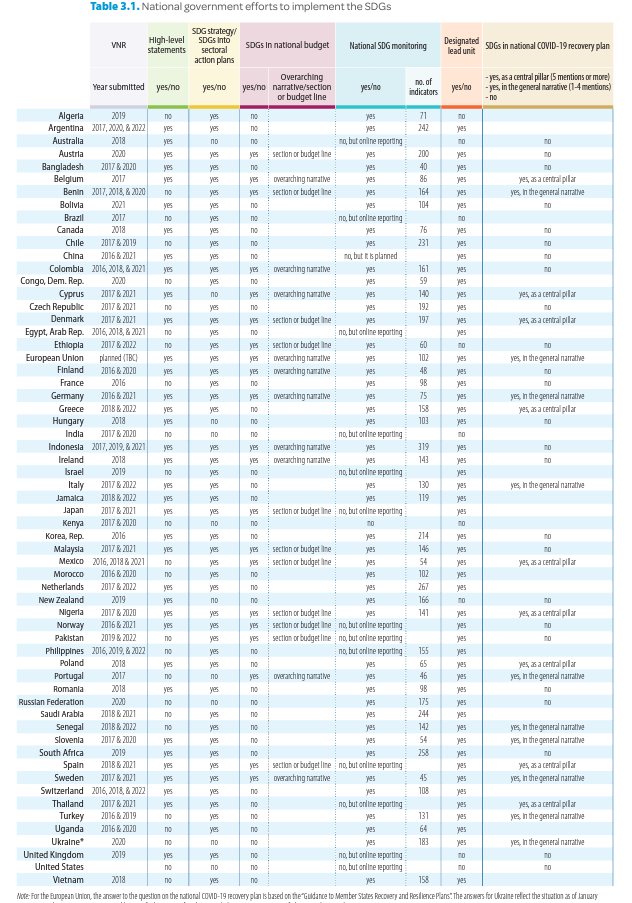
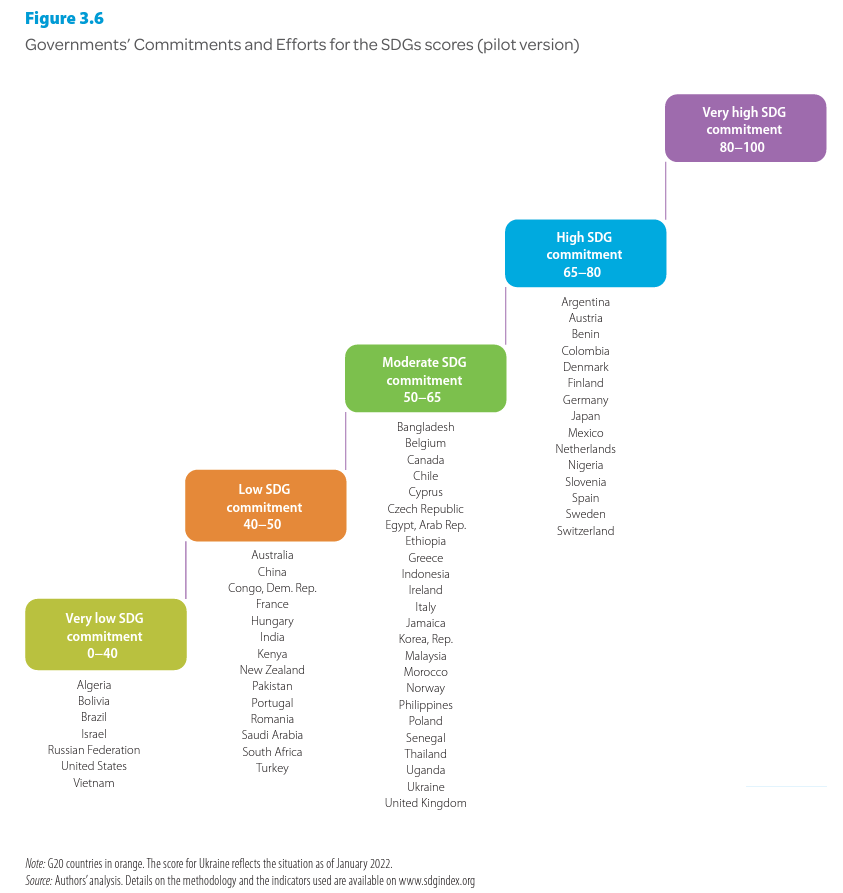
Sustainable Development Report 2022 was the first edition of the report that includes the assessment of the government’s SDG effort. To create the assessment, UN Sustainable Development Solutions Network asked all of its national chapter’s host to collaborate in gathering data on the government SDG’s effort. The output of the collaboration is published in the Sustainable Development Report 2022. Thammasat University, by the SDG Move under the Faculty of Economics, is the national host of SDSN Thailand and was collaborating in the data collection process to produce this result.

National Government Efforts to implement the SDGs
Source: Sustainable Development Report 2022, page 38.
https://s3.amazonaws.com/sustainabledevelopment.report/2022/2022-sustainable-development-report.pdf

Thailand was classified as a country with moderate SDG commitment. While Thailand has its SDG strategy, the Prime Minister provides statements supporting the SDGs, and an organization (NESDC) is assigned to lead the implementation, it still missed SDGs in the national budget and also lacked the number of national SDG indicators. These issues have improved in the 2023 survey.

Source: Sustainable Development Report 2022, page 48.
https://s3.amazonaws.com/sustainabledevelopment.report/2022/2022-sustainable-development-report.pdf

Thammasat University’s Cross-sectoral Dialogues on SDGs in 2022

In 2022, Thammasat University initiated and participated in at least two cross-sectoral dialogues specifically on the SDGs.

  1. Thailand Sustainable Development Forum: July 26, 2022

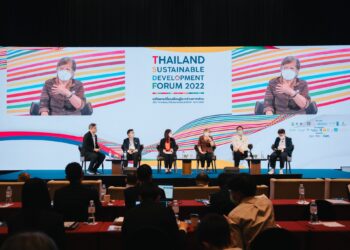
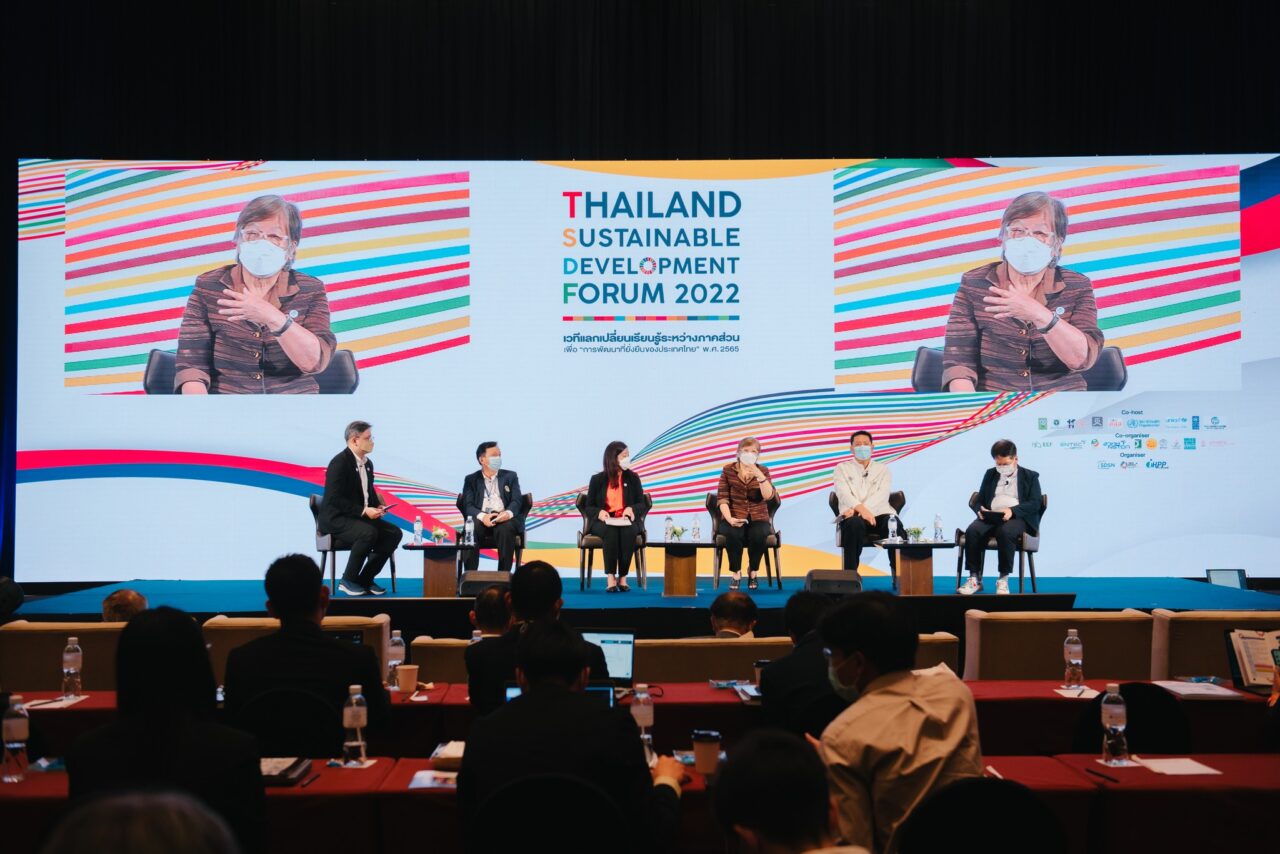
The first event was in Thailand Sustainable Development Forum 2022. SDG Move, Thammasat University was one of the organizers of the event, along with International Health Policy Foundation and SDSN Thailand. The event was held on July 26, 2022 at Pullman King Power Hotel, Bangkok. This event was co-organized, co-hosted and partnered by several academic institutions and international organizations, such as UNDP, World Bank and WHO. It focused on reframing SDGs into more integrated transformation themes, and creating multi-stakeholder platform to explore the underlying driving factors for SDG implementations, using a conceptual framework developed by SDG Move and IHPP, called “System Diagnostic Framework for SDG Implementation”.

The forum consists of several parts. The keynote speeches were given by the Permanent Secretary of the Ministry of Higher Education, Science, Research and Innovation, and the President of the National Social and Economic Development Council. The following session was a public forum where public, political, and civil society stakeholders participated. The panellists include the director of the National Institute for Child and Family Department, Mahidol University; the director of Think Forward Center under the Move Forward Party; the deputy director of PMU-B, a research granting agency; the president of the sub-committee on Baan Munkong project and land management, a representative from CSO sector; and secretariate of Bio-Thai Foundation, an NGO.

You can see the quotes and photos from the event in the links below.

Quotes: https://m.facebook.com/story.php?story_fbid=pfbid0gLDQ6GtRqpw8c1f7kQ8XMbButgrXBJiWtPRF5uxwVBeWvnFoBSVftGo5xiNhRACzl&id=1802365030020696&mibextid=cr9u03

Photos: https://www.facebook.com/media/set/?set=a.3320461101544407&type=3

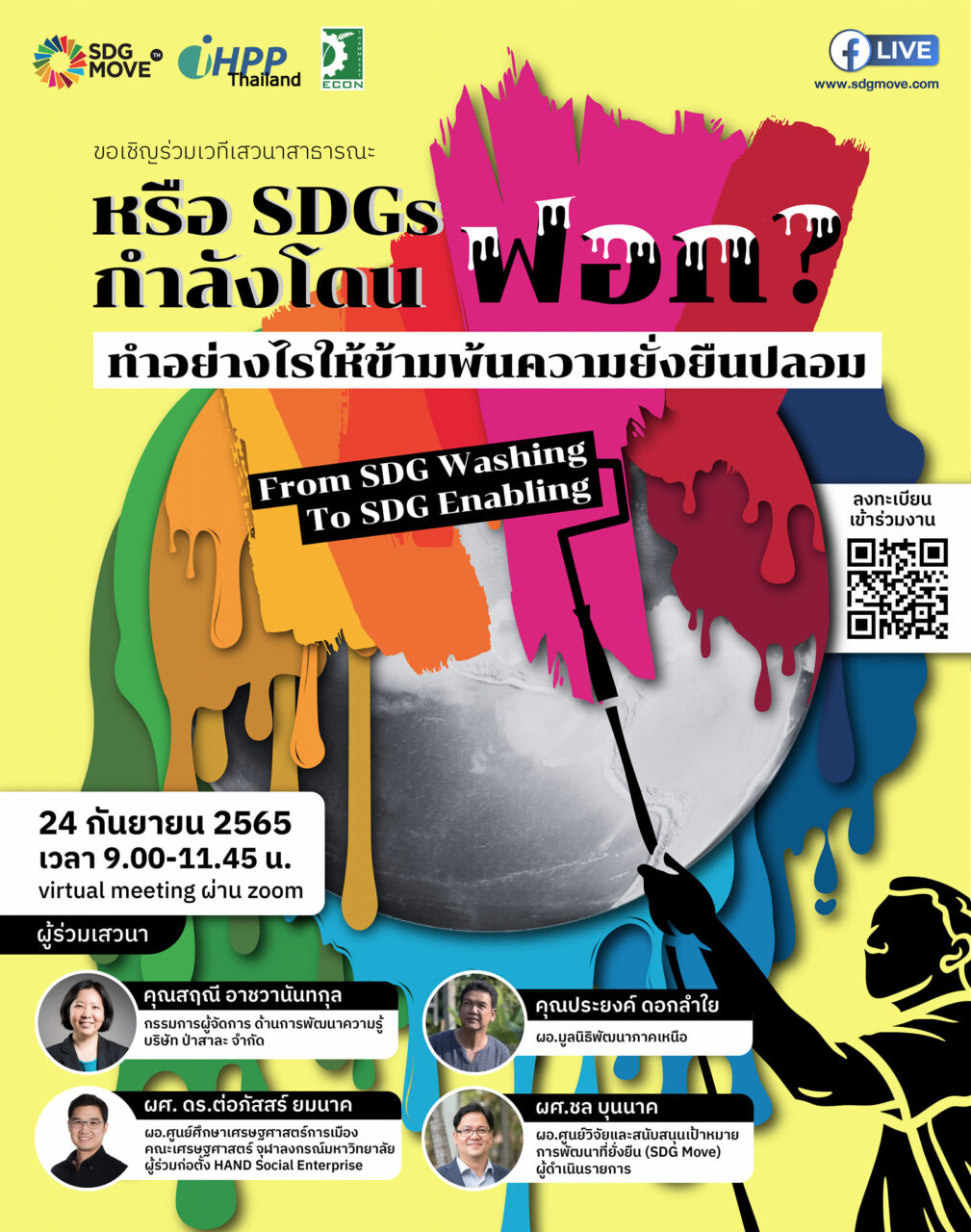
2. SDG Move’s Public Seminar on “From SDG washing to SDG enabling”: September 22, 2022

This public seminar was hosted by SDG Move, Thammasat University, and joined by panellists from academic institutions, a social enterprise and a civil society organization, on September 24, 2022, to discuss one of the major concerns on SDGs, the “SDG Washing”. The panellists include the following organizations.

  • The Managing Director of Sal Forest co,ltd.;
  • The director of the Northen Development Foundation, an NGO;
  • The founder of Hand Social Enterprise, a social enterprise tackling the corruption problem.

The panel addressed several examples of SDG washing and tried to identify the causes of such actions. The SDG washing is not only prevalent in the private sector but also in the public sector. A few of them, however, tried to SDG wash. The others are rather unaware of how to implement the SDGs properly. The panel proposed that to avoid the allegation, an organization needs to prioritize an act to reduce harmful consequences from their actions before any other CSR activities.

Quotes: https://www.facebook.com/1802365030020696/posts/pfbid02UhQQGmUr21A7SQATdpxEjUGC4o4WfUYHoceJpppdUmaZgCBeCuRY3CkiXXBHWoxnl/?mibextid=lOuIew