HIGHLIGHTS
- Driving the Global Agenda and Public Policy : Thammasat collaborates with the UN to drive the Sustainable Development Goals (SDGs) and is preparing to host SUN Thailand in 2027.
- Environmental Innovation and Economic Elevation: Forging partnerships with world-class institutions such as MIT and leading organisations to address water quality and environmental issues. This is coupled with collaborations with OSMEP and the BOT to reduce inequality and drive sustainable growth for Thai SMEs through innovation.
- Building Leaders and the Workforce of the Future: Equipping personnel to navigate global changes through partnerships with Nai Lert Institute, IEAT, NPC, and Bangchak Group. This initiative develops skills ranging from luxury service and senior executive levels to cultivating the new generation (Gen Z-ESG) for the low-carbon economy.
- Collaborative Networks for the Public: Reaffirming the vision of a “University for the People” by integrating collaborations across the public sector, the private sector, and international organisations. This ensures that knowledge and research are applied to create tangible, positive change within society.
Throughout the first half of 2026, Thammasat University has continued to establish strategic partnership networks with international organisations, the public sector, and the private sector, comprehensively integrating collaboration. The key objective was to drive the Sustainable Development Goals (SDGs) towards tangible realisation and elevate the university as a mechanism for creating positive societal change across several key dimensions, including:
Driving Global Agendas and Public Policy
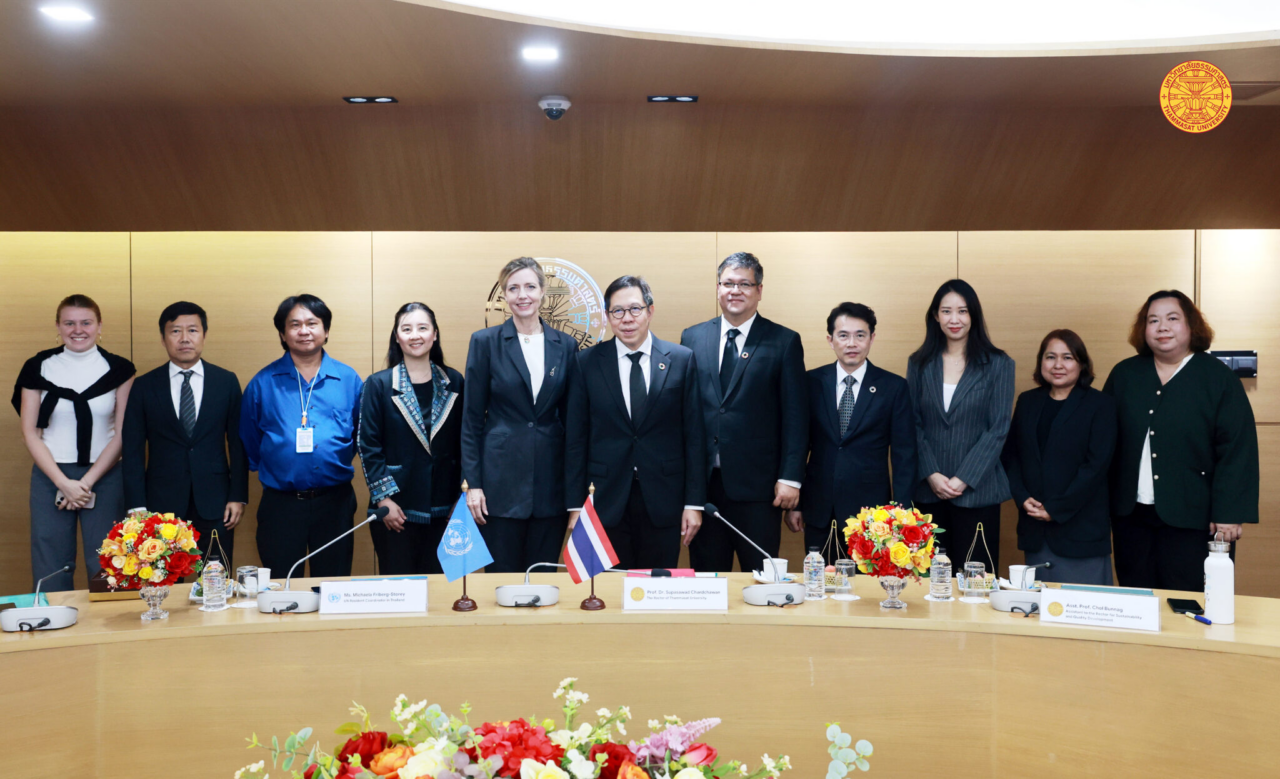
The year commenced with the elevation of international collaboration as Thammasat University advanced discussions with the United Nations (UN) delegation to Thailand. The aim was to jointly formulate strategic guidelines for driving the Sustainable Development Goals (SDGs) by highlighting the “One TU” strategy. This strategy synergises the efforts of all faculties to propel comprehensive sustainability, encompassing social research, green campus initiatives, gender equality, diversity, and serving as a neutral space for peaceful political expression.
These earnest actions resulted in the UN commending Thammasat as a role model educational institution that concretely applies knowledge to communities. This recognition enabled Thammasat to proudly secure the 1st position nationally and 4th globally for SDG 16 in the THE Impact Rankings 2025. Concurrently, the University submitted policy proposals to the UN to create a platform supporting the post-2030 development agenda and to further elevate national volunteer work.
Another significant national milestone is officially taking the baton to host the 11th Sustainable University Network of Thailand (SUN Thailand) conference, which will be held in 2027. This will allow a network of over 65 higher education institutions nationwide to collaboratively seek solutions to global crises through the dimensions of teaching, research, and internal university administration. It also aims to further elevate Thammasat University to become an “engine of change” capable of applying integrated knowledge and research for practical use, both at the community and commercial levels, to create development that concretely responds to the context of Thai society.

Resource and Environmental Management Innovations
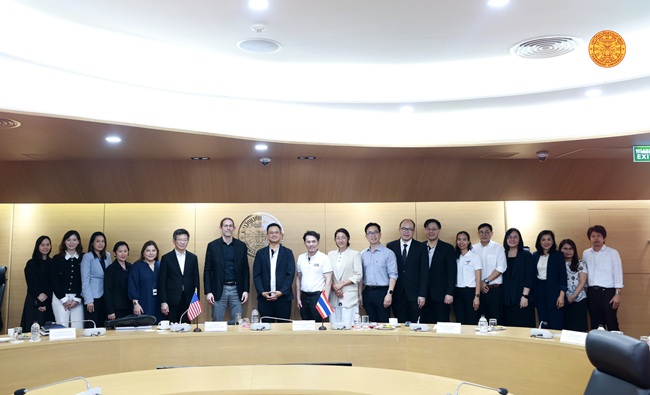
In terms of resource management, Thammasat University, in collaboration with the Massachusetts Institute of Technology (MIT), USA, and Bangkok Bank, forged a trilateral partnership in late March. This collaboration integrates academic, industrial, and financial expertise to address Thailand’s water quality issues. The Faculty of Science and Technology, the Faculty of Public Health, and the Sirindhorn International Institute of Technology (SIIT) are the primary drivers, preparing a pilot research project that applies high-precision sensor technology, information systems, and health impact analyses.
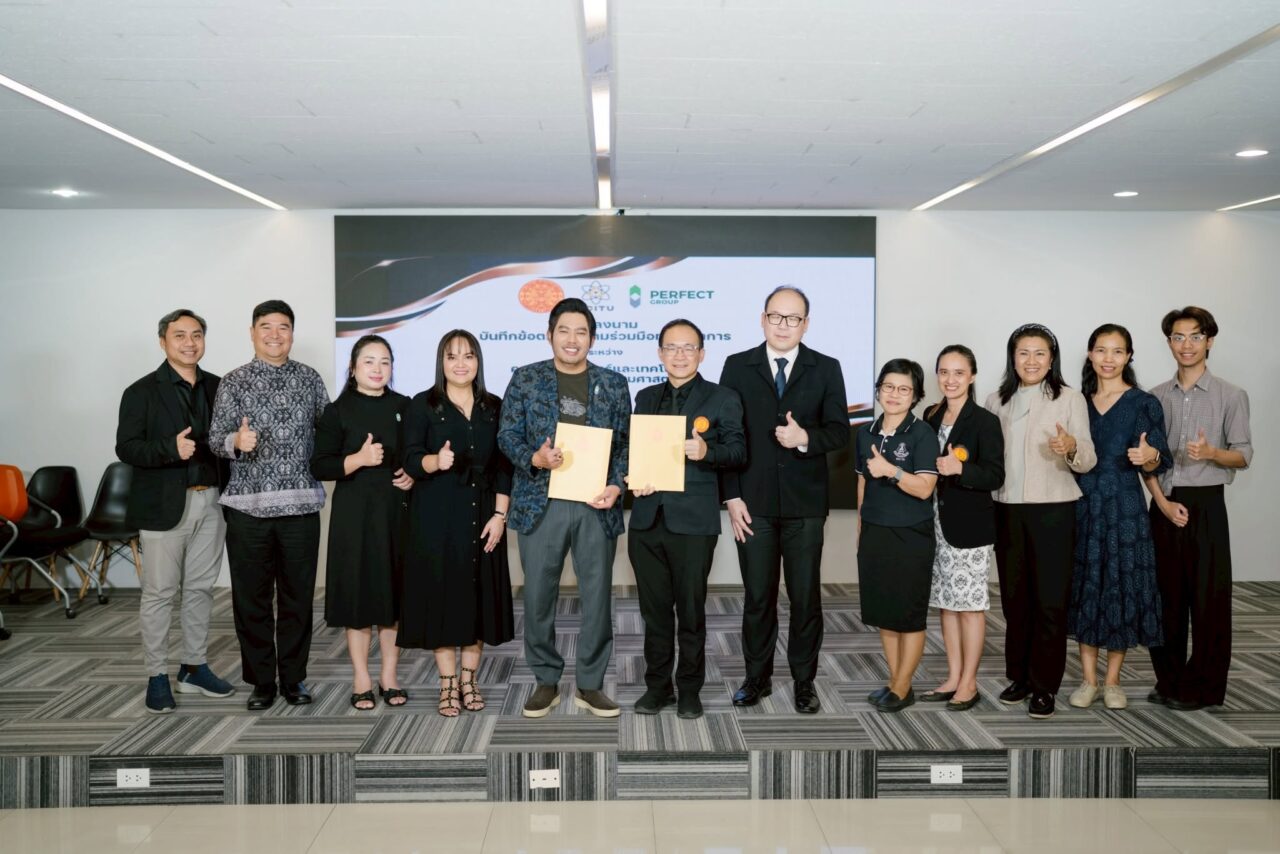
In the same month, Thammasat also signed a Memorandum of Understanding (MoU) with Perfect Group Corporation, a provider of comprehensive environmental solutions. The agreement seeks to advance curriculum development, research, and the upskilling of environmental personnel to meet the ESG policies and Net Zero targets of the business sector. This collaboration focuses on integrating academic knowledge with practical application, offering students the opportunity to undertake internships in workplaces to develop both hard skills and soft skills that align with labour market demands.
Reducing Inequality and Empowering the Grassroots Economy
Another significant step for Thammasat University this past March, apart from its operations in resource and environmental management innovations, was its focus on reducing inequality and empowering the grassroots economy. The University partnered with the Office of SMEs Promotion (OSMEP) to launch the “Empowering Thai SMEs to the Future” project. This initiative aims to elevate medium-sized enterprises, particularly in the food, health, technology, and service sectors, enabling them to grow sustainably through digital technology, innovation, and green businesses.
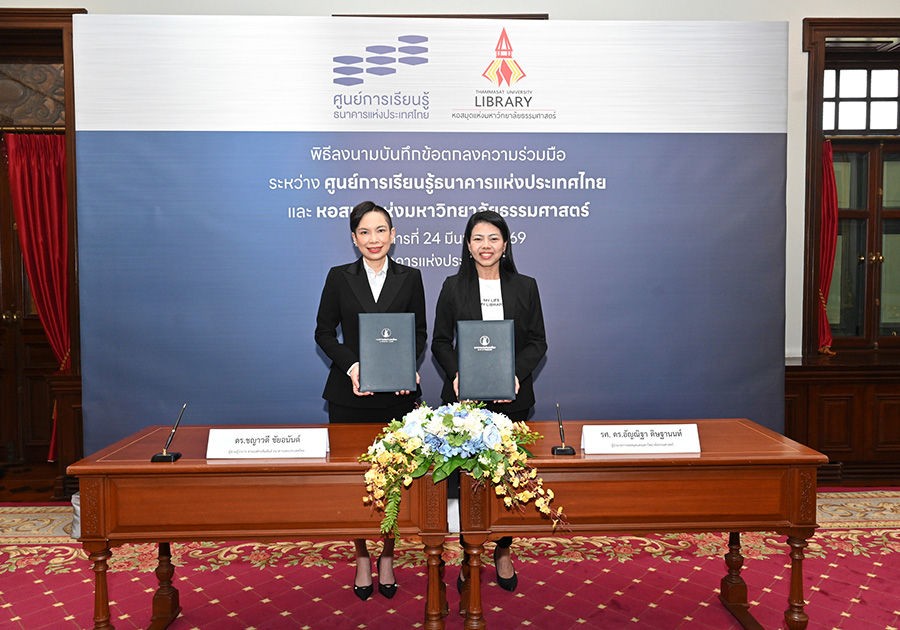
To support access to knowledge, the Thammasat University Library signed an MoU with the Bank of Thailand (BOT) to synergise efforts in developing library service systems, sharing information resources, and exchanging work experiences. Furthermore, both organisations are preparing to advance educational promotion activities for the public. This collaboration marks a crucial step in broadening Thailand’s educational opportunities and making them more accessible to society.

Shaping Leaders and the Workforce of the Future
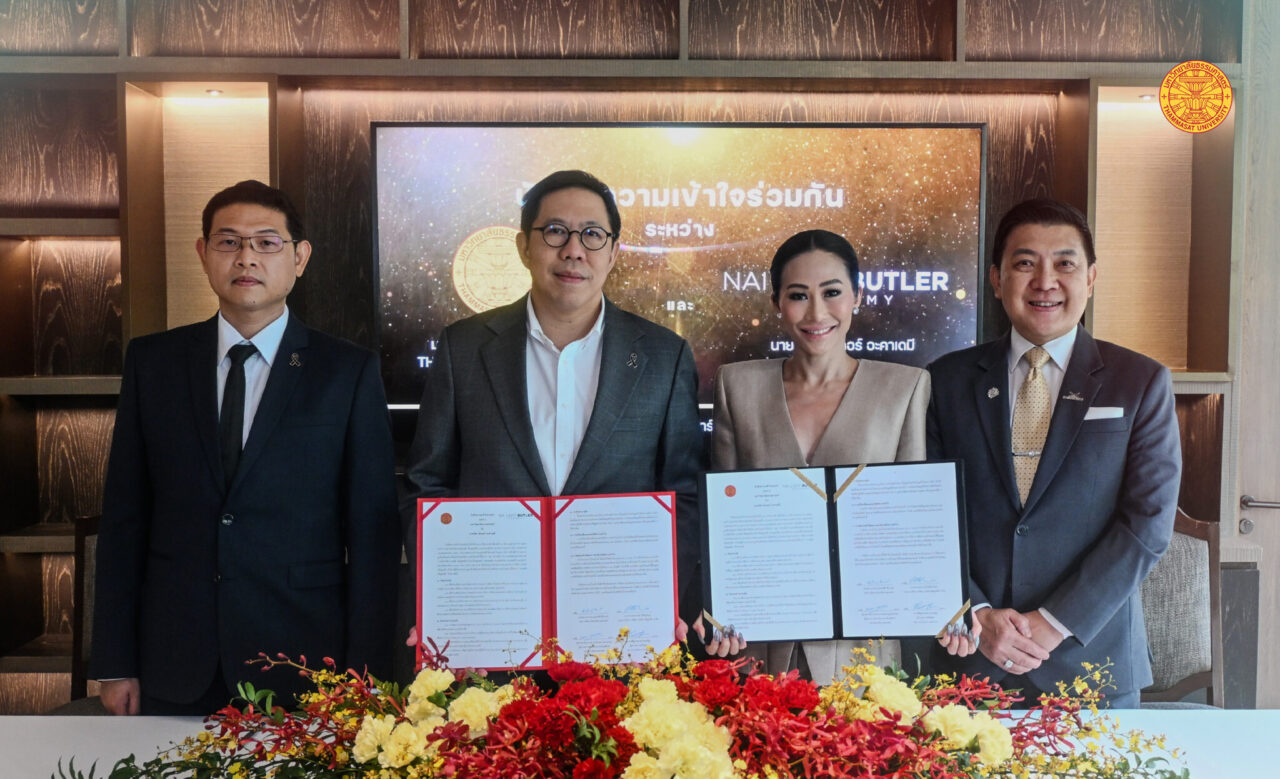
As the world of work transitions, preparing the “workforce of the future” is another vital priority. In May, Thammasat partnered with Nai Lert Butler Academy, a leading organisation in luxury service personnel development, to jointly cultivate academic knowledge and international-level professional skills, elevating the potential of Thailand’s human resources to the global stage. This collaboration not only sets new standards for the education sector but also serves as a key mechanism in driving Soft Power through human resource development in the dimensions of education, service, and cultural diplomacy.
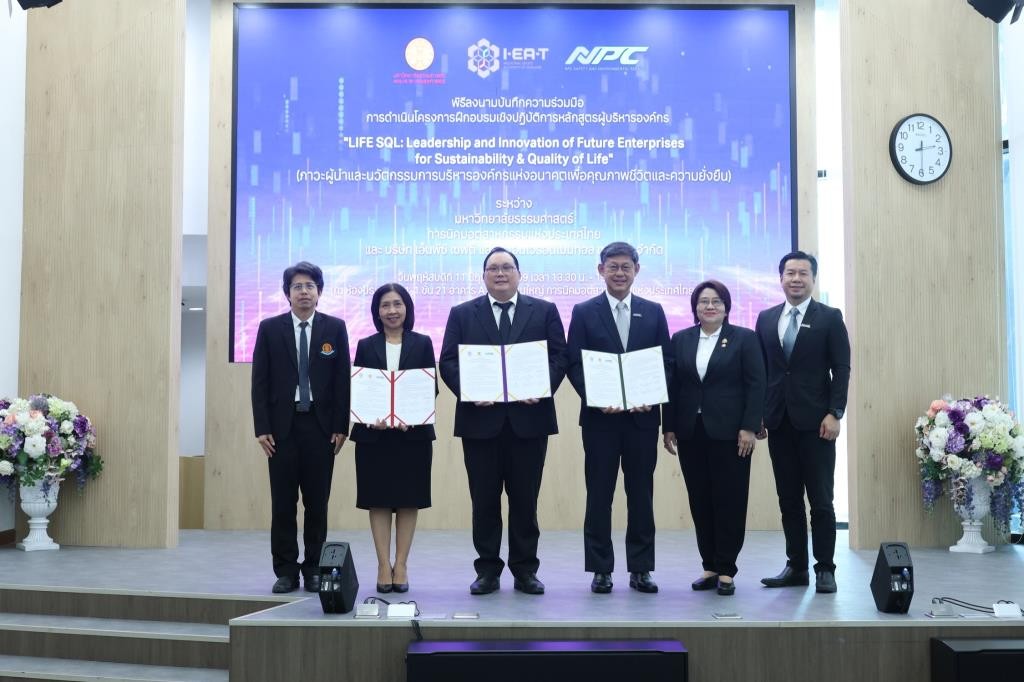
Additionally, Thammasat University aims to elevate executive potential, integrating knowledge on leadership and collaboration to prepare for industrial sector changes. In this past June, an MOU was signed with the Industrial Estate Authority of Thailand (IEAT) and NPC Safety and Environmental Service Co., Ltd. (NPC) to advance the “LIFE SQL” practical training programme. This programme emphasises the development of corporate leaders’ potential in leadership, innovation, Safety, Health, Environment, and Energy (SHE & EN) management, as well as ESG concepts, aiming to elevate executive capabilities and build a collaborative network across the public, educational, and industrial sectors.
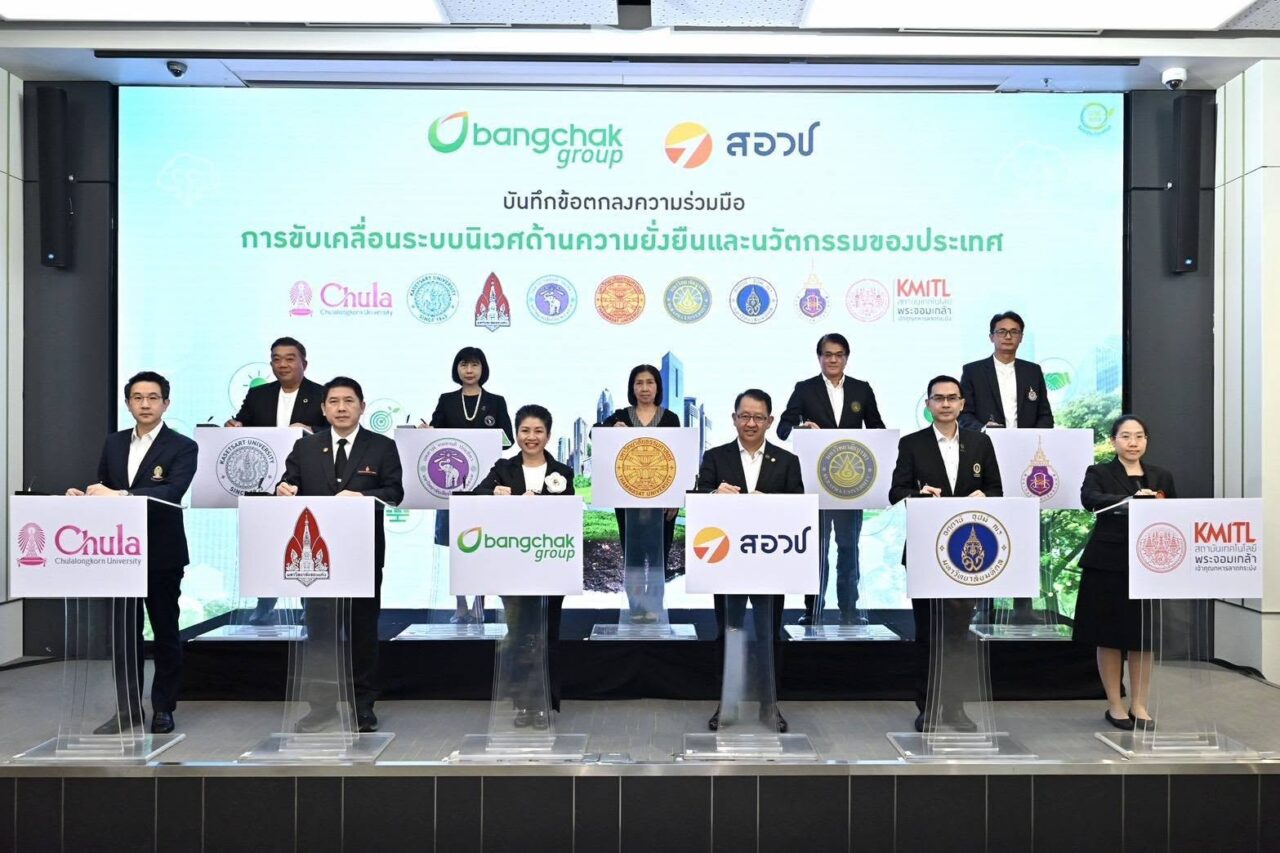
The first half of the year concluded with the preparation of students to enter the world of work and social development in a sustainable low-carbon economy era. Thammasat joined forces with Bangchak, the Office of National Higher Education Science Research and Innovation Policy Council (NXPO), and a network of leading universities to sign an MOU cultivating the new generation of ESG professionals to tackle the low-carbon economy. Under the “Bangchak Group x University Gen Z-ESG” network, the objective is to collaboratively develop manpower in Environmental, Social, and Governance (ESG) by concretely linking the educational, industrial, and policy sectors.
Reflecting on the overview of the collaborative agreements throughout the first half of the year, Thammasat University has clearly prioritised building networks across the public sector, private sector, and international organisations to translate academic knowledge into benefits for society. Operating under the ‘University for the People’ guiding principle serves as a foundation for work in the second half of the year, during which Thammasat will continue to collaborate with all sectors to drive the Sustainable Development Goals forward.