HIGHLIGHTS:
- Global Engagement: Thammasat University student representatives actively participated in the “Youth Roundtable” at the UN conference to voice their perspectives and co-shape global directions.
- Everyday Impact: Meaningful participation begins with small daily actions; therefore, national executives are urged to prioritise the proposals of the new generation.
- True Equality: A strong call was made to normalise education and employment for people with disabilities, treating them as equal members of society rather than mere tools for corporate image.
- Flexible Participation: Spaces for youth engagement should be reimagined as a flexible “playground” that empowers everyone’s daily life, moving beyond traditional and formal leadership roles.
On 22 June 2026, the Ministry of Foreign Affairs, in collaboration with the United Nations in Thailand, held a significant conference titled “80 Years of Thailand and the UN: Country Level Engagement on Pact for the Future Implementation” at the United Nations Conference Centre in Bangkok. The event celebrated eight decades of partnership on the occasion of Thailand joining the United Nations, whilst driving global solutions under the agreement for a sustainable future.
On this occasion, student representatives from Thammasat University participated in the “Youth Roundtable”—highlighting youth as decision-makers—to voice their reflections and perspectives on global social issues. Key highlights from our students include the following:
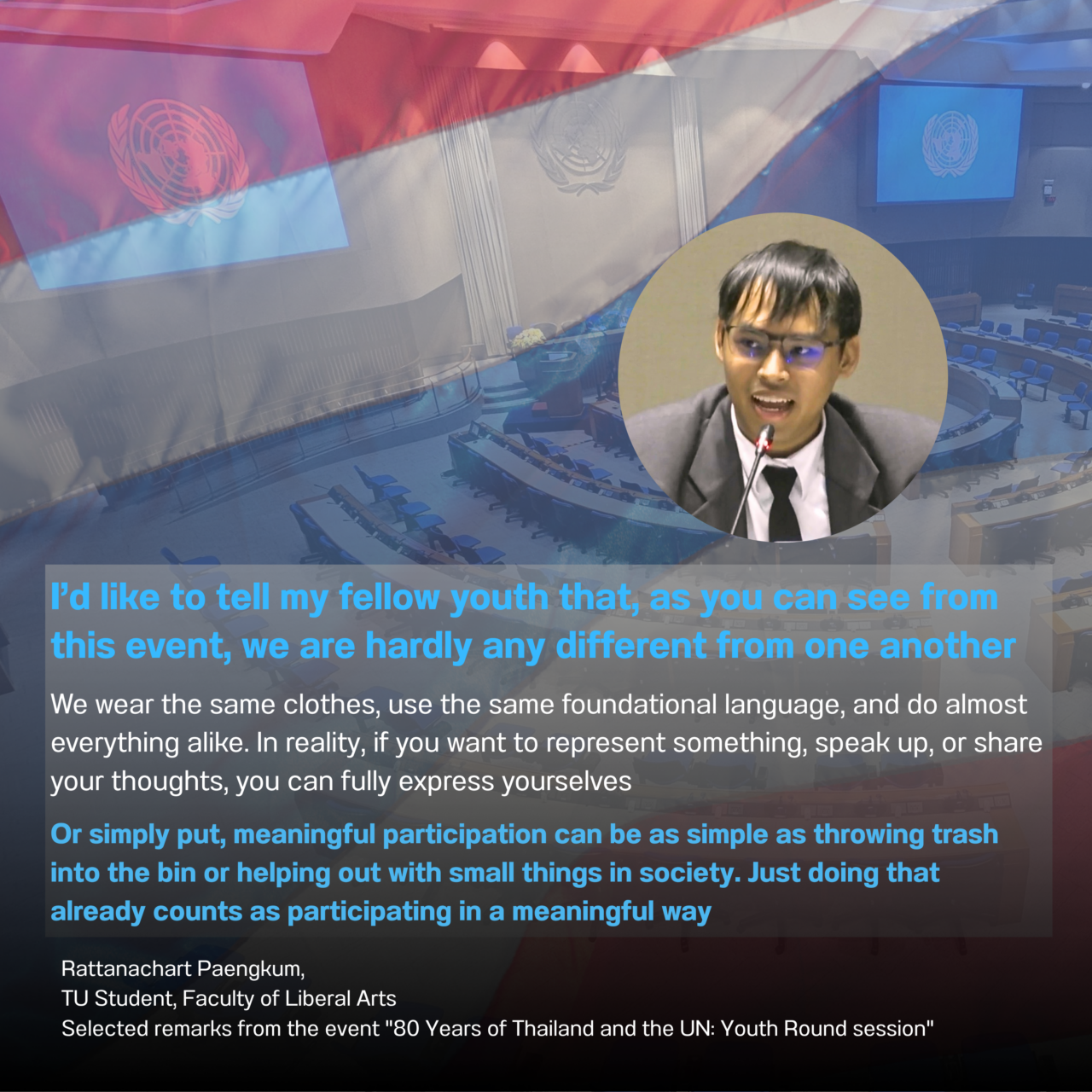
Participation Begins with Small Steps
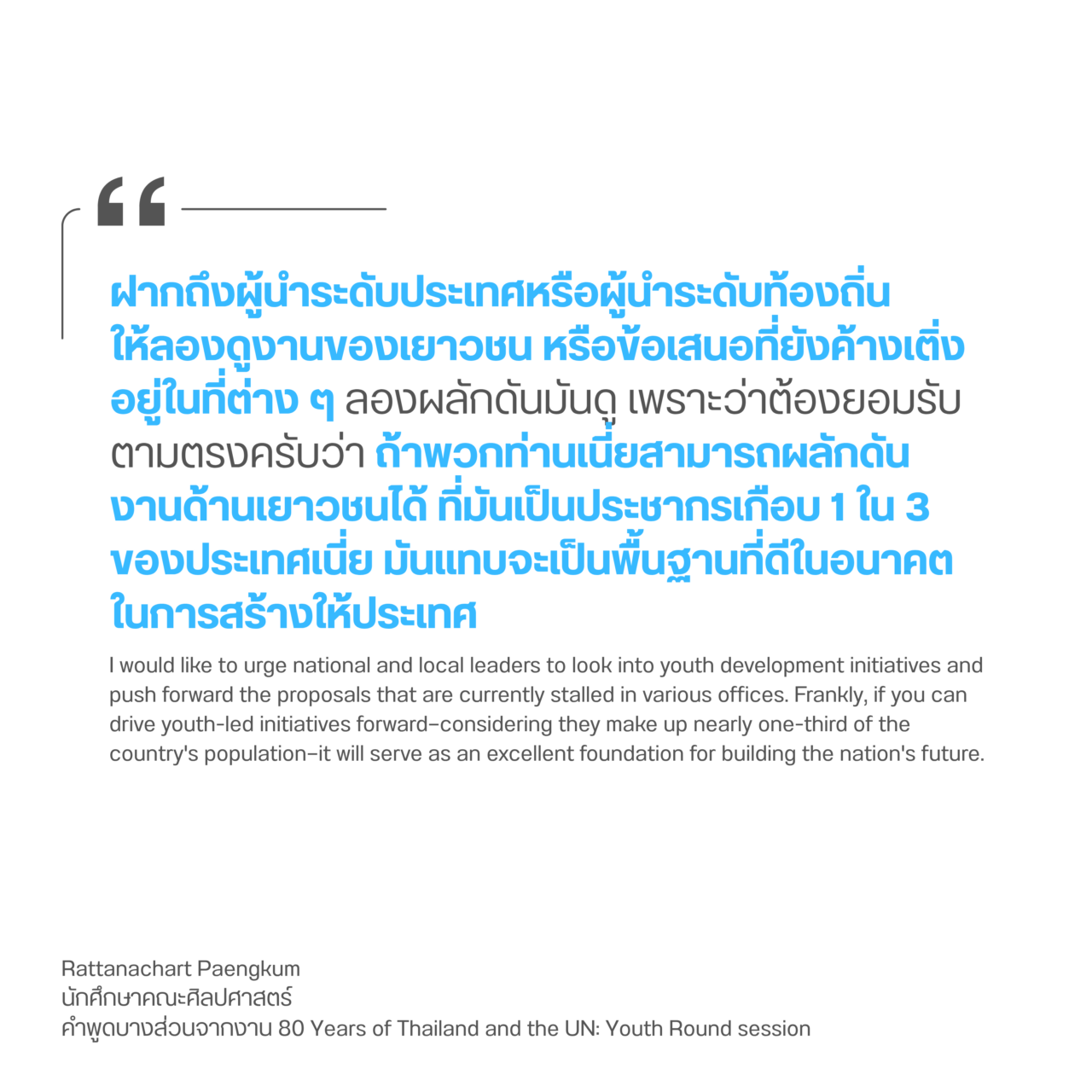
Mr Rattanachart Paengkum, a student from theFaculty of Liberal Arts, passed on positive energy to his peers by emphasising equality and starting from small steps. He believes that participation in driving society forward can happen anywhere, and everyone can take immediate action in their daily lives. For instance, properly disposing of rubbish in the bin is already a meaningful contribution to society. Furthermore, he urged national executives to prioritise youth proposals, as the new generation makes up nearly one-third of the country’s population and serves as a crucial foundation for the future.
Recognising People with Disabilities as an Integral Part of Society
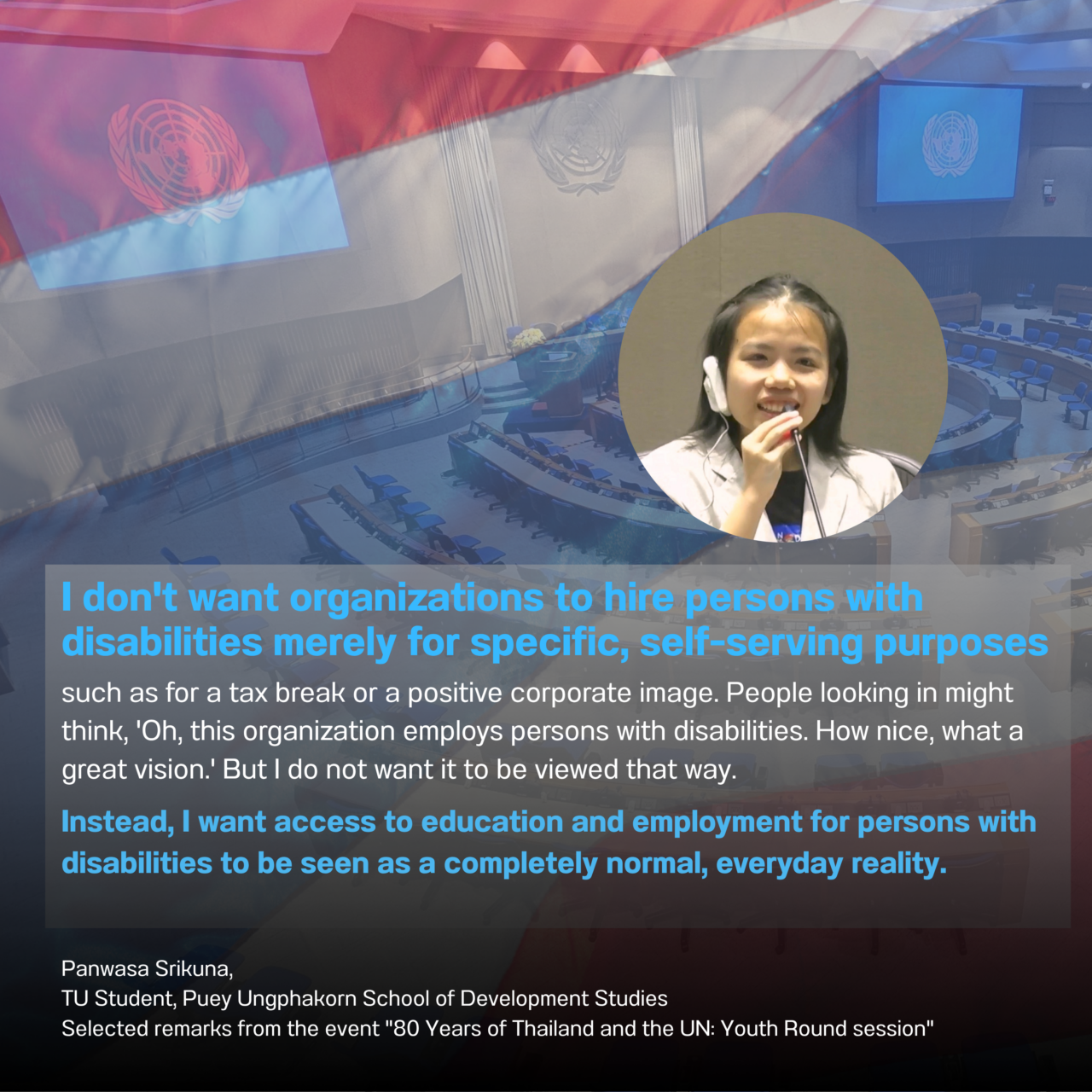
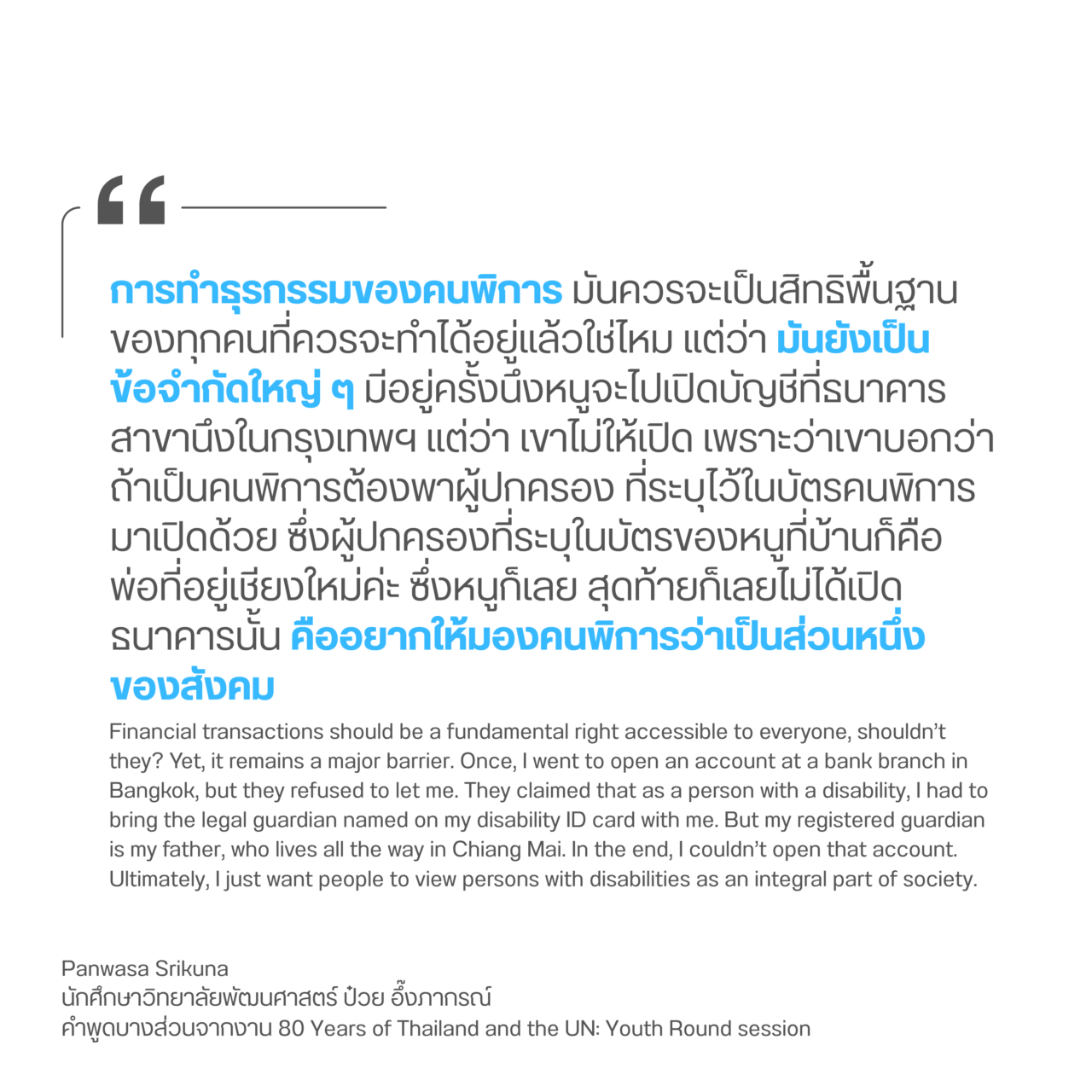
In terms of reducing inequality, Ms Panwasa Srikuna, a student from the Puey Ungphakorn School of Development Studies, shared a thought-provoking perspective on the rights of people with disabilities. She wants society to view access to education and employment for people with disabilities as a normal occurrence, rather than employing them merely for tax benefits or corporate image. In addition, she shared her direct experience regarding the limitations in financial transactions that people with disabilities still face, calling for them to be seen as equal members of society.
A Flexible Approach to Youth Engagement
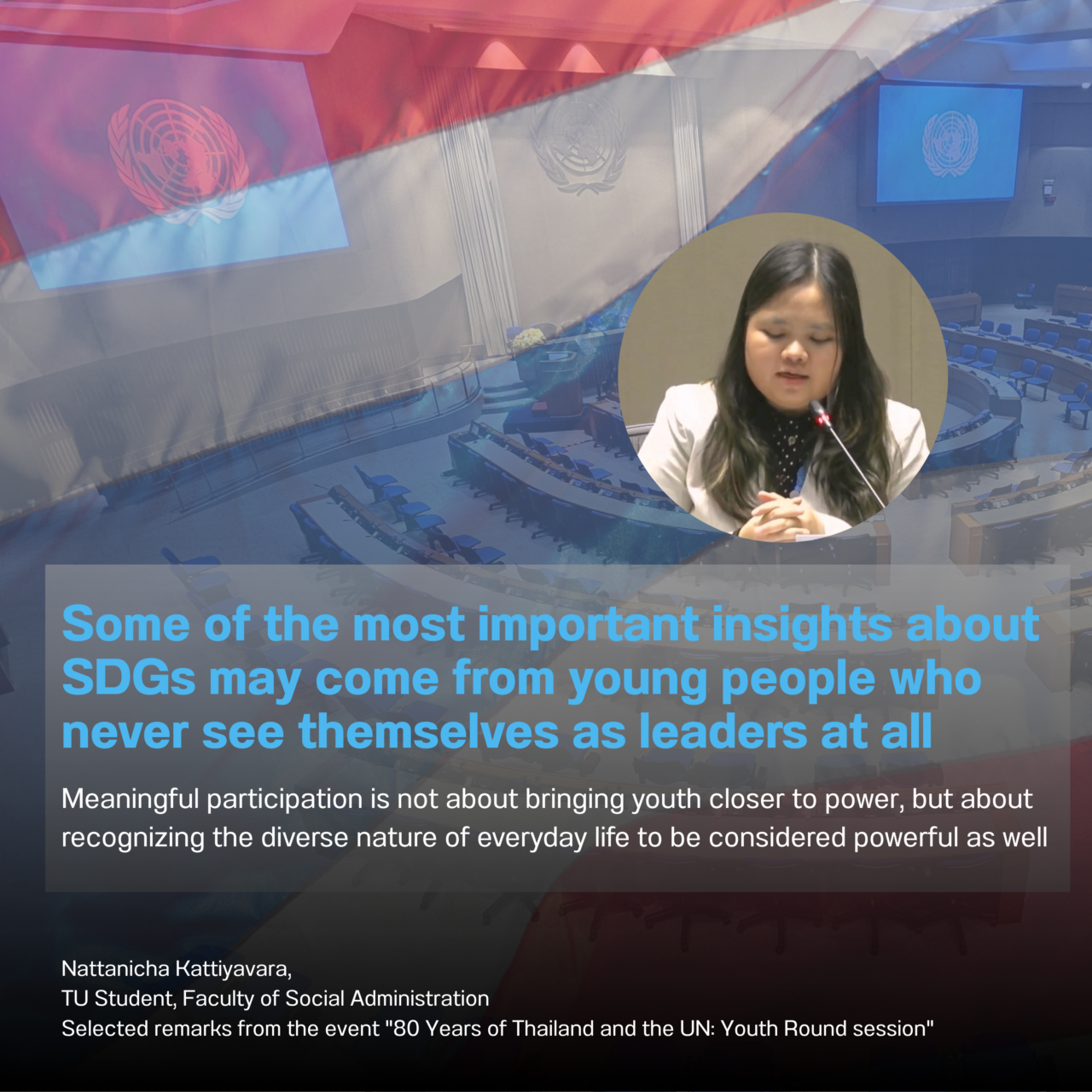
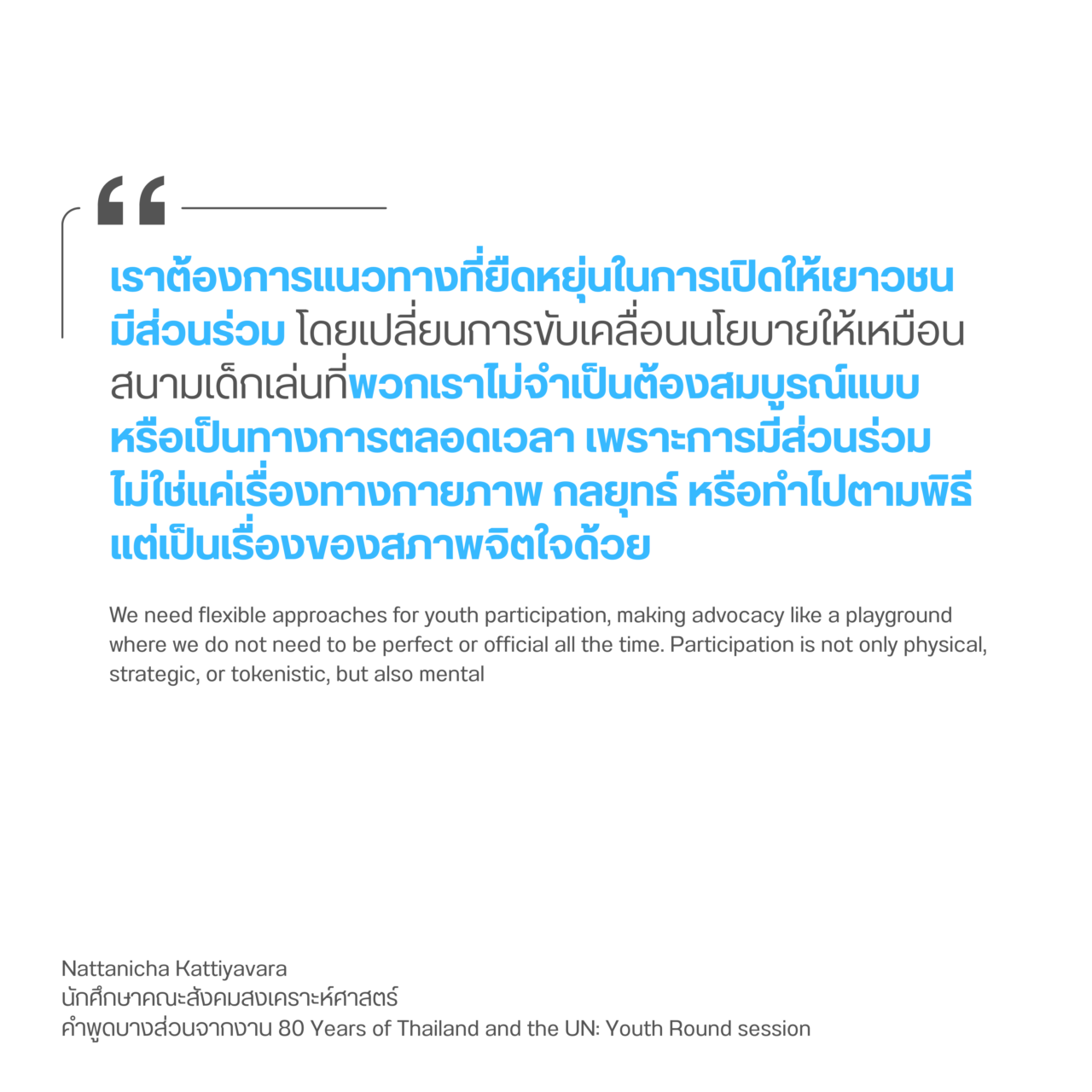
Ms Nattanicha Kattiyavara, a student from the Faculty of Social Administration, presented an interesting concept regarding the Sustainable Development Goals (SDGs). She suggested that the most crucial insights might come from young people who do not even view themselves as leaders. Meaningful participation should move beyond merely bringing youth closer to power, towards shifting the perspective to recognise that everyone’s daily way of life is equally powerful. She proposed that creating spaces for youth engagement should resemble a flexible “playground,” which does not always need to be formal or perfect, because participation is not just a strategic matter, but also a psychological one.
The Pact for the Future and the Next Steps
Beyond the celebration, this conference brought forward the “Pact for the Future”—a global commitment to revitalising multilateralism and sustainable development—and applied it to align with the Thai context. A key objective is to inspire new-generation leaders to see opportunities in diplomatic and multilateral careers, working collaboratively to drive the world towards peace and inclusivity.
The role of Thammasat students on the global stage demonstrates the boundless potential of the new generation. It also reaffirms that the “voice of the youth” is the vital core in creating real change for the future.