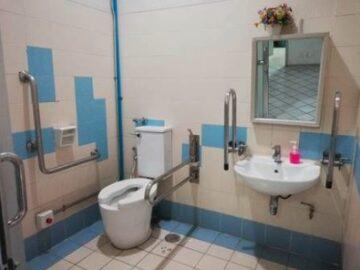
To promote the awareness of gender equality, diversity and inclusion, this “All Genders Restroom” project was created. All gender restroom serves as symbolic and practical expression of the equality of all genders, to create awareness and recognition of gender diversity. The restroom for all genders locates at Gymnasium 7 building. For more information, please refer to: All Genders’ Restrooms
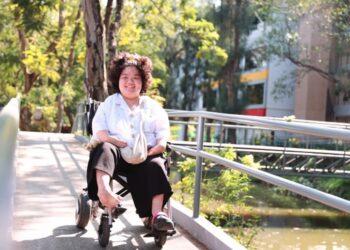
Thammasat University is a pioneer in promoting educational opportunities for individuals with disabilities, being the first in Thailand to implement a comprehensive initiative.
Since 2012, the Disability Support Services Center has completed 21 projects to enhance physical accessibility, including ramps and tactile sidewalks.
The university supports 70 students and 14 staff members with disabilities in various roles.
Thammasat University was honored with the ‘Accessible Place 2023’ excellent award during the International Day of Persons with Disabilities 2023.
Key improvements include elevators with braille buttons and voice announcements and dormitory upgrades with grab rails for safety.
Thammasat University is a leader in promoting educational opportunities for individuals with disabilities in Thailand. As the first higher education institution to implement a comprehensive initiative in this area, the university currently supports 70 students and 14 staff members with disabilities, serving in various roles such as technical officers, analysts, practitioners, and educators.
Aligning with the SDG 10 “Reduce Inequality”, the university has implemented structural improvements across various areas such as adapted its EV Shuttle Bus system on campus to be fully accessible for wheelchair users and remodeled buildings to meet universal design standards, with the construction and renovation of ramps, restrooms, parking spaces, signage, and classrooms, all aimed at making life easier and more inclusive for everyone especially people with disabilities.
Accessible facilities for people with disabilities at Thammasat University:
Thammasat University was honored with the ‘Accessible Place 2023’ excellent award during the International Day of Persons with Disabilities 2023. This recognition was given by the Ministry of Social Development and Human Security, in collaboration with the Association of Persons with Disabilities Council of Thailand. Thammasat University was the only organization to receive the highest-level award this year.
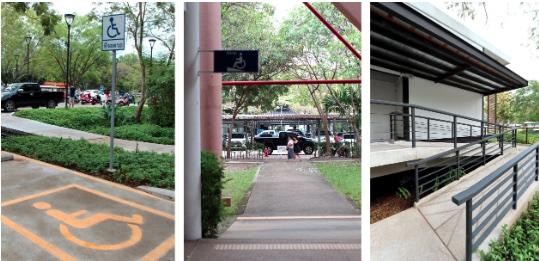
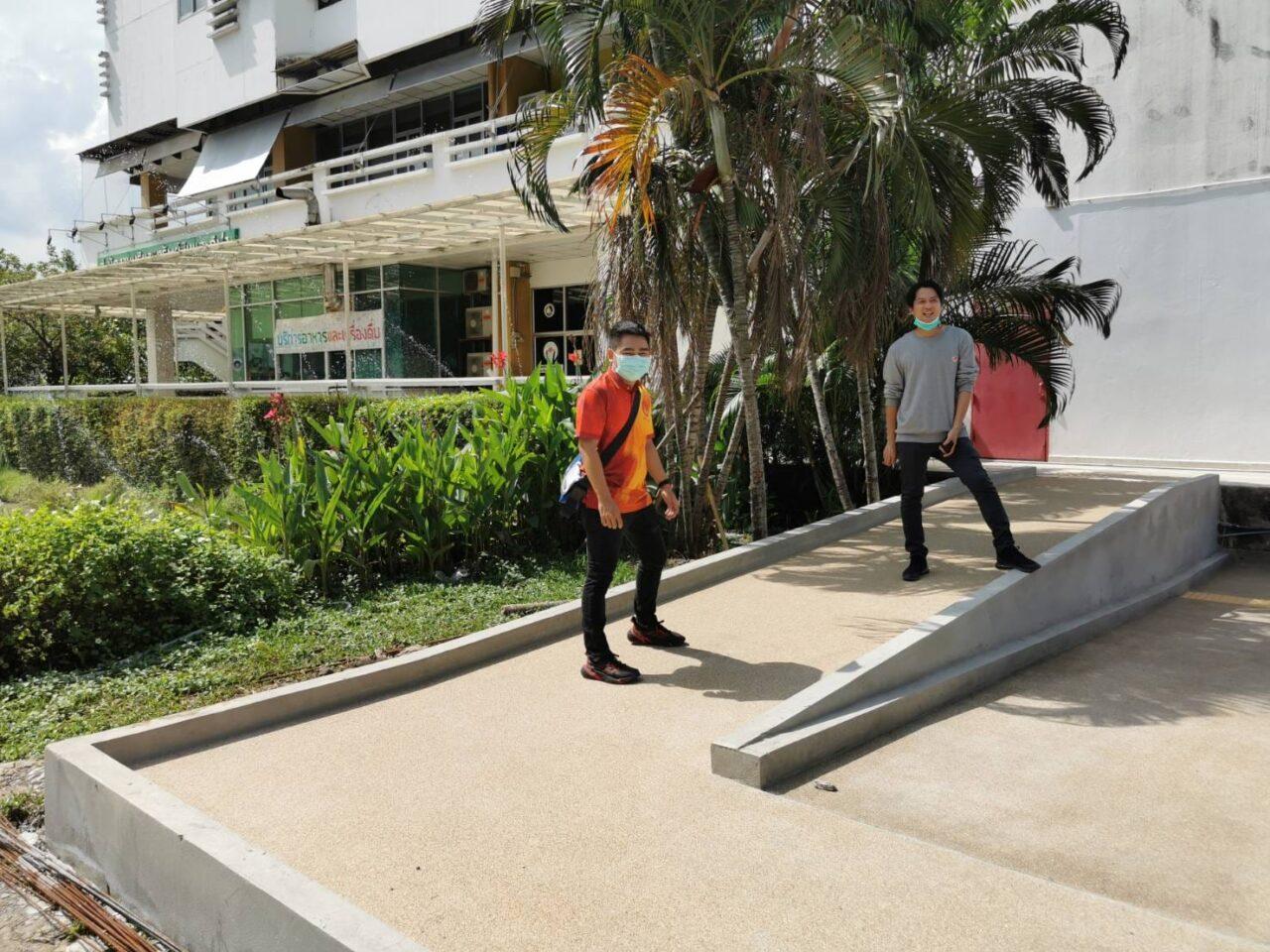
Facilities and building renovations (ramps, parking space and walkway) with “universal design” concepts
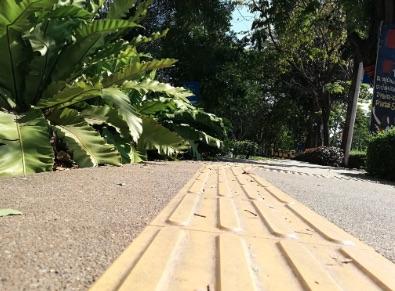
Since 2012, the Disability Support Services Center has been dedicated to transforming the university into a “universal design” environment, ensuring equal access for all community members. Currently, more than 25 projects have been completed which include the improvement of the facilities for the students with disabilities such as ramps, accessible toilets, handicap parking, signs, braille block on sidewalks for visually impaired students, elevators, etc. The renovation of the elevators in several faculties are done by adding braille numbering buttons and voice announcements, the additional supports in the dormitory such as holding rails in bathroom, kitchen sink and closet.
Screenshot
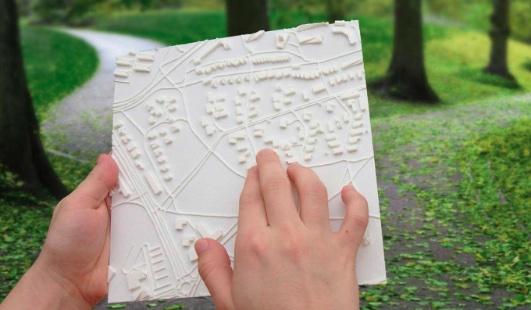
Other examples are at the Faculty of Medicine, Faculty of Social Sciences and Faculty of Sciences. All elevators are specially designed to accommodate students with disabilities by adding braille numbering buttons and voice announcements. Braille map is available for visually impaired students.
ScreenshotScreenshot
Dormitory and ramps for wheelchairs
Regarding accommodation, every student with disabilities who wants to stay in the campus will be arranged into the dormitory without any exception. Buddy or volunteer staff (by request) as well as assistive devices matching with their disabilities will be allocated to them.Dormitory Reservation for Students with Disabilities_Thammasat University Rangsit Campus
For dormitory applications at the Rangsit Campus, students can apply online and fill out your details through online registration. Disabled students can fill out the dormitory reservation form with the necessary information so that the appropriate dormitories could be allocated for them.
Students can specify their gender (Gender) according to their preference, and this will not affect the selection process. However, the office will assign dormitories based on the student’s biological gender.
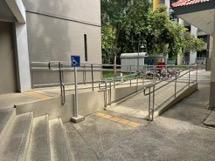
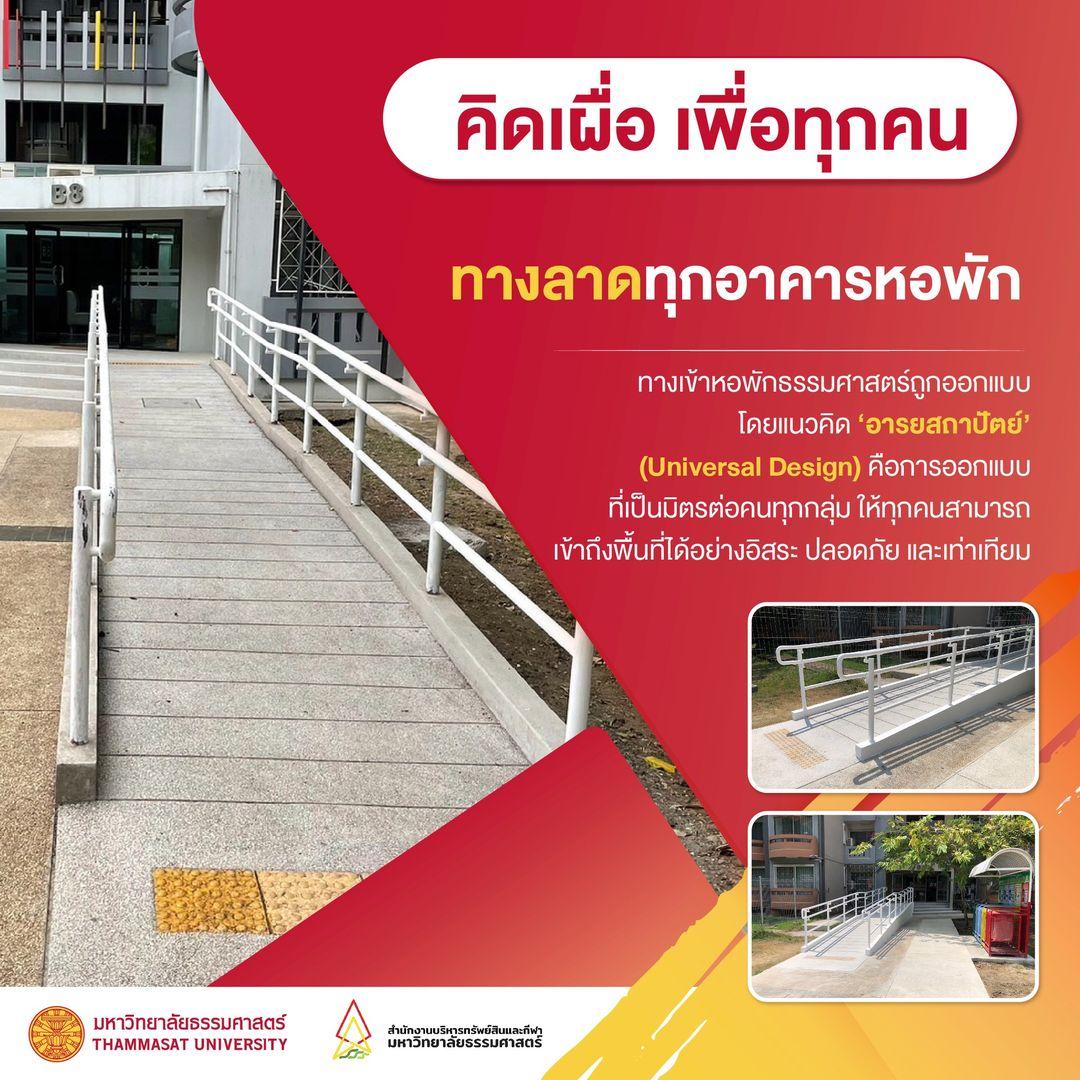
The Thammasat University Property and Sports Management Office follows the international standard of “Universal Design,” which aims to make spaces fully usable and equally accessible to everyone, particularly individuals with disabilities or mobility challenges. This concept, often referred to as “Accessible Architecture,” ensures that all areas managed by the office are designed to promote fairness and equality for everyone, regardless of their physical abilities. Ramps are constructed in all dormitory buildings for those who use wheelchairs.
Library with ramps and blind blocks
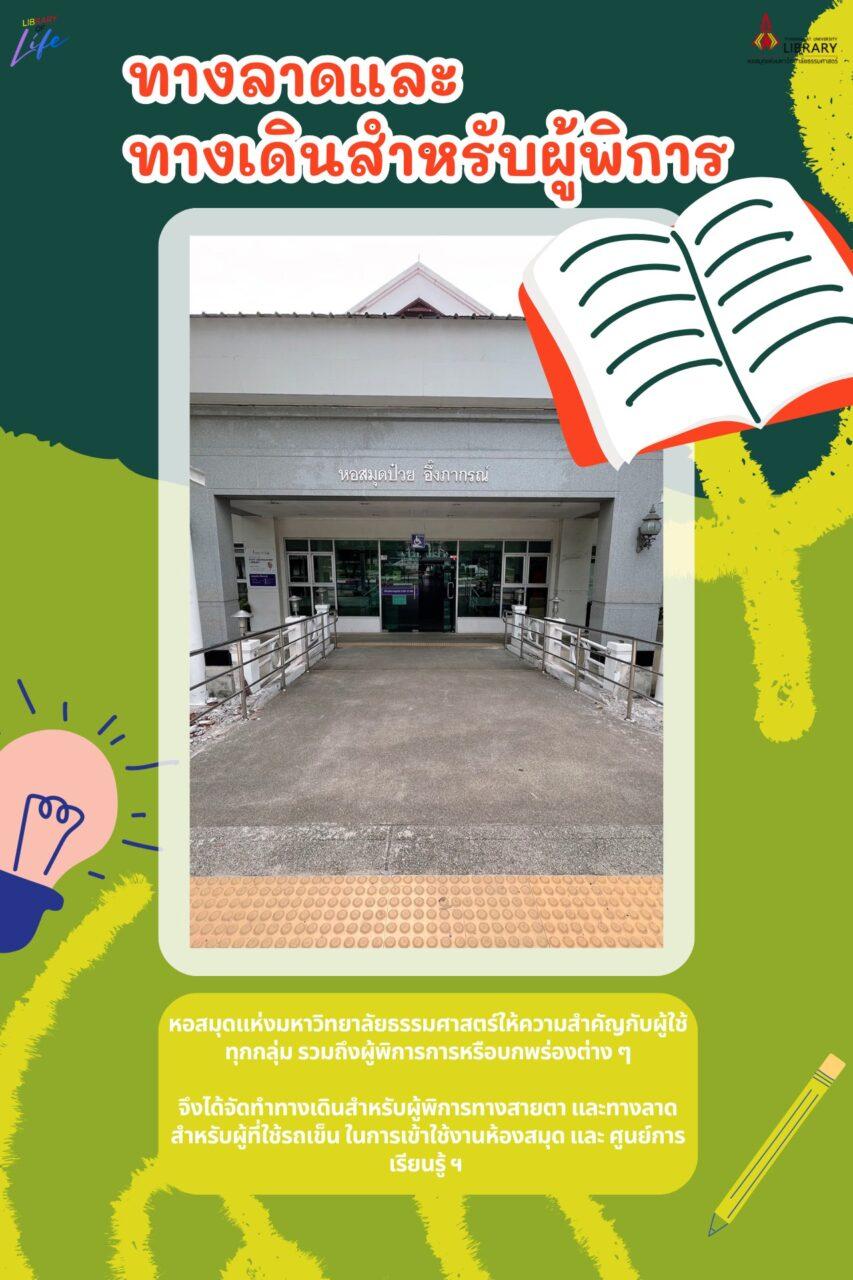
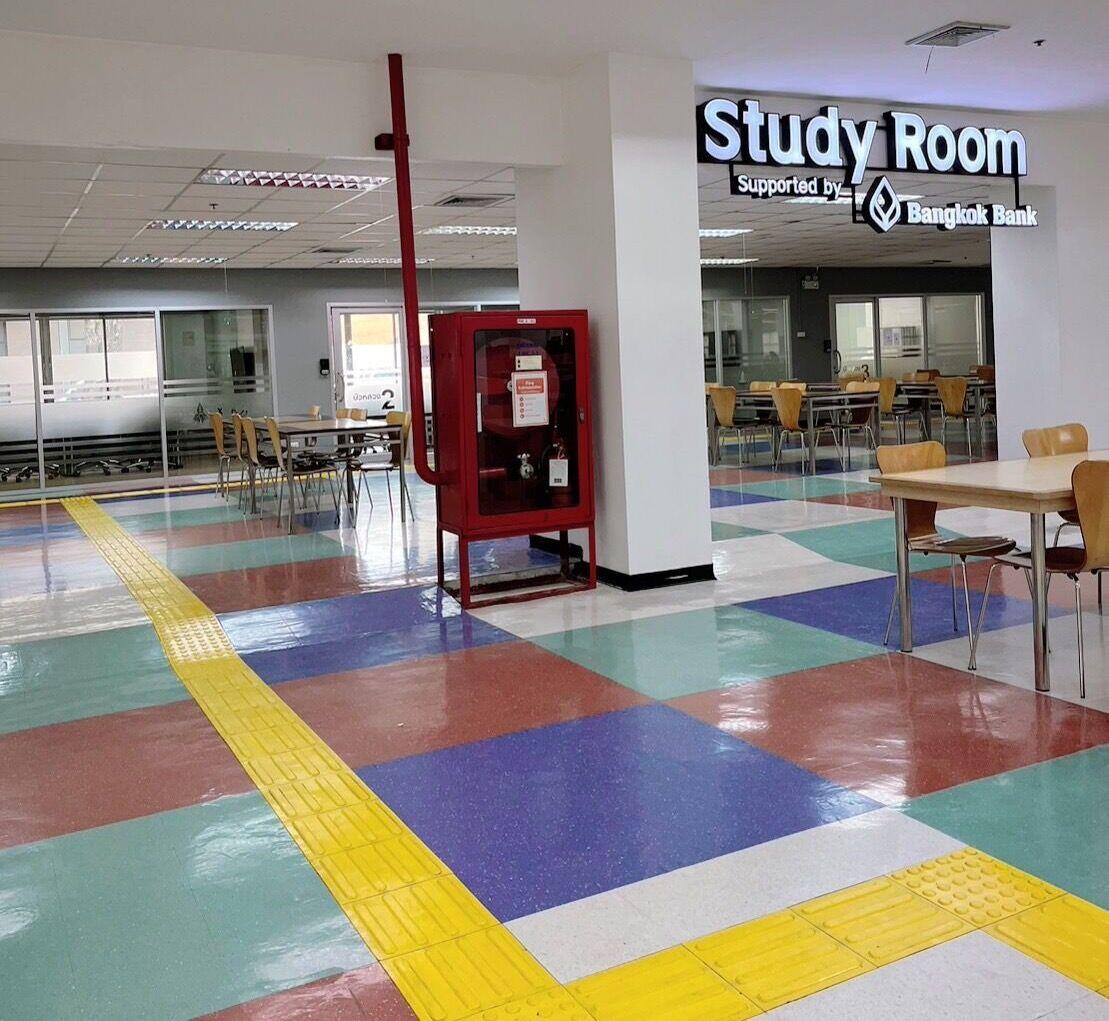
The Thammasat University Library prioritizes all user groups, including individuals with disabilities or impairments. It has installed walkways for the visually impaired and ramps for wheelchair users, allowing them to access the library and learning center. Additionally, the spaces between bookshelves are wide enough for wheelchair users to independently find books.
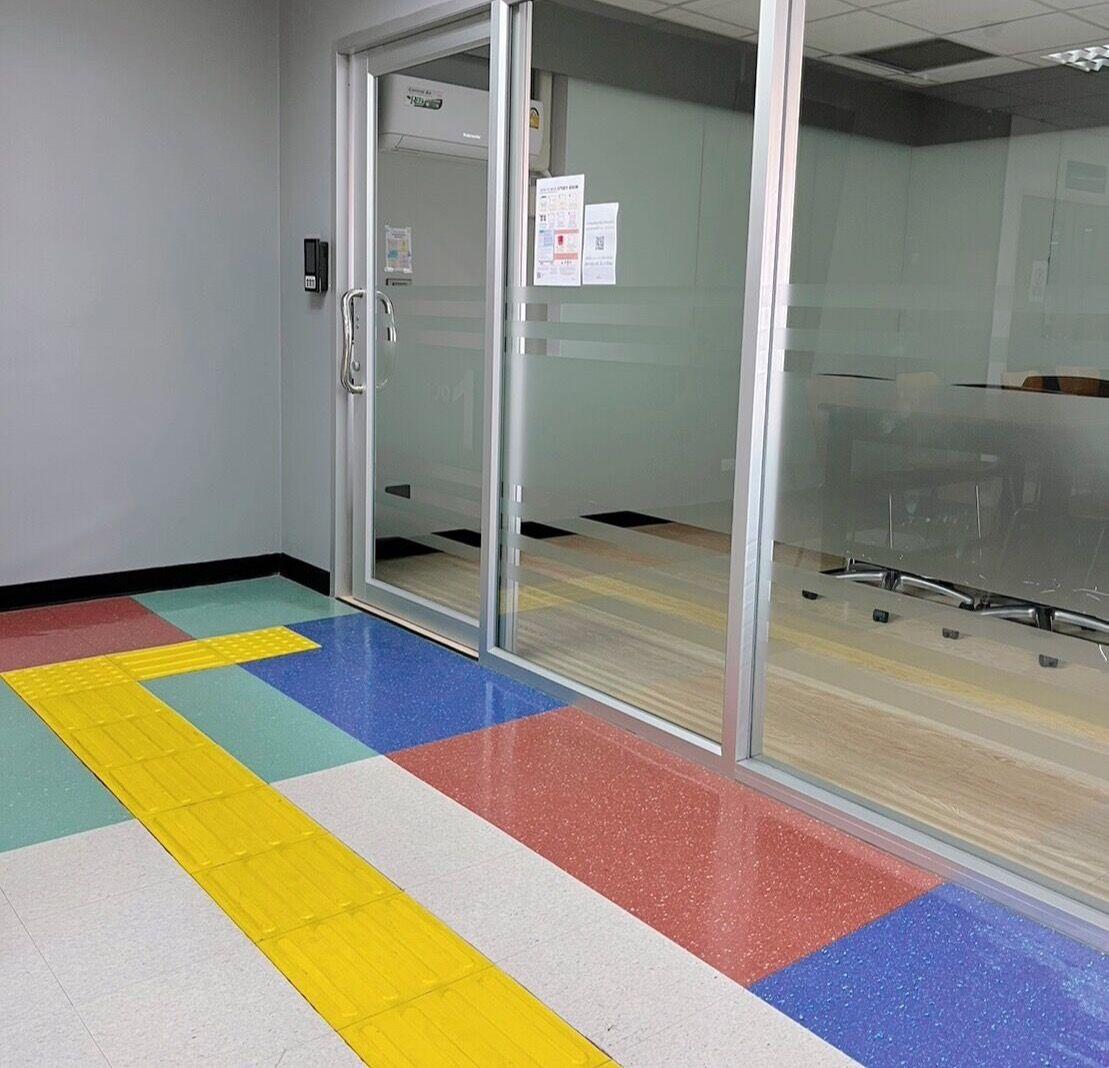
Ramps are available at the side and front entrance of Puey Library, and front & rear entrance of the Learning Center. For the visually impaired, blind blocks have been installed from the library entrance to the interior, including up to the study rooms or meeting rooms.
Restroom for disabilities
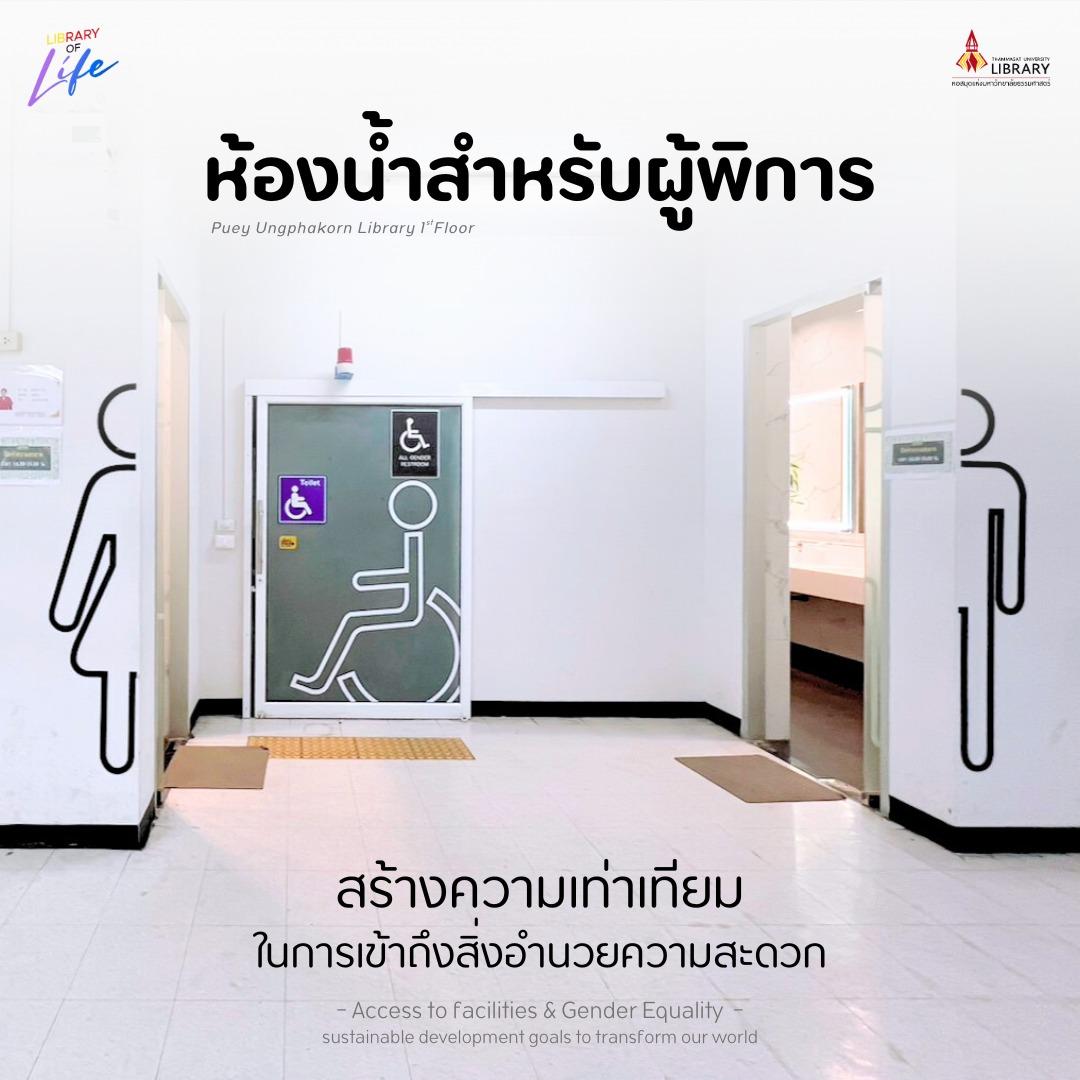
The Puey Ungphakorn Library has renovated its restroom facilities for individuals with disabilities to promote equal access to amenities and ensure fairness for all users, located on the 1st floor.
Museum and Exhibition for Visually Impaired Persons
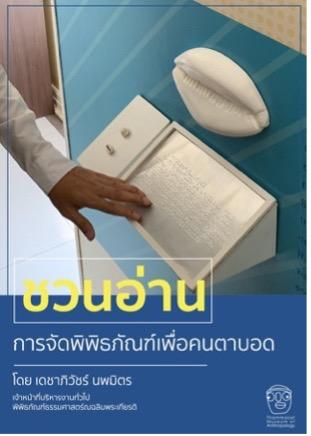
One of the key “universal design” projects is the external and internal building structure of museums to facilitate blind visitors such as elevator and braille block. For exhibition design, sound and touch were used as means to present and describe objects in the exhibition. The audio description is the basic source of data that museums provided to blind visitors through individual guide or audio guide. The sound and touch in the exhibition allow blind people to increasingly gain information and participate in the museums.
Service center common room
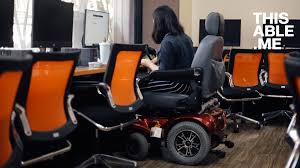
The service center also provides other miscellaneous services like the office area for the staff and the common room for the students. There are 4 recording rooms, 28 computers set with the screen reader program, and the image enlarging devices for the staff to produce the instructional media. The service center opens Monday through Saturday exclusively for students with disabilities. Students can use the common room for both academic purposes and for relaxing in their leisure time.
For more information regarding the accessible facilities for people with disabilities, please refer to:
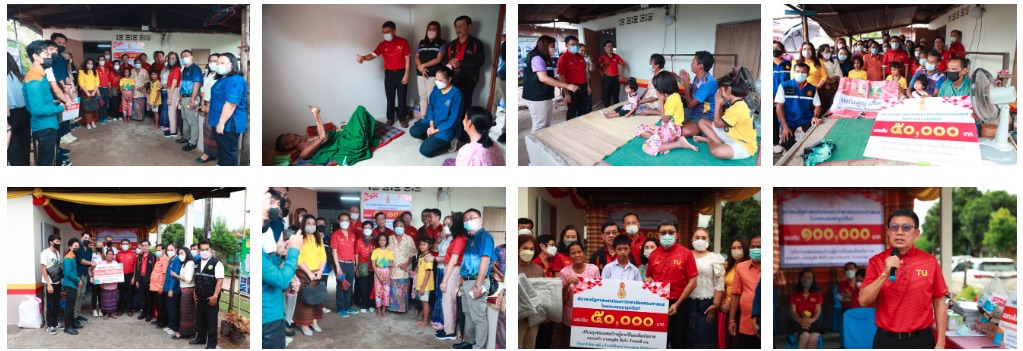
Political Science Association, Thammasat University, together with the Governor of Khon Kaen Province, gave houses to the poor and underpriviledged people of Ban Na Kham Noi, Village No. 3, Wang Hin Lat Subdistrict, Chum Phae District, Khon Kaen Province. The Political Science Association donate funds for the amount of 100,000 baht to support the home renovation project for Chum Phae District on September 10, 2022. With the additional support from the military engineers from Mahasak Phonsep Camp, 8th Infantry Regiment, 2nd Battalion and other local volunteers, the total funds raised were 133,000 baht which could complete the renovation of two houses in Chum Phae District.
Since 2003, Thammasat University has launched an admission program form students with disabilities, and two years later, the Disabled Student Services Thammasat University (DSS). Duty of DSS is to support students with disabilities in every way possible. The center is responsible for guidance counseling, student’s preparation, dormitory arrangement, and even implementing universal design in the university.
The guidance counseling session was not only given to TU students but also high school students with disabilities in order to promote the admission program. The center also facilitates high-school students with disability on the day of the examination to ensure that all of them have equal opportunities in the admission process.
Once the students are admitted, the center also hosts a meeting to prepare the newly admitted students with disability for the university education and living. Even during the COVID-19 pandemic, the DSS center provided the preparation session online for the students with disabilities. Moreover, the DSS also provides relevant trainings for the students, for example, a training on Microsoft Office for students with vision impairment.
Regarding accommodation, every students with disabilities who wants to stay in the campus will be arranged into the dormitory without any exception. Buddy or volunteer staff (by request) as well as assistive devices matching with their disabilities will be allocated to them.
Instructional materials for courses they take will be provided in the forms that match with their types of disabilities, e.g. braille instructional materials for students with vision impairment, audiobooks for those with hearing impairment. Regarding examinations, the service center is responsible for making examination materials ready and suitable with the students’ disabilities.
DSS center also push forward the implementation of universal design in buildings in the university to ensure the accessibility of people with disabilities to the university’s building and infrastructure. Starting with the left-over from budget for devices and equipment, the center have implemented over 20 universal design projects.
In addition to the DSS efforts, Faculty of Engineering also innovates “Plug & Go Wheelchair”, an innovation for people with disabilities and senior citizens. This innovation won 2 awards from the competition on innovation for disabled and senior people.
Please see more details of the service and related documents here:
In academic year 2020, Thammasat University offered admission programs specifically for two underrepresented groups, namely, (1) “White Elephant Program”: poor-but-well-performing students from rural areas of 38 provinces, and from Bangkok, and (2) “Deep South Program”: poor-but-well-performing students from three deep southern provinces. The admitted students were provided with full or partial scholarships. In total there are 17 faculties and colleges participate in this program and admitted these students.
The White Elephant Program provides 284 positions for rural poor students (from the 38 provinces) and 65 positions for urban poor students (from Bangkok). Fifty full scholarships and 100 partial scholarships are provided. For the Deep South Program, 9 positions with full scholarship are offered.
The students who would be eligible for this program must be from low income household (such as farming or wage laborer households, or low level government staff), whose total annual income (income of parents and those who pay for educational expenditure) is no more than 240,000 baht/year (7954.92 US Dollar).
The eligible students must also be registered in the 38 provinces as follows: (1) Central region (7 provinces) – Ang Thong, Singburi, Chainat, Lopburi, Suphanburi, Ratchaburi, Karnchanaburi, Prachuab Kiri Khan; (2) Eastern region (3 provinces) – Prachinburi, Srakaew, Trad; (3) Northern region (9 provinces) – Lumpang, Tak, Sukhothai, Nan, Phrae, Phayao, Uttradit, Chiangrai, Mae Hong Sorn; (4) Northeastern region (15 provinces) – Udorn Thani, Nong Bua Lampoo, Sakonnakorn, Yasothorn, Mukdaharn, Amnart Chareon, Burirum, Surin, Sri Saket, Nakornphanom, Kalasin, Mahasarakham, Nakorn Ratchasima, Khon Kaen, Ubon Ratchthani, (5) Southern region (3 provinces) – Ranong, Trang and Pattalung. For the Deep South Program, the provinces include Yala, Narathiwat, Pattani.
Recruitment process was designed to ensure that the opportunities are given to the right students. A committee is formed, and considers the applications and supporting documents. The committee has to evaluate the applicants’ academic records, and their socio-economic conditions from the documents. Then the committee organizes an unannounced visit to the applicants’ home to validate the evidence provided in the documents. After validating both academic records and socio-economic status, Ordinary National Educational Test (O-NET) and General Aptitude Test (GAT) results of the applicants will also be considered along with other criteria.
Thammasat University has offered admission positions for the under-represented groups under this regulation and criteria since 2009.