Data and Performance
Proportion of Graduates in Health Professions
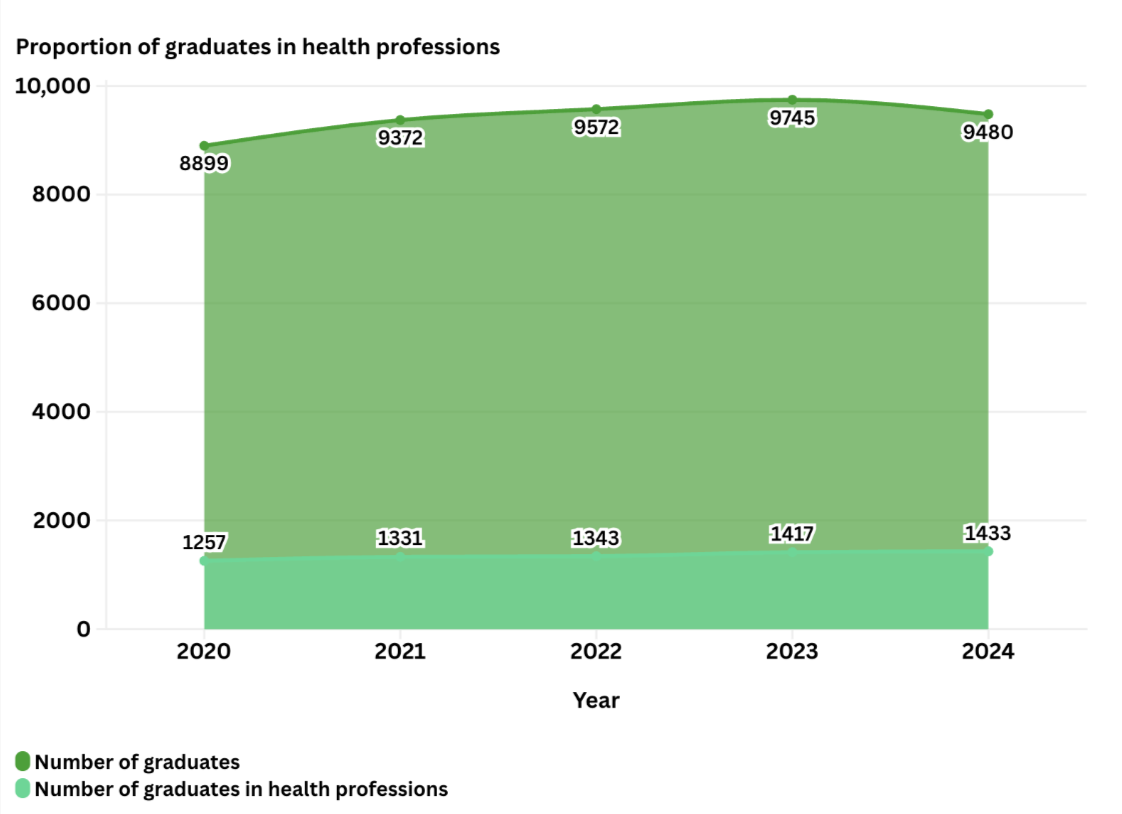
This chart presents the number of graduates in health professions in relation to the total number of graduates at Thammasat University from 2020 to 2024. The number of graduates in health professions increased steadily from 1,257 in 2020 to 1,433 in 2024, reaching the highest level in the five-year period. Despite a slight decrease in the total number of graduates in 2024, the continued increase in graduates in health professions highlights the university’s ongoing contribution to developing healthcare professionals and strengthening education in health-related fields.
Total Number of Students and Staffs Using Viva City Center
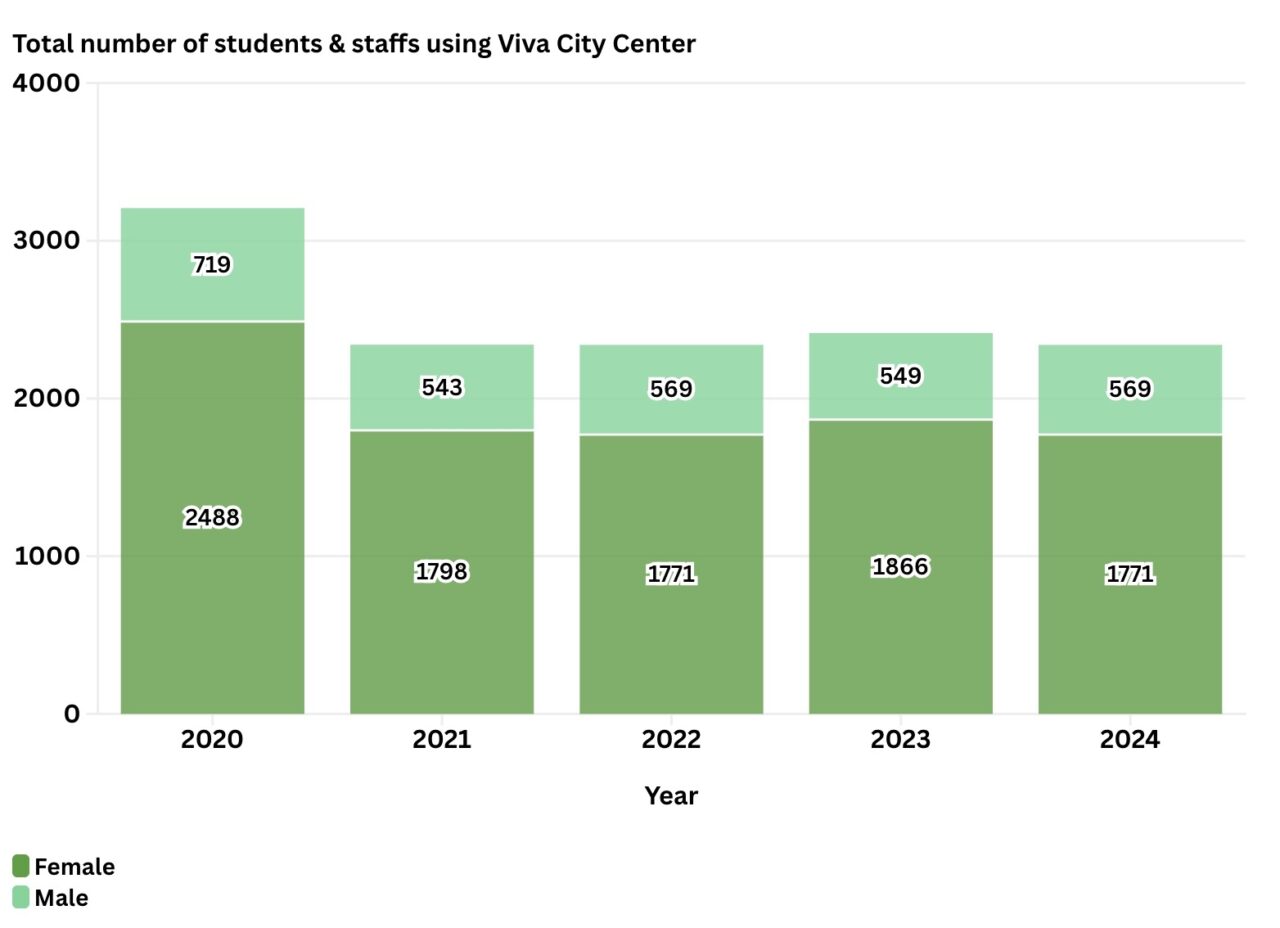
The chart presents the number of students and staff using Viva City Center, Thammasat University’s mental health and counseling center, from 2020 to 2024. In 2024, the center recorded 2,340 users, including 1,771 females and 569 males. Viva City Center provides free mental health support for students and free mental health support for staff, offering free access to counseling and other mental health services. Through these comprehensive services, the university ensures students gain access to mental healthcare and promotes overall well-being across the university community.
SDG 3 Scholarly Output of Thammasat University
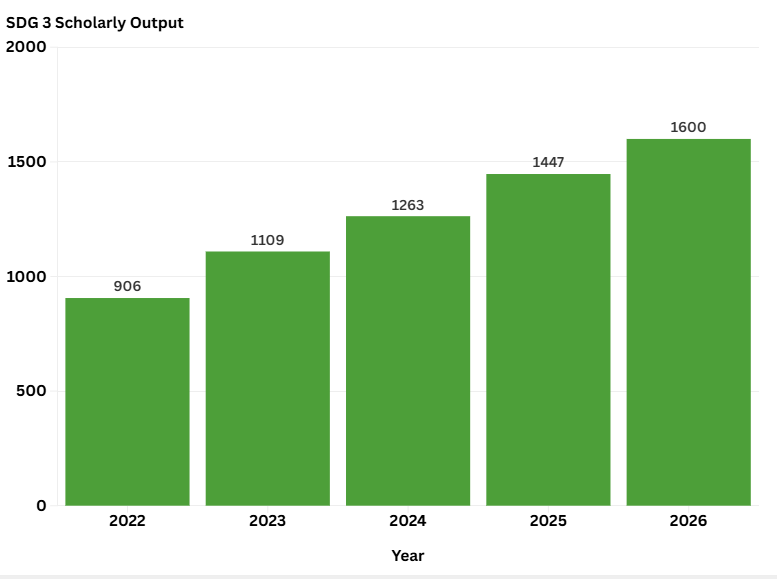
The bar chart presents the number of Good Health and Well-being publications at Thammasat University from 2022 to 2026. The number of publications increased consistently from 906 in 2022 to 1,109 in 2023, 1,263 in 2024, 1,447 in 2025, and 1,600 in 2026. The continued growth may reflect both sustained research activity in health and well-being and the broader identification of relevant publications in the reporting data. This trend demonstrates the university’s growing scholarly contribution to Good Health and Well-being.
Research in SDG 3
Thammasat University produced 1,599 publications mapped to Sustainable Development Goal (SDG) 3, Good Health and Well-being: 268 in 2021, 332 in 2022, 304 in 2023, 325 in 2024 and 370 in 2025. A synthesis of titles and abstracts yields nine thematic clusters:
- Chronic disease and clinical care (339; 3.4): chronic kidney disease, diabetes and stroke rehabilitation.
- COVID-19 pandemic: vaccines, behaviour and response (246; 3.3, 3.b, 3.d): booster vaccine trials and wastewater surveillance.
- Cancer biology, diagnosis and treatment (235; 3.4): cholangiocarcinoma, colorectal and head and neck cancers, and chemotherapy pharmacogenetics.
- Infectious diseases and antimicrobial resistance (210; 3.3, 3.b, 3.d): malaria drug resistance on the Thai–Myanmar border and severe dengue prediction.
- Mental, maternal and child health, behaviour and health systems (158; 3.1, 3.2, 3.5, 3.7, 3.8, 3.c): adolescent pregnancy, postpartum depression, health literacy and health-care access for migrants.
- Environmental and occupational health (144; 3.9): fine particulate matter (PM2.5) and hospital admissions, heavy metals in e-waste communities and microplastics in drinking water.
- Medical artificial intelligence (AI), imaging and diagnostic devices (131; 3.4, 3.d): deep learning for oral cancer detection, breast ultrasound segmentation and point-of-care biosensors.
- Natural products, traditional medicine and drug development (99; 3.b): Thai herbal remedies, andrographolide and anti-diabetic plant extracts.
- Road safety, transport and injury prevention (37; 3.6): motorcycle crash severity, accident hotspots and pedestrian safety.
The disciplines behind the research
Thirty Thammasat units contributed, spanning medicine, health sciences, sciences, engineering, planning, social sciences and business. Each cluster has an anchor unit:
- Faculty of Medicine: 582 publications overall, the most of any unit, and the anchor of seven clusters, including 185 of the 339 chronic disease and 99 of the 235 cancer publications.
- Chulabhorn International College of Medicine: 70 of the 235 cancer and 51 of the 210 infectious disease publications.
- Faculty of Public Health: 49 of the 144 environmental health publications.
- Faculty of Nursing: 36 of the 158 mental, maternal and child health publications.
- Faculty of Architecture and Planning: 12 of the 37 road safety publications.
The Faculty of Dentistry and the College of Interdisciplinary Studies jointly developed deep-learning models that detect oral cancer in photographs, serving target 3.4.
Source: SciVal/Scopus, “Publications at Thammasat University within SDG 3: Good Health and Well-being (2025), 2021–2025” (Scopus data last updated 20 September 2026; exported 27 September 2026).