Data and Performance
Number of Eligible Applicants for Underrepresented Group Applications
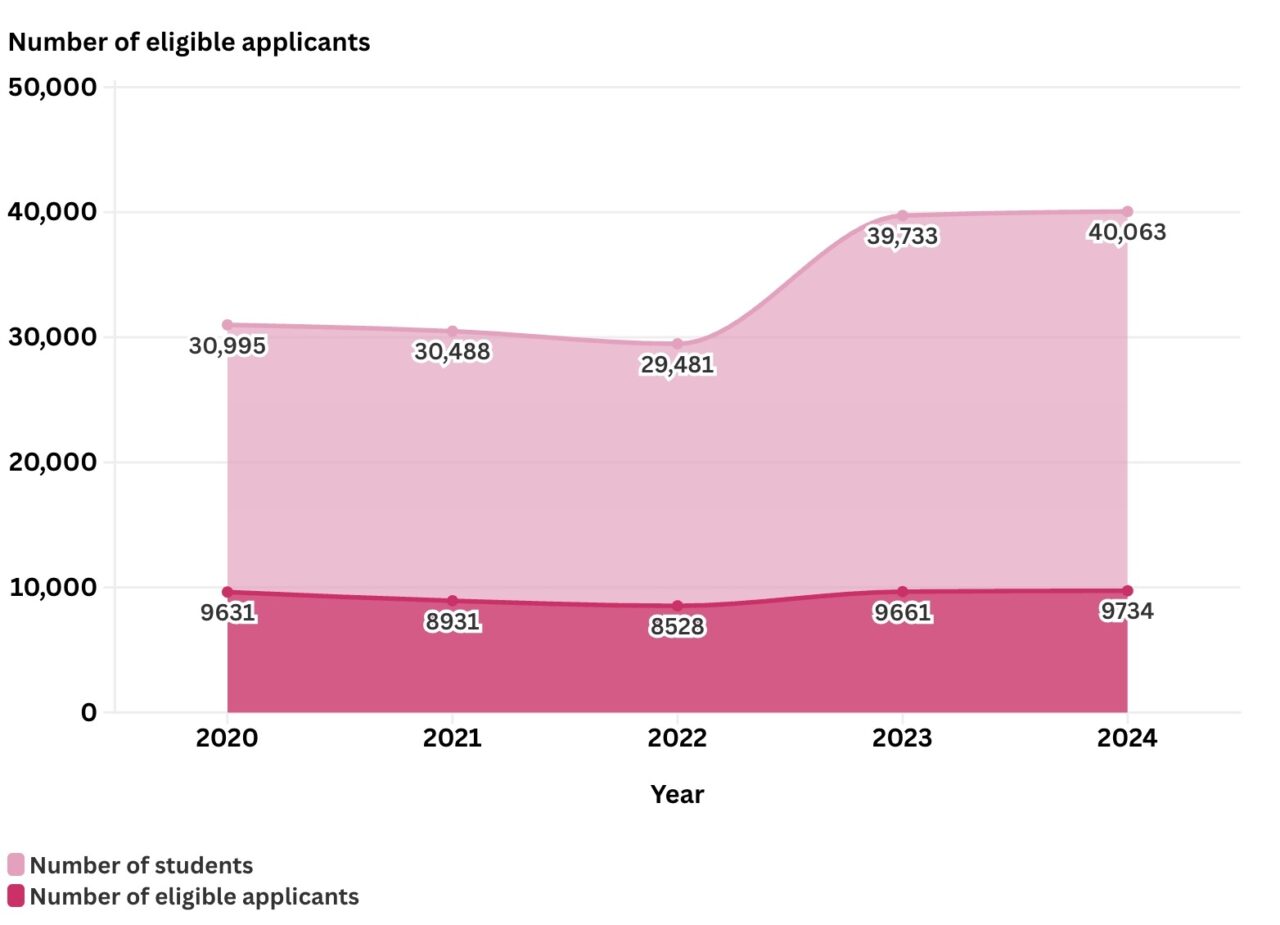
This area chart presents the number of students and the number of eligible applicants from underrepresented groups at Thammasat University from 2020 to 2024. The number of eligible applicants declined from 9,631 in 2020 to 8,931 in 2021 and 8,528 in 2022, before recovering to 9,661 in 2023 and 9,734 in 2024 (up 0.8%). Meanwhile, the total student population rose significantly from 29,481 in 2022 to 40,063 in 2024. These trends highlight changes in applicant numbers and the importance of monitoring equitable access to higher education.
Number of Students with Disabilities
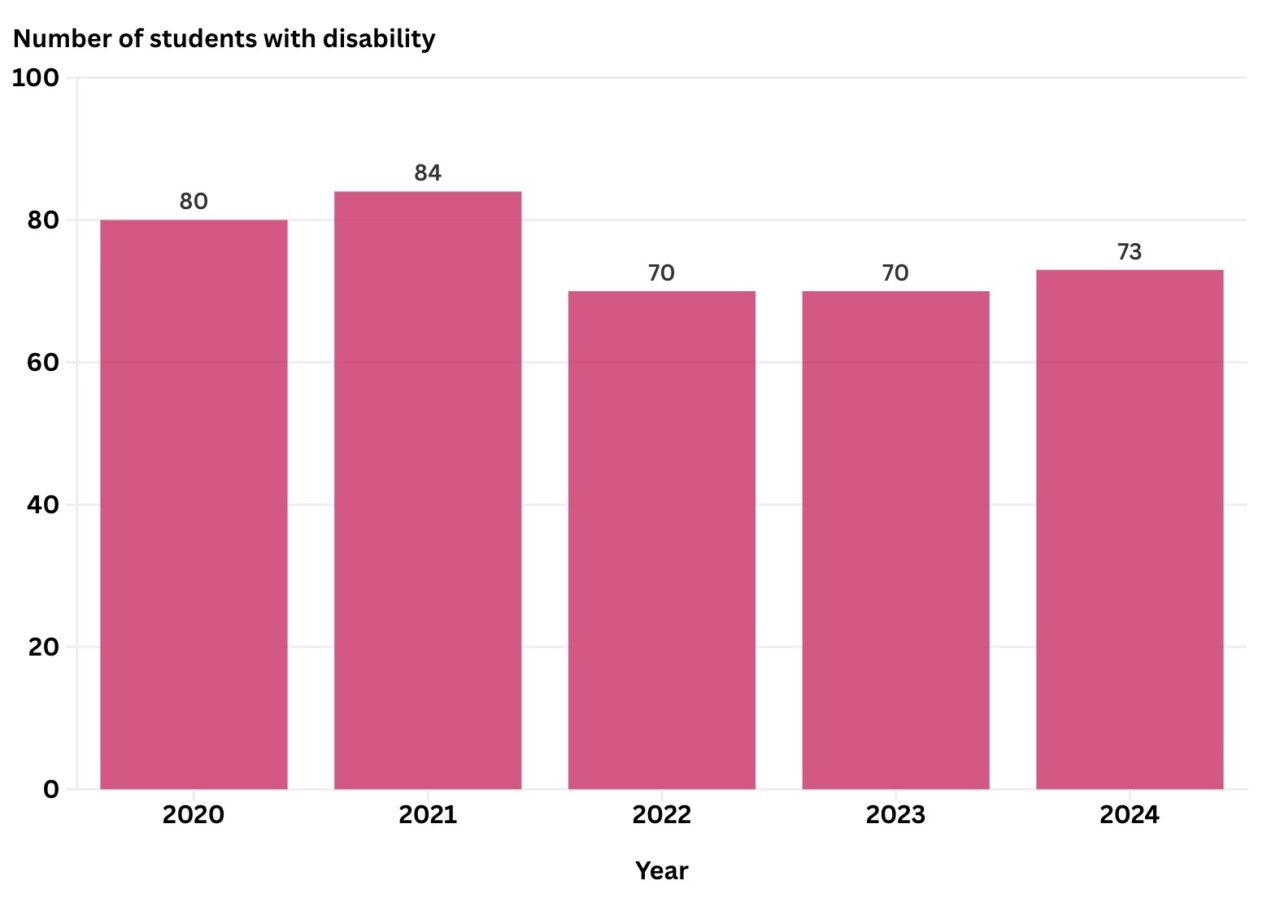
This bar chart illustrates the number of students with disabilities at Thammasat University from 2020 to 2024, showing fluctuations over the period. The figure increased slightly from 80 students in 2020 to 84 in 2021, before declining to 70 in 2022. It remained unchanged in 2023 and then rose modestly to 73 in 2024, representing a 4.3% year-on-year increase.This recent rise highlights the ongoing importance of supporting inclusive and equitable access to higher education under SDG 10.
SDG 10 Scholarly Output of Thammasat University
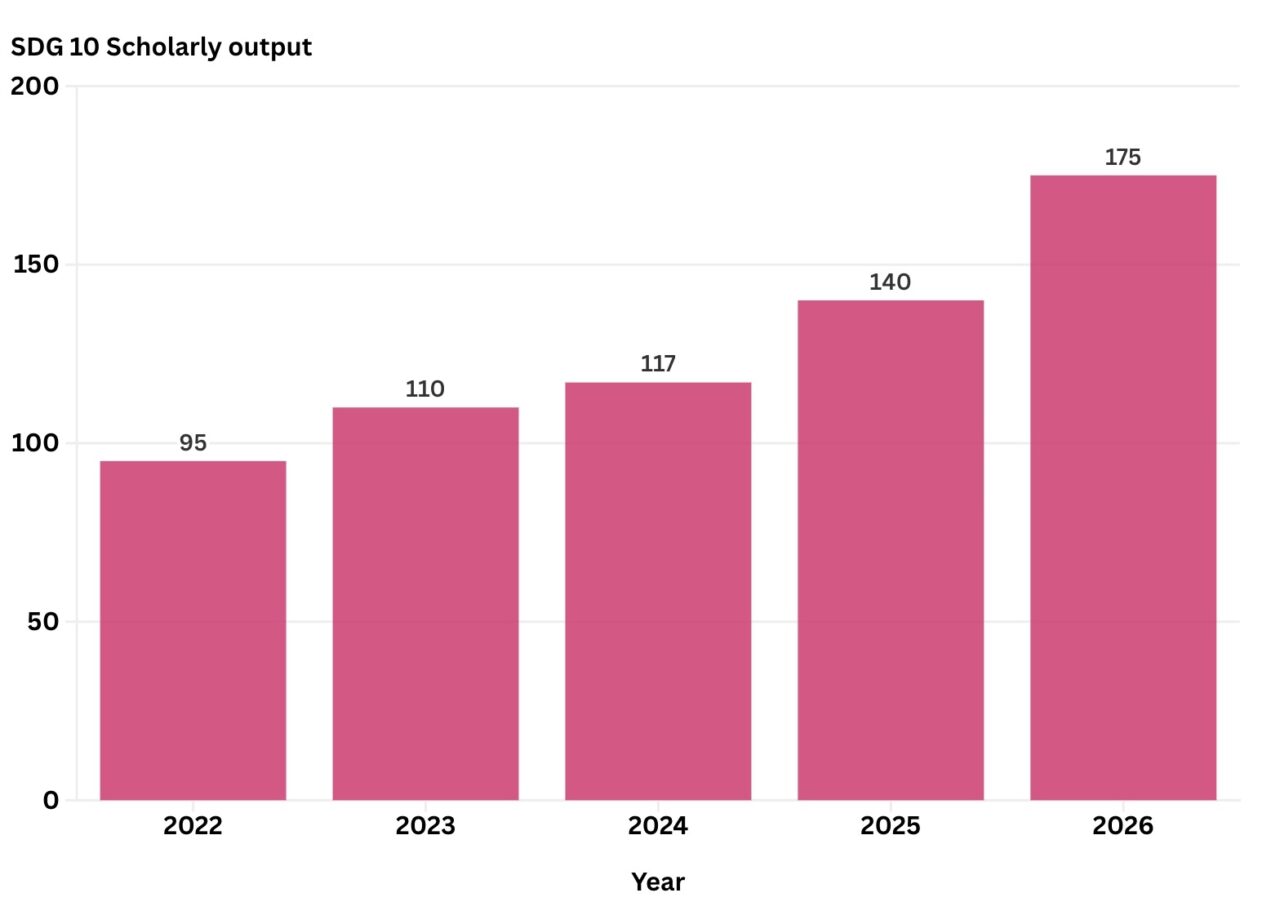
This bar chart presents the scholarly output related to SDG 10 at Thammasat University from 2022 to 2026, focusing on research on reduced inequalities. The number of publications rose from 95 in 2022 to 110 in 2023 and 117 in 2024, followed by a further increase to 140 in 2025. In 2026, output reached 175, representing a 25% increase compared with 2025. This upward trend reflects continued growth in research addressing inequality and promoting social inclusion.
Research in SDG 10
Between 2021 and 2025, Thammasat University produced 175 publications on Sustainable Development Goal (SDG) 10: Reduced Inequalities. Annual output rose from 17 in 2021 to 27 in 2022, 26 in 2023, 46 in 2024 and 59 in 2025. A synthesis of titles and abstracts yields nine thematic clusters:
- Health equity and access to care (33; 10.2, 10.3): healthcare access in Thai border regions, dental service inequality under universal coverage, and health literacy.
- Trade, regional integration and international relations (27; 10.6, 10.a, 10.b): free trade agreements and rules of origin in Thai exports, and education aid to Cambodia.
- Inclusive cities, housing and spatial access (23; 10.2, 10.3): urban greenspace for people with disabilities, heat stress in affordable housing, and gentrification.
- Financial markets, corporate governance and regulation (23; 10.5): Environmental, Social and Governance (ESG) performance and stock price crash risk, and FinTech law.
- Gender equality and sexual and gender minorities (18; 10.2, 10.3): the parenthood penalty, board gender diversity, and LGBTQ+ mental health in Thailand.
- Income, wage and regional inequality (17; 10.1, 10.4): regional wage gaps, assortative mating and income inequality, and land redistribution.
- Migration, refugees and displacement (16; 10.7): migrant workers’ health, asylum and non-refoulement, and human trafficking.
- Social protection, ageing and inclusive work (10; 10.2, 10.4): older workers and Thai social policy.
- Education and digital inclusion (8; 10.2): digital inequality and learning outcomes, and students with visual impairment.
The disciplines behind the research
Twenty-nine units contributed, spanning economics, business, law, health sciences, social work, planning, engineering and the humanities. Each cluster has an anchor unit:
- Faculty of Economics: 12 of the 17 income and wage publications, and 26 publications overall, the most of any unit.
- Thammasat Business School: 13 of the 23 financial markets publications.
- Faculty of Architecture and Planning: 11 of the 23 inclusive cities publications.
- Faculty of Social Administration: 6 of the 10 social protection publications.
- Faculty of Public Health and Faculty of Medicine: the main contributors to the health equity cluster, with 7 publications each.
Planners and economists jointly mapped elderly debt across Thai regions, serving target 10.2 on the inclusion of older people.
Source: SciVal/Scopus, “Publications at Thammasat University within SDG 10: Reduced Inequality (2025), 2021–2025” (Scopus data last updated 20 September 2026; exported 27 September 2026).