HIGHLIGHTS
- Thammasat University upholds participatory governance and institutional democracy by ensuring direct elected representation of faculty, staff (non-faculty employees), and students in institutional decision-making and within its highest governing body—the Thammasat University Council.
- Under Section 20 of the Thammasat University Act B.E. 2558 (2015), full-time faculty and academic support staff hold democratically elected seats and representative leadership positions on the Council.
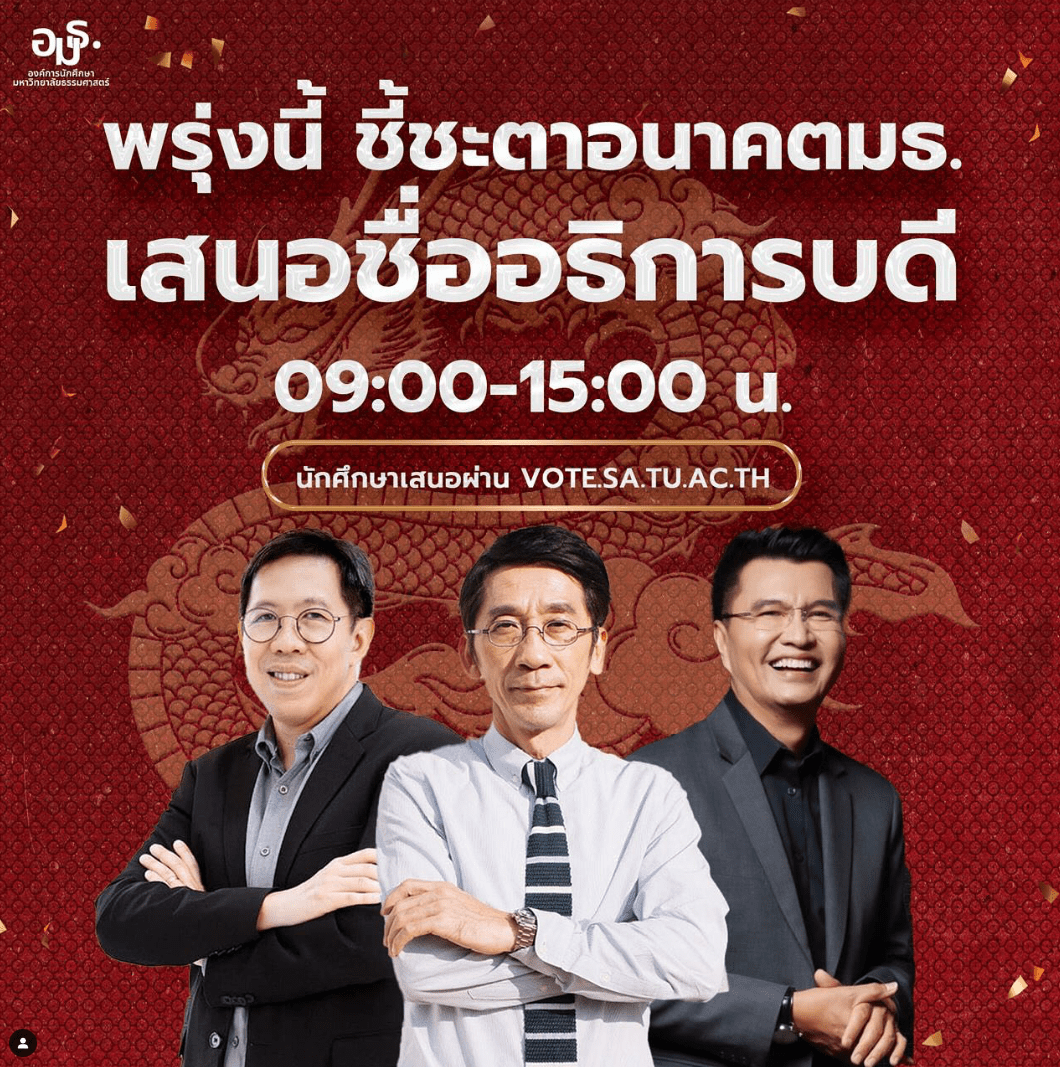
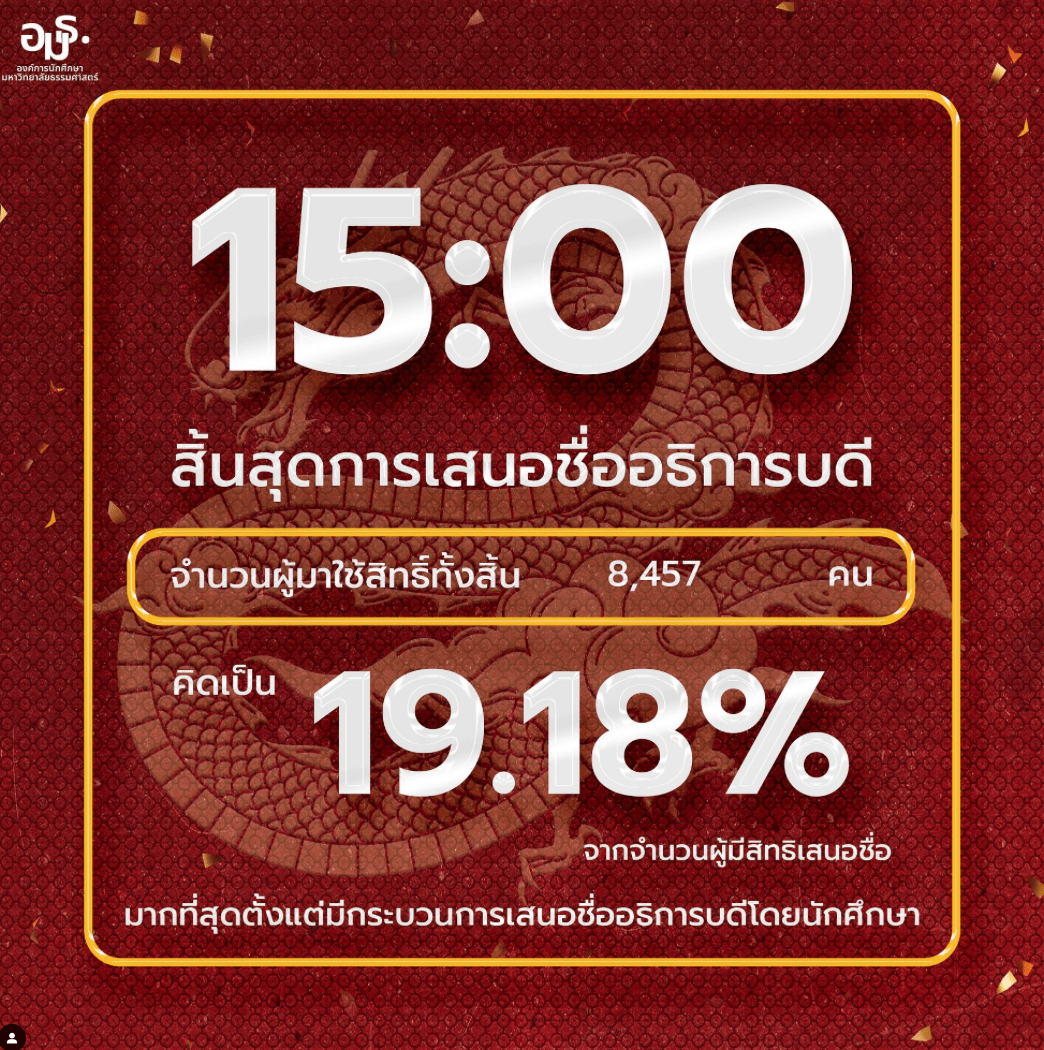
- Students—both undergraduate and graduate—actively participate in university leadership selection through their democratically elected student body, the Student Union, directly shaping the election of the Rector who serves on the University Council.
Thammasat University Council: Highest Governing Body
The highest governing and decision-making body of Thammasat University is the Thammasat University Council. Governed by Section 20 of the Thammasat University Act B.E. 2558 (2015), the Council’s composition strictly incorporates elected representation and leaders of self-governing representative bodies:
- Chair of the University Council: Appointed by Royal Decree.
- University Rector: Ex-officio member, selected through an institution-wide democratic nomination process involving faculty, staff, and students.
- Chair of the Faculty Senate: Ex-officio member representing academic staff, democratically elected by university faculty members.
- Chair of the University Staff Council: Ex-officio member representing non-faculty employees, democratically elected by support personnel.
- President of Thammasat Association under Royal Patronage: Ex-officio member representing alumni.
- Two Elected Faculty Representatives: Full-time faculty members with at least 5 years of service, directly elected by academic staff (Section 20(6)).
- One Elected Non-Faculty Staff Representative: Full-time academic support staff with at least 10 years of service, directly elected by non-faculty employees (Section 20(7)).
- Internal Administrative Members: One Vice Rector, two Deans, and one Institute/Office Director, selected among their respective peers (Section 20(3)-(5)).
- Fifteen External Experts: Appointed by Royal Decree based on recommendations of council members (Section 20(8)).
Faculty and Staff (Non-Faculty Employees) Elected Representation
In compliance with THE governance criteria requiring representatives from democratic bodies:
- Faculty (Academic Staff): Fully represented on the Council by both the Chair of the Faculty Senate (an elected office holder of an independent representative body) and two directly elected full-time faculty members.
- Staff (Non-Faculty Employees): Fully represented on the Council by both the Chair of the University Staff Council (an elected representative body) and one directly elected academic support staff member.
Student Representation and Democratic Engagement in Highest Governance
Thammasat University guarantees meaningful student participation—covering both undergraduate and graduate students—in university governance through independent representative bodies and statutory participation in selecting the university’s executive leadership:
- Statutory Role in Rector Selection: In accordance with The Regulations of Thammasat University on the Selection of the Rector, B.E. 2560 (2017), Item 4(3), the President of the Student Union of Thammasat University (an independently elected student leader) serves as a formal member of the Selection Committee for the Rector, sitting alongside the Chairs of the Faculty Senate and Staff Council.
- Direct Nomination & Vision Vetting (Item 11):
- Nomination: Both undergraduate and graduate students hold the official right to propose candidates for the position of Rector (Item 11(a)(2)).
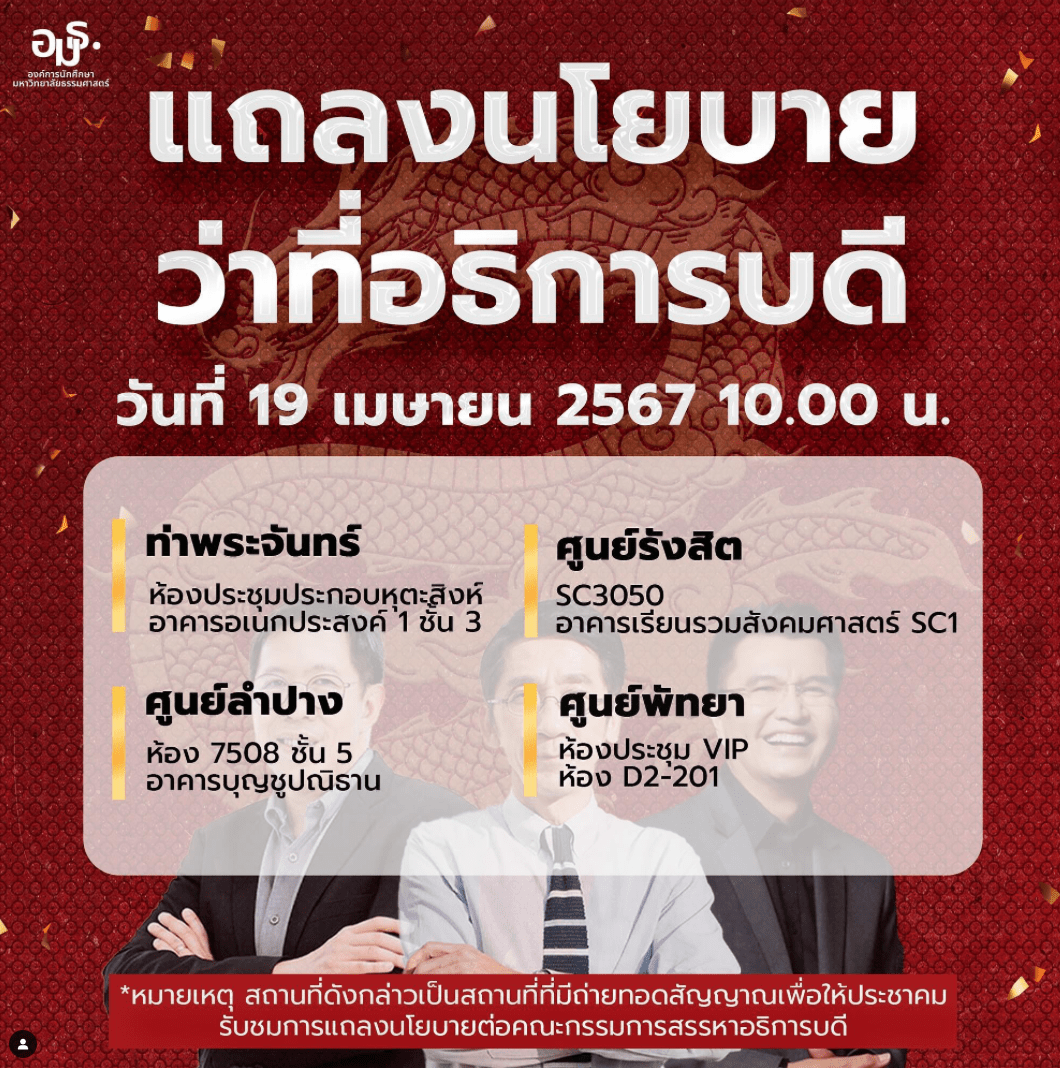
- Vision Presentation & Scrutiny: Shortlisted candidates must present their management frameworks and vision openly to students, staff, and alumni (Item 11(b)(3)-(4)).
- Council Reporting: The Selection Committee compiles all feedback, recommendations, and concerns voiced by students and staff into a formal report submitted directly to the University Council to determine the final appointment (Item 11(b)(7)).
- Executive Representation on Council: Because the appointed Rector serves as an ex-officio member on the University Council (Section 20(2)), students maintain a structural and verified influence over the executive head of the highest governing body.