Data and Performance
Low-Carbon Energy Use
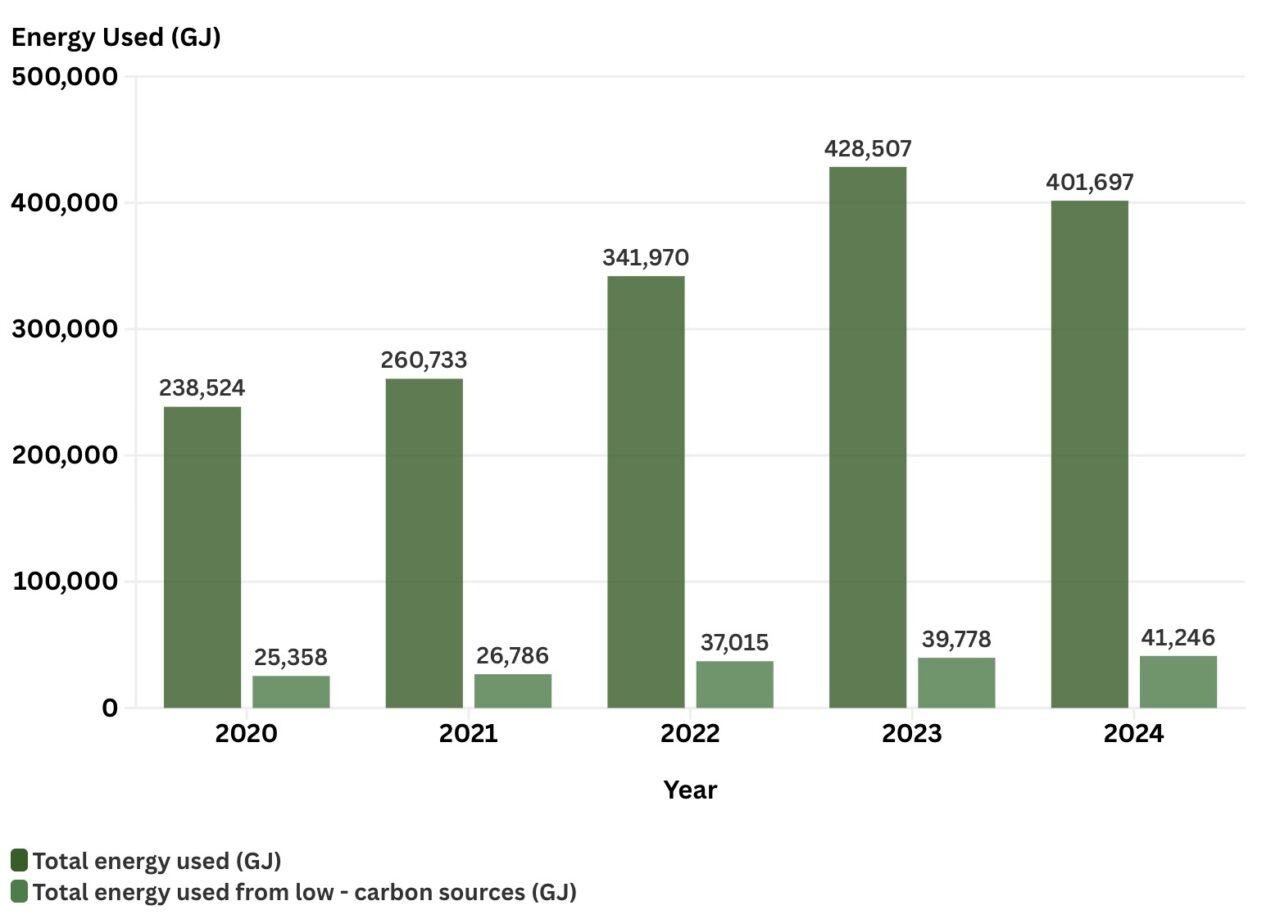
This stacked bar graph illustrates total energy use and low-carbon energy use at Thammasat University from 2020 to 2024, measured in gigajoules (GJ). Total energy consumption increased from 238,524 GJ in 2020 to a peak of 428,507 GJ in 2023, before declining to 401,697 GJ in 2024. Meanwhile, low-carbon energy use rose steadily from 25,358 GJ in 2020 to 41,246 GJ in 2024. This increase highlights progress in adopting lower-carbon energy sources. Expanding low-carbon energy use while improving energy efficiency could further support the university’s climate action efforts.
SDG 13 Scholarly Output of Thammasat University
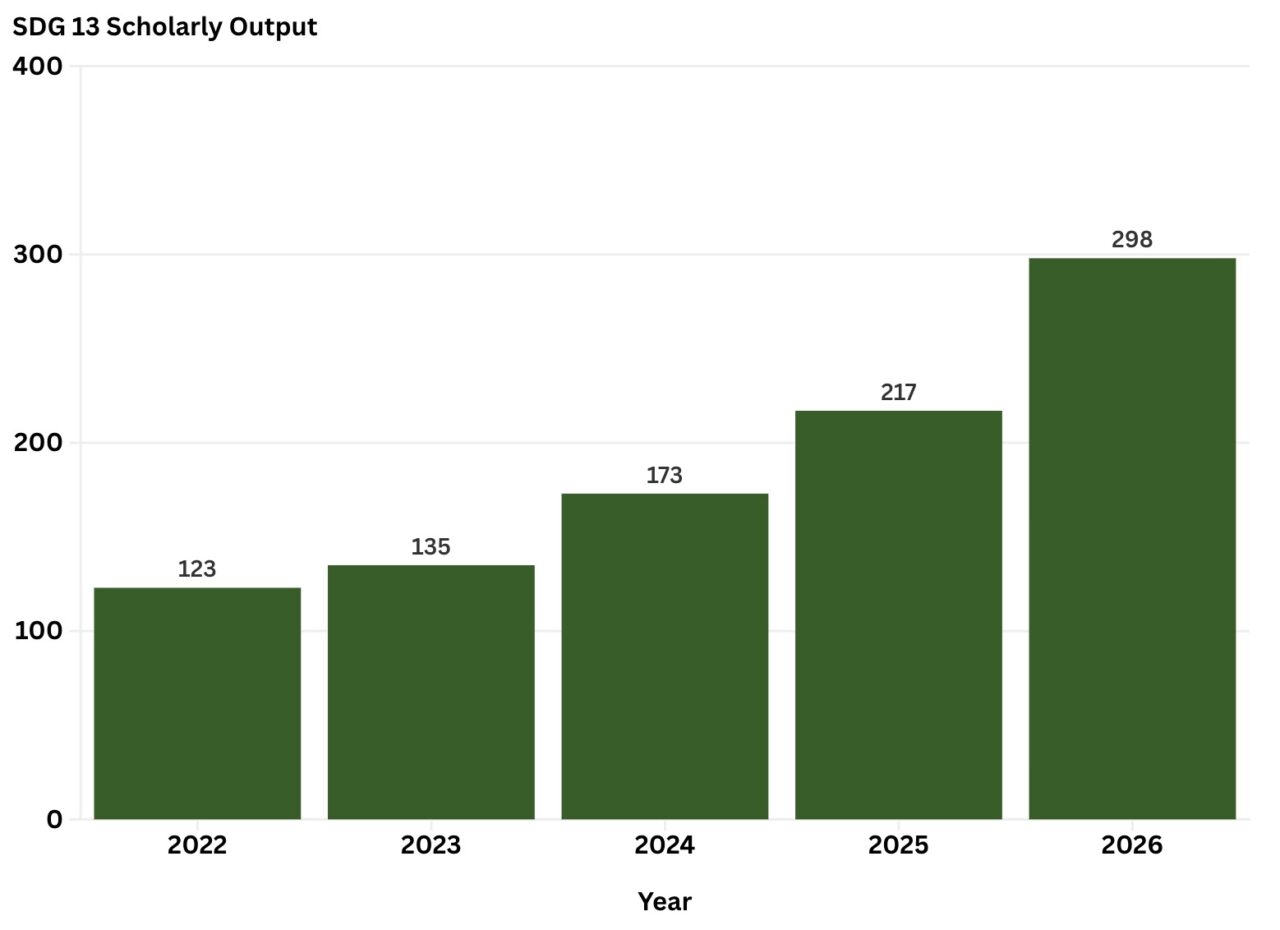
This bar graph presents the SDG 13 Scholarly Output of Thammasat University from 2022 to 2026, focusing on research on climate action. Scholarly output increased steadily from 123 in 2022 to 135 in 2023 and 173 in 2024. This upward trend continued, reaching 217 in 2025 and peaking at 298 in 2026, representing a 37.3% increase from the previous year. This sustained growth may reflect increasing academic engagement with climate change mitigation, adaptation, and strategies to address climate-related challenges.
Research in SDG 13
Between 2021 and 2025, Thammasat University produced 298 publications under Sustainable Development Goal (SDG) 13, Climate Action. Annual output rose from 26 in 2021 to 40 in 2022, 55 in 2023, 67 in 2024 and 110 in 2025. A synthesis of titles and abstracts yields nine thematic clusters:
- Decarbonisation pathways, energy and transport (64; 13.2): net-zero energy system models for Thailand to 2050, and power and transport decarbonisation.
- CO2 capture, utilisation and low-carbon chemistry (48; 13.2): sorbents, CO2-to-methanol catalysts and bioenergy carbon storage.
- Waste, biomass and life-cycle carbon assessment (41; 13.2): waste-to-energy and landfill methane.
- Climate hazards, floods, coasts and adaptation (36; 13.1, 13.b): flood resilience in Ayutthaya and coastal erosion in Krabi and Nakhon Si Thammarat.
- Climate impacts on health, food and agriculture (31; 13.1): climate and mental health, and heat and farm income.
- Climate behaviour, business, finance and governance (26; 13.2, 13.3, 13.a): a behaviour-change tournament in 63 countries and access to the Loss and Damage fund.
- Low-carbon construction materials and buildings (25; 13.2): fly ash concrete and zero-energy offices.
- Urban heat, urban form and climate-resilient planning (17; 13.1, 13.2): urban heat islands in Bangkok and Chiang Mai.
- Carbon sinks, land use and ecosystems (10; 13.2): carbon stocks in rubber plantations and forests.
The disciplines behind the research
Sixteen Thammasat units contributed, spanning engineering, sciences, planning, public health, business, economics, politics and law. Each cluster has an anchor unit:
- Sirindhorn International Institute of Technology (SIIT): 43 of the 64 decarbonisation publications, and 96 publications overall, the most of any unit.
- Faculty of Science and Technology: 30 of the 48 CO2 capture publications.
- Faculty of Engineering and SIIT: the main contributors to the waste and life-cycle cluster (15 and 13 of 41).
- Thammasat Business School: 12 of the 26 behaviour, business and governance publications.
- Faculty of Architecture and Planning, Faculty of Engineering and Faculty of Public Health: the main contributors to the hazards cluster (6, 5 and 5 of 36).
SIIT and the Faculty of Architecture and Planning jointly modelled carbon-neutral pathways for Thailand and Bangkok, linking national and city targets under 13.2.
Source: SciVal/Scopus, “Publications at Thammasat University within SDG 13: Climate Action (2025), 2021–2025” (Scopus data last updated 20 September 2026; exported 27 September 2026).