HIGHLIGHTS
- Energy-Efficient Lighting: Replaced 2,000W HID floodlights with 1,200W LED technology at Tha Prachan Campus, improving lighting efficiency while reducing energy consumption.
- Solar Energy & EV Infrastructure: Prepared over 1,800 sq m of rooftop space for a solar rooftop system and installed a 180kW fast DC EV charging station at Tha Prachan.
- Green Mass Transit: Expanded electric shuttle services, including four electric minibuses serving Tha Prachan and a new EV shuttle bus system at Rangsit Campus with real-time tracking via ViaBus.
- Smarter Building Management: Replaced ageing air-conditioning units in 74 classrooms at Rangsit Campus with energy-efficient models to reduce utility costs and improve operational efficiency.
Thammasat University is driving its “3rd Strategy: Creating Happiness and Sustainability for the Community” by translating policy into action through the Office of Physical and General Services Management. The primary goal is to manage space and infrastructure across all campuses efficiently, reducing greenhouse gas emissions and supporting eco-friendly lifestyles. Several projects were completed and brought into service in early 2026.
Starting with Lighting: Eliminating Unnecessary Energy Consumption
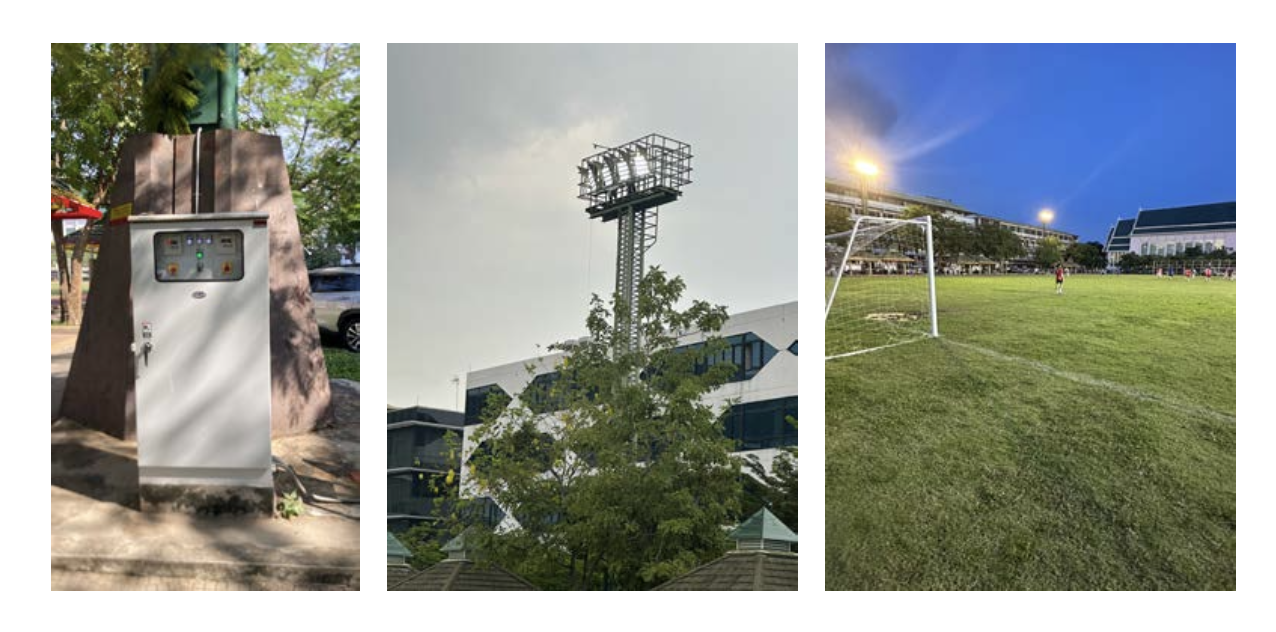
Starting with the lighting systems, Thammasat University (Tha Prachan Campus) replaced the football pitch floodlights from 2,000-watt HID bulbs to 1,200-watt LED Flood Light technology. These provide wide, uniform light distribution over large areas, saving energy whilst delivering high brightness. Completed in September 2025 with a budget of 498,085 THB, the project significantly improved lighting efficiency and reduced energy consumption.
Alongside this, the deteriorated street lighting system around the football pitch, including light fixtures and underground main cables, was repaired with a budget of 777,000 THB to ensure transit areas remain adequately lit, safe, and energy-efficient over the long term.
Alternative Energy: Piloting Solar Rooftops and EV Charging Stations
Assoc. Prof. Dr Jirapol Sunkpho, Vice Rector for Tha Prachan Administration and Digital Affairs, alongside university executives, signed a Memorandum of Understanding (MOU) with the Metropolitan Electricity Authority (MEA) in September 2025 to reduce reliance on fossil fuels.
This cooperation agreement covers the installation of a solar rooftop system, fully funded and maintained by the MEA over a 20-year period. In preparation, the university carried out structural readiness works between August and October 2025, investing 1,500,000 THB to waterproof over 1,800 square metres of rooftop area on the 60th Anniversary Thammasat Building to support the solar panels.
Additionally, a fast DC 180kW EV Charging Station featuring two charging connectors was installed at the Tha Prachan Centre, opening for service in January 2026.
Green Mass Transit: Connecting Eco-Friendly Travel
In terms of transit, Thammasat University is actively promoting electric public transport to reduce air pollution. A budget of 4,000,000 THB was allocated to contract a fleet of four 22-seater electric minibuses to shuttle staff and students to the Tha Prachan Campus from Sanam Chai MRT station and the Thonburi side (Old Southern Bus Terminal), operating from October 2025 to March 2026.
Within the Rangsit Campus, an electric shuttle bus service was launched in April 2026. This project focuses on optimising vehicle sizes, upgrading safety systems, and managing fleet operations. It also includes an intelligent bus stop system integrated with the ViaBus application, scheduled for completion in 2026, allowing passengers to track buses in real time.
Building Resource Management: Focus on Operational Efficiency
Managing indoor facilities is another key element in driving energy efficiency. This includes a project to replace air conditioners in 74 classrooms within the Social Sciences Complex (SC1) at the Rangsit Campus. Replacing deteriorating equipment with energy-efficient models will help lower the university’s overall utility expenses.
These infrastructure improvements reflect Thammasat University’s integration of environmental priorities into daily facilities management to create tangible, sustainable impacts. Interested readers can find further operational details and in-depth data in the 2026 Thammasat Record Annual Report. (Available only in Thai)