HIGHLIGHTS
- Thammasat University strengthens collaboration with the United Nations towards the Post-2030 Agenda, exploring strategic partnerships to accelerate SDGs through social innovation, higher education leadership, and a proposed national platform for SDG progress and volunteer learning.
- The partnership reinforces Thammasat’s “University for the People” mission, highlighting its commitment to equality, sustainability, and societal impact through initiatives such as the new B.Sc. in Sustainable Management programme, Carbon Neutral Campus, and research-driven solutions for communities.
- Thammasat and UN agencies identify pathways for structural change, including advancing volunteerism as a tool for SDG acceleration, strengthening the Science–Policy–Society connection, and expanding cooperation to cultivate future-ready global citizens.
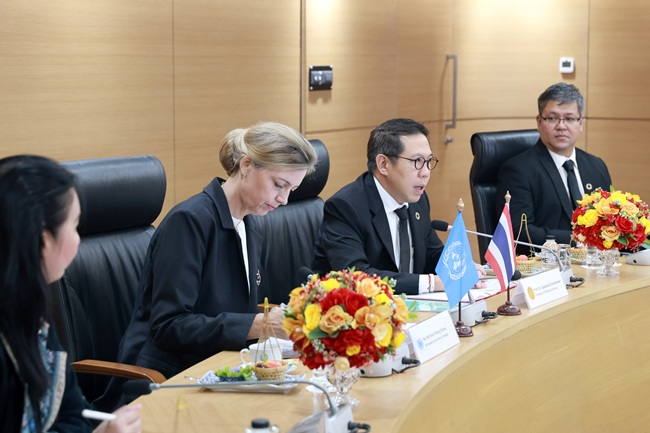
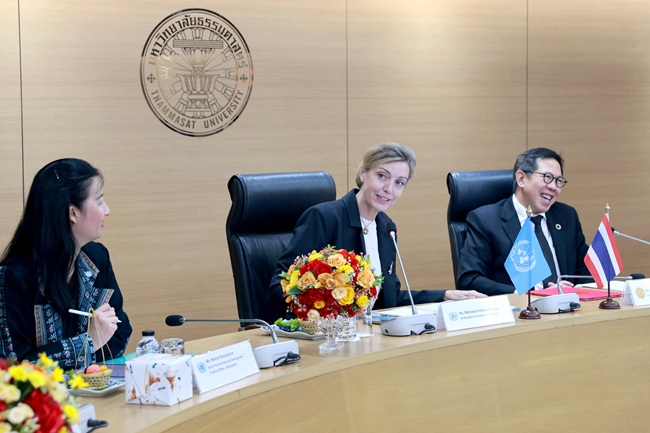
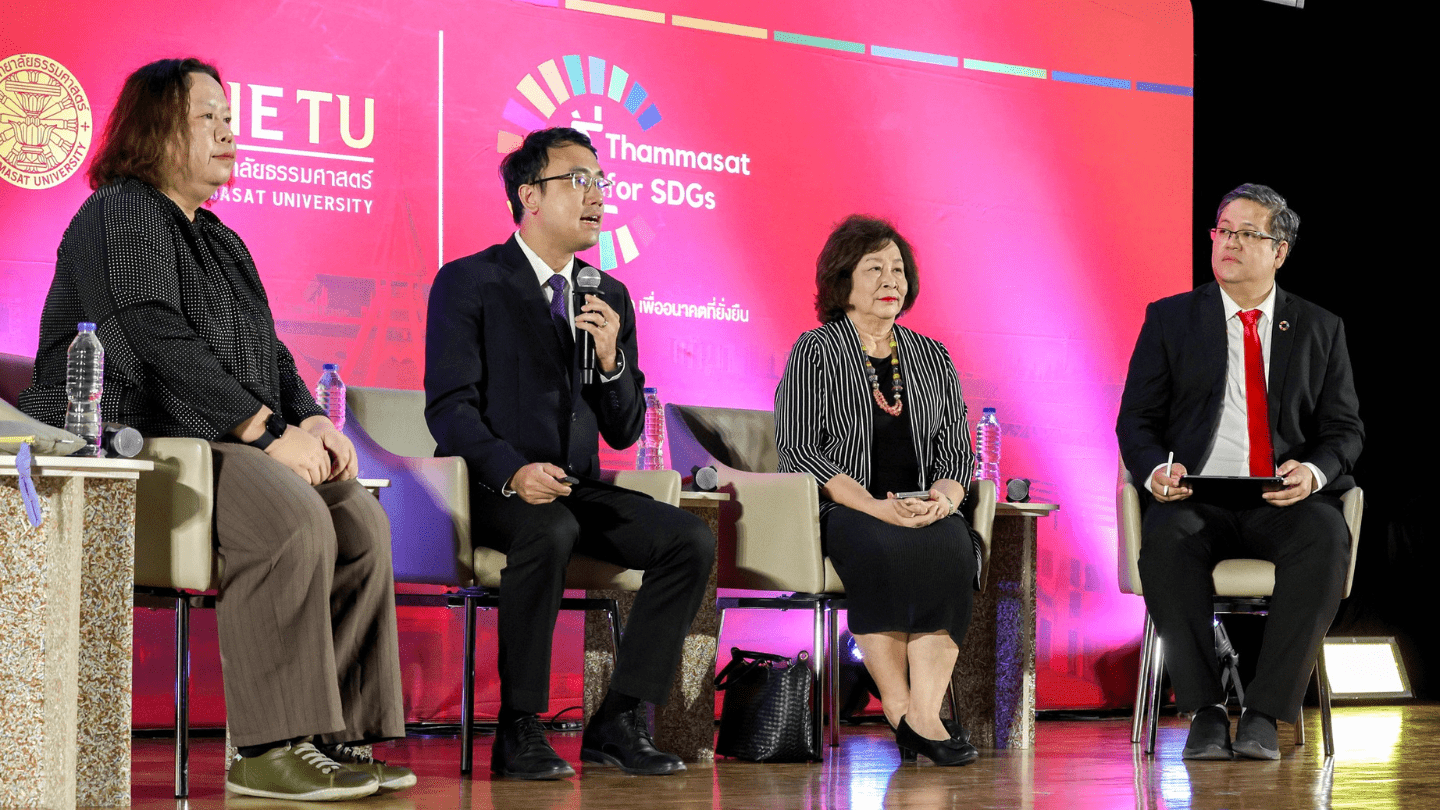
Thammasat University welcomed the United Nations Country Team to discuss strategic collaborations aimed at accelerating the achievement of the Sustainable Development Goals (SDGs). The meeting focused on fostering social innovation and laying the groundwork for the ‘Post-2030 Agenda’, with the aspiration of elevating the role of Thai higher education institutions on the global stage.
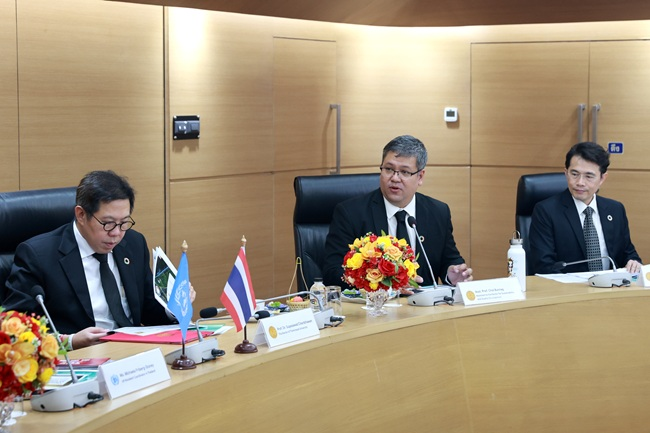
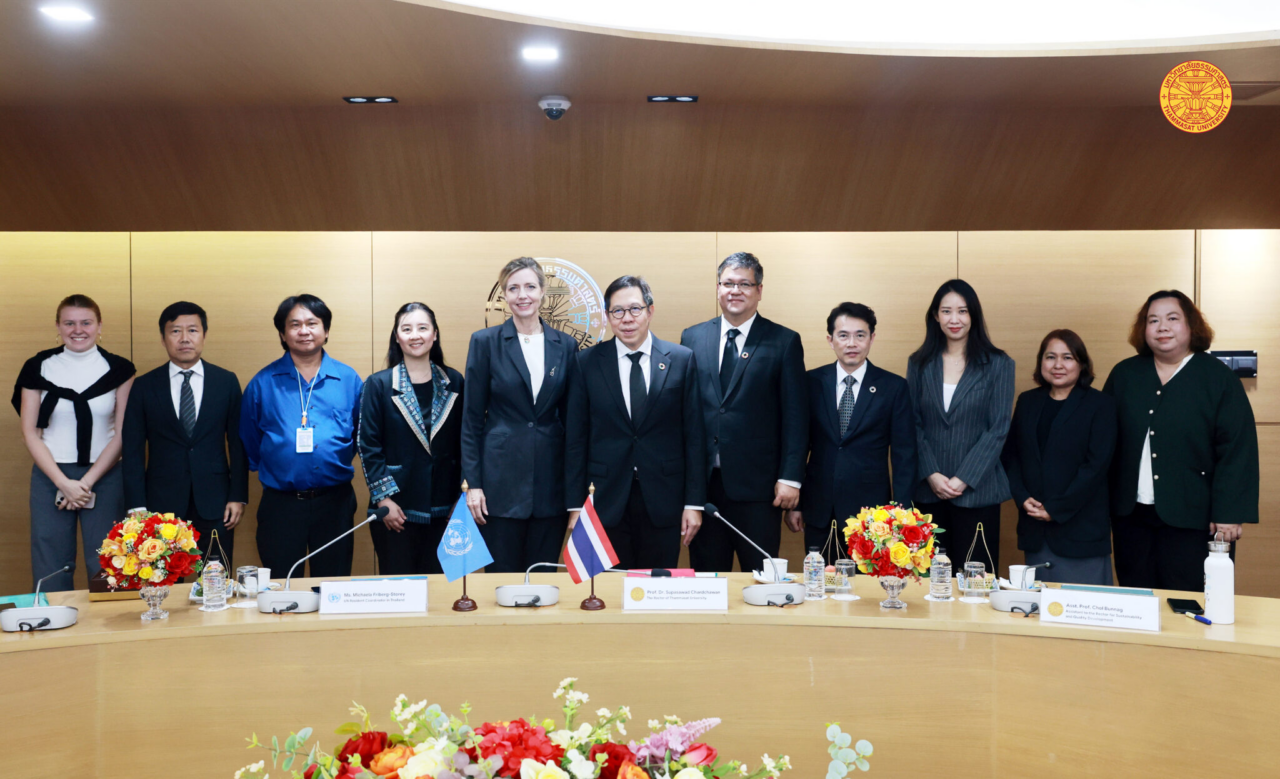
In this regard, Professor Dr Supasawad Chardchawarn, Rector of Thammasat University, alongside the senior executive team, welcomed Ms Michaela Friberg-Storey, the UN Resident Coordinator in Thailand, and representatives from various UN agencies, including UN Women, UN Volunteers (UNV), the UN Global Compact, and the ITU. The meeting took place on 12 February 2026 at the Pridi Banomyong Meeting Room, 3rd Floor, Dome Administration Building, Thammasat University, Rangsit Campus.
Reaffirming the ‘University for the People’ Ethos and Launching a New Sustainable Management Programme
Professor Dr Supasawad Chardchawarn, in his welcoming remarks, emphasised the fundamental principles upon which the university was founded. As a ‘University for the People’, the philosophies of equality, democracy, and providing access to education are deeply ingrained in Thammasat’s DNA. Consequently, championing the SDGs is not a novel concept but a mission that has continually aligned with the university’s core identity.
Furthermore, the Rector unveiled a significant academic advancement: the university has developed a new Bachelor of Science programme in Sustainable Management (B.Sc. in Sustainable Management). This programme, co-designed with the Global Compact Network, integrates expertise from five faculties: the Faculty of Engineering, the Faculty of Science and Technology, the College of Interdisciplinary Studies, the Puey Ungphakorn School of Development Studies, and the Faculty of Social Administration. The primary objective is to produce graduates equipped with the necessary skills to drive sustainability within the corporate sector, catering to the increasingly high demand for such professionals in the global labour market.
UN Commends Thammasat for Bridging the Gap Between Academia and the Community
Ms Michaela Friberg-Storey, the UN Resident Coordinator in Thailand, praised Thammasat University’s vision. She drew a contrast, noting that while many universities worldwide operate as isolated ‘intellectual islands’, disconnected from society, Thammasat excels in bringing knowledge directly to local communities. She highlighted this as a crucial strength for Thailand and commended Thammasat as a progressive, forward-leaning academic institution that places the SDGs at the core of its operations, even as these values face challenges globally.
The ‘One TU’ Strategy: Striving for Excellence in Peace and Sustainability
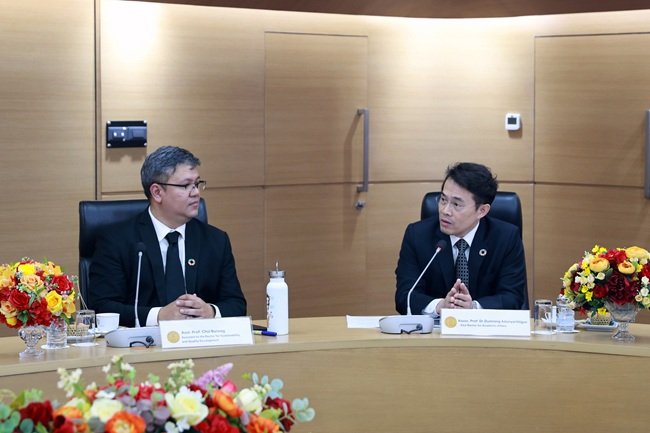
Assistant Professor Chol Bunnag, Assistant Rector for Quality Development and Sustainability, presented the Rector’s ‘One TU’ vision. This strategy focuses on breaking down inter-faculty barriers and dismantling silos through three main strategic pillars: 1) Becoming a leading comprehensive university dedicated to preparing students for the future; 2) Operating as a university for society, driving research that yields tangible societal impact; and 3) Fostering sustainability alongside well-being across all dimensions of the organisation’s development.
The university has actively driven key initiatives, such as its ambition to become a Carbon Neutral Campus, the adoption of electric buses, the implementation of Zero Waste management, and the promotion of gender equality and diversity. Furthermore, it continues to serve as a neutral space for peaceful political discourse. As a result of these intensive efforts, Thammasat University has been ranked 1st in Thailand and 4th in the world for SDG 16 (Peace, Justice and Strong Institutions) in the THE Impact Rankings 2025.
From Academic Research to Tangible Societal Impact: Advancing Quality of Life and Equality
Regarding research and innovation, Associate Professor Dr Supranee Lisawad, Assistant Rector for Research and Innovation, elaborated on the university’s research trajectory, which actively encourages researchers to produce work that delivers concrete solutions to the SDGs. The university’s top three areas for published research align with SDG 3 (Good Health and Well-being), SDG 9 (Industry, Innovation and Infrastructure), and SDG 11 (Sustainable Cities and Communities). The Rector added examples of such success, including the development of arm muscle exercise equipment for patients by the Faculty of Engineering, which was subsequently provided to hospitals under the Bangkok Metropolitan Administration. He also highlighted Universal Design housing projects from the Faculty of Architecture and Planning, which are slated to be developed into full-scale learning centres in the future.
Cultivating Global Citizens Through IMPACT Skills and Volunteerism
Associate Professor Dr Dumrong Adunyarittigun, Vice Rector for Academic Affairs, discussed the university’s approach to student development, rooted in the philosophy of Pridi Banomyong, who likened the university to an “oasis quenching the thirst of the people.” Currently, the university emphasises the IMPACT model, focusing on developing skills such as Interpersonal relations, Mindfulness, Progressiveness, Agility, Competence, and Thriving. This aims to cultivate global citizens prepared to navigate future changes. Concurrently, the university prioritises reducing inequality by awarding over 100 scholarships annually to vulnerable groups, accompanied by a close monitoring and home-visit system.
Furthermore, Assistant Professor Dr Keskul Srakawee, representing the Dean of the Puey Ungphakorn School of Development Studies, presented advancements in elevating volunteerism to an academic discipline. This has been achieved through the introduction of courses on volunteer management and volunteer psychology, alongside the operations of the Volunteer Research Center, which has collaborated with nationwide networks for nearly a decade.
Policy Recommendations: The Post-2030 Agenda and the Volunteer Ecosystem
During the substantive portion of the dialogue, Thammasat University proposed two key areas of collaboration to the UN team.
The first proposal focused on the “Post-2030 Agenda.” The university suggested establishing a platform to review the 10-year progress of the SDGs through a ‘Science-Policy-Society Interface’. This would facilitate a grassroots evaluation process, complement data from the government sector, and utilise ‘Scenario Planning’ to help define Thailand’s position and direction on the global stage.
The second proposal centred on elevating “Volunteerism for SDG Acceleration.” The university proposed the development of a National Volunteer Learning Platform, the integration of volunteerism into ministry-level policies, and the joint production of a report on the state of volunteerism in Thailand. These initiatives aim to foster sustainable, structural change.
Expanding Concrete Collaborations with UN Agencies
Towards the conclusion of the meeting, representatives from various UN agencies proposed concrete avenues for collaboration. These included leveraging Thammasat’s expertise in the Care Economy and gender-responsive procurement, exploring opportunities to connect global volunteer initiatives with the university’s career centre, utilising the ‘Thai SDG Micro-Primer’ tool, and encouraging students in science and technology to participate in the ‘Girls in ICT’ programme to promote the role of women in STEM fields.
Additionally, the Rector discussed the possibility of inviting UN experts to serve as guest lecturers, a proposal the UN representatives accepted with pleasure. This marks a significant step towards a more concrete and integrated partnership between Thai universities and the United Nations.
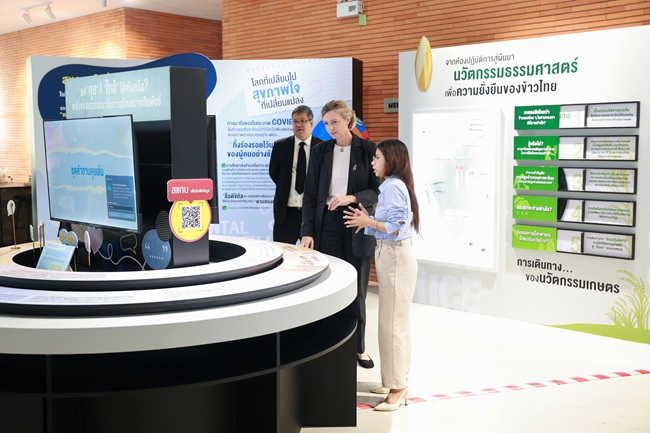
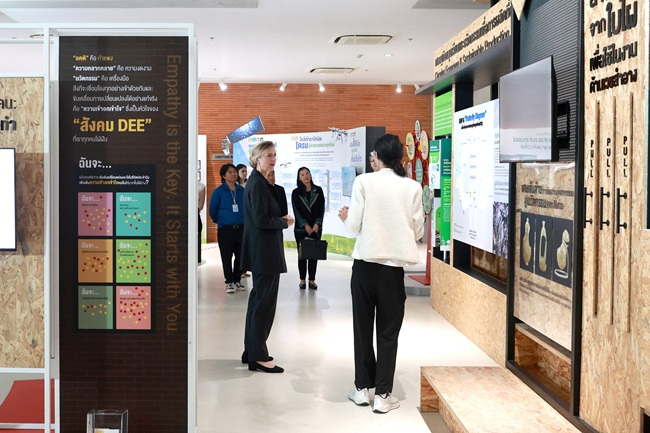
Following the discussions, the university executive team and the UN delegates visited the ‘SDG Exhibition’ at the Puey 100 Years Learning Park to view the collaborative efforts of Thammasat’s faculty and staff in driving the Sustainable Development Goals.