

- National Policy Advisory: Thammasat’s Faculty of Law and energy experts provide direct counsel to the Thai Senate, contributing to landmark legislation like the Solar Energy Promotion Act and offering evidence-based legal expertise for renewable energy adoption.
- Research-Driven Policy Support: Through SDG Move and SDSN Thailand, the university conducts policy research, identifies gaps, and formulates actionable recommendations on energy transition, including regulatory reform, green financing, and infrastructure planning.
- Strategic Partnerships for Applied Innovation: Collaborations with state enterprises such as EGAT enable Thammasat to translate research into practical solutions—e.g., EV battery recycling and circular-economy initiatives—that inform sustainable energy policies.
- Evidence-Based Public Engagement: By hosting forums and seminars on national energy plans (e.g., PDP 2024), Thammasat promotes informed public debate and provides expert critiques to improve policy design, supporting more inclusive and effective clean energy strategies.
Thammasat University is reinforcing its role as a key national solution-provider, informing and supporting governments in developing effective clean energy and energy-efficient technology policies. By translating academic expertise into tangible policy actions, the university is increasingly partnering with government bodies, industries, and civil society to strengthen Thailand’s pathway toward low-carbon development — marking a decisive shift from theory to implementation.
This engagement spans multiple levels of governance, from contributing to national strategy formulation to facilitating on-the-ground solutions and evidence-based policy dialogues.
Engaging Policymakers Through Knowledge Exchange
Thammasat University plays an active role in advancing national energy discussions through academic forums and knowledge-sharing platforms.
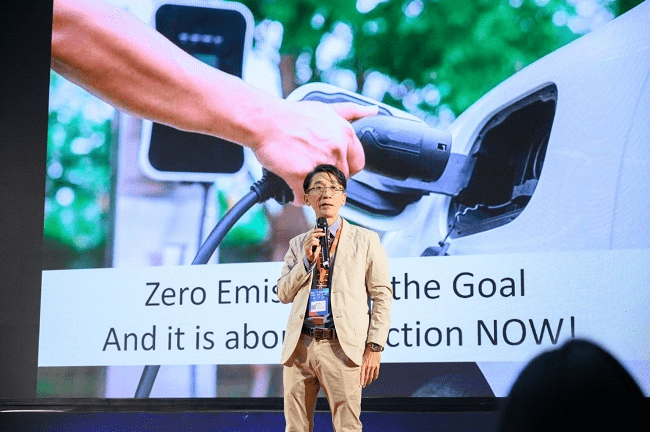
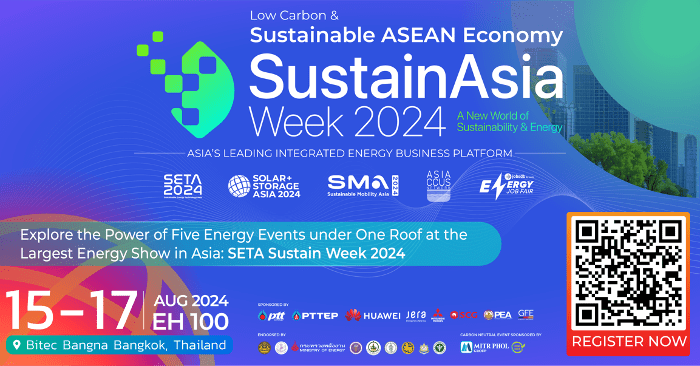
At the Sustainable Energy and Technology Asia (SETA) Week 2024, the university facilitated high-level dialogue between policymakers and industry leaders on climate action. Assistant Professor Dr Prinya Thaewanarumitkul’s session, “Leave Carbon Behind, Not People,” highlighted the urgent infrastructure risks posed by global warming — such as dam vulnerability — and called for stronger national adaptation strategies. He also presented the Thammasat Smart Cityinitiative as a scalable model for sustainable urban development, demonstrating how collaboration with the private sector on EV integration and car-sharing applications can inform national policies for reducing energy consumption and pollution.
National Leadership in Renewable Energy Legislation
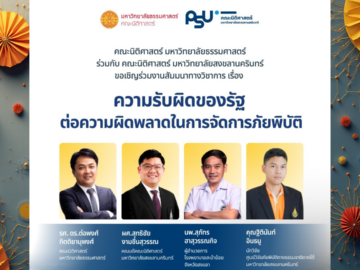
Thammasat’s Faculty of Law has played a pivotal role in shaping Thailand’s renewable energy legislation. Legal experts from the Faculty have provided direct counsel to the Thai Senate, contributing to the development of the Solar Energy Promotion Act — a landmark legislative initiative designed to remove regulatory barriers and enable wider public participation in renewable energy generation.
Complementing this policy engagement, Dr Phakphum Lohawiratananith, a lecturer and energy law specialist from the Faculty, shared expert insights on the issue in Julaniti Legal Journal (Vol. 22, No. 2, May–August 2025). His interview on 4 March 2025 highlighted the critical need for legal reform to facilitate solar energy adoption, reinforcing Thammasat’s role in providing evidence-based legal expertise to advance Thailand’s clean energy transition.
Strengthening Policy Research and Institutional Capacity
Through the Centre of SDG Research and Support (SDG Move), Thammasat University — as the national host of the Sustainable Development Solutions Network (SDSN) Thailand — plays a key role in facilitating research and policy engagement that supports government decision-making. Recognising both Thailand’s Net Zero commitment and the need for broader stakeholder participation in energy planning, SDG Move initiated a research project exploring the establishment of a Think Tank for Just Energy Transition in Thailand.
In 2024, collaboration with SDSN Thailand, the centre also convened the high-level stakeholder forum “Thailand’s Just Energy Transition: Programme Update and Key Takeaways.” The meeting brought together representatives from the energy sector, civil society, and government agencies to discuss the socio-economic impacts of coal use and to exchange perspectives on equitable transition pathways.
From these consultations, SDG Move formulated specific policy recommendations supporting national energy transition goals, focusing on:
- Regulatory and governance reform, including updates to the Power Development Plan (PDP), the application of carbon taxation, and the Polluter Pays Principle.
- Financial mechanisms, such as enforcing the Thailand Taxonomy to stimulate green investment.
- Infrastructure and market design, promoting smart-grid investment and Third-Party Access (TPA) implementation.
By identifying policy gaps and building multi-stakeholder consensus, Thammasat University provides a reliable, evidence-based foundation for government decision-making.
Building Strategic Partnerships for Applied Innovation
Thammasat University further strengthens its policy impact through strategic partnerships with key state enterprises. On 23 July 2025, the university signed a Memorandum of Understanding (MOU) with the Electricity Generating Authority of Thailand (EGAT) to jointly promote and develop research on energy, community, society, and environmental sustainability.
This collaboration aims to translate academic research into innovations that can be applied directly in policy and practice. Areas of joint study include EV battery recycling (Black Mass) and the use of power-generation by-products, aligning with national priorities for circular-economy and clean-technology development. Through this partnership, Thammasat contributes practical, research-based solutions that inform sustainable energy policies.
Providing Evidence-Based Critique to Improve Policy
Thammasat University also supports the policy-making process by offering expert, evidence-based critiques of national energy strategies and creating public platforms for policy dialogue.
On 4 July 2024, the Centre of SDG Research and Support (SDG Move) at Thammasat University’s Faculty of Economics hosted a national seminar titled “Power Development Plan (PDP) 2024: Thailand at the Crossroads.” The event aimed to raise public awareness of the implications of Thailand’s Power Development Plan and to promote an inclusive, just, and sustainable energy transition. It served as an open forum for discussion among academics, policymakers, and citizens on how energy policy affects people’s daily lives and the country’s sustainable future.
Building on this approach, on 8 November 2024, SDG Move organised the seminar “Beyond Coal: Advancing Clean Energy and a Just Transition” at the Faculty of Economics. The seminar provided a platform for academics, energy experts, civil society representatives, and government stakeholders to discuss Thailand’s reliance on coal — a major contributor to greenhouse gas emissions and climate change — and to explore evidence-based solutions for transitioning to clean energy.
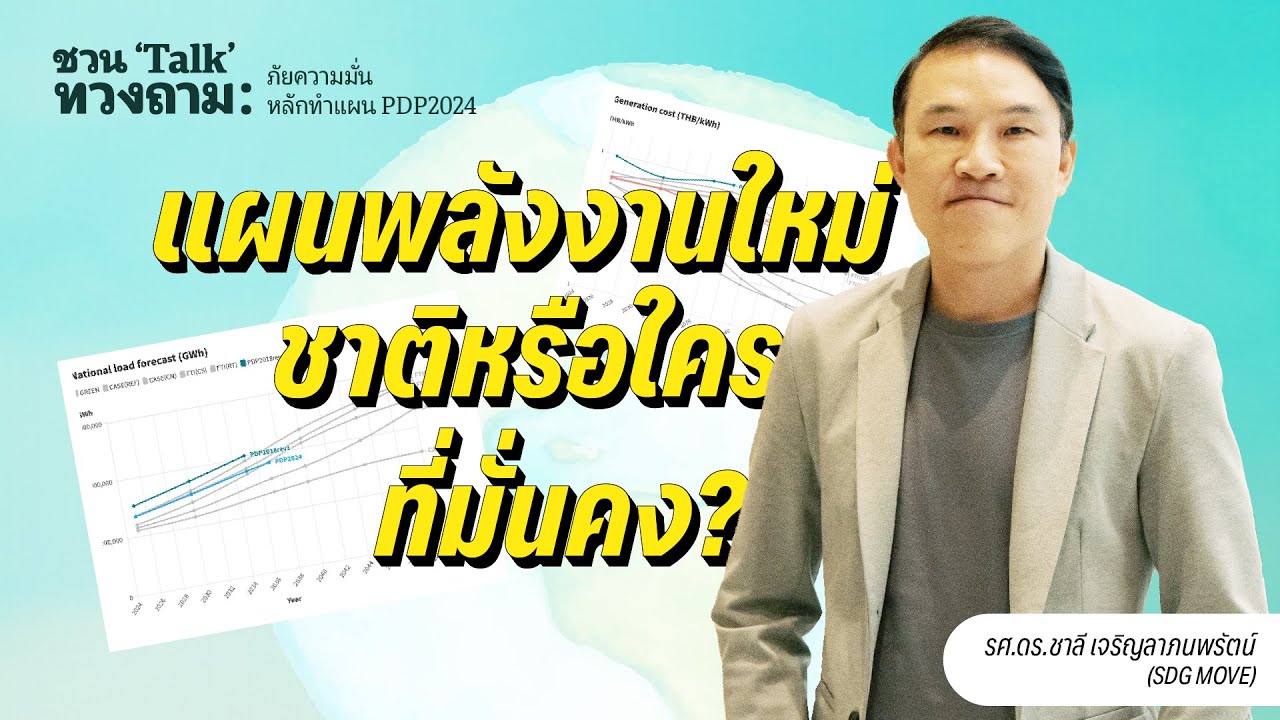
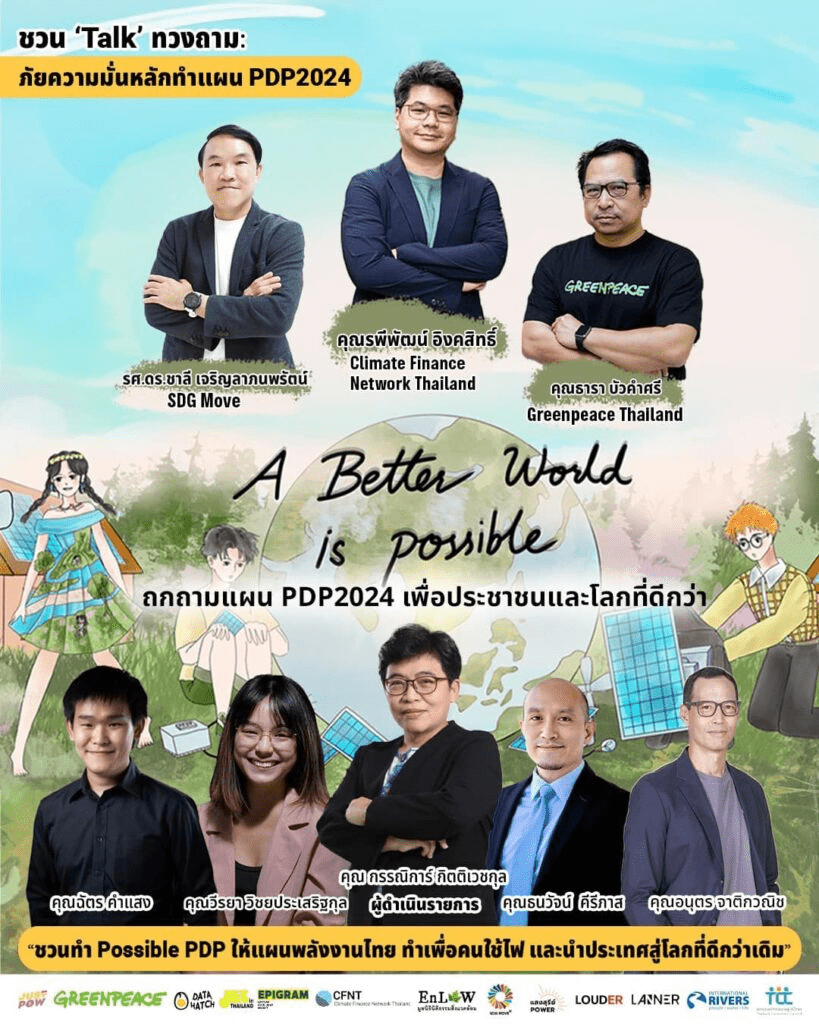
In addition, Assoc. Prof. Dr Chalee Charoenlapnopparat of SDG Move represented the university in the public forum “A Better World is Possible: Debating the PDP 2024 Plan for the People and a Better World” on 31 July 2024, which specifically analysed the draft Power Development Plan 2024.
In this forum, Dr Chalee identified critical flaws such as over-forecasted electricity demand, continued reliance on fossil fuels, and insufficient renewable energy integration. He also provided a concrete recommendation — to include Solar Rooftops in the PDP 2024 — to enhance national energy security and self-reliance.
The forum was broadcast live through multiple Facebook pages, expanding public access and awareness of Thailand’s energy policy debate and encouraging broader civic engagement in the clean energy transition.
By both organising and contributing to national dialogues on Thailand’s energy planning, Thammasat University — through SDG Move — helps inform public understanding and directly supports government action toward a more effective and equitable clean energy policy.
University Driving Evidence-Based Policy
Across these diverse initiatives — from high-level dialogues and collaborative research to official partnerships and policy critique — Thammasat University consistently informs and supports governments in clean energy and energy-efficient technology policy development.
Through the integration of academic expertise with policymaking processes, Thammasat ensures that research findings do not remain theoretical but instead translate into concrete, evidence-based policies that advance Thailand’s transition toward a low-carbon and energy-efficient future.