

HIGHLIGHTS
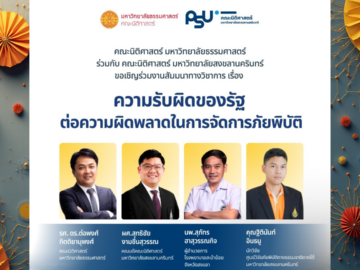
- Disaster Impacts Exacerbated by Governance & Data Gaps: The seminar revealed that the Hatyai flooding was intensified not only by extreme rainfall, but also by failures to utilise real-time data and outdated warning systems — leaving citizens without adequate time to protect lives and property.
- Breakdown of Crisis Management & Public Service Delivery: Frontline experiences showed a lack of preparedness, weak coordination across agencies, ineffective evacuation support, and no unified command — resulting in communities relying on themselves and private networks during the crisis.
- Legal Overlaps Create Accountability Challenges: Multiple laws enforced simultaneously caused confusion in the chain of command, while the Emergency Decree limited personal liability of state officials — complicating legal pathways for disaster victims seeking justice and remedies.
- Call for Rights-Based State Responsibility in Disasters: Scholars proposed that courts recognise the State’s constitutional duty to protect citizens. Where mismanagement worsens disaster impacts, the State should be liable for incremental damages — establishing stronger accountability and driving reform toward transparent, efficient disaster governance.
Creating an “Inclusive Environment” where no one is left behind is a core principle of the United Nations Sustainable Development Goals (SDGs). This principle emphasises the right of every individual—regardless of physical, sensory, or cognitive differences—to access equal opportunities in education, social participation, and quality of life. In higher education, this vision is particularly aligned with SDG 10 (Reduced Inequalities) and SDG 4 (Quality Education), which call for the removal of systemic barriers and the creation of learning environments that embrace diversity.
Thammasat University has emerged as a leading example of how universities can translate these global goals into concrete action. Through long-term policy commitment, institutional mechanisms, and inclusive campus design, Thammasat has developed a comprehensive support system that enables students with disabilities not only to study, but to thrive as full members of the university community.
This commitment was recently recognised in the project “#Review10Universities: Where Should Disabled Kids Study?”, produced by the “Where Should Disabled Kids Study?” programme. Supported by the Safe and Creative Media Development Fund, and created by the Duaykan (Together) Group for the Disabled and Society Foundation in collaboration with Allamax Co., Ltd., the review highlighted Thammasat University as a benchmark institution for inclusive higher education. The project emphasised Thammasat’s multi-dimensional approach, which integrates academic support, infrastructure development, and social participation.
Below is an overview of how Thammasat University is transforming its campus into a truly inclusive “home for everyone”:
1. Educational Support: No Barriers to Learning
(SDG 4: Quality Education)
At the centre of academic inclusion is the Disability Support Services Centre (DSS), a specialised unit that ensures students with disabilities receive systematic and continuous support throughout their university journey. Assistance begins from the admission process, ensuring equal access to higher education for students with diverse impairments, including visual, hearing, mobility impairments, and those on the autism spectrum.
Currently, students with disabilities are enrolled across more than 20 faculties and disciplines at the Rangsit Centre, reflecting Thammasat’s commitment to inclusive education without academic segregation. The DSS Centre works closely with faculties, lecturers, and administrative units to adapt teaching methods and learning materials where necessary.
Key support services include:
- Assistive Technology Rooms: Dedicated computer laboratories equipped with screen reader software and accessibility tools that enable visually impaired students to access academic documents, conduct online research, and complete coursework independently.
- Equipment Lending Service: A centralised resource library offering assistive devices such as iPads, voice recorders, white canes, and wheelchairs. This service reduces financial barriers and ensures that students can fully engage in learning activities both inside and outside the classroom.
Through these measures, Thammasat ensures that physical limitations do not become intellectual limitations, reinforcing the principle that quality education must be accessible to all.
2. Infrastructure & Universal Design
(SDG 11: Sustainable Cities and Communities)
Recognising that accessibility is not limited to classrooms, Thammasat University has systematically redesigned its campus infrastructure in line with Universal Design principles, effectively transforming the university into a model “inclusive city” under SDG 11.
- Accommodation: The university’s Halls of Residence, particularly Dormitories C8 and F, include designated living zones for students with disabilities. These spaces are equipped with ramps, elevators, and facial recognition security systems. Within individual rooms and shared facilities, safety features such as bathroom grab bars and SOS Emergency Signal systems ensure immediate access to assistance when needed.
- Transport & Mobility: Campus transportation is supported by wheelchair-accessible shuttle buses, enabling students to move between academic buildings, dormitories, and public spaces with ease. Pedestrian infrastructure includes tactile paving (Braille blocks) along walkways for visually impaired students, as well as audible traffic signals at crossings to enhance safety and independence.
- Public Spaces: Major academic and social facilities—such as SC1 Building, the Puey Ungphakorn Library, and the Green Canteen—are designed to be fully accessible. Features include standard ramps, wide entrances, elevators, and designated seating areas for wheelchair users, ensuring that students with disabilities can participate equally in academic and social life.
These infrastructure investments demonstrate that accessibility is not an add-on, but a fundamental component of sustainable and inclusive campus planning.
3. Well-being & Social Participation
(SDG 3: Good Health and Well-being)
True inclusion extends beyond access to education and physical spaces; it encompasses mental health, physical well-being, and meaningful social participation. Thammasat University recognises that students with disabilities face unique challenges that require holistic support systems.
- Holistic Health Services: The university provides the Viva City Centre for mental health counselling, offering professional psychological support in a safe and inclusive environment. In addition, the Well-being Center (SC1 Building) delivers primary medical care, first aid services, and health consultations accessible to all students.
- Accessible Recreation: Physical activity is promoted as a right rather than a privilege. Fitness facilities, including the outdoor Gym 7, have been modified with ramps and accessible equipment, enabling students with disabilities to engage in exercise and recreational activities alongside their peers.
- Student Activities & Social Integration: The “Puen Dome Samphan” (Dome Friends Relations) Club exemplifies inclusive student engagement. Through volunteer camps and joint activities, students with and without disabilities collaborate, learn from one another, and build genuine friendships. These interactions help dismantle social stigma, foster empathy, and cultivate a campus culture of mutual respect.
By integrating academic support, inclusive infrastructure, and holistic well-being initiatives, Thammasat University demonstrates that higher education institutions can serve as powerful models for inclusive societies. The university’s approach shows that diversity is not a challenge to be managed, but a strength to be embraced—one that empowers every student with an equal platform to learn, grow, and succeed.
In doing so, Thammasat University not only advances the SDGs within its campus, but also sets a precedent for inclusive development across Thai society and beyond.