

HIGHLIGHTS
- Public Learning Hub: Thammasat University actively opens its campuses to the public, offering diverse educational programmes that promote lifelong learning and community engagement.
- Legal Dialogue Through Film: The Faculty of Law, in collaboration with the ICRC, hosted “International Law and Films”—a public seminar combining cinema and academic discussion to deepen understanding of international humanitarian law.
- Art for Peacebuilding: The “Dialogue of Humanity” exhibition at the Thammasat Museum, created with Patani Artspace, used art to foster empathy and dialogue around peace in Thailand’s southern border provinces.
- Community Health and Safety: Through the “Luk Pathum Must Be Safe from Water” project, the university trained over 500 local children in essential swimming and water safety skills, supporting youth well-being and accident prevention.
Thammasat University is reinforcing its commitment to public education and community well-being, opening its doors to host a diverse range of programmes that serve the wider public. From critical academic discussions to essential life-skills training, the university actively transforms its campus into a vital hub for continuous learning.
Fostering Legal Dialogue Through Cinema
On Friday, 1 November 2024, the Faculty of Law’s International Law Centre, in collaboration with the International Committee of the Red Cross (ICRC), hosted a compelling public seminar titled “International Law and Films.”
The event, held in the Jit-Saetabutr Room at the university’s Tha Phrachan campus, featured a screening of the powerful film First They Killed My Father. The screening was followed by an expert academic seminar, providing a unique opportunity for attendees to explore the complex themes of international humanitarian law through the accessible medium of cinema. Furthermore, the university extended the reach of this important discussion by broadcasting the academic panel live via the Faculty of Law’s Facebook page.
Exploring Learning Environments Through Sound
Furthermore, the university extended its educational outreach into innovative sensory research. On 28-29 May 2024, the Faculty of Learning Sciences and Education hosted a specialised workshop, “Soundscape in School: Sound, People, School, Learning”.
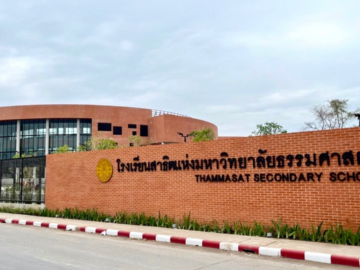
This two-day training event was open to academics, teachers, students, and the interested general public, drawing participants from multiple institutions. Attendees were trained by university experts and specialists from ‘Hear & Found’ in soundscape theory, ethnographic data collection, and field recording techniques. The programme combined theory with practical application, using the Thammasat Secondary School campus as a live learning environment for fieldwork, analysis, and data presentation, providing valuable new methodologies for future research.
Art as a Platform for Peace and Understanding
This commitment to fostering critical dialogue through culture was further demonstrated at the Rangsit campus. The Thammasat Museum, in partnership with Patani Artspace, presented the “Dialogue of Humanity” art exhibition. Running from May to August 2024, the exhibit provided a powerful exploration of events in the three southern border provinces, using art as a medium to build understanding and support the peace process. By opening the museum doors to the public on weekdays, the university provided a vital, free-of-charge space for reflection and conversation.
Promoting Vital Community Health and Safety Skills
Beyond academic and cultural dialogue, the university’s dedication to the community also extends to critical health and safety training. In a significant collaboration, the Thammasat Property and Sports Management Office partnered with the Pathum Thani Provincial Administrative Organisation for the “Luk Pathum Must Be Safe from Water” project.
Held between March and May 2024, this initiative provided essential basic swimming skills training for over 500 children and youth from the local area. By opening the state-of-the-art Thammasat Aquatic Centre for the programme, the university provided a professional and safe environment for participants to learn vital skills, combining both theory and practical application to help prevent drowning.
These initiatives—spanning law, art, and health—exemplify Thammasat University’s multifaceted role as an active community partner, utilising its diverse campus facilities to provide accessible and meaningful educational opportunities for all.