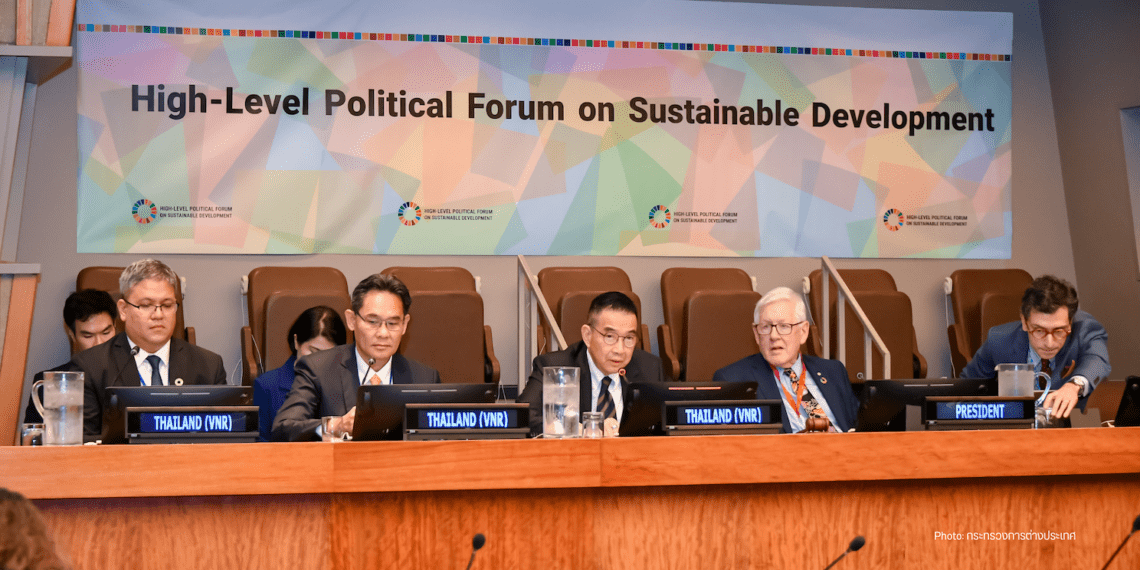
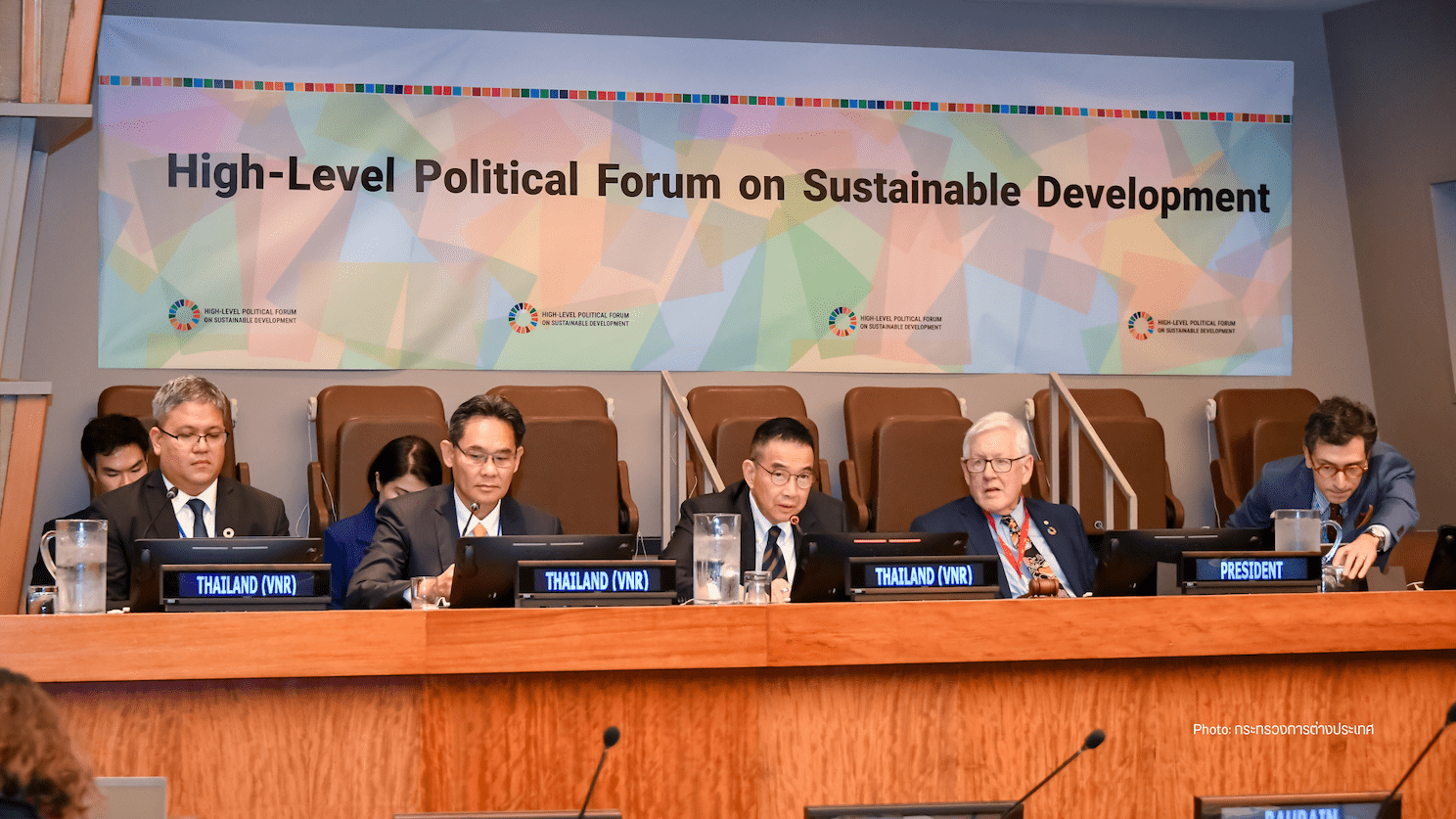
- International Recognition of Thammasat’s SDG Leadership: Assistant Professor Chol Bunnag from SDG Move represented Thailand at the High-Level Political Forum 2025 at the UN Headquarters, underscoring Thammasat University’s global role in advancing the SDGs.
- Canteen Vendors Meet New SAN Standards: All food vendors passed the latest SAN (Sanitation, Accountability, Network) certification, replacing the older Clean Food Good Taste standard, ensuring safer and higher-quality meals.
- Pathway to Healthy Canteen Certification: The canteen is now working towards the more comprehensive “Healthy Canteen” standard, which includes not only hygiene but also nutritional value, such as reducing sugar, fat, and sodium.
- Supportive Monitoring and Education: The Department of Health will provide further training and analysis in August 2025 to help vendors align with Healthy Canteen criteria, aiming for full certification in the near future.
เลือก Page 2 เพื่ออ่านเป็นภาษาไทย
Thammasat University has once again reaffirmed its commitment to driving the Sustainable Development Goals (SDGs), with Assistant Professor Chol Bunnag, Director of the Centre of SDG Research and Support (SDG Move) from the Faculty of Economics, being honoured as one of Thailand’s representatives at the High-Level Political Forum on Sustainable Development 2025 (HLPF 2025). The forum took place at the United Nations Headquarters in New York, USA, on 21st July.
The university’s participation was aimed at presenting Thailand’s Voluntary National Review (VNR) on the implementation of the 2030 Agenda for Sustainable Development. The pivotal role played by SDG Move was preparing and presenting this report highlights the importance of integrating perspectives from both academia and civil society in the country’s national SDGs drive.
During his presentation, Asst. Prof. Bunnag outlined the progress and challenges of implementing the SDGs in the Thai context. He noted that the SDGs are a vital force bringing together all sectors, including businesses, financial institutions, and educational bodies. This is evident from the 83 Thai universities that have participated in the Times Higher Education Impact Ranking, with five of them making it into the world’s top 100. However, he also pointed out that disparity still exist, particularly the limited discussions on the SDGs within the parliamentary system.
Asst. Prof. Bunnag also offered three key recommendations for future development:
- SDGs as a Common Language: The SDGs framework should be used as a tool to foster understanding of complex issues and as a starting point for discussions to build a sustainable future together.
- Decentralizing Knowledge to Local Communities: He emphasised the need to distribute appropriate knowledge and technology to local communities and proposed reviving Community-Based Research projects, which would empower communities to solve their own problems.
- Creating a Platform for Participation: A platform should be established to meaningfully promote the participation of communities and civil society organisations, enabling them to co-design policies and officially integrate data from the public into evaluation processes.
In addition, during the data collection for the VNR 2025 report, SDG Move played a crucial role in gathering feedback and recommendations from two key sectors: civil society and the science, research, and innovation sector. This was achieved by collaborating with the Department of International Organizations and the Office of the National Higher Education Science, Research and Innovation Policy Council (NXPO) to host stakeholder consultations across six regions nationwide.
This significant role on the global stage reflects the university’s commitment to being a thought leader and a source of social knowledge. It also showcases the collective effort of all sectors to genuinely drive Thailand’s Sustainable Development Goals.