HIGHLIGHTS
- Thammasat University, through SDG Move and regional working groups, leads the AREA Need project funded by Thailand Science Research and Innovation (TSRI) to identify sustainability challenges and develop evidence-based policy briefs guiding national and regional research funding strategies aligned with the SDGs.
- The project applies foresight and participatory planning methods—including Horizon Scanning and Adapted Delphi—to identify problems, model future scenarios, and enable adaptive management of sustainable development policies.
- In collaboration with NRCT and SDSN Thailand, Thammasat spearheads the Cross-Sectoral SDG 2030 Acceleration System project, hosting national seminars where researchers present policy proposals directly to government officials on key SDG areas such as anti-corruption, marine biodiversity, climate resilience, and public participation.
In 2023, Thammasat University, through SDG Move and regional working groups across Thailand, launched the “AREA Need” project, funded by Thailand Science Research and Innovation (TSRI). The initiative’s primary goal is to identify local needs and knowledge gaps to develop effective research funding strategies for sustainable regional development.
The project’s initial phase employed a two-step methodology: first, it used the Sustainable Development Goals (SDGs) framework, foresight techniques like Horizon Scanning, and the Adapted Delphi method with experts to identify and prioritize regional sustainability challenges. This process aligns directly with the indicator’s criteria for identifying problems and challenges. Second, it engaged stakeholders in participatory foresight discussions to envision future directions, effectively modelling likely futures with and without interventions.
By 2024, the project is advancing into its “2nd Next Step” and “3rd Year,” building on the findings from the initial phase. This current phase focuses on translating the identified needs and knowledge gaps into actionable strategies. The primary output has evolved into the development of Policy Briefs aimed at formulating effective research funding strategies.
The resulting Policy Briefs are designed to guide further research granting programmes, optimize research budgets, and support government efforts to integrate SDGs at all levels. This process is vital for shaping national research strategies and ensuring effective investments in sustainable development, ultimately improving local quality of life.
Furthermore, Thammasat University (led by SDG Move, the Faculty of Economics, and the Urban Futures & Policy research unit) is a key leader in the “Research and Support for the Cross-Sectoral SDG 2030 Acceleration System” project. This major collaboration is supported by the National Research Council of Thailand (NRCT) and involves SDSN Thailand, MTEC, Mahidol University, and Chulalongkorn University.
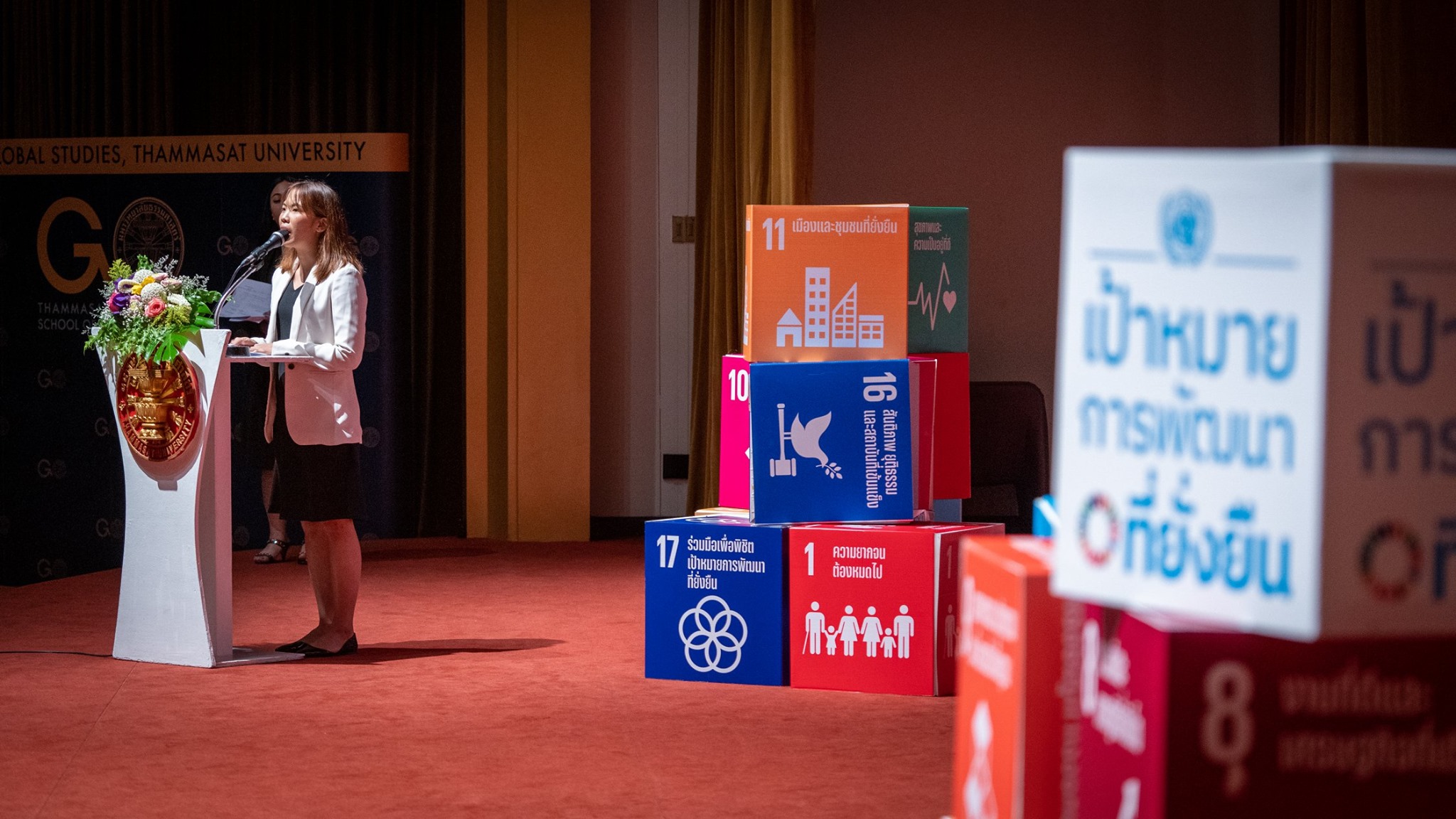
In 2024, this project hosted a series of six public seminars focused on accelerating specific, challenging SDG targets, including anti-corruption (SDG 16.5), marine biodiversity (SDG 14), climate resilience (SDG 13), and public participation (SDG 16.7). These seminars serve as a direct mechanism for policy input, where university researchers present findings and “Policy Proposals” directly to high-level national government officials.
Key participants from the government included senior officials from the National Economic and Social Development Council (NESDB), the National Anti-Corruption Commission (NACC), the Ministry of Finance (Comptroller General’s Dept), the Department of Public Works and Town & Country Planning, the Department of Marine and Coastal Resources, and the EEC Office. The dialogues also actively involved leading non-governmental organizations, such as the Local Community Development Institute (LDI) and the National CSO Coordinating Committee (กป.อพช.), fulfilling the 17.2.1 criteria for engaging both government and NGOs in policy development.