Thammasat University’s Collaborations with Health Institutions at All Levels

Thammasat University recognizes the value of health and well-being. We strive to become a reliable resource and a role model in health and well-being of the people in the community as well as Thailand. We have continuously had several collaborations with local, national, and global health institutions to improve health and well-being outcomes, one of which is the collaboration of Faculty of Allied Health and Sciences with external institutions, both academics and public sectors, in the fields of medical technology, physiotherapy, radiologic techniques and sports science.

There have been projects and activities to build and expand academic cooperation networks with external health institutions including cooperation in professional practice, joint management of multidisciplinary education and the development of personnel in the academic field through:

Global Collaborations :

On January 5, 2024, the Faculty of Medicine at Thammasat University formalized an academic cooperation MOU with the National Pediatric Hospital in Phnom Penh, Cambodia, focusing on maternal and child nutrition in line with the United Nations Decade of Action on Nutrition 2016–2025. On October 28, 2024, a new MOU with Preah Ang Duong Hospital, Cambodia, was signed to strengthen collaboration in academia, research, and the development of the Eye Southeast Asia Journal (EyeSEA), highlighting regional health collaboration and capacity building.

On April 4, 2024, the Faculty of Pharmacy at Thammasat University signed an academic cooperation MOU with the Institute of Natural Medicine, University of Toyama, Japan. The agreement aims to promote global health collaboration in pharmaceutical research and education.

On April 11, 2024, the Faculty of Nursing partnered with the Department of Nursing, Faculty of Health Care, Takasaki University of Health and Welfare, Japan, through an MOU aimed at strengthening academic and research collaboration. On May 8, 2024, a similar MOU was signed with the Faculty of Health Care and Nursing at Juntendo University, Japan, focusing on expanding academic cooperation and health research. On October 9, 2024, the Faculty held a virtual MOU signing ceremony with the Sinclair School of Nursing, University of Missouri, USA, reinforcing global academic collaboration. On October 17, 2024, a partnership was formalized with 1 Aspire Home Care, Singapore, along with support from Thammasat University Hospital and the Center of Intellectual Property and Business Incubator, to advance health collaboration in community-based care.

On June 25, 2024, the Faculty of Dentistry, in partnership with Thammasat University Hospital and the Pan-Asian Dental Informatics Network from Osaka University Dental Hospital, Japan, organized a joint meeting and study visit on hospital information systems, aiming to foster innovation and global health collaboration in dental research and data sharing. On July 23, 2024, the Faculty renewed its Agreement on Academic Cooperation with the Faculty of Dentistry, Mahasaraswati Denpasar University, Indonesia, focusing on academic exchange, research, and student collaboration. On December 26, 2024, an academic cooperation agreement was renewed with Dr. D.Y. Patil Dental College & Hospital, India, with activities highlighting smoking cessation initiatives, underscoring dentistry’s role in advancing public health.

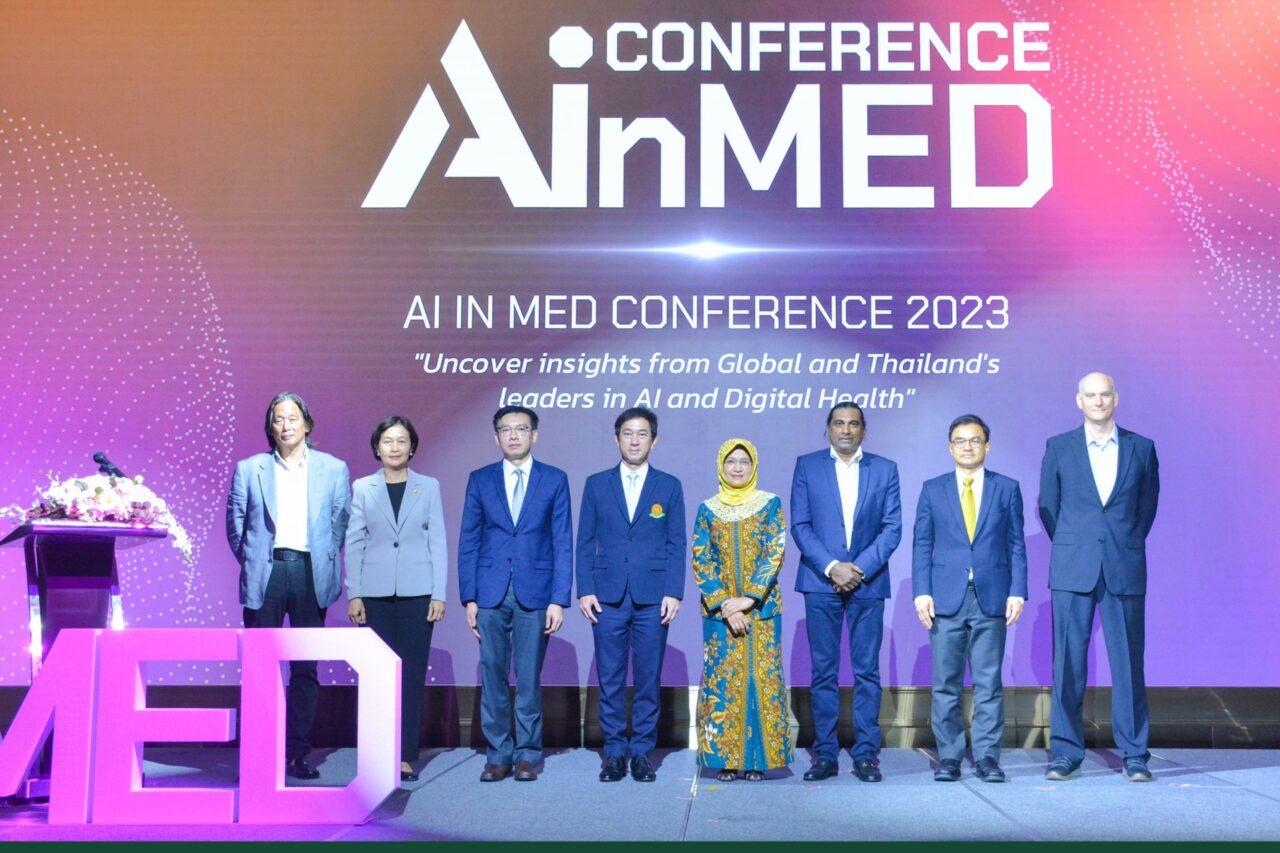
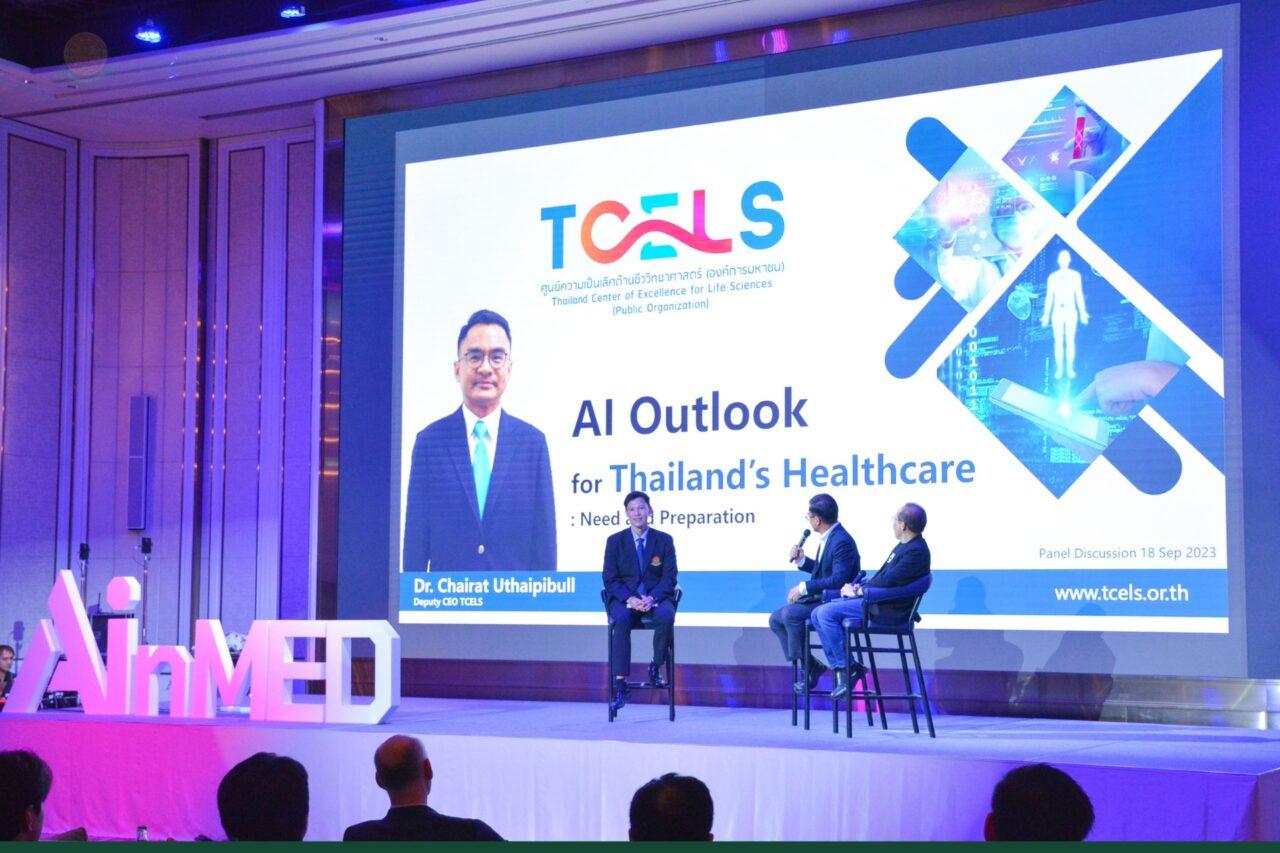
The Faculty of Medicine, Thammasat University, in collaboration with The University of Alabama at Birmingham, organized the AI in Med Conference 2023, the first event in Thailand to delve into the application of AI in medicine. The conference featured numerous world-renowned and Thai experts who will exchange ideas, share experiences, and showcase cutting-edge innovations. This event highlights our commitment to fostering advancements in both medical and technological fields, with a vision of pioneering Medical AI and Digital Health. By harnessing impactful solutions, we aim to revolutionize Thailand’s healthcare landscape.
National Collaborations :

To become a reliable resource and a role model in health and well-being for Thai people, Thammasat University continues to collaborate and provide health services and support with several health institutions in Thailand. Ministry of Public Health often is the key partner especially for the health services, health education, and health innovative projects.

From October 4–6, 2023, the Faculty of Medicine’s Clinical Research Center, in collaboration with the National Clinical Research Center (NCRN) and the Academic Clinical Research Organization (ACRO), with support from the Program Management Unit for Competitiveness (PMUC), organized a national workshop on clinical research and medical device registration under ISO 14155 and ISO 20916 at Swissôtel Bangkok Ratchada. The event strengthened national health collaboration by providing essential training for medical researchers.

On July 5, 2024, the Faculty of Public Health held discussions with the Vipharam Hospital Group to establish an academic cooperation MOU aimed at advancing health, environmental health, occupational safety, health promotion, and health information systems for risk prevention and control. On November 15, 2024, the Faculty of Public Health is set to host a delegation from the European Education and Culture Executive Agency (EACEA) under the EU-funded Transdisciplinary Higher Education for Global Well-being (THE-GLOW) project. This initiative promotes transdisciplinary learning linked to the SDGs and fosters international health collaboration with Thai partners including Kasetsart University and the Asian Institute of Technology.

On January 11, 2024, the Faculty of Nursing formalized an academic cooperation agreement with Mahavajiralongkorn Thanyaburi Hospital, establishing national health collaboration to support practicum placements for Master of Nursing Science students. On January 29, 2024, the Faculty of Nursing, in partnership with Bangkok Dusit Medical Services Public Company Limited and Bangkok Wattanosoth Cancer Hospital, launched a one-month Short Training Course for Nursing in Chemotherapy Care. This program provided specialized professional training to nurses within the Bangkok Dusit Medical Services hospital network, advancing national healthcare capacity in oncology.

On January 24, 2024, the Faculty of Allied Health Sciences signed an academic cooperation agreement with Hashi Laboratory (Thailand) Co., Ltd. and Lady Solution Co., Ltd., aiming to jointly develop and transfer knowledge beneficial to society. On February 28, 2024, the Faculty signed an MOU with the Yacht Racing Association of Thailand under Royal Patronage to enhance collaboration in research, academic services, and the development of sailing sports, integrating health collaboration into sports science.

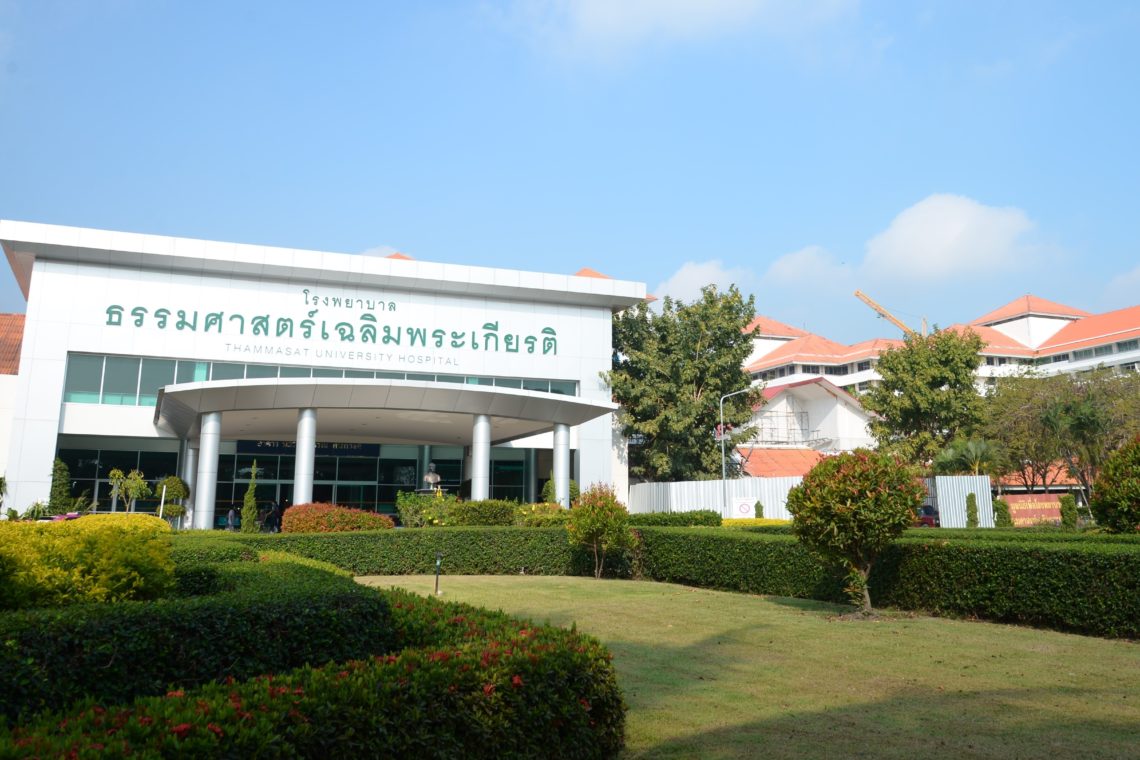
On April 11, 2024, Thammasat University Hospital signed an MOU with the Dental Innovation Foundation under Royal Patronage to co-develop innovative products and establish a lifestyle medicine system for the Thammasat Lifestyle & Wellness Medical Center, supporting preventive health collaboration. On July 3, 2024, Thammasat University Hospital partnered with DKSH (Thailand) Limited to launch Home Pulse, a digital health collaboration delivering at-home healthcare services such as blood and urine collection. The project aims to enhance patient access, reduce hospital congestion, and strengthen sustainable national healthcare delivery.

Local Collaborations :

Learning Learning how to take care of oneself with some basic health knowledge and then changing health behaviors are what the people in local community or provincial areas needed. The Faculty of Allied Health Sciences, Faculty of Pharmacy, and the Department of Physical Therapy, Thammasat University, conducted training programs and projects to promote and develop health management systems, especially for the vulnerable groups and elderly.

On November 12, 2023, the Department of Physical Therapy, in collaboration with the Department of Medical Technology at Thammasat University and Khlong Luang Municipality, conducted a project aimed at promoting health and improving the quality of life for the elderly within the White House Community in Khlong Luang District, Pathum Thani Province. This initiative, part of their academic practicum, involved providing physical fitness assessments and kidney disease risk analyses to elderly community members.

On November 16, 2023, the Faculty of Public Health, Thammasat University, in partnership with the National Health Commission Office, the Health Systems Research Institute, and the Saraburi Provincial Administrative Organization, convened a meeting in Saraburi Province. This gathering of academics and agency representatives focused on developing and testing tools for data collection and health impact assessment (HIA). The activities included a practical workshop on designing these tools and planning subsequent data collection efforts for health impact assessment.

On January 11, 2024, the Faculty of Nursing at Thammasat University engaged with Mahavajiralongkorn Thanyaburi Hospital to coordinate the practicum placements for students enrolled in the Master of Nursing Science program. During this meeting, an academic cooperation agreement was also signed between the two institutions. On February 14, 2024, the Health Service Center of the Faculty of Allied Health Sciences, Thammasat University, in collaboration with the Lad Sawai Municipality Health Insurance Fund, held a training activity focused on promoting health behavior changes for the elderly (aged 60 and above) at Lad Sawai Municipality, Pathum Thani Province. This event, part of the Elderly Health Check-Up Program, offered participants their health check-up results and provided consultations on health issues, led by faculty members from the Department of Medical Technology and medical technologists.
Thammasat University as a Neutral Platform for Discussion

Thammasat University provides a neutral platform and ‘safe’ space for different political stakeholders to come together to frankly discuss challenges. Due to the imbalance of power in Thai politics stemming from the coup in 2014 and the existing establishment, a safe space to voice different political is needed more than ever.

Faculty of Political Science, Thammasat University is at the forefront of the attempt to provide a safe and neutral platform for these voices. The following activities are the important examples that Thammasat University is providing this kind of platform.

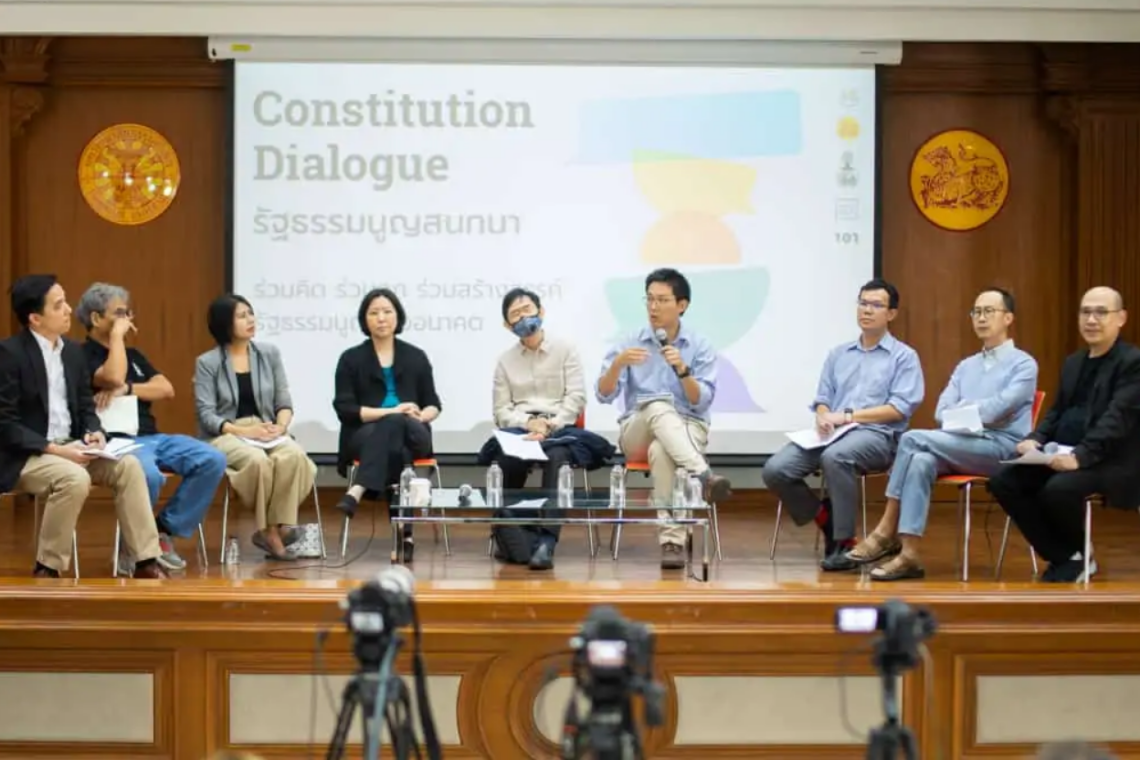
First, the “Constitution Dialogue: New Constitution, New Consensus” was a public seminar and a research project that aims to create a platform for the public to deliberate about the reform of the constitution for the future of Thailand. This activity was cooperation between Direk Jayanama Research Center of the Faculty of Political Science, Thammasat University, and partners, including Faculty of Political Science, Chulalongkorn University, Faculty of Law, Chiang Mai University, and The101.World. The project was launched on December 21, 2020 (see: https://www.the101.world/constitution-dialogue/ ).

The Constitution Dialogue project focused on 8 sensitive political issues, namely, (1) New political structure: redesigning power relations between the Monarchy, the Executive Branch, the Legislative Branch, the Judicial Branch, and the people; (2) Election system: House of Representatives, the Senate, and political parties; (3) People Politics: Rights, Freedom and People Participation; (4) Constitutional Court; (5) Independent Organizations; (6) Decentralization; (7) the reform of Judicial system; (8) the State, Public Policy, the National Strategies and the National Reform.

Since the launch, the project has organized a series of seminars and articles. There have been 8 seminars so far. Please see the articles and outcomes of the seminar here (see: https://www.the101.world/category/constitution-dialogue/ ).

Second, The Democratic Citizens and Civic Engagement of the Youth was organized on November 14, 2020, by the Faculty of Political Science, Thammasat University. This was a full-day event, discussing several issues including Civic Education in Thailand, Ecology for Civic Learning, and Civic Engagement of Youth in the Digital Age. Each session was participated by academia, youth leaders, civil society organizations, as well as politicians. Please see the details of the event here: https://theactive.net/social-agenda/25631110/.

The youth political movement has been a crucial democratic movement in Thailand in the past two years. The government was trying various ways to suppress and intimidate the movement, without providing a safe space for youth to voice what they really want and properly respond. Therefore, this event was one among a few events that opened a neutral and safe platform for youth to voice their political opinions.

The SDG-Foresight project for the Thailand SRI Strategic Plan


From March to June 2020, SDG Move undertook policy-focused research for Thailand Science Research and Innovation (TSRI), an organization under the Ministry of Higher Education, Science, Research and Innovation. It was the analysis of data and the design of future scenarios to support the science research and innovation plan. TSRI wants this development plan to be the catalyst of change that would steer Thailand to progress more sustainably and inclusively along the line of the United Nations’ Sustainable Development Goals (SDGs).

The research was conducted at two levels, namely national and regional levels. Foresight (i.e. Horizon Scanning and Delphi) was used as the research methodology. Data collection was conducted online due to the COVID-19 pandemic.

At the national level, the SDG Move research team did the horizon scanning by reviewing secondary data related to all SDGs from national and international data sources, as well as scanning social signals appearing in social media and news. Then 60 experts were selected and asked to do adapted Delphi surveys. The surveys were conducted two rounds. The first round was to verify the critical sustainability issues found from the Horizon Scanning. The second round was to prioritize the issues, using two main criteria namely the level of importance and the level of policy readiness.

Moreover, SDG Move also worked with 6 regional teams, using the same methodology, to obtain each region’s crucial sustainability challenges, as well as to assess knowledge stock and gaps for these challenges. The findings were used as inputs for TSRI strategic plan for the budget year 2021.

Please see the report here:

Reference: https://drive.google.com/drive/u/3/folders/18CsTODH5rAuo2SIfr3tUMPzvN0iHjjyD

Thammasat University provides outreach, general education, upskilling and capacity-building to policy and lawmakers on several topics.

Thammasat University has been providing outreach, general education, upskilling and capacity-building to policy and lawmakers on several topics which will contribute to the implementation and achievement of Sustainable Development Goals and the Paris Accord.

The general education, upskilling, and capacity building activities that have been organized in 2019 and 2020 were mainly focused on economics and climate change. The followings are samples of capacity building activities in which our academic staff were involved.

On Economics

Asst.Prof. Nattapong Pattanapong (PhD.) gave a lecture on “Analysis of Inequality in Thailand using Satellite and Geographical Information System for the implementation of the National Strategies and National Reform Plans” on October 10, 2019, for the officers of The Office of National Social and Economic Development Council (NESDC)

Asst.Prof. Nattapong Pattanapong (PhD.) was an instructor in a workshop on the topic of “Innovation in Analysing Big Data Using Machine Learning (Innovative Data Analytics for Granular Estimation of Population and Poverty Indicators)”, on October 28, 2019, for the officers of the National Statistical Office (NSO).

Asst.Prof. Chayanee Chawanote (PhD.) was an instructor in a workshop on November 13, 2019, for the officers and researchers at the Fiscal Policy Research Institute Foundation, a think tank for the Ministry of Finance. The topics are “Development Economics” and “In-depth Analysis for the monitoring of the 10thStrategy: International Development Cooperation, under the 12th National Economic and Social Development Plan”.

Asst.Prof. Nessara Sukpanich (PhD.) was an instructor in a workshop on November 13, 2019, for the officers and researchers at the Fiscal Policy Research Institute Foundation, a think tank for the Ministry of Finance. The topics are “International Supply Chain Analysis” and “In-depth Analysis for the monitoring of the 10th Strategy: International Development Cooperation, under the 12th National Economic and Social Development Plan”.

Assoc. Prof. Chanin Minphokee (PhD.) gave a lecture on the topic “Regional Economic Integration”, in the Training Programme for the Professional-Level State Lawmaker, the 26th Cohort, on December 18, 2019, for the lawmakers at the Office of the Council of State.

Dr.Supruet Thavornyutikarn was a lecturer on the topic “Principle of Economics and Competition Law”, on December 18, 2019, for the Office of Trade Competition Commission.

On Labor and Migration

Asst.Prof. Supachai Srisuchart (PhD.) gave a lecture on the topic “Indicator Development and the Utilization of the Labor Situation Index” in the First Workshop for Reviewing the indicators of the Labor Situation Index, on February 12, 2020, for the officers at the Ministry of Labor.

Assoc. Prof. Kiriya Kulkolkarn (PhD.) gave a lecture on the topic “Human Resource 4.0 and International Labor Mobility and Migration”, on March 23, 2020, for the officers at the Department of Trade Negotiations.

Climate Change

Assoc. Prof. Bundit Limmeechokchai gave a lecture on the topics of “Principle and scope of Greenhouse Gas Account, according to the Framework of Paris Rulebook for the energy sector”, and “the Sectoral data collection and assessment of Greenhouse Gas for Energy Sector, with calculation practice”, in a workshop on “The data collection and quality control for the creation of the energy sector Greenhouse Gas account”, on April 1-2, 2021, organized by the Office of Natural Resource and Environmental Policy and Planning (ONEP), Ministry of Natural Resource and Environment and partner organizations, namely, GIZ and Thailand Greenhouse Gas Management Organization (Public Organization) (https://climate.onep.go.th/wp-content/uploads/2021/03/Agenda_1-2Apr2021.pdf).

Thammasat Provides Expert Advice to Government At Every Level

Professors and Lecturers in almost faculties and colleges of Thammasat University have been providing expect advice to government at all levels (National, Regional/Provincial, Local) in almost all areas of the Sustainable Development Goals (SDGs). The followings are some examples of the expert advice our faculties provided to national, provincial and local governance, with public evidence.

At the National Level:

Assistant Professor Nattapong Puttanapong (PhD.) from Faculty of Economics, Thammasat University, was appointed as Economic Expert in the National Committee on Sustainable Development since February 2020 (see: http://nscr.nesdb.go.th/wp-content/uploads/2020/03/คำสั่ง-สนร.-แต่งตั้งผู้ทรงคุณวุฒิ.pdf )

Associate Professor Bundit Limmeechokchai (PhD.) from Sirindhorn International Institute of Technology (SIIT), was appointed as a member of working group on the integration of plan and policies on climate change mitigation, under the National Climate Change Committee since March 2019 (see: https://climate.onep.go.th/wp-content/uploads/2019/08/3.pdf)

Associate Professor Bundit Limmeechokchai along with Associate Professor Chayan Tantivasadakarn from Faculty of Economics were also appointed as experts in climate change mitigation and in economics respectively by the National Climate Change Policy Committee since December 2017.

At the Regional / Provincial Level:

Thammasat University in cooperation with the National Science and Technology Development Agency (NSTDA) provide expert advice to provincial governor of Pathum Thani to design and implement the pilot area of smart city in Klong Luang District where Thammasat University is located before expanding to the whole Pathum Thani and nearby provinces (see: https://tu.ac.th/thammasat-310864-mou-smart-city-klong-luang-pathumthani )

Assistant Professor Nattapong Puttanapong (PhD.) from Faculty of Economics, Thammasat University, was appointed as Economic Expert in the Committee for Bangkok Smart City in 2021 (see: https://www.econ.tu.ac.th/news/detail/155 )

At the local level:

Thammasat University is granted a research funding for “University to Tambon (Sub-District)” project, which is a nation-wide scheme research grant encouraging universities to work with local stakeholders to achieve integrated social and economic development at sub-district (Tambon) level (see: https://www.facebook.com/TUU2T

Thammasat University has been working with Bang Krabue sub-district, Sam Khoke district, Pathum Thani province. One of the projects the university initiated was An Early Warning Survey of the Emerging Infectious Diseases, amid the COVID-19 pandemic. The survey was conducted in order to understand the magnitude of the COVID-19 infection and its socio-economic impacts, so that the local health system can plan more effectively how to stop the spread of COVID-19, to manage the local health facilities, resources and health staff, and to formulate evidence-based policy recommendations to the local authorities. (See photos of the field survey here: https://drive.google.com/drive/folders/1vKuJcphbfefV26HxZnGvAFE8ZCF85NTs)

Thammasat and Transparency: Financial Data

Thammasat University publishes its financial data publicly every year in its annual report (https://tu.ac.th/annual-report) and in a separate annual financial report. Detailed report of financial data 2020 can be found in the following link: https://treasury.tu.ac.th/uploads/treasury/pdf/%20ปี%202563.pdf

The annual report consists of two major parts, namely, Thammasat Memoir (an overview of the university, basic information, and qualitative information), and Performance Report (performance reports of offices, departments and faculties). The university’s financial data is published in the basic information report.

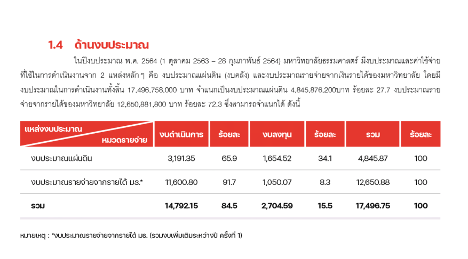
The latest financial data is for the 2021 budget year (October 1, 2020 – February 28, 2021). The main financial sources of the university are the government’s allocated budget and the university’s income. From the total budget of 17,496.75 million baht, the government’s allocated budget and the university’s income were accounted for 27.7% and 72.3% respectively.

Reference:

  1. https://pr.tu.ac.th/annual_report/annual_2021/ข้อมูลพื้นฐาน/html#page_20
  2. https://treasury.tu.ac.th/uploads/treasury/pdf/%20ปี%202563.pdf

Freedom of Speech of Thammasat University Tested by Students’ Political Rally

Under the rule of NCPO since 2014 and its continuing elected government in the name of Palung Pracharat Party, academic freedom has never been more difficult. However, Thammasat University has tried its best to provide a safe space for freedom of speech.

Academic freedom is one of the main principles of Thammasat University from the start:

“…A university is, figuratively, an oasis that quenches the thirst of those who are in pursuit of knowledge. The opportunity to acquire higher education rightly belongs to every citizen under the principle of freedom of education…Now that our country is governed by a democratic constitution, it is particularly essential to establish a university that will allow the people, and hence the public, to develop to their utmost capability. It will open up an opportunity for ordinary citizens to conveniently and freely acquire higher education for their own benefits and for the development of our country…”

Dr. Pridi Banomyomg

Therefore, academic freedom in education is at the heart of Thammasat University.

Moreover, Thammasat University also prioritizes academic freedom in a sense of freedom of speech. One important example in recent years was the rallies for political reform from July to August 2020, in which several rallies were organized almost daily at universities and schools including at Thammasat University both Tha Prachan and Rangsit campuses.

On August 10, 2020, a political rally of 4000 people organized at Thammasat University Rangsit campus demanded for royal reform. The royal reform was and still is a very sensitive issue in Thai politics. This was a real test for Thammasat University on Academic Freedom principle, which includes freedom of speech. As the news reported, “After an emergency meeting called by the Thammasat University council shortly after the 10 August rally, the university issued a statement affirming the constitutional monarchy system while supporting the rights of students to freedom of expression under law and the Constitution.”

The decision of the Thammasat University Council, the highest governing body of the university, reaffirms Thammasat University’s principle supporting academic freedom and freedom of speech.

University principles on corruption and bribery

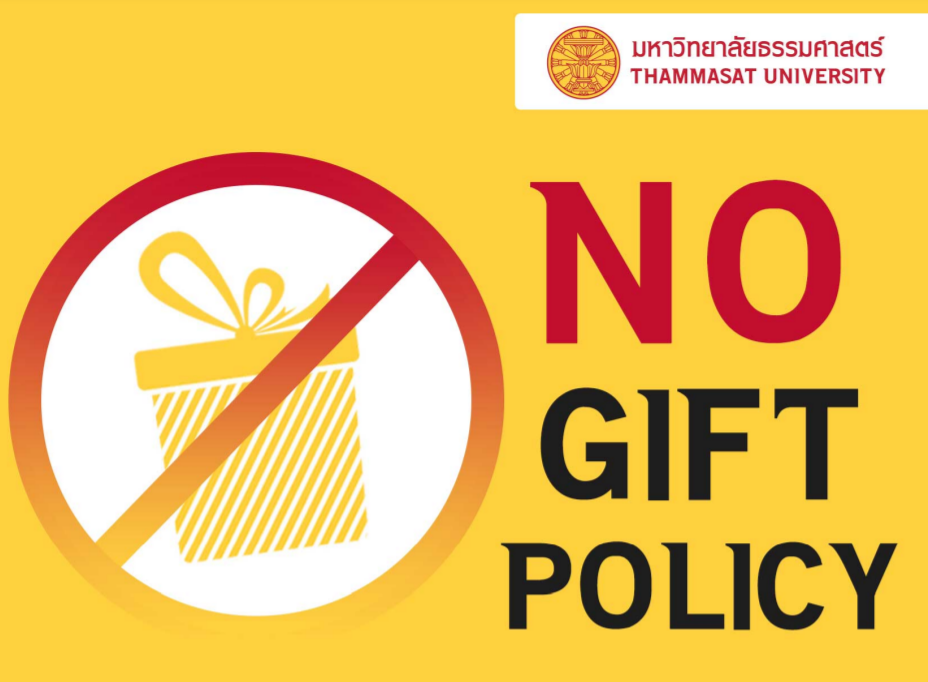
Since December 2018, Thammasat University officially announced the university announcement on “Practices for giving and receiving gifts” to ensure transparency and good governance.

Essentially, the university (especially university and faculty executives and staff) must not receive gifts or anything convertible to financial value from partner of contract, companies, or any individuals who may have direct or indirect interest with the university, especially in contract signing or continuation, contract inspection, or any other kind of interest. The university, instead, encourages giving “blessing”.

In terms of giving gifts, the university clearly states that it is not necessary to produce or acquire any gifts to give to other departments or faculties. Giving gifts in special occasions such as New Year could have an exception when the gifts are the faculty’s souvenirs or when there is a special reason to support sustainable development or community products.

Reference:

  1. https://www.bangkokbiznews.com/news/821092
  2. https://thammasatforsdgs.files.wordpress.com/2020/11/85364_tu_no-gift-policy-16.2.5.pdf

Thammasat University’s Participatory Bodies for Stakeholder Engagement through Smart City Khlong Luang initiative

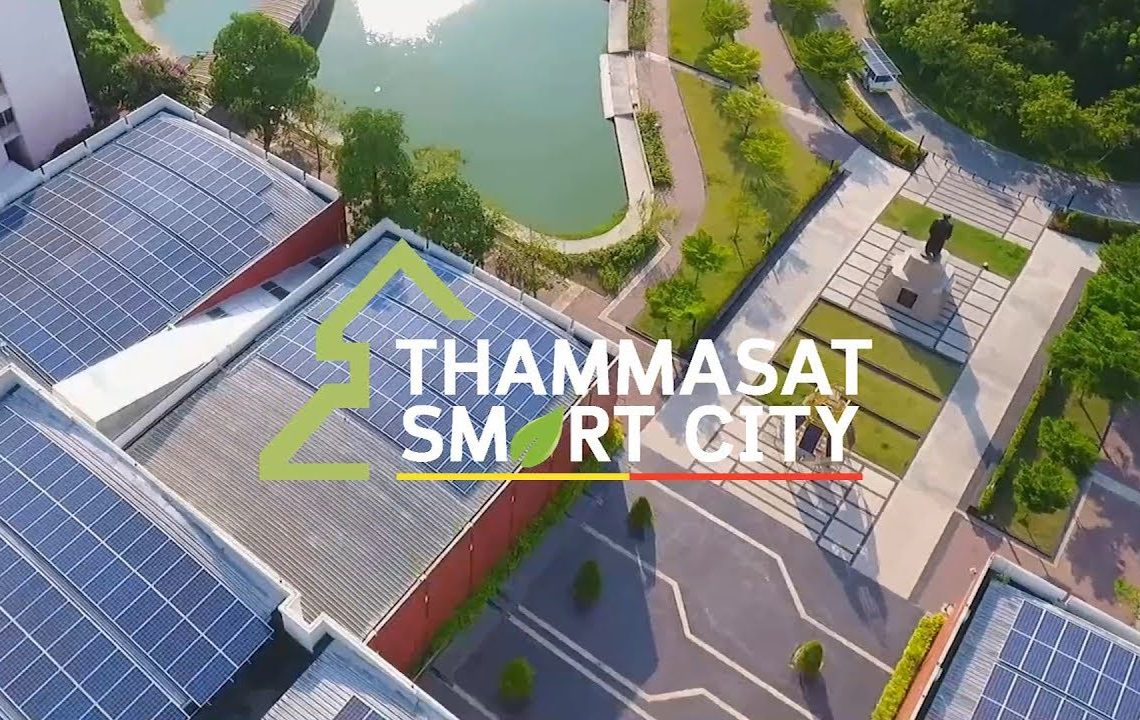
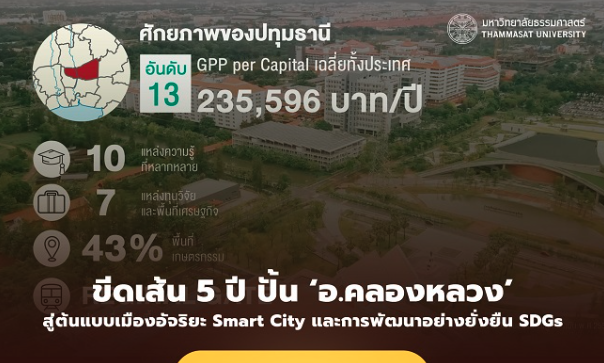
The rector of Thammasat University, Associate Professor Gesinee Witoonchart, signed MOU on August 27, 2021, with Patumthani Province and National Science and Technology Development Agency (NSTDA) to develop a pilot smart city in Klong Luang District before expanding to other districts. The main objective of this cooperation is to apply advanced technology and smart innovation to increase the efficiency of provincial administration based on the Smart City Approach and Sustainable Development Goals (SDGs).

This 5-year MOU established a “Joint-committee on smart city” between Thammasat University, NSTDA and Pathumthani Province, functioning as a body to provide policies and action plans, monitoring actions, and disseminate knowledge and technology to the community to support bottom-up development that would lead to sustainability.

The Master plan for the Smart City initiative will focus on 7 pillars including Smart environment, Smart Governance, Smart Mobility, Smart Energy, Smart Economy, Smart Living, and Smart People. These pillars will enhance several priorities of Pathum Thani provincial office, such as providing public service, human and environmental development, solving existing problems, and enforcing the law. Moreover, since Klong Luang district has a large population, this Smart City initiative will help the province to answer the need of the people more efficiently and develop their quality of life.

Reference:

https://tu.ac.th/thammasat-310864-mou-smart-city-klong-luang-pathumthani

Thammasat University participates in the Integrity and Transparency Assessment: ITA

Thammasat University engages local stakeholders in monitoring university good governance through an assessment scheme called “Integrity and Transparency Assessment or ITA.

The ITA is an assessment scheme initiated by the Office of the National Anti-Corruption Commission (NACC) and used for assessing government agencies the level of integrity and transparency. ITA is comparable to its global counterpart, Corruption Perception Index: CPI”. Thammasat University has participated in the ITA since 2016 as a university policy. The rector delegated the responsibility for participating in this assessment to the Vice-Rector on Administration and Human Resources.

There are three parts to the assessment.

First, Internal Integrity and Transparency Assessment (IIT), accounted for 30% of the total score, surveys opinions of 400 managers and executives of units inside the university on (1) performance and operation (2) budget and expense (3) the use of power (4) the use of government property (5) how the university dealing with corruption problems.

Second, External Integrity and Transparency Assessment (EIT), accounted for 30% of the total score, surveys opinions of external stakeholders, university customers, students, and partners of contracts on (6) quality of operation (7) communication efficiency (8) operation improvement.

The first two parts were surveyed through online surveys.

Third, Open Data Integrity and Transparency Assessment (OIT), accounted for 40% of the total score, focuses on whether the evidence in the assessment is public. There are two main indicators namely, (9) data disclosure and (10) prevention of corruption.

In 2020, Thammasat University was assessed with A grade, 92.08 out of 100 points. In 2021, the assessment period was from February until August 2021. There are 8,393 government agencies all over Thailand participated in the ITA.

In 2021, Thammasat University enacted a policy called “Stakeholder Participation Measure 2021”, to ensure transparency and accountability to all parties involved in accordance with Good Governance principles. See the policy here.