SDG 13 in Numbers
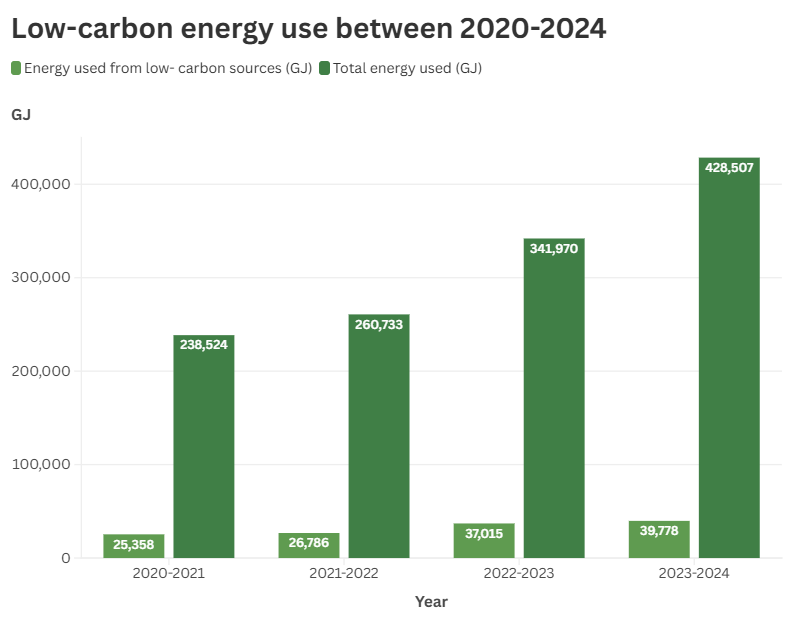
This stacked bar graph displays Low-carbon energy use and total energy used between 2020 and 2024, measured in gigajoules (GJ). Both metrics show a consistent upward trend across the four periods. Total energy usage increased substantially from 238,524 GJ in 2020-2021 to 428,507 GJ in 2023-2024. Energy utilized from low-carbon sources also rose consistently each period, increasing from 25,358 GJ in the 2020-2021 period to 39,778 GJ by the 2023-2024 period.
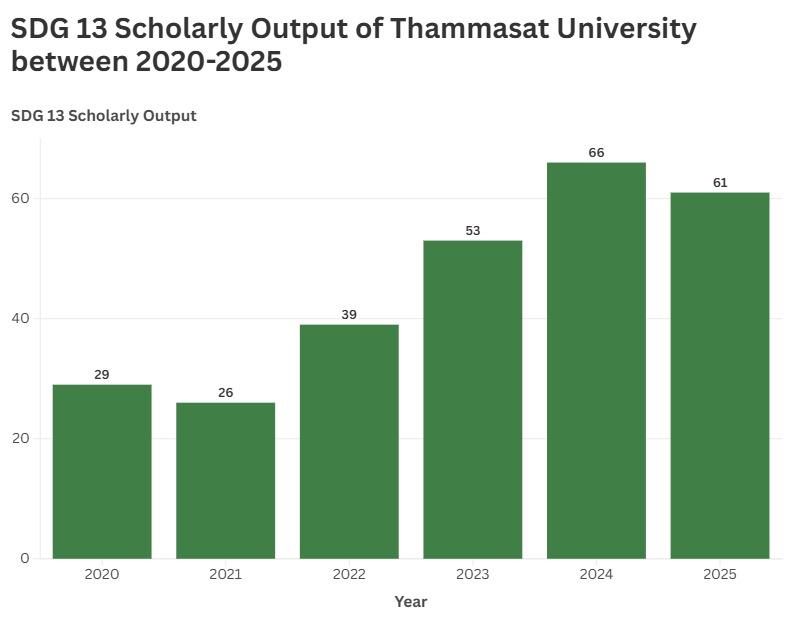
This bar graph illustrates the SDG 13 Scholarly Output of Thammasat University from 2020 to 2025. The trend generally shows a substantial increase in output over the period, following an initial dip. While the output initially decreased from 29 in 2020 to 26 in 2021, it then sharply rose, peaking at 66 outputs in 2024. This peak represents a significant growth of over 150% from the 2021 low of 26. The projected output for 2025 is 61, a reduction of 5 from the previous year’s maximum.
Research in SDG 13
Based on an analysis of 324 publications from 2020 to 2024, Thammasat University’s research on SDG 13 focuses heavily on climate policy modeling, energy transition, and local resilience efforts, particularly within Thailand and the Greater Mekong Sub-region (GMS). The university’s work is organized around three main pillars:
- Macro-Policy and National GHG Mitigation Modeling: A primary research pillar involves analyzing and modeling large-scale national and industrial efforts to meet climate targets. This includes extensive modeling of Thailand’s pathways to achieve net-zero emissions by 2050, assessing long-term GHG mitigation strategies beyond 2030, and developing mitigation scenarios for key industrial sectors like the cement industry. This policy-oriented research also examines the role of financial tools, such as the social cost of carbon, in shaping effective climate policy for Thailand.
- Sustainable Energy and Waste Transition: The second cluster focuses on the technological and systemic shiftsrequired for decarbonization. This includes a strong emphasis on the circular economy through Waste-to-Energy (WtE) technologies and the sustainable use of biomass for fuel and power generation, supported by carbon footprint analysis of supply chains. Researchers also investigate forward-looking solutions such as Carbon Capture, Utilization, and Storage (CCUS) and technologies for reducing emissions from the transport sector, including the promotion of electric vehicles.
- Climate Impact, Vulnerability, and Local Resilience: A third key area addresses the on-the-ground effects of climate change and strategies for adaptation. This work involves assessing coastal vulnerability in provinces like Nakhon Sri Thammarat and Krabi, and developing participatory toolkits for enhancing community resilience in areas like the Bangkok Metropolitan Region. The research also explores the broader impacts of climate change on public health, such as mental health, and analyzes land use changes, including forest cover and carbon storage in regions like Nan Province.
Synthesis and Impact
Collectively, this research demonstrates a multi-scalar approach, addressing climate action from high-level national policy down to local community adaptation. The work is geographically concentrated on Thailand, with specific case studies in key regions and a strong collaborative focus on the GMS. This research directly informs policymakers, industry stakeholders, and local communities, and is supported by a robust network of national collaborators (NSTDA, Chulalongkorn University) and international partners (Japan’s NIES, US Department of Energy), positioning Thammasat as a central knowledge hub for climate action in the region.
Outreach and Academic Services in SDG 13
In 2024, Thammasat University addressed the critical and multifaceted challenges of climate change through seven targeted academic and social service initiatives aligned with SDG 13. These projects underscore a sophisticated, dual-pronged strategy that balances climate change mitigation with crucial adaptation and resilience-building efforts. By engaging directly with key industrial sectors, academia, and the wider community, the university is fostering a holistic response to one of the most pressing issues of our time. The university’s efforts are organized into two key clusters:
- Driving Climate Mitigation through Green Transition and Industrial Accountability (5 activities)
A significant portion of the university’s work focused on climate mitigation by directly targeting major sources of greenhouse gas emissions. Recognizing the transport sector’s substantial environmental footprint, the Sirindhorn International Institute of Technology (SIIT) and the Faculty of Economics led initiatives to accelerate Thailand’s green transition. They hosted specialized workshops and policy-oriented seminars on electric vehicle (EV) technology and the strategic adjustments needed to maintain the competitiveness of modern automotive industries in a low-carbon future. Simultaneously, the Faculty of Engineering provided crucial technical expertise to key industrial players, helping them align with national climate goals. This included conducting in-depth projects on greenhouse gas (GHG) management for the oil and gas sector and performing comprehensive GHG emissions assessments for the Rubber Authority of Thailand. These actions move beyond mere measurement, providing the foundational data necessary for these industries to develop credible decarbonization roadmaps and enhance their corporate accountability. - Building Resilience and Adapting to Climate Impacts (2 activities)
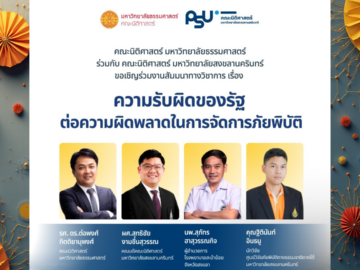
Recognizing that some climate impacts are now unavoidable, the university also focused on bolstering societal resilience, particularly concerning disaster preparedness and effective response. The Faculties of Political Science and Liberal Arts hosted interdisciplinary academic seminars exploring the multifaceted impacts of natural disasters. These discussions went deep into the political science of disaster management, analyzing the effectiveness of governance structures, institutional coordination, and policy implementation during climate-related crises. In parallel, they explored disaster narratives in literature and contemporary media, examining how storytelling shapes public perception, influences community behavior, and fosters a collective memory of risk. This approach fosters a deeper, more nuanced public understanding of climate risks and promotes the development of more effective, people-centric governance and communication strategies for building lasting community resilience in the face of escalating climate-related events.
Featured Stories
Driving Sustainable Policy and Legislation
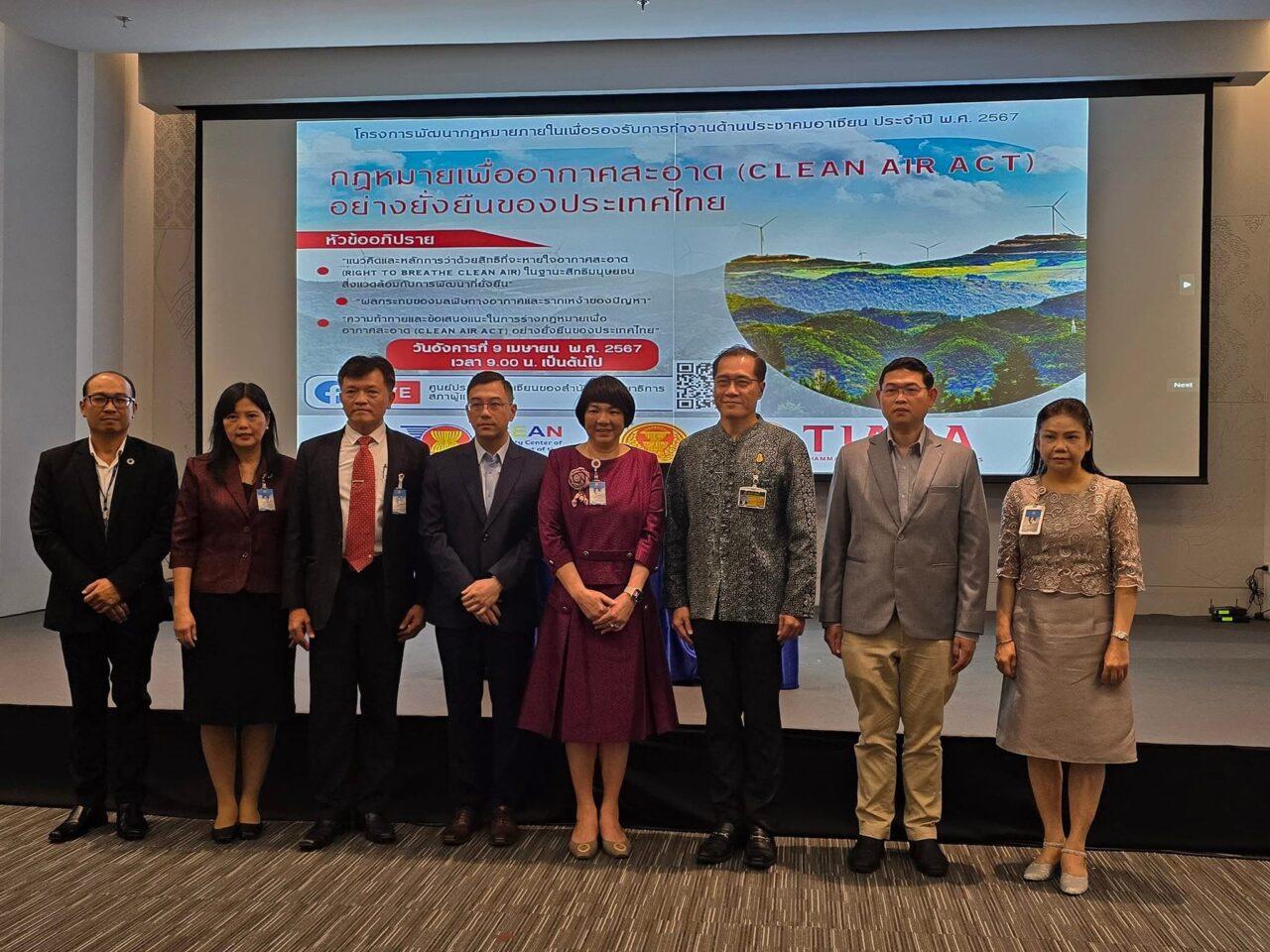
- Academic Seminars on the “Clean Air Act” The Faculty of Law and the Thammasat Institute of Area Studies (TIARA) hosted multiple seminars in 2023-2024 to provide legal insights on the Right to Clean Air and advocate for the Clean Air Act. These forums focused on the effectiveness of stringent legal measures against PM 2.5 and the issue of transboundary pollution, aiming to equip parliamentary officials with knowledge to push forward vital legislation.
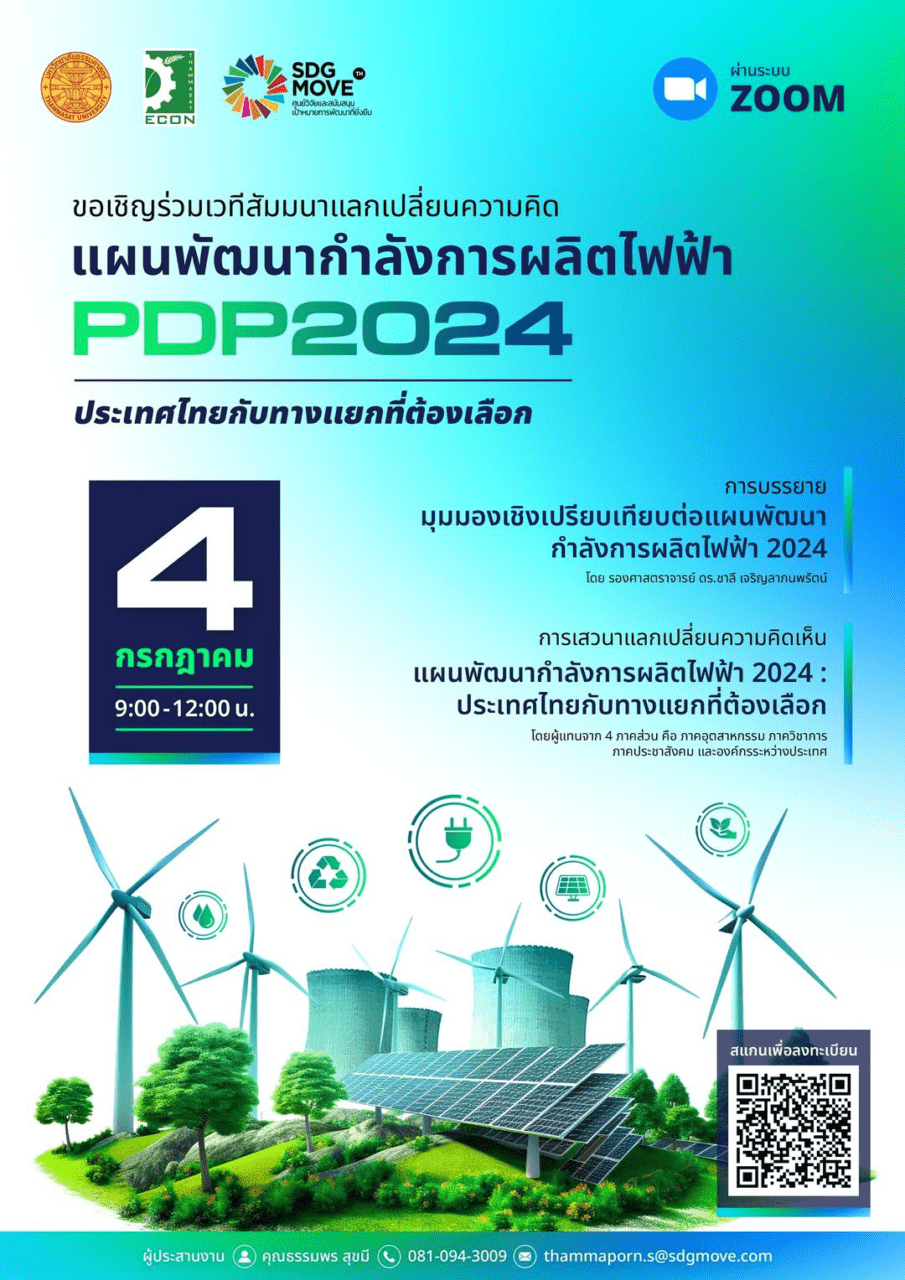
- The Power Development Plan (PDP 2024) and Thailand at a Crossroads Seminar The Faculty of Economics analyzed the national PDP 2024, which is central to reducing Greenhouse Gas (GHG) emissions in the energy sector. Discussions focused on the economic and environmental strategies needed to achieve Thailand’s Carbon Neutrality targets.
Research and Innovation for Mitigation
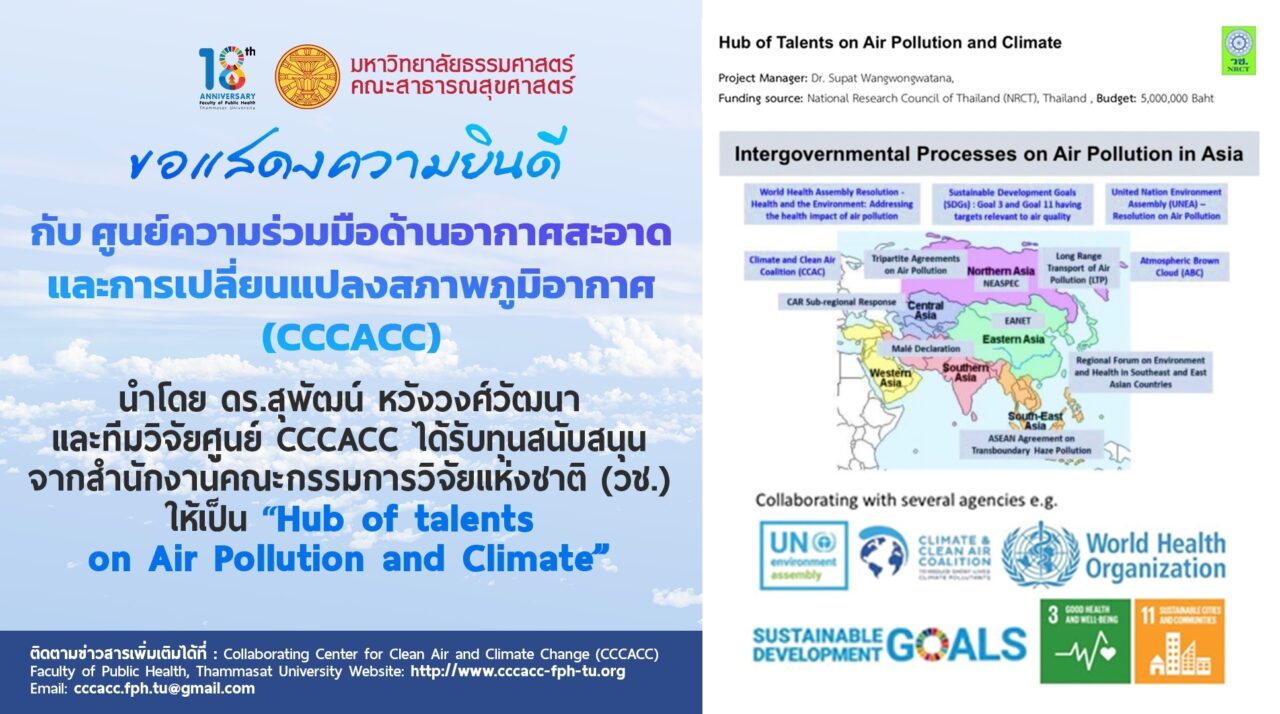
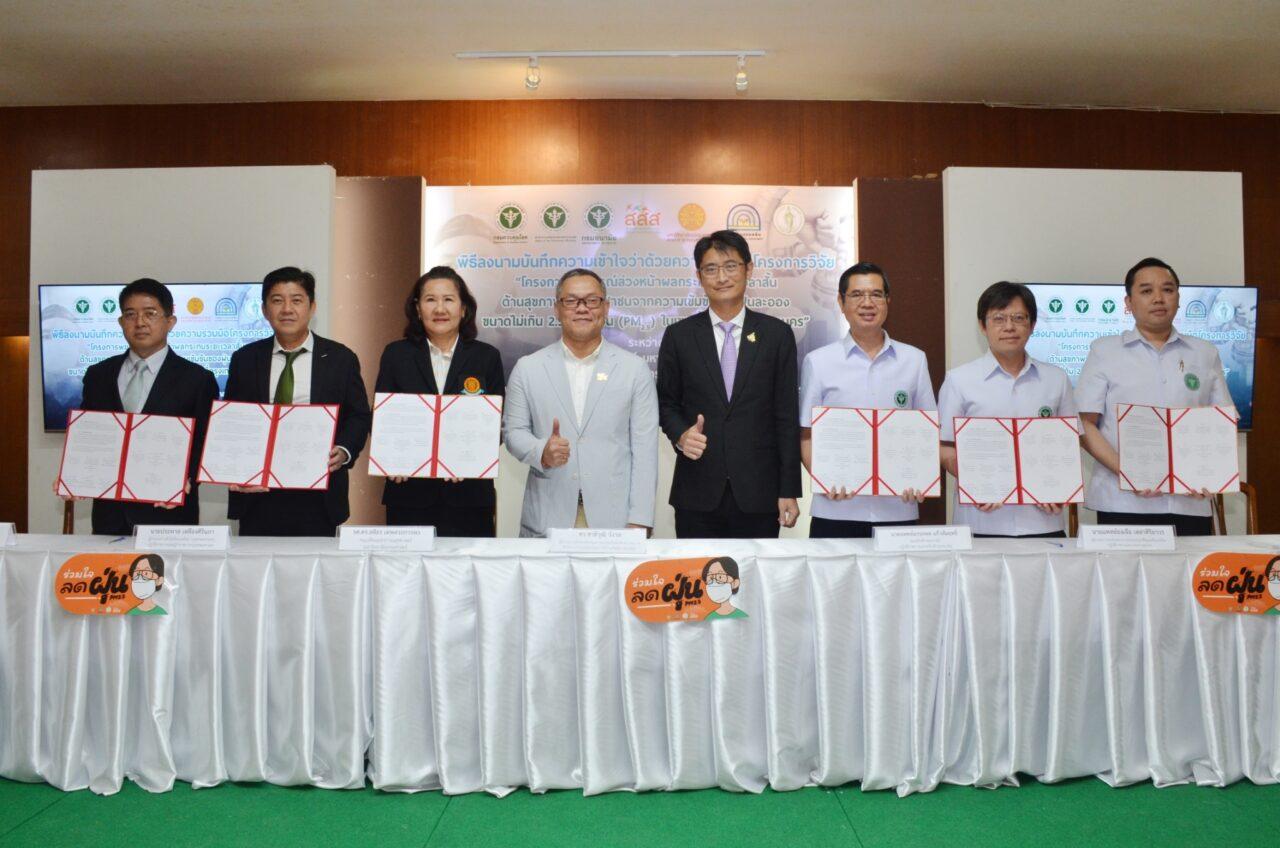
- Establishing the Collaborating Center for Clean Air and Climate Change (CCCACC) The Faculty of Public Health launched the CCCACC as a Hub of Talents on Air Pollution and Climate research (funded by NRCT). This centre is central to climate and health research, notably by collaborating with the Ministry of Public Health and Bangkok Metropolitan Administration (BMA) on a MOU for a PM 2.5 Health Impact Forecasting Project in Bangkok, directly linking air quality with public health.
- Decarbonization Research and Policy Insights TU engaged in researching GHG management for key Thai sectors like the Oil & Gas industry, supporting the Net-Zero GHG Emissions by 2065 goal. The Faculty of Economics hosted a seminar on “Examining Farmers’ Willingness to Pay for Harvesting Technology to Restrain Sugarcane Burning and PM2.5 in Thailand,” providing policy research insights on reducing agricultural emissions.
Adaptation and Resilience Building
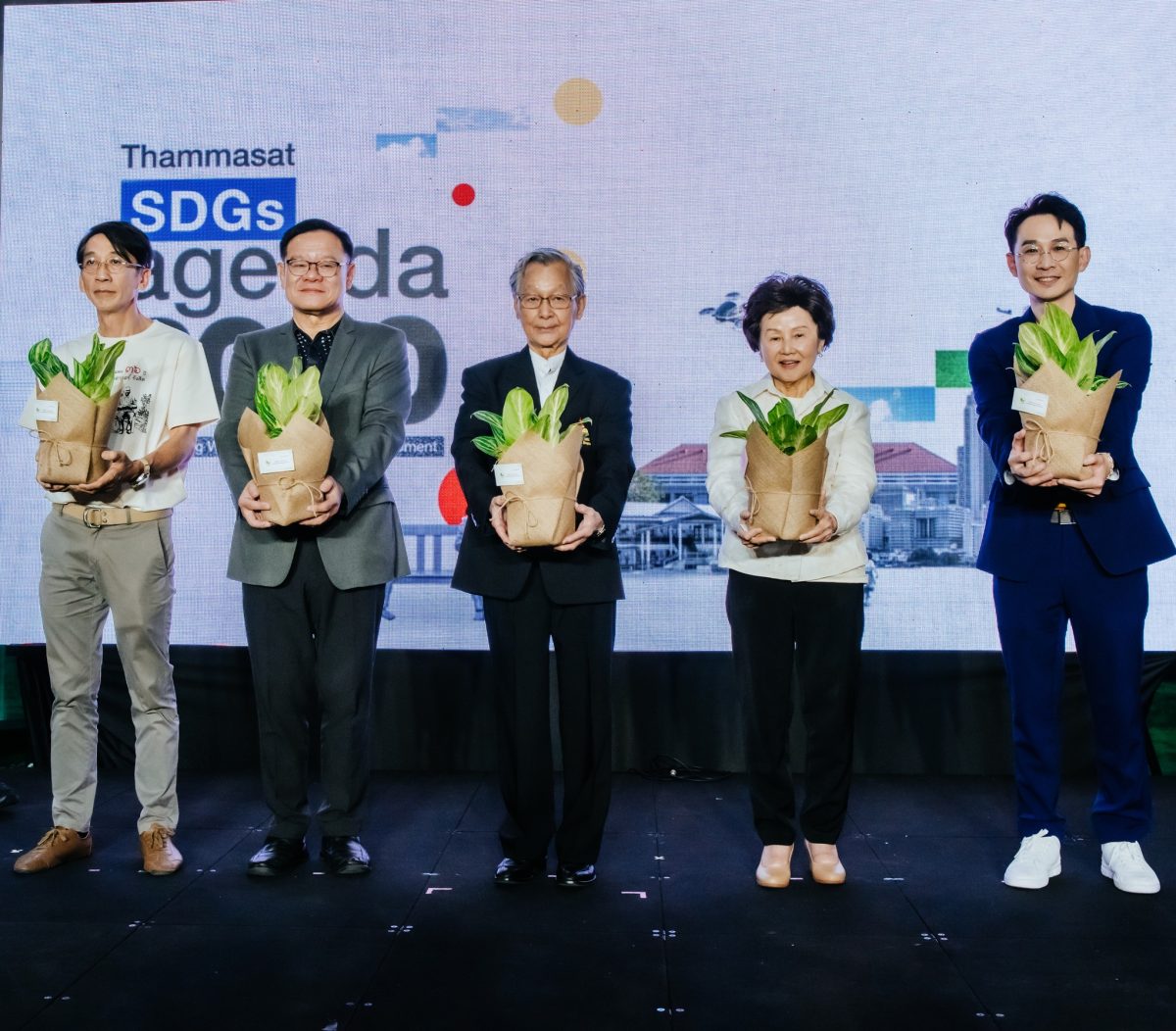
- Broad Public Engagement Events such as the Thammasat SDGs Agenda 2030 (Feb 2023) provided a major public platform for sharing environmental solutions and raising widespread awareness about climate action.
- Climate Resilience for Vulnerable Groups The Thammasat University Research Administration Office (TU-RAC) initiated discussions with the Ministry of Social Development and Human Security (MSDHS) regarding the impact of global warming on vulnerable groups, ensuring that climate adaptation planning includes social equity dimensions.