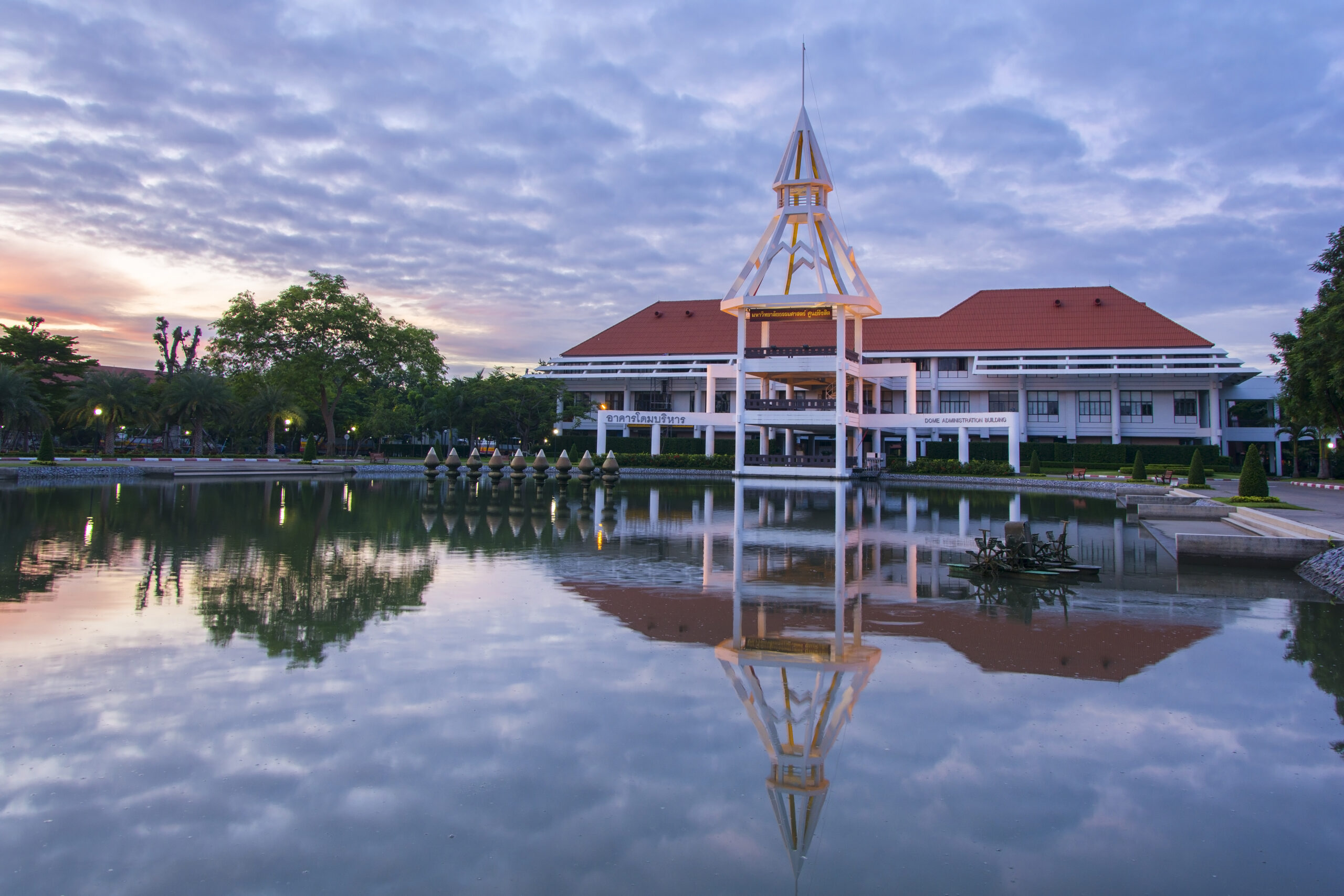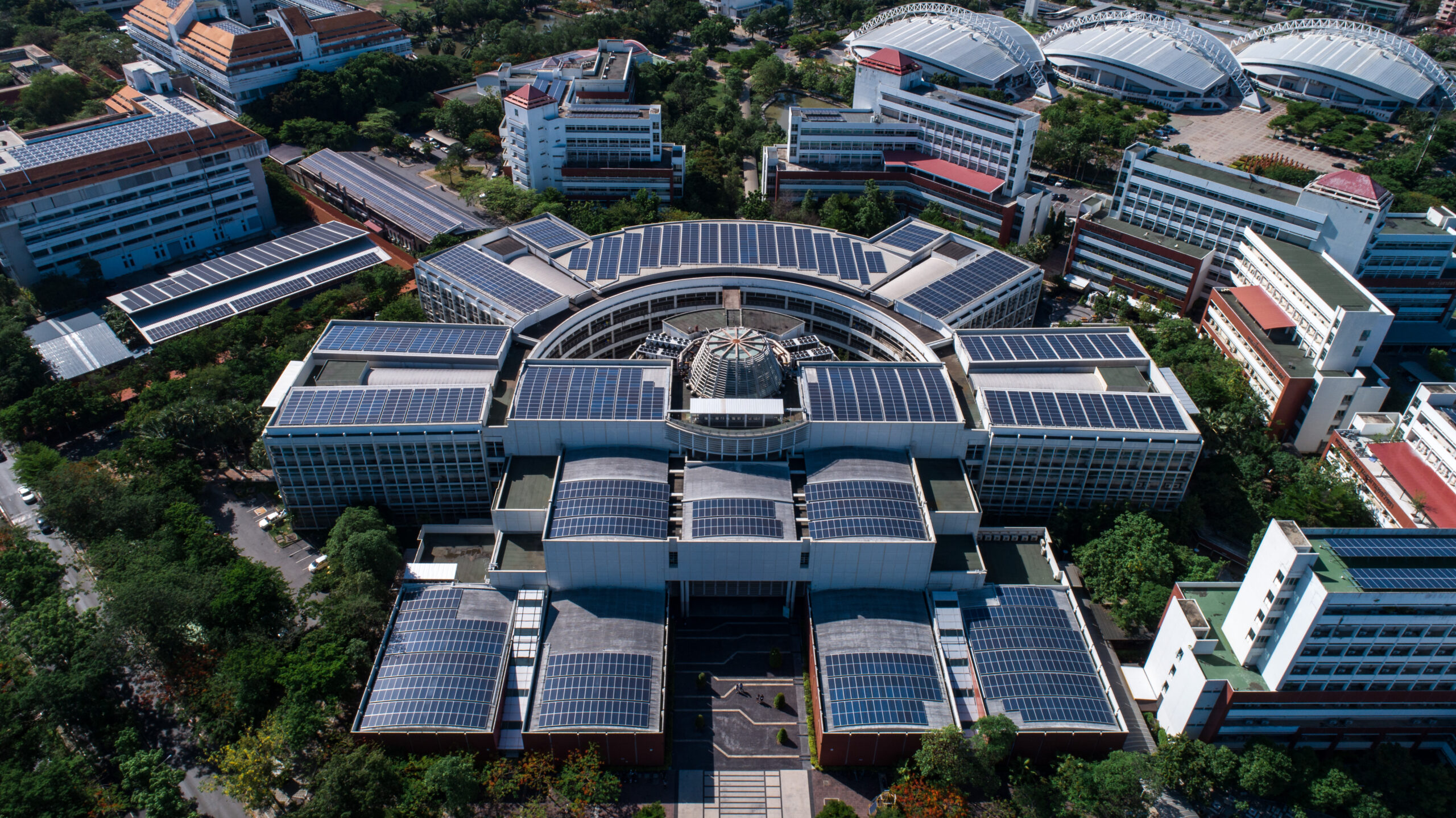
Thammasat University has several outstanding buildings that are recognized as the highly energy-efficient buildings that adhere to the building design principle for energy conservation such as the “Wisit-Auksorn” Building which has won the “Energy Saving Building Design Awards” in 2016, the “Siriwitthayaluck” Building of the Faculty of Learning Sciences and Education which flawlessly combined the energy-efficient principle with the concept of universal design, the “Thammasat Secondary School” which received an IFLA AAPME Awards 2020, and last by not least, the “Puey Centenary” Hall.
Latest in 2023, Thammasat University’s Faculty of Architecture and Planning has earned the prestigious Green Office Excellence Award (Gold Medal) for 2023, awarded by the Department of Climate Change and Environment, Ministry of Natural Resources and Environment. This recognition highlights the faculty’s commitment to sustainability in various forms, including energy-efficient building designs, the installation of solar panels to generate renewable energy, and initiatives like the TDS Freecycle Rack, a space for sharing and exchanging materials for model-making to promote reuse.
The design for the International Education Building (อาคารวิศิษฏ์อักษร), executed by the Center for Design and Research Innovation (CIDAR) within the Faculty of Architecture and Planning at Thammasat University, was certified under a crucial sustainable construction standard. As announced on January 17, 2024, this design passed the assessment for new construction and renovation projects (TREES-NC) and achieved the Gold level certification from the Thai Green Building Institute. This assessment utilized the ‘Standard criteria for assessing energy and environmental sustainability’ (TREES-NC), and the recognition aligns with the university’s broader goals for Thammasat Sustainability, Thammasat SmartCity, and Future CampusLife at the Rangsit campus.
Another achievement recognizing sustainable practices occurred on August 29, 2024, when the Faculty of Architecture and Planning received the Green Office (G-Green) Award at the Excellent G Gold level. Assistant Professor Asahan Suwanrit, the Dean of the Faculty, was the representative who accepted the award, which was conferred by the Department of Environmental Quality Promotion. This G-Green award is given to organizations that demonstrate environmental management, emphasizing the efficient and worthwhile use of resources, commitment to energy saving, and explicit consideration of environmental impacts
Looking ahead, the faculty is focused on adopting Net Zero and Carbon Neutral strategies. Through collaborations with external agencies, they are working to develop future-ready models for sustainability in organizational practices, positioning themselves as a leader in environmentally responsible development. This ongoing dedication underscores the faculty’s commitment to sustainable design and practices for an eco-friendlier future.
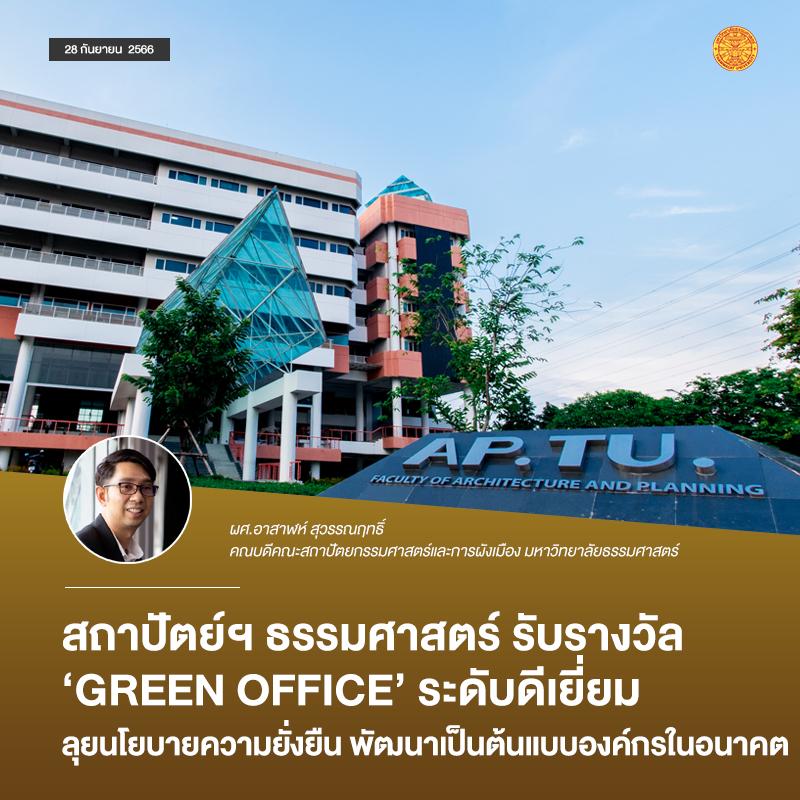
For more details, please refer to the article on Thammasat University – Times Higher Education Research Hub “Thammasat Design School received the prestigious Green Office Award for Excellence”.
For more information on the building design, please refer to these websites:
1. Thammasat Policy for Energy-Efficient Renovation and Building
2. Energy Efficient Renovation and Building at Thammasat University
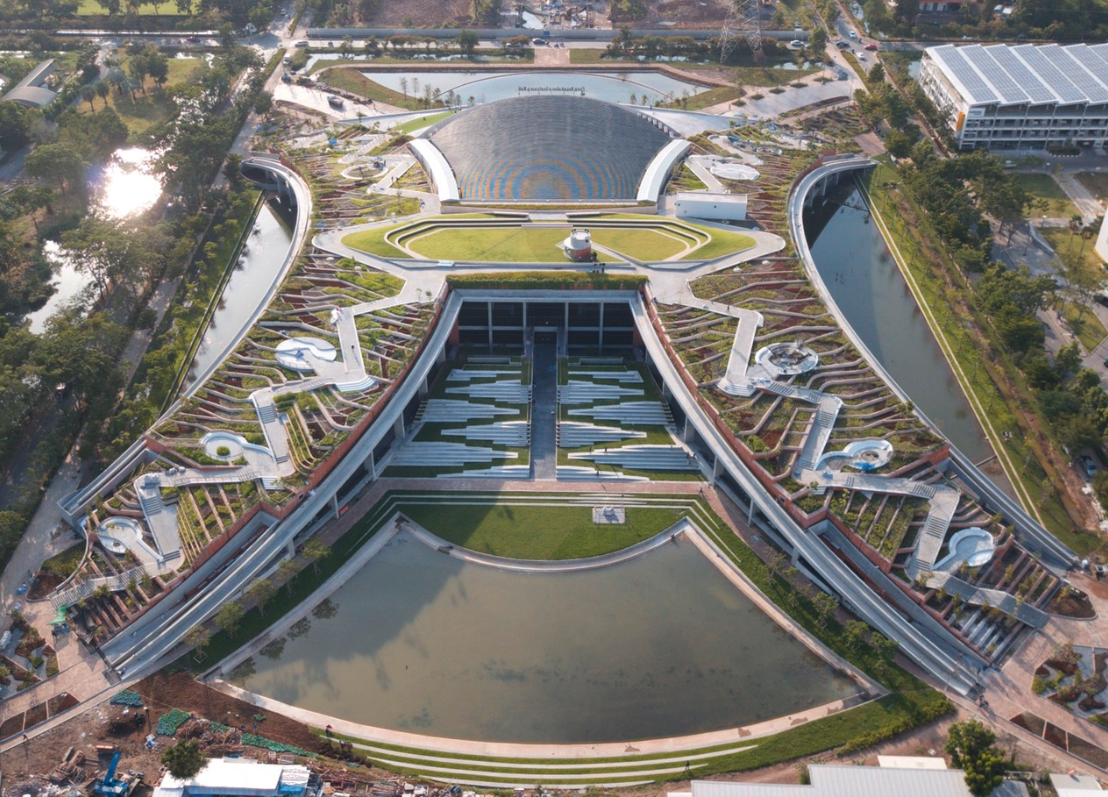
All new buildings at Thammasat University have been constructed under this design guideline and the “Policy for Energy Conservation Management and Access to Modern Sustainable Energy”. The policy ensures that all new buildings and/or renovations are following energy efficiency standards and use the most optimized way in planning for energy consumption in all buildings. It stretches throughout the policy, especially in item #2, #4, #7 and #9, that all constructions, renovations and expansion of the building in Thammasat University must adhere to the “building design principle” for energy conservation.
Policy on Energy Conservation Management and Access to Modern Sustainable Energy
Item #9 stated that “Construction and renovation of all buildings within Thammasat University will adhere to the building design principle for energy conservation and must take into account energy efficiency as a primary factor, following the minimum “Certified” rating from TREES (Thai’s Rating of Energy and Environmental Sustainability).
Under the “Policy on Environmental Management”, the University also stretches the important of the design and development of all new building to follow sustainable building standards. Item #2 stated that “Perform design and physical development while following sustainable building design principles. All new build developments will be required to achieve a minimum “Certified” rating from TREES (Thai’s Rating of Energy and Environmental Sustainability)”. There are four level of certifications: certified, silver, gold, and platinum.
Policy of Environmental Management
Building Design Principles
New buildings according to the updated Thammasat University’s master plan must be designed to reduce the use of energy and exhaustible natural resources. The design and construction of new buildings must consider the environment and sustainability issues. The building plan and building envelope design must utilize environmentally friendly materials that meet the national or international green building standards. For Thailand, TREES (Thai’s Rating of Energy and Environmental Sustainability) is the national standard.
Following the building design principles, the shapes the building must facilitate the use of natural light. The design must also include sunshades to reduce glare with an appropriate window-to-wall ratio for each direction to avoid overheating, as well as natural light monitoring and artificial light dimming systems to optimize the energy use.
The design of the artificial lighting system must complement the natural light to provide luminance that follows the standard of each area with the lighting power in accordance with Energy Conservation Promotion Act (No. 2) B.E. 2550 (2007). The artificial lighting system must contribute to the conservation of energy using various methods, such as using energy-efficient light bulbs and setting automatic lighting schedules.


“Siriwitthayaluck” is the name of the school building of the Faculty of Learning Sciences and Education. Thammasat University, a 4-storey building located near the university’s learning center. The overall design focus on being energy-efficient building, using the high ceiling to improve the air circulation inside the building which significantly reduce the use of air conditions around the learning areas. The transparent roofs were installed to allow the natural sunlight to pass through the hallways, walkways and the oval area on the 1st floor of the building.
For more information on the building design of the Faculty of Learning Sciences and Education, please refer to these websites:
1. Faculty of Learning Sciences and Education Building – Energy-efficient Design
2. Green Faculty “Gold Award” – Faculty of Learning Sciences and Education (Sep,2022)
3. Green Office Award – Faculty of Learning Sciences and Education (Sep,2022)
In summary, all new buildings at Thammasat University have been constructed under this building design principles. The most recent new building which received an IFLA AAPME Awards in 2020 was the buildings of Thammasat Secondary School.
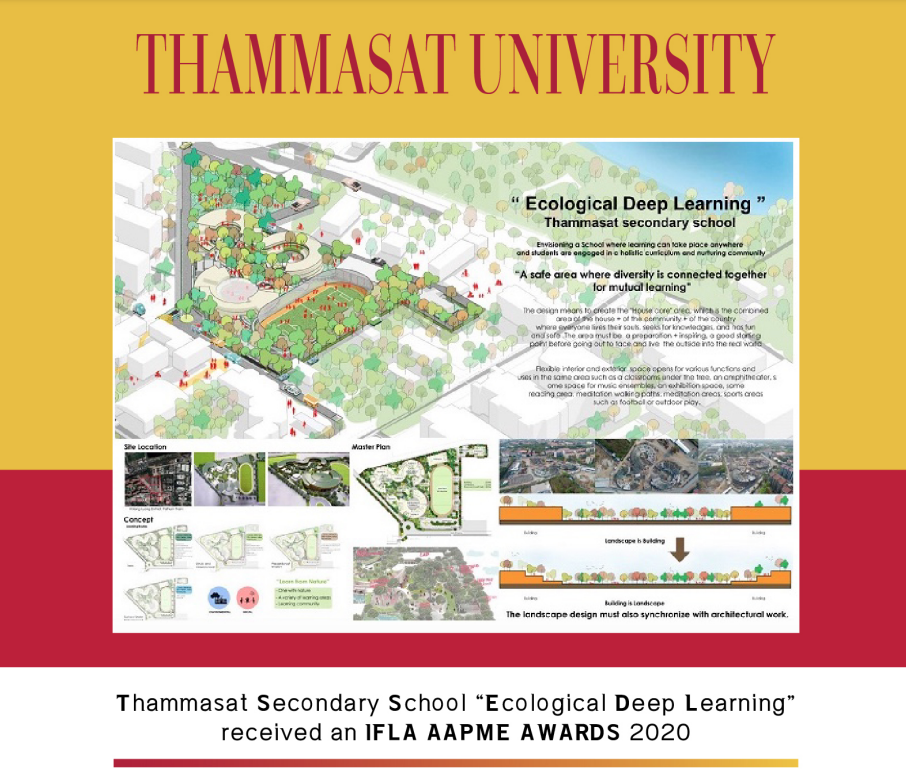
Environmental Design Building – Thammasat Secondary School received IFLA AAPME Awards 2020
Thammast Secondary School is one of the 27 Awards of Excellence for projects that have successfully promoted climate change adaptation, responsible practices, and the pursuit of joint efforts to address isuues of resilience building under the category “Analysis & Master Planning”.
Related articles and websites:
1. Arsomsilp Community and Environment Architect – Thammasat University
2. Arsomsilp Architect – Faculty of Learning Sciences and Education Building
3. Arsomsilp Architect – Thammasat Innovation Hub
4. Arsomsilp Architect – Puey Ungphakorn Centenary Hall, Thammasat University