HIGHLIGHTS
- Tackling Systemic Education Disparities: Through a partnership between CRISP and the Equitable Education Fund (EEF), Thammasat utilized econometric modeling across four key pillars—personnel, progressive budgeting, digital learning, and student reintegration—to provide central authorities with an empirical basis for restructuring national education budgets and interrupting intergenerational poverty.
- Driving Regional Connectivity and Supply Chain Hubs: Led by the Faculty of Commerce and Accountancy alongside PMUA, the “Thai Centrality” initiative established actionable logistics frameworks across five domestic economic corridors and eight regional trade partners, equipping planning bodies with structural roadmaps to cut freight costs and connect local economies to global networks.
- Guiding Healthcare Decentralization: The College of Interdisciplinary Studies, supported by HSRI, examined the transfer of sub-district health-promoting hospitals to Provincial Administrative Organizations across 11 pilot provinces, delivering compliance frameworks, data dashboards, and coordination tools to safeguard accessible primary healthcare during administrative devolution.
Sustainable governance and systemic resilience require public policy frameworks anchored in rigorous empirical investigation. As Thailand confronts structural socio-economic transformations—ranging from entrenched educational disparities and primary care decentralisation to regional economic realignment—academic institutions provide essential research infrastructure to support state decision-making. Thammasat University actively translates academic inquiry into public administration by continuing to undertake policy-focused research in collaboration with government departments, delivering robust data, institutional models, and statutory strategies that equip national and local authorities to address critical development challenges.
Decoupling Educational Disadvantage: Dynamics of Education Equity Policy
Socio-economic disparity in Thailand remains intrinsically linked to uneven access to developmental opportunities. To formulate structural interventions, the Centre for Research on Inequality and Social Policy (CRISP) at the Faculty of Economics, Thammasat University, executed the “Research Project on the Policy Dynamics of Equitable Education.” This comprehensive investigation was conducted in a formal research partnership with the Equitable Education Fund (EEF)—a statutory state agency operating under the supervision of the Prime Minister.
This policy-focused research investigated and evaluated state interventions across four critical pillars: educational personnel deployment, progressive fiscal budget allocation, digital learning infrastructure, and specialized mechanisms to reintegrate out-of-school children and youth. By synthesizing econometric modeling with longitudinal policy assessments, CRISP delivered actionable data directly to central government authorities. The findings established an empirical baseline for national budget restructuring and targeted policy instruments designed to dismantle systemic barriers and disrupt intergenerational poverty.
Regional Connectivity and Global Supply Chains: The ‘Thai Centrality’ Economic Corridors

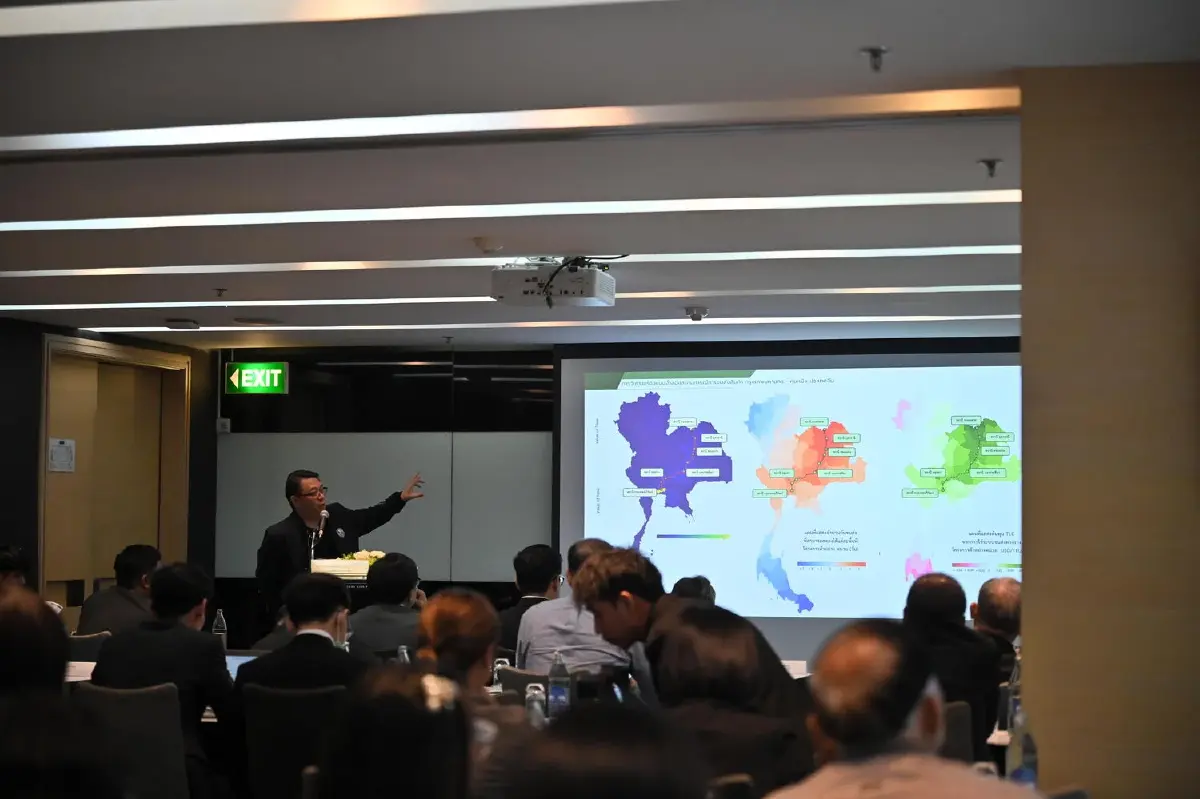
Sustained economic growth depends on transitioning from centralized administration to integrated, area-based economic vitality. Under the leadership of Professor Dr. Ruth Banomyong from the Faculty of Commerce and Accountancy, Thammasat University partnered with the Program Management Unit on Area Based Development (PMUA)—a statutory national research funding agency—to spearhead the “Research Project on Developing Regional Economic Corridors to Establish Thailand as the Hub of Southeast Asia (Thai Centrality).”
Expanding upon baseline special border economic zone data initiated by the National Economic and Social Development Council (NESDC), this policy-focused research designed strategic connectivity frameworks across five primary domestic economic corridors in Thailand.
Operating within a tripartite model uniting government agencies, the private sector, and academia, the research formulated national strategies linking Thailand with eight neighboring and regional trade partners: Laos, Myanmar, Vietnam, Cambodia, Malaysia, Singapore, India, and Sri Lanka. Aligned with major frameworks including the Greater Mekong Subregion (GMS), the Indonesia-Malaysia-Thailand Growth Triangle (IMT-GT), BRICS, and broader Indo-Pacific trade routes, the project produced actionable structural roadmaps across seven domains—focusing on logistics optimization, cross-border trade facilitation, regulatory harmonization, and institutional infrastructure. The outputs provide statutory planning bodies with an evidence-based roadmap to optimize freight cost, transit time, and service reliability, thereby anchoring localized communities into global supply networks.
Devolution of Public Health Services: Structural Models for Primary Healthcare Transfer

The administrative transfer of healthcare responsibilities from central ministries to local government bodies represents one of the most critical governance realignments in modern Thai administration. To guide this transition, the College of Interdisciplinary Studies at Thammasat University, led by Associate Professor Dr. Thatchachalerm Suthiphongpracha and a multidisciplinary research team, executed the “Research Project on Transfer Models of Sub-District Health Promoting Hospitals to Provincial Administrative Organizations for Enhanced Primary Care Access.” The study was commissioned and funded by the Health Systems Research Institute (HSRI)—a statutory autonomous state research agency operating under the Ministry of Public Health.
Conducted across 11 pilot provinces, this collaborative research analyzed public expenditure regulations under the Ministry of Interior, legal compliance structures, and continuity-of-care (COC) networks. By applying developmental evaluations and field trials of network management, the study delivered operational solutions, including integrated health data dashboards and inter-agency coordination mechanisms for provincial administrators, the Ministry of Public Health, and the Department of Local Administration. The empirical framework guarantees that administrative decentralization directly enhances clinical quality and safeguards accessible, equitable primary healthcare for provincial communities.
Through sustained empirical investigations addressing educational disparity, regional logistics connectivity, and decentralized healthcare governance, Thammasat University demonstrates how higher education directly reinforces public administration. By formalizing rigorous research partnerships with statutory bodies, ministerial departments, and regional governance councils, the university continues to embed evidence-based methodologies into the national policy process, fostering transparent, resilient, and inclusive institutions across Thailand.