Data and Performance
Total Water Consumption from Four Campuses
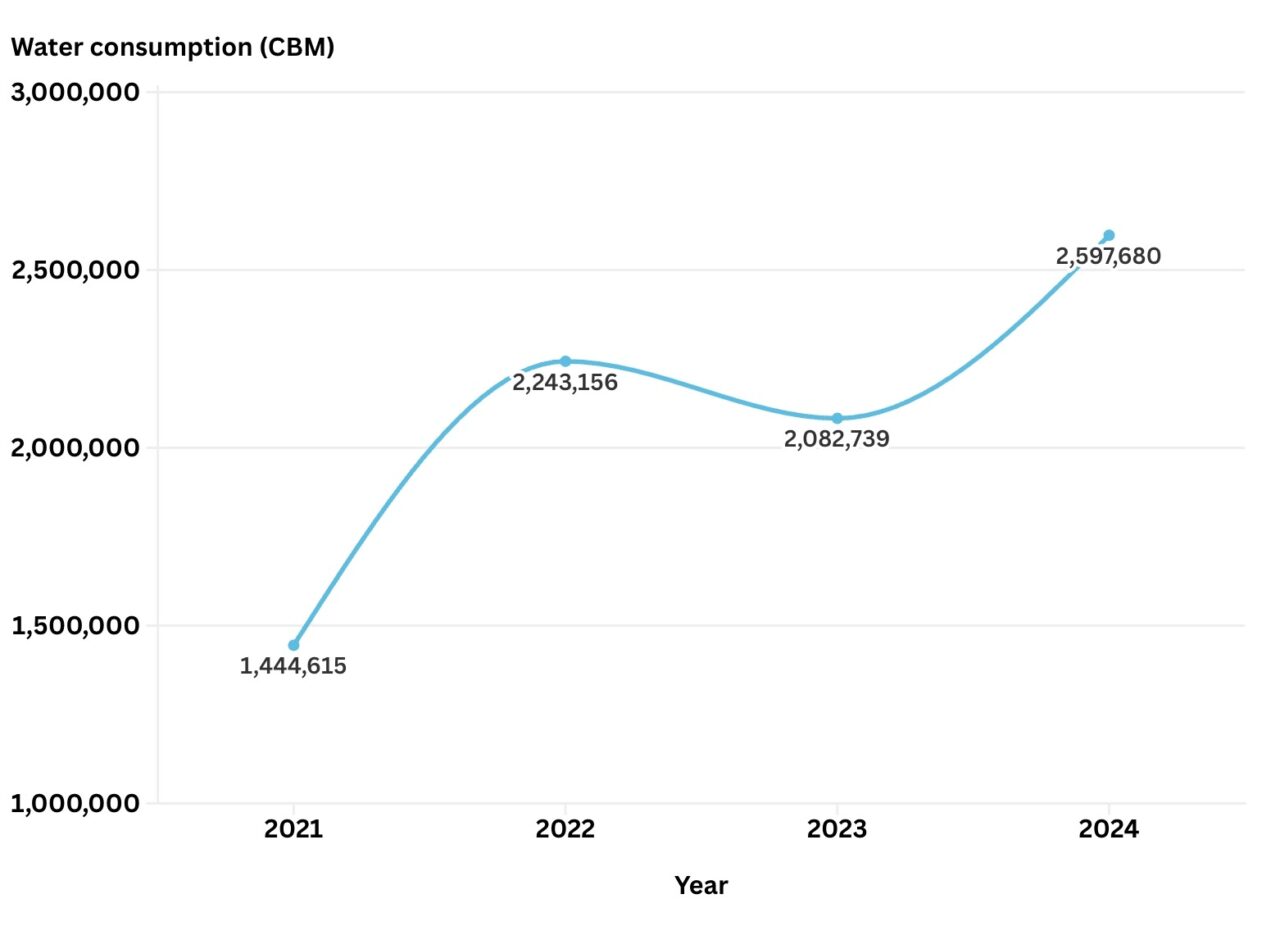
The line graph illustrates water consumption across four campuses from 2020 to 2023. Water consumption increased from 1,444,615 CBM in 2020 to 2,243,156 CBM in 2021, representing a 55.3% rise. It subsequently declined by 7.2% to 2,082,739 CBM in 2022 before rising by 24.7% to 2,597,680 CBM in 2023, reaching the highest level during the period. Overall, water consumption increased by 79.8% from 2020 to 2023. These fluctuations may be associated with changes in campus occupancy and activity intensity.
SDG 6 Scholarly Output of Thammasat University
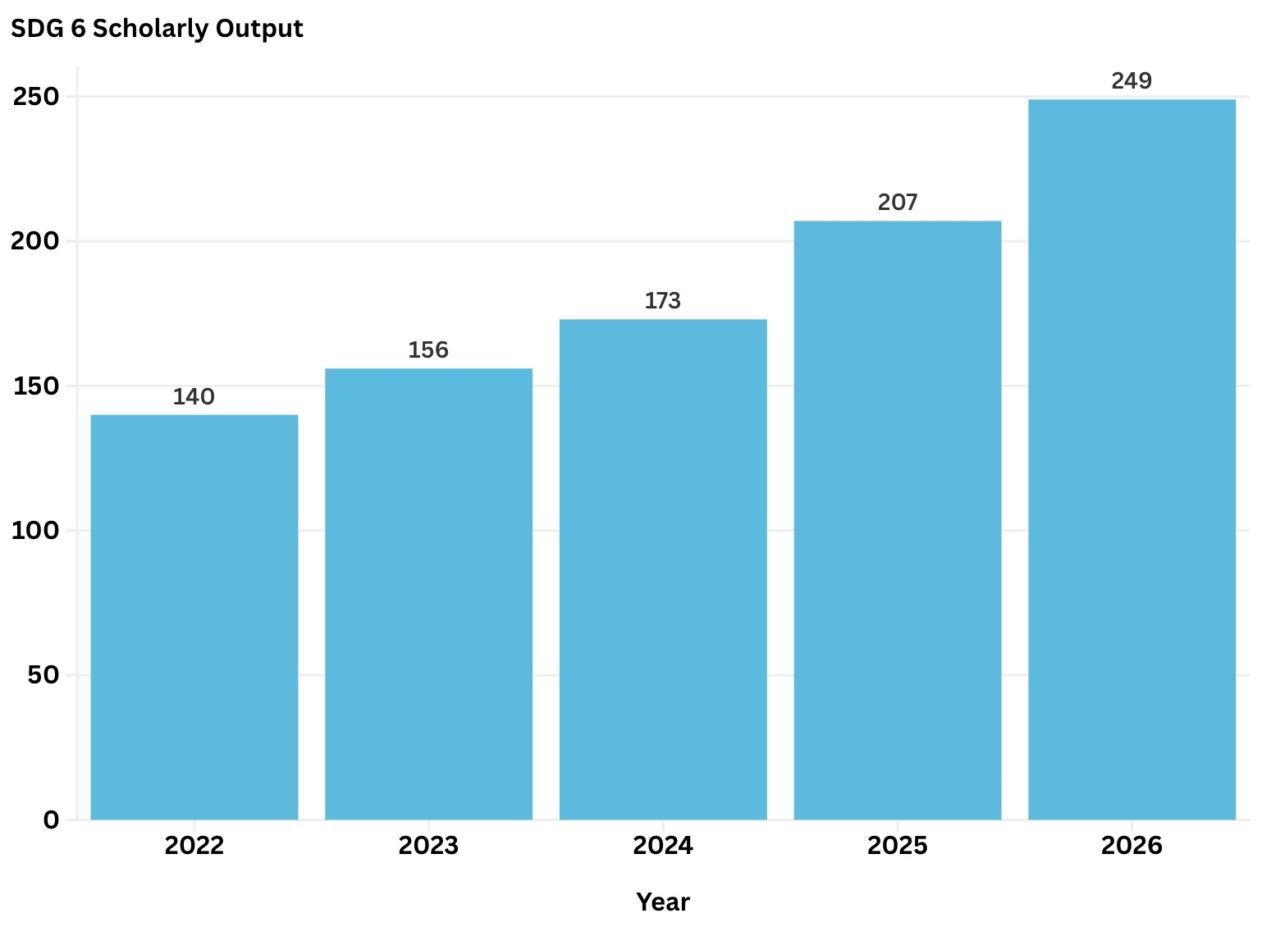
The bar chart illustrates the number of publications related to clean water and sanitation from 2022 to 2026. Research output increased steadily from 140 publications in 2022 to 249 in 2026. The number of publications rose to 156 in 2023 and 173 in 2024, followed by a more pronounced increase to 207 in 2025 and 249 in 2026. This sustained growth indicates an expanding body of research addressing water quality, water resource management, and sanitation, contributing to the advancement of SDG 6.
Research in SDG 6
Thammasat University produced 249 publications on Sustainable Development Goal (SDG) 6, Clean Water and Sanitation, between 2021 and 2025: 44 in 2021, 32 in 2022, 47 in 2023, 55 in 2024 and 71 in 2025. A synthesis of titles and abstracts yields 8 thematic clusters:
- Advanced materials and technologies for pollutant removal (67; 6.3): photocatalysts, adsorbents and membranes that remove dyes, antibiotics and heavy metals.
- Wastewater treatment, reuse and resource recovery (44; 6.3, 6.4, 6.a): microbial fuel cells that treat wastewater and generate electricity; wastewater reuse options for Phuket.
- Sanitation, faecal sludge and hygiene (31; 6.2, 6.b): solar septic tanks and constructed wetlands; faecal sludge management in Bangkok; handwashing on the Thai–Myanmar border.
- Water resources, hydrology and water-use efficiency (25; 6.4, 6.5): rainfall and streamflow forecasting with machine learning; transboundary water allocation in the Kabul River basin.
- Drinking water, groundwater and water-quality health risks (24; 6.1, 6.3): arsenic in groundwater; drinking water quality in rural schools.
- Microplastics, antibiotics and other emerging contaminants (21; 6.3, 6.1): microplastic removal in Bangkok water and wastewater treatment plants; per- and polyfluoroalkyl substances in groundwater.
- Health and socio-economic studies with indirect water links (19): community health, tourism and other studies mapped to SDG 6 by keywords.
- Nature-based solutions, urban stormwater and freshwater ecosystems (18; 6.6, 6.3): stormwater wetlands, low-impact development and lake ecosystems.
The disciplines behind the research
Fourteen Thammasat units contributed, spanning engineering, natural sciences, public health, architecture and planning, the humanities and the social sciences. The anchor units are:
- Faculty of Science and Technology: 33 of the 67 advanced materials publications.
- Faculty of Engineering: 21 of the 31 sanitation, 19 of the 44 wastewater and 12 of the 25 water resources publications, and 81 publications overall, the most of any unit.
- Sirindhorn International Institute of Technology (SIIT): 10 of the 21 emerging contaminants publications.
- Faculty of Public Health: 12 of the 24 drinking water publications.
- Faculty of Architecture and Planning: 13 of the 18 nature-based solutions publications.
The Faculty of Public Health and the Faculty of Engineering co-authored 5 publications; 4 address faecal sludge and onsite sanitation under target 6.2.
Source: SciVal/Scopus, “Publications at Thammasat University within SDG 6: Clean Water and Sanitation (2025)”, 2021–2025 (Scopus data last updated 20 September 2026; exported 27 September 2026).