Thammasat Museum of Anthropology (known as Thammasat Chalermprakiet Museum) is a project which was initiated by the Faculty of Sociology and Anthropology in 1986 when the faculty received artifacts from Ban Chiang excavation project at Ban Om Kaeo and Ban That in Udon Thani, led by Assoc. Prof. Sumitr Pitiphat during 1972-1974. All antiquities and cultural objects exhibited at the museum were compiled by the Faculty of Sociology and Anthropology from those that already belonged to the faculty and those that were donated.
The commissions of Thammasat Museum of Anthropology are to preserve and exhibit artefacts for studying, researching and circulating knowledge that facilitates the comprehension of different characteristics of humanity and the diversity of their culture and interaction with the world through the observation of cultural artefacts. The preservations are done through the exhibition of museum objects, online exhibition and video, creation of three-dimensional photographs of objects, academic seminar, and documentary.
- Thammasat Chalermprakiet Museum – Facebook
- Thammasat Chalermprakiet Museum – Website (Thai)
- Thammasat Chalermprakiet Museum – Website (English)
Exhibitions: Museum Exhibitions
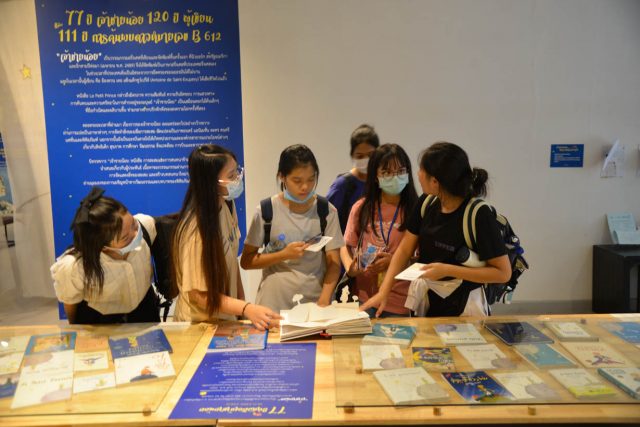
Thammasat Museum of Anthropology is open to the public with no entry fee. It exhibits cultural heritage from different part of Thailand. The exhibitions include display of folk, regional, and national cultural heritage, both at the museum and as an online exhibition, ad-hoc and ongoing.
2024 Key activities opened to the public with no entrance fee were such as:
Displays or exhibitions of folk, regional, and national cultural heritage
Primates and Me: Learning about Primates, Understanding Humans (Primates and Me: เรียนรู้วานร เข้าใจมนุษย์) opened on June 15, 2024, at the Khao Yai National Park Tourist Service Center. This exhibition was developed by Thammasat Museum in collaboration with the Khao Yai Tourism Association, Khao Yai National Park, the Petrified Wood Museum, and other partners. The opening event also included a seminar titled “Primates and Me with World Heritage: Learning about Primates, Understanding Humans in a World Heritage Area”. The key objective of the exhibition and seminar was to serve as a significant starting point for tourists and local inhabitants to learn about primates, thereby fostering self-understanding and comprehension of other living things in the area, ultimately leading to sustainable coexistence.
Sumit Pitipat (1943-2024): Passing on and Inheriting “Cultural Heritage” (สุมิตร ปิติพัฒน์ (2486-2567): การส่งต่อและสืบทอด “มรดกวัฒนธรรม”) is an exhibition that focuses on the transmission and inheritance of cultural heritage. The Ang Thong Provincial Human Resources Management Group visited this exhibition as part of a provincial project aimed at developing creativity and innovation. The museum director, Dr. Udomlak Hoontrakul, welcomed the group and provided a guided tour. This exhibition was also viewed by attendees of the 3rd National Academic Conference on Museums and Cultural Heritage held in September 2024.
Dialogue Between Humans (Dialogue of Humanity: บทสนทนาระหว่างมนุษย์) is a rotating exhibition that was viewed on September 16, 2024. Along with the Sumit Pitipat exhibition, visitors from the Ang Thong Provincial Human Resources Management Group toured this display and were able to learn about cultural stories through artifacts housed in the open storage area of the museum.
Online Exhibitions
The Thammasat University Museum (พิพิธภัณฑ์ธรรมศาสตร์เฉลิมพระเกียรติ) presented a specific online exhibition focusing on a significant national ceremony. This online exhibition was titled “พระราชพิธีพืชมงคลจรดพระนังคัลแรกนาขวัญ ขวัญแรกและกำลังใจเกษตรกรไทย” (The Royal Ploughing Ceremony).
Another key project was the online exhibition titled “ออกพรรษา: วิถีชีวิต ประเพณี” (End of Buddhist Lent: Way of Life, Tradition). The Thammasat University Museum encouraged viewers to read this material following the completion of the Buddhist Lent period. Notably, this online exhibition was created by students studying in the Faculty of Sociology and Anthropology at Thammasat University. A unique URL was provided for access to this student-led exhibition.
The museum also facilitated an important scholarly online activity, specifically an online seminar related to the concepts of exhibitions and museology. This seminar, hosted by the Cultural Materials Laboratory (ห้องปฏิบัติการทางวัตถุวัฒนธรรม) of the museum, invited curators, museum professionals, and interested members of the public to join. The discussion featured Professor Adam Kuper, the author of “The Museum of Other People: From colonial acquisitions to cosmopolitan exhibitions,” and Dr. Paritta Chalermpao Koanantakool. The event utilized Zoom for registration and was conducted in English with simultaneous translation into Thai
Ad-hoc or on-going cultural activity
A Phenomenology of Landscape of the Khorat Plateau: An exploration of Buddhist hill and mountaintop sites was scheduled as a public lecture on July 12, 2024, from 1:30 PM to 3:30 PM, taking place at the 4th floor of the Faculty of Social Administration Building at Thammasat University, Tha Prachan Campus. An earlier notice, possibly announcing the original date or scheduling detail, lists a date of June 25, 2024. For those unable to physically attend, the museum intended to stream the lecture live via its Facebook platform.
Trade Routes and Cultural Heritage (เส้นทางการค้าและมรดกวัฒนธรรม) is a comprehensive set of activities running during June–July 2024, organized under a research cluster project. These activities, led by Assistant Professor Dr. Wannaporn Rian-chang, head of the Material Culture Laboratory, include workshops, academic seminars, public lectures, fieldwork, meetings, and exchange discussions. The aim of these ongoing activities is to foster interdisciplinary academic networks and develop teaching potential in the field.
Knowledge and language preservation
Trade Routes and Cultural Heritage (เส้นทางการค้าและมรดกวัฒนธรรม) is a research unit establishment project focused on academic development and network building in the area of trade routes and cultural heritage, operating between June and July 2024. The project is supported by the Faculty of Sociology and Anthropology Research Fund and involves interdisciplinary activities such as workshops, academic seminars, fieldwork, and public lectures. Professor Jonathan Mark Kenoyer from the University of Wisconsin-Madison was invited as the main speaker, funded by the Fulbright Specialist Program. Collaborating academic institutions include the Faculty of Archaeology at Silpakorn University and the Advanced Scientific Instrument Center at Thammasat University.
3rd National Academic Conference on Museums and Cultural Heritage (การประชุมวิชาการระดับชาติ พิพิธภัณฑ์และมรดกวัฒนธรรม ครั้งที่ 3) was hosted on September 5 and September 6, 2024, by the Thammasat Museum in collaboration with several universities and organizations, including Prince of Songkla University, Silpakorn University, and Siam Society. The theme of the conference was “Looking-Reflecting-De-centering in Museum Work, Cultural Heritage, and Archaeology”. The event served as a major forum for knowledge exchange, featuring presentations and discussions on archaeology, museums, and cultural heritage in Southeast Asia, with sessions held in both English and Thai. The English topics specifically addressed “Current issues in Archaeology & Mainland and Maritime Southeast Asian,” “Southeast Asian Museum and Heritage,” and discussions on “De-centering Archaeology, Museum, and Heritage in Southeast Asia.
Online Exhibitions – Knowledge and Languages Preservation
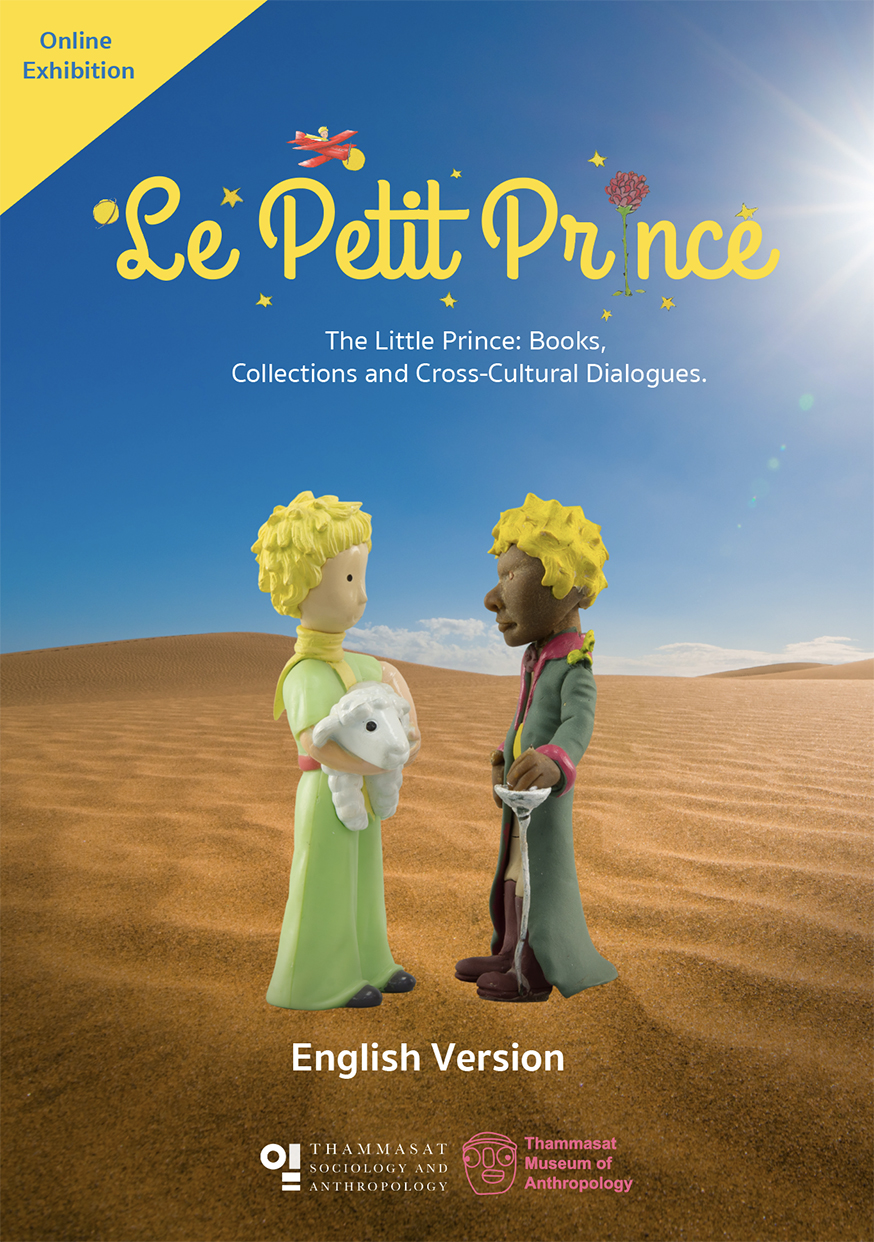
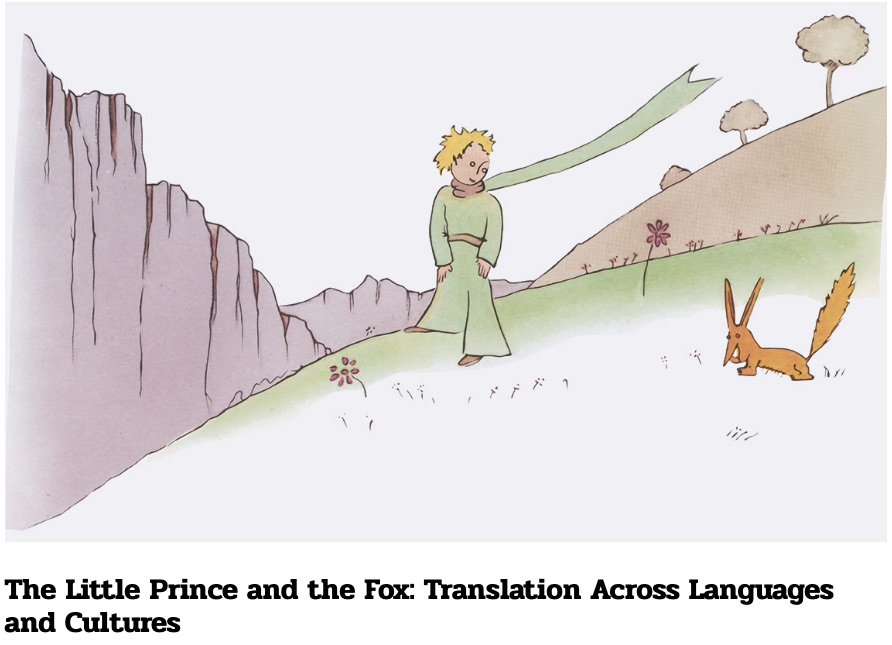
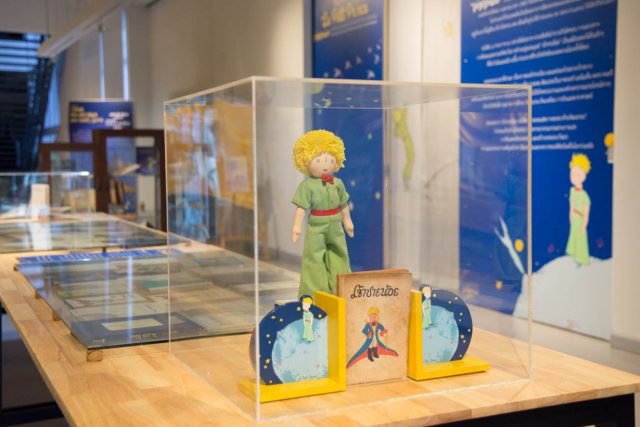
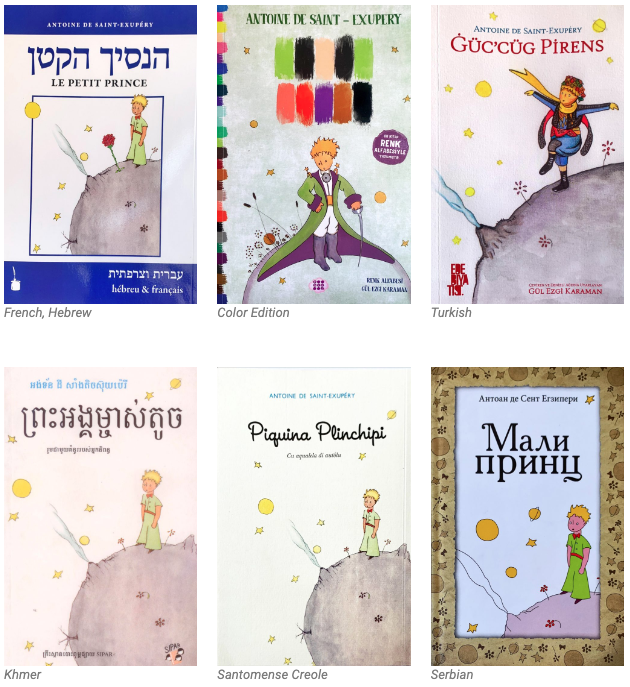
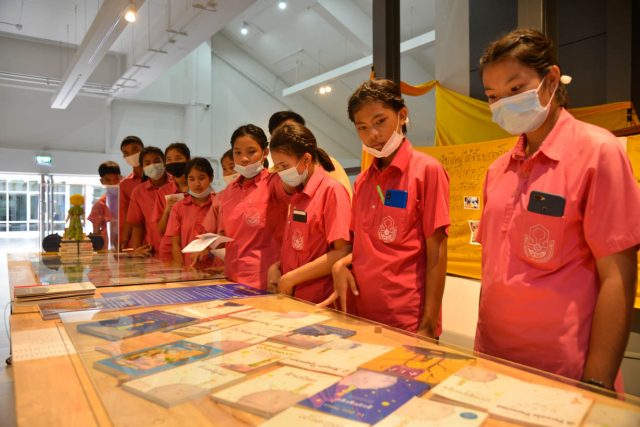
To preserve other traditions, knowledge, and language, the museum stores and record books, videos, and online seminar onto its website. The book “The Little Prince” (Le Petit Prince) is regarded as “The Most Important Work of the Century of France”, written by Antoine de Saint-Exupéry, 1900-1944, has been translated into over 380 languages in 62 countries. The Thai translation was first published in 1969 by Amphan Otrakul and translated into several other expressions.

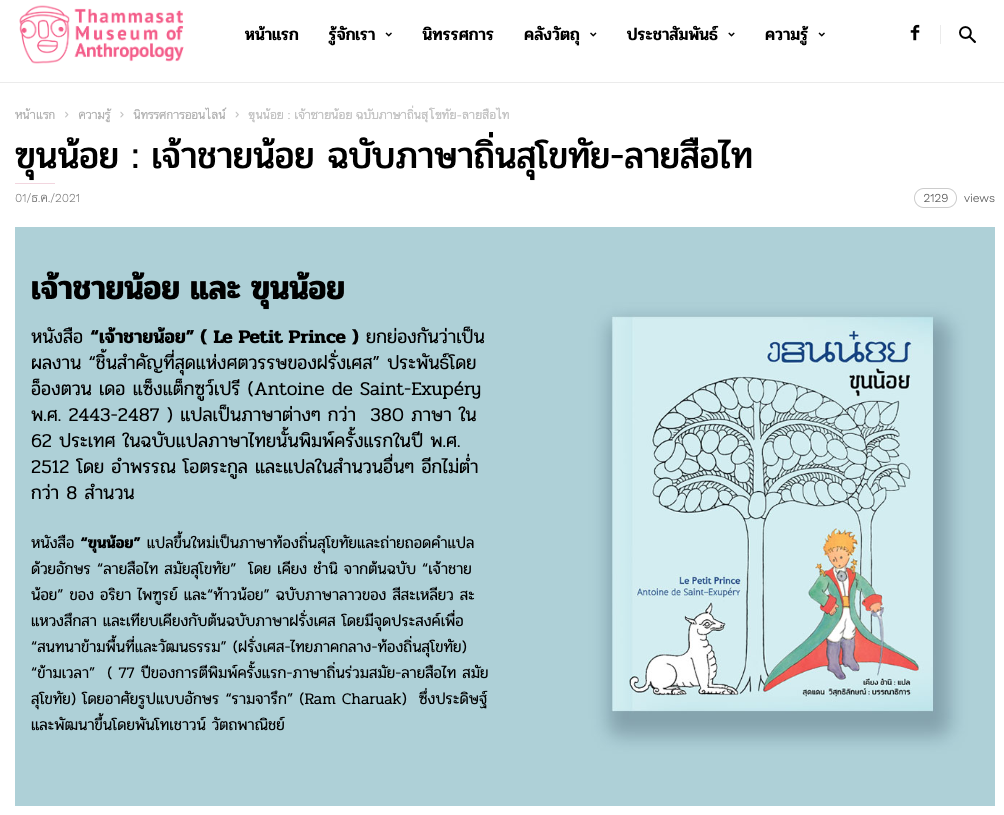
The book “Chun Noi” was re-translated into the local Sukhothai language and transcribed with “Lai Sue Thai in the Sukhothai period” by Khiang Chamni from the original “Little Prince” by Ariya Paitoon and “Thao Noi”, Lao version of Si. Saliaw, Sawaeng. Then the author compared it with the original French with the purpose of “cross cultural dialogues” (French, Central region Thai, and Sukhothai which has a unique accent.
In addition to using Sukhothai words and local dialects, the book “Chun Noi” also use Sukhothai fonts “Ram Chak” with the ancient typeface.
Chun Noi – The Little Prince, Sukhothai Dialect Version
Exhibition: Little Prince – Sukhothai Dialect Version – Lai Sue Thai
Online Exhibition: Little Prince – Sukhothai Lai Sue Thai Dialect Version
Le Petit Prince: Books, Collections and Cross-Cultural Dialogues
https://museum.socanth.tu.ac.th/general/the-little-prince-online-exhibition/
Audio Book: Chun Noi – The Little Price, Sukhothai Dialect Edition

Online Books – Cultural Heritage Preservation of Displaced Communities
The “Mon” people, according to the history, are prosperous people living in the old capital of Myanmar, known as “Raman” people. The immigration of Mon people into Thailand started in the year 1584 AD. Most of the Mon people’s settlements in Thailand are along the rivers such as the Mae Klong River, Chao Phraya River, and provinces such as Nonthaburi, Pathum Thani, and Samut Sakhon.

Mon has its own written and speaking language, influenced by South India script and Thai. The faculty of Sociology and Anthropology, Thammasat University has published a research on “Cultural Heritage: The Creation of Sam Khok “Mon” people in Pathutani Province. The objectives are to understand the heritage of Mon people, especially the ways of living and how their cultures were inherited from generation to generation while they live in Thailand.
Research on “Cultural Heritage: Creation of Sam Khok “Mon” (ชาวมอญ) People
https://museum.socanth.tu.ac.th/update/โครงการวิจัย-มรดกทางวัฒนธรรม-การสร้างตัวตนคนมอญสามโคก-จังหวัดปทุมธานี/
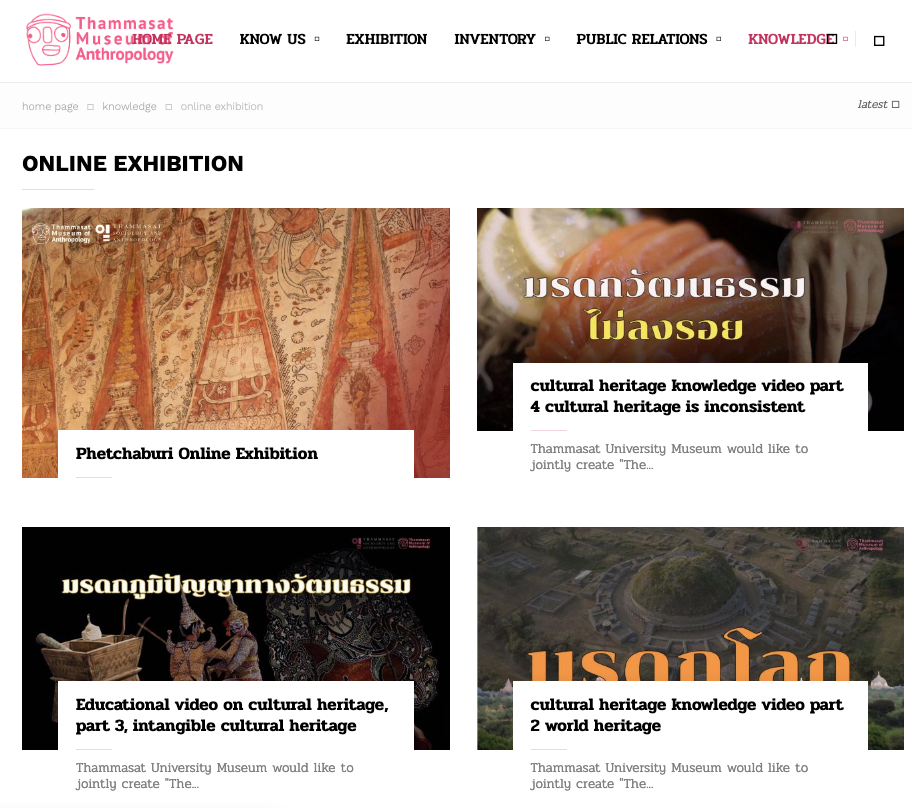
Other videos and online seminars are such as the “Cultural Heritage Knowledge Video (Part 1-4) and many other academic seminars on museums and cultural heritage.
Cultural Heritage Knowledge Video – What is Cultural Heritage?
Creating a three-dimensional images (3D model) and online database to record the artifacts and museum objects
Thammasat Museum in collaboration with the Faculty of Architecture and Urban Planning, Thammasat University has implemented a project to integrate applied technology with museum objects, using a three-dimensional image (3D model) to record the artifacts and objects in the museum, creating a database for future public study and research.
The database provides valuable details such as the appearance, shape, cracks, and damages of the objective which not only benefit the preservation and repairing of these objectives, but also help making it more safe and convenient to access and handle the objects to avoid further damages.
Three-dimensional Photographs of Objects
Museum Objects
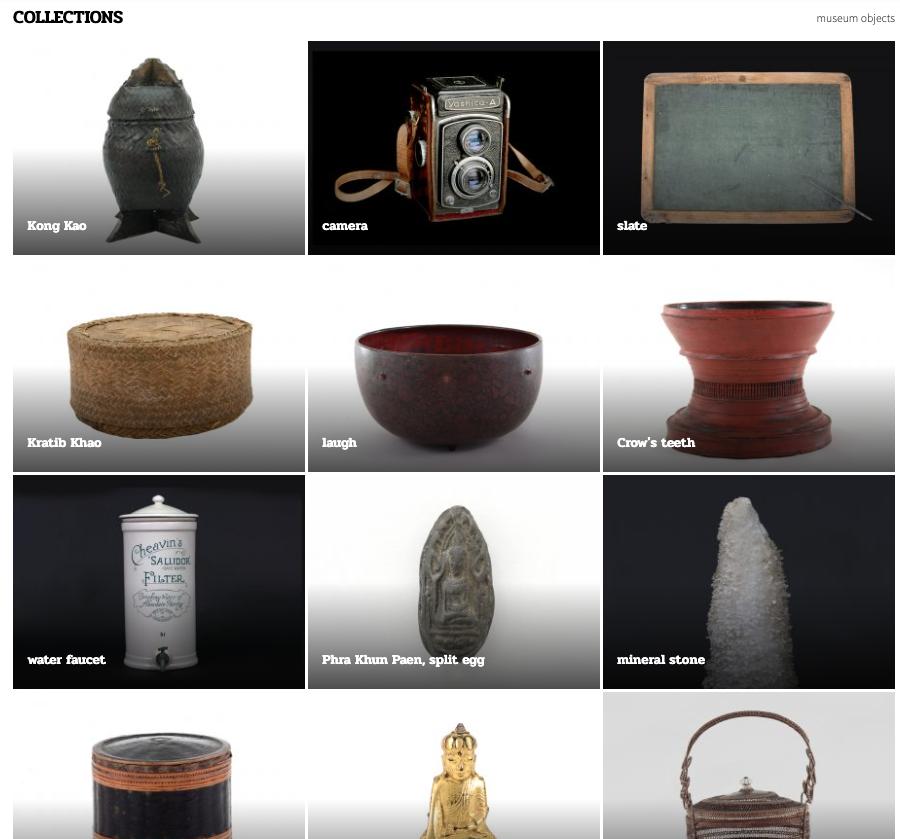
The key mission of the museum is to preserve cultural heritage through displaying artifacts and objects for study and research. Distinctive features of the Thammasat Chalermprakiet Museum are the variety of over 6,000 objects, the variety of material types, artifacts from many eras and cultures, millions of years old fossils, antiques, tools and utensils of the past society from the “New Stone Age”, technology, rare objects, strange objects, objects related to religious and beliefs, artifacts and collectibles from the past centuries of the peoples in Southeast Asia.
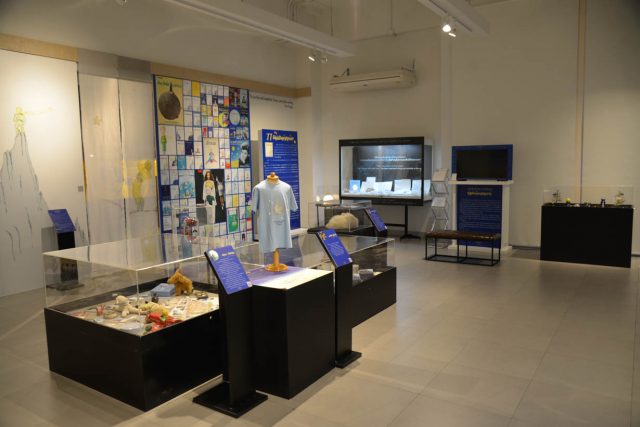
The museum preserves and exhibits its objects and collections through “Open Storage” and “Online Archives” to provide opportunities for students and young generation to understanding the diverse cultural differences of humanity.
“Invite them to learn things and to understand human beings in different dimensions through our inventory”.