Highlights:
- Puey Ungphakorn Centenary Hall & Rooftop Farm: 24,000 m² green rooftop; urban farm and event venue; free public access.
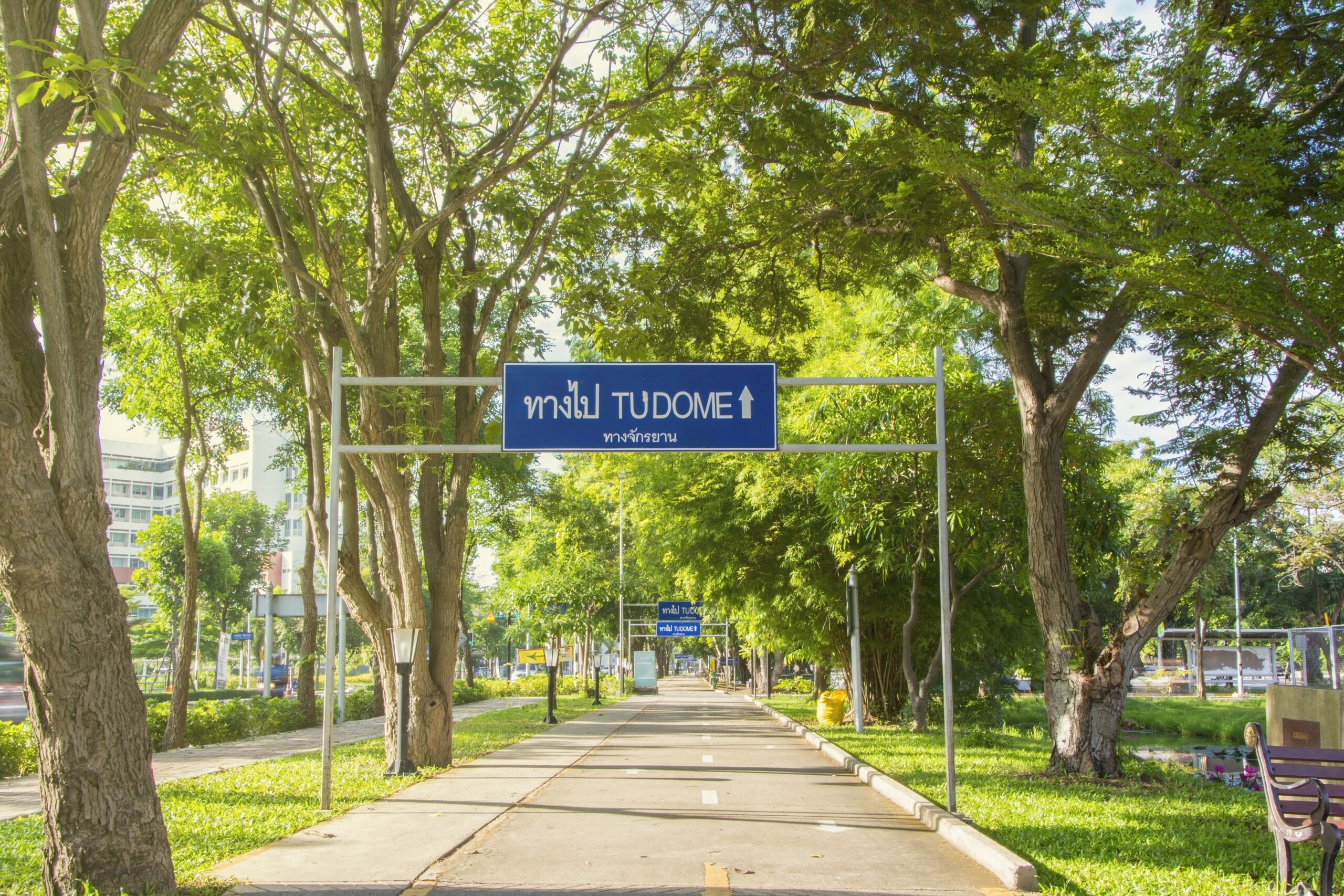
- Thammasat Solar Park: 95,000 m² with 800 m canal; powered by 100% solar energy; cycling and nature classrooms; open space to all.
- Suan Tiam: 8,000 m² square; social space with food outlets; easy access.
- Eco-Forest Park: 100,000 m² ecological area; plant nursery, biodiversity learning; free to enter.
- People’s Park: 20,000 m² open lawn; leisure and community hub; free entry.
- Khok Nong Na: 32,000 m²; Lampang Campus’s ecological conservation and restoration; free public access.
Green spaces of Thammasat community refer to areas with big trees, which are important for ecological balance. The on-campus green spaces are for 3 main purposes, which are for public activities and festivals, for recreational activities, and for ecological conservation and restoration.
Rangsit Campus
Green Space – All Public Spaces at Thammasat Rangsit Campus
1. Puey Ungphakorn Centenary Hall and Park (Rooftop Farm)

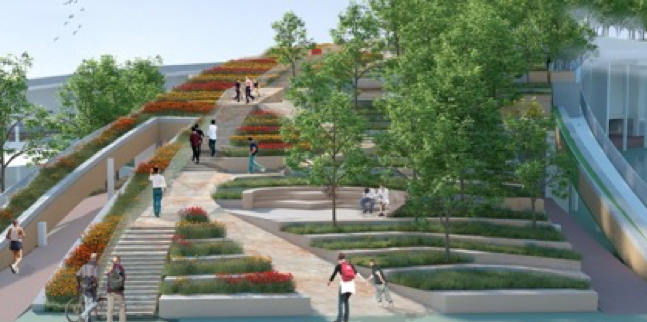
An H-shape building with slopes resembling a giant mound, specifically designed to be environmentally friendly, equipped with a variety of energy-saving innovations. At the top of the hall is Asia’s largest Green Roof Urban Farm, which has the area of about 24,000 square meters. This green roof has a sustainable water management system that endlessly reuses rainwater to cultivate organic vegetables for use at the University’s canteens.


The 7,000-square-meter organic plots on the Green Roof is open for Thammasat students, faculty, staff, and the public to plant organic vegetable and crops for consumption and for sale to the University’s canteens with the aim to contribute to a change to Thailand’s agricultural style to sustainable agriculture. Besides serving as an educational space on sustainable, organic, urban farming, this 24,000-square-meter area can also be used for festivals, social events, and recreational activities.

People’s Park is a 20,000-square-meter lawn that is easily accessible by the public. The nearby parking lots make this field a popular destination especially in the evening for various activities, such as pet walking, exercising, or enjoying the landscape. This integration of education, agriculture, and leisure epitomizes Thammasat’s effort to inspire change towards sustainable urban living.
Access is open to both the university community and the general public free of charge. All visitors are welcome.
For more information on Puey Ungphakorn Centenary Hall and Rooftop Farm, please visit these websites.
1. Puey Centenary Hall
2. Puey Park for People and Sustainability
2. Solar Park
Thammasat Solar Park is a public park that was established with the concept to utilize renewable energy in a green open space. Solar Park is a 95,000-square-meter green space with a 20-meter-wide canal that is more than 800 meters. On both sides of the canal are big tree corridors and pedestrian walkways wide enough to accommodate jogging and running. The waterfront pavilions and the open space can be used for festivals, social events and other recreational activities.

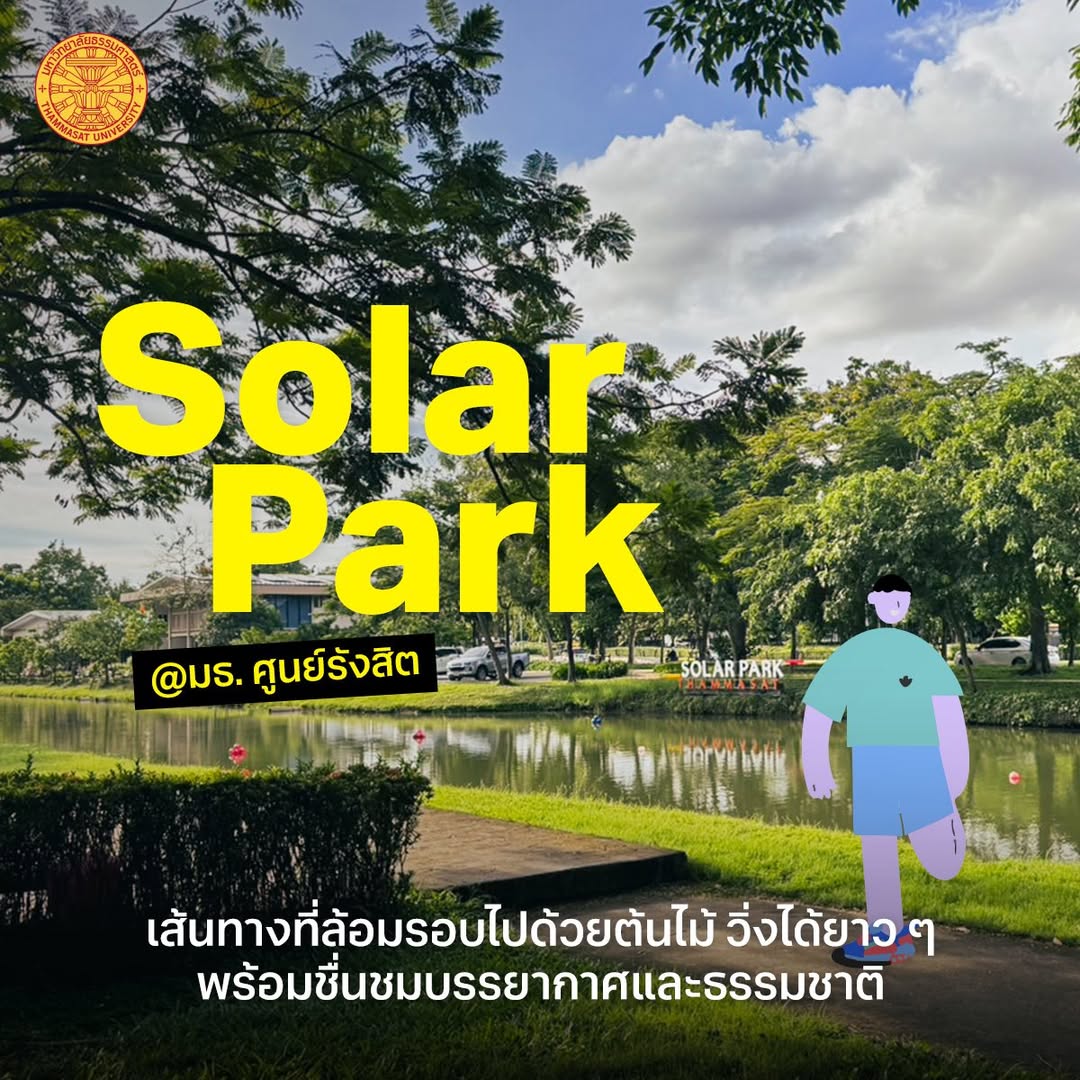
Thammasat Solar Park remains accessible year-round, welcoming the public at no cost, embodying Thammasat’s role as a leader in sustainability education.
Thammasat University opened a public park “Thammasat Solar Park” for the local community, developed by applying renewable energy technologies for urban areas. Thammasat Solar Park is a public park that was established with the aim to utilize renewable energy in a green open space. Besides the direct benefit in terms of increasing clean energy usage, the Solar Park also serves as a recreational green open space that can educates the visitors on the importance of clean energy and introduces them to clean energy innovations.
Thammasat Solar Park is the first public park in Thailand that uses 100% renewable energy from solar energy.
- The lighting system of the 800-meter-long bicycle track completely powered by solar energy from 60 solar panels with individual power rating of 60-watt serves as a model for solar energy use in urban areas.
- Electricity from the solar panels is used to power 600-watt LED decoration lights on the central sculpture of the Solar Park and around the outdoor activity space. This serves as a model for the design of outdoor decoration lights that completely rely on renewable energy.
- Solar energy systems on the roofs of three nature classroom buildings and the roof of the waterfront terrace generate a total capacity of 5,000 watts of clean energy. The clean energy supporting the footpath lighting in the park, provides electricity in to the three nature classroom buildings, waterfront terrace, waterfront recreational area, and the activity space, and powers the water pumps in the Park.
- Three sets of solar energy systems generate 2,500 watts of clean energy that powers lamps along the footpaths and provides lighting for the nearby sculptures, and for the water pumps used in the Park.
- Energy-efficient lamps for the footpaths in the park with creative and beautiful design that can be used in other areas of the University in the future.
Please visit our sustainability website for more information on Thammasat Solar Park.
https://sdgs.tu.ac.th/2021/11/19/thammasat-solar-park-the-first-100-renewable-energy-public-park-in-thailand/
https://sdgs.tu.ac.th/2021/11/19/solar-energy-educational-programs-for-community/
3. Suan Tiam Suan
Located at the heart of the Rangsit Campus between three prominent faculty buildings, Suan Tiam serves as a lively communal square, covering approximately 8,000 square meters. This space is popular among students who visit for quick breaks or social interaction, as well as for its many small food and beverage outlets. Suan Tiam combines greenery with convenience, offering shaded seating and open views that encourage relaxation amidst academic life. While it functions primarily as an informal meeting and recreation zone, its open access policy ensures that the general public can enjoy its facilities as well.
https://moovitapp.com/index/th/ระบบขนส่งสาธารณะ-สวนเทียม-Bangkok-site_137242104-2401


4. Eco-forest Park
Eco-forest park is a green space with 100,000-square-meter cultivated area. It is used as an educational space for the public to learn about ecological systems as well as plant nursery and cultivation with the aim to raise awareness on ecological conservation and restoration.
Eco-Forest Park is the largest ecological zone on campus, sprawling over 100,000 square meters and dedicated to fostering environmental awareness. Unlike traditional parks, Eco-Forest Park serves as an outdoor classroom where visitors learn about forest ecosystems, biodiversity, and conservation practices. It features a plant nursery and green cultivation areas that simulate natural habitats, creating opportunities for workshops and research in ecological restoration. This park not only enhances the campus’s sustainability profile but also inspires visitors to appreciate and protect urban green spaces. It is freely accessible and frequently used for educational activities, nature walks, and environmental exhibitions.
5. People’s Park
Nestled conveniently within the campus, People’s Park offers an expansive green lawn of about 20,000 square meters. Its open design and proximity to main parking areas make it an ideal gathering spot for students, faculty, and visitors. Throughout the day, the park becomes a hub for light recreational activities such as jogging, exercising, pet walking, or simply enjoying the open landscape. During evenings and weekends, the tranquil setting draws families and locals seeking a well-maintained public space. What makes People’s Park truly stand out is its free access to everyone, reinforcing the university’s commitment to providing inclusive spaces that foster community engagement and wellness.
Tha Prachan Campus
1. Pridi Banomyong Memorial Square
Pridi Banomyong Memorial Square is a memorial space for Professor Banomyong who is a key contributor of Thammasat University. This 5,200-square-meter area is a home to “Dome Organic Garden” which is an organic urban farm for the people to preserve and restore green space in city centers.

Golden Lioness Shrine Waterfront
Golden Lioness Shrine Waterfront is a 2,200-square-meter area for recreational activities. This area which covers a 100-meter stretch along the Chao Phraya River is covered with large trees and open to fresh air, making it a popular destination for relaxing, dining, and enjoying the river view. https://cavinteo.blogspot.com/2022/09/golden-lioness-shrine-thammasat.html


Lampang Campus
When Thammasat University considered expanding the campuses to other provinces, Lampang was recognized as an appropriate choice for the center of education development in the Northern region. Thammasat University Lampang Campus has an area of approximately 584,000 square meters, with more than 60% covered with large trees. Lampang Campus has converted a portion of its campus into an area for ecological conservation and restoration, named “Hybrid Park for Food Security”, which is open to the public with no entry fee.
This park covers an 32,000-square-meter area and is a home to medium and large reservoirs that are connected to all the on-campus canals. The reservoir system can store up to 48,000 cubic meters of water for agriculture and aquaculture all over the campus.
https://www.facebook.com/TULP.pr/posts/1307918689558991/