SDG 9 in Numbers

This bar graph illustrates the number of patents citing research across five academic years, showing a clear downward trend. The number of patents decreased substantially from 151 in 2019-2020 to 63 in 2023-2024 , representing a reduction of 88 patents over this period. The steepest year-over-year decline was observed between 2021-2022 (126) and 2022-2023 (81). This total decline constitutes approximately a 58.3% overall reduction in patents citing research from the starting year.

This stacked bar graph illustrates the Number of academic staff by subject area across five years, categorized into Medicine, STEM, and Arts & Humanities/Social Sciences. While staff in Arts & Humanities/Social Sciences decreased from 493 to 443 , the number of STEM staff increased significantly from 832 in 2019-2020 to 992 in 2023-2024. This represents an overall addition of 160 STEM staff over the period shown , indicating growth in technical areas, while staff in Medicine remained relatively stable, peaking at 1243.
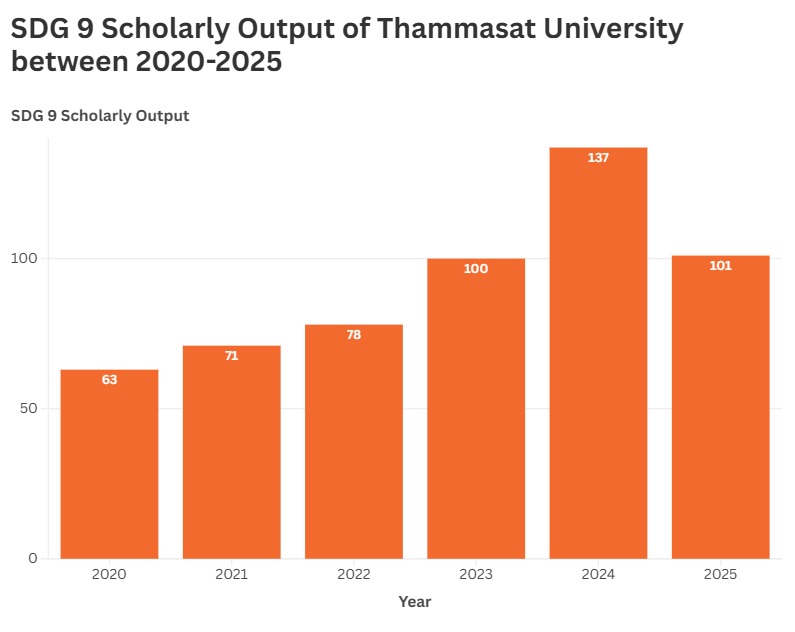
This bar graph tracks the SDG 9 Scholarly Output of Thammasat University from 2020 to 2025, revealing a strong upward trend culminating in 2024. The output nearly doubled, increasing from 63 in 2020 to a peak of 137 in 2024. This 117.5% increase over four years shows significant growth in scholarly contributions related to SDG 9. However, the data projects a reduction to 101 outputs in 2025, a drop of 36 from the prior year.
Research in SDG 9
Based on a detailed analysis of 685 publications from 2020 to 2024, Thammasat University has cultivated a comprehensive and impactful research agenda focused on SDG 9. This body of work directly informs and supports Thailand’s key national strategies, such as the ‘Thailand 4.0’ initiative, by bridging the critical gap between technological innovation and sustainable industrial practice through four primary, interconnected research pillars:
- Digital Transformation of Industry and Supply Chains: A significant area of focus is on Industry 4.0 and Digital Transformation, where research investigates the practical adoption of technologies like Al, loT, and digital twins. The goal is to enhance the competitiveness and efficiency of Thailand’s manufacturing sector by embedding intelligence into production processes. This technological push is intrinsically linked to the university’s work on Sustainable Supply Chains and the Circular Economy.
This research moves beyond traditional logistics to explore how green practices, resource optimization through remanufacturing, and transparent systems using technologies like blockchain can build more resilient and environmentally sound value chains, which is particularly vital for key Thai industries like automotive and agriculture in a globally interconnected market. - Sustainable Infrastructure and Climate Mitigation: The second core research area centers on Sustainable Infrastructure and Advanced Materials. A standout strength within this pillar is the intensive focus on waste valorization—the innovative process of transforming industrial and municipal byproducts, such as fly ash from power plants and sludge from water treatment, into durable, eco-friendly construction materials like green concrete and geopolymers. This circular approach directly reduces landfill waste and the carbon footprint of the construction industry. This ties directly into the high-level pillar of Energy Systems and Climate Mitigation, where the university’s research provides an essential evidence base for national policy. This includes sophisticated modeling of Thailand’s long-term decarbonization pathways, which is critical for guiding strategic investments and policy decisions to meet ambitious net-zero emissions targets, alongside feasibility studies of vital technologies like carbon capture and waste-to-energy systems.
Synthesis and Impact
Across all research themes, the portfolio maintains a strong and deliberate geographical focus on Thailand’s most pressing national challenges, providing targeted analysis for major development projects like the Eastern Economic Corridor. Simultaneously, it addresses systemic issues relevant to the broader ASEAN region. The work effectively engages a wide spectrum of stakeholders, from government policymakers and large manufacturing firms to the small and medium-sized enterprises (SMEs) that form the backbone of the economy, and the local communities impacted by development. This impactful research is amplified by a robust network of both national and international collaborations, solidifying Thammasat University’s position as a crucial knowledge hub that is actively driving the future of sustainable industrial development and innovation in Thailand.
Outreach and Academic Services in SDG 9
In recent years, with a significant concentration of efforts in 2024, Thammasat University has championed SDG 9 by launching over 210 distinct academic and social service initiatives. These programs were strategically focused on advancing Thailand’s industrial capabilities, fostering a robust innovation ecosystem, and promoting the development of resilient infrastructure. The initiatives were broadly organized into three interconnected clusters:
- Digital Transformation and Technological Innovation (approx. 100 initiatives)
The university placed a strong emphasis on preparing Thailand for the digital economy. A vast number of workshops, seminars, and training programs were conducted on cutting-edge technologies. These included extensive training on Artificial Intelligence (Al) and its applications (e.g., ChatGPT, Generative Al), Al ethics, blockchain technology, digital marketing, and data analytics. Faculties such as Engineering, Economics, and the Office of Advanced Science and Technology led these efforts, providing crucial upskilling for students, academics, and professionals. Initiatives also focused on developing digital infrastructure, such as product traceability systems (TRACETHAI.com) and digital governance frameworks for public sector agencies. - Sustainable Industry and Resilient Infrastructure (approx. 50 initiatives)
Thammasat actively supported the modernization and sustainability of Thai industries. The Sirindhorn International Institute of Technology (SIIT) conducted workshops on electric vehicle (EV) technology, while the Faculty of Engineering provided consultancy on implementing Industrial Internet of Things (IoT) and advanced manufacturing technologies for the agro-processing sector. Furthermore, the university contributed to building resilient infrastructure through specialized courses from the Faculty of Social Administration on urban planning and infrastructure management, ensuring that development is both sustainable and serves community needs. - Cultivating a Comprehensive Innovation Ecosystem (approx. 60 initiatives)
A core part of the university’s strategy was to nurture innovation from conception to commercialization. The Office of Advanced Science and Technology was instrumental in providing guidance on intellectual property management, facilitating industry-academia partnerships, and fostering an “Academic Entrepreneur” mindset among researchers. The Puey Ungphakorn School of Development Studies spearheaded programs on social innovation to solve community challenges, while faculties like Architecture and Design offered courses on “Innovation by Design”. These comprehensive efforts, combined with specialized R&D support services like nanoparticle analysis, underscore the university’s role in building a dynamic and competitive innovation landscape for the nation.
Featured Stories
High-Impact Research and Inclusive Innovation
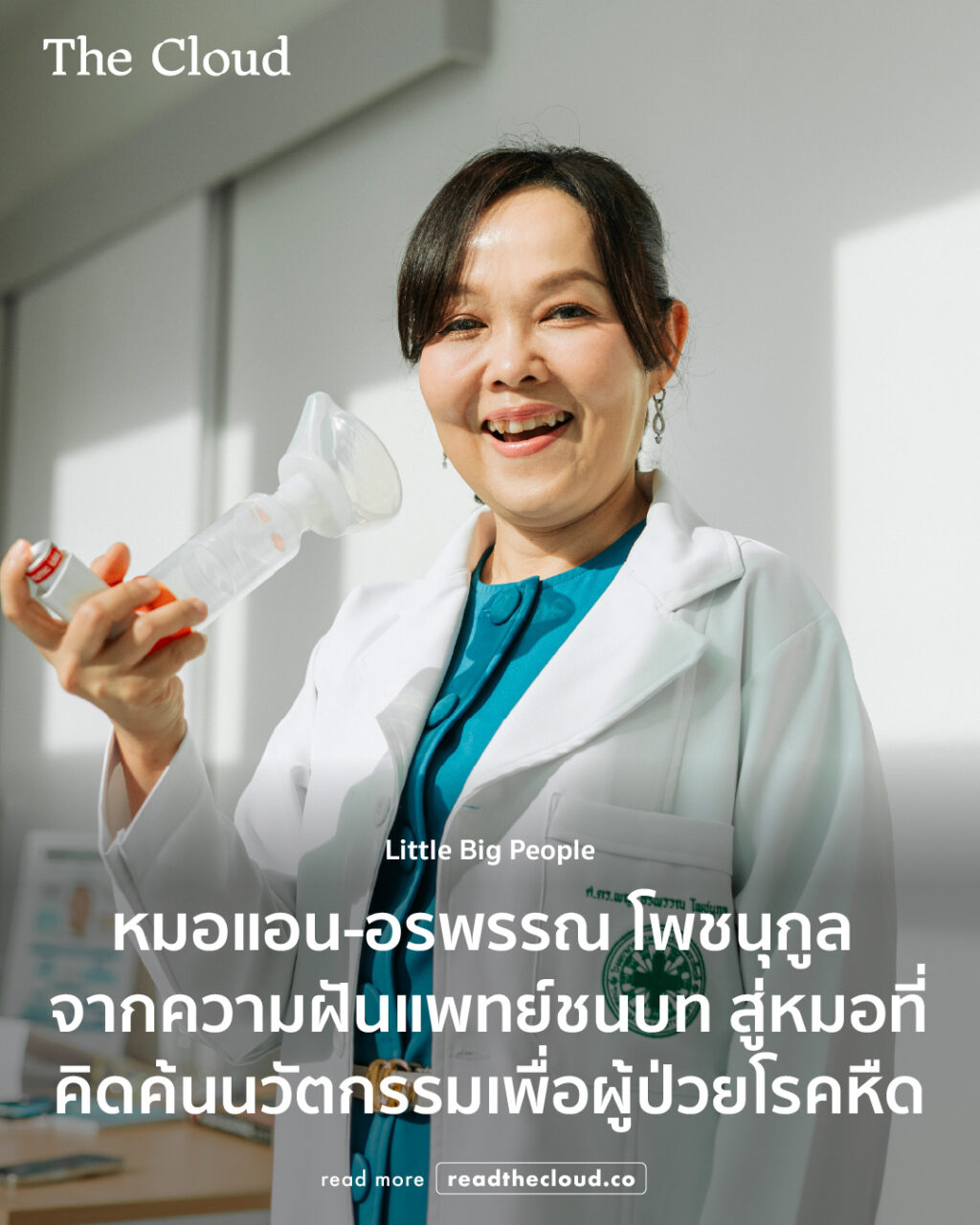
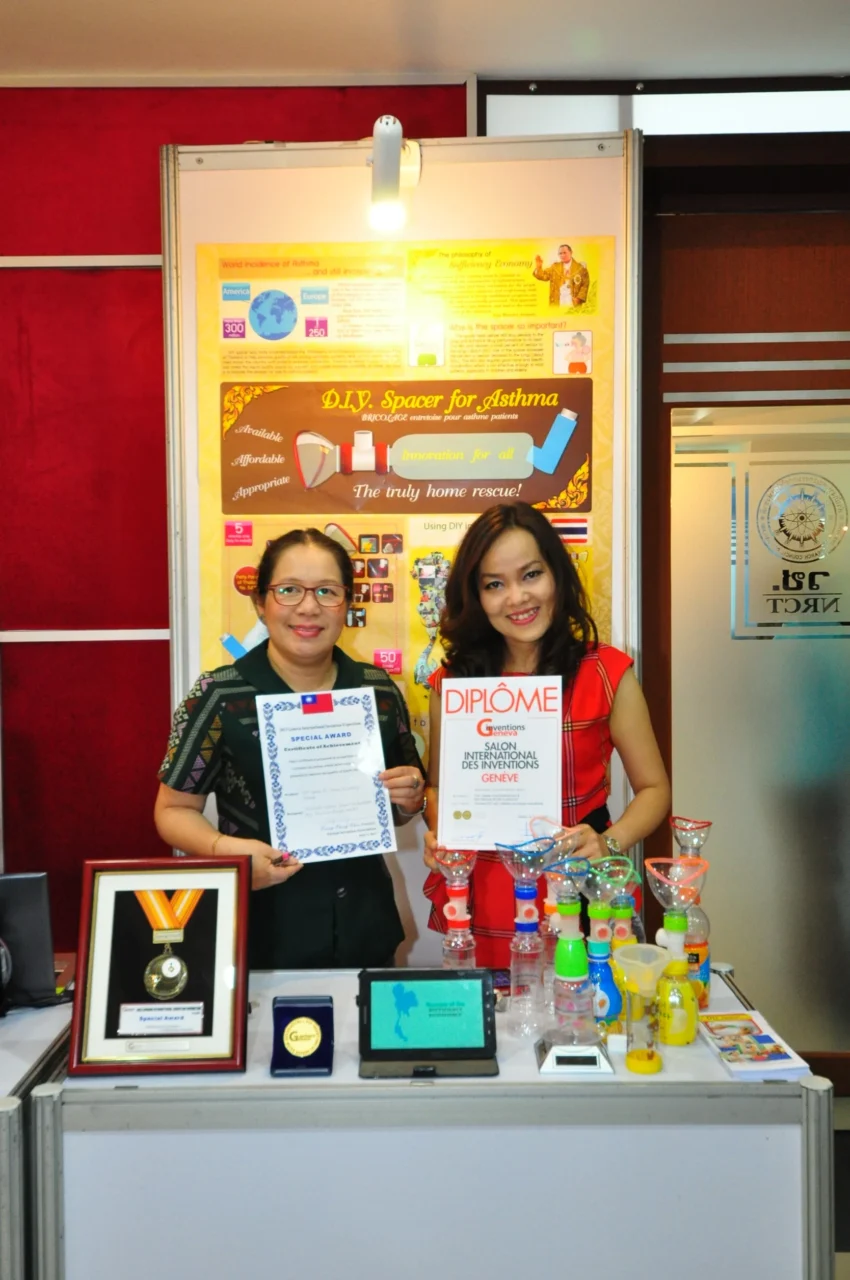
- Flagship Medical Innovation The “Thai Kit Spacer” project (TU-CAAP and partners) is a flagship social innovation: a medical-grade plastic spacer for asthma patients. Impact: It is highly effective, user-friendly, and acts as a direct import substitute, reducing production costs by over 90%. The widespread donation and usage highlight its success in enhancing public health through domestic technology.
- Award-Winning Digital Solutions TU researchers successfully apply digital technology to real-world problems. Examples include an Al-powered skin disease analysis application and an innovative navigation device for the visually impaired, emphasizing inclusive design. Furthermore, TU deployed Al in public services, such as the contracted Al-based Chest X-ray Image Reading System, enhancing efficiency in healthcare infrastructure.
- Global Recognition and Sustainable Materials TU researchers achieved international acclaim, securing awards at events like ITEX. Research also focused on the Circular Economy with projects on sustainable materials, including biodegradable products and innovative food processing techniques (e.g., Water Chestnut Flour).
Digital Infrastructure and Resilience Building
- IoT for Infrastructure Resilience The TU faculty deployed IoT sensor systems in earthquake-prone areas(Magnitude 6.0) to monitor and enhance the resilience of infrastructure against natural disasters, demonstrating the practical application of ICT for public safety.
- Strategic Digital Planning TU entered into multi-sectoral MOUs to accelerate national innovation strategies. Critically, TU served as a consultant for the government on the Digital Development Plan for the Department of Industrial Works, advising on digital implementation, cybersecurity, and traceability systems for Industry 4.0.
- Cultivating Future Skills The university actively develops a future-ready workforce through specialized training programs like “Molecular Docking for Computer-Aided Drug Design” and projects focused on loT and Electric Vehicle (EV) technologies. This includes student successes in national innovation contests, reinforcing the talent pipeline for high-tech industries.