SDG 5 in Numbers
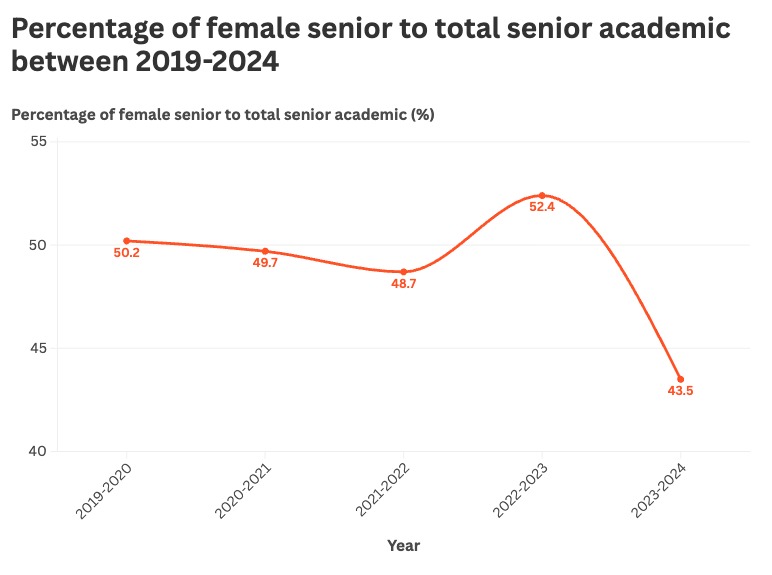
The line graph showing the percentage of female senior academics from 2019 to 2024 reveals a fluctuating yet declining trend. The proportion remained steady at 50% in both 2019-2020 and 2020-2021, slightly decreased to 49% in 2021-2022, then rose to a high of 52% in 2022-2023. However, it sharply dropped to 43% in 2023-2024, marking a 17% decline from the previous year, suggesting a concerning reduction in female representation in senior academic roles.
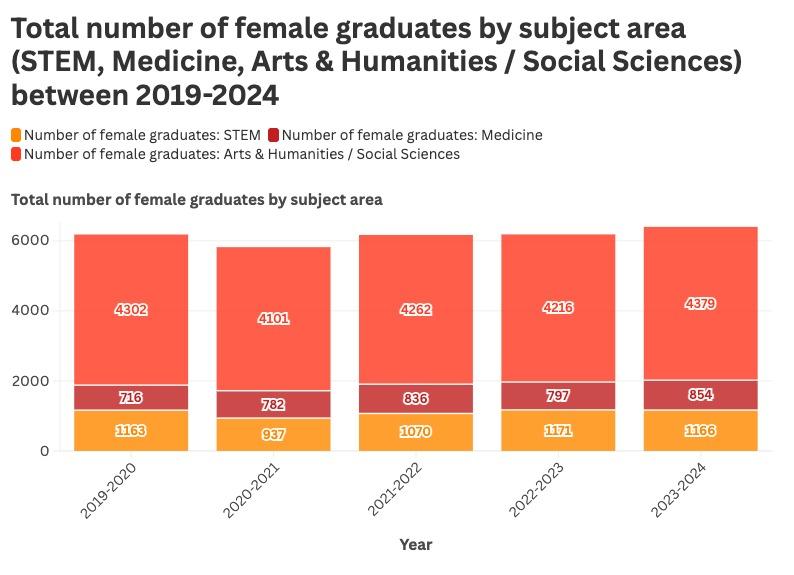
The stacked bar chart illustrating the total number of female graduates by subject area between 2019 and 2024 shows stability with modest fluctuations. The total increased from 6,181 in 2019-2020 to 6,399 in 2023-2024, a 3.5% rise overall. Female graduates in Medicine grew by 19%, while STEM numbers remained consistent. Arts, Humanities, and Social Sciences continued to dominate, though growth was moderate, indicating sustained but slow progress in gender representation across disciplines.
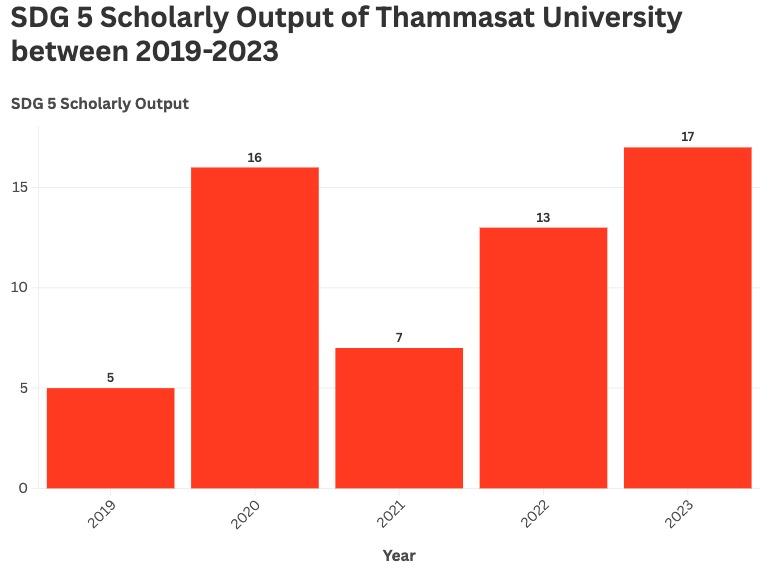
The bar chart depicting Thammasat University’s SDG 5 scholarly output between 2019 and 2023 demonstrates strong overall growth. Publications rose from 5 in 2019 to a peak of 18 in 2023, representing a 260% increase over the period. Despite fluctuations—such as a temporary dip to 7 in 2021—the overall trajectory shows a clear upward trend, reflecting the university’s increasing focus on gender equality research and its expanding contribution to SDG 5-related scholarship.
Research in SDG 5
Based on an analysis of 92 publications from 2020 to 2024, Thammasat University has established a significant research program focused on SDG 5. The university’s contributions are primarily organized into three distinct but interconnected thematic clusters that address health, economic, and social justice dimensions of gender:
- Public Health, Well-being, and LGBTQ+ Studies: This is the most prominent area of research, with a strong and sustained focus on public health issues related to gender and sexuality. A significant portion of the work centers on HIV/STI prevention and care, particularly among vulnerable populations such as men who have sex with men (MSM) and transgender women in Thailand. Beyond clinical studies, the research also delves into the broader social and cultural dimensions of LGBTQ+ communities, exploring topics of identity, social perception, and human rights, as seen in studies on school environments and media consumption.
- Corporate Governance and Economic Empowerment: The second major cluster examines the intersection of gender and the economy. Research in this area investigates the impact of gender diversity in corporate governance, analyzing how women on corporate boards influence executive compensation and social responsibility. This theme also includes a critical focus on economic inequality, with studies directly addressing the systemic causes of the gender wage gap and the “parenthood penalty” within the Thai context.
- Social Justice, Violence, and Inequality: This cluster addresses the systemic challenges of gender-based violence and social injustice. The research covers a wide spectrum of issues, from sexual harassment in public spaces to the trauma of domestic violence. A key characteristic of this work is its focus on the experiences of marginalized groups, including the vulnerabilities of migrant women, the trafficking of sex workers, and the peer victimization faced by gender non-conforming adolescents.
Synthesis and Impact
Across all themes, Thammasat’s research demonstrates a strong primary focus on issues within Thailand, providing crucial, context-specific evidence. This localized expertise is amplified by a robust network of national and international collaborators. The consistent focus on specific, vulnerable populations positions the university as a leading regional authority on the public health dimensions of gender equality and an emerging center for research on corporate gender dynamics.
Outreach and Academic Services in SDG 5
In early 2024, Thammasat University advanced SDG 5 through 6 targeted academic and social service initiatives. These programs focused on empowering women, supporting vulnerable families, and fostering dialogue on gender-related issues through legal education, direct support, and policy advocacy. The initiatives were concentrated into two primary clusters:
- Advocacy, Research, and Policy Dialogue on Gender Issues (approx. 2 initiatives)
A key focus was on generating and disseminating knowledge to address systemic gender inequalities. The Faculty of Sociology and Anthropology hosted a significant workshop titled “5 Years After COVID-19: Voices from Women in Close-Contact Work,” creating a platform to highlight the specific labor, family, and gender challenges women face. Complementing this, the Faculty of Social Administration delivered lectures on child and family welfare policies, contributing to the discourse on creating supportive legal and social frameworks for families, which are foundational to gender equality. - Empowerment through Family Support and Legal Education (approx. 4 initiatives)
The university provided practical support aimed at empowering individuals and families. A flagship project by the Faculty of Social Administration focused on promoting welfare for single-parent families, a group predominantly led by women, through its “Happy Family and Happy Kids” initiative. In parallel, the Institute for Continuing Education and Human Resources conducted public training sessions on family and inheritance law, equipping citizens, especially women, with crucial knowledge about their legal rights. These efforts directly contribute to enhancing women’s autonomy and security.
Through these focused efforts, Thammasat University demonstrated a multi-faceted approach to promoting gender equality, combining academic research and policy discussion with tangible community support and legal empowerment.
Featured Stories
Encouraging Women in Diplomacy and Leadership
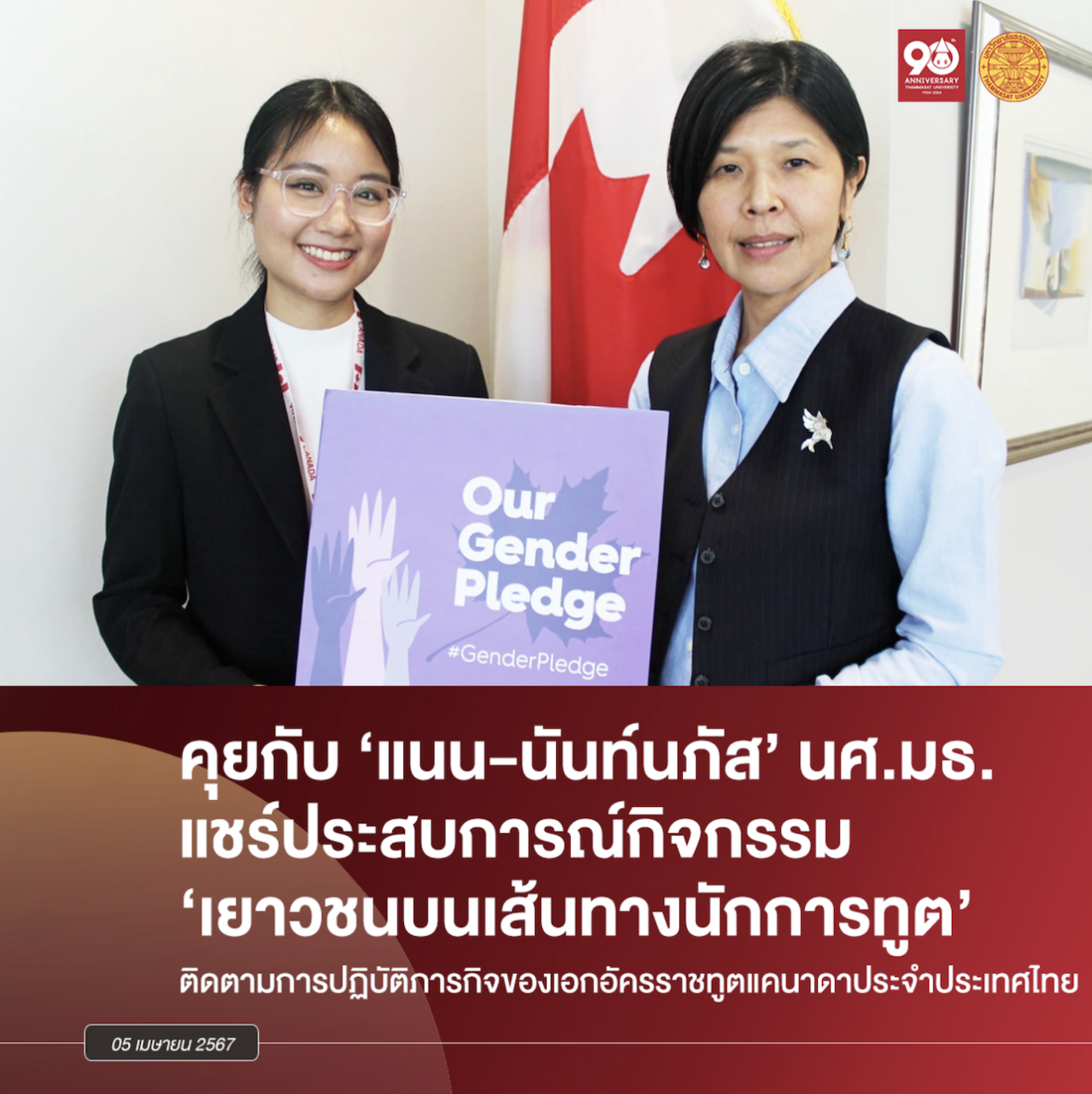
Thammasat University actively promotes the achievements of its female students through national initiatives aimed at nurturing future leaders. One notable example is Nan-Nunthapas Phongwitun, a second-year student in the Spanish and Latin American Studies (HISLAS) program, who participated in the ‘Ambassador for A Day’ program. This initiative allows talented Thai youth to experience the work of United Nations agencies and foreign embassies, inspiring them to pursue leadership roles. Nan shadowed H.E. Ping Kitnikone, Ambassador of Canada to Thailand, attending meetings, a reception at the Australian Embassy, and an International Women’s Day event at UN ESCAP.
Through this immersive experience, she gained insight into the challenges women and LGBTQ+ individuals face in diplomatic careers due to patriarchal structures, while recognizing the growing influence of Women Empowerment networks, which encourage more female and LGBTQ+ leaders to pursue careers in diplomacy and international relations, highlighting the importance of representation and inclusion in global leadership.
Promoting Transgender Inclusion and Gender Equity
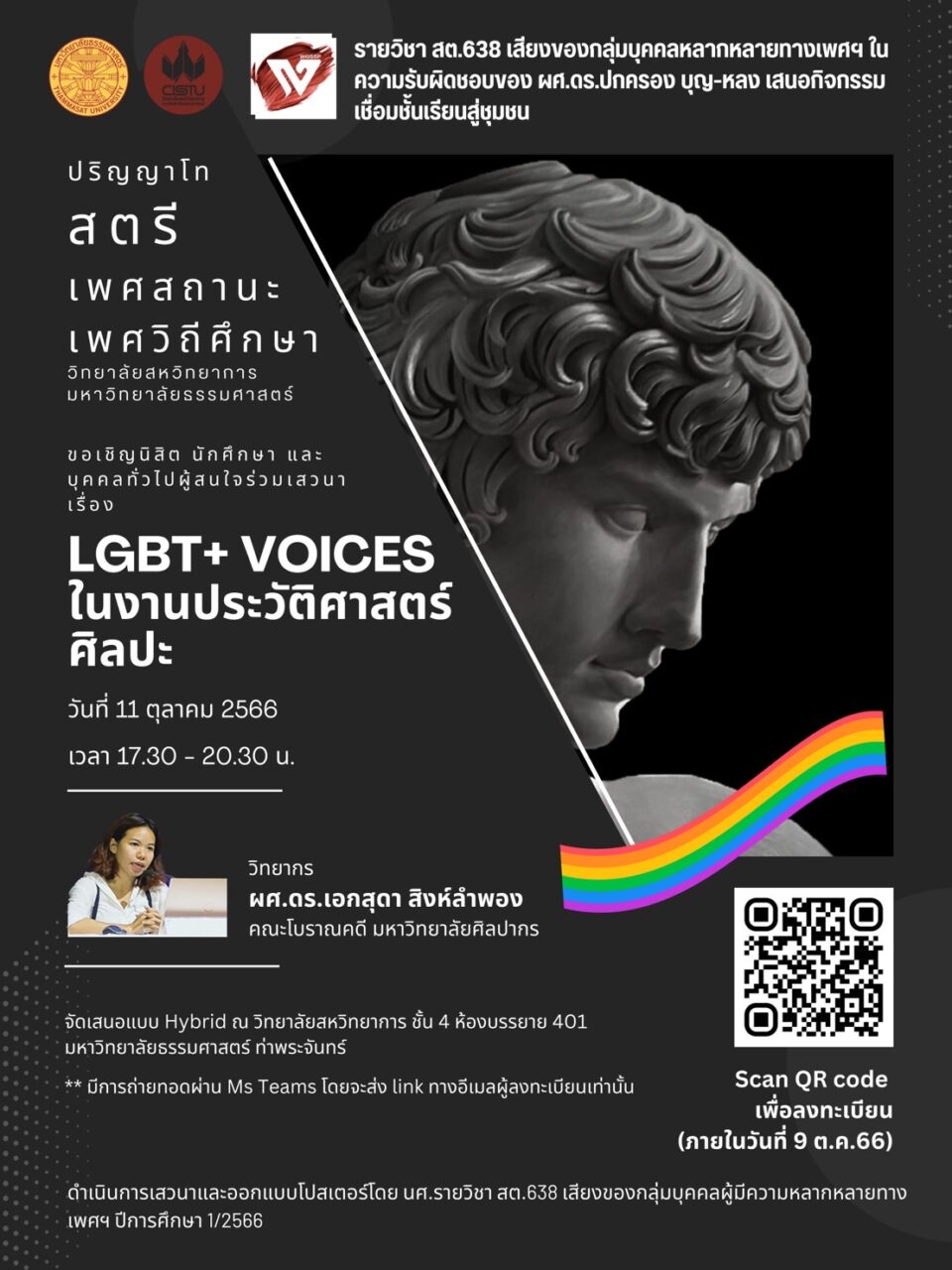
Thammasat University has actively promoted non-discrimination and inclusion for transgender individuals through targeted academic and advocacy initiatives. The Master of Arts program in Women, Gender, and Sexuality Studies (WGSSP) led the way by hosting the hybrid seminar “LGBT+ Voices,” providing a platform for open discussion and validation of diverse gender identities. The university also advocated for legal reform through the PSDS Talk on “Marriage Equality: Gender Recognition Act,” highlighting the importance of securing fundamental rights such as health, education, and employment for transgender and LGBTQ+ individuals. Complementing these efforts, Thammasat launched the Creative Media Production Manual for Promoting Gender Equality, offering guidelines for media that respect gender diversity and foster societal acceptance. Together, these initiatives demonstrate Thammasat University’s commitment to advancing equality, challenging discrimination, and driving systemic change for transgender rights and broader LGBTQ+ inclusion.