SDG 4 in Numbers
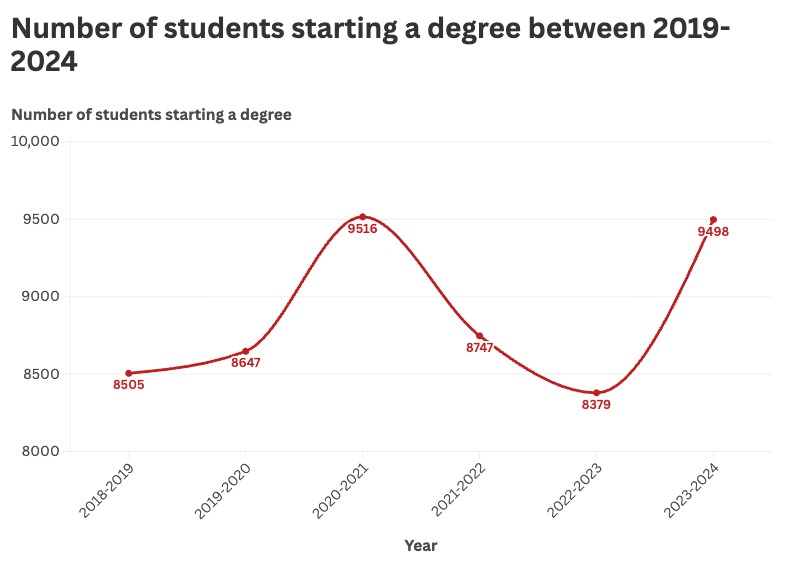
The line graph showing the number of students starting a degree from 2019 to 2024 demonstrates fluctuating but generally positive growth. Numbers increased from 8,505 in 2018-2019 to 9,516 in 2020-2021, a rise of about 12%, likely reflecting improved recruitment or interest in higher education. A decline followed, reaching 8,379 in 2022-2023, possibly due to external challenges such as pandemic effects. However, the sharp rebound to 9,498 in 2023-2024 (up 13%) suggests recovery and renewed student engagement.
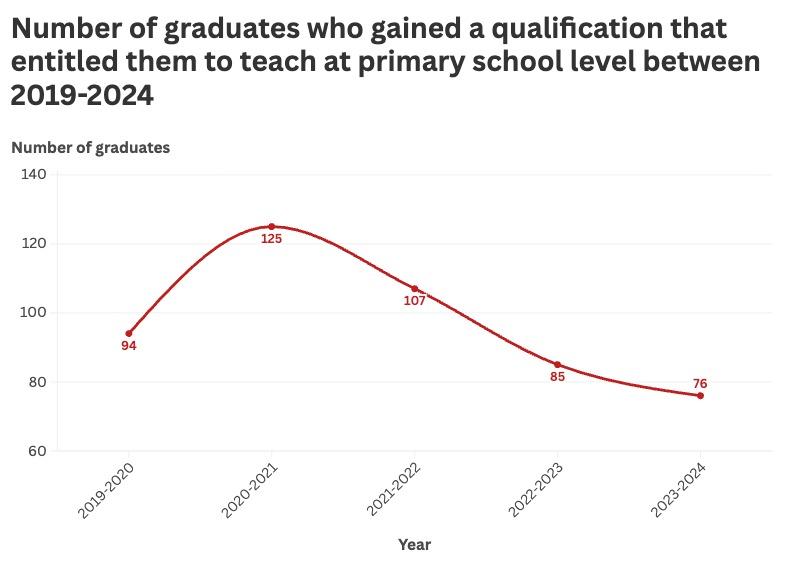
The line graph illustrating the number of graduates qualified to teach at the primary school level from 2019 to 2024 shows an early increase but an overall downward trend. Numbers climbed from 94 in 2019-2020 to 125 in 2020-2021 (up 33%), indicating short-term program success or demand. Yet, a steady decline to 76 in 2023-2024 (a 39% drop from the peak) suggests fewer completions or declining interest in teaching careers over time.
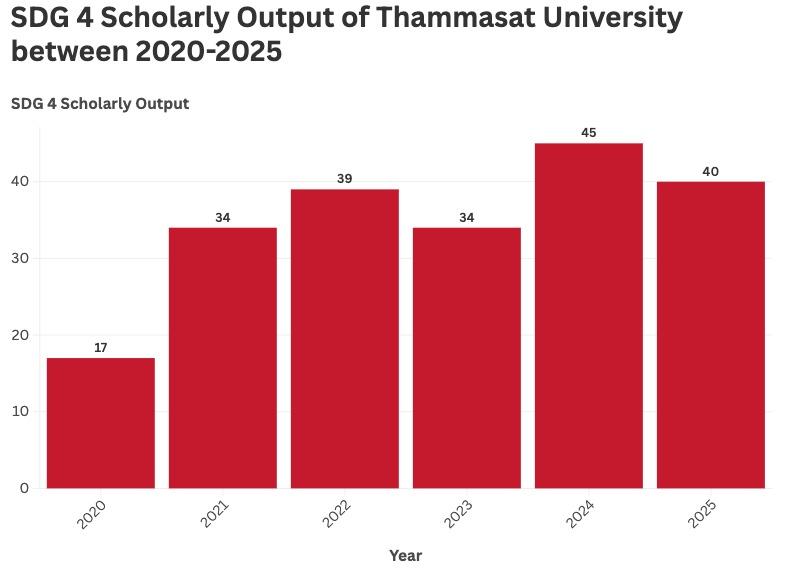
The bar chart depicting Thammasat University’s SDG 4 scholarly output between 2020 and 2025 highlights notable growth in academic productivity. Publications rose from 17 in 2020 to a high of 45 in 2024 (an impressive 165% increase), showing institutional commitment to education-focused research. Although output slightly declined to 40 in 2025, the overall trend remains positive, reflecting a sustained emphasis on advancing SDG 4 goals and expanding research contributions in education and related fields.
Research in SDG 4
Based on an analysis of 230 publications from 2020 to 2024, Thammasat University has demonstrated a significant and multi-faceted research focus on SDG 4. The university’s contributions are organized around five primary thematic clusters, addressing education from technological, pedagogical, and socio-economic perspectives:
- Educational Technology and Language Pedagogy: A major area of research is the integration of Educational Technology and Digital Learning. This includes studies on immersive technologies like virtual and augmented reality for professional training, the effectiveness of online and blended learning models (especially in response to the COVID-19 pandemic), and the use of gamification to enhance student engagement. This is complemented by a strong focus on English Language Teaching (ELT), with research dedicated to improving instructional methods, understanding learner experiences within the Thai context, and advancing teacher development programs.
- Education for Sustainability and Employability: The university’s research also connects education to broader societal and economic goals. The Education for Sustainability cluster includes interdisciplinary work on developing green skills for a changing economy and designing sustainable, inclusive “learning cities.” This theme is closely linked to Skills Development and Employability, where research focuses on aligning education with modern labor market demands, analyzing necessary workforce skills, and promoting frameworks for lifelong learning.
- Specialized Professional Education: A distinct cluster is dedicated to innovations in Health and Medical Education. This research concentrates on improving clinical training through advanced simulations, addressing health equity by examining access to services and training, and enhancing the professional development of healthcare workers to meet complex public health challenges.
Synthesis and Impact
Across these themes, the research portfolio is characterized by a primary focus on the Thai national context while also engaging with regional and global educational issues. The studies address a wide range of stakeholders, from primary school students to professionals in the workforce. This body of work is supported by extensive national and international collaborations, positioning Thammasat University as a key contributor to advancing knowledge and practice in the field of Quality Education.
Outreach and Academic Services in SDG 4
In early 2024, Thammasat University demonstrated a profound commitment to SDG 4, rolling out an impressive 318 academic services and social contribution projects. These initiatives spanned a wide spectrum, from professional upskilling and teacher development to lifelong learning and public sector training, underscoring the university’s role in fostering inclusive and equitable quality education for all. The extensive activities can be summarized into three main clusters:
- Professional Upskilling and Specialized Training (approx. 245 initiatives)
A significant portion of the university’s efforts focused on enhancing the skills of the national workforce across both the private and public sectors. The Faculty of Commerce and Accountancy and the Institute for Continuing Education and Human Resources were key drivers, offering a vast array of courses in business administration, finance, marketing, project management, law, and human resources. Concurrently, the Faculty of Social Administration provided extensive training programs for public sector officials, focusing on social welfare administration, community development, and effective local governance to improve public services. - Teacher and Educator Development (approx. 15 initiatives)
The university placed a strong emphasis on enhancing the capabilities of educators to improve the quality of the national education system. The Faculty of Learning Sciences and Education led targeted workshops for teachers (“Korkarnkru” project) on modern pedagogy, creating meaningful learning experiences, applying positive psychology in the classroom, and integrating digital tools and Al into teaching. These programs aimed to equip teachers with innovative skills to meet the needs of 21st-century learners. - Lifelong Learning, Language, and Cultural Education (approx. 58 initiatives)
Promoting lifelong learning and language proficiency was another cornerstone of the university’s mission. The Language Institute was highly active, offering extensive English proficiency test preparation (TU-GET, TOEIC) and corporate language training. Cultural education was advanced through the Institute of East Asian Studies with Japanese language and cultural immersion programs. Furthermore, initiatives like the “School for the Elderly” and various public seminars underscored the university’s dedication to providing accessible and inclusive educational opportunitiesfor all age groups.
Through this comprehensive portfolio, Thammasat University affirmed its role as a leader in providing high-quality education and contributing significantly to lifelong learning opportunities for diverse communities across Thailand.
Featured Stories
Expanding Equitable Access to Education through the Lifelong Learning Policy
Upholding the founding vision of Professor Dr. Pridi Banomyong to serve as an “Open University of Knowledge,” Thammasat University introduced the Lifelong Learning Policy to promote inclusive, flexible, and continuous learning opportunities for all. The policy reinforces Thammasat’s identity as “The University for the People” and establishes institutional mechanisms to support education across the lifespan
A central component of the policy is the Credit Bank system allowing learners to accumulate academic credits from short courses, reskilling/upskilling programs, and micro-credentials for transfer into degree pathways or professional certifications. This system strengthens national capacity for lifelong learning and enhances social resilience in a rapidly changing labour market.
Building a Knowledge Bridge with Thammasat Library Connecting Research to the SDGS
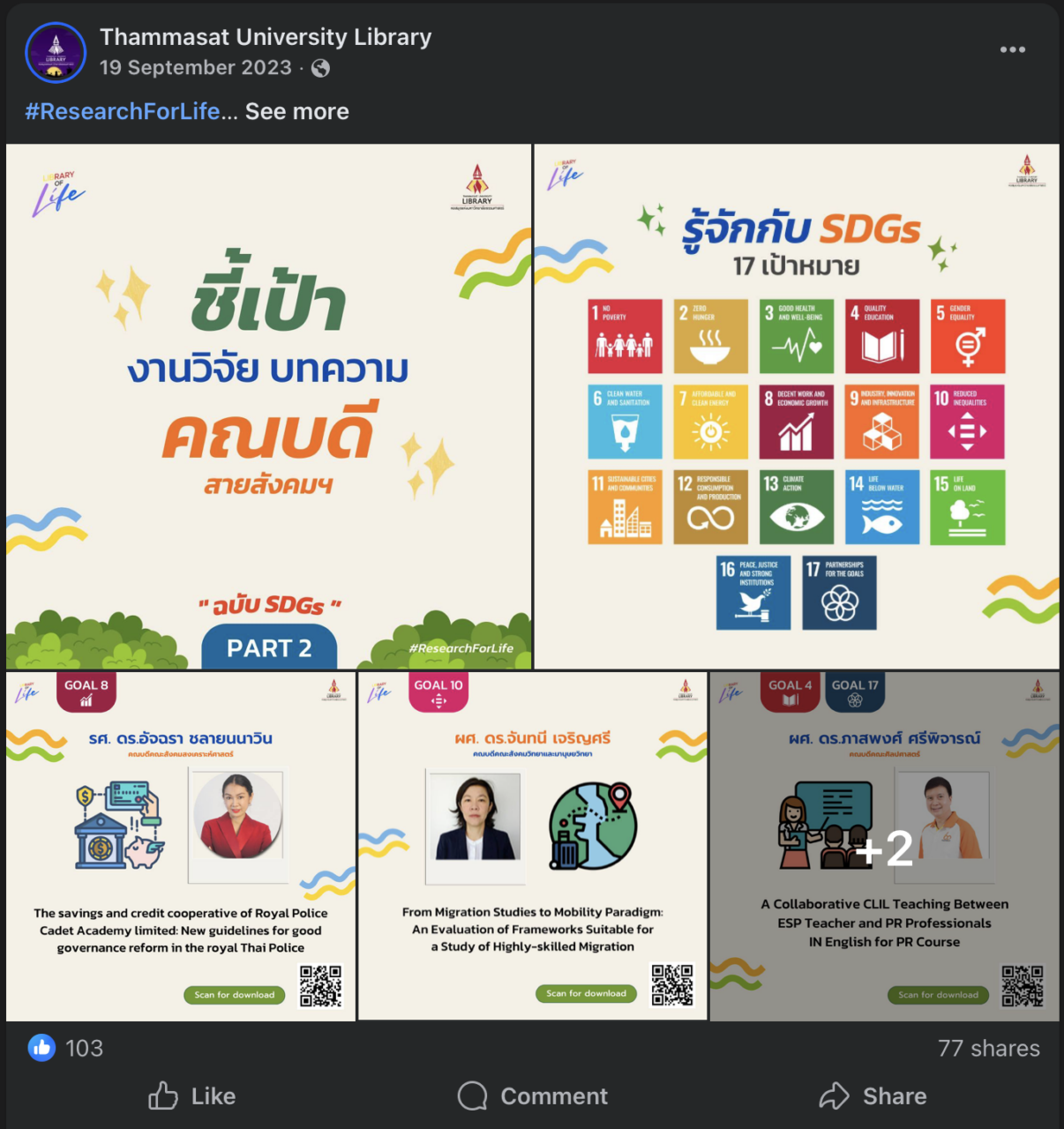
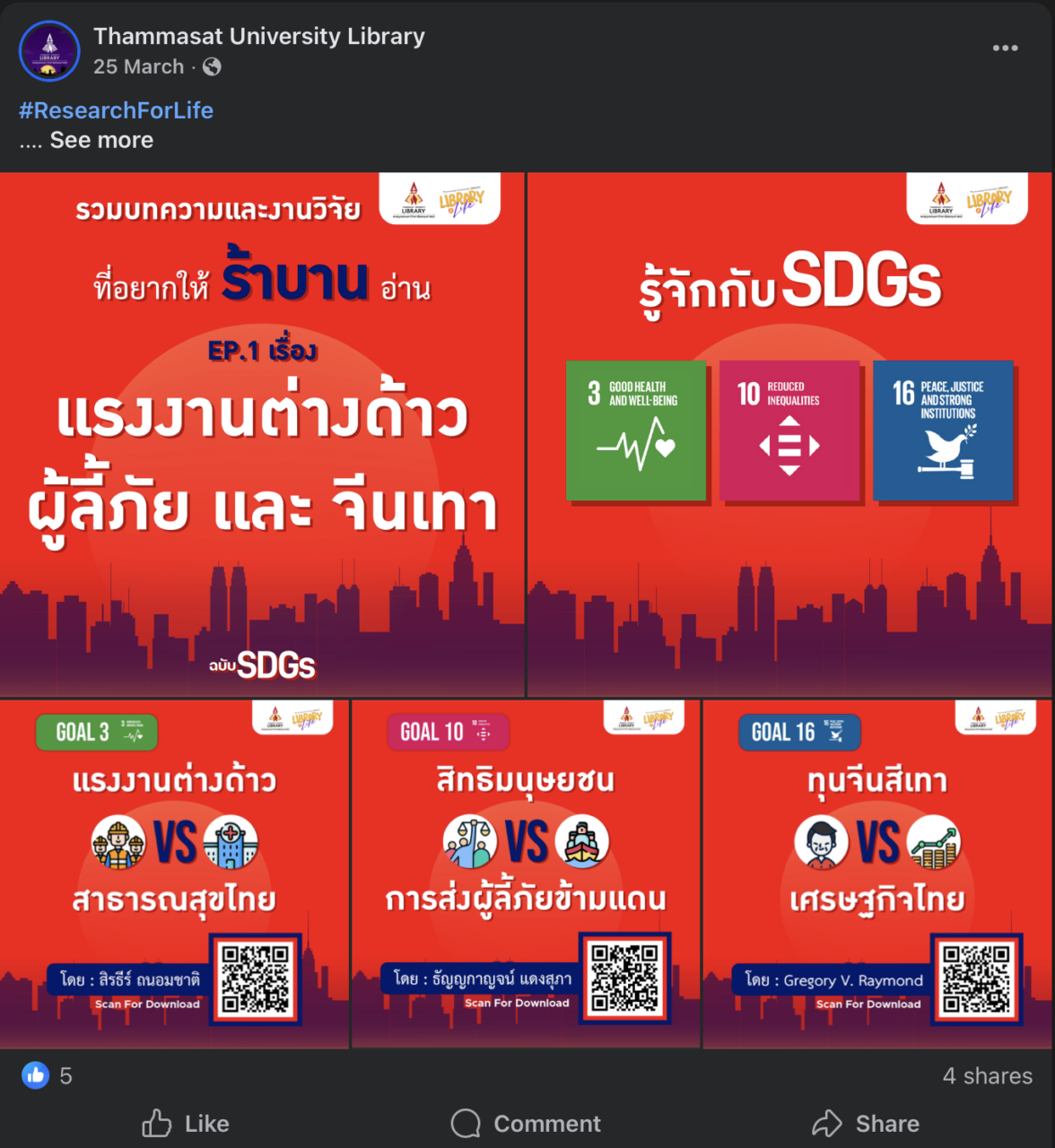
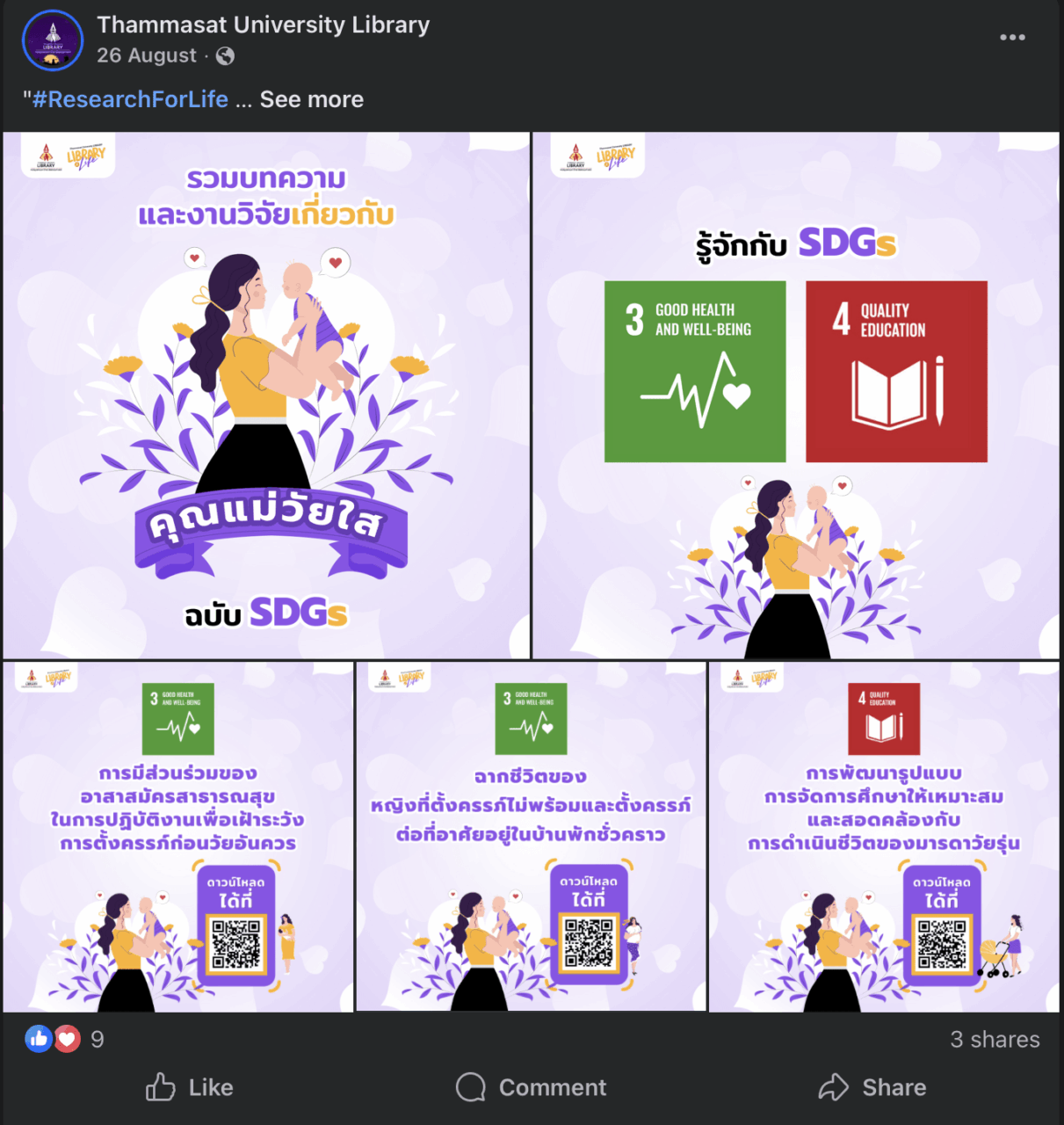
The Thammasat University Library plays a strategic role in expanding public access to sustainability knowledge by curating and linking a selected collection of resources from its database of over 158,000 academic items to the SDGs. Through comprehensive digital repositories and active thematic social media engagement, the Library bridges academic knowledge with pressing social issues, such as adolescent pregnancy, environmental justice, and migrant workers rights, connecting them to relevant SDG frameworks. This approach helps make complex academic content more accessible and relatable for the wider public. The platform promotes lifelong learning and the democratization of knowledge, allowing people from all sectors to access reliable, research-based insights for everyday decision-making and community development.
Advancing Transdisciplinary Learning through International Collaboration in the THE-GLOW Project
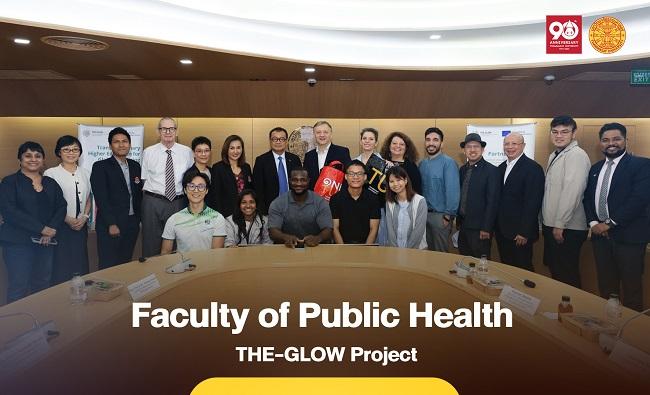
Thammasat University is implementing the Transdisciplinary Higher Education for Global Well-being (THE-GLOW) project, led by the Faculty of Public Health and supported by EU funding. The initiative strengthens collaboration between Thai and European universities to co-design innovative, transdisciplinary curricula that equip learners with the competencies needed to address complex global challenges. Through this partnership, Thammasat advances education for sustainable development while promoting shared learning and intercultural exchange, positioning the University as an active international collaborator in reshaping higher education for societal well-being.