SDG 3 in Numbers
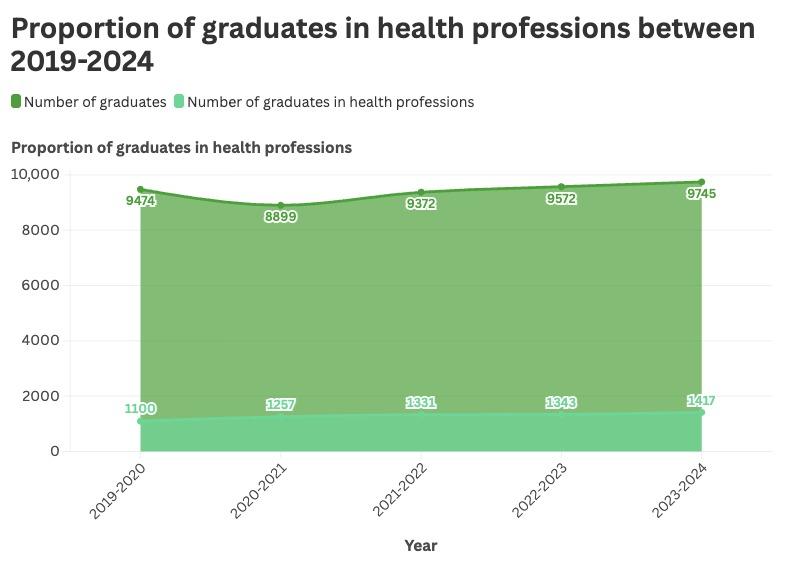
This graph illustrates the proportion of graduates in health professions between 2019 and 2024. The number of graduates in health-related fields increased from 1,100 in 2019-2020 to 1,417 in 2023-2024, reflecting a growth of approximately 29%. Although total graduates fluctuated slightly, the upward trend in health professions suggests sustained institutional investment in medical and health sciences education, potentially influenced by heightened demand for healthcare professionals following the COVID-19 pandemic.
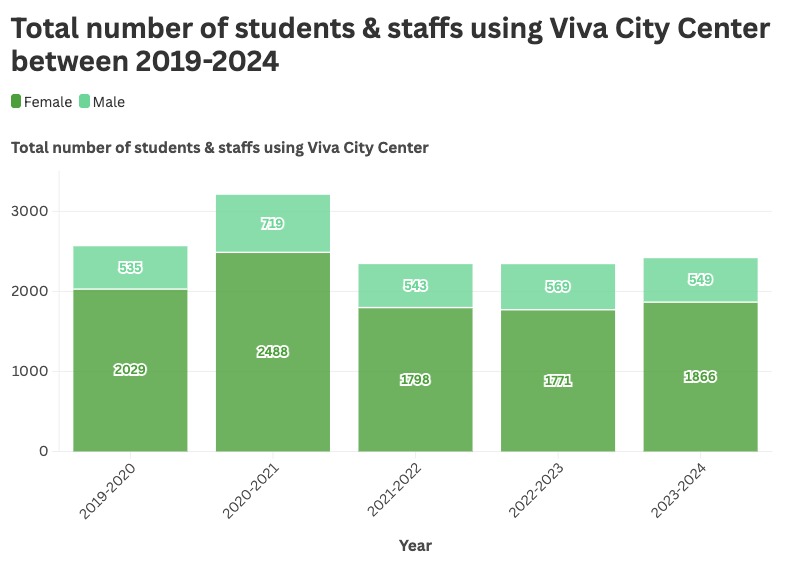
The stacked bar chart presents the total number of students and staff using the Viva City Center from 2019 to 2024. Usage rose from 2,564 in 2019-2020 to a peak of 3,207 in 2020-2021, marking a 25% increase, before gradually declining to 2,415 in 2023-2024. The initial growth likely reflects increased engagement in wellness and activity programs, while the subsequent decline may be attributed to pandemic restrictions and shifts toward remote or hybrid learning models.
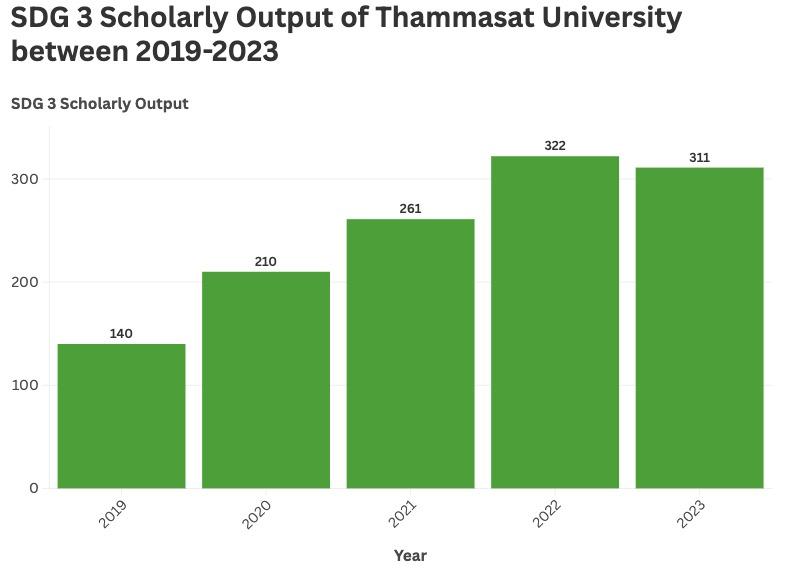
The bar chart highlights Thammasat University’s SDG 3 scholarly output between 2019 and 2023, showing significant growth in health-related research. Publications rose from 140 in 2019 to 311 in 2023, representing a 122% increase. The peak in 2022, with 322 outputs, underscores the university’s strong research emphasis on public health and well-being during and after the pandemic, while the slight decline in 2023 may relate to project transitions and publication review timelines.
Research in SDG 3
From 2020 to 2024, Thammasat University produced a vast and impactful body of research addressing SDG3. This work is drawn from a comprehensive analysis of 2,163 university publications on the topic. The university’s extensive contributions are defined by several key thematic clusters that highlight its strengths in tackling both immediate and long-term health challenges:
- Major Disease Response Pandemic and Chronic Illnesses: A dominant research theme is the comprehensive response to major diseases. This is highlighted by a substantial focus on the COVID-19 pandemic, with research spanning public health policy, vaccine effectiveness, clinical studies, and the broad socio-economic impacts of the crisis. Alongside this rapid pandemic response, the university maintains a robust research program targeting other globally significant diseases. This includes work on infectious diseases prevalent in the region like dengue and tuberculosis, major non-communicable diseases such as diabetes and kidney disease, and an extensive portfolio of cancer research covering diagnostics and novel treatments.
- Innovations in Health Technology and Therapeutics: A second major cluster focuses on technological and therapeutic innovation. There is a strong emphasis on applying advanced technologies like Artificial Intelligence (Al) and machine learning for improved diagnostics, disease prediction, and personalized medicine, particularly in oncology. This is complemented by research in pharmacology and therapeutic development, which explores both cutting-edge nanomedicine for enhanced drug delivery and the potential of natural products derived from traditional Thai medicine.
- Environmental Health and Pollution: The third key area is Environmental Health, which investigates the critical link between environmental factors and human well-being. Research in this cluster addresses the pressing health impacts of pollution, including the contamination of major water systems like the Chao Phraya River with microplastics and heavy metals, and the effects of traffic-related air pollution on vulnerable populations, such as students.
Synthesis and Impact
Across these themes, Thammasat’s research demonstrates a multi-scalar approach, addressing health challenges from local Thai communities to large-scale global collaborations. A defining characteristic is the consistent focus on specific and vulnerable populations, including children exposed to e-waste, marginalized communities, and patients with chronic conditions. This impactful work is supported by extensive national and international collaborative networks, cementing the university’s role as a key contributor to advancing global health.
Outreach and Academic Services in SDG 3
In early 2024, Thammasat University showcased a strong commitment to SDG 3 with 143 academic services and community outreach programs. Leveraging expertise across diverse faculties, the university aimed to enhance public health, promote well-being for all ages, and strengthen the healthcare ecosystem. The initiatives are organized into four key clusters:
- Comprehensive Community Health Services and Disease Prevention (approx. 30 initiatives)
The university provided extensive clinical care and health promotion, including seasonal influenza vaccinations, mobile health check-ups, home visits, and public education on disease prevention. The Faculty of Medicine offered pulmonary function tests, while the Faculty of Dentistry provided free dental services via its royally-sponsored unit. These efforts focused on both preventive and direct treatment for a wide range of community members. - Promoting Healthy Aging and Lifelong Well-being (approx. 26 initiatives)
A significant focus was placed on Thailand’s aging population. The “Thammasat School for the Elderly” served as a central hub, offering courses on quality of life, dementia prevention, and digital literacy. These programs were complemented by initiatives on integrative medicine for seniors and projects empowering them to become agents of change in their cities. - Specialized Care for Vulnerable Populations (approx. 18 initiatives)
Recognizing that effective poverty reduction requires skilled administrators, the Faculty of Social Administration delivered several specialized training programs for local government officials. These courses, such as the “Social Welfare Administrator” program and “Administration of Education and Social Welfare” for local organizations, were designed to enhance the capabilities of local leaders in managing and implementing effective social welfare and educational services. By strengthening the administrative capacity at the local level, Thammasat University is helping to ensure that poverty alleviation efforts are efficient, impactful, and reach those most in need. - Advancing Healthcare Capacity and Professional Development (approx. 69 initiatives)
Strengthening the healthcare system was a core objective, achieved through extensive training and academic programs. The health science faculties offered numerous specialized courses and workshops for professionals on topics from physical therapy to rational drug use. The university also fostered innovation through healthcare entrepreneurship, ensuring Thailand’s healthcare workforce remains at the forefront of medical advancement.
Collectively, these initiatives underscore Thammasat University’s holistic approach to advancing good health and well-being, addressing immediate health needs while building a more resilient and equitable healthcare future.
Featured Stories
Advancing Global, National, and Local Health Collaborations
In 2024, Thammasat University strengthened its leadership in health promotion through dynamic collaborations that advanced education, research, and community well-being.
Global Partnerships
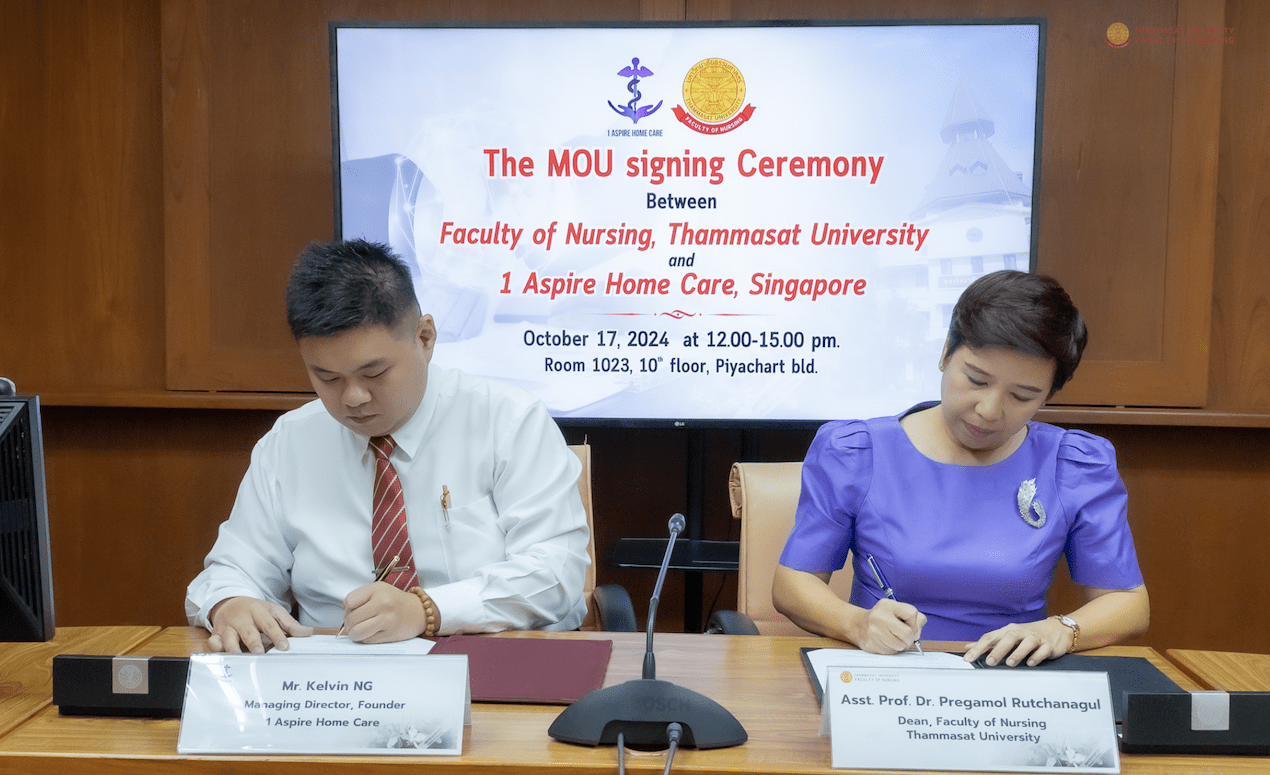
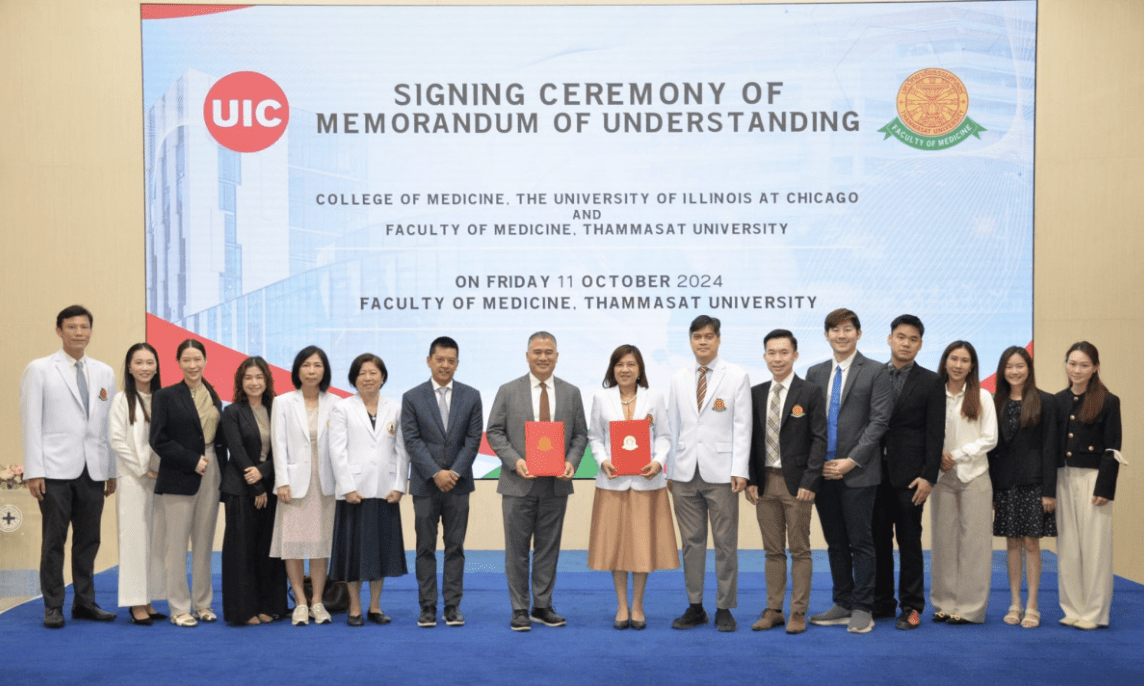
The university expanded international health networks across multiple faculties. The Faculty of Medicine signed MOUs with Cambodia’s National Pediatric Hospital and Preah Ang Duong Hospital to enhance maternal and child nutrition. The Faculty of Pharmacy partnered with Japan’s University of Toyamafor pharmaceutical research, while the Faculty of Nursing collaborated with Takasaki University of Health and Welfare, Juntendo University, Sinclair School of Nursing (USA), and 1 Aspire Home Care (Singapore). The Faculty of Dentistry advanced innovation through partnerships with Osaka University Dental Hospital, Mahasaraswati Denpasar University, and Dr. D.Y. Patil Dental College & Hospital.

National Initiatives
Thammasat collaborated with the Ministry of Public Health and national agencies to strengthen healthcare education and innovation. The Faculty of Medicine’s Clinical Research Center conducted training on research and medical device standards. The Faculty of Public Health joined the EU-funded THE-GLOW Project and partnered with Vipharam Hospital Group to promote SD-linked education. Other faculties worked with BDMS, DKSH, and the Dental Innovation Foundation to advance digital health and healthcare capacity.
Community Engagement
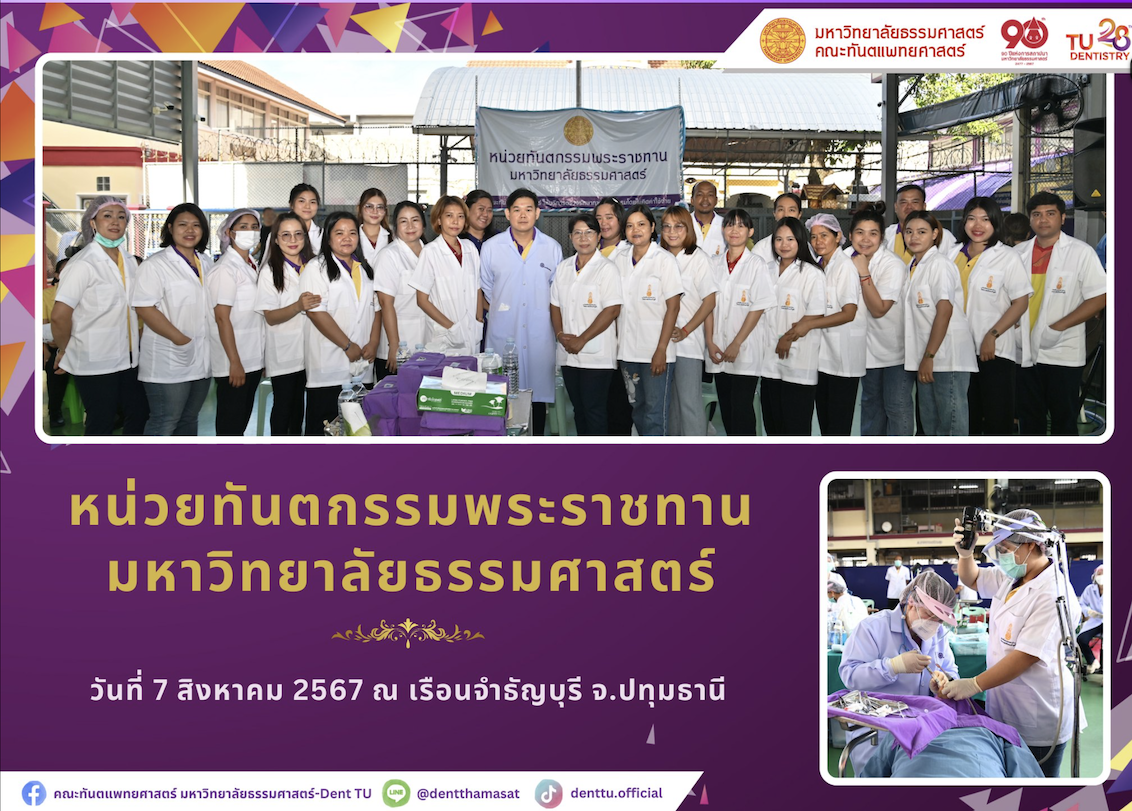
Locally, Thammasat partnered with Khlong Luang and Lad Sawai Municipalities and the Saraburi Provincial Administrative Organization to promote elderly health, preventive care, and community empowerment. The Royal Mobile Dental Unit, established under royal permission in 1999, continues to provide free dental services across Pathum Thani and remote provinces, reaching vulnerable populations with preventive care.
Mobile and Educational Outreach
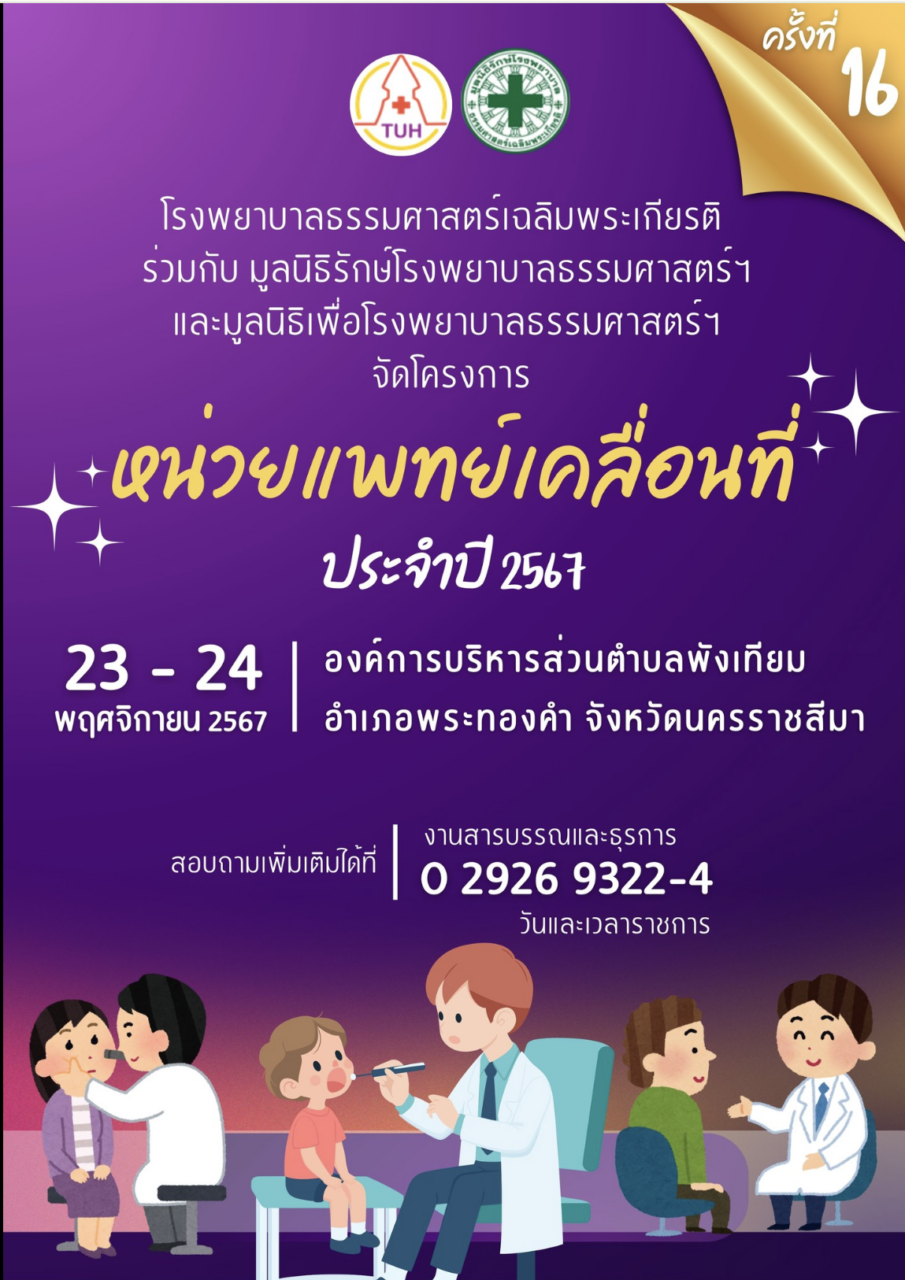
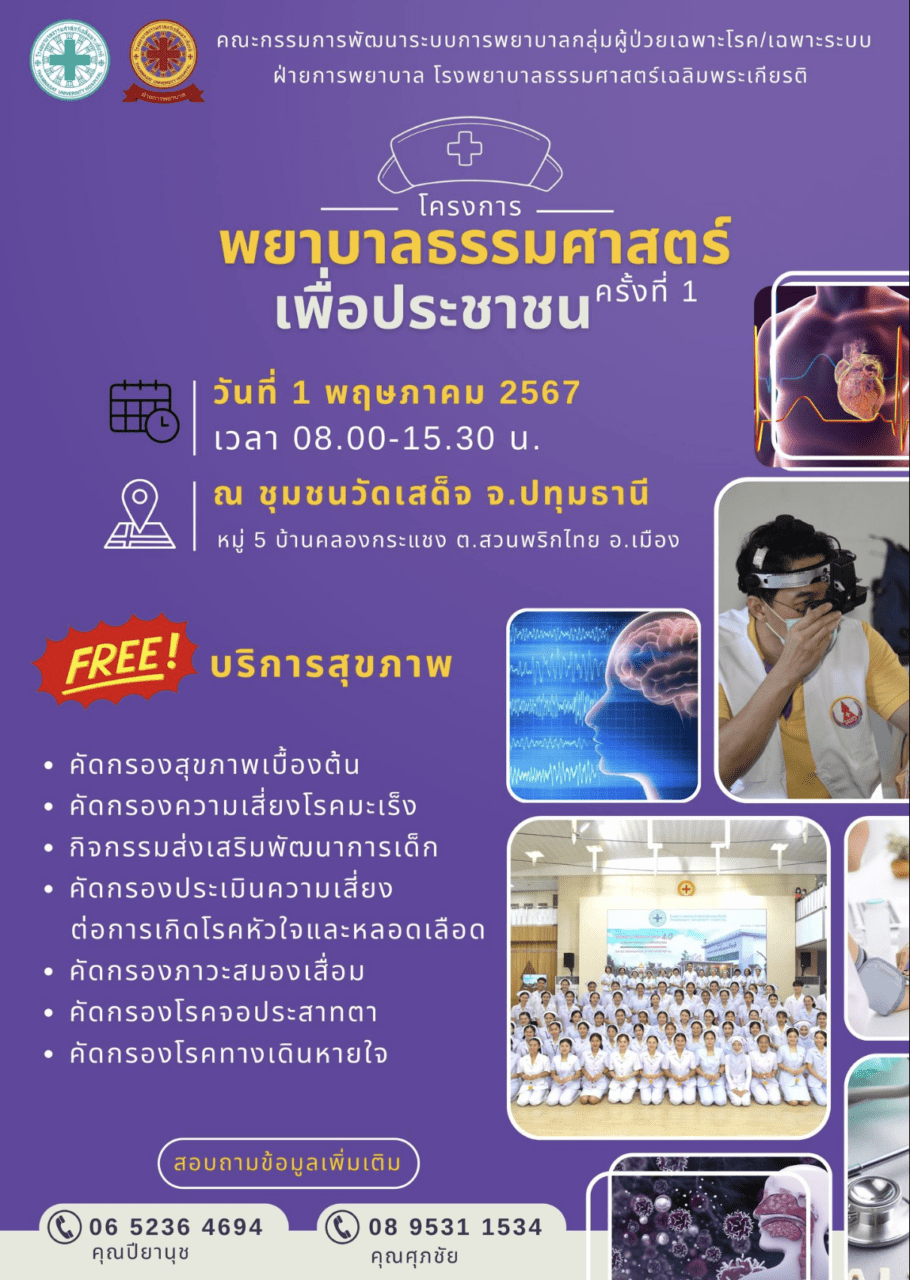
Thammasat’s Mobile Medical Units offer screenings, vaccinations, and wellness education across communities and workplaces. Health faculties also conduct extensive outreach—such as elderly care training, oral health education, and the “Empowering Bodies, Strengthening Minds” project—promoting preventive health and experiential learning. Collectively, these outreach projects reflect Thammasat University’s enduring commitment to community health promotion, experiential learning, and sustainable social impact.