SDG 16 in Numbers
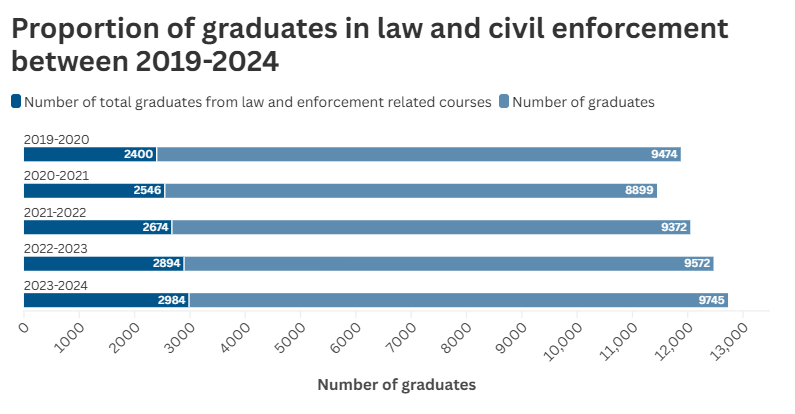
This bar graph displays the proportion of graduates in law and civil enforcement between 2019 and 2024. The number of graduates from law and enforcement related courses showed a consistent increase over the period. It rose steadily from 2,400 graduates in 2019-2020 to 2,984 graduates by 2023-2024. This increase represents a growth of 584 graduates, or approximately 24.3%. Concurrently, the total number of graduates fluctuated, peaking at 9,745 in the 2023-2024 academic year.
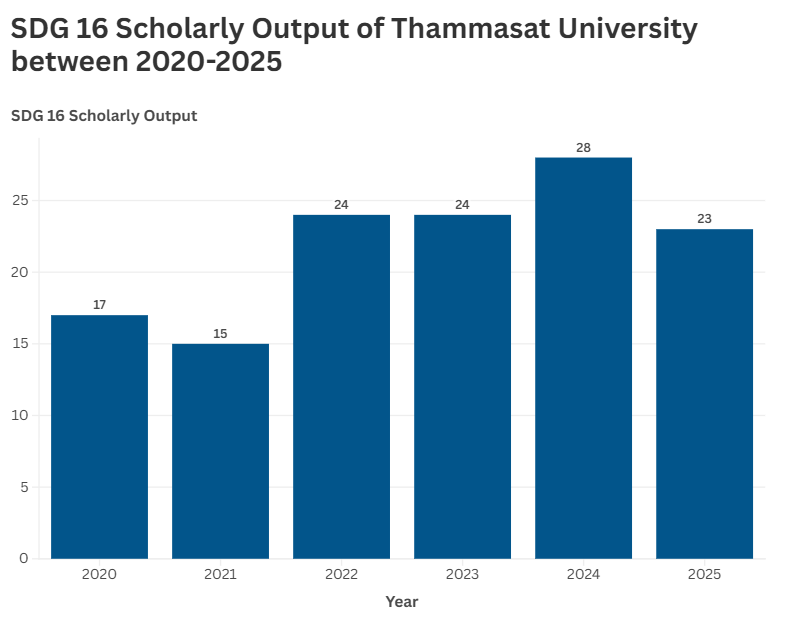
This bar graph illustrates the SDG 16 Scholarly Output of Thammasat University from 2020 to 2025. The output showed an initial reduction from 17 in 2020 to 15 in 2021, followed by significant growth. The output dramatically increased by 9 outputs in 2022, reaching 24, which was maintained in 2023. It peaked at 28 outputs in 2024. Although 2024 was the high point, the projection for 2025 indicates a slight reduction to 23 outputs.
Research in SDG 16
Based on an analysis of 159 publications from 2020 to 2024, Thammasat University’s research on SDG 16 is structured around four interconnected pillars that address the core tenets of peace, justice, and institutional strength:
- Advancing Justice, Human Rights, and Legal Innovation: A primary research cluster focuses on the architecture of legal and justice systems. This includes studies on the domestic application of international human rights law, particularly concerning marriage equality and conflict resolution. A forward-looking sub-theme is the integration of technology into the legal field, with research on Al-powered chatbots for victims of violence and the use of deep learning for forensic analysis, such as firearm classification. The research also provides critical insights into social and gender-based violence, from domestic abuse to bullying in schools.
- Strengthening Governance and Accountability: This body of work examines the mechanisms of trust and accountability in both public and corporate institutions. Research analyzes public sector performance and citizen trust, particularly in the context of major events like the COVID-19 pandemic. In the corporate sphere, studies investigate how governance structures, such as board gender diversity, influence corporate social responsibility, ESG performance, and employee welfare.
- Social Equity and Protection of Vulnerable Populations: A significant portion of the research is dedicated to understanding and addressing the challenges faced by marginalized groups. This includes a focus on the risks confronting youth and children, such as violence and adverse childhood experiences. It also covers the systemic issues encountered by women and LGBTQ+ communities, from safety in public transport to discrimination. Furthermore, studies highlight the unique health and social determinants affecting ethnic minorities and indigenous communities.
- Building Resilient Cities and Communities: This interdisciplinary cluster applies the principles of good governance to the challenges of urban and environmental resilience, linking SDG 16 to SDGs 11 and 13. The research explores sustainable urban planning, climate governance, and the importance of community participation in building local capacity for disaster risk management and climate adaptation, with a strong focus on participatory planning and nature-based solutions.
Synthesis and Impact
Collectively, this research portfolio demonstrates a strategic focus on Thai and ASEAN contexts while engaging in global comparative studies. Supported by a robust network of domestic and international collaborators, Thammasat University provides a vital evidence base for strengthening legal frameworks, improving governance, protecting vulnerable populations, and building resilient communities, positioning itself as a key contributor to SDG 16 in the region.
Outreach and Academic Services in SDG 16
In 2024, Thammasat University demonstrated an extensive and profound commitment to fostering SDG16, executing over 148 targeted academic service and social outreach activities. These initiatives reflect a comprehensive strategy to strengthen the rule of law, enhance institutional capacity, and promote a just and peaceful society. The university’s diverse efforts can be organized into three principal clusters: strengthening the rule of law and access to justice, promoting good governance and institutional transparency, and fostering peace, security, and human rights:
- Strengthening the Rule of Law and Access to Justice (approx. 85 activities)
The cornerstone of Thammasat’s contribution to SDG 16 was the significant work undertaken to fortify the legal and judicial systems. The Faculty of Law, alongside other institutes, organized numerous seminars, workshops, and training sessions aimed at both legal professionals and the general public. Key topics included criminal justice reform, the rights of detainees, consumer protection law, and the operational best practices of legal aid clinics. A strong emphasis was placed on demystifying the law for citizens through programs on essential topics like family, inheritance, and land law. Furthermore, a dedicated focus was placed on the justice system’s role in rehabilitation, with extensive projects providing legal knowledge, vocational training, and life skills to inmates within the correctional system, directly contributing to their successful reintegration into society. - Promoting Good Governance and Institutional Transparency (approx. 40 activities)
Building strong, accountable, and transparent institutions was another critical focus area. The university provided extensive training for local government officials through the Faculty of Social Administration, covering crucial topics such as public procurement laws, administrative regulations, urban planning, and effective internal auditing. These programs are designed to enhance the efficiency, transparency, and accountability of public administration at the local level. Seminars also addressed broader themes of good governance, anti-corruption policies, and the ethical responsibilities of public officials, reinforcing the foundations of a trustworthy and effective state. - Fostering Peace, Security, and Human Rights (approx. 23 activities)
Thammasat University actively engaged in critical discussions and initiatives aimed at promoting peace and protecting human rights. This included public forums analyzing complex international conflicts and their implications for global peace. Domestically, the university continued its vital work on the peace process in the southern border provinces by disseminating public opinion surveys and facilitating dialogue. A significant number of seminars were dedicated to crucial human rights legislation and issues, such as the Act on Prevention and Suppression of Torture and Enforced Disappearance, the principles of human dignity under the constitution, and the legal frameworks for creating a more just and peaceful society.
Featured Stories
Building Accountability and Advancing Governance
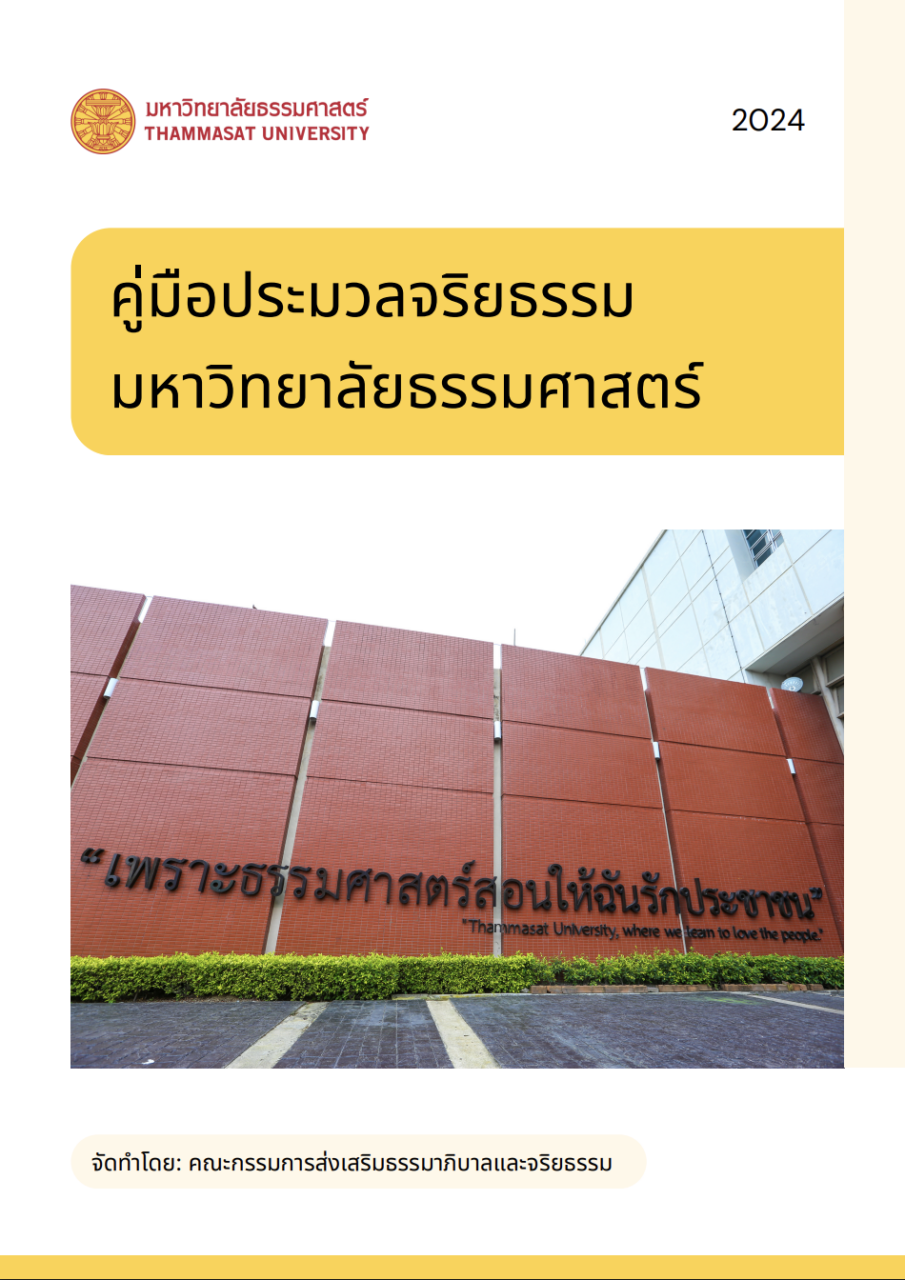
Thammasat University has strengthened its commitment to ethical governance with the launch of the Code of Ethics Handbook, providing clear guidelines on integrity, responsibility, and justice for executives, staff, and students. A key feature is the Grievance Channels for Governance and Ethics, offering a transparent and reliable process for reporting misconduct and fostering a university-wide culture of accountability. In Fiscal Year 2024, Thammasat achieved an ITA score of 94.73 (Pass, Good), improving by 0.69 points from the previous year. This reflects the success of the Strategic Anti-Corruption Action Plan (2023-2027), which promotes transparent management, integrity in research, and fair administrative systems. The Handbook reinforces these standards, emphasizing honesty, public interest, fairness, and non-discrimination, supported by the Committee for Good Governance and Ethics and confidential reporting channels.
Strengthening Local Institutions through Thammasat’s Models for Governance and Public Service Reform
Thammasat University strengthens local governance and public institutions through policy-focused research. One key initiative, launched in August 2024, supports Hua Hin Municipality in its transition to a Special Administrative Organization (SAO). This research assesses Hua Hin’s potential, recommends governance models, and informs legislation for a more flexible and responsive administration.
Demonstrating commitment to decentralization, another project with Health Systems Research Institute (HSRI) and NIDA researched transferring primary healthcare responsibilities to Provincial Administrative Organizations (PAOs). Studying models in 11 provinces, insights and practical tools were shared via a November 2024 national seminar and capacity-building, aiming to enhance PAO capabilities in managing primary healthcare and improve public access. Both initiatives exemplify Thammasat’s dedication to using academic knowledge to build strong, accountable, and community-oriented local institutions in Thailand.


Fostering Constitutional Dialogue through Thammasat as a Platform for Democratic Reform
Thammasat University actively serves as a vital platform for discussions on constitutionalism and democratic governance. In December, significant seminars were hosted, including “Pridi Talk #28” on ending coups and drafting a people’s constitution, and a Faculty of Law event on pathways for constitutional reform. By facilitating these timely discussions, Thammasat underscores its commitment to strengthening democratic institutions, promoting the rule of law, and fostering peace and justice in Thailand.