SDG 12 in Numbers
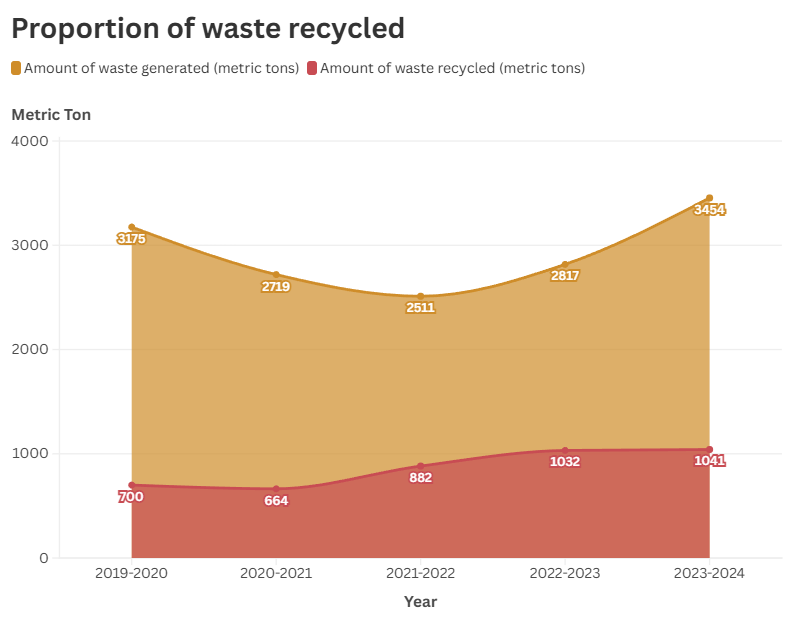
This stacked area chart details the proportion of waste generated and the amount of waste recycled, measured in metric tons, across the period 2019-2020 through 2023-2024. The overall amount of waste recycled displays a consistent upward trend. Specifically, the recycled metric tons increased from 700 in 2019-2020 to 1041 by 2023-2024. Meanwhile, the waste generated metric tons peaked at 3,454 in 2023-2024, following a previous low of 2511 metric tons in 2021-2022.
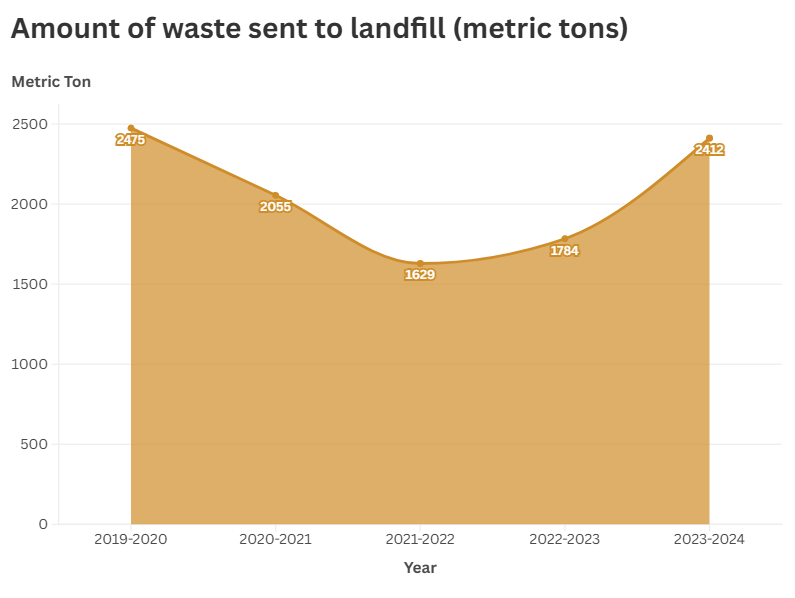
This graph illustrates that the amount of waste sent to landfill initially decreased, dropping from 2,475 metric tons (MT) in 2019-2020 to its lowest point of 1,629 MT in 2021-2022. However, the trend reversed, rebounding sharply to 2,412 MT by 2023-2024, nearing the initial peak. This significant increase presents a challenge for Thammasat, requiring focused efforts to reverse this upward movement, reduce landfilled waste, and substantially increase the proportion of materials being recycled.
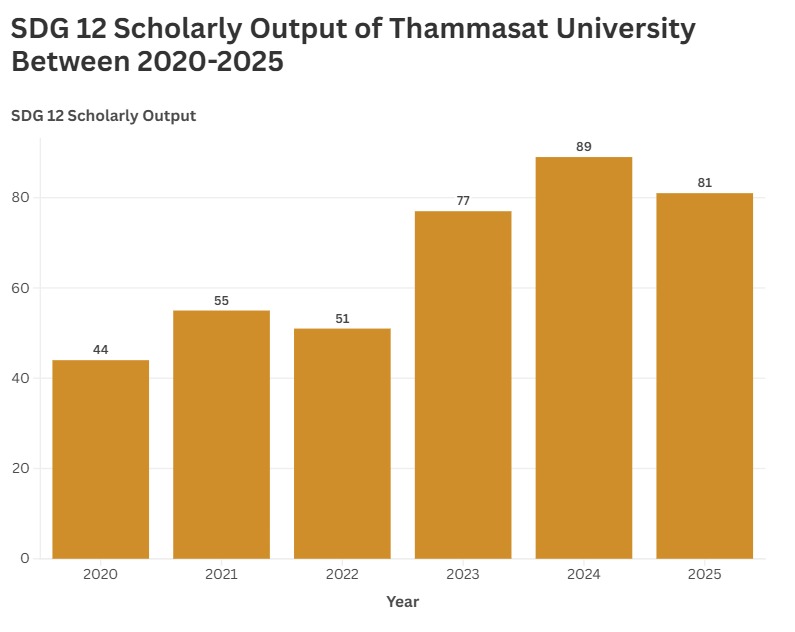
This vertical bar graph tracks the SDG 12 Scholarly Output of Thammasat University across the years 2020 to 2025. The general trend demonstrates a considerable increase in research output during this five-year period. Starting with 44 scholarly outputs in 2020, the output consistently rose, reaching a maximum of 89 outputs in 2024. This surge represents a gain of 45 outputs up to the peak year. The output for 2025 is shown to be 81.
Research in SDG 12
Based on an analysis of 441 publications from 2020 to 2024, Thammasat University has developed a comprehensive and impactful research portfolio aligned with SDG 12. This body of work provides a critical evidence base for Thailand’s transition to a circular economy, addressing the full life cycle of products and services through several interconnected research clusters:
- Circular Economy, Waste Valorization, and Green Materials: A dominant research theme is the advancement of the Circular Economy, with a strong focus on Waste Valorization. Researchers have extensively explored transforming municipal, industrial, and agricultural waste streams into valuable resources. This includes studies on Waste-to-Energy (WTE) technologies, the chemical recycling of plastics and e-waste, and the upcycling of agricultural residues like durian peels and rice husks. This work is complemented by innovations in Sustainable Production and Materials Science, particularly the development of green construction materials like geopolymer concrete incorporating fly ash and other industrial byproducts, as well as bio-based products and fuels derived from renewable biomass.
- Sustainable Supply Chains and Environmental Management: The university’s research also focuses on redesigning industrial systems through Sustainable Supply Chains. Studies investigate the integration of green practices to enhance environmental and economic performance, the role of digitalization and blockchain in creating transparent and resilient supply networks, and strategies tailored to key sectors like food, apparel, and electronics. This is supported by rigorous Environmental Impact Assessment and Management, where methodologies like Life Cycle Assessment (LCA) are used to quantify the environmental footprint of products and processes, alongside research into pollution control and remediation.
- Socio-Economic and Policy Dimensions: Recognizing that technology and processes operate within a human context, a vital research cluster addresses the Socio-Economic and Policy Dimensions of sustainability. This includes analyses of corporate strategy, such as the adoption of Environmental, Social, and Governance (ESG) criteria and Corporate Social Responsibility (CSR). It also delves into consumer behavior related to green products and evaluates the effectiveness of government policies and economic incentives in promoting responsible consumption and production.
Synthesis and Impact
Collectively, Thammasat University’s research on SDG 12 demonstrates a holistic approach that connects materials science, industrial engineering, and supply chain management with environmental science and socio-economic policy. With a strong geographical focus on Thailand and the broader Southeast Asian region, and supported by extensive national and international collaborations, this body of work positions the university as a key knowledge hub, providing practical solutions and strategic insights for a more sustainable future.
Outreach and Academic Services in SDG 12
In 2024, Thammasat University actively advanced SDG 12 through six key academic and social service initiatives. These efforts were strategically focused on a dual-pronged approach: influencing high-level national policy while simultaneously driving practical, on-the-ground improvements in industrial applications. This demonstrates a comprehensive strategy to foster sustainability by bridging the gap between theory and practice. The university’s contributions can be categorized into two main clusters:
- Driving Policy Dialogue on Circular Economy and Just Transitions (2 activities)
A significant focus was placed on shaping national strategies for sustainable production through critical public forums. The Faculty of Economics hosted a pivotal seminar on the circular economy, specifically examining the implementation of Extended Producer Responsibility (EPR) for end-of-life vehicles. This timely dialogue aimed to promote greater industry accountability for the entire product lifecycle—from design to disposal and material recovery—and explore policy mechanisms to make it a reality.
Complementing this, the Faculty of Law organized a forum titled “Beyond the Coal,” which delved into the complex legal and social frameworks required for a just transition to clean energy. The discussion went beyond simply replacing fossil fuels, addressing the crucial need to support affected communities and ensure the shift in production patterns is both environmentally sound and socially equitable for all stakeholders. - Enhancing Sustainable and Safe Practices in Industry (4 activities) The university also concentrated on the practical implementation of sustainable practices within the business sector. The Faculty of Public Health delivered a “Mini MBA in Sustainability Innovation” for corporate executives. This program was designed to equip business leaders with the tools to integrate holistic management systems covering safety, health, environment, and energy into their core business strategies, moving beyond mere compliance.
This high-level educational initiative was supported by direct, hands-on services, where the faculty conducted crucial environmental monitoring in various industrial workplaces. These assessments provided companies with vital data to manage risks, ensure regulatory compliance, and safeguard worker health, directly translating academic expertise into safer and more responsible industrial operations.
Synthesis and Impact
Collectively, Thammasat University’s research on SDG 12 demonstrates a holistic approach that connects materials science, industrial engineering, and supply chain management with environmental science and socio-economic policy. With a strong geographical focus on Thailand and the broader Southeast Asian region, and supported by extensive national and international collaborations, this body of work positions the university as a key knowledge hub, providing practical solutions and strategic insights for a more sustainable future.
Featured Stories
Thammasat University continues to lead environmental and social initiatives focused on sustainable waste management, recycling, and upcycling, demonstrating a strong commitment to responsible consumption and production.
The Power of United Recycling for a Better Life
The LessPlastic Thammasat campaign collaborated with various sectors to transform PET plastic waste into life-enhancing products. Donations of plastic bottles have been used to create 49 sets of washable PPE gowns that can each be reused 20 times—equivalent to 980 single-use gowns. The initiative also supports diabetic patients by producing upcycled diabetic shoes and sparks creativity among children with paint palettes made from recycled bottle caps.
Thammasat earned first place in the 2023 “Green University” competition, receiving an upcycled plastic trophy and scholarship. Partnering with 11 universities, the campaign collected over 600,000 pieces of plastic and e-waste, including 598,043 PET bottles—reducing carbon emissions by 12.33 tons of CO2.
Responsible Consumption Starts Now!
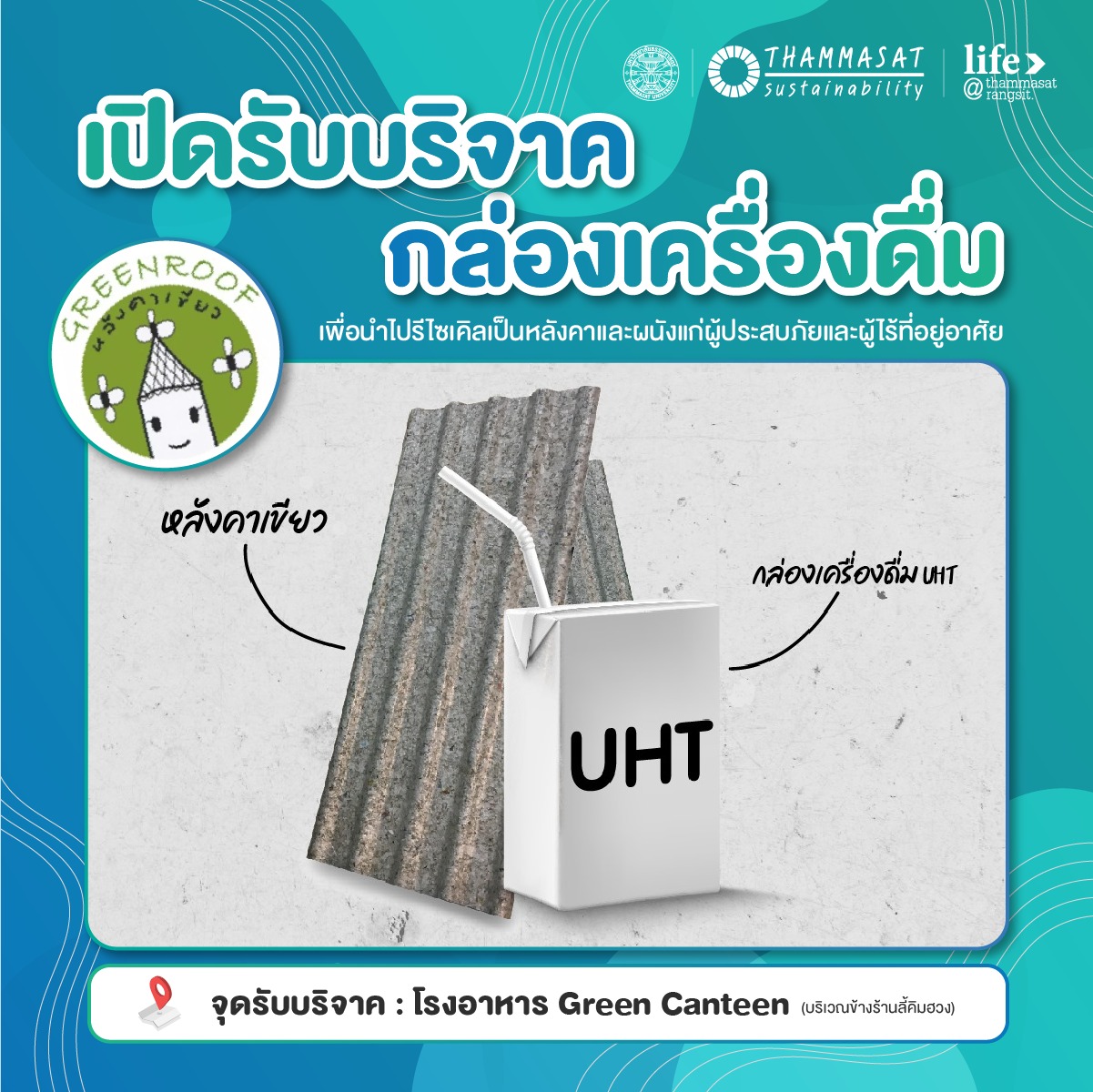
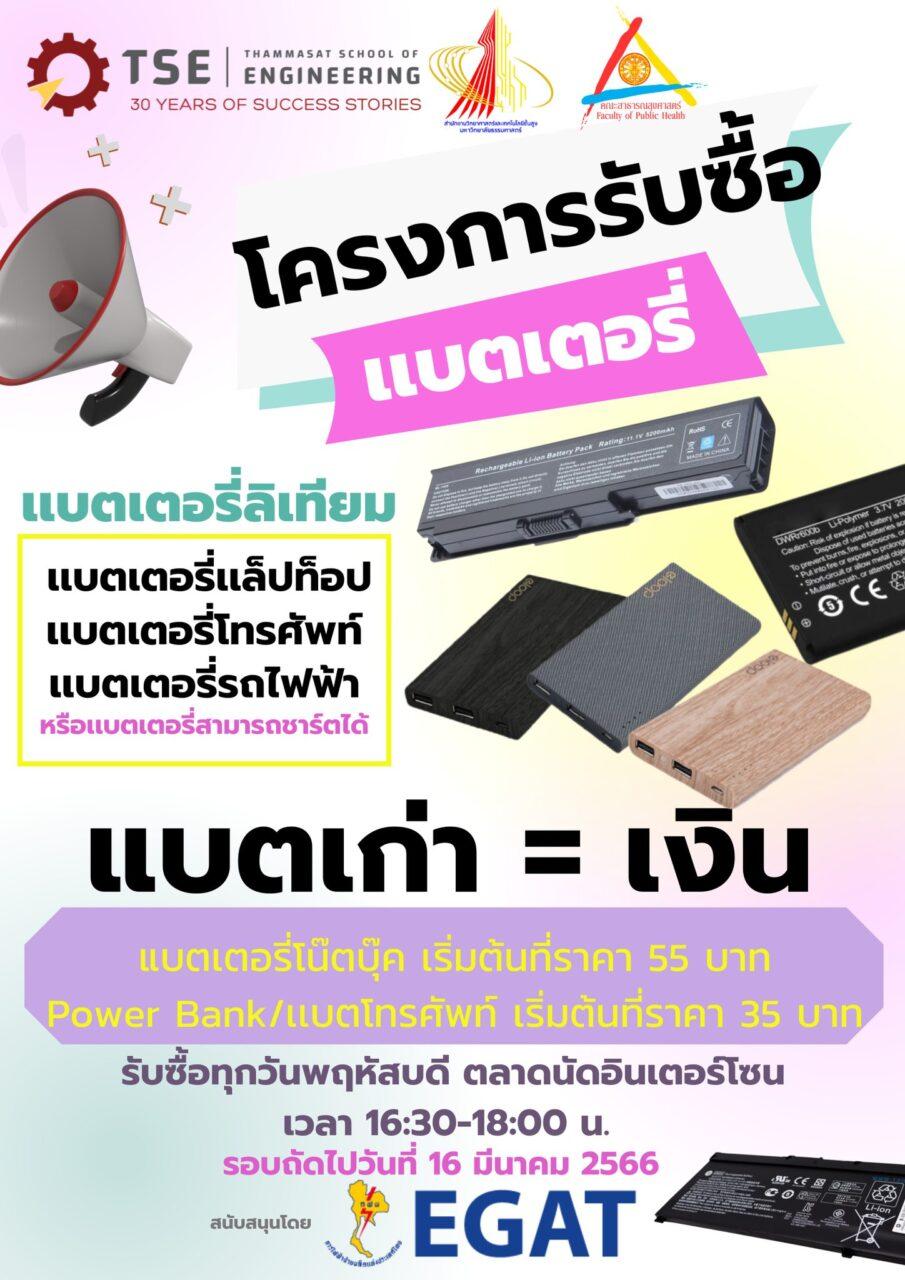
The university promotes waste separation and recycling through multiple community-driven projects. The Green Shelter Project invites the donation of used beverage cartons to produce roofing and wall materials for disaster victims and the homeless. In collaboration with the Electricity Generating Authority of Thailand, TSE, FPH, and TU-SAT, facilitate the exchange of used batteries for monetary value. The Chiang Rak Secondhand Market encourages the reuse of clothing, while the Faculty of Public Health’s School Waste Fund enables communities to trade recyclables for municipal trash bags—fostering a culture of circular economy participation.
Smart Innovation for Waste and Carbon Management
Students from the Faculty of Commerce and Accountancy developed the “WASTE WORTH Smart Waste Disposal Cabinet“—an innovation that improves community hygiene and waste efficiency. Their team, Ai Ma See Kon, won the 2024 SCG Green Innovation Award for converting waste into Alternative Fuel and Raw Materials. Meanwhile, the Property and Sports Management Office contributes to carbon reduction through waste management, tree planting, and solar energy initiatives. The Thammasat Carbon Footprint Website monitors these efforts by tracking energy use, resources, waste, and CO2 emissions—demonstrating the university’s holistic approach to sustainability.