SDG 1 in Numbers
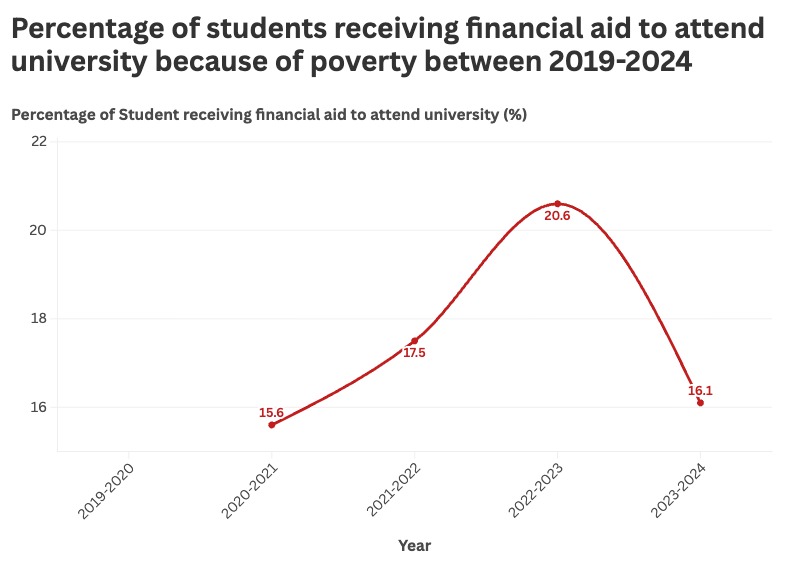
This line graph illustrates the percentage of students at Thammasat University who received financial aid due to poverty from the 2020-2021 to the 2023-2024 academic year. The data reveals a significant increase in financial need, coinciding with the economic impact of the COVID-19 pandemic. The proportion of students requiring aid rose from 15.6% in 2020-2021 to a peak of 20.6% in 2022-2023. Following this peak, the percentage saw a sharp decline to 16.05% in 2023-2024, indicating a period of economic recovery for students and their families post-pandemic.
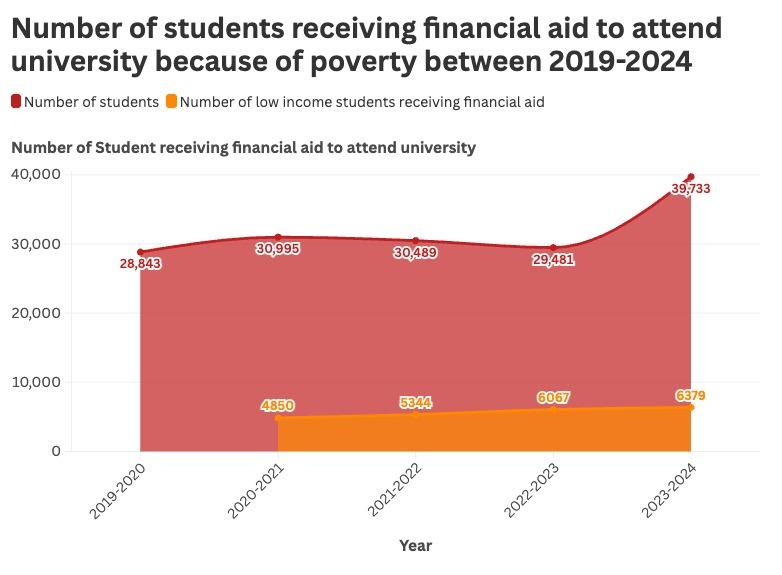
This chart tracks the total student population against the number of students receiving financial aid for poverty from 2019 to 2024. The number of students needing aid grew steadily before plateauing at 6,379 over the final two years. However, the total student population, after remaining stable, surged to 39,733 in 2023-2024. This divergence shows that while the absolute number of students supported remained consistent, financial aid did not expand to match the university’s significant enrollment growth in the most recent year.
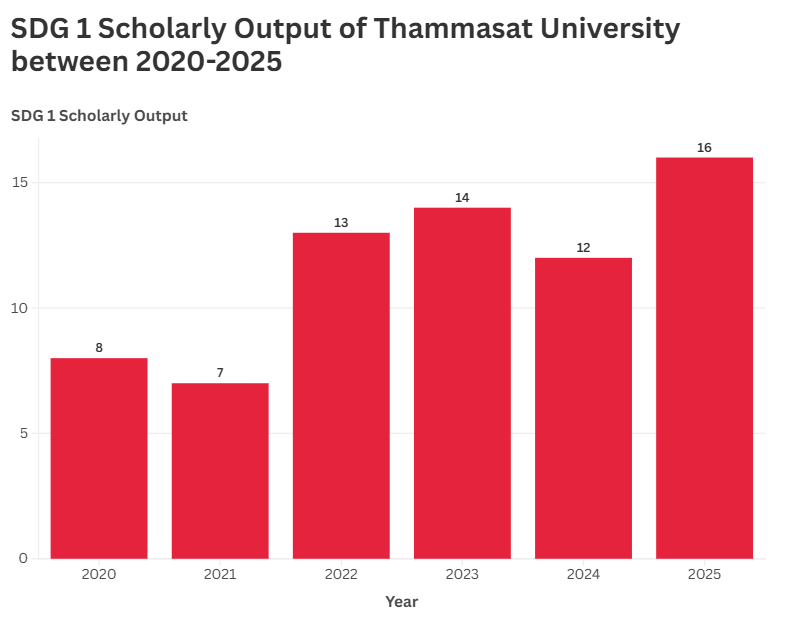
This bar chart highlights Thammasat University’s growing scholarly contribution to SDG 1 (No Poverty) from 2020 to 2025. The data shows a significant overall increase in research output on this topic, rising from 8 publications in 2020to a peak of 16 publications in 2025. This upward trend demonstrates the university’s strengthening commitment and expanding academic focus on addressing the critical global challenge of poverty.
Research in SDG 1
Between 2020 and 2024, Thammasat University produced a significant body of research addressing SDG 1. An analysis of 76 scholarly publications reveals a comprehensive, multi-disciplinary approach to understanding and combating the root causes and consequences of poverty. The university’s research contributions can be broadly organized into four interconnected thematic clusters:
- Health and Healthcare Access for Vulnerable Populations: A primary research focus address the critical link between health and poverty. Studies consistently demonstrate how health crises drive financial hardship and how poverty creates systemic barriers to healthcare. This research pays special attention to vulnerable populations- including migrants, informal workers, and the elderly and particularly examining the amplified impacts of shocks like the COVID-19 pandemic and natural disasters on their health and well-being.
- Economic Resilience, Labor Markets, and Inequality: This cluster addresses the economic underpinnings of poverty. Researchers investigated the structural drivers of income inequality, the precarity of labor markets for informal and aging workers, and pathways toward greater economic resilience. This includes analyses of macroeconomic policies, foreign direct investment, and the role of social enterprises and inclusive agricultural value chains in fostering economic stability for low-income populations.
- Environment, Climate Resilience, and Urban Development: A third area explores the intersection of environment, climate change, and urban planning. This work highlights the disproportionate impact of environmental degradation and natural disasters on the poor. Research projects focus on assessing coastal vulnerability in Thailand, promoting sustainable and inclusive urban planning in cities like Bangkok, and leveraging technology, such as machine learning with geospatial data, for more accurate poverty mapping.
- Social Policy, Governance, and Human Rights: The final cluster frames poverty as a systemic issue shaped by social policy, governance structures, and human rights frameworks. This research critically evaluates national social policies and their alignment with poverty reduction goals, the effectiveness of welfare systems, and the protection of human rights, especially in transnational contexts involving migrants and other marginalized communities in Southeast Asia.
Synthesis and Impact
Across all themes, Thammasat’s research demonstrates a strong geographical focus on Thailand—from provincial case studies to national-level analysis—while also extending its scope to the ASEAN region and the broader Global South. A defining feature of this portfolio is its consistent emphasis on specific marginalized groups, including older adults, people with disabilities, and disaster-affected communities. This work is reinforced by a robust collaborative network of leading domestic and international partners, positioning the university as a key hub for providing critical, evidence-based insights essential for developing effective strategies to eradicate poverty.
Outreach and Academic Services in SDG 1
In early 2024, Thammasat University demonstrated a focused commitment to addressing SDG 1 through a series of targeted academic and social service initiatives. A total of 8 key projects were undertaken, adopting a multi-faceted strategy that combined direct support for vulnerable populations, policy-relevant research, and institutional capacity building to create sustainable pathways out of poverty in Thailand. The initiatives can be categorized into three key areas of intervention:
- Strengthening Social Safety Nets and Community Welfare (2 initiatives)
A primary focus was on reinforcing the social welfare system for at-risk groups. The Faculty of Social Administration launched the “Happy Family and Happy Kids” project, a targeted initiative to improve the welfare and living conditions of single-parent families, who are often more susceptible to economic hardship. In parallel, the Puey Ungphakorn School of Development Studies continued its support for grassroots poverty alleviation through its Community Welfare Fund Project, empowering local communities to build their own social protection mechanisms and enhance economic resilience from the ground up. - Policy-Oriented Research and Economic Dialogue (2 initiatives)
Leveraging its academic strengths, the university contributed to the national discourse on poverty reduction. The Faculty of Economics conducted crucial seminars to inform policy-making. One seminar analyzed the health outcomes resulting from financial subsidies for extremely poor children, providing evidence-based insights into the effectiveness of social welfare programs. Another explored the practical application of educational economics as a tool to break the cycle of intergenerational poverty, directly addressing the root causes of long-term economic disadvantage. - Enhancing Capacity for Social Welfare Administration (4 initiatives)
Recognizing that effective poverty reduction requires skilled administrators, the Faculty of Social Administration delivered several specialized training programs for local government officials. These courses, such as the “Social Welfare Administrator” program and “Administration of Education and Social Welfare” for local organizations, were designed to enhance the capabilities of local leaders in managing and implementing effective social welfare and educational services. By strengthening the administrative capacity at the local level, Thammasat University is helping to ensure that poverty alleviation efforts are efficient, impactful, and reach those most in need.
Collectively, these initiatives highlight Thammasat University’s comprehensive approach to combating poverty, moving beyond temporary aid to build a foundation of knowledge, skills, and community-based support for a more equitable and prosperous society.
Featured Stories
Driving Public Policy through the “Welfare State Dialogue 2024”
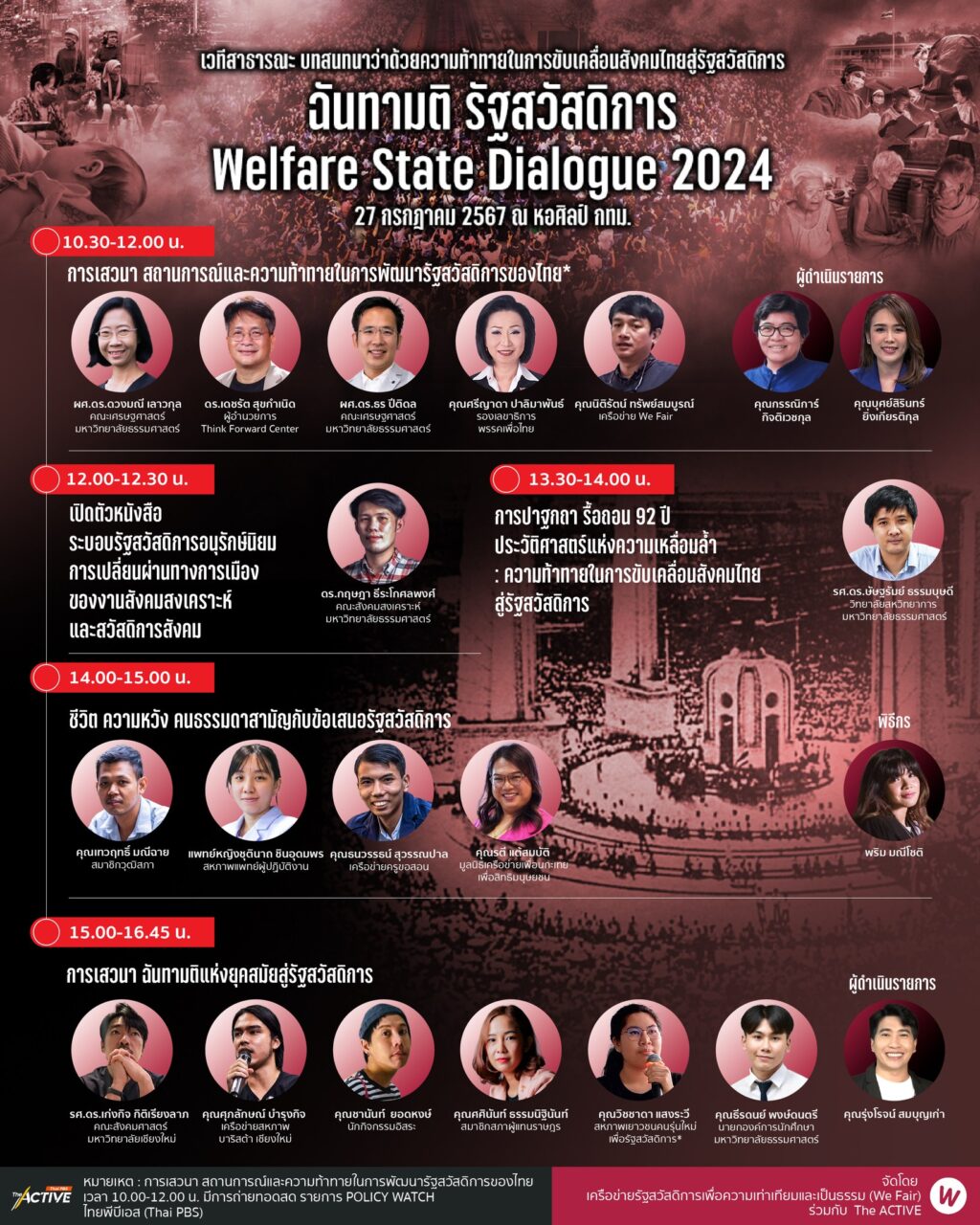
In July 2024, Thammasat University co-organized the public forum to initiate a national conversation on the challenges of advancing Thailand towards a welfare state. The forum featured essential policy data and analysis from key Thammasat academics, including: report on the situation of inequality in Thailand 2024, Thai state Ideology and the development of the Thai social welfare system, history of welfare state movements. The organization of this national public forum, which brought together academics, policymakers, and civil society, underscored Thammasat University’s significant role as a Thought Leader and its intensive contribution to shaping evidence-based public policy for sustainable social security and poverty eradication.
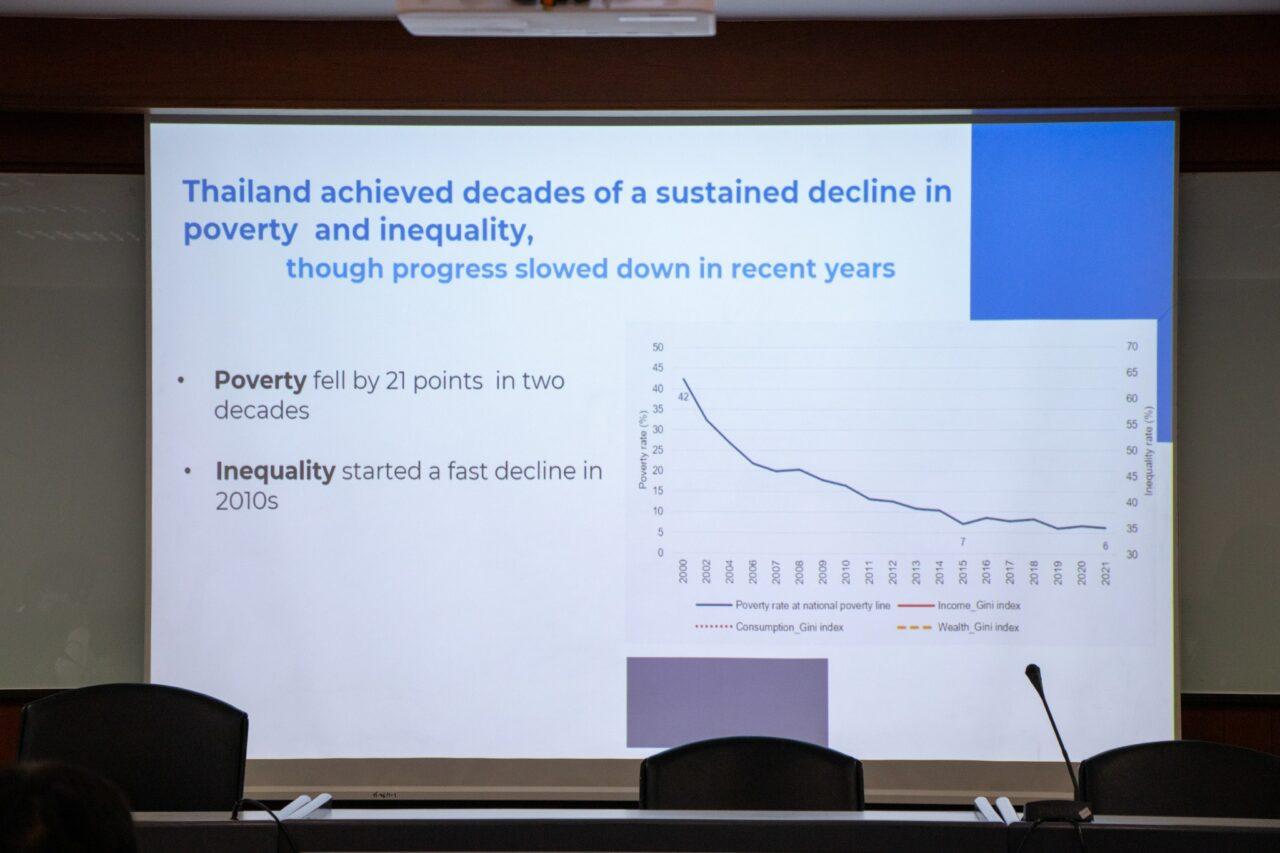
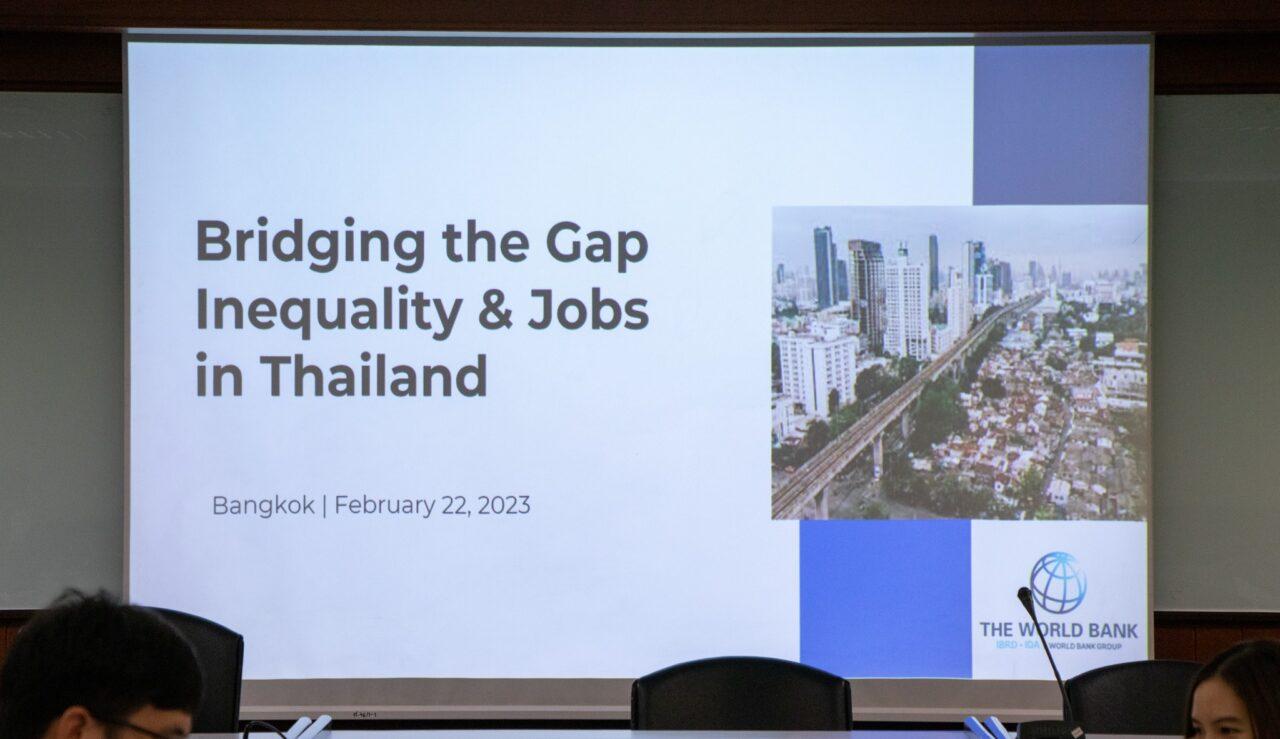
The Role of Research in Educational Policy Highlights Mechanism to Address Educational Poverty
In February 2023, the Centre for Research on Inequality and Social Policy (CRISP) at Thammasat University published major research on “Lessons from Two Decades of Thai Education Reform.” The research indicated that public policies focused on equitable resource allocation (e.g., EEF legislation) are crucial for reducing educational inequality and supporting disadvantaged children. This initiative demonstrates the University’s role as a ‘Think Tank’ that uses empirical evidence to guide policy-making, aiming to tackle structural and intergenerational poverty.
Building Financial Resilience through Saving and Personal Finance Literacy
In the dimension of building individual financial resilience, Assoc. Prof. Dr. Wichai Witayakiattilerd from the Division of Mathematics and Statistics, Faculty of Science and Technology, contributed to disseminating knowledge on saving and personal financial management through public media, such as an article in Workpoint Today (as seen in March 2024). This effort focuses on providing essential financial literacy to the general public, aiming to enhance skills in financial planning, reduce financial risks, and create long-term stability a crucial mechanism for preventing individual poverty.