Thammasat University integrates SDG-focused education into its General Education Courses, preparing all students with the skills, values, and global mindset needed for 21st-century challenges.
Thammasat University has the commitment of providing meaningful education around SDGs issues for all students across the university through General Education Courses (GE Courses). The GE Courses of Thammasat aim at educating all Thammasat Students to be ready for the 21st Century. and having characteristics of GREATS, i.e. Global mindset, Responsibility, Eloquence, Aesthetic, Team leader, and Sprit of Thammasat (democracy, justice and social dedication). SDGs in general and aspects of Education for Sustainable Development have been embedded in Thammasat GE Courses since the 2013 and each revise every 5 years.
The followings are the example of GE courses that provide education on SDGs as well as Education for Sustainable Development in 2023 academic year.
Course Titles
Its relation to SDGs and Education for Sustainable Development (ESD)
TU100 Civic Engagement
SDG 4.7 and ESD on Global Citizenship Education (all issues)
TU101 Thailand, ASEAN, and the World
SDG 4.7 and ESD on Global Citizenship Education (Cultural diversity and tolerance, Human Rights, Peace and anti-violence)
TU109 Innovation and Entrepreneurial Mindset
SDG 4.4, 8.3
TU103 Life and Sustainability
SDG in general, ESD on GCED and ESD (gender equality, human rights, climate change, environmental sustainability, human survival and wellbeing, Sustainable Consumption and Production.
TU312 Social project and campaign
SDG 4.7
AP164 Economics of Built Environment
SDG 11
AP 166 Sustainability and Built Environmental Design GTS131 Circularity for Sustainable Development
SDG 11 SDG 12.5
CIS 111 Concepts and Theories on sustainability
SDG 4.7
BT116 Biodiversity for sustainable life
SDG 15.5
TU143 Man and Environment
SDG 4.7 and ESD (climate change, environmental sustainability, Sustainable Consumption and Production)
ES329 Environment and Energy
SDG 12
RT 366 Sustainable Development
SDG 4.7
CHE106 Sustainability of Natural Resources and Energy AE106 Sustainability of Natural Resources and Energy
SDG 4.7 and ESD (climate change, environmental sustainability, Sustainable Consumption and Production)
Thammasat University is committed to advancing education and sustainable development through strategic partnerships, research, and collaboration with Civil Society and Non-Governmental Organizations. One such initiative, the “Ecosystem of Meaningful Learning and Happiness” project, teams up with the Jaika Ting Foundation to support schools in Phichit Province, enhancing educational quality by aligning it with local community needs. Additionally, Thammasat’s collaboration with the Doi Tung Development Project assesses the social impacts of long-standing community programs, driving insights for rural development. Through SDG Move, Thammasat also leads national efforts on the Sustainable Development Goals, consolidating vital data and resources in the SDG Portal to promote informed, sustainable policies.
Student volunteering
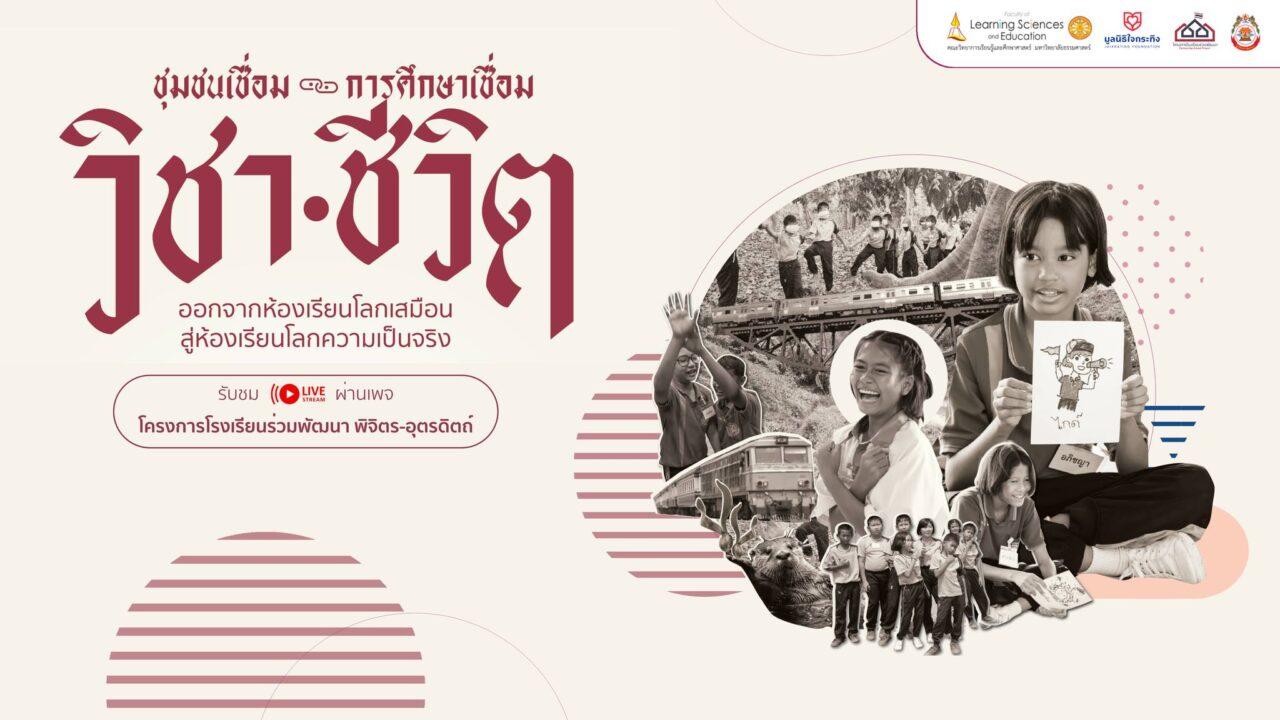
Since 2022, Thammasat University’s Faculty of Learning Sciences and Education, in collaboration with the Jaika Ting Foundation, has been at the forefront of improving education in rural Thailand. Through the “Ecosystem of Meaningful Learning and Happiness” project, Thammasat continues its commitment to enhancing educational quality and fostering community-driven change in schools across Phichit Province. This initiative is part of the larger national Partnership School Project, which aims to transform education through public-private collaboration.
The “Ecosystem of Meaningful Learning and Happiness” project targets supporting four schools in Phichit Province—Bang Mun Nak, Wat Ban Huai Yao, Wang Takur, and Ban Noi Pruk—with the goal of enhancing educational management and quality.
Leveraging Phichit’s strong educational resources and collaborative networks, the project aims to create a shared vision and mobilize resources to align educational practices with community needs and socioeconomic development. It addresses key challenges, such as adapting classroom management to students’ contexts and ensuring academic strategies meet community requirements.
The project operates on three levels:
Institutional Level: Schools are encouraged to transform into lifelong learning spaces, adapting curricula to real-life needs and fostering multi-grade learning to optimize resources.
Network Level: Building connections among educational institutions, communities, and public and private sectors is essential for mobilizing resources for educational development.
Policy Level: Findings will inform policy recommendations to enhance small and medium-sized schools nationwide, ensuring that similar contexts receive support.
Project activities focus on empowering teachers as change leaders through modules emphasizing self-awareness and innovative teaching practices. Engaging students in creative camps, such as video production and community theater, fosters critical skills and connects them to their local contexts.
This collaboration between Thammasat University and the Jaika Ting Foundation not only seeks to improve educational quality but also embodies a commitment to achieving Sustainable Development Goal 4: Quality Education. By fostering inclusive and equitable educational practices, the project contributes to building a resilient learning ecosystem in rural areas.
Partnership School Project’s Home page: Click the photo,
Thammasat University, led by Associate Professor Dr. Orapan Kongmalai, collaborates with the Doi Tung Development Project to conduct a comprehensive research initiative focused on social impact assessment. This project aims to compare the social impacts of the Doi Tung Development Project—initiated by the Royal Initiative and operating for over 30 years—with similar communities, specifically in Mae Salong Subdistrict.
The research uses a framework based on the 3S Model (Survival, Sufficiency, Sustainability) and evaluates 25 key indicators across economic, social, and environmental dimensions. It assesses changes before and after the project’s implementation and compares conditions with unaffected populations to ensure genuine social benefits. The findings highlight significant improvements in the project area, though some indicators related to ecological sustainability are still developing.
Thammasat University, through SDG Move at the Faculty of Economics, plays a pivotal role in international collaboration for the Sustainable Development Goals (SDGs) by serving as the national host of the Sustainable Development Solutions Network (SDSN) Thailand. This network aims to unite experts from academia and practice to address sustainability challenges effectively.
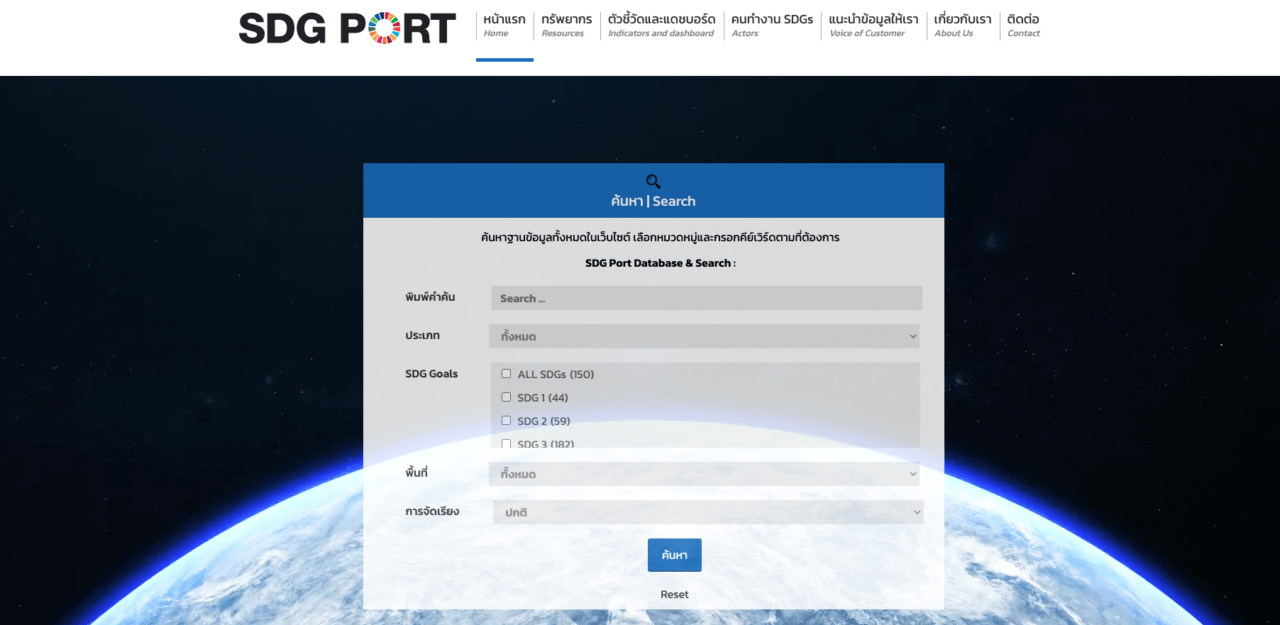
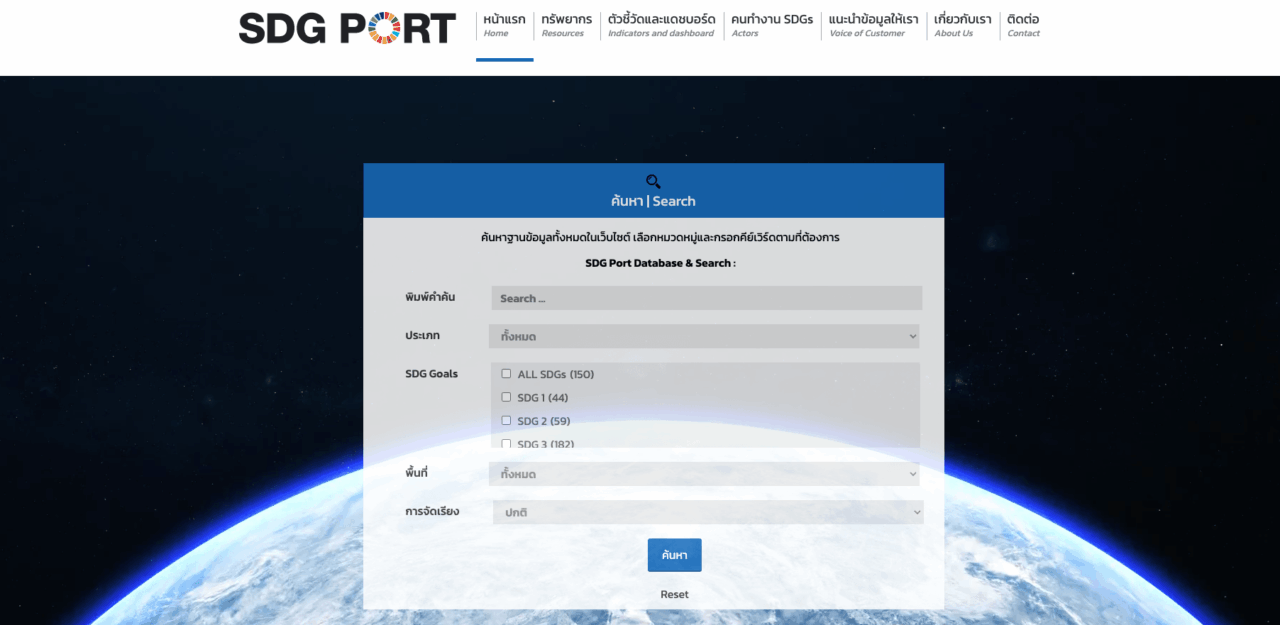
One key initiative is the collaboration on data collection to produce “the SDG Portal”, a significant output of the project “Communicating Knowledge and Monitoring the Implementation of SDGs in Thailand.” This project, primarily led by SDG Move, is supported by IHPP Foundation, a non-profit think tank on international health policies. Together, they aim to create a Knowledge Hub that consolidates diverse SDG-related information, leveraging existing databases and educational resources from various agencies dedicated to advancing the SDGs. (SDG portal Homepage: https://www.sdgport-th.org)
The Knowledge Hub features three main components:
Resources: A variety of documents, including research reports, journals, articles, books, manuals, and promotional materials in different formats.
Indicators: Annual progress data presented in global dashboards from the Sustainable Development Report and specific progress data for Thailand from the National Economic and Social Development Council (NESDC).
Actors: Information about organizations involved in driving the SDGs at all levels, including international bodies, government agencies, academia, the private sector, and civil society.
Moreover, the platform encourages users to contribute by suggesting additional resources or academic works, enhancing the comprehensiveness of the database and fostering collaboration in the ongoing effort to monitor and assess progress on the SDGs in both area-based and issue-based contexts. Through these initiatives, Thammasat University not only contributes to data gathering and analysis but also promotes an inclusive approach to sustainability efforts in Thailand and beyond.
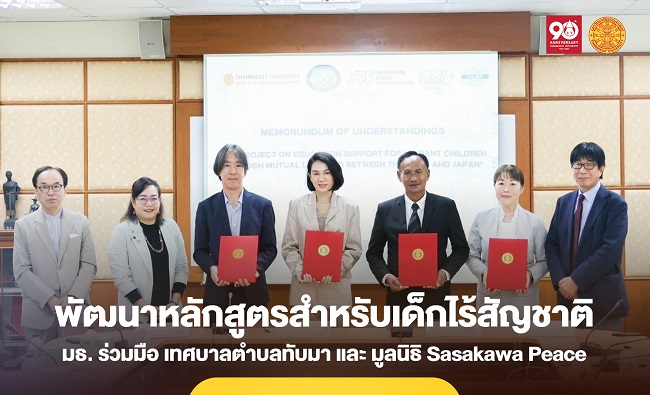
Developing Educational Resources with NGOs: Through SDG Move (SDSN Thailand), Thammasat partnered with the IHPP Foundation to launch the SDG Port—a national knowledge hub consolidating SDG-related data and learning materials. At the community level, Thammasat’s Faculty of Social Administration and the Sasakawa Peace Foundation co-created curricula for stateless children, promoting educational equity.
Collaborative Research for Community Resilience: The Puey Ungphakorn School of Development Studies partnered with local NGOs to study community innovations during the COVID-19 pandemic, producing research that strengthens primary healthcare systems and informs national policy on community resilience.
Student Engagement and Educational Transformation: In the “Ecosystem of Meaningful Learning and Happiness” project, Thammasat’s Faculty of Learning Sciences and Education worked with the Jaika Ting Foundation to engage students and teachers in hands-on learning innovation across schools in Phichit Province—linking education reform to SDG 4: Quality Education through creative, community-based initiatives.
Thammasat University is deeply committed to addressing the world’s most pressing challenges, utilizing the Sustainable Development Goals (SDGs) as a guiding framework. Recognizing that meaningful change cannot be achieved in isolation, the university actively fosters deep, cross-sectoral collaborations, particularly with Non-Governmental Organizations (NGOs).
These vital partnerships bridge the gap between academia and society, transforming shared goals into tangible outcomes. These collaborations are activated across three core pillars: developing inclusive educational resources, conducting high-impact public research, and fostering hands-on student engagement.
Development of Educational Resources
A cornerstone of Thammasat’s strategy involves co-creating educational resources that target both specific communities and the nation at large.
On a national scale, Thammasat University, through its SDG Move initiative at the Faculty of Economics, serves as the host of the Sustainable Development Solutions Network (SDSN) Thailand. In this pivotal role, Thammasat partners with the IHPP Foundation, a non-profit think tank, to produce “the SDG Port.” This key initiative creates a centralized Knowledge Hub, consolidating diverse SDG-related data and educational resources from various agencies to monitor and advance sustainable development in Thailand.
The Faculty of Social Administration, for instance, has partnered with the Sasakawa Peace Foundation to develop a specialized learning curriculum for stateless children. This initiative directly addresses educational inequality (SDG 4 and 10), ensuring that vulnerable children gain access to the knowledge and skills necessary for their development and to improve their quality of life.
Similarly, the “Ploi Sang School” (Letting Shine School) project, led by the Faculty of Learning Sciences and Education, collaborates with NGOs like the Korkankru (Teacher Uprising Group) and the Foundation for the Promotion of Reading Culture. This project moves learning beyond the traditional classroom, working to build a healthy learning ecosystem by developing teacher capacity and empowering students.
Driving Impact Through Collaborative Research
Thammasat’s research mission is intrinsically linked to solving public problems, a goal amplified through partnerships with civil society.
The Puey Ungphakorn School of Development Studies is leading a critical research project to enhance community resilience against health crises. This project, which analyzes community-led innovations that emerged during the COVID-19 pandemic, is conducted in close collaboration with government health agencies and various NGOs that serve as local “mentors.” By working together, the university and its NGO partners are analyzing community-based solutions to strengthen primary healthcare systems and develop national policy proposals.
Thammasat is dedicated to connecting students directly with community challenges while simultaneously working to improve educational systems from the ground up.
A prime example is the “Ecosystem of Meaningful Learning and Happiness” project, led by the Faculty of Learning Sciences and Education in collaboration with the Jaika Ting Foundation. This initiative, part of the national Partnership School Project, targets four schools in Phichit Province (Bang Mun Nak, Wat Ban Huai Yao, Wang Takur, and Ban Noi Pruk).
The project’s goal is to enhance educational management and quality by leveraging Phichit’s local resources and collaborative networks. It addresses key challenges, such as adapting classroom management to students’ specific contexts and ensuring academic strategies meet community requirements.
The project operates on three distinct levels:
Institutional Level: Encouraging schools to transform into lifelong learning spaces by adapting curricula to real-life needs and fostering multi-grade learning to optimize resources.
Network Level: Building connections among educational institutions, communities, and the public and private sectors to mobilize resources for development.
Policy Level: Utilizing findings to inform policy recommendations aimed at enhancing small and medium-sized schools nationwide.
Core activities include empowering teachers as change leaders through modules emphasizing self-awareness and innovative teaching practices. The project also engages students in creative camps, focusing on skills like video production and community theater, which foster critical skills and connect them directly to their local contexts. This multi-level collaboration directly embodies a commitment to achieving Sustainable Development Goal 4: Quality Education.
These collaborations—spanning high-impact research, inclusive educational development, and student-led community service—are fundamental to Thammasat University’s role as an engine for social progress. By partnering with dedicated NGOs, Thammasat ensures that its academic expertise is effectively translated into scalable solutions and lasting sustainable development for Thailand and the region.
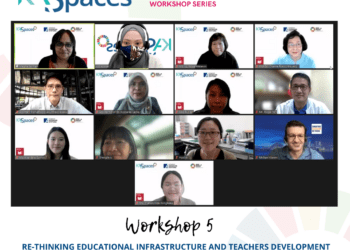
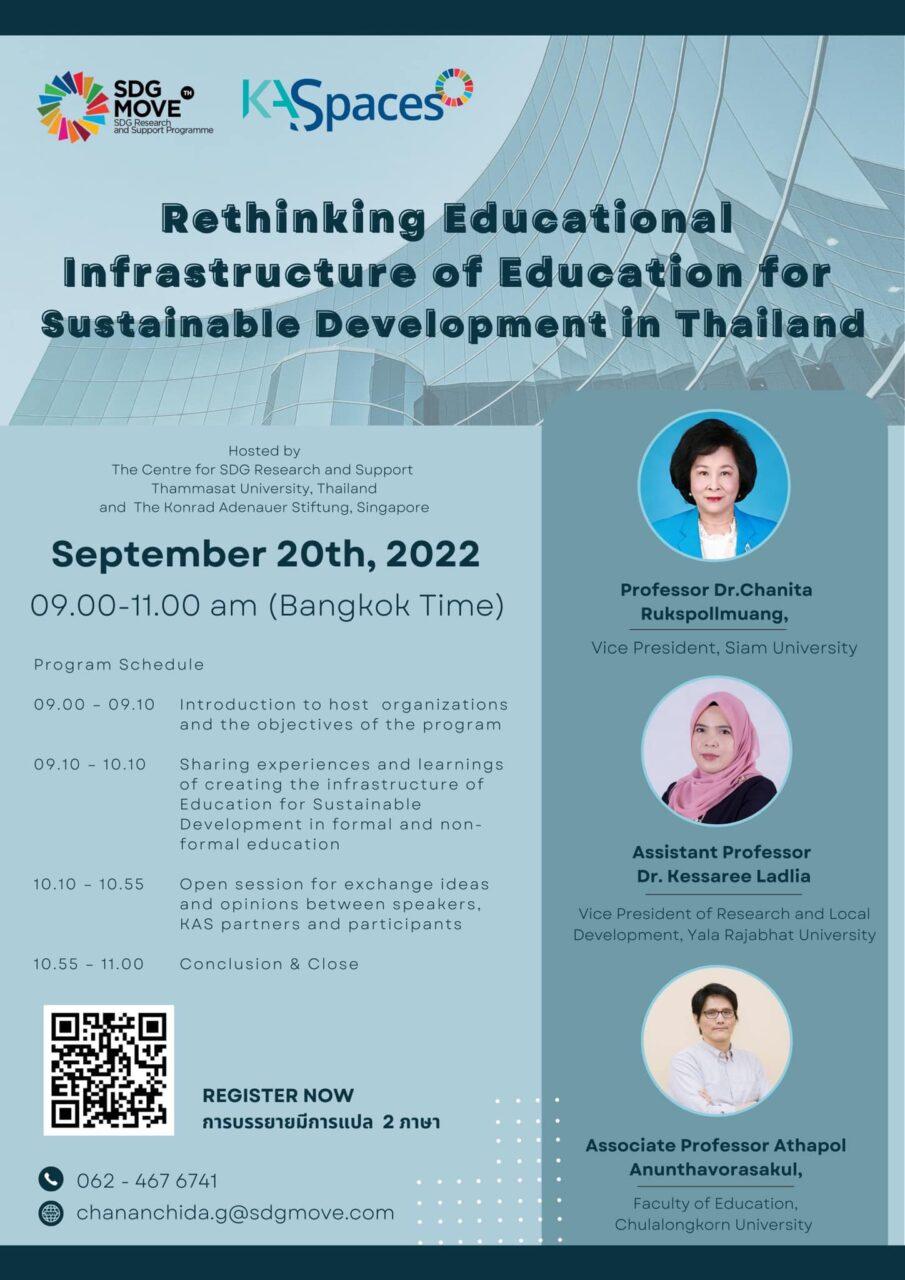
Thammasat University’s Centre for SDG Research and Support (SDG Move), as the national host of SDSN Thailand, organized an international online workshop on “Rethinking Educational Infrastructure for Education for Sustainable Development in Thailand” on September 20, 2022. Part of the KASpaces series initiated by Konrad Adenauer Singapore, the workshop featured insights from Thai universities and engaged partners from 12 countries. This event highlighted collaborative efforts to advance sustainable education practices across Asia.
At the beginning of the academic year 2022-2023, on September 20th, 2022, the Centre for SDG Research and Support (SDG Move), Thammasat University, as a national host of SDSN Thailand, organized an online workshop on the topic of “Rethinking Educational Infrastructure for Education for Sustainable Development in Thailand”.
In this workshop, SDG Move engaged national experts on Education for Sustainable Development from Chulalongkorn University, Siam University, and Rajabhat Yala University to share their experiences and lessons learned in relation to the topic of the workshop. Participants include partners in the 12 countries, representatives from Konrad Adenauer Singapore, and the public.
This workshop was the 5th workshop in a workshop series called KASpaces, started in 2021. KASPaces is an international effort, initiated by Konrad Adenauer Singapore with partners in 12 countries. Thailand is one of the countries and SDG Move, Thammasat University was the main partner in Thailand. This project covers 12 countries including, Thailand, Cambodia, Indonesia, South Korea, Bhutan, Bangladesh, Malaysia, Pakistan, The Philippines, India, Taiwan.
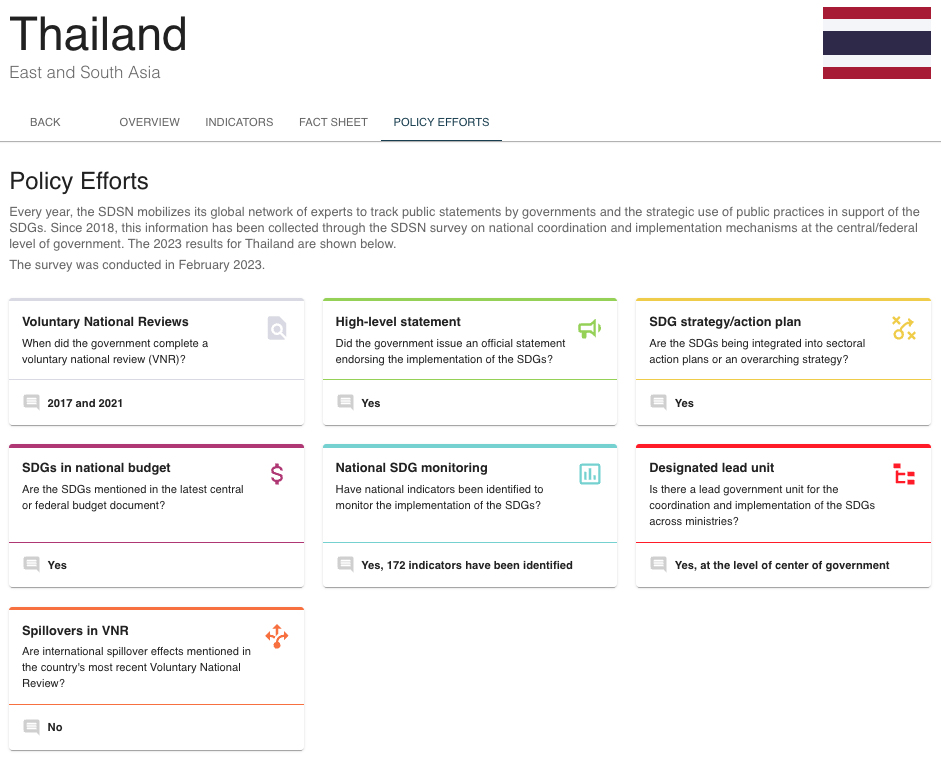
In 2023, Thammasat University as the national host of SDSN Thailand was collaborating with UNSDSN, an international academic network supporting Sustainable Development Goals under the auspices of the UN Secretary General, in collecting data on government efforts for achieving the SDGs along with other 73 countries.
Sustainable Development Report 2023 was the second edition of the report that includes the assessment of the government’s SDG effort. To create the assessment, UN Sustainable Development Solutions Network asked all of its national chapter’s host to collaborate in gathering data on the government SDG’s effort. The output of the collaboration is published in the Sustainable Development Report 2023.
Thammasat University, by the SDG Move under the Faculty of Economics, is the national host of SDSN Thailand and was collaborating in the data collection process to produce this result.
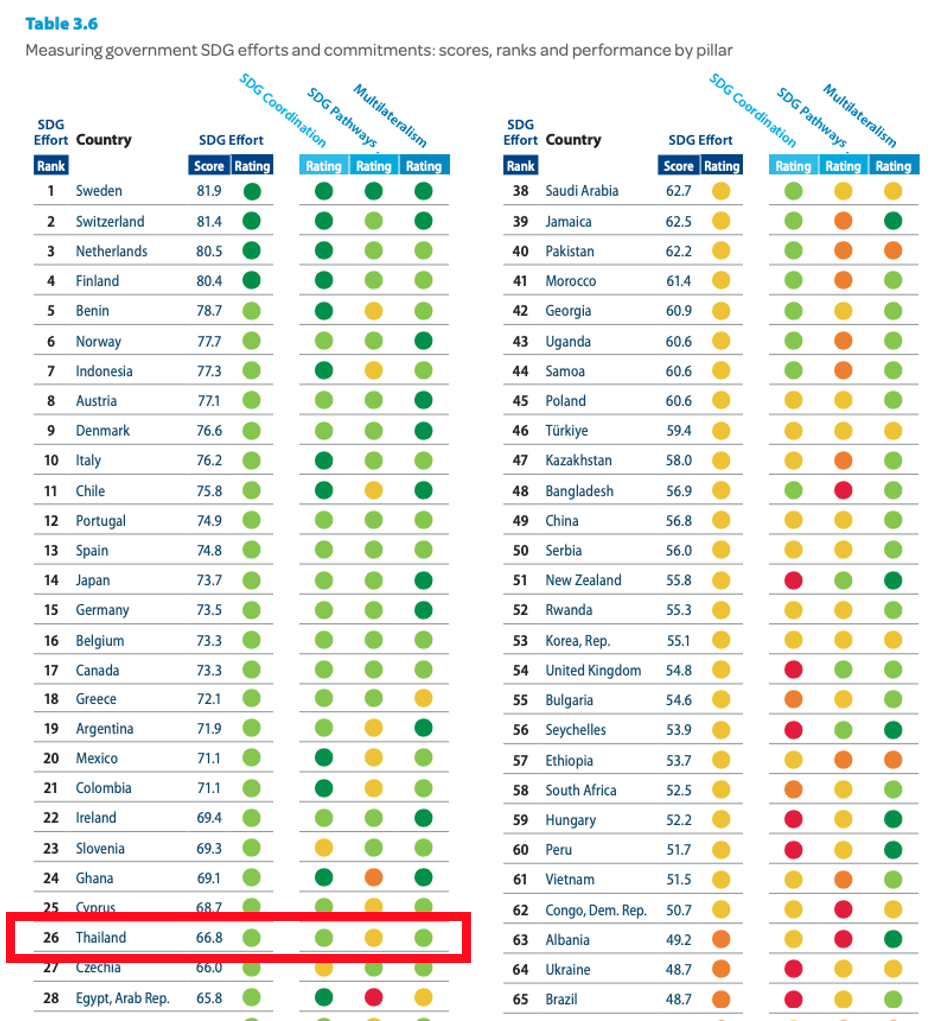
Thailand was classified as a country with high SDG commitment, ranked 26th from 74 countries being assessed. SDG coordination and multilateralism were assessed as high efforts, while having SDG pathways was assessed as moderate.
Source: Sustainable Development Report 2023, page 72.
Thammasat University’s Active Role in SDG Dialogue: Through the Centre for SDG Research and Support (SDG Move), Thammasat has actively led cross-sectoral discussions on SDGs, demonstrated by key events like the Thailand Sustainable Development Forum 2023, which showcased local sustainable development projects and launched critical SDG publications.
Collaborative Seminars on Policy and Governance: Thammasat hosted significant seminars in 2023 on pressing issues such as sustainable energy transition and governance, bringing together policymakers, academics, and experts to explore solutions for Thailand’s sustainability challenges.
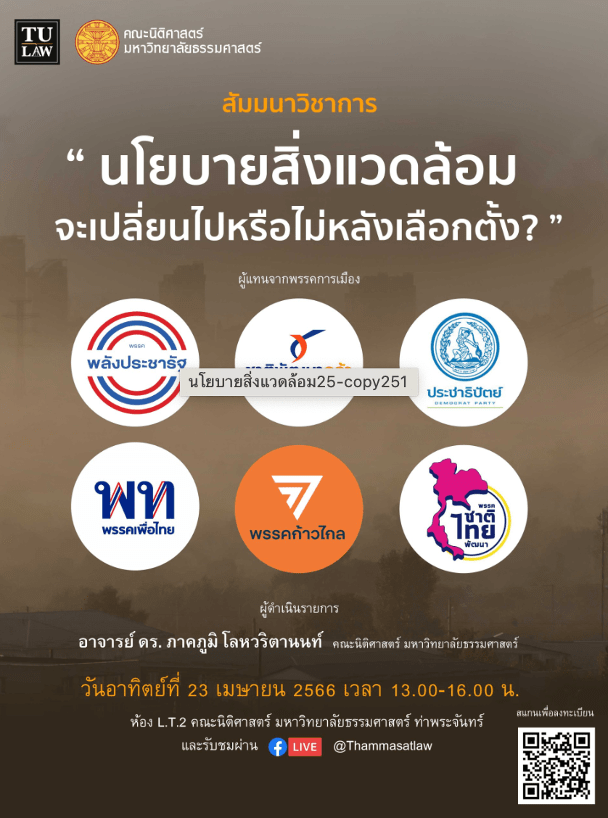
Engagement with Political Leaders on Environmental Policy: In a seminar on April 23, 2023, Thammasat facilitated a dialogue with representatives from multiple political parties to discuss Thailand’s environmental policy, underscoring its role in fostering policy discussions that align with sustainable development objectives.
Thammasat University has taken a proactive role in fostering cross-sectoral dialogue on the Sustainable Development Goals (SDGs) through various initiatives, particularly via the Centre for SDG Research and Support (SDG Move) throughout 2023.
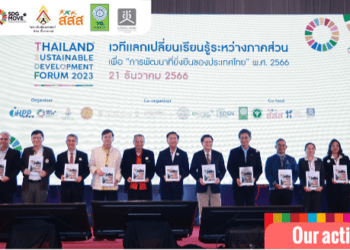
A significant highlight was the “Thailand Sustainable Development Forum 2023,” held on December 21, 2023. Co-hosted by the International Health Policy Program (IHPP) of the Ministry of Public Health, the event featured the launch of key publications, including the “Thailand Sustainable Development Report” and “Community Journeys: 5 Learning Areas and Sustainable Development.” The forum emphasized local-level sustainable development initiatives from five communities, showcasing practical approaches to the SDGs. The seminar on the Community Journeys was a dialogue between community representatives from the selected learning areas and participants who were scholars and government officers.
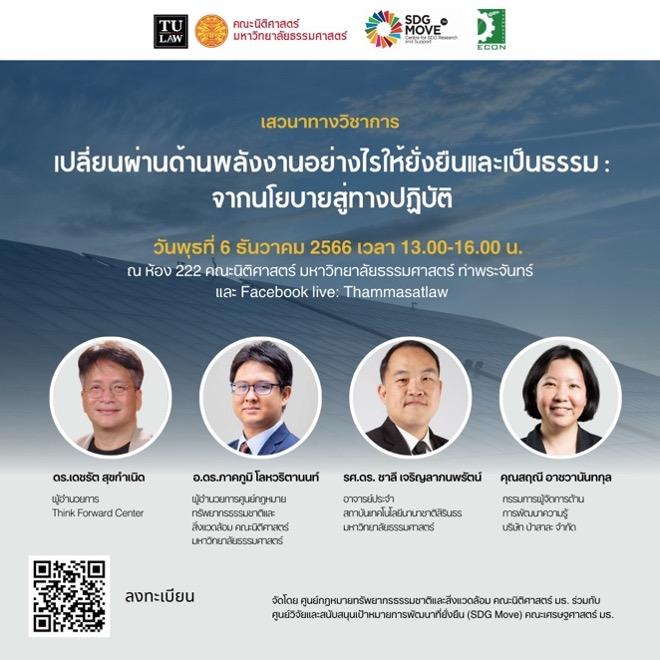
On December 6, 2023, the Center for Natural Resources and Environmental Law at Thammasat University, in collaboration with the Research and Support Center for Sustainable Development Goals (SDG Move) at the Faculty of Economics, organized an academic seminar titled “How to Achieve a Sustainable and Just Energy Transition: From Policy to Practice.” The panelists included two scholars, i.e. one from Faculty of Law, the other from Sirinthorn International Institute of Technology, Thammasat University, one is director of a political think tank, and the other was scholar from a sustainability research company.
Earlier, on June 8, 2023, Thammasat’s Centre for SDG Research and Support hosted a seminar titled “Broken Governance | The Decay of Governance = The Root of Thailand’s Unsustainability,” where experts discussed critical issues affecting governance in Thailand, highlighting the need for improved corporate governance and the impacts of decentralization. The panelists included two scholars, one director of a civil society organization, and one scholar from sustainability research company.
Other notable events included a seminar on April 23, 2023. The Center for Natural Resources and Environmental Law at Thammasat University organized an academic seminar titled “Will Environmental Policy Change After the Election?” at Thammasat University, Tha Phra Chan Campus. Representatives from various political parties participated in the discussion, including the Palang Pracharath Party, the Chart Patthana Kla Party, the Democrat Party, the Pheu Thai Party, the Move Forward Party, and the Chart Thai Pattana. Party.
Thammasat University is actively contributing to SDG policy development through the “AREA Need” project, which identifies and prioritizes regional needs to support sustainable development strategies at the national level.
In 2023, Thammasat University, through SDG Move and regional working groups across Thailand, is launching the “AREA Need” project, funded by Thailand Science Research and Innovation (TSRI). This initiative aims to identify local needs and knowledge gaps to develop effective research funding strategies for sustainable regional development.
The project has two main steps: first, it employs the Sustainable Development Goals (SDGs) framework, which includes social, economic, environmental, peace, and justice dimensions, to identify these regional sustainability challenges. Horizon Scanning, one of the foresight techniques, and Adapted Delphi method with experts from various disciplines and sectors were used to explore, scope down and prioritize these challenges in each region.
Second, it engages stakeholders in participatory foresight discussions to envision future directions for their communities. The outcomes will help formulate further research granting programmes related to critical knowledge gaps for sustainable development, ultimately improving local quality of life and supporting government efforts to integrate SDGs at all levels. This process is vital for shaping national research strategies and optimizing research budgets for effective investments in sustainable development. See the outcomes of key findings in each region of Thailand below.