SDG 5 Achieve gender equality and empower all women and girls

SDG 5 in numbers

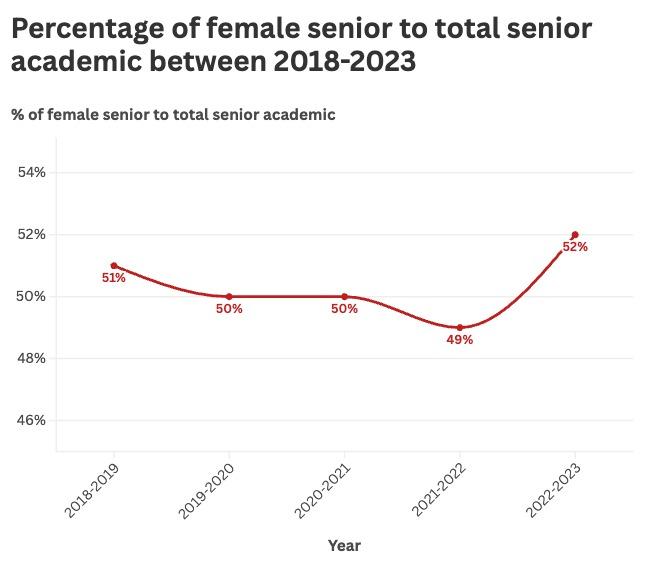
The graph shows the percentage of female senior academics at Thammasat University from 2018 to 2023, starting at 51% in 2018–2019, dropping to 49% in 2021–2022, and peaking at 52% in 2022–2023. This trend reveals a slight decline followed by a recent increase, reflecting a positive shift in female representation among senior academics.
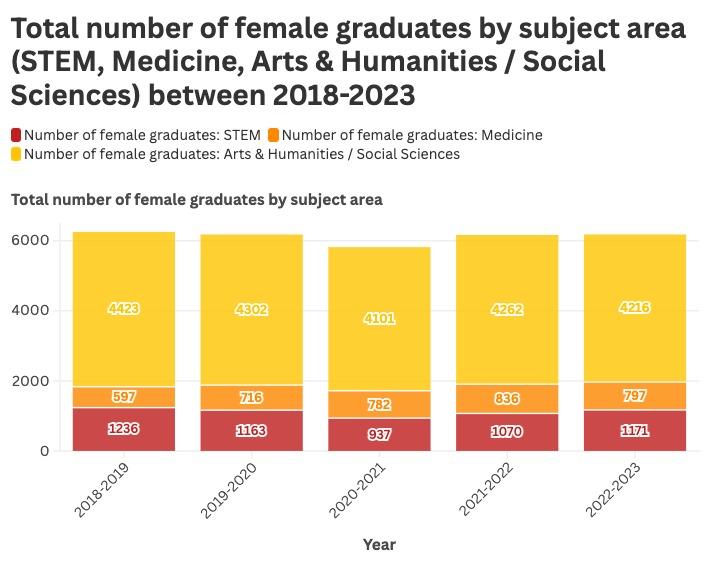
The graph shows the number of female graduates at Thammasat University from 2018 to 2023 by subject: Arts & Humanities/Social Sciences, STEM, and Medicine. Arts & Humanities consistently leads, with a slight decrease from 4,423 in 2018–2019 to 4,216 in 2022–2023. STEM fluctuates, while Medicine shows a steady rise, reaching 797 graduates in 2022–2023.
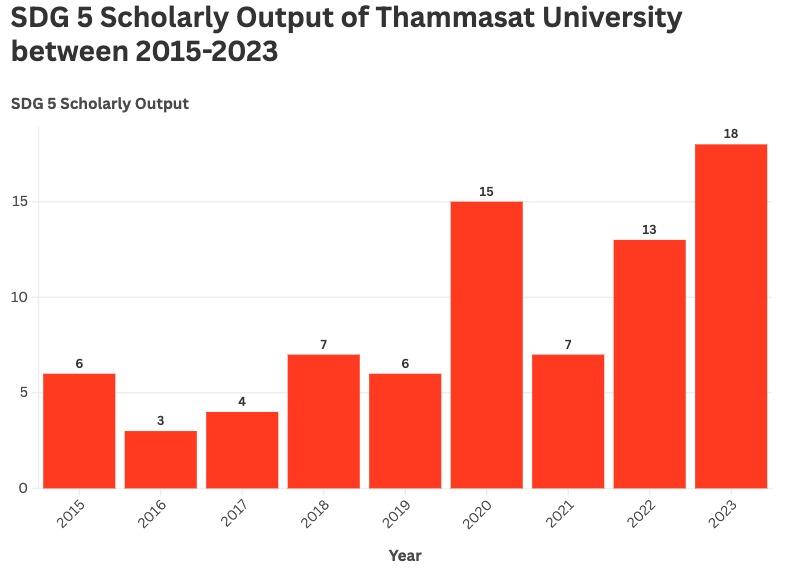
The graph shows Thammasat University’s scholarly output on SDG 5 (Gender Equality) from 2015 to 2023, starting with 6 publications in 2015, peaking at 18 in 2023. Despite fluctuations, including a high of 15 in 2020 and a dip to 7 in 2021, the trend reflects a growing focus on gender equality research in recent years.

Research in SDG 5

Breaking Boundaries: Thammasat University’s Bold Pursuit of Gender Equality Across Culture, Health, and Leadership

Thammasat University scholars contribute to SDG 5: Gender Equality through various thematic clusters, addressing social, economic, health, and cultural dimensions. Their research highlights gender equality across societal challenges, workplace dynamics, healthcare access, and sociocultural norms.

A major focus is on gender roles and workplace diversity. Studies examine the influence of female representation on corporate governance and management ethics, showing how gender diversity in leadership enhances equitable practices and empowers women within organizations.

Another key cluster addresses gender, health, and reproductive rights, particularly for marginalized groups. Research on sexual and reproductive health for women, transgender individuals, and migrants explores barriers to healthcare access. Notable studies include work on reproductive health for Myanmar migrant women in Thailand and HIV prevention for transgender women and men who have sex with men, highlighting the need for inclusive, culturally sensitive healthcare policies.

Gender-based violence and harassment also feature prominently in Thammasat’s research. Studies investigate gender-based harassment in public spaces, cyberbullying in schools, and domestic violence, aiming to inform policies that reduce violence against women. These efforts emphasize the importance of public safety measures and educational initiatives to create safer environments for women and gender minorities.

Finally, Thammasat scholars explore socio-cultural constructs of gender and sexuality, analyzing traditional and modern gender roles in Thailand and beyond. Research includes cultural narratives in media, the experiences of drag performers, and challenges faced by transgender youth, promoting greater cultural acceptance and gender inclusivity.

Through these thematic clusters, Thammasat University’s research makes significant contributions to SDG 5, addressing systemic barriers to gender equality and proposing pathways toward a more inclusive society.

Outreach and Academic Services in SDG 5

Thammasat University actively engages in community service projects aligned with SDG 5 (Gender Equality), drawing on expertise from various faculties, including social sciences, sciences, and interdisciplinary studies. These initiatives aim to raise awareness of gender issues and combat societal gender biases.

One key project is the workshop “Five Years After COVID-19: Perspectives on Labor, Family, and Gender—Voices from Women in Close-Contact Work Sectors,” organized by the Faculty of Sociology and Anthropology. The seminar provided a platform for women in vulnerable sectors to share their experiences, particularly during the COVID-19 pandemic, highlighting the challenges faced by female workers and promoting policies addressing their needs.

The Faculty of Social Administration has supported gender equality through the “Happy Family and Happy Kids” project, which assists single-parent families, many of which are headed by women. The project offers welfare support and empowerment, aiming to create equal opportunities for women and children in vulnerable situations. The faculty has also organized lectures on child and family welfare policies to raise awareness of women’s and children’s rights.

The Institute for Continuing Education and Human Resources Development launched a legal education program focused on family and inheritance laws to reduce biases and inequalities stemming from misunderstandings of rights, especially concerning women’s rights within families.

In cultural and media studies, the College of Interdisciplinary Studies promotes gender diversity through projects like “Depiction of LGBTQs in Literary Texts” and “LGBT+ VOICES in Art History,” fostering understanding and societal acceptance of diverse sexual orientations.

These interdisciplinary projects demonstrate Thammasat University’s commitment to promoting gender equality by utilizing knowledge from various fields to address gender biases and create positive societal impact.

Featured Stories

Women’s Access Schemes and Service Programs

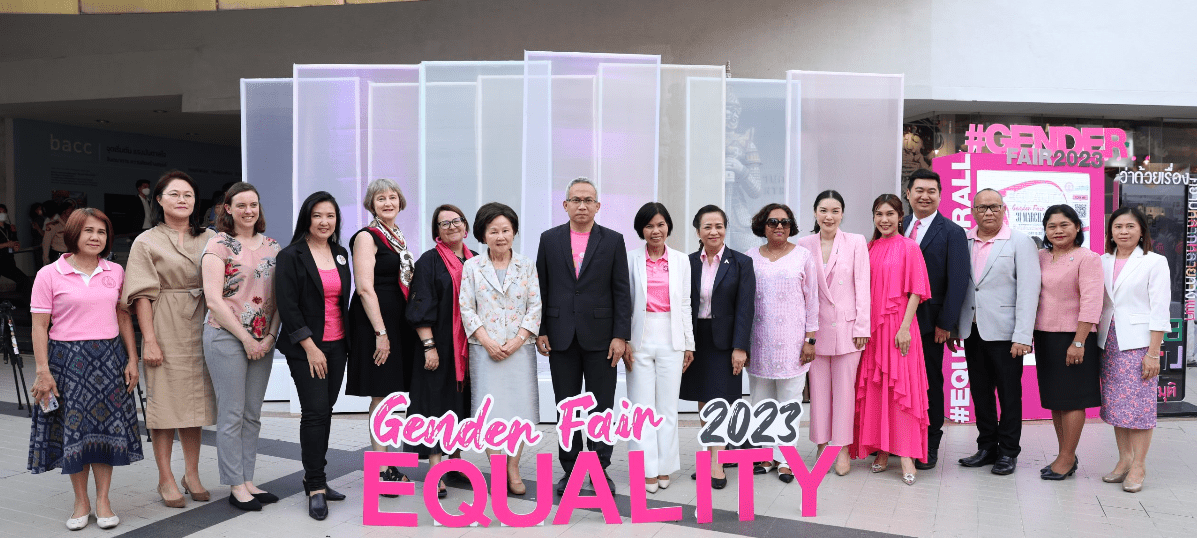
Thammasat University is dedicated to creating a gender-inclusive and equitable environment for all, actively preventing discrimination and harassment related to gender, sexual orientation, identity, and disability. With over 65% of students being women, we prioritize gender equality, diversity, and inclusion through our “Policy on Gender Equality and Non-Discrimination Against Women.”

Our initiatives include scholarships, especially for women from rural, low-income, and underrepresented groups, as well as mental health care and childcare support for female students and staff with children.
To enhance gender equality, we are:

  1. Promoting Women’s Participation: Increasing female enrollment, especially in fields where women are underrepresented, with over 300 scholarships accessible via TU Scholarship Facebook.
  2. Addressing Gender-Based Barriers: Enforcing policies against discrimination, harassment, and retaliation to ensure women’s full participation in campus life.
  3. Enhancing Leadership Representation: Ensuring job postings and qualifications support gender, age, and ability inclusivity.
  4. Creating a Supportive Environment: Providing counseling, mentorship, and resources to empower women and eliminate gender-based obstacles.
  5. Collaborating with External Partners: Working with agencies, NGOs, and other organizations to promote gender equality, combat discrimination, and create career pathways for female students.

This comprehensive approach fosters a safe, empowering, and inclusive environment for women at Thammasat University.
SDG 4 Ensure inclusive and equitable quality education and promote lifelong learning opportunities for all

SDG 4 in numbers

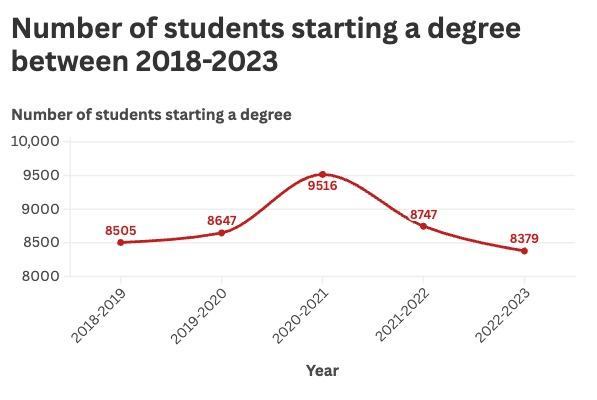
The graph shows Thammasat University’s new enrollments from 2018 to 2023, starting with 8,505 students in 2018–2019, rising to a peak of 9,516 in 2020–2021, then declining to 8,747 in 2021–2022 and 8,379 in 2022–2023. This trend reflects initial growth followed by a steady decrease in recent years.

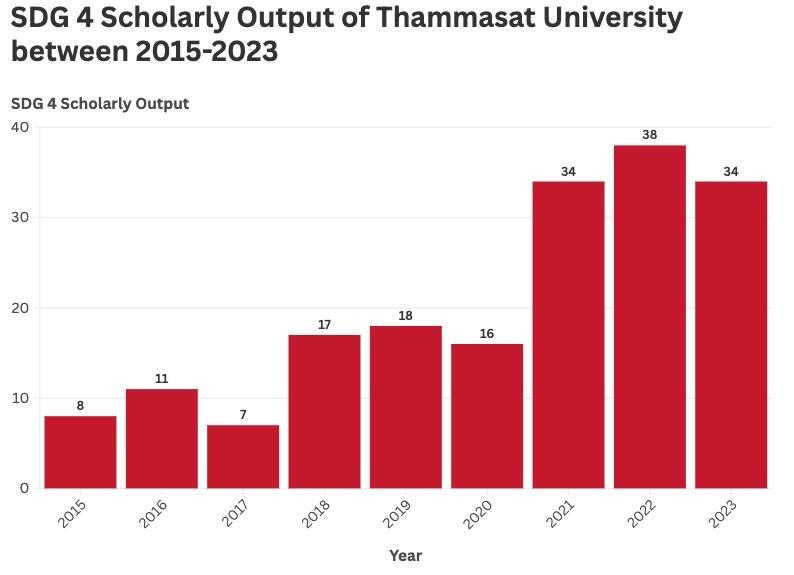
The graph shows Thammasat University’s scholarly output on SDG 4 (Quality Education) from 2015 to 2023. Starting with 8 publications in 2015, output peaked at 38 in 2022, with fluctuations over the years. Despite a slight drop to 34 in 2023, the trend reflects a strong, growing focus on quality education research in recent years.

Research in SDG 4 (2019 – 2024)

Empowering Minds: Thammasat University’s Trailblazing Research for Inclusive and Innovative Education

Thammasat University scholars are actively advancing SDG 4 (Quality Education) through diverse research clusters focused on improving education quality and accessibility in Thailand and beyond.

A significant area of research addresses language and literacy education, particularly in English as a Foreign Language (EFL) settings. Studies explore collaborative teaching techniques, scaffolding, and data-driven learning (DDL), alongside methods to improve reading comprehension. These efforts aim to strengthen foundational literacy and language skills among Thai students, which are essential for broader academic success and competitiveness in global contexts.

Educational technology and digital learning environments represent another major research focus. Scholars at Thammasat are exploring the use of virtual reality (VR) for specialized training, such as in dental and civil engineering programs, and integrating Massive Open Online Courses (MOOCs) and gamified platforms to increase student engagement and promote digital citizenship. This focus on educational technology underscores the university’s commitment to leveraging digital tools to expand access to high-quality education and to tailor learning environments to contemporary needs.

Pedagogical innovation in higher education forms a third important research area. Thammasat scholars are investigating the effectiveness of flipped classrooms, role-playing, and problem-based learning in fields like business and science. These approaches cultivate essential skills like critical thinking, creativity, and adaptability, preparing students for dynamic workforce demands.

Lastly, research on educational equity and inclusivity highlights efforts to address disparities in Thai education, including unequal access to funding, resources, and opportunities. Scholars are developing frameworks to support inclusive learning environments, such as tailored support for hearing-impaired students, to promote equal access to quality education for all learners.

Collectively, these research clusters showcase Thammasat University’s dedication to SDG 4 through an inclusive, innovative, and technology-enhanced approach to education. By focusing on foundational literacy, digital tools, pedagogical innovation, and equity, Thammasat is advancing both the quality and accessibility of education across diverse levels and disciplines.

Outreach and Academic Services in SDG 4

Thammasat University has implemented over 200 social service projects related to SDG 4, “Quality Education,” across various faculties. These initiatives aim to promote knowledge and skills for learners and educators, while fostering collaboration for sustainable education and social development.

The Faculty of Learning Sciences and Education plays a central role, notably through the “Teacher Empowerment” (ก่อการครู) project. This project conducts capacity-building workshops for lead teachers across Thailand, equipping them with modern teaching methods to enhance classroom effectiveness. The faculty also organizes professional networking events to facilitate experience-sharing among teachers nationwide.

The Faculty of Economics contributes to interdisciplinary integration by offering training programs in economics for social studies teachers. This initiative helps educators understand and teach economic concepts in a contemporary, comprehensive manner, preparing students to navigate an increasingly complex society. The integration of economics with education development exemplifies Thammasat’s approach to SDG 4.

The Institute of East Asian Studies offers projects promoting Japanese language and cultural learning, emphasizing cross-cultural understanding. One such initiative is the Kyogen theater performance for high school students, blending language, art, and cultural education to foster a holistic learning experience in a globalized world.

These projects target a diverse range of beneficiaries, including high school teachers and students, university students, and individuals from various organizations. By addressing the specific needs of each group, Thammasat University demonstrates its commitment to advancing quality education in Thailand, aligned with the Sustainable Development Goals. Through interdisciplinary efforts, the university continues to contribute significantly to education reform and development.

Featured Stories

Library of Life

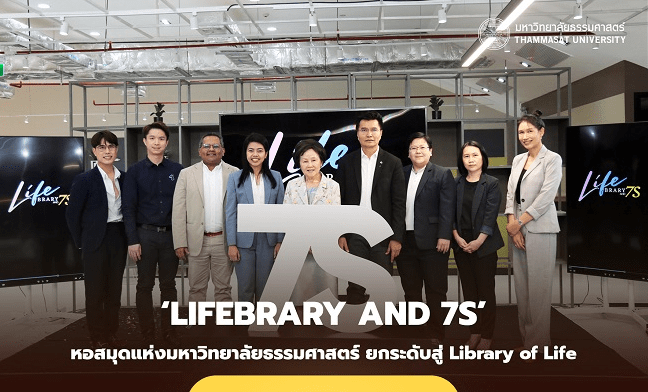
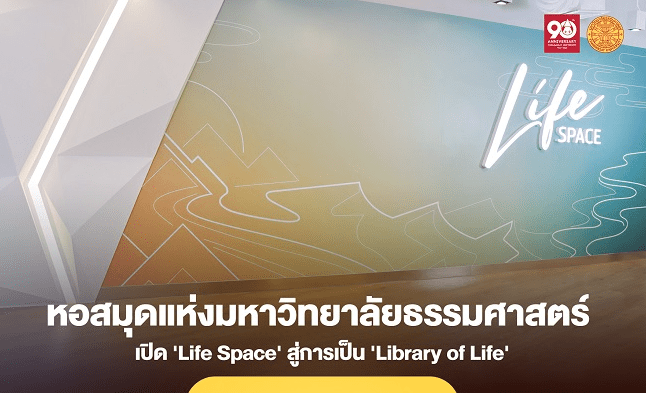
Thammasat University Libraries (TUL) supports SDG 4: Quality Education by offering over 1.3 million books, 2,000 newspaper titles, and access to 100 international databases. With 11 branches and a learning center, TUL provides resources for research, teaching, and learning. The “Life Space” concept promotes lifelong learning with co-working, learning, inspiration, and performance spaces. As part of its Future Workforce strategy, TUL offers dynamic activities and workshops to foster creativity and skill development, ensuring learners are prepared for a rapidly changing world. The Life Space is a model for inclusive, lifelong learning.

Reference:
Thammasat University Library launched ‘Lifebrary and 7S,’ aiming to become the ‘Library of Life.’
Thammasat University Library launched “Life Space,” moving towards becoming the “Library of Life.”

TU Next: Empowering Lifelong Learning for All, Anywhere

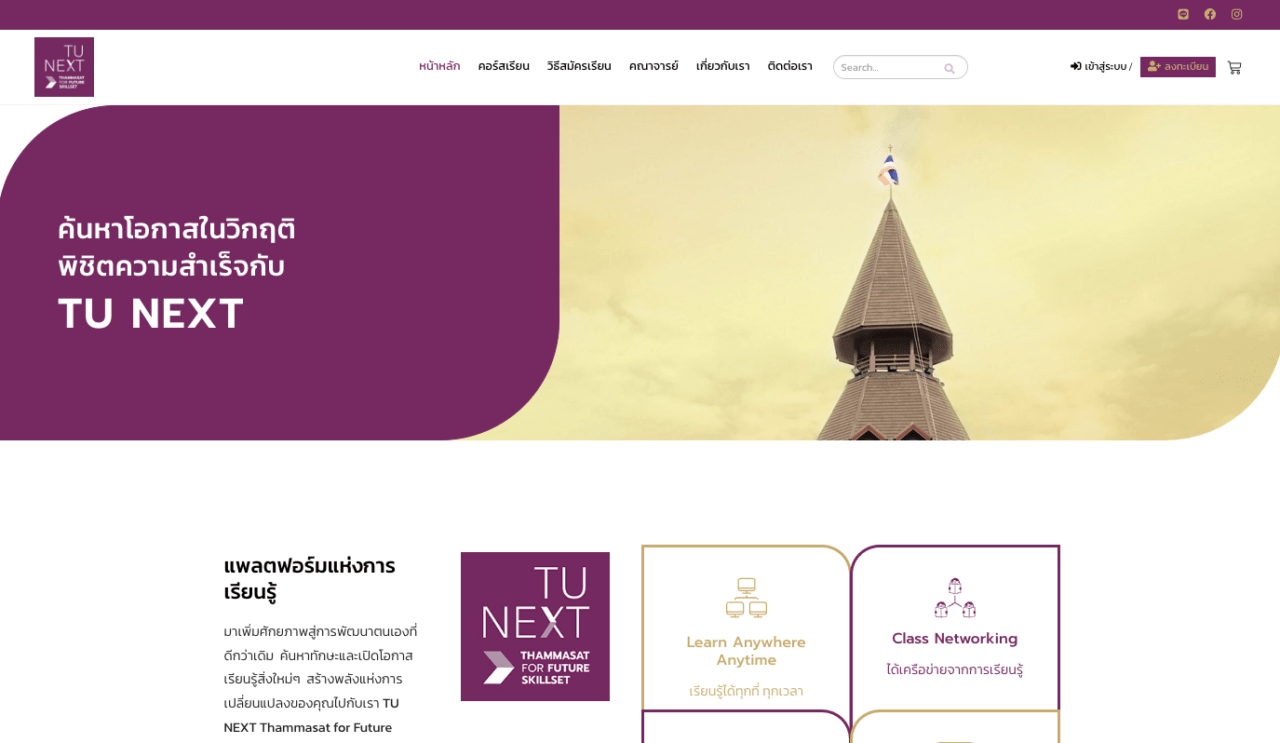
Launched in 2021 by Thammasat University’s Institute for Continuing Education and Human Resources (ICEHR), TU Next is an online platform for Reskilling and Upskilling. Offering flexible learning with the option to Learn Anywhere, Anytime, it provides a variety of free courses across topics like Art, Gen Next Academy, and Human Capital Management. The platform promotes collaboration through Class Networking and awards official TU Certificates. Specialized programs such as M.A.D Bootcamp and Pharmatopia TU support skill development. TU Next’s multi-device access ensures education is inclusive, fostering lifelong learning and enhancing professional credentials.

Reference:

TU NEXT’s Website
Free Online Courses from TU NEXT, Institute of Lifelong Learning and Human Resources, Thammasat University, under the Gen Next Academy

Thammasat University’s Ongoing Outreach: Supporting Rural Education through the National Partnership School Project

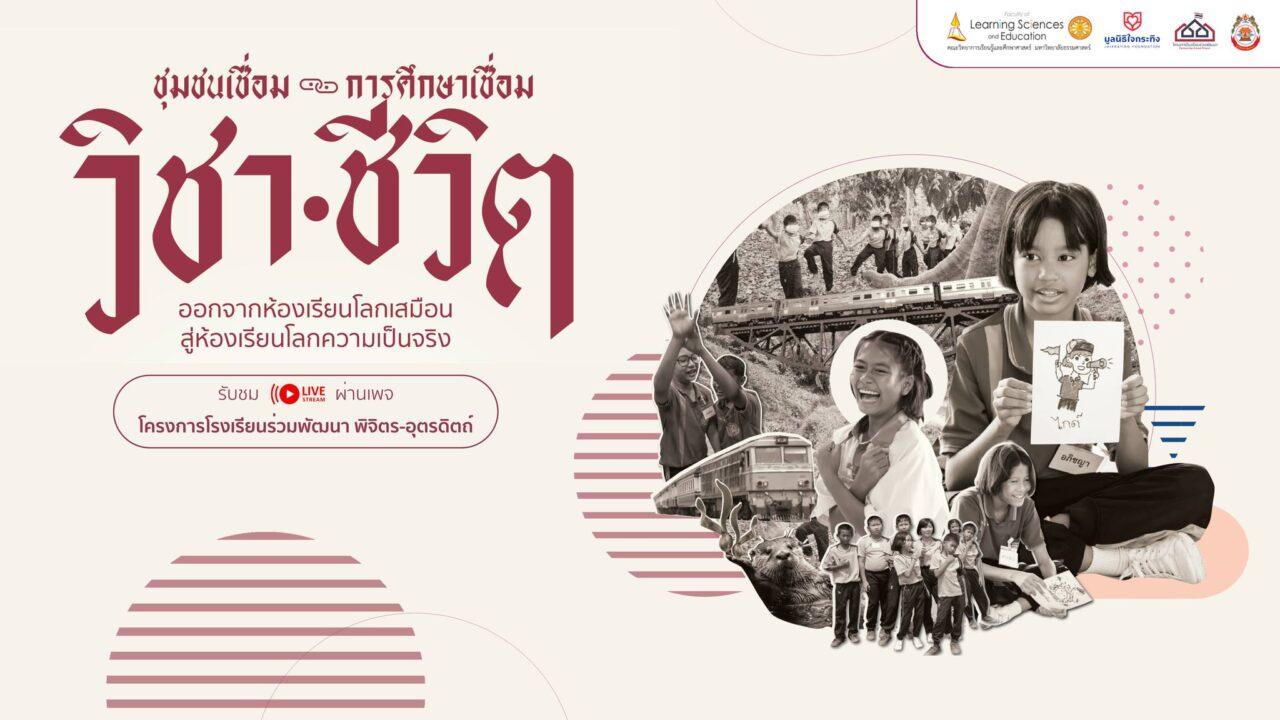
Since 2022, Thammasat University’s Faculty of Learning Sciences and Education, in collaboration with the Jaika Ting Foundation, has been improving education in rural Thailand through the “Ecosystem of Meaningful Learning and Happiness” project. Focused on four schools in Phichit Province—Bang Mun Nak, Wat Ban Huai Yao, Wang Takur, and Ban Noi Pruk Utit—the project aims to address key educational challenges, including curriculum adaptation to real-world needs and the promotion of multi-grade teaching strategies. By empowering teachers as leaders and strengthening community-school relationships, the initiative supports the national Partnership School Project’s goal of transforming education. Thammasat’s efforts align with its mission to ensure inclusive, quality education for all, regardless of location.

Reference:

SDG 3 Ensure healthy lives and promote well-being for all at all ages

SDG 3 in numbers

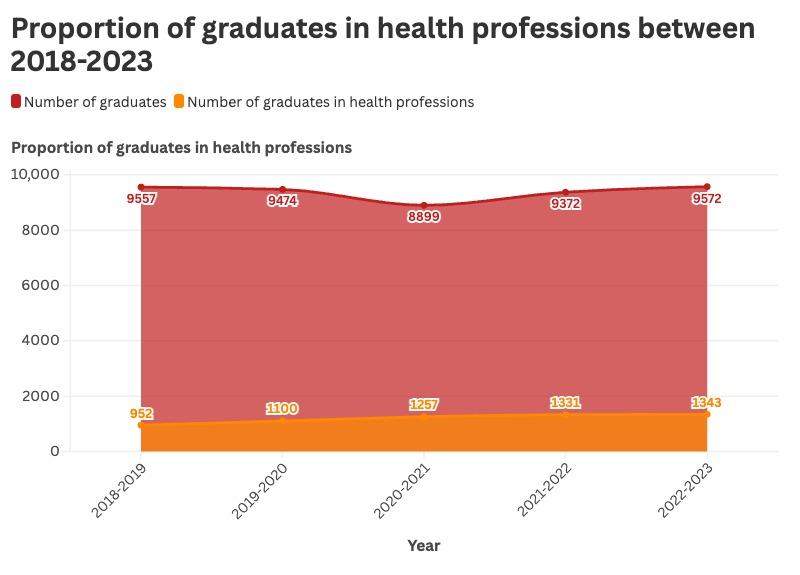
The graph shows a steady rise in health profession graduates at Thammasat University, from 952 in 2018–2019 to 1,343 in 2022–2023, while total graduates fluctuated around 9,000. This trend reflects a growing focus on health professions, with an increasing share of graduates in this field.

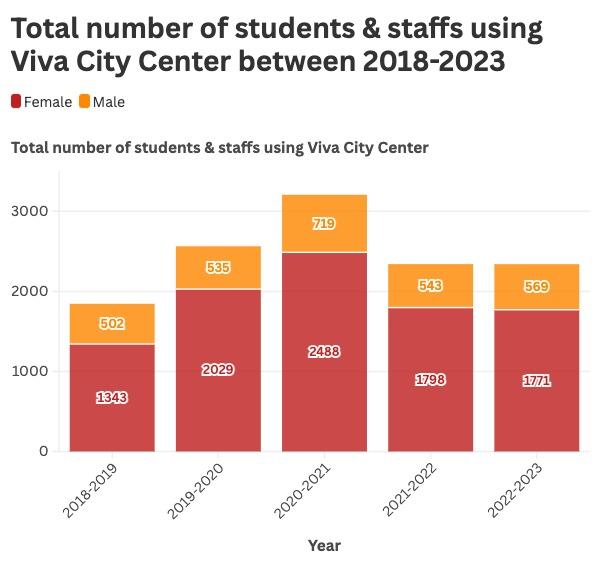
The graph shows Viva City Center usage at Thammasat University from 2018 to 2023, peaking in 2020–2021 with 3,207 users (2,488 females, 719 males) and decreasing to 2,340 users in 2022–2023. Female users consistently outnumbered males, reflecting fluctuating engagement with the center over the years.

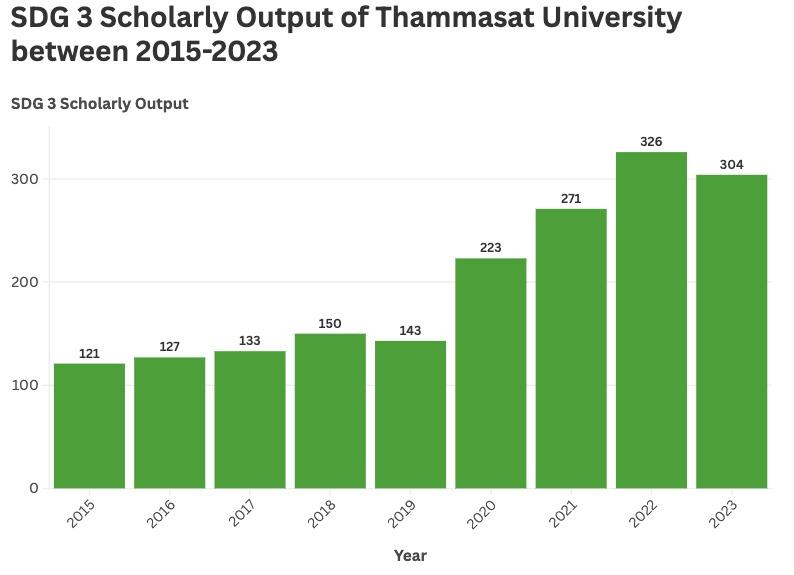
The graph shows Thammasat University’s increasing scholarly output on SDG 3 (Good Health and Well-being), rising from 121 publications in 2015 to a peak of 326 in 2022, with a slight drop to 304 in 2023. This trend highlights a growing emphasis on health-related research, especially in recent years.

Research in SDG 3

Health and Wellness in Action: Key Research Clusters of Thammasat University Scholars on SDG Good Health and Wellbeing

Thammasat University scholars make significant contributions to SDG 3 (Good Health and Wellbeing) through research that spans public health, chronic diseases, infectious diseases, mental health, and healthcare technologies.

A key area of focus is chronic diseases, including diabetes, cardiovascular disease, and cancer. Scholars investigate treatment efficacy, such as GLP-1 receptor agonists for diabetes, and develop predictive tools for cancer survival. Research on liver and kidney diseases and hypertension reflects a strong commitment to managing chronic illnesses that impose a substantial healthcare burden in Thailand.

Infectious disease management is also a major theme, particularly in addressing diseases prevalent in Southeast Asia, such as dengue fever, malaria, and cholangiocarcinoma, which is often linked to liver fluke infections. COVID-19 research has been especially impactful, encompassing vaccine efficacy studies and post-COVID syndrome management, and informing public health policies on vaccination and long-term care strategies.

Mental health research emphasizes issues like depression and anxiety in vulnerable groups, including adolescents and older adults. This focus on mental health as essential to overall wellbeing aligns with a holistic approach to health, which is central to SDG 3.

Thammasat University is also advancing healthcare technologies, developing AI-driven diagnostic tools and mobile health applications to boost health literacy and support patient self-management. These digital health innovations reflect a forward-thinking approach, aimed at improving healthcare accessibility and bridging gaps in patient care.

Together, these research areas underscore Thammasat University’s multifaceted dedication to SDG 3. By emphasizing disease prevention, accessible healthcare, mental health, and innovative solutions, Thammasat scholars are helping to build a more resilient and healthier society, advancing health outcomes across various demographics in Thailand. This integrated approach reflects a comprehensive commitment to addressing public health challenges and enhancing wellbeing.

Outreach and Academic Services in SDG 3

Thammasat University actively supports community health through over 80 projects aligned with SDG 3: Good Health and Well-being. These initiatives involve cross-faculty collaboration to improve public health and quality of life, combining medical and social sciences for sustainable outcomes.

1. Health Education and Skill Development

The Institute for Continuing Education and the Faculty of Nursing provide programs on health literacy, including safe medication use and cancer care nursing, empowering the public to prevent and manage health issues effectively.

2. Care for Vulnerable Groups and the Elderly

The Chulabhorn International College of Medicine (CICM) focuses on elderly care, offering integrated health services in communities like Tha Khong Municipality. The Faculty of Dentistry trains dental professionals to provide specialized care for the elderly and special needs patients, ensuring accessible dental services.
3. Community Health Promotion

The Faculty of Medicine organizes health check-ups and training for public health volunteers and leaders. Programs like asthma awareness and basic life support highlight Thammasat’s commitment to enhancing community health skills.

4. Interdisciplinary Collaboration

Thammasat incorporates social sciences, with the Faculty of Sociology and Anthropology conducting workshops on labor, family, and gender issues post-COVID-19. This approach underscores the role of socio-cultural factors in health.

5. Diverse Target Groups

These projects benefit a wide range of groups, including the elderly, children, vulnerable patients, and public health workers. By engaging multiple faculties, Thammasat maximizes impact, promoting equitable health outcomes.

Thammasat University exemplifies interdisciplinary collaboration, using its knowledge base to advance public health and well-being through SDG 3-focused community service projects.

Featured Stories

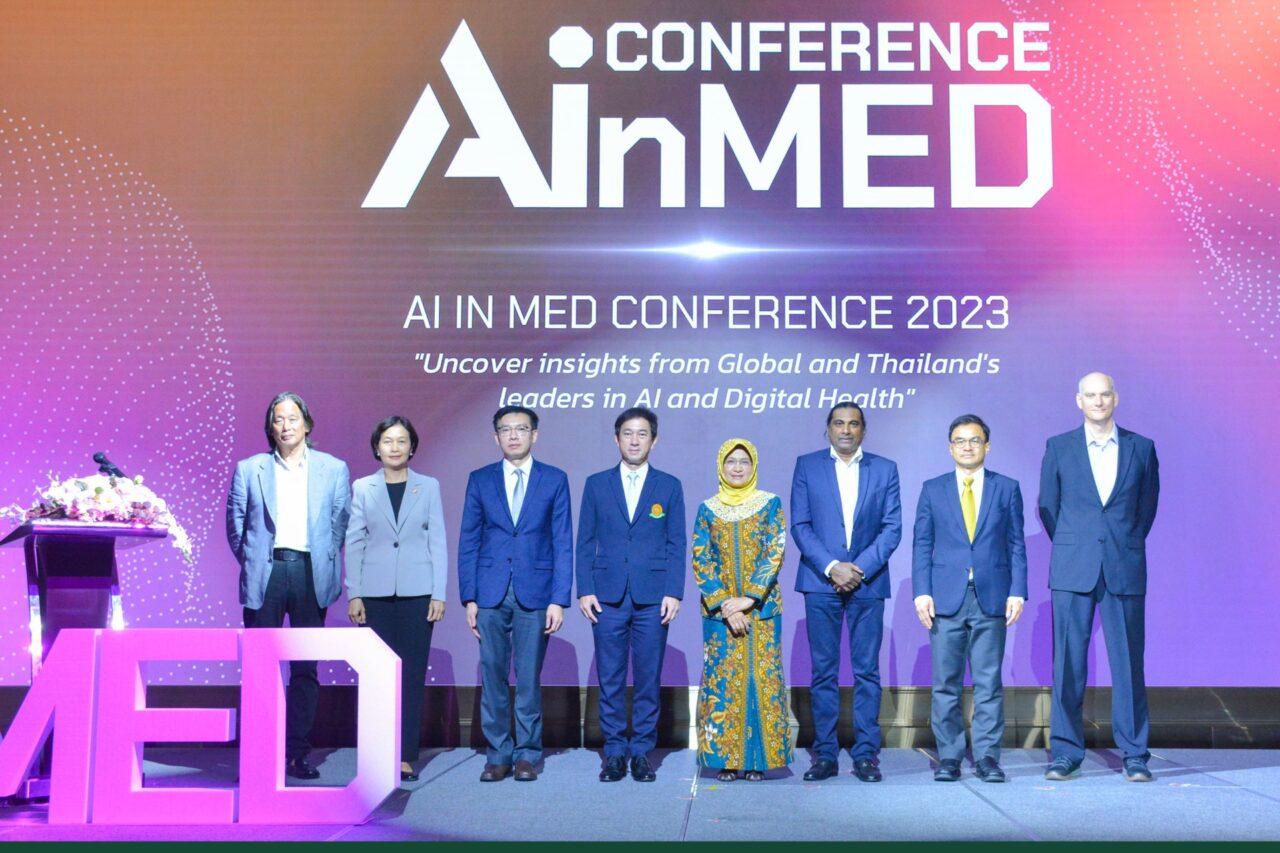
The first AI in Med Conference in Thailand

The Faculty of Medicine, Thammasat University, partnered with the University of Alabama at Birmingham to host Thailand’s first AI in Med Conference 2023. Featuring world-renowned and Thai experts, the event explored cutting-edge innovations in Medical AI and Digital Health. It showcased ideas, experiences, and solutions aimed at advancing technology and medicine. The conference underscored a commitment to revolutionizing healthcare in Thailand through impactful AI applications and pioneering developments in the field.

Mobile Health Services Units

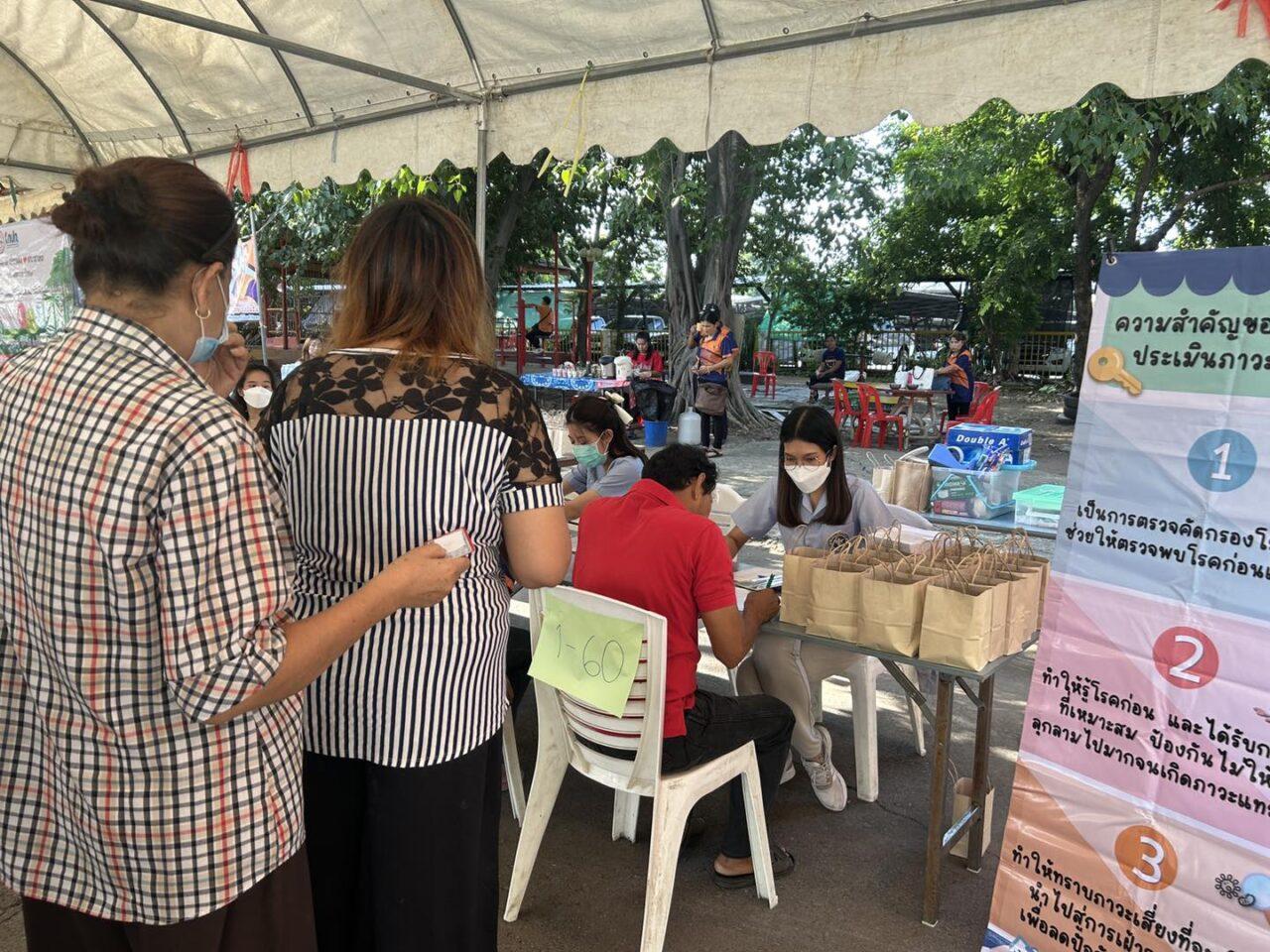
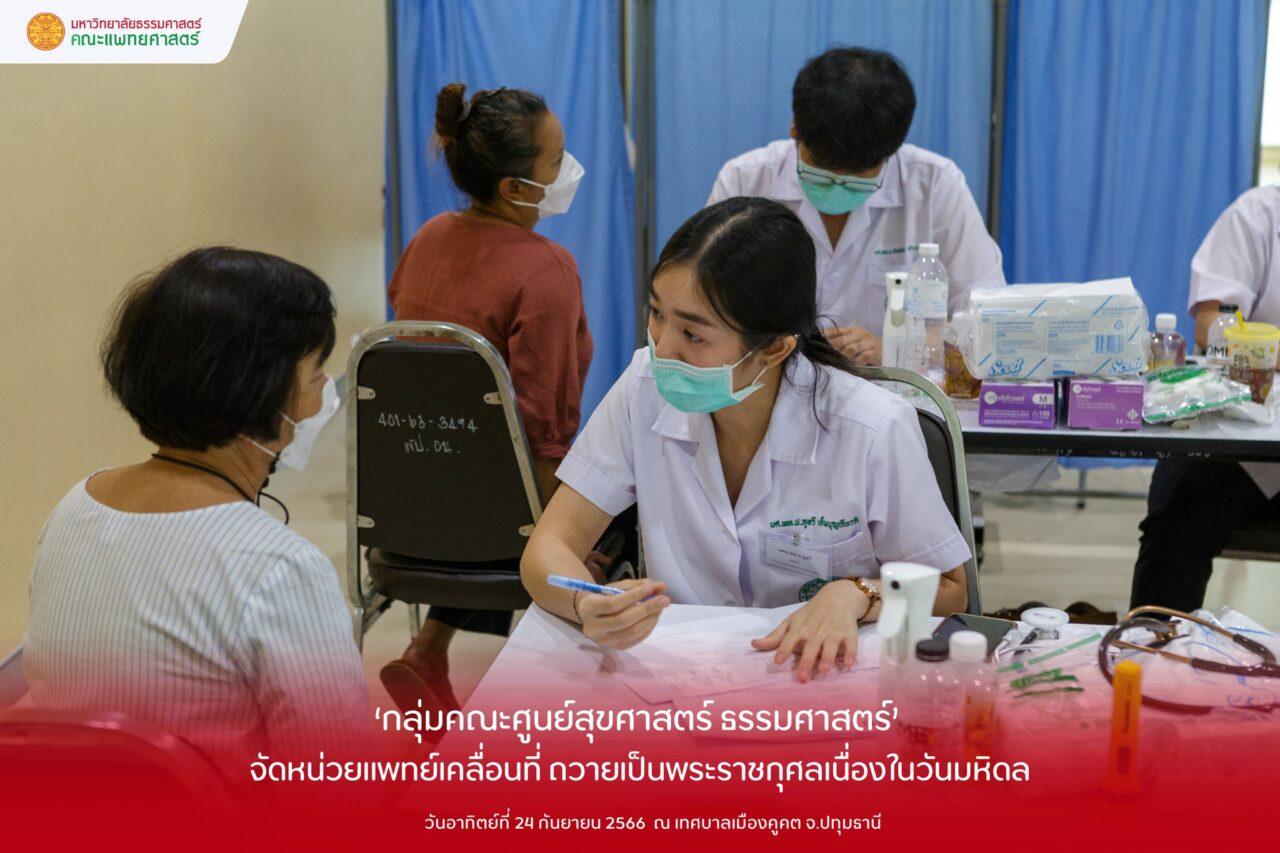
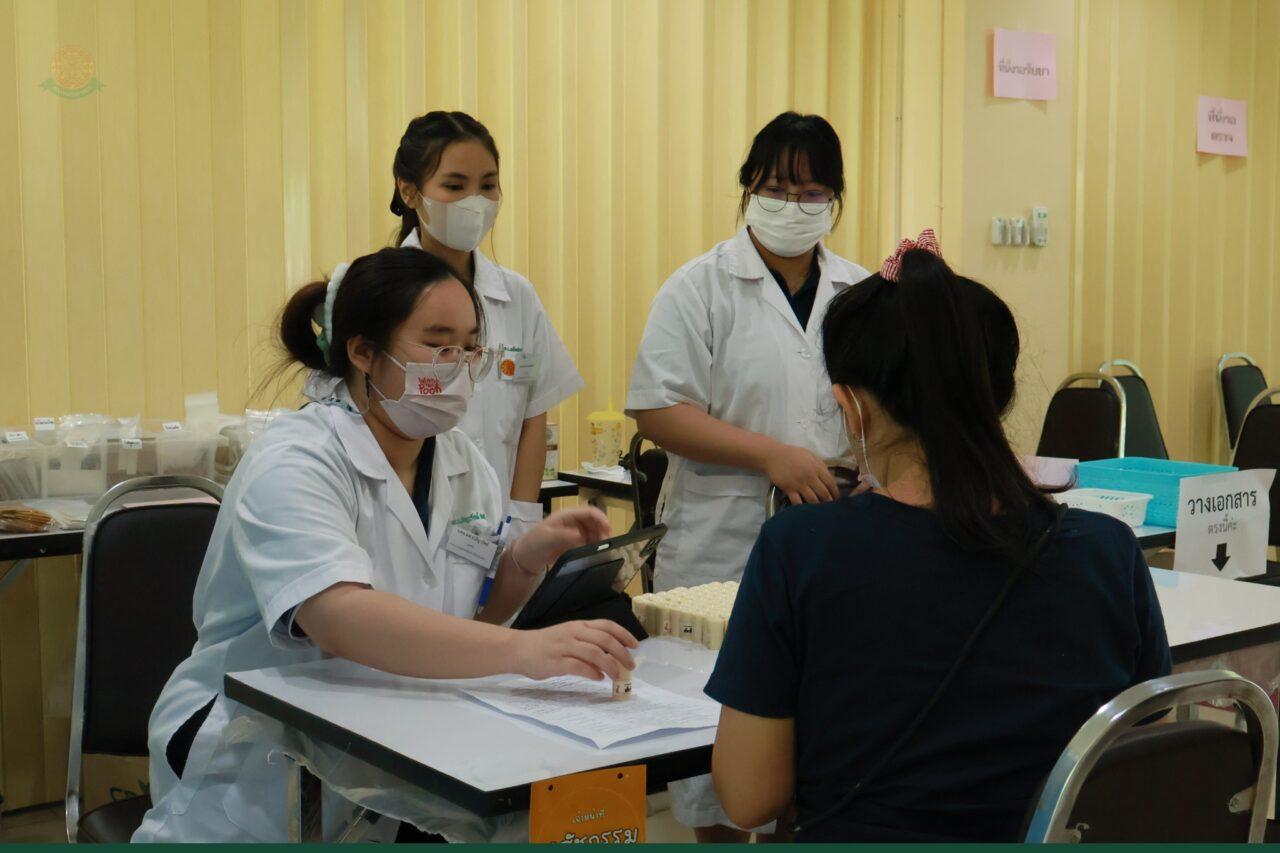
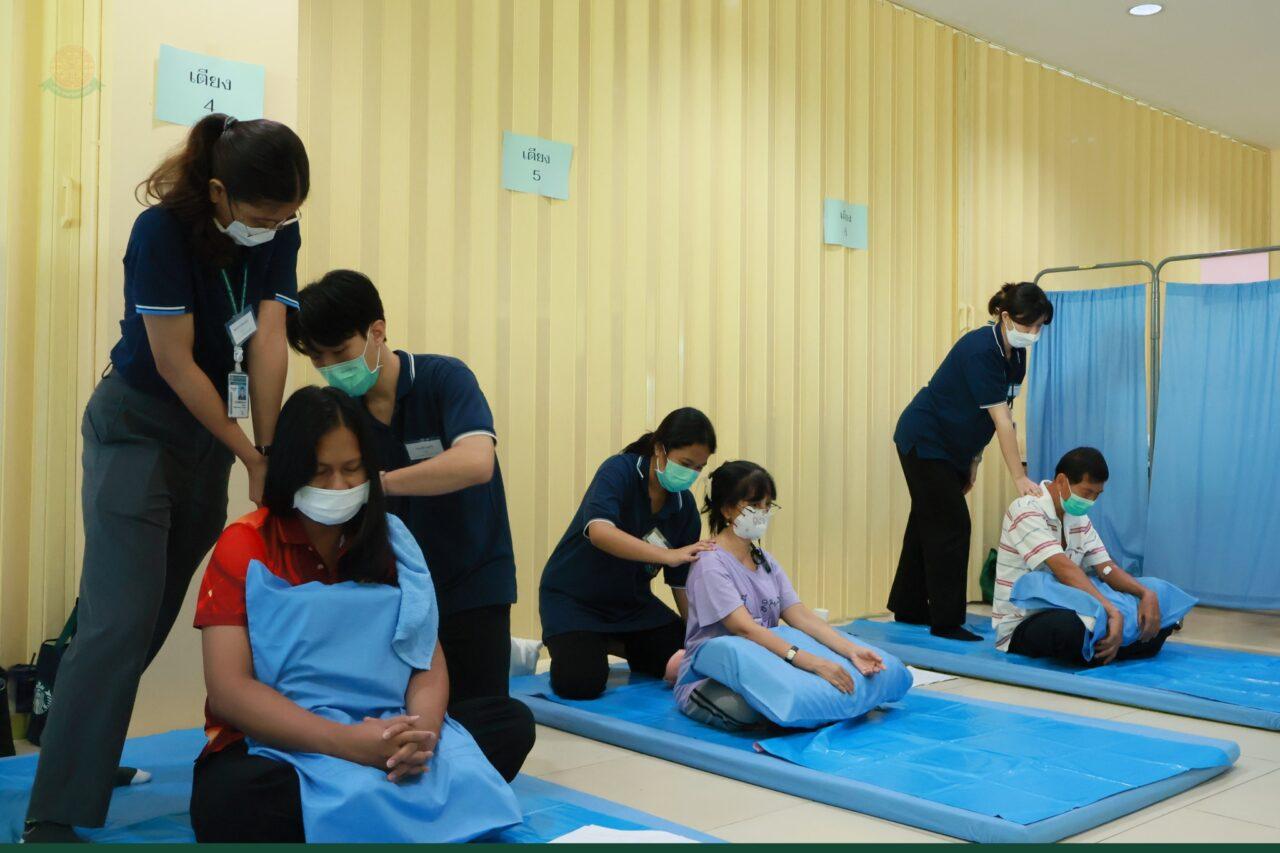
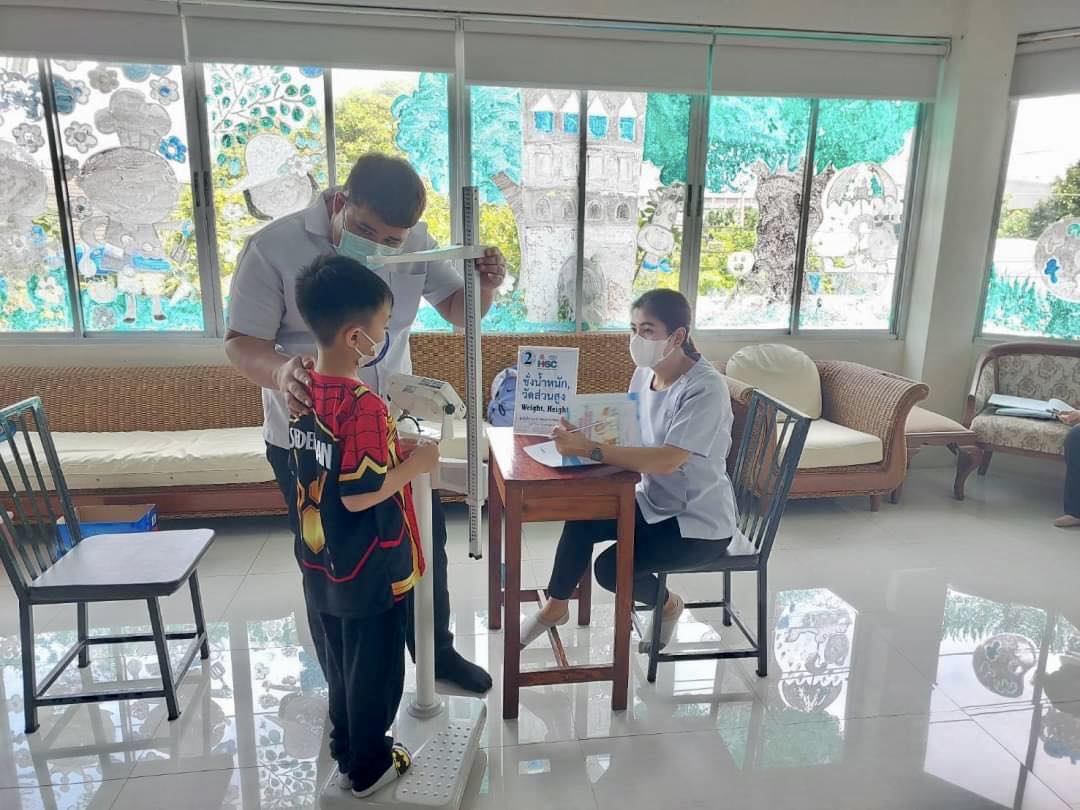
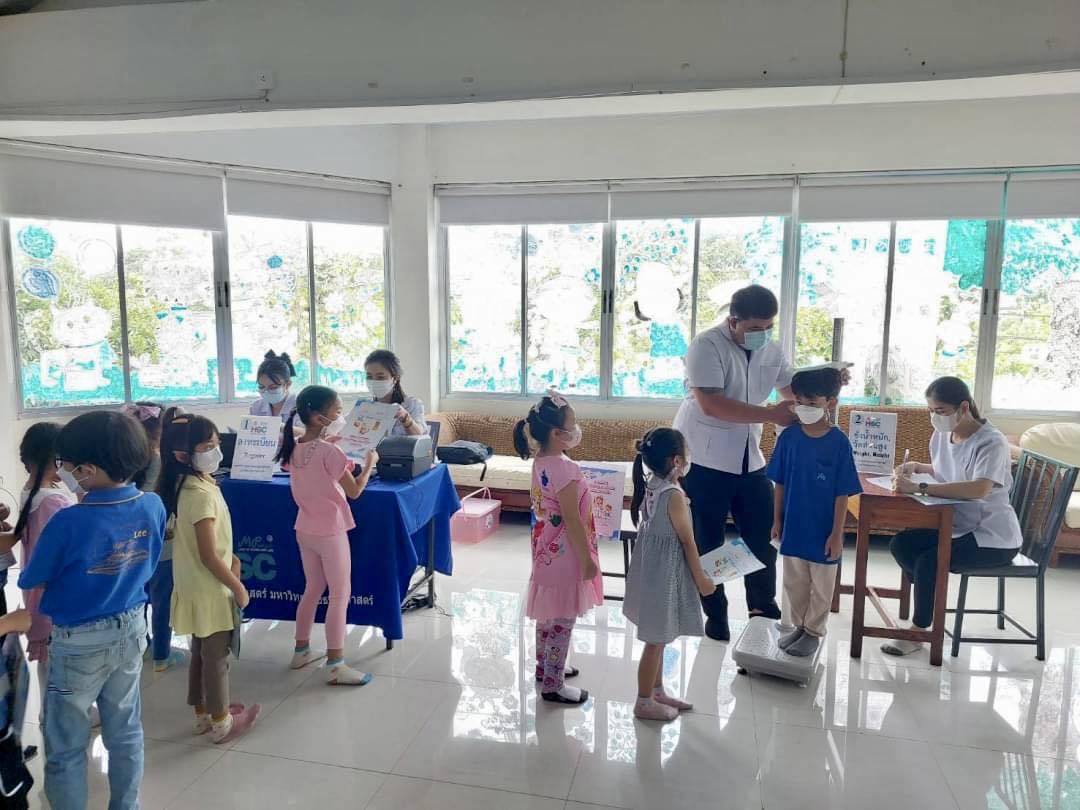
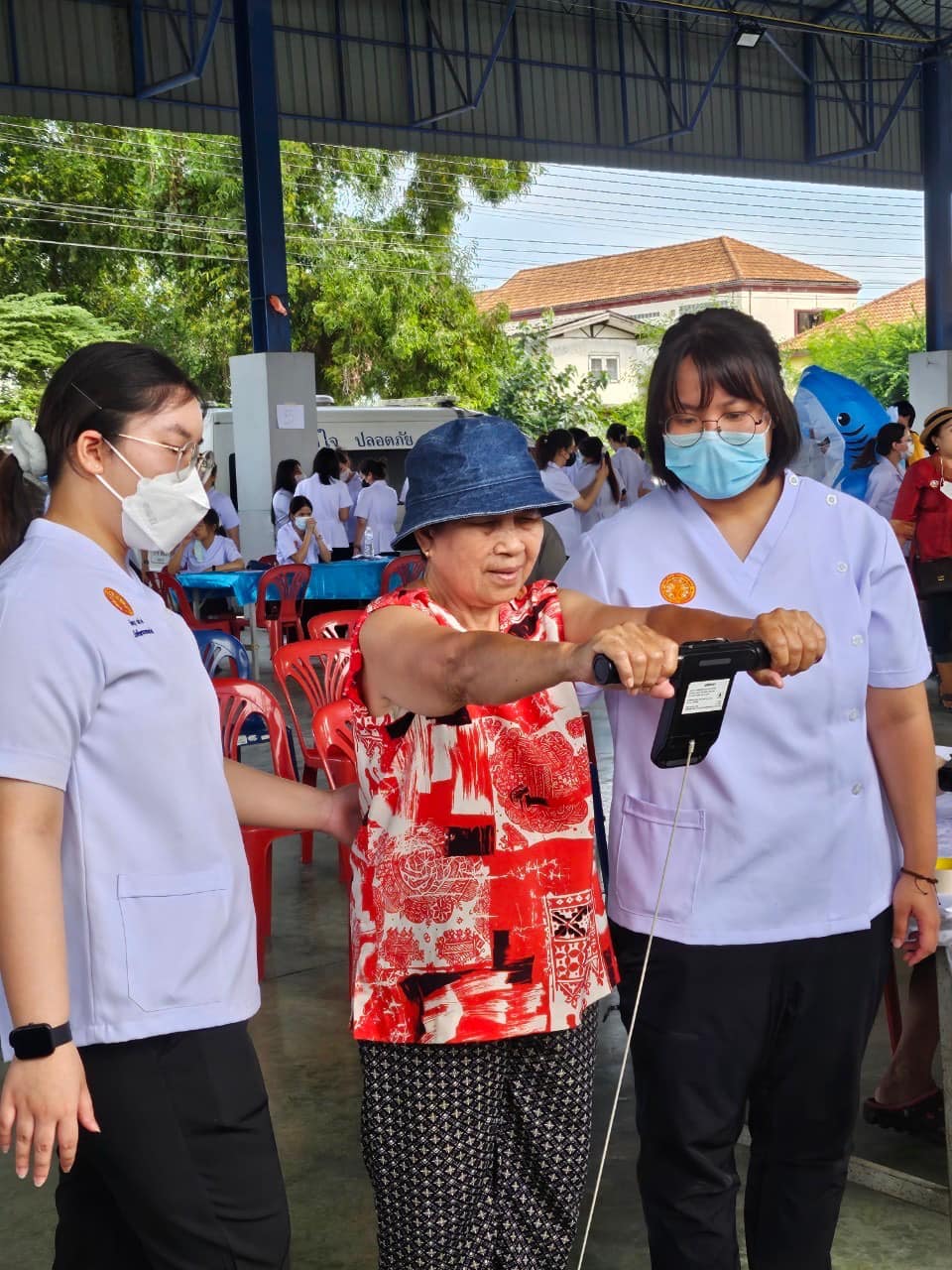
From January to December 2023, Thammasat University’s mobile medical units, led by its healthcare faculties, provided annual check-ups and influenza vaccinations to factories, schools, universities, and communities in nearby provinces. These outreach services improved public health access and promoted interdisciplinary collaboration among health-related faculties. By offering essential medical care, the initiative also enhanced academic programs, research, and community health, benefiting students, faculty, and local populations.

Community Health Education Program

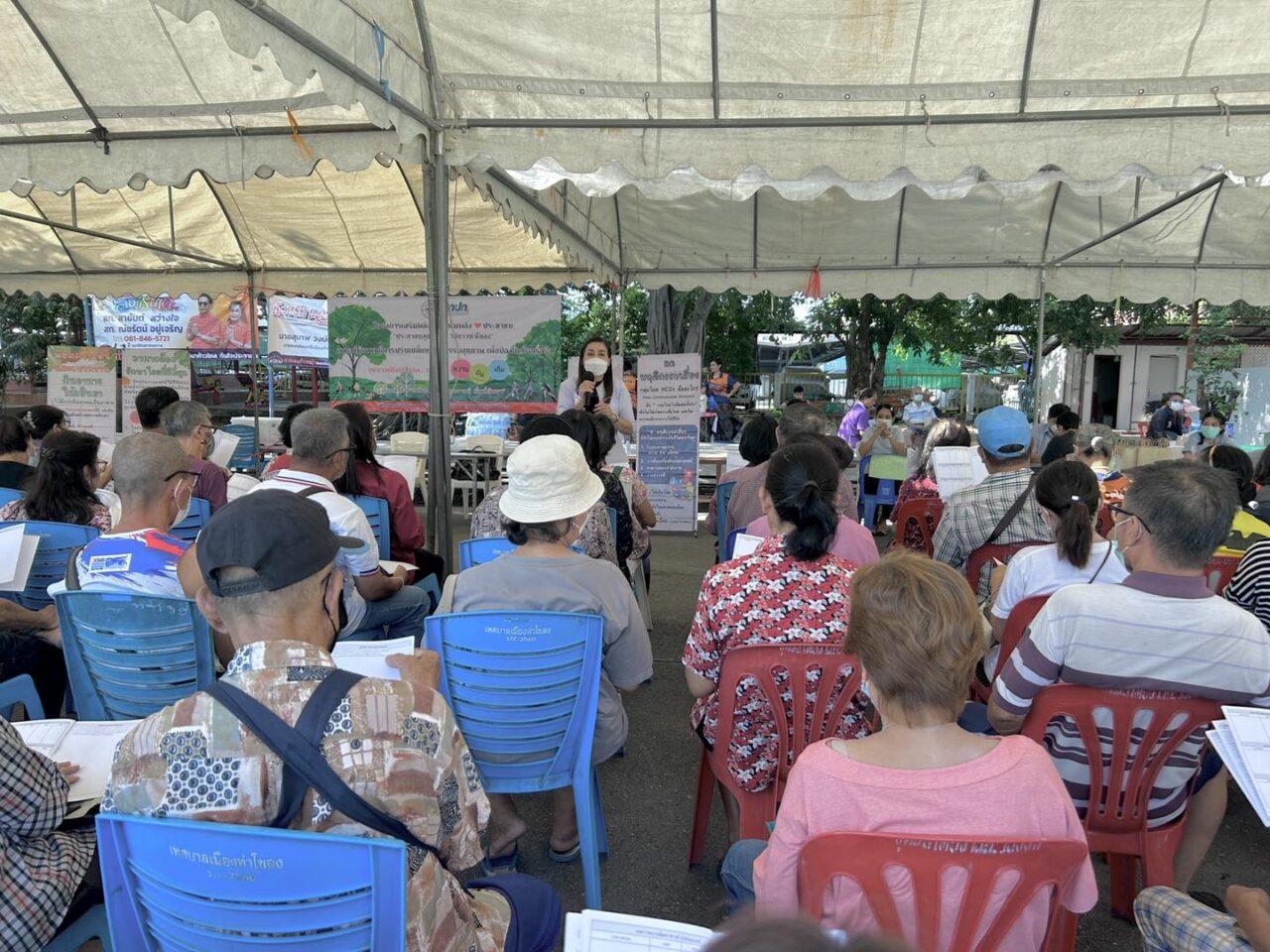
Thammasat University’s Community Health Program (Lampang Campus) organized a health event for the elderly in Ban Dong Dam, Lamphun, focusing on nutrition and exercise. The Faculty of Allied Health Sciences, Pharmacy, and Physical Therapy also conducted health management programs for vulnerable groups.

In Pathum Thani, the Department of Physical Therapy and Medical Technology led fitness assessments and kidney disease risk analysis for the elderly. The Health Service Center, in collaboration with Lad Sawai Municipality Health Insurance Fund, hosted an Elderly Health Check-Up Program, offering consultations for those aged 60+.

SDG 2 End hunger, achieve food security and improved nutrition and promote sustainable agriculture

SDG 2 in numbers

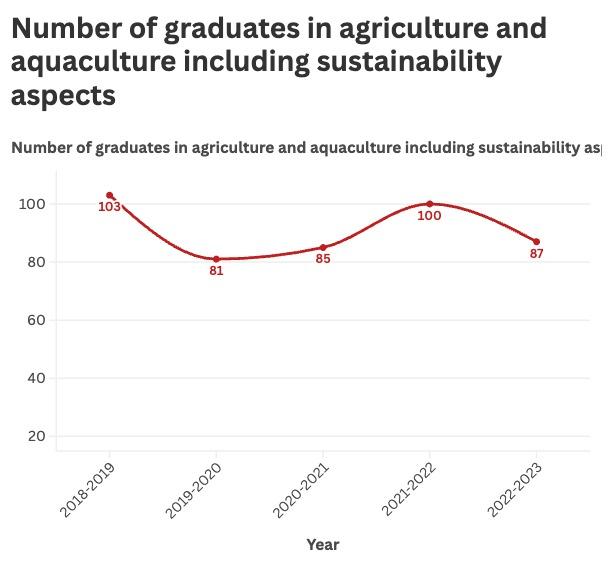
The graph shows fluctuations in Thammasat University graduates in agriculture and aquaculture with a sustainability focus from 2018 to 2023, starting at 103 in 2018–2019, peaking at 100 in 2021–2022, and ending at 87 in 2022–2023. This trend suggests varying interest or capacity in this field over time.

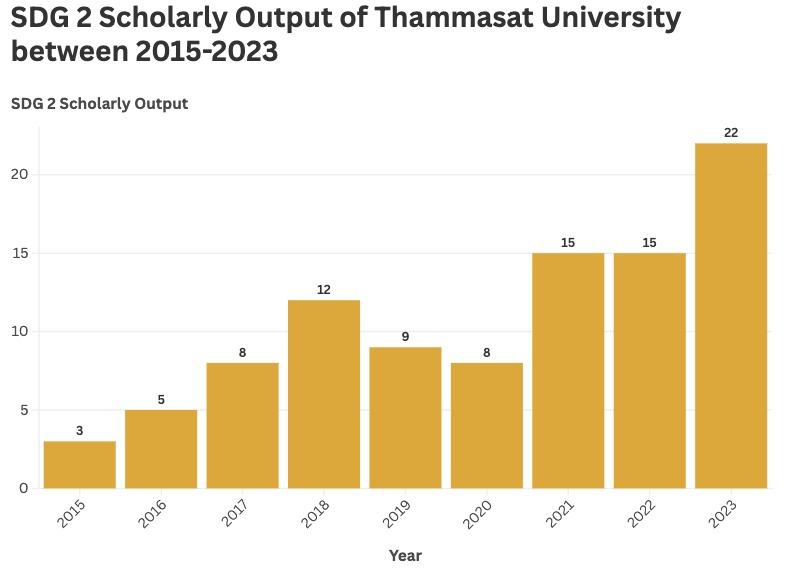
The graph shows Thammasat University’s rising scholarly output on SDG 2 (Zero Hunger), increasing from 3 publications in 2015 to 22 in 2023. Despite some fluctuations, this upward trend highlights the university’s growing focus on hunger reduction and sustainable agriculture research.

Research in SDG 2 (2019 – 2024)

Harvesting Resilience: Thammasat University’s Innovations Toward a Hunger-Free, Sustainable Future

Thammasat University scholars contribute significantly to SDG 2 (Zero Hunger) through comprehensive research across sustainable agriculture, food technology, climate resilience, and nutrition, reflecting an integrated approach to food security and environmental health.

In sustainable agriculture, research focuses on improving crop resilience and productivity in alignment with environmental conservation. Projects explore microbial and biotechnological solutions, such as rhizosphere microorganisms and biocontrol agents, to enhance plant defenses and soil nutrient availability, reducing the need for chemical pesticides and fertilizers. These studies support sustainable food production by promoting practices that maintain soil health and biodiversity, directly advancing food security.
Food technology innovation is another major research area, where scholars investigate alternative proteins, digital and AI-based crop assessments, and supply chain waste reduction. Efforts like hydrogen and biodiesel production from food waste highlight the university’s commitment to resource-efficient food systems. By addressing productivity, environmental impact, and food waste management, these advancements contribute to more sustainable and resilient food supply chains.

Climate resilience and ecosystem services also play a central role, with research examining climate change impacts on agriculture and adaptation strategies for vulnerable regions. Studies on water quality, coastal and agricultural ecosystems, and peri-urban agriculture underscore the importance of ecosystem services in building resilient food systems that can adapt to environmental changes. These projects reinforce the need for adaptable food systems that ensure security in the face of shifting climate conditions.

Thammasat scholars also emphasize food safety and nutrition, particularly for vulnerable groups such as older adults and cancer patients. Research on nutritional supplements, food contamination risks, and undernutrition expands the understanding of food security beyond mere availability to include quality and safety, emphasizing the importance of healthy, accessible food.

Overall, Thammasat University’s research reflects a robust approach to achieving SDG 2 by addressing production, innovation, resilience, and nutrition, aligning food security goals with sustainability, technological advancement, and human health.

Outreach and Academic Services in SDG 2

Thammasat University has launched 23 social service projects aligned with SDG 2: Zero Hunger, promoting food security and sustainable development through interdisciplinary collaboration. These initiatives combine expertise across sciences, social sciences, and commerce, focusing on community empowerment, self-sufficiency, and food sustainability.
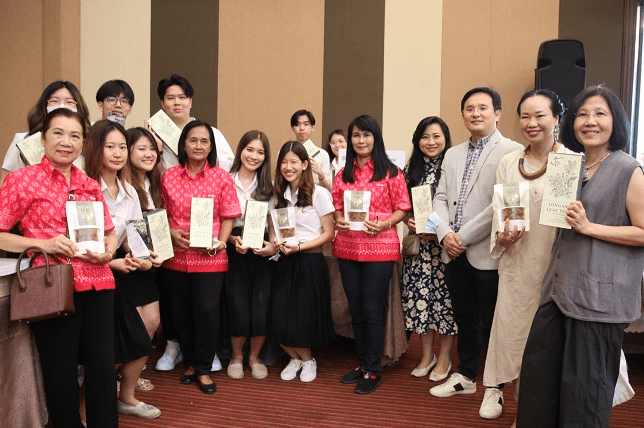
A notable project led by the Institute for Continuing Education and Human Resources provides vocational training for female inmates, teaching them how to add value to agricultural products. This empowers inmates with skills for stable income and economic security after release, benefiting both their communities and their personal growth.

The Faculty of Commerce and Accountancy supports local agricultural businesses, such as Ban Nu Lung Kai Garden and the Mudin Agricultural Farm. These initiatives help farmers enhance product value and adopt sustainable income models, strengthening community enterprises and promoting economic resilience.

The Office of Advanced Science and Technology offers consulting services on export preparation for processed agricultural goods, increasing the competitiveness of Thai agriculture. Additionally, workshops on financial planning and debt restructuring assist cooperatives, like the Wang Nam Yen Dairy Cooperative, in achieving greater economic stability.

The Faculty of Law and Faculty of Sociology and Anthropology contribute through educational events that emphasize agriculture’s cultural importance. The “Royal Ploughing Ceremony” online exhibition, for instance, highlights agriculture’s role in Thai society, inspiring respect and recognition for farmers nationwide.

Thammasat’s projects reflect a comprehensive commitment to SDG 2, drawing from diverse disciplines to support food and economic sustainability. By empowering vulnerable groups and local enterprises, these initiatives strengthen communities and foster long-term resilience.

Featured Stories

Affordable Food for All

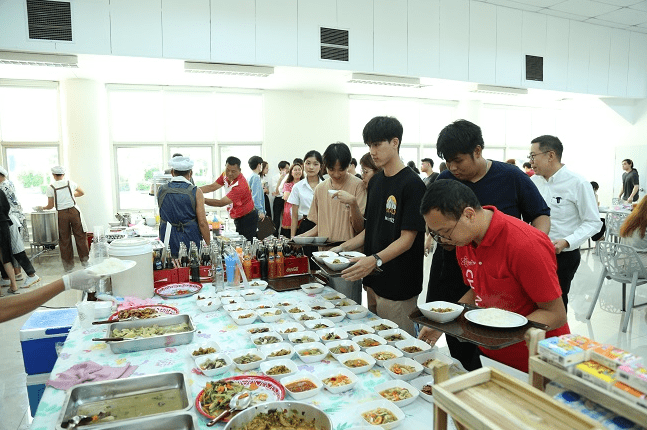
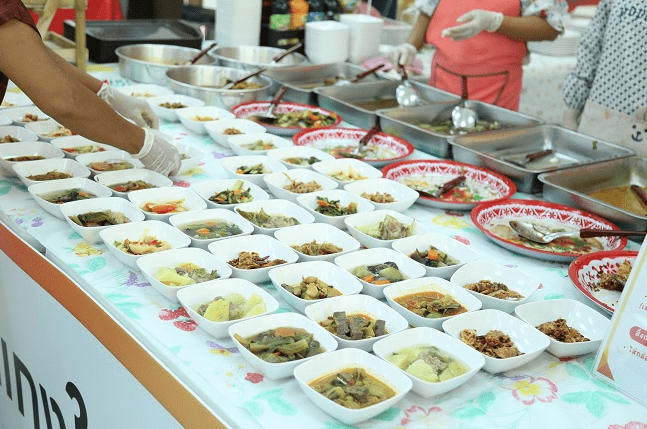
With 15 canteens across four campuses, Thammasat University provides affordable meals, meeting its goal in 2020 of offering main dishes at just 0.75 USD and free drinking water. The “Im Suk Canteen” at Rangsit campus further reduces prices, offering rice at 0.15 USD and side dishes for 0.3 USD. Supporting SDG 2 (Zero Hunger), Thammasat ensures its community has access to affordable, nutritious food.

Reference:  ห้องอาหารอิ่มสุข 

Thammasat University Leads the Way in ASEAN’s Food Security Research

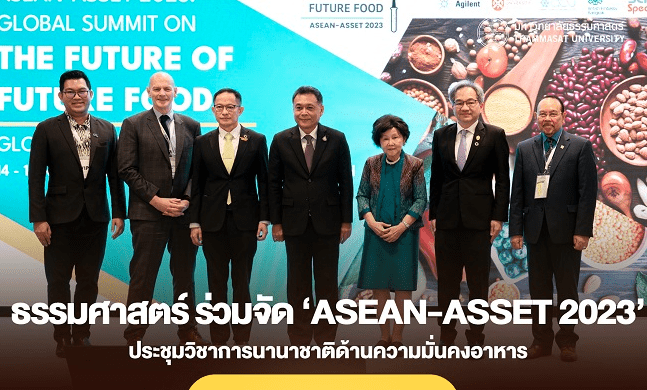
Thammasat University, in collaboration with the National Science and Technology Development Agency (NSTDA) and Queen’s University Belfast, is advancing food security across Southeast Asia. Through the International Joint Research Center on Food Security (IJC-FOODSEC), the university leads research on food production and safety innovations.

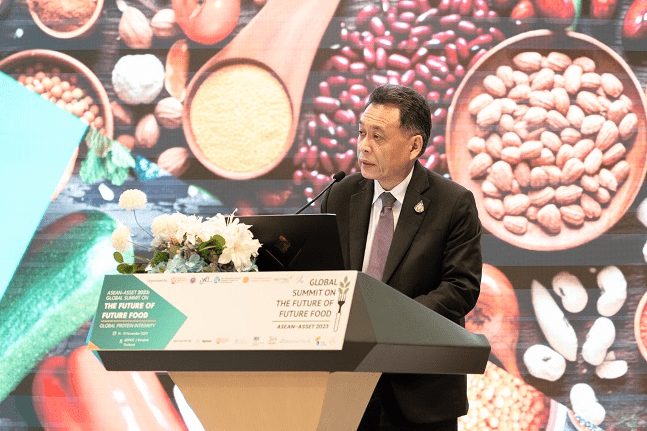
In November 2023, Thammasat hosted the ASEAN-ASSET 2023 summit, focusing on “Global Protein Integrity” and gathering over 400 experts to explore alternative protein sources and future food technologies. Thammasat’s research also addresses food waste, crop yields, and food safety, enhancing Thailand’s position as a global food exporter and fostering ASEAN as a hub for food innovation.

Reference: Thammasat University and NSTDA, in collaboration with QUB, organized the ASEAN-ASSET 2023 International Conference on Food Security. 

Driving Agricultural Sustainability with Blockchain Technology

In 2020, Thammasat University’s Research and Consultancy Institute, led by Professor Dr. Anut Lymakdach, partnered with the Trade Policy and Strategy Office (TPSO) to develop TraceThai.com, a Blockchain-based platform for traceability in Thailand’s organic agricultural supply chain. The system ensures transparency, product safety, and quality, helping farmers access global markets.

In September 2023, Thammasat led a training session at the “Organic Agriculture: From Choice to Survival” seminar in Lopburi, teaching nearly 80 farmers how to use TraceThai.com. In 2024, Thammasat expanded the project to include fruits, vegetables, and processed goods.

SDG 1 End poverty in all its forms everywhere

SDG 1 in numbers

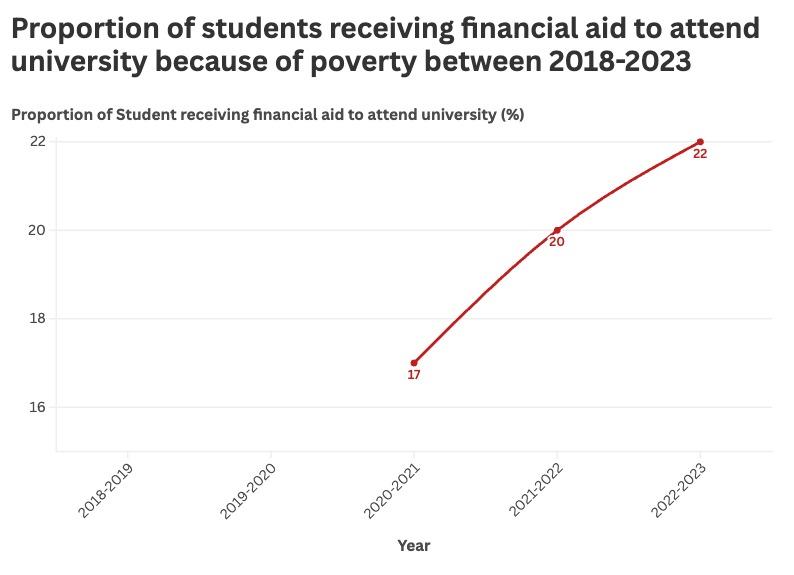
The graph shows a steady rise in students receiving financial aid due to poverty from 2018 to 2023, starting at 17% in 2020–2021 and reaching 22% by 2022–2023. This trend suggests increasing financial need among students, likely due to economic challenges or expanded support for disadvantaged groups.

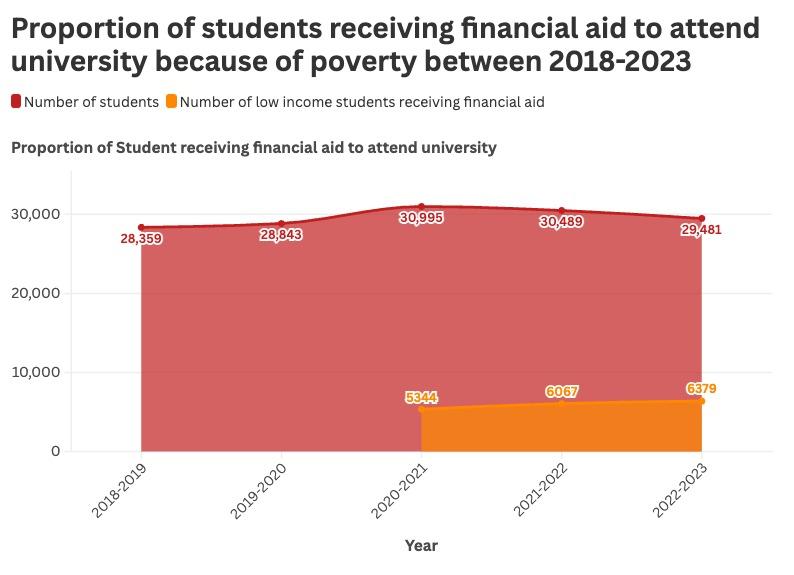
The graph shows a steady increase in low-income students receiving financial aid from 5,344 in 2020–2021 to 6,379 in 2022–2023, while the total student population remained stable around 28,000–30,000. This trend highlights a growing need for financial support among disadvantaged students, consistent with increased aid distribution.

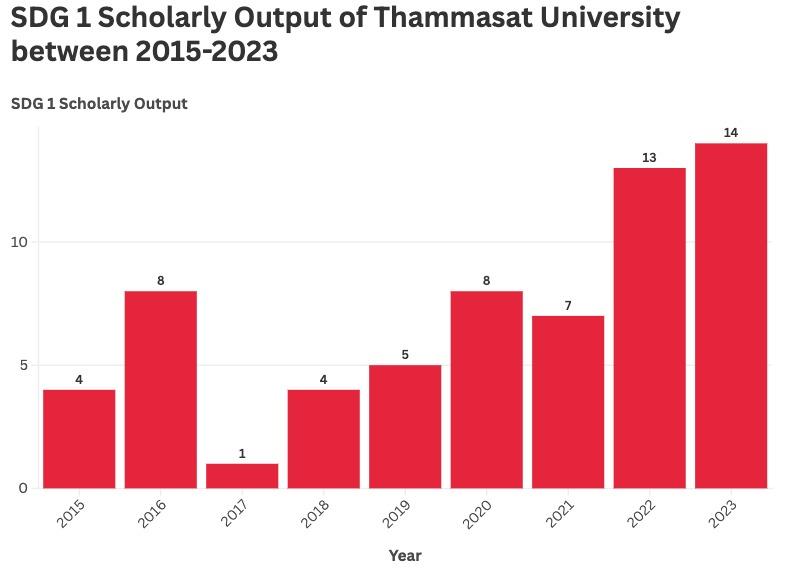
The graph shows Thammasat University’s growing scholarly output on SDG 1 (No Poverty), starting with 4 publications in 2015 and fluctuating until 2020, when output rose from 8 publications to a peak of 14 in 2023. This trend reflects the university’s increasing focus on poverty-related research in recent years.

Research in SDG 1 (2019 – 2024)

Breaking Barriers to Poverty: Thammasat University’s Holistic Approach to Social Equity, Health, and Resilience

Thammasat University scholars have actively contributed to SDG 1, No Poverty, through research addressing poverty, social welfare, and economic equity across multiple dimensions:

  1. Social and Economic Policy Analysis: This research cluster has assessed Thailand’s policies for social inclusion and poverty reduction. For instance, Chougule’s 2024 analysis explores policy alignment with SDG 1, while Paweenawat and Liao (2023) investigate income inequality and labor market disparities, proposing strategies to address structural issues.
  2. Health Inequities: Researchers have examined healthcare barriers for marginalized groups, such as informal workers and migrants. Studies by Langkulsen et al. (2023) on migrant health access during COVID-19, and Antunes et al. (2022, 2024) on healthcare costs in Thailand and Cambodia, highlight the link between poverty and healthcare, advocating for improved health policies as a poverty reduction measure.
  3. Climate Vulnerability and Poverty: Scholars have investigated how climate resilience supports poverty alleviation, focusing on the vulnerability of low-income communities to environmental risks. Cheewinsiriwat et al.’s 2024 research on coastal populations’ adaptive capacities emphasizes climate adaptation as critical for protecting these communities from worsening poverty due to environmental challenges.
  4. Technological Innovation: Research in this area has applied geospatial analysis and machine learning to identify poverty hotspots and has explored smart technology to enhance job accessibility for the urban poor (Isnan et al., 2023; Asavanirandorn et al., 2023). These initiatives improve data-driven policymaking and demonstrate how technology can empower economically disadvantaged populations.

Collectively, Thammasat University’s research has provided valuable insights and strategies for addressing the root causes of poverty, contributing to SDG 1 and advancing a more inclusive and equitable society. Through economic, health, environmental, and technological perspectives, this research fosters comprehensive policy solutions.

Outreach and Academic Services in SDG 1

Empowering Change: Thammasat University’s Bold Path to Poverty Eradication and Social Welfare Transformation

Thammasat University is committed to poverty eradication and social welfare development through 15 social service projects aligned with SDG 1, “No Poverty.” These initiatives, created by various faculties, target diverse beneficiary groups, from village health volunteers to public agencies.

The Faculty of Social Administration leads projects to build social welfare knowledge and skills. The “Child and Family Welfare Policy” project educates local governments on policies for children and families, while the “Happy Family and Happy Kids” project supports single-parent families by training village health volunteers, who can then assist families in their communities.

The Faculty of Economics contributes through public seminars, such as “The Impact of Child Support Grants on Health Outcomes for Economically Disadvantaged Children,” which explores economic support for impoverished children. Additionally, the forum on “Policy Community for Advancing Welfare Systems in Thailand” emphasizes human investment to foster a sustainable welfare system.

The Office of Advanced Science and Technology supports financial literacy through a workshop on financial planning and debt restructuring for the Wang Nam Yen Dairy Cooperative. This workshop empowers community entrepreneurs to improve business sustainability and resolve debt issues effectively.

The Puey Ungphakorn School of Development Studies manages the “Community Welfare Fund” project, which connects government, private businesses, and civil society to aid financially vulnerable groups and improve low-income populations’ access to financial resources.

Thammasat University’s initiatives embody interdisciplinary collaboration, blending social sciences and sciences to provide comprehensive services. These projects enhance community knowledge in financial planning, child welfare, and social welfare, contributing significantly to poverty alleviation and improved quality of life.

Featured Stories

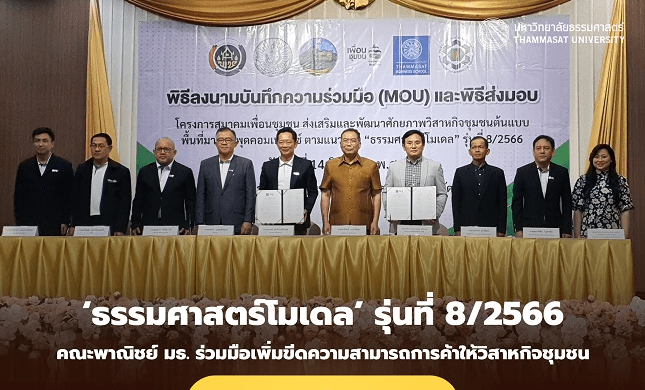
Thammasat Model: Bridging Education, and Business in Rayong

The Thammasat Model has been a cornerstone of community development for 15 years. Initially launched as part of the “Accounting/Business for Society and Nation” course, and later evolved into the TU100 course, “Citizenship and Hands-on Problem Solving.” In 2023, the Thammasat Model entered its 8th edition in partnership with the Friends of the Community Association to support community enterprises in Rayong’s Maptaput Complex With the support of industry partners such as PTT Group, BLCP, and Dow Thailand. The collaboration focuses on strengthening the management skills, product quality, and market competitiveness of seven local businesses, empowering them to thrive independently. Students work closely with community members, providing innovative solutions to help develop sustainable products and services that generate income. 

Reference: https://tu.ac.th/thammasat-060766-mou-8th-thammasat-model 

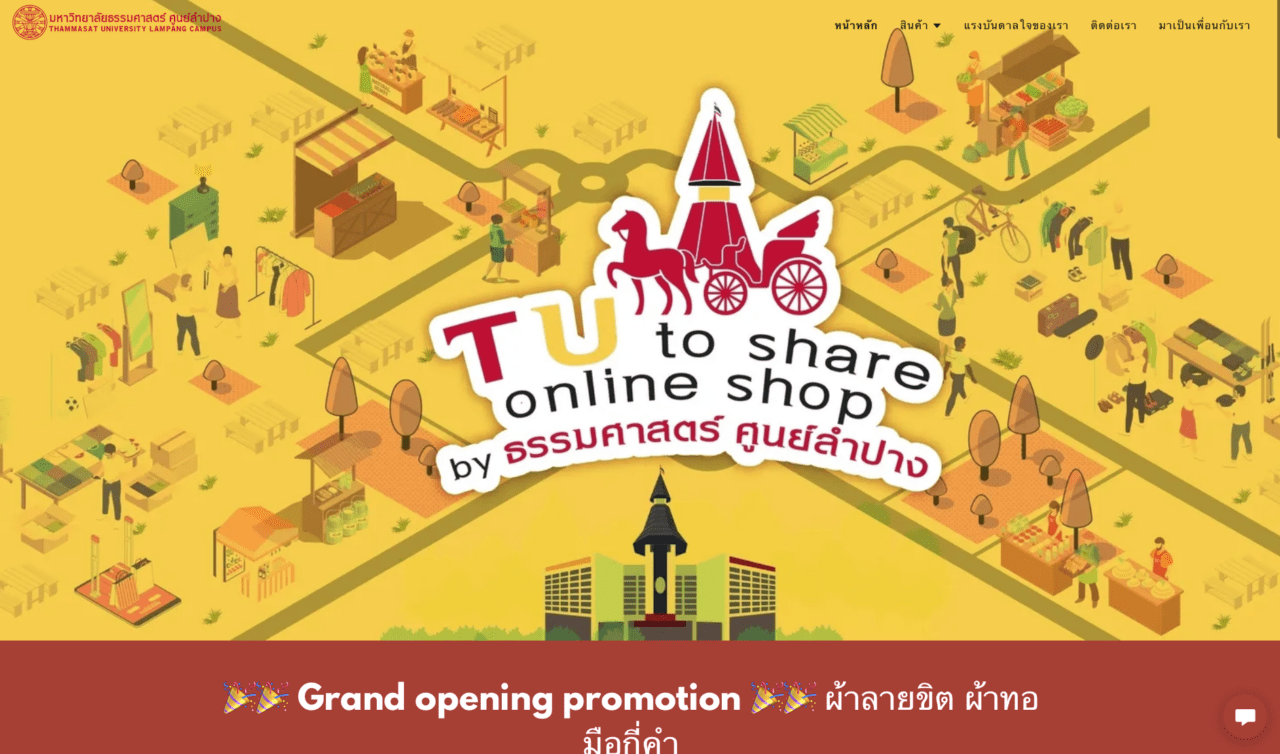
Lampang Campus Launches “TU to Share Online Shop”

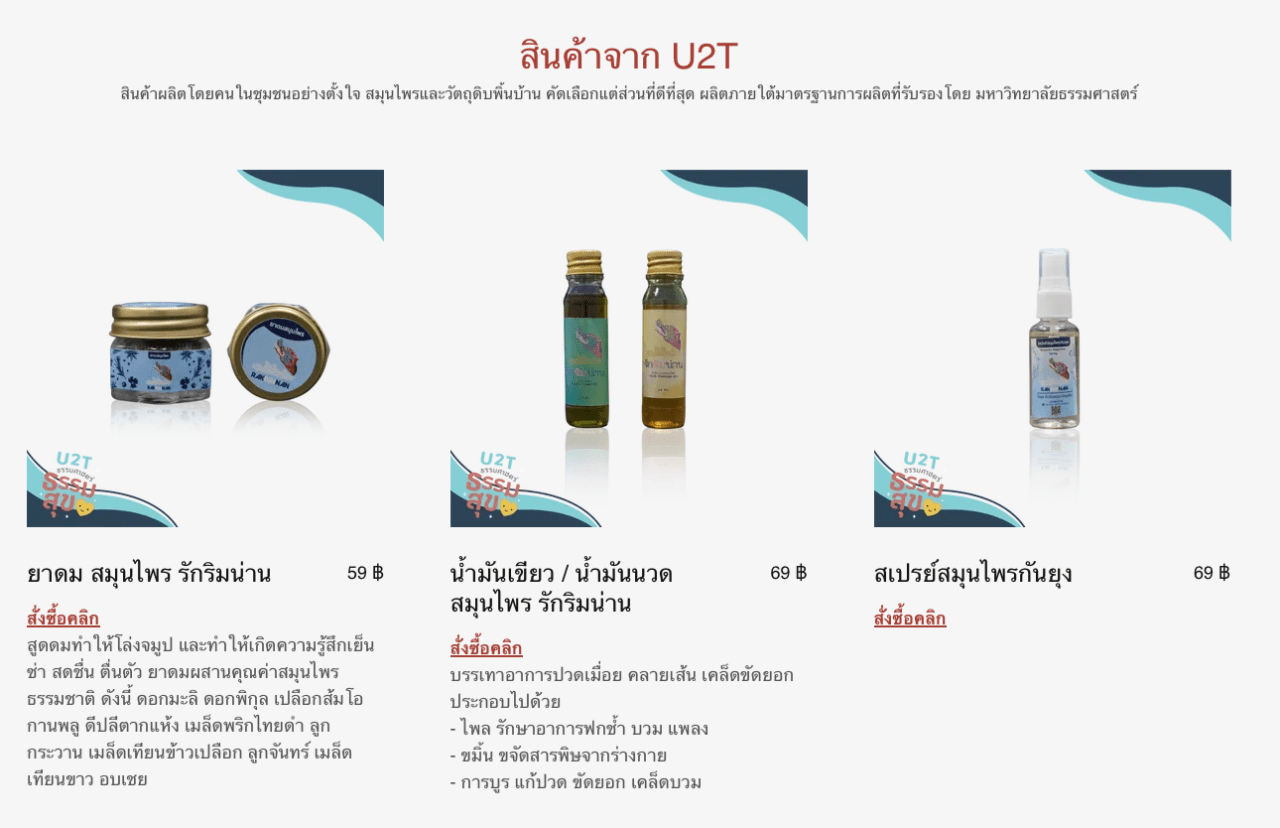
Thammasat University’s Lampang campus has launched the “TU to Share Online Shop” to empower local artisans and small-scale entrepreneurs. This initiative offers a platform for local products, including handwoven textiles, traditional crafts, and organic agricultural goods, enabling them to reach a broader audience both nationally and internationally.

In partnership with the university’s Center for Community Development and the local government, the online store provides small producers with an e-commerce platform to enhance their market visibility. This initiative aligns with Thammasat’s commitment to SDG 1: No Poverty, fostering economic growth and helping reduce poverty by creating new market opportunities for rural communities.

Reference: https://tulptoshare.com/

Rector Statement

Since its establishment in 1934, Thammasat University has upheld the principle of “For the People,” standing as a pillar of knowledge, democracy, and social justice in Thailand. Today, as a comprehensive university excelling across diverse fields—including social sciences, science and technology, and medical science—our commitment to sustainability is stronger than ever. We are dedicated to advancing sustainable development through an interdisciplinary approach, addressing critical challenges from multiple perspectives and driving impactful change within our institution and society at large.

Sustainability is woven into the fabric of Thammasat University’s mission. Guided by the ONE TU policy, our vision for sustainability is centered around three strategic goals:

1. To become a leading comprehensive university of the future,

2. To serve as a university for society, and

3. To foster happiness and sustainability within the Thammasat University community.

These pillars support our dedication to the Sustainable Development Goals (SDGs) by integrating social responsibility, environmental consciousness, and educational impact. Our initiatives reflect this commitment, from the affordable meals at the Imsuk Canteen and scholarships for underprivileged students to our Safe Food initiative and the goal of carbon-neutral events and a 50% recycling rate. Education for Sustainable Development lies at the core of our curriculum, equipping students with the skills and knowledge to tackle future challenges, while our research efforts focus on impactful innovations, including solutions for an aging society.

This Thammasat University Sustainability Report 2023 encapsulates our journey and achievements over the past year, presenting our efforts to drive positive change through partnerships, education, and research that align with sustainable development. Through long-term collaborations with local communities and a commitment to continuous improvement, we aim to build a more sustainable, inclusive, and equitable future.

We invite you to explore this report to see how Thammasat University remains steadfast in its mission to serve society and protect our planet for generations to come.

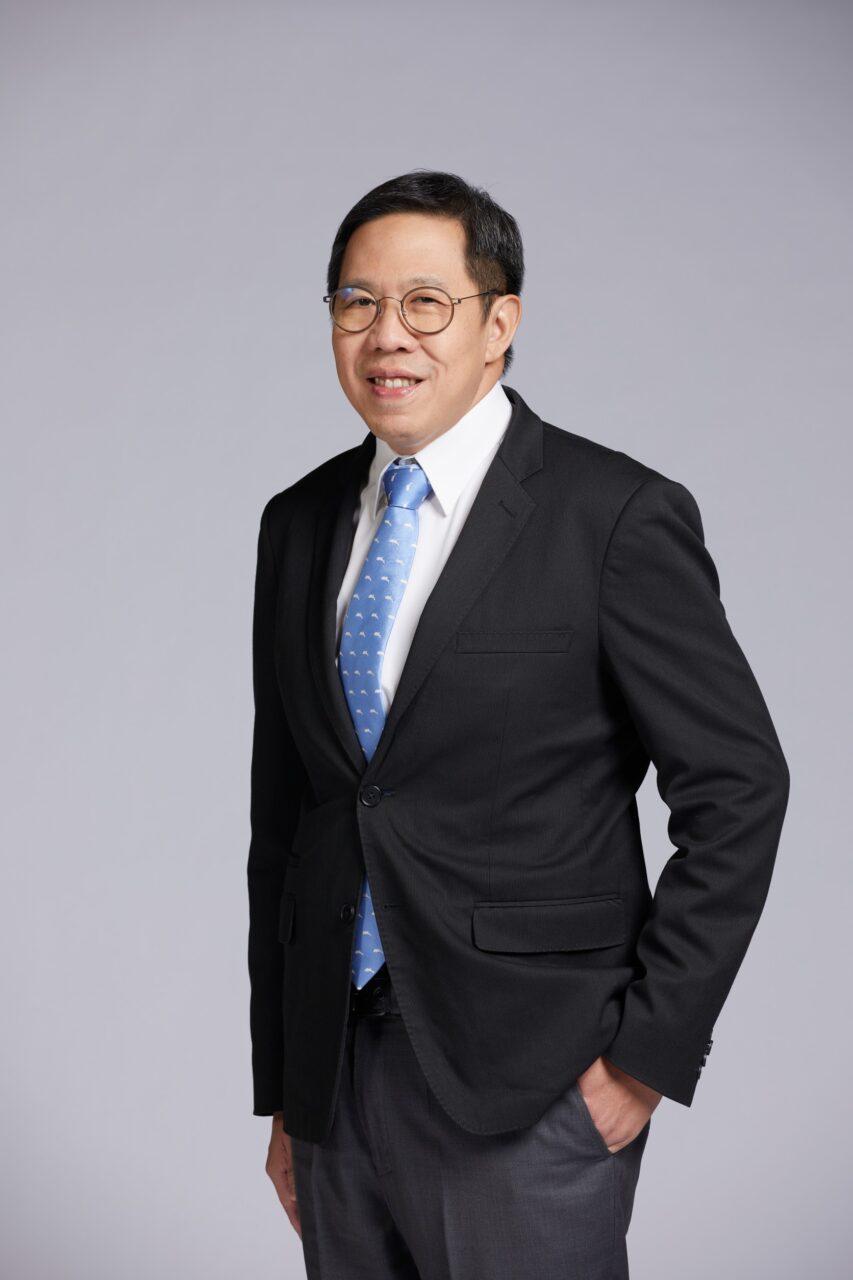
Professor Dr. Supasawad Chardchawarn

Rector, Thammasat University

Thammasat University’s Outreach Efforts to Promote Sustainable Development Knowledge in Local Communities

HIGHLIGHTS

  • Commitment to Community Education: Thammasat University actively promotes Sustainable Development Goals (SDGs) by offering valuable education and resources to underserved communities, particularly in rural areas, focusing on public health, legal rights, mental health, and sustainable business practices.
  • Mental Health and Legal Outreach: Through initiatives such as mental health sessions for seniors in Chonburi and legal training and mobile clinics in Kanchanaburi, Thammasat University addresses community needs, providing support in mental health awareness and enhancing access to justice in remote areas.
  • Hands-On Public Health Engagement: The “Public Health Volunteer: Developing Rural Communities” program allows Thammasat students to gain practical experience while delivering essential health services and fostering environmental awareness, showcasing the university’s commitment to public service and sustainable health practices.
  • Supporting Local Economic Sustainability: By collaborating with small businesses on marketing and traceability, the School of Global Studies and the Intellectual Property and Business Incubation Center empower local entrepreneurs, supporting sustainable economic growth in rural communities.
  • Empowering Communities for Sustainable Development: Thammasat University’s outreach programs equip local residents with knowledge and resources to enhance their quality of life and promote sustainable community development across health, legal, and economic sectors.

Thammasat University has a strong commitment to promoting Sustainable Development Goals (SDGs) through initiatives that provide valuable knowledge and resources to communities in need, particularly in rural areas. These efforts aim to reduce knowledge gaps by offering education and resources on public health, legal rights, mental health, and sustainable business practices, with an emphasis on reaching individuals and groups who might otherwise lack access to this information.

One such initiative took place on September 13, 2023, when Thammasat University Pattaya, led by Assistant Professor Dr. Natdanai Phanujaerwong, organized a mental health education session for elderly residents in Nong Prue Municipality, Chonburi. The event, titled “Understanding Depression: Restoring Smiles for the Elderly,” aimed to promote mental health awareness and support the well-being of seniors, many of whom are vulnerable to social isolation and depression. This outreach program also included the donation of face masks for local distribution, demonstrating Thammasat’s dedication to both physical and mental health in underserved communities.

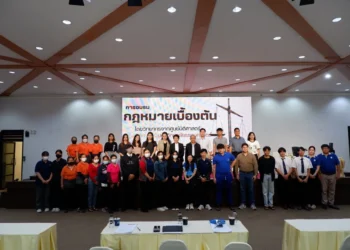
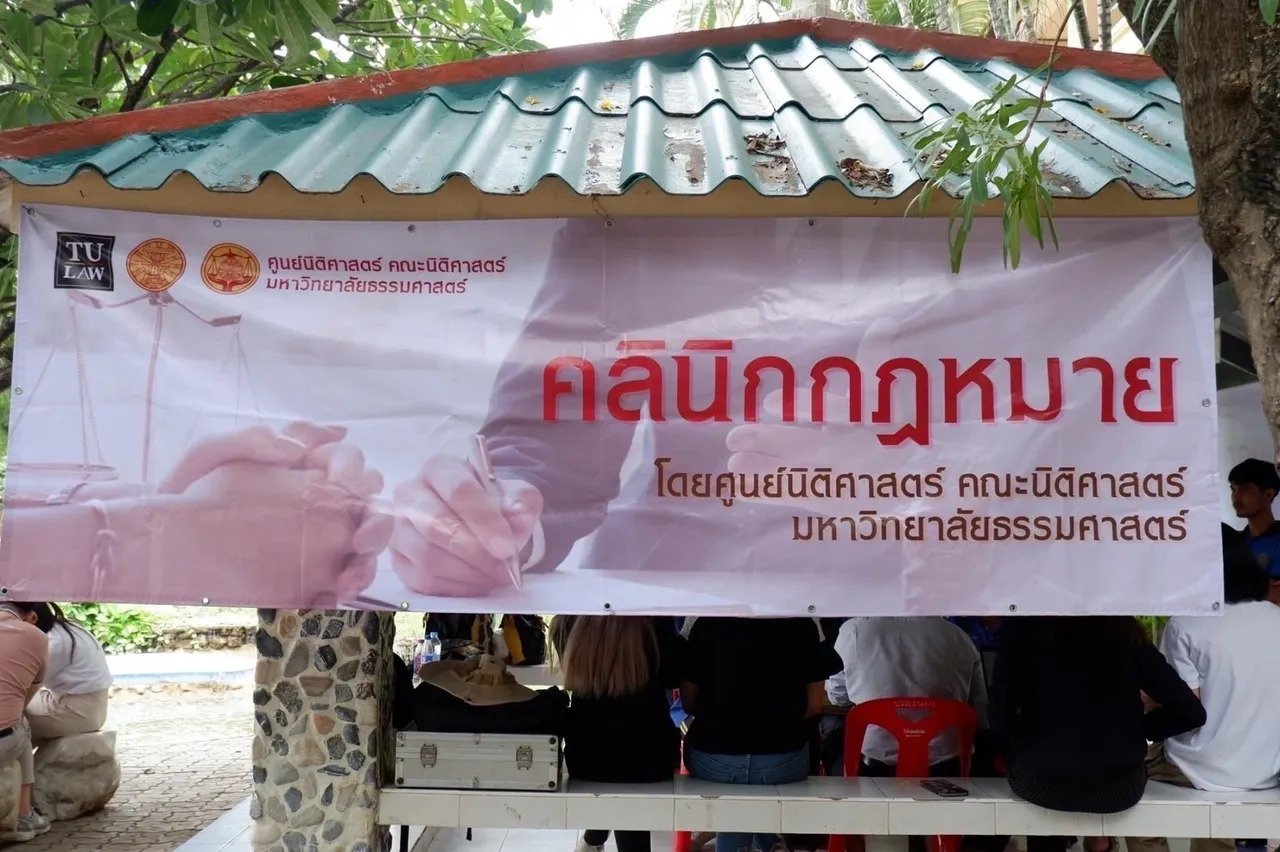
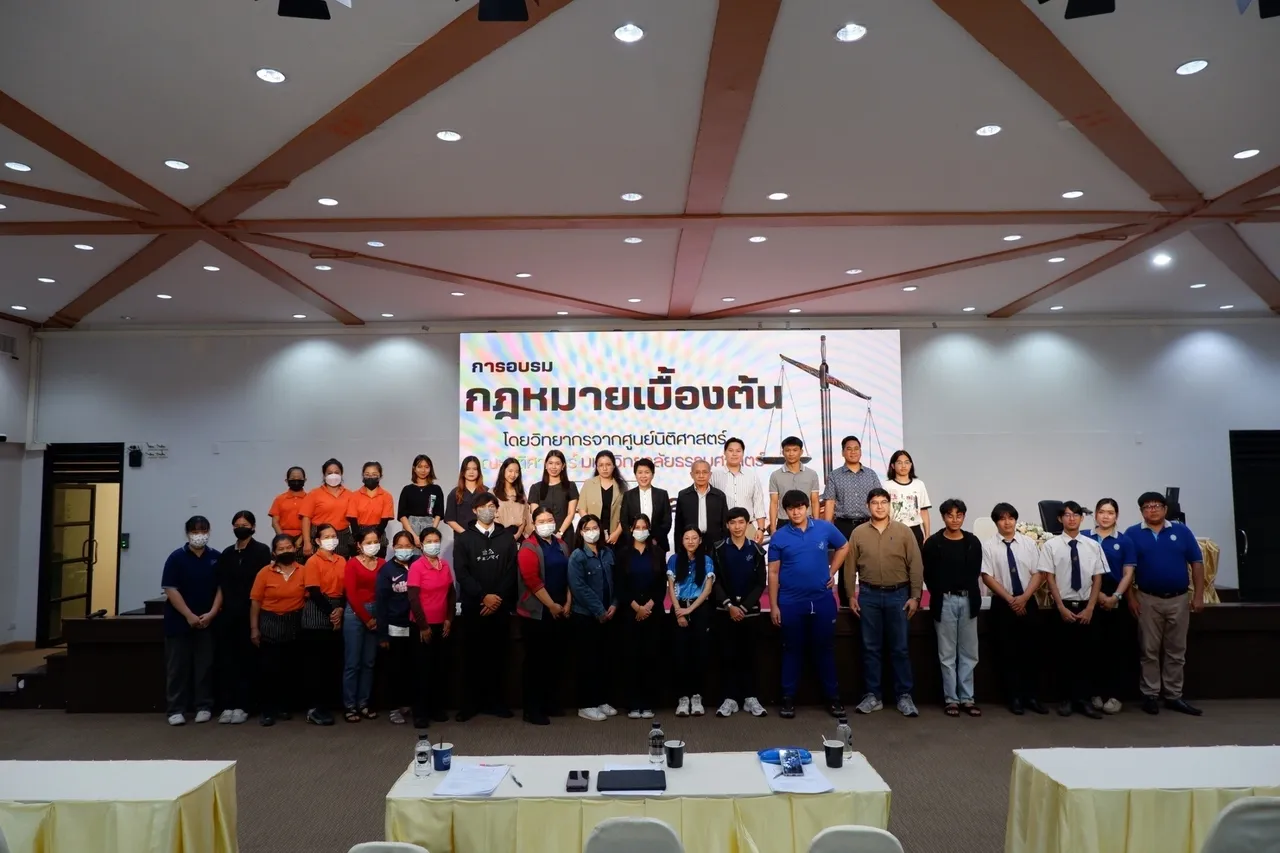
The Thammasat Law Center has extended its reach by offering legal training and mobile clinics in rural areas. During September and October 2023, the center organized training sessions for village heads, community leaders, and interested residents in Kanchanaburi Province. Many rural residents often lack an understanding of their legal rights, leaving them vulnerable to exploitation and disputes. These workshops educate local leaders and citizens on laws that affect them, helping to prevent civil and criminal issues. Mobile legal clinics were also offered to provide consultations and advice for individuals facing legal challenges, thus improving access to justice and legal resources in remote areas.

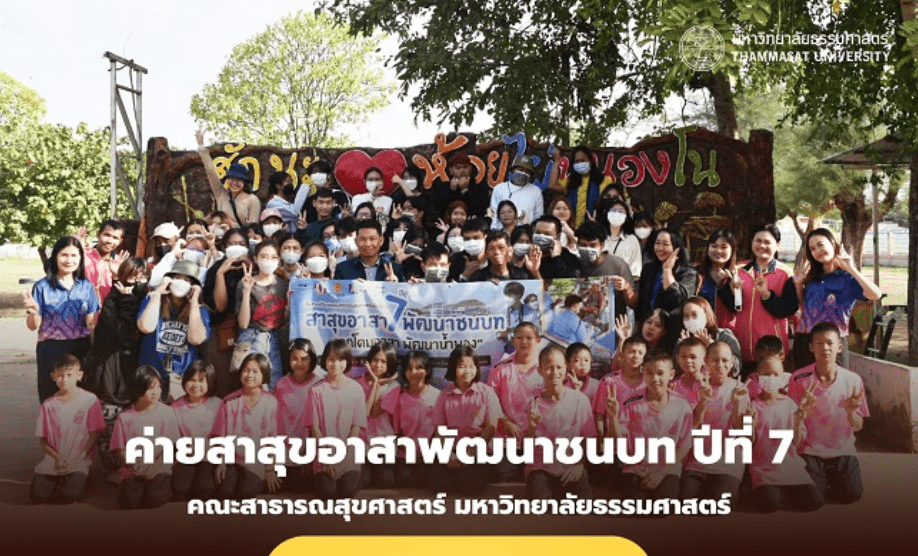
The Faculty of Public Health at Thammasat University engages students in practical learning through the annual “Public Health Volunteer: Developing Rural Communities” program, with its seventh iteration held in Khon Kaen’s Huai Phai community in early 2023. Through activities such as restroom repairs, infirmary upgrades, and community health screenings, students not only provide essential health services but also gain hands-on experience in public service and civic responsibility. Additionally, students conducted health awareness sessions on diabetes, hypertension, and mental health, and promoted waste separation initiatives, fostering environmental consciousness. This program exemplifies Thammasat University’s dedication to instilling public health awareness and sustainable practices in both students and community members.

Beyond health and legal knowledge, Thammasat supports economic sustainability through the School of Global Studies (SGS) and the Intellectual Property and Business Incubation Center. SGS students recently collaborated with community business groups in Baan Khao Noi, Satun Province, to share expertise in online and offline marketing strategies. This guidance empowers small businesses in remote areas, helping them access wider markets and contribute to local economic growth.

In addition, the Intellectual Property and Business Incubation Center held a seminar in collaboration with the Ministry of Commerce on September 6, 2023, in Lopburi Province. This workshop focused on “Organic Farming: From Choice to Survival” and trained nearly 80 farmers and entrepreneurs on organic certification, online marketing, and traceability through the TRACETHAI.com system, which ensures product transparency from farm to consumer.

Through these targeted outreach programs, Thammasat University demonstrates its commitment to advancing sustainable development within local communities. By providing education on public health, legal rights, mental well-being, and sustainable business practices, the university empowers residents with the skills and knowledge needed to improve their quality of life and promote sustainable community development.

Specific Programmes and Courses on Sustainability at Thammasat University in 2023

HIGHLITGHTS

  • Thammasat University, through several faculties, e.g. Faculty of Science and Technology, Faculty of Public Health, Faculty of Engineering, Puey School of Development Studies, School of Global Studies, Faculty of Commerce and Accountancy, Faculty of Political Science, and Faculty of Economics, is committed to embedding sustainability and SDG education across disciplines. By offering specialized programs and courses, these faculties equip students with the skills and knowledge needed to address global sustainability challenges.

Programmes on Sustainability

Several faculties and colleges in Thammasat University provide specific programmes on sustainability and SDGs from bachelor, master and doctoral program. These courses and programmes cover a wide range of disciplines as follow

Faculty of Science and Technology
Bachelor of Science Programme in Sustainable Development Technologyhttps://sci.tu.ac.th/sustainable-development-th/
Bachelor of Science Programme in Environmental Sciencehttps://sci.tu.ac.th/environmental-science/
Master of Science Programme in Sustainable Development Technologyhttps://sci.tu.ac.th/environmental-science-2/
Doctor of Philosophy in Environmental Managementhttps://sci.tu.ac.th/doctor-of-philosophy-in-environmental-management/
Faculty of Public health 
Master of Public Health Program in Public Health and Sustainable Developmenthttps://web1.fph.tu.ac.th/mph-sdgs
Doctoral of public health program in Public Health and Sustainable developmenthttps://web1.fph.tu.ac.th/drph-sdgs
Master of Public Health in Global Health (International Program)https://web1.fph.tu.ac.th/mph-gh
Doctor of Philosophy in Global Health  (International Program)https://web1.fph.tu.ac.th/phd-gh
Faculty of Engineering
Master of Engineering Programme in Energy and Environmental Technology Managementhttps://en.engr.tu.ac.th/master#!
Puey School of Development Studies
Bachelor of Arts Programme in Innovation for Human and Social Development (Multidisciplinary)https://reg.tu.ac.th/en/Picture/AttFile/37187b7b-ba3e-4586-b548-a980c8a8a9bc

Moreover, The School of Global Studies at Thammasat University stands out as a dynamic hub for interdisciplinary education and research, tackling some of the most pressing global challenges of our time. With a focus on issues like globalization, international relations, sustainable development, human rights, and environmental change, this school prepares students to become impactful leaders in an increasingly interconnected world. 

Programs Offered:  https://sgs.tu.ac.th

CourseDetail
Bachelor of Arts in Global Studies and Social Entrepreneurship (International Program):  Dive into the world of social innovation and learn how to create sustainable solutions to real-world problems.  
Master of Arts in Social Innovation and Sustainability (International Program)

 
Build on your knowledge and skills to drive change and foster sustainable practices in various sectors.
Doctor of Philosophy in Social Innovation and Sustainability (International Program):Engage in cutting-edge research and contribute to the field with advanced insights into social innovation and sustainability challenges.  

Courses on Sustainability

The followings are examples of courses on sustainability provided at faculty level, covering both undergraduate and graduate programmes.

Faculty of Commerce and Accountancy

Undergraduate Courses

  • AC311             Accounting for Environmental and Social Responsibility
  • ER321              Entrepreneurial Skills and Social Entrepreneurship
  • IB433               Ethical Issues in Business
  • MK411            Sustainability Marketing
Faculty of Commerce and Accountancy

Undergraduate Courses

  • AC311             Accounting for Environmental and Social Responsibility
  • ER321              Entrepreneurial Skills and Social Entrepreneurship
  • IB433               Ethical Issues in Business
  • MK411            Sustainability Marketing

Graduate Courses

  • BA604             Sustainability Business Management
  • RB798              Sustainable Real Estate Development
  • MF767             Corporate Governance and Sustainability

Faculty of Political Science

Undergraduate Courses

  • PO222             Dynamics of Local Politics
  • PO307             Feminist Political Theory
  • P311                Social Movements and Political Space
  • PO312             Politics and Public Laws
  • PO323             Politics of Development
  • PO406             Politics of Gender and Sexuality
  • PO348             Introduction to Environment Policy and Planning
  • PO355             Social Welfare Policy Management
  • PO356             Technology, Innovation and Public Management Information System
  • PO358             Development Administration in Global Context
  • PO363             Local Financial Administration
  • PO366             Sustainable Environmental Management
  • PO368             Urban Policy and Management
  • PO449             Disaster Risk Governance
  • PO377             Environment and International Relations
  • PO397             The Politics of International Assistance and Development
  • PO398             Global Civic Society
  • PO399             Human Security

Faculty of Economics

Undergraduate Courses

  • EC364              Gender Economics
  • EC365              Economics of Local Development
  • EC366              Thai Rural Studies
  • EC375              Applied Natural resource and Environmental Economics
  • EC376              Economics of Climate Change
  • EC446              Economic Analysis of Corruption
  • EC461              Development Microeconomics
  • EC462              Development Macroeconomics
  • EC463              Globalization and International Development
  • EC464              Urban and Regional Economics
  • EC465              Sustainable Development
  • EC466              Political Economy of Development
  • EC471              Labor Economics
  • EC472              Economics of Population and Family
  • EC473              Education Economics
  • EC474              Health Economics
  • EC475              Natural Resource Economics
  • EC476              Environmental Economics
  • EC477              Energy Economics
  • EC491              Agricultural Production and Policy
  • EC492              Agricultural Marketing and Policy
  • EC494              Food Economics and Policy

Faculty of Science and Technology

Undergraduate Courses

  • ES387              รีโมทเซนซิงเบื้องต้นสำหรับการวิเคราะห์ทรัพยากรสิ่งแวดล้อม
  • ES451              อากาศ การเปลี่ยนแปลงสภาพภูมิอากาศ และการจัดการภัยพิบัติ
  • RT366              การพัฒนาที่ยั่งยืน
  • RT427              เทคโนโลยีการจัดการน้ำเพื่อการเกษตร
  • BT319              เทคโนโลยีชีวภาพสำหรับการบำบัดของเสียและน้ำเสีย
  • ES251              สิ่งแวดล้อมและนิเวศวิทยาน้ำจืด
  • ES312              สิ่งแวดล้อมและนิเวศวิทยาป่าไม้
  • ES387              รีโมทเซนซิงเบื้องต้นสำหรับการวิเคราะห์ทรัพยากรสิ่งแวดล้อม
  • RT347              เทคโนโลยีประปาชนบท
  • RT380              พลังงานและการจัดการสำหรับท้องถิ่น
  • RT386              การจัดการพลังงานในอาคารอย่างยั่งยืน
  • RT387              การจัดการพลังงานในอุตสาหกรรมอย่างยั่งยืน
  • RT388              การวางแผนพลังงานระดับท้องถิ่น
  • RT486              เทคโนโลยีพลังงานแสงอาทิตย์
  • RT487              พลังงานกับการเปลี่ยนแปลงสภาพภูมิอากาศ
  • BT419              เทคโนโลยีชีวภาพสาหร่ายและแพลงก์ตอนเพื่อความยั่งยืน
  • ES266              สิ่งแวดล้อมและการพัฒนาที่ยั่งยืน
  • ES329              สิ่งแวดล้อมและพลังงาน
  • RT416              อุตสาหกรรมท่องเที่ยวเพื่อการพัฒนายั่งยืน
  • ES468              การอนุรักษ์มรดกทางธรรมชาติ
  • ES469              การอนุรักษ์มรดกทางวัฒนธรรม
  • RT351              การวางผังและพัฒนาพื้นที่อย่างยั่งยืน
  • ES349              เทคโนโลยีสะอาดเพื่อการพัฒนายั่งยืน
  • AT271             นวัตกรรมฟาร์มยุคใหม่เพื่อความยั่งยืน

Graduate Courses

  • RT665              พลังงานและสิ่งแวดล้อม
  • RT666              หัวข้อวิจัยด้านพลังงาน-สิ่งแวดล้อม
  • ES759              การควบคุมมลพิษในดินและน้ำเพื่อการจัดการสิ่งแวดล้อม
  • ES725              เทคโนโลยีการกำจัดและการแปรสภาพขยะ
  • RT748              เทคโนโลยีการบำบัดน้ำเสียและการประยุกต์ใช้

Faculty of Engineering

Graduate Courses

  • EM613             Waste Heat Recovery
  • EM616             Building Energy Management
  • EM631            Waste Water Control and Management
  • EM632            Hazardous Waste Control and Management
  • EM633            Air Pollution Control and Management
  • EM634            Environmental Impact Assessment
  • EM635            Safety Engineering and Environmental Laws
  • EM636            Life Cycle Assessment and Eco-Design
  • EM606            Natural Resource Management
  • EM617            Clean Fuel Technology and the Environment
  • EM618            Co-Energy Consumption in Process
  • EM619            Alternative Energy

Faculty of Public Health

Undergraduate Courses

  • EN351             Environmental Health Toxicology
  • EN361             Solid Waste and Excreta Management
  • EN363             Water Supply for Community and Industry
  • EN382             Wastewater Treatment Technology
  • EN383             Air Pollution Management and Control
  • EN483             Hazardous Waste Management
  • EN451             Environment and Health Impact Assessment
  • EN352             Environmental Quality and Impact to Health
  • EN362             Water and Wastewater Sampling and Analysis
  • EN431             Environmental Health Engineering
  • EN461             Food Sanitation and Food Safety
  • EN481             Environmental Health Management

Puey School of Development Studies

Undergraduate Courses

  • PCD201           Organization and Management for Sustainability
  • PCD203           Political Economy and Social Development
  • PCD205           Introduction to Development Studies
  • PCD207           Design Thinking for Development
  • PDC211           Contemporary Community Development
  • PDC221           Corporate Social Responsibility (CSR)
  • PCD231           Introduction to Social Enterprise
  • PCD241           Volunteerism for Human and Social Development
  • PCD304           Social Innovation for Development
  • PCD305           Skills for Social Change
  • PCD306           Psychology for Social Development
  • PCD311           Management of Community Economy System
  • PCD312           Community Development of Contemporary Ethnic Community
  • PCD331           Social Marketing
  • PCD341           Volunteer Management
  • PCD351           Population Dynamics and Development
  • PCD352           Urban Economy and Society
  • PCD422           Sustainable Report and Management
  • PCD423           Good Governance for Sustainability
  • PCD454           Issues in Gender and Development

School of Global Studies

Undergraduate Courses

  • GS212             Economics for Social Entrepreneurs
  • GS236             Psychology of Global Organizations
  • GS231             Introduction to Human Security
  • GS232             Globalization Flows
  • GS241             Human Centred Design for Social Innovation
  • GS244             Corporate Social Responsibility
  • GS344             Social Innovation Project
  • GS440             Community-based Learning Initiative
  • GS237             Cities and Globalization
  • GS346             Urban Innovation
  • GS348             Policy and Innovation Transfer
  • GS263             Sustainable Transformations
  • GS264             Design Thinking for Public Social Services
  • GS270             Power, Strategy and Social Change
  • GS280             Science, Technology and Society
  • GS282             Digital Economy and Social Innovation
  • GS283             Technology for Developing Countries
  • GS284             Designing for Science

Graduate Courses

  • GS601             Sustainability and Global Political Economy
  • GS603             Approaches to Social Innovation
  • GS613             Designing Organization for Impact
  • GS621             Seminar on Social Innovation and Sustainability
  • GS741             Research Method for Social Innovation and Sustainability
  • GS752             Behavioral Economics for Sustainability
  • GS762             Seminar on Sustainability Practices
  • GS763             Technology for Sustainable Development
  • GS811             Advanced Theories in Social Innovation
  • GS812             Advance theories in Sustainability

Specific Programmes and Courses on Sustainability at Thammasat University

HIGHLITGHTS

  • Thammasat University, through several faculties, e.g. Faculty of Science and Technology, Faculty of Public Health, Faculty of Engineering, Puey School of Development Studies, School of Global Studies, Faculty of Commerce and Accountancy, Faculty of Political Science, and Faculty of Economics, is committed to embedding sustainability and SDG education across disciplines. By offering specialized programs and courses, these faculties equip students with the skills and knowledge needed to address global sustainability challenges.

Programmes on Sustainability

Several faculties and colleges in Thammasat University provide specific programmes on sustainability and SDGs from bachelor, master and doctoral program. These courses and programmes cover a wide range of disciplines as follow

Faculty of Science and Technology
Bachelor of Science Programme in Sustainable Development Technologyhttps://sci.tu.ac.th/sustainable-development-th/
Bachelor of Science Programme in Environmental Sciencehttps://sci.tu.ac.th/environmental-science/
Master of Science Programme in Sustainable Development Technologyhttps://sci.tu.ac.th/environmental-science-2/
Doctor of Philosophy in Environmental Managementhttps://sci.tu.ac.th/doctor-of-philosophy-in-environmental-management/
Faculty of Public health 
Master of Public Health Program in Public Health and Sustainable Developmenthttps://web1.fph.tu.ac.th/mph-sdgs
Doctoral of public health program in Public Health and Sustainable developmenthttps://web1.fph.tu.ac.th/drph-sdgs
Master of Public Health in Global Health (International Program)https://web1.fph.tu.ac.th/mph-gh
Doctor of Philosophy in Global Health  (International Program)https://web1.fph.tu.ac.th/phd-gh
Faculty of Engineering
Master of Engineering Programme in Energy and Environmental Technology Managementhttps://en.engr.tu.ac.th/master#!
Puey School of Development Studies
Bachelor of Arts Program in Interdisciplinary Studies of Social Science (Integrating Sustainability)https://cis.tu.ac.th/uploads/ci/courses/bachelor-degree/si-lampang/FC-Course-2023.pdf

Moreover, The School of Global Studies at Thammasat University stands out as a dynamic hub for interdisciplinary education and research, tackling some of the most pressing global challenges of our time. With a focus on issues like globalization, international relations, sustainable development, human rights, and environmental change, this school prepares students to become impactful leaders in an increasingly interconnected world. 

Programs Offered:  https://sgs.tu.ac.th

CourseDetail
Bachelor of Arts in Global Studies and Social Entrepreneurship (International Program):  Dive into the world of social innovation and learn how to create sustainable solutions to real-world problems.  
Master of Arts in Social Innovation and Sustainability (International Program)

 
Build on your knowledge and skills to drive change and foster sustainable practices in various sectors.
Doctor of Philosophy in Social Innovation and Sustainability (International Program):Engage in cutting-edge research and contribute to the field with advanced insights into social innovation and sustainability challenges.  

Courses on Sustainability

The followings are examples of courses on sustainability provided at faculty level, covering both undergraduate and graduate programmes.

Faculty of Commerce and Accountancy

Undergraduate Courses

  • AC311             Accounting for Environmental and Social Responsibility
  • ER321              Entrepreneurial Skills and Social Entrepreneurship
  • IB433               Ethical Issues in Business
  • MK411            Sustainability Marketing
Faculty of Commerce and Accountancy

Undergraduate Courses

  • AC311             Accounting for Environmental and Social Responsibility
  • ER321              Entrepreneurial Skills and Social Entrepreneurship
  • IB433               Ethical Issues in Business
  • MK411            Sustainability Marketing

Graduate Courses

  • BA604             Sustainability Business Management
  • RB798              Sustainable Real Estate Development
  • MF767             Corporate Governance and Sustainability

Faculty of Political Science

Undergraduate Courses

  • PO222             Dynamics of Local Politics
  • PO307             Feminist Political Theory
  • P311                Social Movements and Political Space
  • PO312             Politics and Public Laws
  • PO323             Politics of Development
  • PO406             Politics of Gender and Sexuality
  • PO348             Introduction to Environment Policy and Planning
  • PO355             Social Welfare Policy Management
  • PO356             Technology, Innovation and Public Management Information System
  • PO358             Development Administration in Global Context
  • PO363             Local Financial Administration
  • PO366             Sustainable Environmental Management
  • PO368             Urban Policy and Management
  • PO449             Disaster Risk Governance
  • PO377             Environment and International Relations
  • PO397             The Politics of International Assistance and Development
  • PO398             Global Civic Society
  • PO399             Human Security

Faculty of Economics

Undergraduate Courses

  • EC364              Gender Economics
  • EC365              Economics of Local Development
  • EC366              Thai Rural Studies
  • EC375              Applied Natural resource and Environmental Economics
  • EC376              Economics of Climate Change
  • EC446              Economic Analysis of Corruption
  • EC461              Development Microeconomics
  • EC462              Development Macroeconomics
  • EC463              Globalization and International Development
  • EC464              Urban and Regional Economics
  • EC465              Sustainable Development
  • EC466              Political Economy of Development
  • EC471              Labor Economics
  • EC472              Economics of Population and Family
  • EC473              Education Economics
  • EC474              Health Economics
  • EC475              Natural Resource Economics
  • EC476              Environmental Economics
  • EC477              Energy Economics
  • EC491              Agricultural Production and Policy
  • EC492              Agricultural Marketing and Policy
  • EC494              Food Economics and Policy

Faculty of Science and Technology

Undergraduate Courses

  • ES387              รีโมทเซนซิงเบื้องต้นสำหรับการวิเคราะห์ทรัพยากรสิ่งแวดล้อม
  • ES451              อากาศ การเปลี่ยนแปลงสภาพภูมิอากาศ และการจัดการภัยพิบัติ
  • RT366              การพัฒนาที่ยั่งยืน
  • RT427              เทคโนโลยีการจัดการน้ำเพื่อการเกษตร
  • BT319              เทคโนโลยีชีวภาพสำหรับการบำบัดของเสียและน้ำเสีย
  • ES251              สิ่งแวดล้อมและนิเวศวิทยาน้ำจืด
  • ES312              สิ่งแวดล้อมและนิเวศวิทยาป่าไม้
  • ES387              รีโมทเซนซิงเบื้องต้นสำหรับการวิเคราะห์ทรัพยากรสิ่งแวดล้อม
  • RT347              เทคโนโลยีประปาชนบท
  • RT380              พลังงานและการจัดการสำหรับท้องถิ่น
  • RT386              การจัดการพลังงานในอาคารอย่างยั่งยืน
  • RT387              การจัดการพลังงานในอุตสาหกรรมอย่างยั่งยืน
  • RT388              การวางแผนพลังงานระดับท้องถิ่น
  • RT486              เทคโนโลยีพลังงานแสงอาทิตย์
  • RT487              พลังงานกับการเปลี่ยนแปลงสภาพภูมิอากาศ
  • BT419              เทคโนโลยีชีวภาพสาหร่ายและแพลงก์ตอนเพื่อความยั่งยืน
  • ES266              สิ่งแวดล้อมและการพัฒนาที่ยั่งยืน
  • ES329              สิ่งแวดล้อมและพลังงาน
  • RT416              อุตสาหกรรมท่องเที่ยวเพื่อการพัฒนายั่งยืน
  • ES468              การอนุรักษ์มรดกทางธรรมชาติ
  • ES469              การอนุรักษ์มรดกทางวัฒนธรรม
  • RT351              การวางผังและพัฒนาพื้นที่อย่างยั่งยืน
  • ES349              เทคโนโลยีสะอาดเพื่อการพัฒนายั่งยืน
  • AT271             นวัตกรรมฟาร์มยุคใหม่เพื่อความยั่งยืน

Graduate Courses

  • RT665              พลังงานและสิ่งแวดล้อม
  • RT666              หัวข้อวิจัยด้านพลังงาน-สิ่งแวดล้อม
  • ES759              การควบคุมมลพิษในดินและน้ำเพื่อการจัดการสิ่งแวดล้อม
  • ES725              เทคโนโลยีการกำจัดและการแปรสภาพขยะ
  • RT748              เทคโนโลยีการบำบัดน้ำเสียและการประยุกต์ใช้

Faculty of Engineering

Graduate Courses

  • EM613             Waste Heat Recovery
  • EM616             Building Energy Management
  • EM631            Waste Water Control and Management
  • EM632            Hazardous Waste Control and Management
  • EM633            Air Pollution Control and Management
  • EM634            Environmental Impact Assessment
  • EM635            Safety Engineering and Environmental Laws
  • EM636            Life Cycle Assessment and Eco-Design
  • EM606            Natural Resource Management
  • EM617            Clean Fuel Technology and the Environment
  • EM618            Co-Energy Consumption in Process
  • EM619            Alternative Energy

Faculty of Public Health

Undergraduate Courses

  • EN351             Environmental Health Toxicology
  • EN361             Solid Waste and Excreta Management
  • EN363             Water Supply for Community and Industry
  • EN382             Wastewater Treatment Technology
  • EN383             Air Pollution Management and Control
  • EN483             Hazardous Waste Management
  • EN451             Environment and Health Impact Assessment
  • EN352             Environmental Quality and Impact to Health
  • EN362             Water and Wastewater Sampling and Analysis
  • EN431             Environmental Health Engineering
  • EN461             Food Sanitation and Food Safety
  • EN481             Environmental Health Management

Puey School of Development Studies

Undergraduate Courses

  • PCD201           Organization and Management for Sustainability
  • PCD203           Political Economy and Social Development
  • PCD205           Introduction to Development Studies
  • PCD207           Design Thinking for Development
  • PDC211           Contemporary Community Development
  • PDC221           Corporate Social Responsibility (CSR)
  • PCD231           Introduction to Social Enterprise
  • PCD241           Volunteerism for Human and Social Development
  • PCD304           Social Innovation for Development
  • PCD305           Skills for Social Change
  • PCD306           Psychology for Social Development
  • PCD311           Management of Community Economy System
  • PCD312           Community Development of Contemporary Ethnic Community
  • PCD331           Social Marketing
  • PCD341           Volunteer Management
  • PCD351           Population Dynamics and Development
  • PCD352           Urban Economy and Society
  • PCD422           Sustainable Report and Management
  • PCD423           Good Governance for Sustainability
  • PCD454           Issues in Gender and Development

School of Global Studies

Undergraduate Courses

  • GS212             Economics for Social Entrepreneurs
  • GS236             Psychology of Global Organizations
  • GS231             Introduction to Human Security
  • GS232             Globalization Flows
  • GS241             Human Centred Design for Social Innovation
  • GS244             Corporate Social Responsibility
  • GS344             Social Innovation Project
  • GS440             Community-based Learning Initiative
  • GS237             Cities and Globalization
  • GS346             Urban Innovation
  • GS348             Policy and Innovation Transfer
  • GS263             Sustainable Transformations
  • GS264             Design Thinking for Public Social Services
  • GS270             Power, Strategy and Social Change
  • GS280             Science, Technology and Society
  • GS282             Digital Economy and Social Innovation
  • GS283             Technology for Developing Countries
  • GS284             Designing for Science

Graduate Courses

  • GS601             Sustainability and Global Political Economy
  • GS603             Approaches to Social Innovation
  • GS613             Designing Organization for Impact
  • GS621             Seminar on Social Innovation and Sustainability
  • GS741             Research Method for Social Innovation and Sustainability
  • GS752             Behavioral Economics for Sustainability
  • GS762             Seminar on Sustainability Practices
  • GS763             Technology for Sustainable Development
  • GS811             Advanced Theories in Social Innovation
  • GS812             Advance theories in Sustainability

Empowering Future Leaders: Thammasat University’s Commitment to SDG Education for All in 2023

HIGHLIGHTS

  • Thammasat University integrates SDG-focused education into its General Education Courses, preparing all students with the skills, values, and global mindset needed for 21st-century challenges.

Thammasat University has the commitment of providing meaningful education around SDGs issues for all students across the university through General Education Courses (GE Courses). The GE Courses of Thammasat aim at educating all Thammasat Students to be ready for the 21st Century. and having characteristics of GREATS, i.e. Global mindset, Responsibility, Eloquence, Aesthetic, Team leader, and Sprit of Thammasat (democracy, justice and social dedication). SDGs in general and aspects of Education for Sustainable Development have been embedded in Thammasat GE Courses since the 2013 and each revise every 5 years.

The followings are the example of GE courses that provide education on SDGs as well as Education for Sustainable Development in 2023 academic year.

Course TitlesIts relation to SDGs and Education for Sustainable Development (ESD)
TU100 Civic EngagementSDG 4.7 and ESD on Global Citizenship Education (all issues)
TU101 Thailand, ASEAN, and the WorldSDG 4.7 and ESD on Global Citizenship Education (Cultural diversity and tolerance, Human Rights, Peace and anti-violence)
TU109 Innovation and Entrepreneurial MindsetSDG 4.4, 8.3
TU103 Life and SustainabilitySDG in general, ESD on GCED and ESD (gender equality, human rights, climate change, environmental sustainability, human survival and wellbeing, Sustainable Consumption and Production.
TU312 Social project and campaignSDG 4.7
AP164 Economics of Built EnvironmentSDG 11
AP 166 Sustainability and Built Environmental Design GTS131 Circularity for Sustainable DevelopmentSDG 11   SDG 12.5
CIS 111 Concepts and Theories on sustainabilitySDG 4.7
BT116 Biodiversity for sustainable lifeSDG 15.5
TU143 Man and EnvironmentSDG 4.7 and ESD (climate change, environmental sustainability, Sustainable Consumption and Production)
ES329 Environment and EnergySDG 12
RT 366 Sustainable DevelopmentSDG 4.7
CHE106 Sustainability of Natural Resources and Energy
AE106 Sustainability of Natural Resources and Energy
SDG 4.7 and ESD (climate change, environmental sustainability, Sustainable Consumption and Production)
TU241 Reducing Social InequalitySDG 5, SDG 10
0eff50dc-0706-4698-8c93-42fcf5ed4720

See the reference here.