Thammasat University has Elected Representation from Multiple Stakeholders on the University’s Highest Governing Body

Highlights

  • Thammasat University is committed to participatory governance by including representatives from multiple stakeholders in its highest governing body.
  • Students, staff, and Alumni directly participate in selecting the Rector by nominating candidates and engaging in several steps

Thammasat University Council

Thammasat University’s highest governing body is the Thammasat University Council, which consists of eight key positions as specified in The composition of the University Council:

  • Chair of the University Council: Appointed by royal decree.
  • University Rector: Nominated by faculty, staff, and students, followed by a selection process.
  • One member from the Vice Rectors.
  • Two members from the Deans or heads of equivalent units.
  • One member from the Directors of Institutes or Offices.
  • Two full-time faculty members with at least 5-years experience.
  • One member from the academic support staff with at least 10-years experience
  • 15 external experts appointed by royal decree, based on recommendations from the council’s internal members.

Students, Faculty, and Staff Engagement in the selection of the Rector

Among the representatives, Thammasat University prioritized student involvement in the rector election process. This reflecting the university’s strong commitment to participatory governance, where the voices of students, staff, and faculty are heard and valued. The rector serves a term of three years.

Thammasat University Rector Selection Process is overseen by the Selection Committee for the Rector and unfolds through several engaging steps as specified in The Regulations of Thammasat University on the Selection of the Rector, B.E. 2560 (2017), specifically in item 11:

(a) Procedures for Application and Nomination

  1. An announcement shall be made to invite applications for the position.
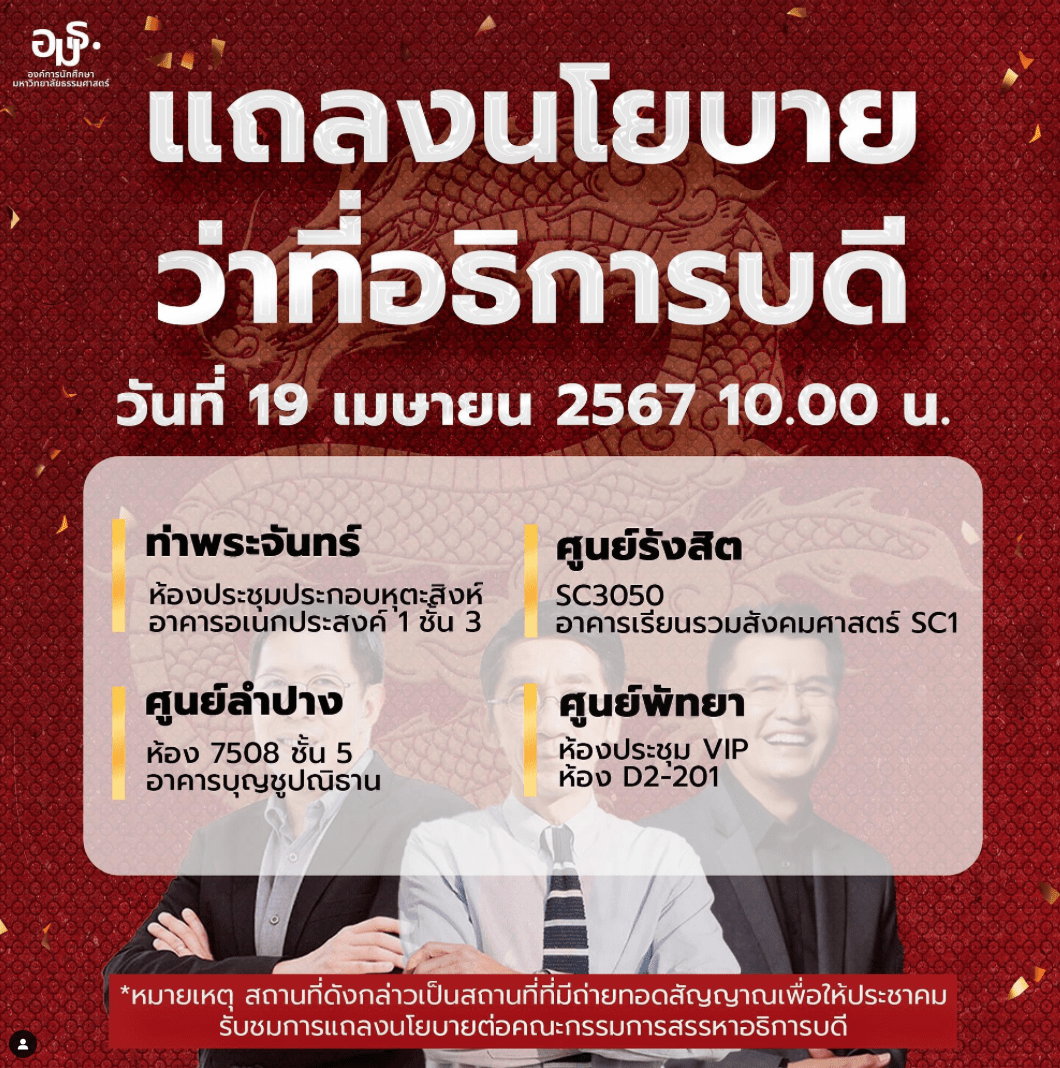
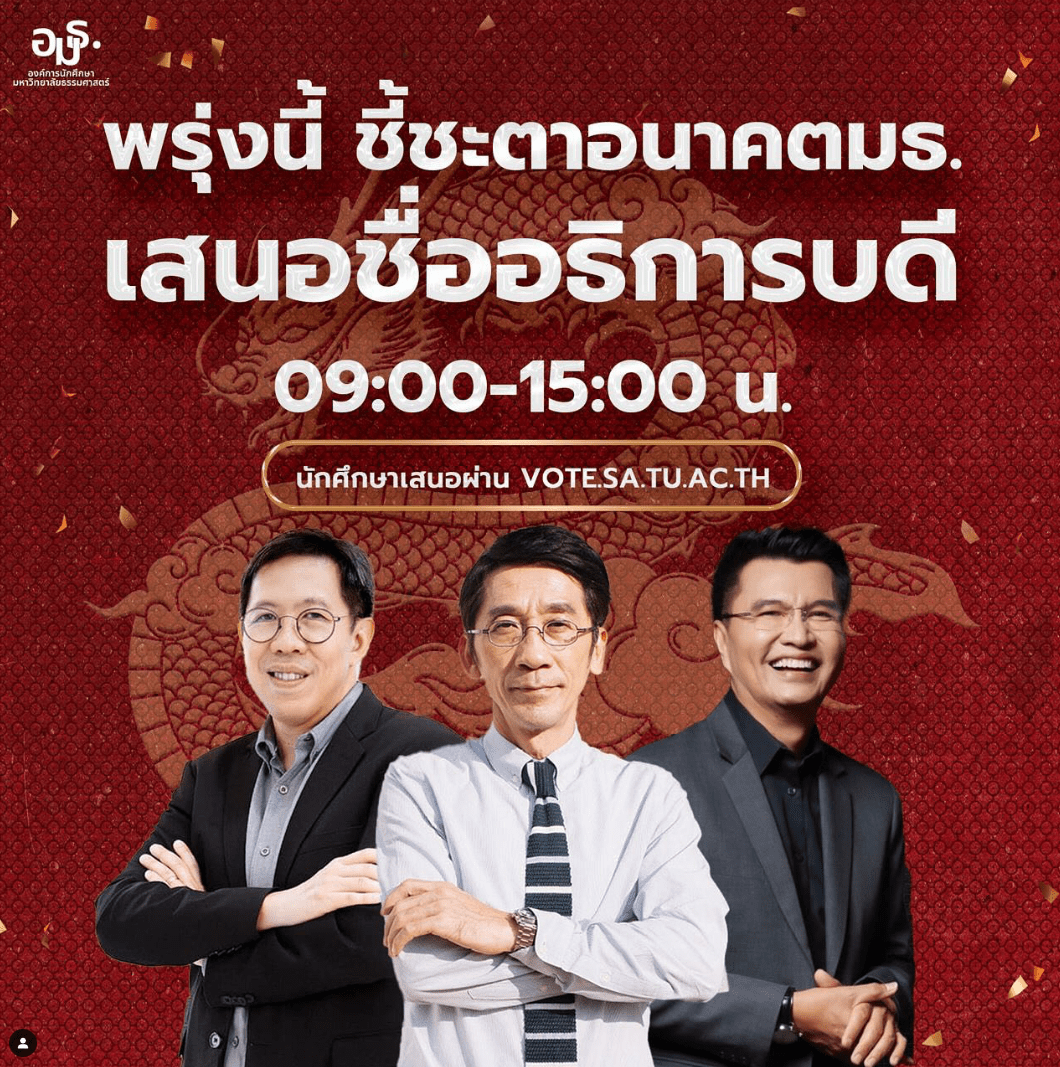
  2. The Selection Committee for the Rector shall arrange for university staffs and students to propose candidates deemed suitable for the position of rector

(b) Procedures for Selection and Consideration Process

  1. The Selection Committee for the Rector shall select and filter candidates according to the methods established by the committee.
  2. The Selection Committee shall consider approaching no more than five individuals who have been nominated, as well as evaluate candidates who have applied for the position.
  3. Those who accept the invitation or candidates who have been selected according to (2) must prepare a proposed operational framework for the university and submit it to the Selection Committee for consideration. This framework must be made available to university staffs, students, and alumni. The proposed framework should align with the goals, policies, and development strategies of the university council.
  4. Candidates who have accepted the invitation and been selected according to (2) shall present their management strategies to the Selection Committee, allowing university staffs, students, and alumni to attend the presentation. The Selection Committee may also interview candidates who have been selected according to (2)
  5. The Selection Committee shall consider and nominate no more than two individuals with suitable qualifications and characteristics for the position of rector to the university council for consideration. However, if the committee reaches a unanimous decision, they may nominate only one individual.
  6. The Selection Committee must prepare a report detailing the procedures and outcomes of the selection process, along with comments gathered from university staffs, students, or alumni, to be submitted to the university council for their consideration.

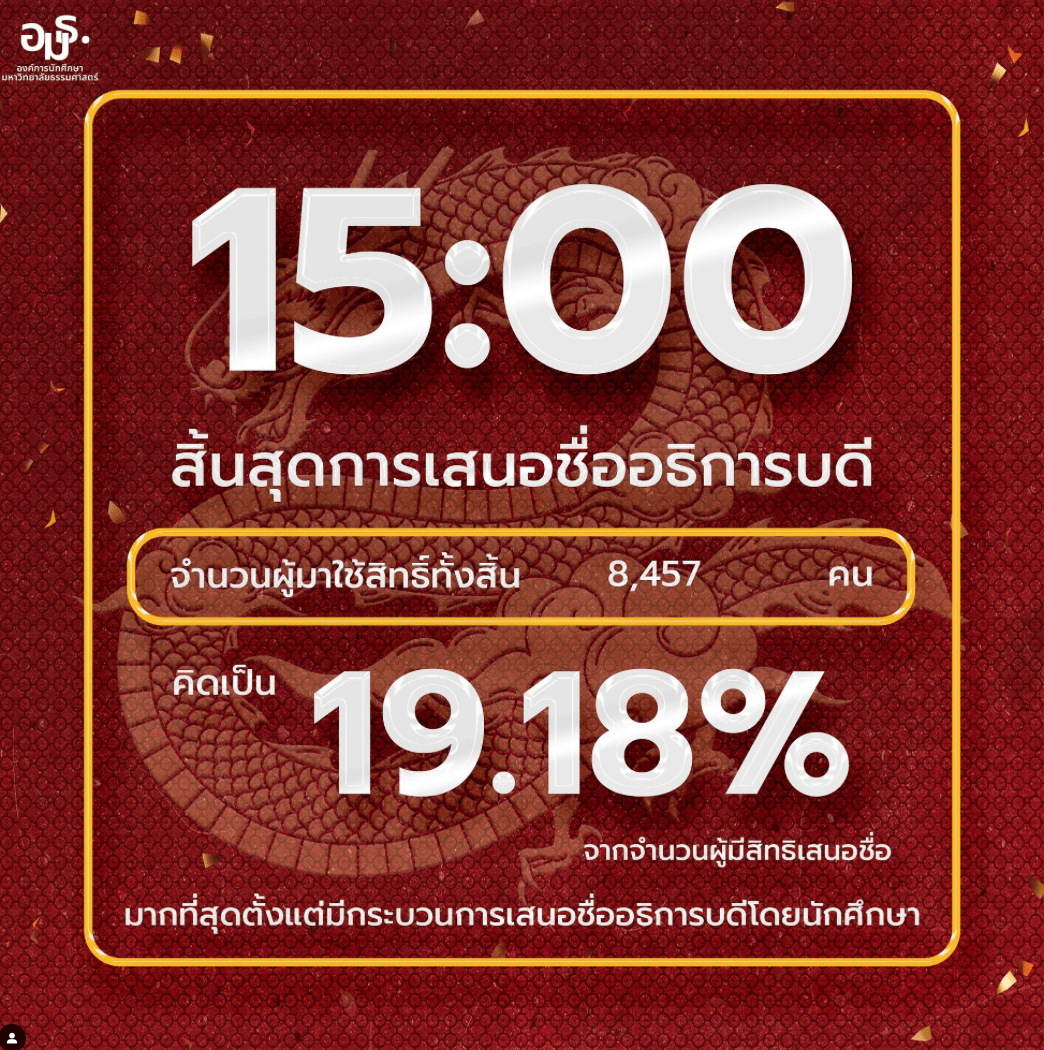
See more information about Thammasat University’s student participation in the Rector Election 2024
Thammasat University’s Principles on Corruption and Bribery 

Highlights

  • Thammasat university has assigned the Sanya Dharmasak Institute for Democracy, under the Thammasat University Anti-Corruption Center, as the primary mechanism to drive the strategy toward becoming an organization of integrity and transparency
  • Internal units of Thammasat University implementing the Anti-Corruption Action Plan for 2023 – 2027 are required to report their progress biannually (every six months)

Thammasat University aims to become an organization characterized by integrity and transparency. To achieve this goal, the university has assigned the Sanya Dharmasak Institute for Democracy, under the Thammasat University Anti-Corruption Center, as the primary mechanism to drive the strategy toward becoming an organization of integrity and transparency. The strategy includes promoting good governance through risk management related to corruption and misconduct, developing management systems, and fostering a culture of integrity aligned with the Integrity and Transparency Assessment (ITA) criteria for government agencies.

Anti-Corruption Action Plan for Thammasat University 2023 – 2027 

The updated Anti-Corruption Action Plan for Thammasat University 2023 – 2027 outlines strategic objectives as follows:

  • Strategy 1: Promote and develop transparent and ethical administration at Thammasat University.
  • Strategy 2: Enhance the effectiveness of work systems and the organizational culture aimed at preventing corruption and ensuring transparency within the university.
  • Strategy 3: Improve control systems for measuring educational outcomes and creating academic, research, and innovation results from faculty and students with integrity and transparency.
  • Strategy 4: Foster collaboration to enhance the university’s performance in the Integrity and Transparency Assessment (ITA).
  • Strategy 5: Promote the management of issues related to corruption and misconduct

Internal units of Thammasat University implementing the Anti-Corruption Action Plan for 2023 – 2027 are required to report their progress biannually (every six months) to the Sanya Dharmasak Institute for Democracy and the Anti-Corruption Center. This data will be compiled to provide an overall report on the plan’s implementation to the university’s integrity and transparency committee and relevant agencies.

O36-แผนปฏิบัติการด้านป้องกันการทุจริต-ปี-พ.ศ.-2566

Thammasat University Anti-Corruption Action Plan

Thammasat University Anti-Corruption Monitoring Report

Thammasat’s Expert Advice to Government at All Level in 2023

Highlights

  • In 2023, more Thammasat professors were appointed to various positions or joined as committee members in several government entities at all levels—local, regional, and national—across a diverse array of fields

In 2023, more Thammasat professors were appointed to various positions or joined as committee members in several government entities at all levels—local, regional, and national—across a diverse array of fields. At the national level, faculty members contribute to critical areas such as Labor Economics, Social Development, Pension Systems, Law and Constitutional Matters, Anti-Corruption, Inequality, Broadcasting and Telecommunications, Forestry, Agriculture and Cooperatives, National Space Policy, Food and Drug Administration, and Medical Services.At the regional and local levels, Thammasat’s experts engage in vital initiatives focused on peacebuilding and conflict resolution in the Southern Border Provinces, as well as Child Protection and Human Resource Management.

Local Level

AreaNamePositionDateEvident Link
Child ProtectionAsst.Prof. Areerat Adisaidetchrin, (Faculty of Social Administration)A member of the Child Protection Committee for Lampang Province under the Department of Juvenile Observation and Protection.Sep 28, 2023Click
Human resource managementAsst.Prof. Sunisa Chokhaew
(Faculty of Political Science)
A special committee member on recruitment, personnel development, and evaluation, A special committee member on human resource management strategies for the Bangkok Metropolitan Administration

Regional Level

AreaNamePositionDateEvident Link
PeacebuildingAssociate Professor Chaninthira na Thalang
(Faculty of Political Science)
An Advisor to the subcommittee responsible for studying and enhancing the effectiveness of peace negotiations and political solutions in the Southern Border Provinces Nov 11, 2023 Click
PeacebuildingDr. Chayanit Poonyarat
(Faculty of Political Science)
A Subcommittee focused on studying and promoting public participation in peacebuilding efforts in the Southern Border ProvincesNov 11, 2023Click

National Level

AreaNamePositionDateEvident Link
Labor Economics Asst. Prof. Dr. Thirapat Phakthong
(Thammasat Business School)
Member of the working group to study, analyze, research, and propose policy recommendations on international labor economics,  Ministry of LaborJan 3, 2023Click
Employment Development and Job ProtectionAsst. Prof. Dr. Kiat-anant LuangkeawCommittee member in the Committee for the Development of Employment and Protection of Job Seekers.Mar 22,2023 Click
Wage EconomicsAssoc. Prof. Dr. Supachai SrisuchatExpert in economics, serving as an advisor to the Wage Committee, Series 22.Jul 12, 2023Click
Agriculture and CooperativesAsst.Prof. Pracha KoonnathamadeeMember of the working group for the Minister of Agriculture and Cooperatives.Oct 24, 2023Click
Pension SystemsAsst. Prof. Duangmanee Laovakul 
(Faculty of Economics)
Advisor to the Subcommittee on Monitoring the Implementation of the Basic Pension System for Citizens.Dec 14, 2023Click
Pension SystemsAsst. Prof. Tipakorn Jirathitikulchai
(Faculty of Economics) 
Subcommittee on Monitoring the Implementation of the Basic Pension System for Citizens.Oct 19, 2023Click
Broadcasting and telecommunication Asst. Prof. Supachai Srisuchat
(Faculty of Economics)
A member of the subcommittee for reviewing and improving the internal administrative regulations of the National Broadcasting and Telecommunications Commission (NBTC).Aug 11, 2023
Law and Constitutional MattersAssociate Professor Nirumai Pitsakham Manjitr
(Faculty of Law)
An advisor for the project “Drafting the Reference Constitution” at the Constitutional Court OfficeAug 1, 2023
Anti-corruptionProf. Pongtep Santikul
(Faculty of Social Administration)
A member of the subcommittee supporting the evaluation of the outcomes of the Anti-Corruption and Misconduct Action Plan Phase 2 (2023-2027) at the Office of the National Anti-Corruption Commission (NACC).Nov 1, 2023
Food and DrugAsst. Prof. Paradi Saengwattanakul (Chulabhorn International College of Medicine, Thammasat University)A member of the subcommittee for reviewing the criteria and approval of traditional Thai medicine and alternative medicine knowledge, 13th meeting of 2023, at the Food and Drug Administration (FDA) Office.Sep 15, 2023
Medical serviceAsst. Prof. Paradi Saengwattanakul (Chulabhorn International College of Medicine, Thammasat University)A member of the Chinese Medicine Professional Committee, 4th meeting of 2023, at the Department of Medical Services and Medical Profession.Oct 6, 2023
Poverty and 
Inequality 
Asst. Prof. Wasit Limpraesert 
College of Interdisciplinary Studies)
A consultant for the subcommittee addressing poverty alleviation and reducing inequality within the Senate’s Committee on Poverty Alleviation and Inequality Reduction.Nov 15, 2023
Law and Constitutional MattersProf. Dr. Udom Rathamarit
(Faculty of Law)
Justice of the Constitutional Court Dec 26, 2022 Click
National Space PolicyAsst. Prof. Dr.Lalin Kovudhikulrungsri
(Faculty of Law)
Expert in the National Space PolicyFeb 9, 2022 Click
Gender EqualityProf. Narong Jaiharn 
(Faculty of Law)
President of the Committee for Gender Discrimination Verification in accordance with the Gender Equality Act 2015Jan 19, 2022Click
Area-based AdministrationAsst. Prof. Dr. Supachai Srisuchart 
(Faculty of Economy)
Member of the Sub-committee on Integrated Area-based Administration Policy focusing on academic, law, and integration of projectsDec 29, 2022Click
National Forestry Asst. Prof. Dr. Pracha Koonnathamdee 
(Faculty of Economy)
An expert and committee in the National Forestry CommitteeJun 9, 2022Click
National Economic and Social DevelopmentAssoc. Prof. Niramon Suthammakij
(Faculty of Economy)
A board member of the Institute for Public Policy Development under the National Economic and Social Development Council (NESDC)Jan 7, 2022Click
National Economic and Social DevelopmentAsst. Prof. Nattapong Puttanapong
(Faculty of Economy)
A board member of the Institute for Public Policy Development under the National Economic and Social Development Council (NESDC)Jan 7, 2022Click
LaborAssoc. Prof. Kiriya Kulkolkarn 
(Faculty of Economy)
A member, as a government representative, of the 20th National Labour Development Advisory Council.Dec 26, 2022Click
Impact EvaluationAsst. Prof. Anin Aroonruengsawat 
(Faculty of Economy)
An expert of a working group for outcome and impact evaluation of platforms/programs/projects to which the budget from the Science Research and Innovation fund was allocated.Jul 19, 2022Click

Thammasat University – Anti-discimination Policy

Recognition of freedom for student’s gender identity and expression are outlined in the policy and imbed in the Thammasat’s culture. Thammasat University has published a “Policy on Gender Equality and Non-Discrimination against Women, LGBT+ People, and People with Disabilities” (as policy no. 6 on our sustainability website) that designates a policy and practice guidelines against any discrimination or disadvantage in education or employment. The policy addresses in section 3. “Guideline to Non-discrimination and Gender Equality Promotion(in item #1 – item #4) that all internal administration within each unit shall actively promote equality, mutual respect and inclusion, ensuring that no individual is discriminated against based on their race, ethnicity, religion, gender identity, sexual orientation, disability, or age. It also emphasizes the anti-discrimination for recruitment, admission and job posting. If one discriminates, there will be disciplinary action.

6.-Policy-on-Gender-Equality-and-Non-discrimination-Against-Women-LGBTIQA-Individuals-and-People-with-Disabilities

Gender Equality Promotion

To fosters a positive and safe atmosphere to reduce discrimination and the risk of harassment and abuse, Thammasat promote knowledge and understanding regarding actions that constitute sexual abuse or sexual harassment through the establishment of the “Sexual Safety and Sexual Awareness Promotion Board” in 2019 to regulate and manage all issues related to sexual safety and gender equality. The role and responsibilites are:

  1. Set direction, advise and implement policies and programs to promote sexual safety and the prevention of sexual abuse and harassment.
  2. Set direction and plans to provide understanding of gender equality, diversity and inclusion, and the awareness of the subtle and different sexual relationships.
  3. Assign working team to implement policies, programs, and trainings related to equity, diversity and inclusion, and human rights on campus.
  4. Establish guidelines and process for receiving complaints related to sexual harassment and steps to proceed with those complaints according to the guidelines.
  5. When the complaint is considered to be a violation of student or personnel disciplinary action, the committee will proceed in accordance with Thammasat University regulations.
  6. Perform other duties and tasks assigned by the Sexual Safety and Sexual Awareness Board.

This committee, not only promote gender equality, diversity & inclusion, monitor and receive information, suggestions, and complaints, they also provide free legal consultation and assistance for gender-based violence cases.  If legal counseling is needed, pro-bono lawyers will be assigned to proceed on legal procedures required.

Creative Media Production Manual to Promote Gender Equality

On September 16, 2024, the College of Interdisciplinary Studies, Thammasat University, in collaboration with the Women, Gender and Sexuality Studies Programme (WGSSP), released a new e-book. Titled “Creative Media Production Manual to Promote Gender Equality,” this manual serves as a tool to foster understanding of gender equality within families and provides guidelines for creating quality media that respects gender diversity. Its objective is to reduce gender stereotypes, promote an atmosphere of respect and acceptance in society, and drive positive change towards sustainable gender equality.

Student Dress Code – Gender Expression

With the recognition of freedom for student’s gender identity and student uniforms, in June 2020, Thammasat University announced a guideline for non-discriminatory treatment towards LGBTIQN students and how they dress. This guideline allows the students to behave and dress in accordance with their gender, even in the graduation ceremony. It also prohibits actions of harassment, discrimination, bullying or any form of harassments. If one infringes or discriminates, there will be disciplinary action.

Announcement on the guideline for non-discriminatory treatment toward LGBT+ students and the dress code

10.6.4-แนวทางปฏิบัติการแต่งกายนักศึกษา-2563

For more information on theapproval of dress code for students whose gender identity or sexual orientation does not match their gender, please refer to: 
Thammasat University approves regulations to allow students to dress according to their gender identities

Student Identification – “Others” Gender Field

Since 2022, the Office of Registrar, Thammasat University, allowed students to specify their gender in their personal history and graduation record with an additional “other” gender field, in addition to just the male and female fields like before.  Understanding the rights of LGBT+ and the recognition of more than two genders are therefore very important for educational institutions.
สำนักทะเบียนมหาวิทยาลัยธรรมศาสตร์ เปิดให้นักศึกษาได้สามารถระบุเพศตัวเองในประวัติส่วนตัว (2022)

All Genders Restroom

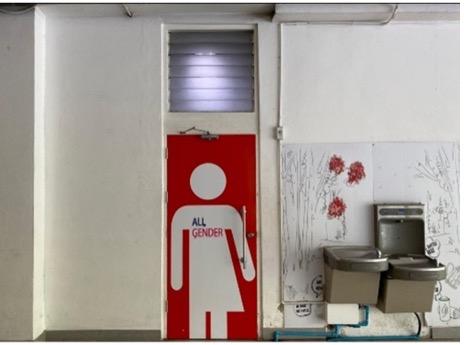
To promote the awareness of gender equality, diversity and inclusion, the “All Genders Restroom” project was created. All gender restroom serves as symbolic and practical expression of the equality of all genders, to create awareness and recognition of gender diversity.

The restroom for all genders locates at Gymnasium 7 building. For more information,
please refer to:
All Genders’ Restrooms
IG: All Genders’ Restrooms